


 Train routes operated by CFR Călători
16 routes · classic 14 · night train 1 · scenic 1
CFR Călători runs 16 of the routes in the World Train Map atlas, 4,574 km of railway across 2 countries. The longest is the InterRegio 1831 at 806 km; the fastest is the Bucharest–Constanța InterCity, running up to 160 km/h; the oldest line it runs over here opened in 1858. 1 of its routes crosses an international border.
The company itself dates to 1998, filed on Wikidata as a railway undertaking. What this page says about the company comes from CFR Călători's own Wikidata item, checked against the countries its routes here actually cross before any of it is used; everything about the railway is counted from this atlas. Official site ↗ · Wikipedia ↗ · Wikidata Q856252 ↗
Open the world railway map →Classic (14)
- InterRegio 1831
Romania corner to corner in sixteen hours without going near Bucharest, from the Banat over the Eastern Carpathians at Vatra Dornei on a crossing finished in 1938, and down through Bukovina to Moldavia.
- InterRegio Timișoara
Follows the Danube past the Iron Gates gorge, then climbs to Timișoara, the Banat city where Romania’s 1989 revolution ignited.
Wikipedia (RO) ↗ - InterRegio Cluj
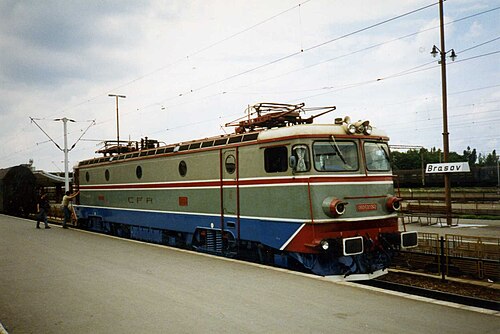
The long haul from Bucharest over the Carpathians via Brașov and medieval Sighișoara to Cluj-Napoca, heart of Transylvania.
Wikipedia (RO) ↗ - InterRegio
The Moldavia main line north through Bacău and Roman to Suceava, jumping-off point for Bukovina’s painted monasteries.
Wikipedia ↗ - InterRegio
Wallachia to the old Moldavian capital: Romania’s busiest eastern corridor, hours of steppe and vineyards ending in university-city Iași.
Wikipedia ↗ - Bucharest–Constanța InterCity
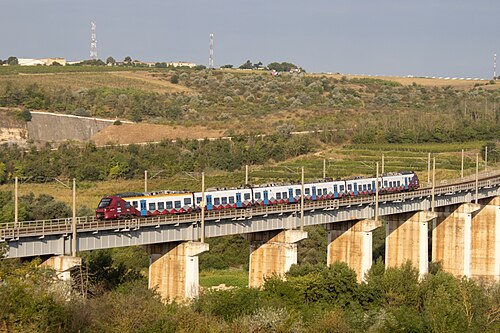
Romania’s fastest domestic run crosses the Danube on Anghel Saligny’s 1895 bridge before new EMUs race on to the Black Sea.
Wikipedia ↗ - Prahova Valley Railway
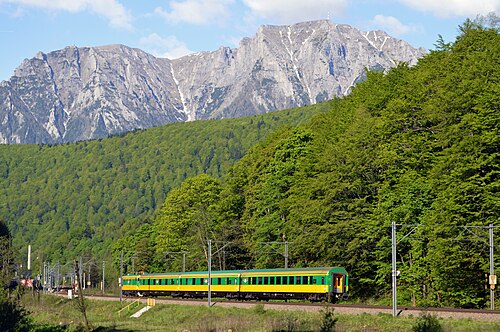
Climbs the Prahova gorge past Peleș Castle at Sinaia to Predeal, Romania’s highest station at 1,032 m, under the Bucegi’s 2,500 m walls.
Wikipedia (RO) ↗ - InterRegio Sibiu–Brașov
Runs under the Făgăraș Mountains, Romania’s highest, along the Olt valley between the Saxon citadels of Sibiu and Brașov.
- Medgidia–Tulcea railway
Begun in 1911, stopped by the war, opened to Babadag on 1 October 1925 and finished on 25 March 1938, when Tulcea, the last county town in Romania without a railway, got its first train.
Wikipedia ↗ - Pitești–Craiova railway
Opened on 9 May 1878, six years after the line from Bucharest had reached Pitești, and still an unelectrified single track running west across the Olt to Craiova.
- Craiova–Calafat railway
A secondary single line down to the Danube, largely unelectrified, that found new purpose when the Calafat–Vidin bridge opened the way into Bulgaria.
Wikipedia (RO) ↗ - Târgu Jiu–Craiova railway
Filiași to Craiova is the 1878 line; the branch up the Jiu opened in two pieces in 1888, to Cărbunești and then to Târgu Jiu, which stayed the end of the railway for another 27 years.
Wikipedia ↗ - Oradea–Püspökladány railway
Over the Hungarian border on rails the Tisza Railway Company put into service on 22 April 1858, still the way out of Oradea onto the Great Plain at Püspökladány.
- Golești–Câmpulung railway
Inaugurated on 21 June 1887 and derailed two months later between Mihăești and Stâlpeni; still an hour and a half up the Râul Târgului to Câmpulung.
Wikipedia (RO) ↗
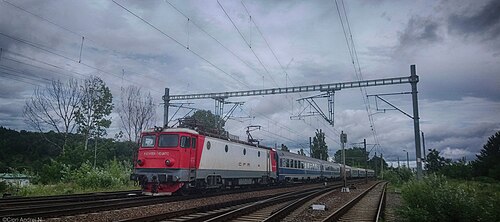
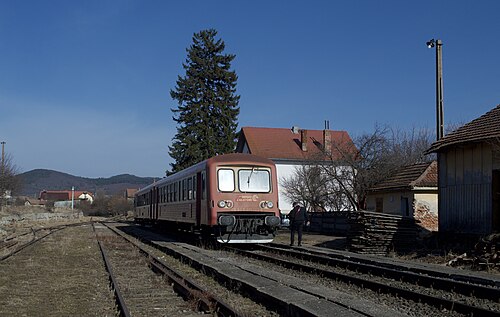
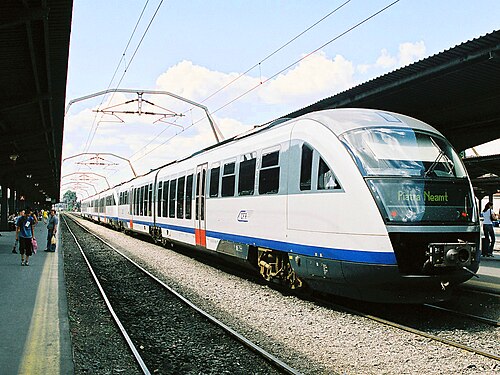
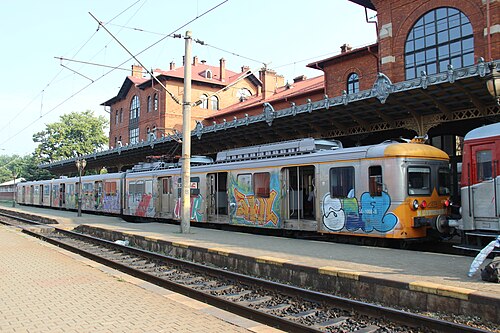
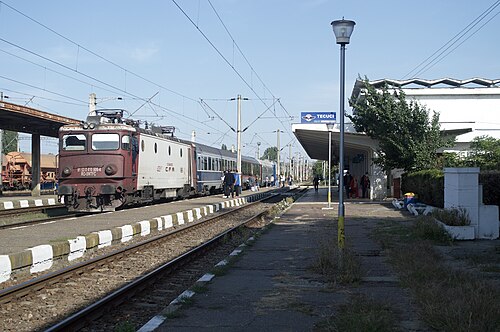
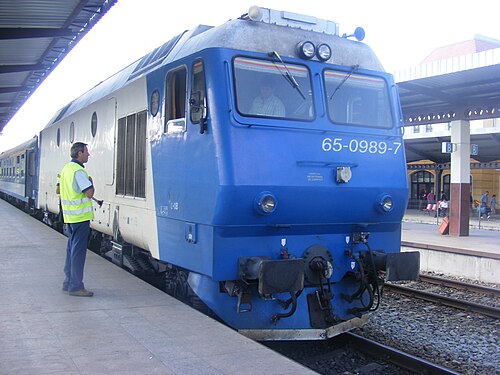
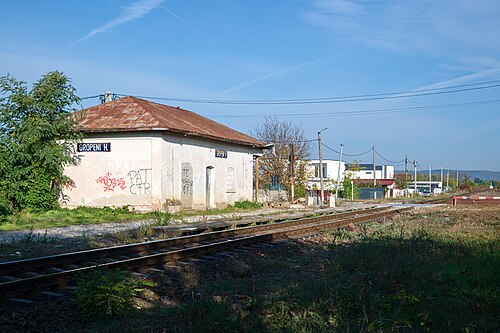
Night train (1)
- IRN Corona
Romania’s classic night loop: asleep through Székely Land and the Maramureș foothills, waking at the far northwestern corner of the country.
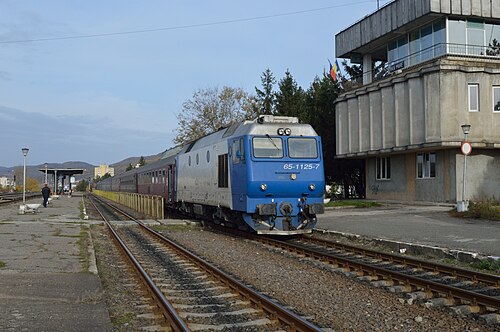
Scenic (1)
- Oravița–Anina Railway
The “Banat Semmering” of 1863. Romania’s first mountain railway spirals through 14 tunnels and over 10 viaducts up the Aninei gorges, a masterwork of Habsburg engineering.
Wikipedia (RO) ↗
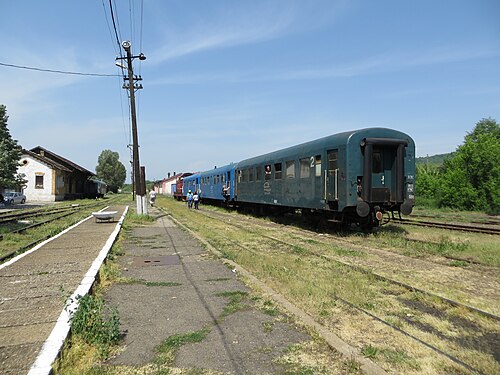
Photos via Wikimedia Commons; each route page credits the author & licence
How many train routes does CFR Călători run?
16 of the routes in this atlas are CFR Călători services, covering 4,574 km across 2 countries (Romania, Hungary). That is what this atlas draws, not the operator's whole network: a national railway runs thousands of local services no map of notable journeys would list.
What is the fastest CFR Călători train?
The Bucharest–Constanța InterCity, Bucharest to Constanța, at up to 160 km/h. Its fastest scheduled run takes 2 h 07 min over 225 km.
Does CFR Călători run night trains?
Yes, 1 sleeper service in this atlas: IRN Corona (Bucharest – Satu Mare).
When was CFR Călători founded?
Wikidata records the company's inception as 1998, and files it as a railway undertaking. The oldest railway it runs over in this atlas opened in 1858; the line and the company are rarely the same age, and this page dates both.
Countries CFR Călători runs in
 Train routes in Hungary 42 routes
- Train routes in Romania 25 routes
Other operators in Romania
- CFI (Calea Ferată Îngustă) 2 routes