
Classic route
Linha do Vouga Espinho–Oliveira de Azeméis
Espinho → Oliveira de Azeméis · Portugal
View on the map →Wikipedia ↗Stations · 18
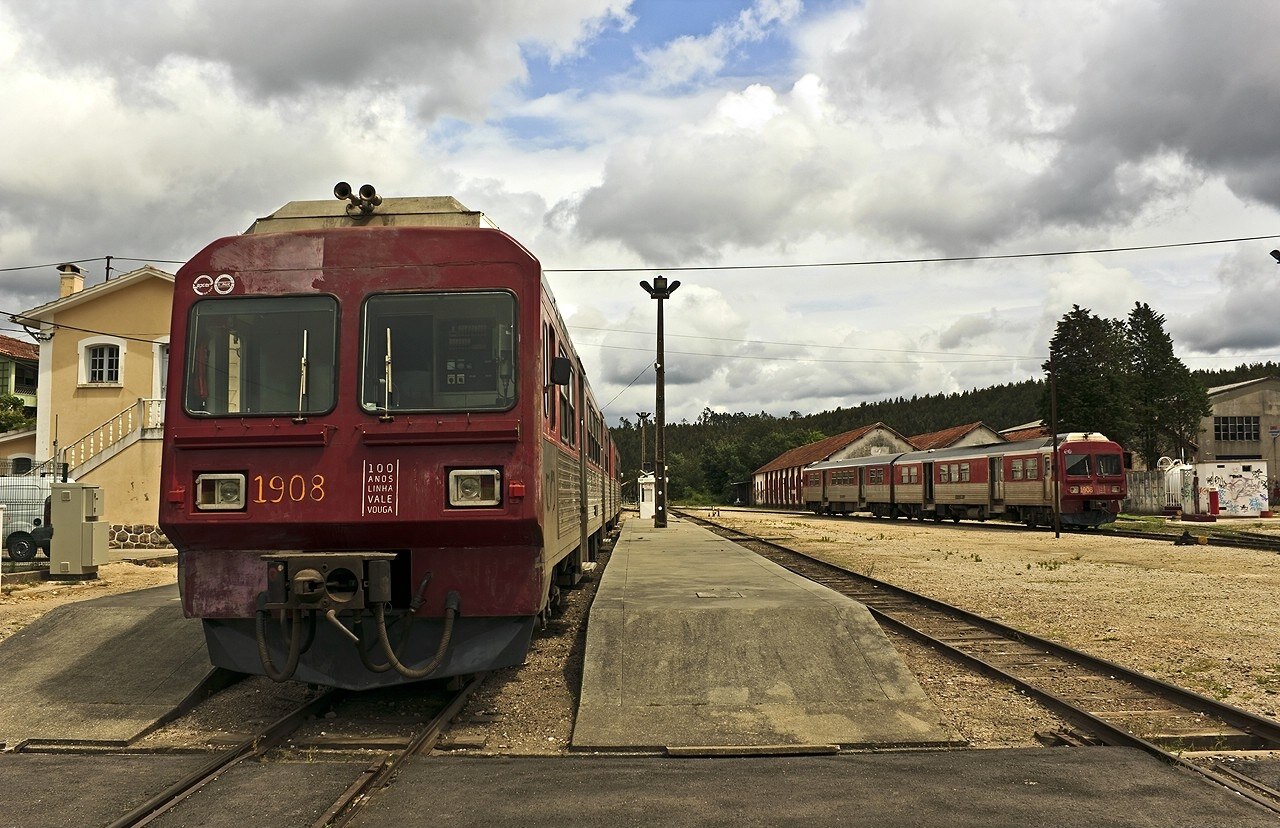
The last metre gauge railway carrying passengers in Portugal, an hour from the Atlantic at Espinho inland to Oliveira de Azeméis, opened on 21 December 1908 and still running on the same narrow track.
Stations
- 0 kmEspinho-Vouga
- 2 kmSilvalde - Vouga
- 3 kmMonte de Paramos
- 5 kmLapa
- 6 kmSampaio-Oleiros
- 8 kmPaços de Brandão
Show 7 more stations
- 10 kmRio Meão
- 13 kmSão João de Ver
- 16 kmCavaco
- 18 kmSanfins
- 19 kmVila da Feira
- 21 kmEscapães
- 23 kmArrifana
- 24 kmSão João da Madeira
- 26 kmFaria
- 28 kmCouto de Cucujães
- 30 kmSantiago de Riba-Ul
- 32 kmOliveira de Azeméis
The stations OpenStreetMap lists for this service, in order, with the distance along the line as drawn here. A train may skip some of them.
How this line was checked
- Line drawn from OpenStreetMap relation 7244716 — the same nodes OpenStreetMap holds for this railway, thinned to within under 25 m of them
- Checked against OpenStreetMap: the whole line lies on real track, a median 4 m from it
- Checked against the running timetable via ÖBB Scotty: our line sits under 100 m from the shape of R 5202
- Wikipedia has an article for this line
- See for yourself: open this line on the map with OpenStreetMap's own railway drawn underneath it
Questions and answers
How long is the Linha do Vouga?
The Linha do Vouga runs 32 km from Espinho to Oliveira de Azeméis.
How long does the Linha do Vouga take?
The fastest scheduled journey is 1 h 03 min for the 32 km. That is an average of 30 km/h end to end.
Who runs the Linha do Vouga?
CP.
How old is the Linha do Vouga?
The line has been in service since 1908. That is the year the atlas dates it from: for a modern brand running over an older railway, it is the railway's date, not the brand's.
How often does the Linha do Vouga run?
8 direct trains on a weekday (counted on 2 September 2026).
More classic routes
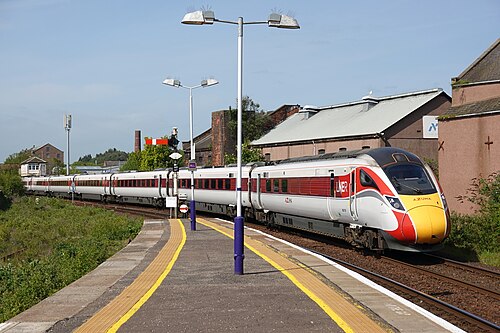
- LNER Azuma
The Flying Scotsman’s route since 1862: and where Mallard set the never-beaten steam record of 203 km/h in 1938.
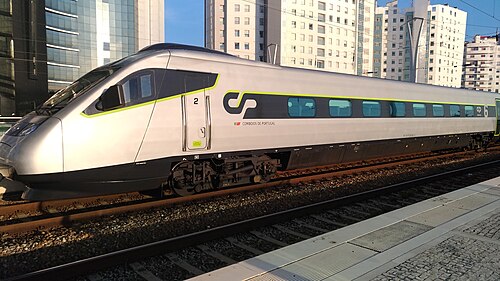
Wikipedia ↗ - Alfa Pendular
A tilting Pendolino leaning through the curves of the 19th-century Linha do Norte between Portugal’s two great cities.
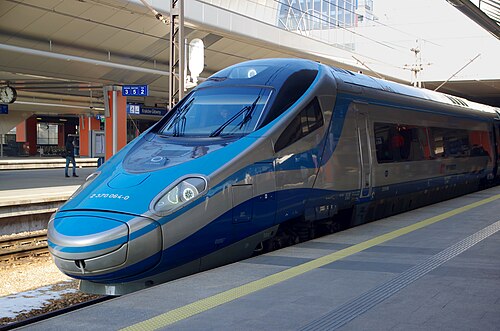
Wikipedia ↗ - EIP Pendolino
Rides Poland’s 1970s Central Main Line (CMK), engineered decades ahead of its time and now being upgraded to 250 km/h.
Wikipedia ↗ - Railjet
Follows the old Orient Express alignment down the Danube plain: centre to centre faster than any flight.
Wikipedia ↗
More train routes in Portugal.