


 Train routes operated by PKP Intercity
24 routes · classic 24
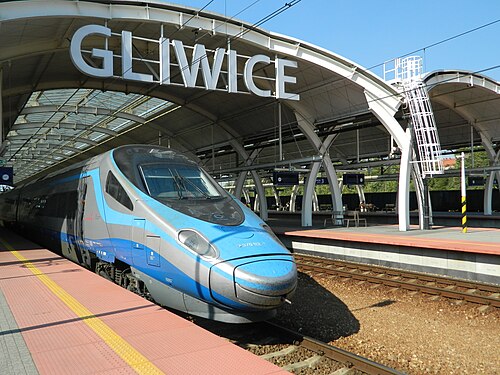
PKP Intercity runs 24 of the routes in the World Train Map atlas, 6,803 km of railway across 1 country. The longest is the EIC Warszawa–Szczecin at 511 km; the fastest is the EIP Pendolino, running up to 200 km/h; the oldest line it runs over here opened in 1847.
The company itself dates to 2001, filed on Wikidata as a railway company. What this page says about the company comes from PKP Intercity's own Wikidata item, checked against the countries its routes here actually cross before any of it is used; everything about the railway is counted from this atlas. Official site ↗ · Wikipedia ↗ · Wikidata Q590406 ↗
Open the world railway map →Classic (24)
- EIC Warszawa–Szczecin
Warsaw to the Oder in four and a quarter hours, on the old Prussian main line west through Poznań, then Krzyż and Stargard to Szczecin, where Poland meets the German border.
- IC Łempicka
Lublin to Wrocław the long way round, through Radom, Kielce and Częstochowa, then west across Silesia to Opole and the Oder; the Częstochowa to Kielce link, opened in 1911, was the last piece of the route.
- IC Przemyślanin
Crosses Poland to Przemyśl, the southeastern gateway where standard gauge meets Ukraine’s broad gauge, handover point for Kyiv-bound trains.
- TLK Bory Tucholskie
Gdynia by Gdańsk to Tczew, then west through Chojnice and Piła on the Prussian Eastern Railway’s direct line of 1871 to 1873, across the Tuchola Forest it is named for, and on to Kostrzyn.
Wikipedia ↗ - IC Kasztelan
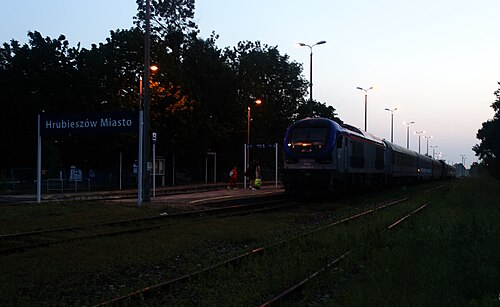
Kraków to Hrubieszów near the Ukrainian border, by Tarnów, Mielec and Stalowa Wola, then east through Biłgoraj and Zwierzyniec to Zamość and its Renaissance old town; the line from Stalowa Wola to Biłgoraj was only completed in 1976.
- EIP Pendolino
Southwest across the Polish plain via Łódź to Lower Silesia’s handsome market city of Wrocław, threaded with its hundred bridges.
Wikipedia ↗ - Nadodrzanka
The Nadodrzanka: down the Oder valley through Głogów and Zielona Góra, the quiet 1870s corridor between Silesia and the Baltic.
Wikipedia ↗ - IC Gdynia–Szczecin
The Pomeranian main line from Gdynia by Lębork, Słupsk and Koszalin to Stargard and Szczecin: it reached Koszalin from the west in June 1859 and was joined to Gdańsk in September 1870.
Wikipedia ↗ - IC Poznań–Gdynia
Across Wielkopolska and Pomerania: Gniezno’s cathedral hill, Bydgoszcz, then the Vistula crossing at Tczew and the Tri-City coast to Gdynia.
- EIP Pendolino
Capital to the Baltic amber coast, Gdańsk’s Hanseatic old town, in under three hours.
Wikipedia ↗ - Express InterCity
Historic trunk line on the Paris–Berlin–Warszawa–Moscow corridor; the same rails carry the Berlin-Warszawa-Express onward to Germany.
Wikipedia ↗ - Express InterCity Premium
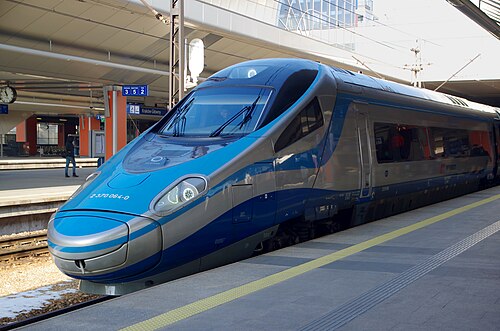
Poland’s fastest train, hitting 200 km/h on the dead-straight Central Rail Line (CMK) engineered for high speed back in the 1970s.
Wikipedia ↗ - EIP Pendolino
Rides Poland’s 1970s Central Main Line (CMK), engineered decades ahead of its time and now being upgraded to 250 km/h.
Wikipedia ↗ - IC Brda
The 1862 Warsaw–Bydgoszcz Railway via the brick-gothic city of Toruń, Copernicus’s birthplace, to the Brda riverside.
- IC Kraków–Wrocław
Poland’s two great tourist cities linked across industrial Silesia on the 1847 Upper Silesian Railway, the mesh line no Warsaw-bound train covers.
- Omulew
Masuria east to west without going near Warsaw, on a single track the Prussian army threw across the Narew in five weeks in 1915 to move troops to the Eastern Front.
- IC Warszawa–Olsztyn
Off the Gdańsk main line at Działdowo, then through the wooded lake country via Nidzica and Olsztynek into Olsztyn, gateway to Masuria.
- IC Poznań–Szczecin
Continuation of the Warsaw expresses to the Baltic’s big absent city: Szczecin’s Prussian boulevards and the gateway to Świnoujście.
Wikipedia ↗ - IC Warszawa–Terespol
Warsaw east to the Bug on the 1866 Terespol railway, the third line built in Congress Poland, running through Siedlce and Biała Podlaska to the Belarusian frontier.
Wikipedia ↗ - IC Warszawa–Lublin
The 1877 Vistula River Railroad east from Warsaw, rebuilt for 160 km/h: under two hours to Lublin’s renaissance old town.
- Wrocław–Poznań railway
Silesia to Wielkopolska via Leszno, opened in 1856 and now part of TEN-T corridor E59 from Scandinavia south to Vienna and Budapest.
Wikipedia ↗ - IC Olsztyn–Elbląg
Warmia end to end, Olsztyn through Morąg to Elbląg and the Vistula Lagoon, on a line that reached Olsztyn from Bogaczewo in August 1883.
- Łódź–Kutno railway
Łódź's link north to the Warsaw–Poznań main line at Kutno, through Zgierz, Ozorków and Łęczyca, part of it doubling as the city's freight ring.
Wikipedia ↗ - Kalwaria Zebrzydowska–Bielsko-Biała railway
Built as the Kaiser Ferdinand Northern Railway's Bielitz–Kalwaria local line, running through Wadowice under the Beskids.
Wikipedia (PL) ↗
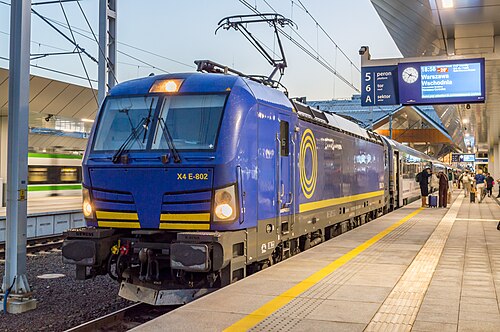
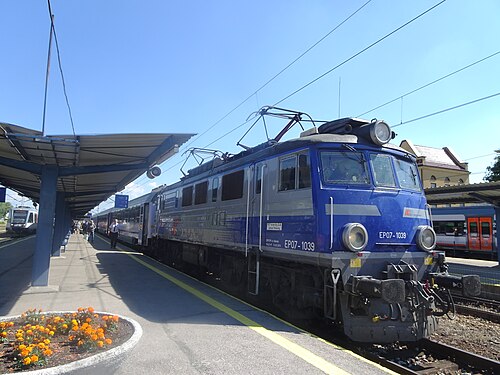
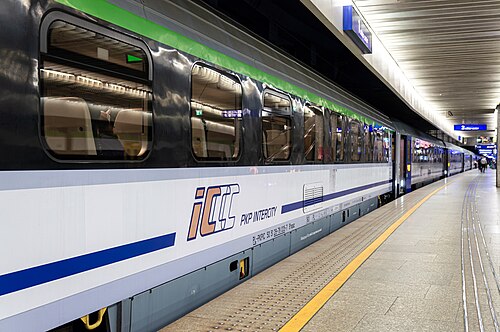
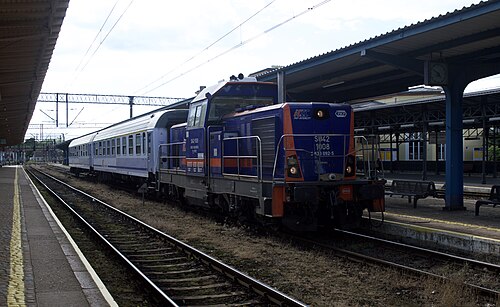
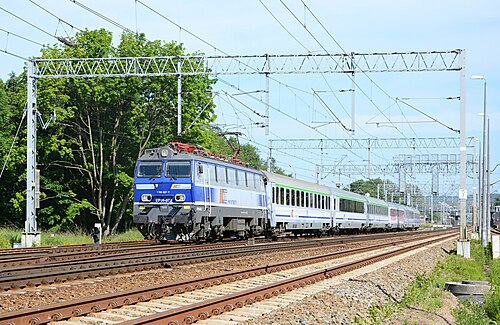
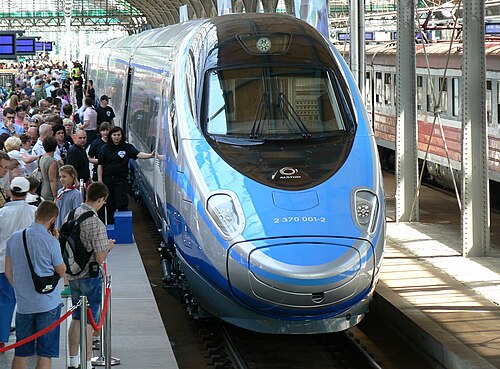
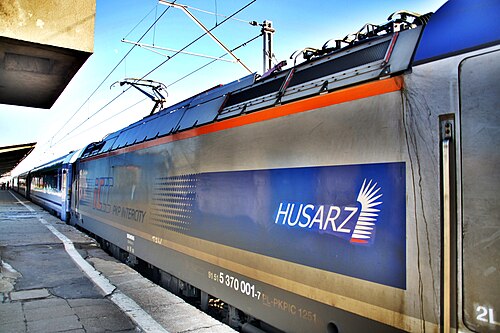
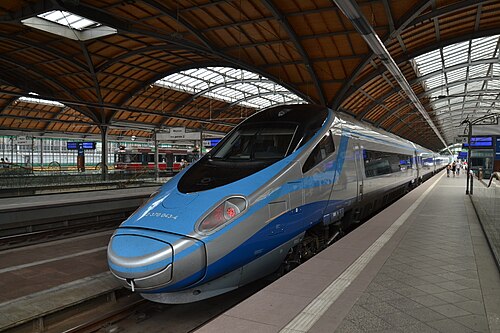
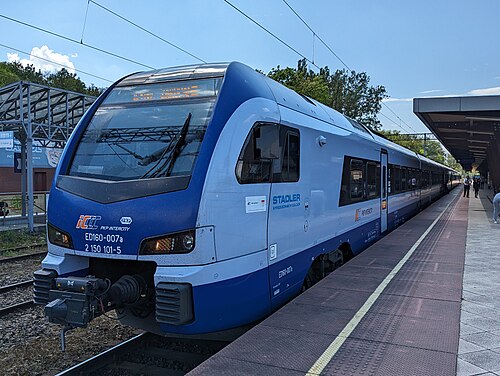
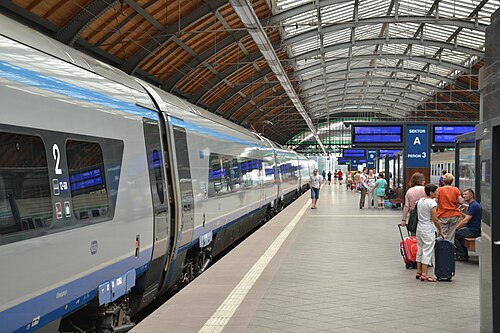
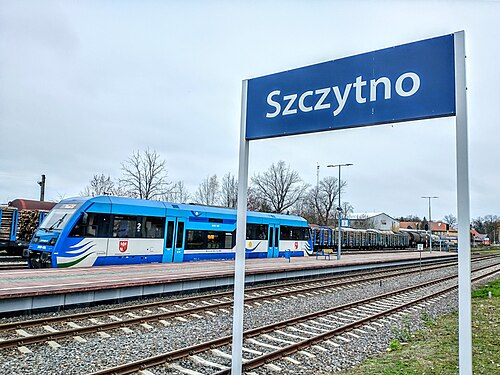
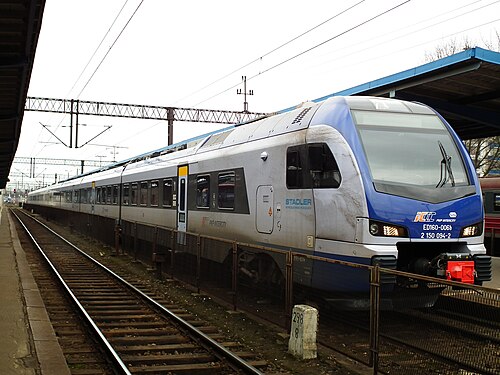
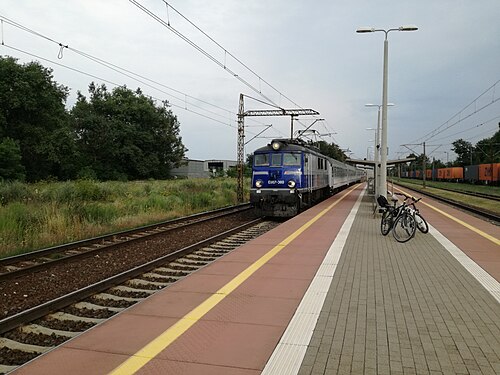
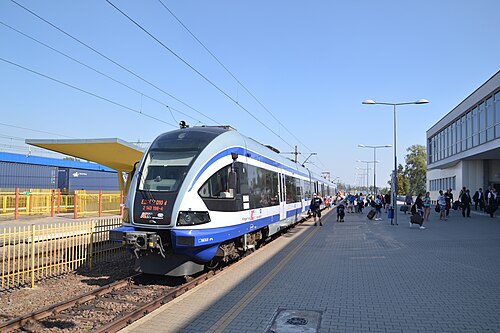
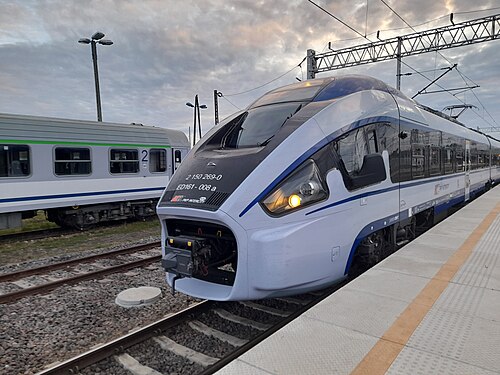
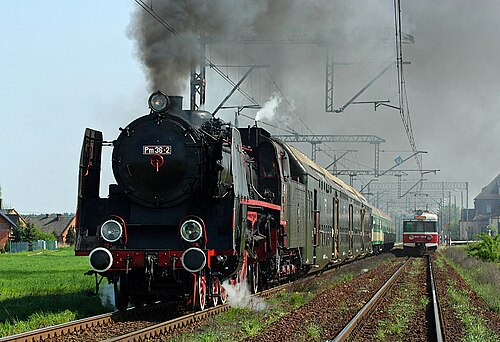
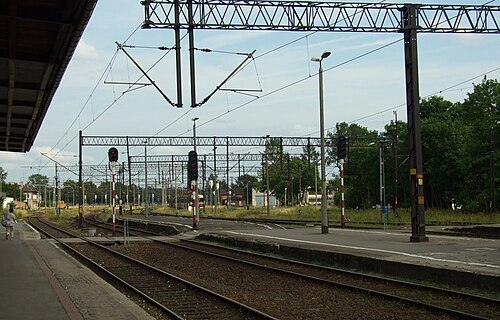
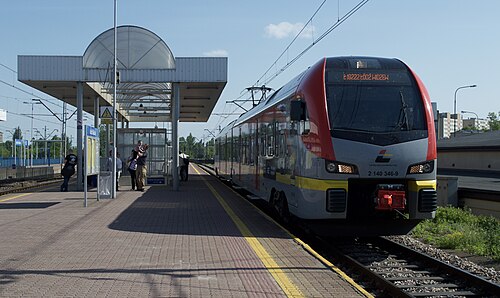
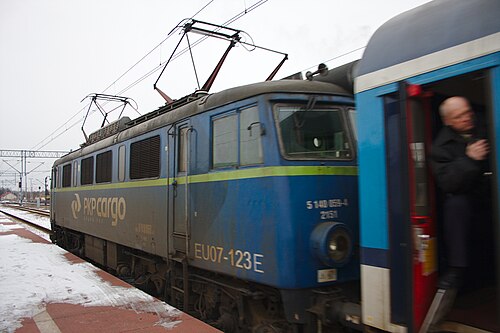
Photos via Wikimedia Commons; each route page credits the author & licence
How many train routes does PKP Intercity run?
24 of the routes in this atlas are PKP Intercity services, covering 6,803 km across 1 country (Poland). That is what this atlas draws, not the operator's whole network: a national railway runs thousands of local services no map of notable journeys would list.
What is the fastest PKP Intercity train?
The EIP Pendolino, Warsaw to Gdańsk, at up to 200 km/h. Its fastest scheduled run takes 2 h 39 min over 328 km.
Does PKP Intercity run night trains?
Not in this atlas. All 24 PKP Intercity routes listed here are daytime services.
When was PKP Intercity founded?
Wikidata records the company's inception as 2001, and files it as a railway company. The oldest railway it runs over in this atlas opened in 1847; the line and the company are rarely the same age, and this page dates both.
Countries PKP Intercity runs in
- Train routes in Poland 67 routes
Other operators in Poland
- Polregio 13 routes
- Koleje Wielkopolskie 3 routes
- Koleje Mazowieckie 2 routes