


 Train routes in Poland
58 routes · classic 47 · night train 3 · scenic 3 · heritage 5
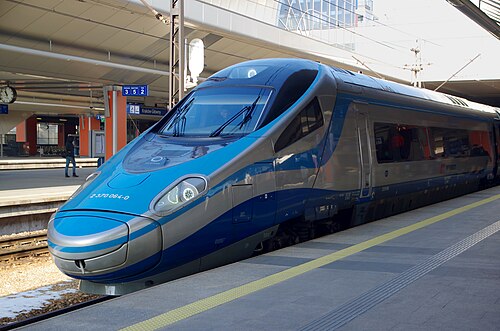
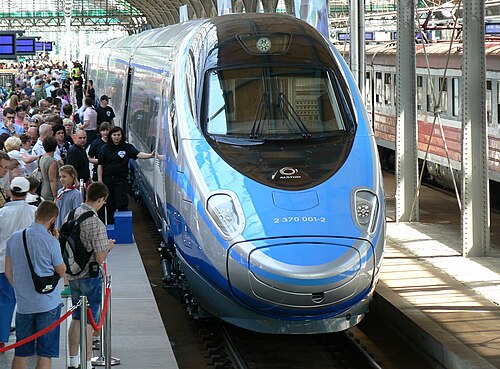
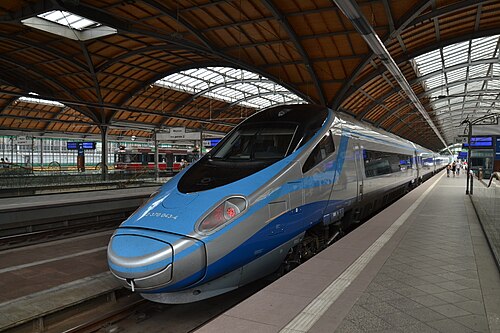
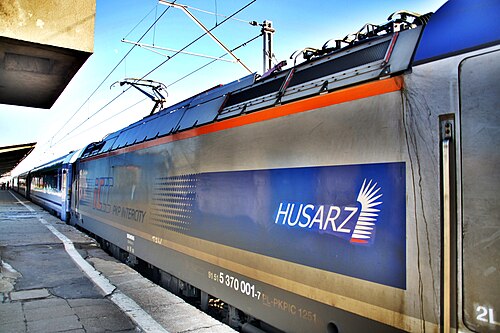
58 routes cross Poland in the World Train Map atlas. The longest is the EC Wawel at 864 km; the fastest is the EIP Pendolino, running up to 200 km/h; the oldest line dates to 1845. Every route links to its facts, photo and story, and to the interactive world map.
Open the world railway map →Part of the Europe train map: every route on the continent, one map.
Classic (47)
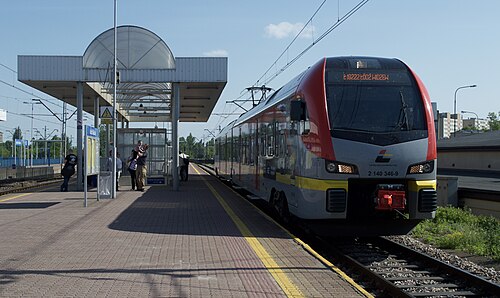
- EIP Pendolino
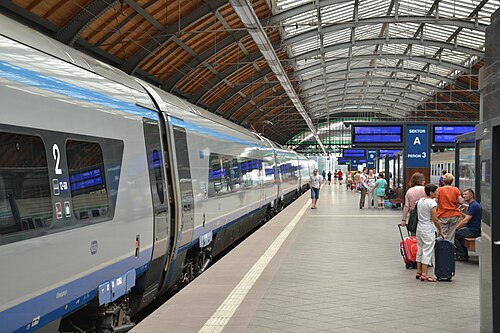
Rides Poland’s 1970s Central Main Line (CMK), engineered decades ahead of its time and now being upgraded to 250 km/h.
Wikipedia ↗ - EIP Pendolino
Capital to the Baltic amber coast, Gdańsk’s Hanseatic old town, in under three hours.
Wikipedia ↗ - Express InterCity Premium
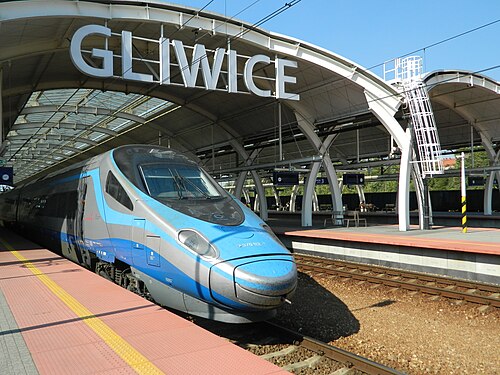
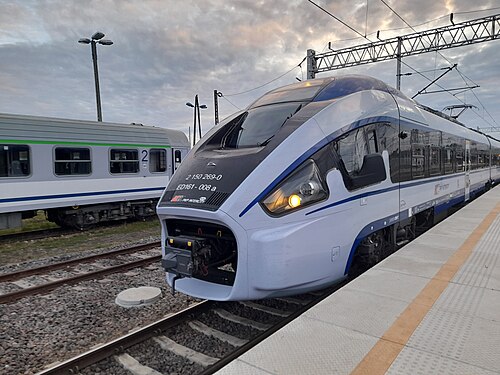
Poland’s fastest train, hitting 200 km/h on the dead-straight Central Rail Line (CMK) engineered for high speed back in the 1970s.
Wikipedia ↗ - Express InterCity
Historic trunk line on the Paris–Berlin–Warszawa–Moscow corridor; the same rails carry the Berlin-Warszawa-Express onward to Germany.
Wikipedia ↗ - IC Przemyślanin
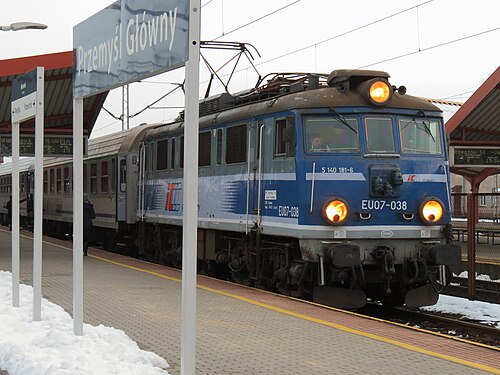
Crosses Poland to Przemyśl, the southeastern gateway where standard gauge meets Ukraine’s broad gauge, handover point for Kyiv-bound trains.
- Omulew
Masuria east to west without going near Warsaw, on a single track the Prussian army threw across the Narew in five weeks in 1915 to move troops to the Eastern Front.
- Intercity+
The first Intercity+ to cross a border, and since 2022 the way most of Ukraine reaches the European Union: Kyiv to the Polish frontier at Przemysl in nine hours, through Vinnytsia, Khmelnytskyi, Ternopil and Lviv.
Wikipedia (UK) ↗ - IC Kraków–Przemyśl
The old Galician main line east: Kraków, Tarnów, Rzeszów and the fortress town of Przemyśl, last stop before Ukraine.
Wikipedia (PL) ↗ - LTG Link
For years the Baltics’ only rail gateway to the rest of Europe. Vilnius to Warsaw through the Suwałki Gap, changing trains at Mockava.
Wikipedia ↗ - Berlin-Warszawa-Express
Six EuroCitys a day across the North European Plain, with the cult WARS dining car serving pierogi between the Oder and the Vistula.
Wikipedia ↗ - EIP Pendolino
Southwest across the Polish plain via Łódź to Lower Silesia’s handsome market city of Wrocław, threaded with its hundred bridges.
Wikipedia ↗ - Usedomer Bäderbahn
The imperial spa line: along Usedom’s beaches from Züssow over the Peene bridge to Ahlbeck’s pier, then across the border into Świnoujście.
Wikipedia ↗ - Hel Peninsula Line
A railway down a sandbar: 34 km along the Hel spit, at points 200 m wide, open Baltic one side and lagoon the other. Packed solid every Polish summer.
Wikipedia ↗ - IC Kraków–Wrocław
Poland’s two great tourist cities linked across industrial Silesia on the 1847 Upper Silesian Railway, the mesh line no Warsaw-bound train covers.
- IC Poznań–Szczecin
Continuation of the Warsaw expresses to the Baltic’s big absent city: Szczecin’s Prussian boulevards and the gateway to Świnoujście.
Wikipedia ↗ - Poznań–Piła railway
Built in 1879 to hook Poznań onto the Prussian Eastern Railway; a recent rebuild cut about fifteen minutes off the run north through Chodzież to Piła.
Wikipedia ↗ - Łódź–Kutno railway
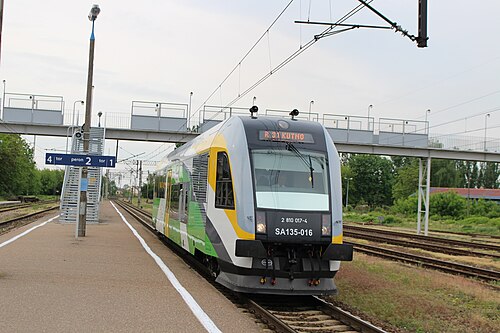
Łódź's link north to the Warsaw–Poznań main line at Kutno, through Zgierz, Ozorków and Łęczyca, part of it doubling as the city's freight ring.
Wikipedia ↗ - Wrocław–Poznań railway
Silesia to Wielkopolska via Leszno, opened in 1856 and now part of TEN-T corridor E59 from Scandinavia south to Vienna and Budapest.
Wikipedia ↗ - Człuchów–Słosinko railway
PKP line 413 across the Pomeranian lakes and forests, capped at 50 km/h: an hour and a half for 84 km.
Wikipedia ↗ - Olsztyn–Ełk railway
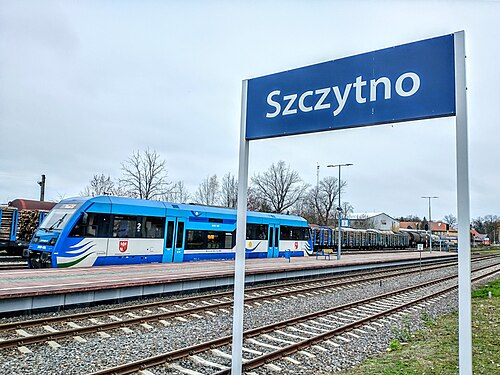
Across Masuria through Szczytno and Pisz: the old East Prussian line from Allenstein to Lyck, still one train's ride end to end.
Wikipedia (PL) ↗ - Kalwaria Zebrzydowska–Bielsko-Biała railway
Built as the Kaiser Ferdinand Northern Railway's Bielitz–Kalwaria local line, running through Wadowice under the Beskids.
Wikipedia (PL) ↗ - EIC Warszawa–Szczecin
Warsaw to the Oder in four and a quarter hours, on the old Prussian main line west through Poznań, then Krzyż and Stargard to Szczecin, where Poland meets the German border.
- IC Warszawa–Lublin
The 1877 Vistula River Railroad east from Warsaw, rebuilt for 160 km/h: under two hours to Lublin’s renaissance old town.
- IC Warszawa–Olsztyn
Off the Gdańsk main line at Działdowo, then through the wooded lake country via Nidzica and Olsztynek into Olsztyn, gateway to Masuria.
- IC Brda
The 1862 Warsaw–Bydgoszcz Railway via the brick-gothic city of Toruń, Copernicus’s birthplace, to the Brda riverside.
- Nadodrzanka
The Nadodrzanka: down the Oder valley through Głogów and Zielona Góra, the quiet 1870s corridor between Silesia and the Baltic.
Wikipedia ↗ - IC Poznań–Gdynia
Across Wielkopolska and Pomerania: Gniezno’s cathedral hill, Bydgoszcz, then the Vistula crossing at Tczew and the Tri-City coast to Gdynia.
- EC Wawel
The EuroCity across Poland: Berlin and the Oder, Wrocław and Opole, the Silesian cities and Kraków, then on east to Przemyśl at the Ukrainian border.
Wikipedia ↗ - IC Warszawa–Terespol
Warsaw east to the Bug on the 1866 Terespol railway, the third line built in Congress Poland, running through Siedlce and Biała Podlaska to the Belarusian frontier.
Wikipedia ↗ - Piła–Szczecin railway
Across Pomerania on a railway the Prussians finished in 1895 and Poland gave up on in 2000: through trains came back to Wałcz and Choszczno in 2012, five pairs a day.
- Szczecin–Świnoujście railway
Szczecin to the Baltic across Wolin island, over the Dziwna and through Międzyzdroje to the ferry berths at Świnoujście, on rails that reached the Świna in 1900.
Wikipedia ↗ - IC Olsztyn–Elbląg
Warmia end to end, Olsztyn through Morąg to Elbląg and the Vistula Lagoon, on a line that reached Olsztyn from Bogaczewo in August 1883.
- Inowrocław–Olsztyn railway
Kuyavia to Masuria across the Vistula at Toruń, then Iława and Ostróda to Olsztyn, on the Prussian trunk that joined Poznań to East Prussia in 1873.
- Sierpc–Nowy Dwór railway
A Mazovian branch line: Sierpc down the Wkra valley to Nasielsk, then Modlin and Nowy Dwór, on a First World War military narrow gauge regauged and opened properly in 1924.
- Lublin–Zamość railway
Lublin south east to Zamość and its Renaissance old town, through Rejowiec and the Wieprz valley, on the section of the Rejowiec to Hrebenne line opened in 1916.
- Dęblin–Łuków railway
Dęblin to Łuków across the Lublin plain, on rails that took sixty years to join up: Łuków reached Stawy in 1876 and the last stretch into Dęblin waited until 1935.
- Kutno–Płock railway
Kutno north to Płock and the Vistula, on a line opened on the last day of 1925, the bridge over the river into the city following in 1938.
- Sierpc–Toruń railway
One of the last railways the Second Republic built: eighty kilometres laid between 1935 and 1937, and the Drwęca bridge at Lubicz was the first in Poland to carry welded girders.
Wikipedia ↗ - Laskowice–Czersk railway
A Prussian act of 20 July 1902 ordered it, and the 55 km from Laskowice to Czersk opened on 2 October 1906; the stretch beyond to Bąk came in 1928 to feed the building of the coal trunk line.
Wikipedia ↗ - Czersk–Tuchola railway
A piece of the coal trunk line built to reach the new port at Gdynia without crossing the Free City of Danzig: the whole Bydgoszcz to Gdynia stretch opened on 9 November 1930.
Wikipedia ↗ - Koleje Dolnośląskie D25
Most of the old Breslau–Berlin trunk, in its 1875 alignment through Żagań: a single Lower Silesian sprinter crosses the Nysa at Zasieki and runs 189 km to Wrocław.
- EuroCity Via Regia
Named for the medieval road it shadows: the EuroCity takes the Oberlausitz company’s line of 1874 and crosses at Horka, a border that carried no scheduled passenger trains for decades.
- IC Łempicka
Lublin to Wrocław the long way round, through Radom, Kielce and Częstochowa, then west across Silesia to Opole and the Oder; the Częstochowa to Kielce link, opened in 1911, was the last piece of the route.
- IC Kasztelan
Kraków to Hrubieszów near the Ukrainian border, by Tarnów, Mielec and Stalowa Wola, then east through Biłgoraj and Zwierzyniec to Zamość and its Renaissance old town; the line from Stalowa Wola to Biłgoraj was only completed in 1976.
- ŁKA Częstochowa–Łódź
From Częstochowa over the line to Chorzew Siemkowice, built in 1939 and used only by freight from 2012 until passenger trains came back in December 2024, then by Zduńska Wola, Łask and Pabianice to Łódź Kaliska.
Wikipedia (PL) ↗ - Polregio Siedlce–Białystok
Through the woods of Podlasie: from Siedlce by Siemiatycze to the junction at Czeremcha and on to Hajnówka at the edge of the Białowieża Forest, then north by Bielsk Podlaski to Białystok; the Siedlce line opened in 1906.
Wikipedia (PL) ↗ - Wrocław–Międzylesie railway
From Lichkov on the Czech border by Międzylesie and the Długopole tunnel down the Nysa Kłodzka valley to Kłodzko, then north by Ziębice and Strzelin to Wrocław; the line through the tunnel opened in 1875.
Wikipedia (PL) ↗

Night train (3)
- Kyiv–Warsaw Sleeper
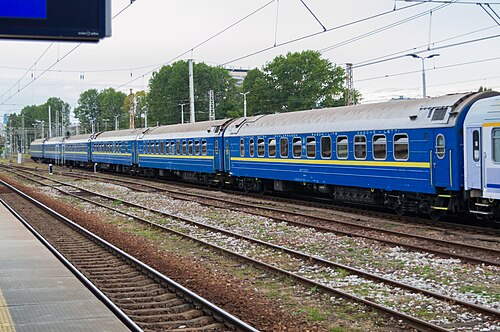
Wartime lifeline to the EU: at the Bug border every carriage is jacked up and its bogies swapped from 1,520 to 1,435 mm gauge while passengers doze.
Wikipedia (UK) ↗ - Chopin
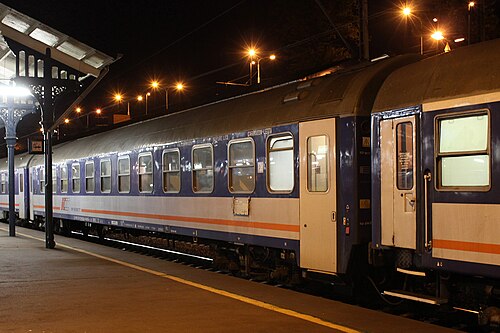
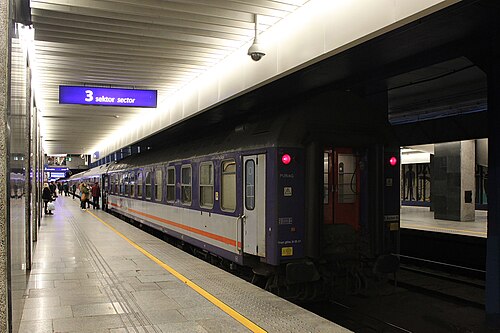
The Chopin sleeper has linked Vienna and Warsaw since at least the 1980s, slipping through the Moravian Gate by night and finishing down Poland’s CMK fast line into the capital before six.
Wikipedia ↗ - EN Slovakia / Chopin
Overnight between two capitals: out of Prague past Pardubice and Olomouc, over the border to Katowice, then the fast Central Trunk line into Warsaw by breakfast.
Scenic (3)
- Kraków–Zakopane
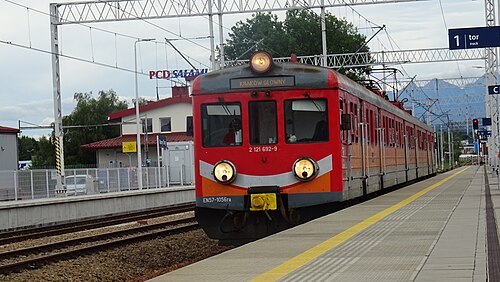
Climbs from Kraków into the Tatra Mountains on the rebuilt line to Zakopane, Poland’s highest town and winter-sports capital.
- Silesian Mountain Railway
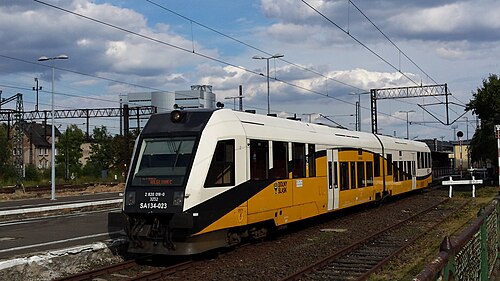
The 1867 Silesian Mountain Railway: through Wałbrzych’s coal valleys and Jelenia Góra, climbing to nearly 700 m at Szklarska Poręba under the Karkonosze.
Wikipedia ↗ - Katowice–Zwardoń railway
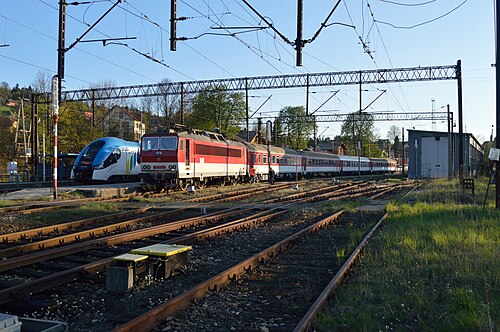
Out of the Silesian coalfield into the Beskids: Katowice through Tychy and Bielsko-Biała to Żywiec and the Slovak border at Zwardoń, a line completed piece by piece to 1912.
Heritage (5)
- Bieszczady Forest Railway
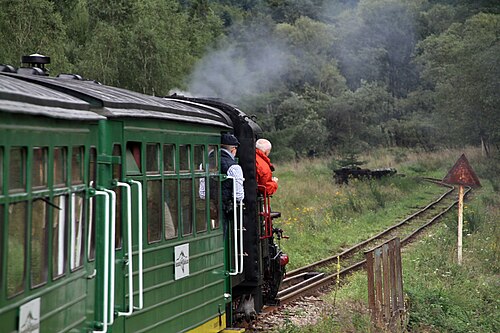
Poland’s highest narrow-gauge line, a former logging railway that now carries over 150,000 riders a year into the Bieszczady wilderness.
Wikipedia ↗ - Wolsztyn Steam
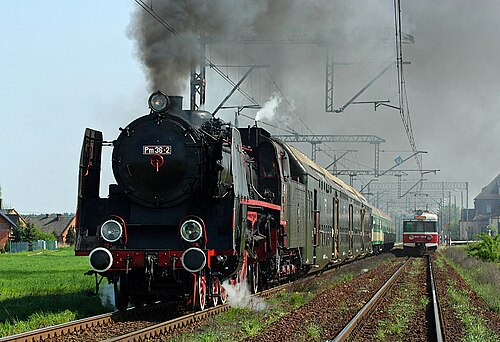
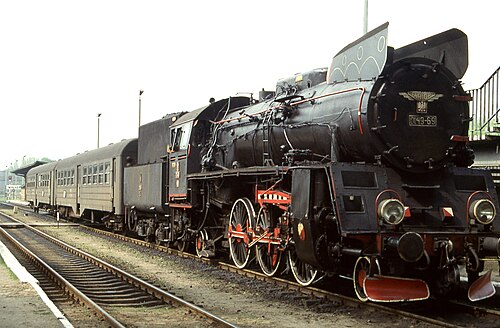
Europe’s last everyday steam: commuters behind a 1948 Pt47 out of the working Wolsztyn roundhouse. An ordinary ticket, an extraordinary train.
Wikipedia (PL) ↗ - Żnin District Railway
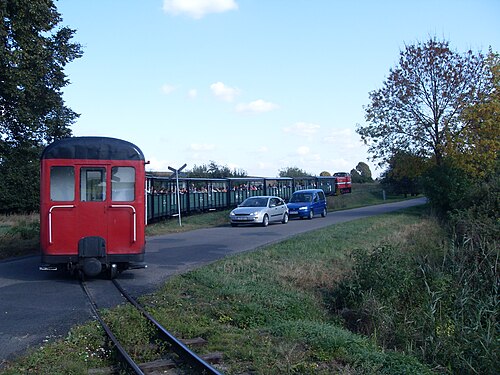
A 600 mm minirailway from 1894 chuffing 12 km through Pałuki to the Iron Age lake fort of Biskupin, where archaeologists commute by narrow gauge.
Wikipedia (PL) ↗ - Nadmorska Kolej Wąskotorowa
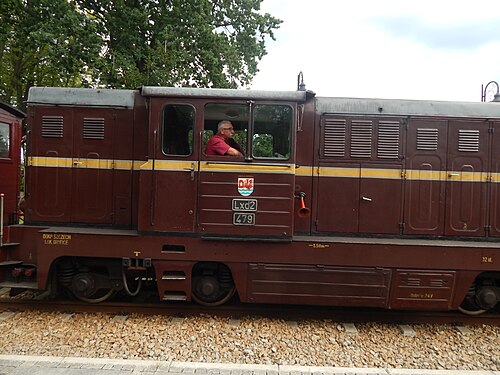
Opened 1896 and still packing 150,000 riders a summer: metre-gauge cars amble from Gryfice to the Baltic cliffs, Poland’s last coastal narrow gauge.
Wikipedia ↗ - Upper Silesian Narrow Gauge
Running since 1853, the world’s oldest continuously operating narrow gauge: 785 mm industrial track turned heritage line across the Silesian coalfield.
Wikipedia ↗
Photos via Wikimedia Commons; each route page credits the author & licence
What is the fastest train in Poland?
The EIP Pendolino, running Warsaw to Kraków at up to 200 km/h. It is one of 58 routes in Poland in this atlas.
Are there night trains in Poland?
Yes, 3 sleeper services in this atlas serve Poland: Kyiv–Warsaw Sleeper (Kyiv – Warsaw), Chopin (Vienna – Warsaw), EN Slovakia / Chopin (Prague – Warsaw).
Can you cross the border by train from Poland?
Yes, 11 of its 58 routes continue into another country: Kyiv–Warsaw Sleeper (Kyiv – Warsaw), Intercity+ (Kyiv – Przemyśl), LTG Link (Vilnius – Warsaw), Chopin (Vienna – Warsaw), among others.
Which is the most scenic railway in Poland?
Poland has 3 scenic or mountain lines in this atlas. The longest is the Silesian Mountain Railway, 157 km.
Cross-border lines continue into
 Train routes in Austria 64 routes
 Train routes in Czechia 33 routes
 Train routes in Germany 144 routes
 Train routes in Lithuania 9 routes
 Train routes in Ukraine 14 routes