
High-speed route
Jingha High-Speed
Beijing → Harbin · China
View on the map →Wikipedia ↗Stations · 30
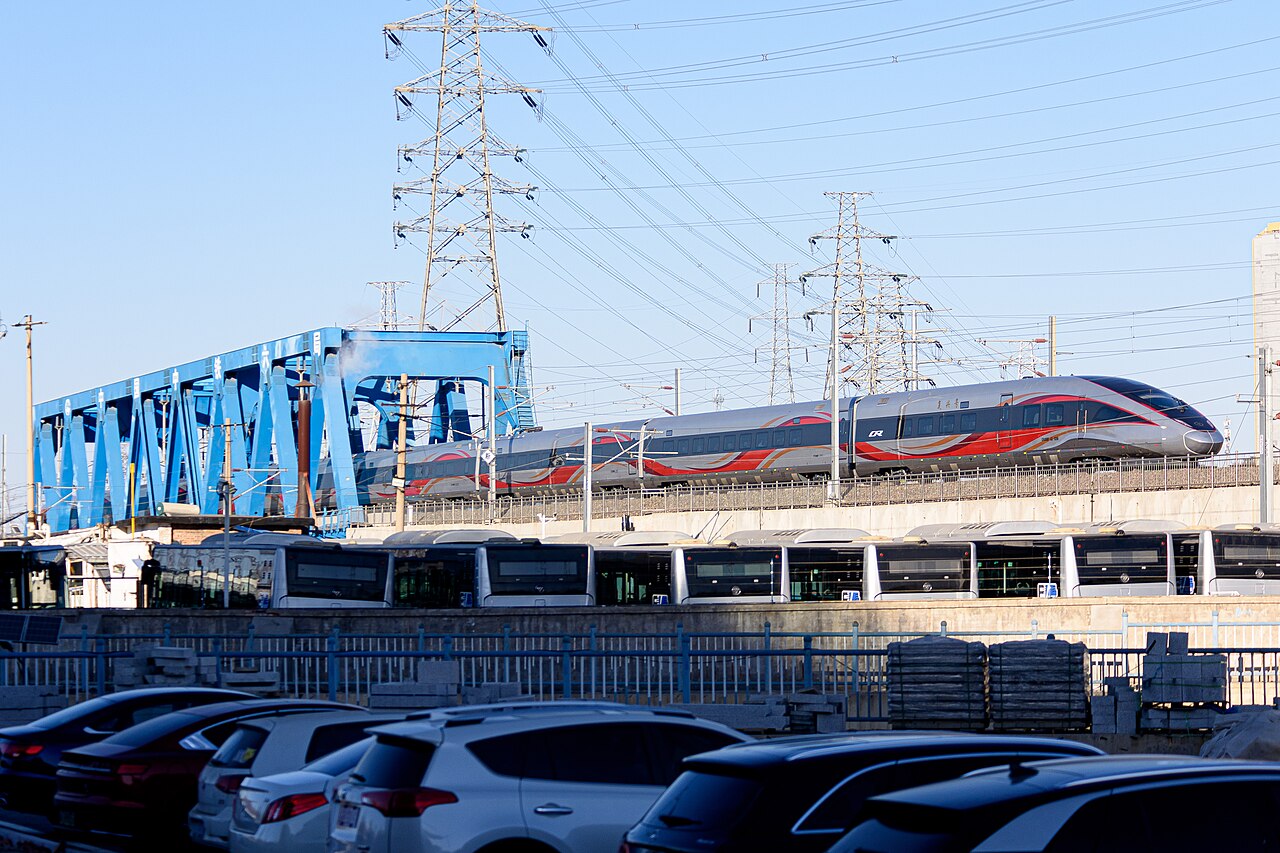
Cold-proof Fuxing sets built for −40 °C sprint to the ice-festival city of Harbin in Manchuria.
Stations
- 0 kmBeijing Chaoyang
- 27 kmShunyi West
- 50 kmHuairou South
- 65 kmMiyun
- 121 kmXinglongxian West
- 165 kmAnjiang
Show 19 more stations
- 191 kmChengde South
- 220 kmChengdexianbei
- 257 kmPingquan North
- 318 kmNiuheliang
- 353 kmKazuo
- 383 kmNailingao
- 419 kmLiaoning Chaoyang
- 457 kmBeipiao
- 505 kmUlanmod
- 537 kmFuxin
- 593 kmHeishan North
- 635 kmXinmin North
- 695 kmShenyang North +1
- 748 kmTieling West
- 789 kmKaiyuan West
- 817 kmChangtu West
- 868 kmSiping East
- 916 kmGongzhuling South
- 971 kmChangchun West
- 1,056 kmDehui West
- 1,114 kmFuyu North
- 1,165 kmShuangcheng North
- 1,205 kmHarbin West +1
- 1,212 kmHarbin +2
The stations on this line, as the Wikipedia article lists them, in order along the line as drawn here, with the distance along it. Not every train stops at every station. A +N after a station: N other routes on this map stop or end there, and the map draws it as a station where lines meet.
How this line was checked
- Checked against OpenStreetMap: the whole line lies on real track, a median 4 m from it
- The operator publishes this line's timetable: China Railway 12306 — a place to look it up, not a check of our drawing
- Wikipedia has an article for this line
Questions and answers
How long is the Jingha High-Speed?
The Jingha High-Speed runs 1,198 km from Beijing to Harbin.
How long does the Jingha High-Speed take?
The fastest scheduled journey is ≈ 5 h for the 1,198 km. That is an average of 240 km/h end to end. The line's top service speed is 350 km/h.
Who runs the Jingha High-Speed?
China Railway, with CR400BF-G “Fuxing”.
How old is the Jingha High-Speed?
The line has been in service since 2021. That is the year the atlas dates it from: for a modern brand running over an older railway, it is the railway's date, not the brand's.
More high-speed routes
- Eurostar
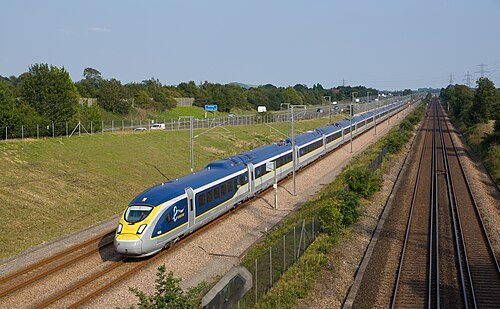
Drops 75 m below the sea through the 50.5 km Channel Tunnel, 37.9 km of it under the seabed, the longest undersea stretch of any rail tunnel.
Wikipedia ↗ - TGV inOui
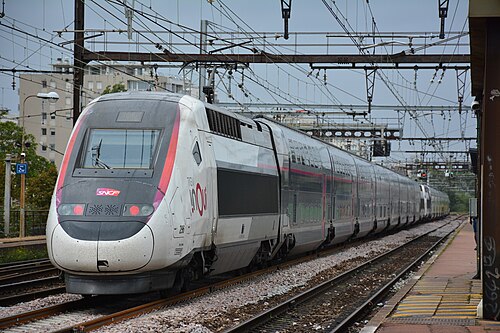
France’s original 1981 LGV forms the first leg; today the TGV holds 320 km/h nearly all the way to the Mediterranean.
Wikipedia ↗ - AVE
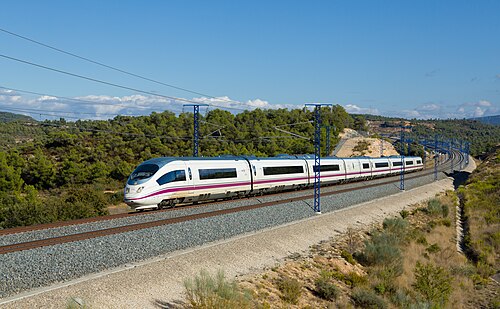
Scheduled at 300 km/h, this line flipped one of the world’s busiest air routes to rail.
Wikipedia ↗ - AVE
Spain’s first AVE, built for Expo ’92 in standard gauge, the line that reset Spanish railways.
Wikipedia ↗
More train routes in China.