
High-speed route
TGV inOui Paris–Marseille
Paris → Marseille · France
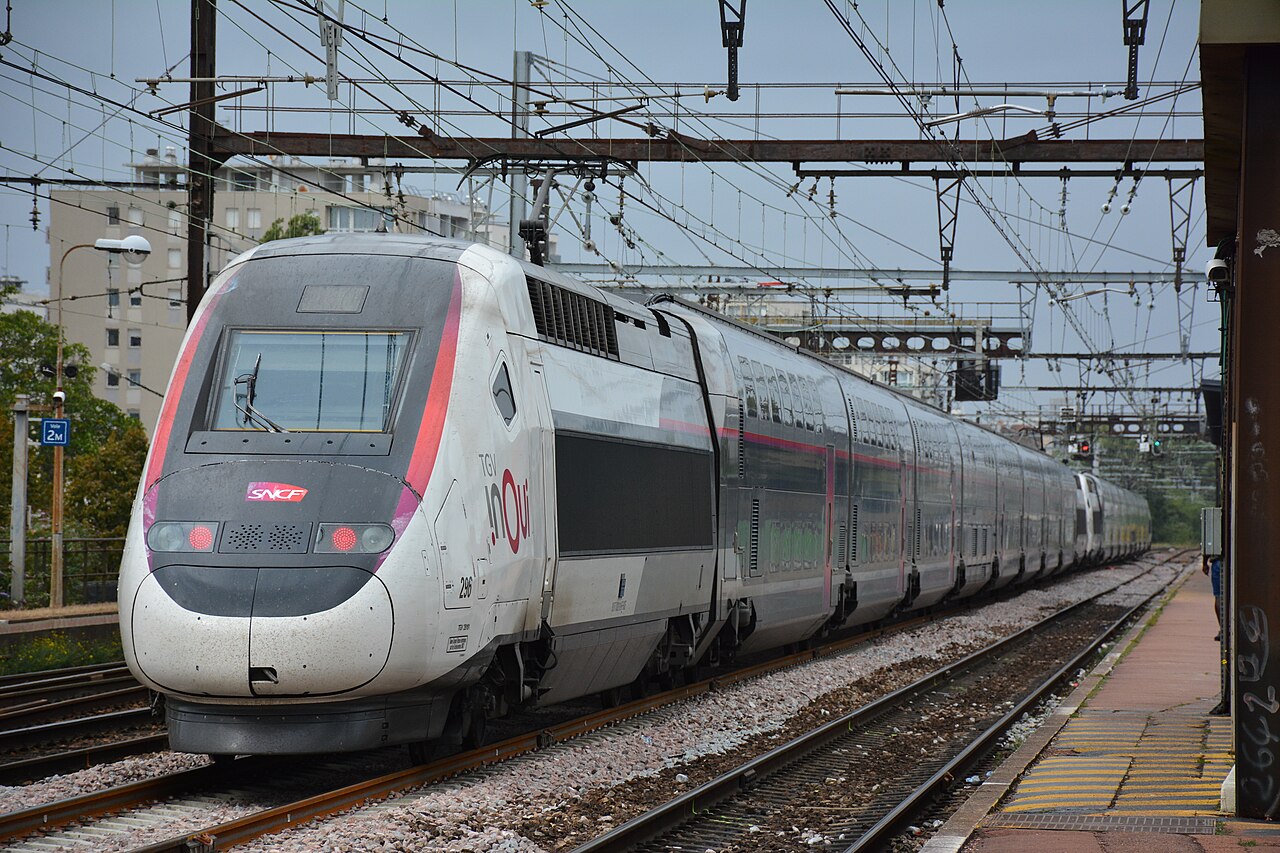
France’s original 1981 LGV forms the first leg; today the TGV holds 320 km/h nearly all the way to the Mediterranean.
This is the corridor where France learned its high-speed craft: the original Ligne à Grande Vitesse out of Paris, later extended down the Rhône to reach the sea in 2001. Burgundy escarpments, cooling towers and hilltop villages flicker past until the garrigue turns silver with olives and the Étang de Berre announces the south. Arrival is pure theatre: Saint-Charles station sits on a bluff, its monumental staircase spilling straight into Marseille’s boisterous streets.
Along the way
- Burgundy escarpments at full speed
- Rhône Valley sprint past Valence
- Avignon and the Provençal garrigue
- Étang de Berre lagoon
- Saint-Charles station’s grand staircase
How this line was checked
- Checked against OpenStreetMap: the whole line lies on real track, a median 12 m from it
- Checked against the running timetable via ÖBB Scotty: our line passes within 27 m of every station TGV 6103 calls at (the planner's own shape was too coarse to measure a line against)
- Wikipedia has an article for this line
- See for yourself: open this line on the map with OpenStreetMap's own railway drawn underneath it
Questions and answers
How long is the TGV inOui?
The TGV inOui runs 750 km from Paris to Marseille.
How long does the TGV inOui take?
The fastest scheduled journey is 3 h 05 min for the 750 km. That is an average of 243 km/h end to end. The line's top service speed is 320 km/h.
Who runs the TGV inOui?
SNCF Voyageurs, with TGV Duplex.
How old is the TGV inOui?
The line has been in service since 1981. That is the year the atlas dates it from: for a modern brand running over an older railway, it is the railway's date, not the brand's.
How often does the TGV inOui run?
Roughly hourly, more at peak (16+ direct daily).
More high-speed routes
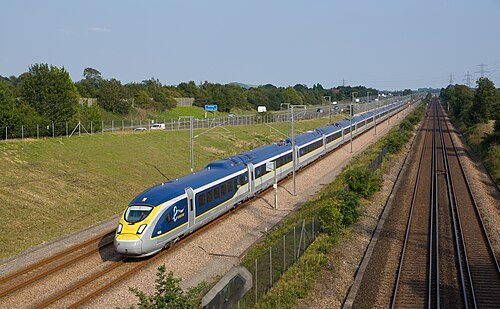
- Eurostar
Drops 75 m below the sea through the 50.5 km Channel Tunnel, 37.9 km of it under the seabed, the longest undersea stretch of any rail tunnel.
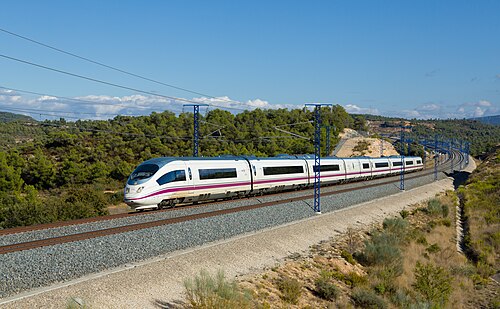
Wikipedia ↗ - AVE
Scheduled at 300 km/h, this line flipped one of the world’s busiest air routes to rail.
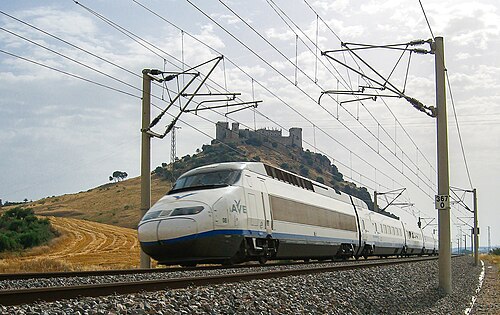
Wikipedia ↗ - AVE
Spain’s first AVE, built for Expo ’92 in standard gauge, the line that reset Spanish railways.
Wikipedia ↗ - ICE Sprinter
The €10bn VDE 8 project: 26 tunnels and 37 viaducts through the Thuringian Forest halved the Berlin–Munich journey.
Wikipedia ↗
More train routes in France.
Planning this trip? Journey time & direct trains: Marseille → Paris · Paris → Marseille.