
🇨🇳 Country
Train routes in China
58 routes · high-speed 36 · classic 8 · night train 8 · scenic 5 · heritage 1
58 routes cross China in the World Train Map atlas. The longest is the Hong Kong–Beijing High-Speed Sleeper at 2,439 km; the fastest is the Shanghai Maglev, running up to 431 km/h; the oldest line dates to 1881. Every route links to its facts, photo and story, and to the interactive world map.
Open the world railway map →High-speed (36)
- Jinghu High-Speed
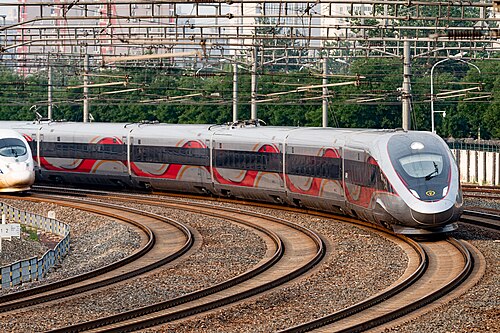
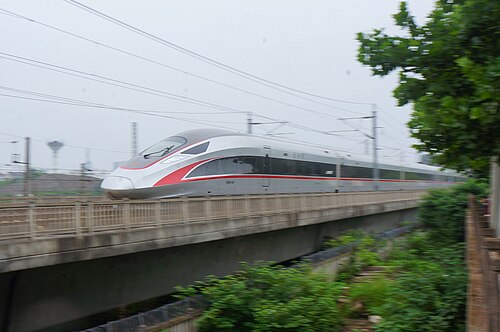
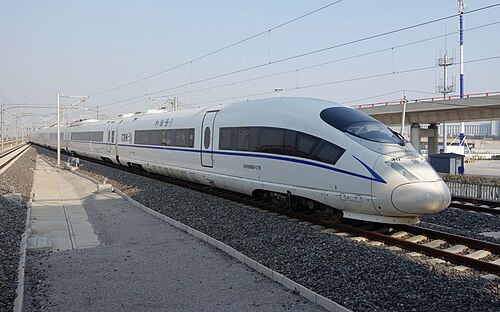
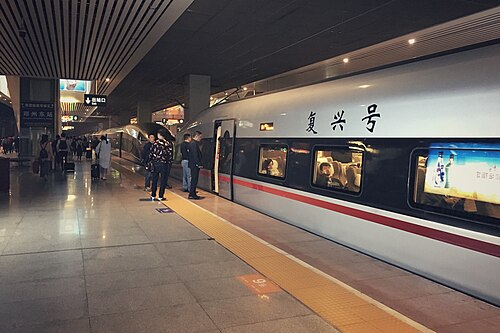
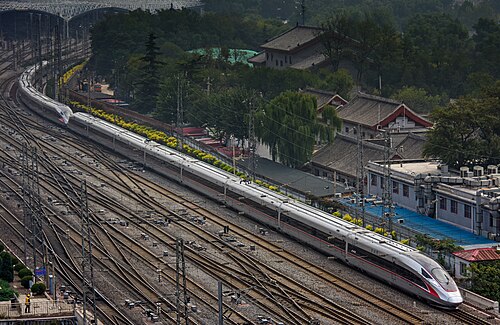
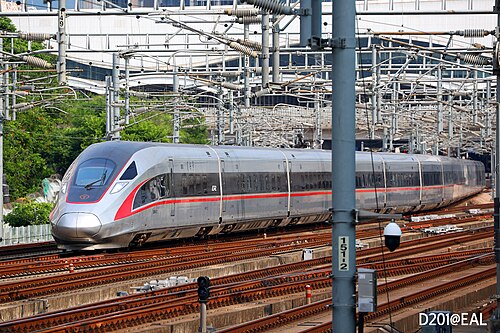
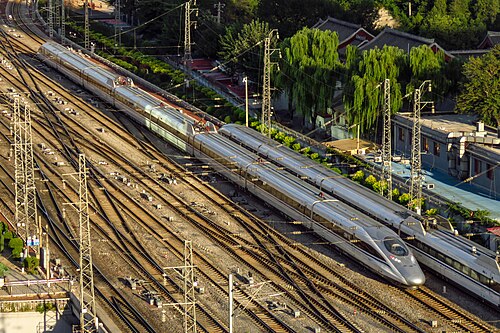
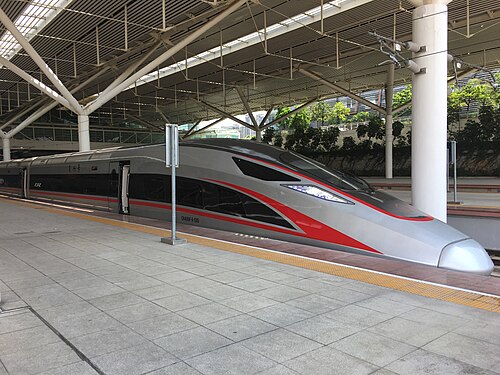
The world’s fastest scheduled trains: 350 km/h Fuxing sets covering 1,318 km in under four and a half hours.
Wikipedia ↗ - Jingguang High-Speed
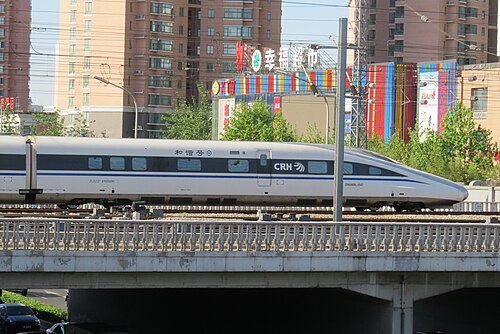
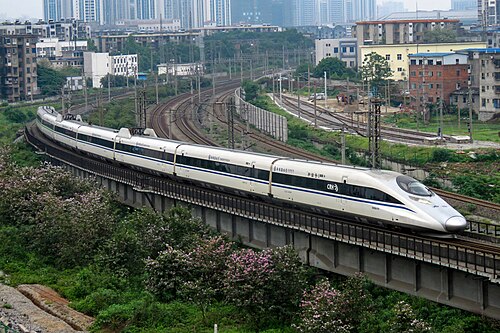
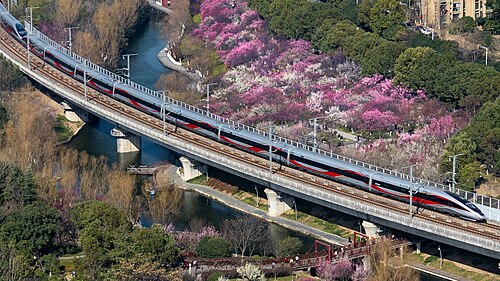
When it opened in 2012 it was the longest high-speed line in the world: 2,230 km from the Yellow River plain to the Pearl River Delta.
Wikipedia ↗ - Jingha High-Speed
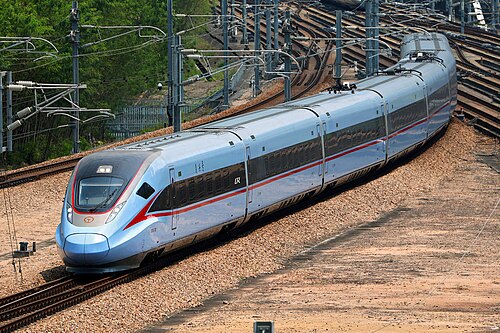
Cold-proof Fuxing sets built for −40 °C sprint to the ice-festival city of Harbin in Manchuria.
Wikipedia ↗ - Shanghai Maglev
The fastest commercial train on the planet: 431 km/h with no wheels, floating on magnets.
Wikipedia ↗ - Lanxin High-Speed
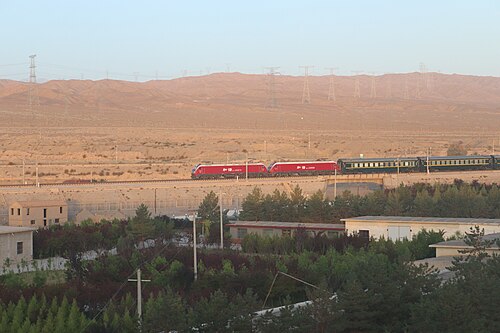
The world’s longest desert high-speed line: wind-walled against Gobi gales on the old Silk Road.
Wikipedia ↗ - Shanghai–Kunming HSR
China’s longest east–west high-speed line: 2,252 km from the Bund to the Yunnan plateau, vaulting Guizhou’s canyons on some of the world’s highest bridges.
Wikipedia ↗ - Southeast Coastal HSR
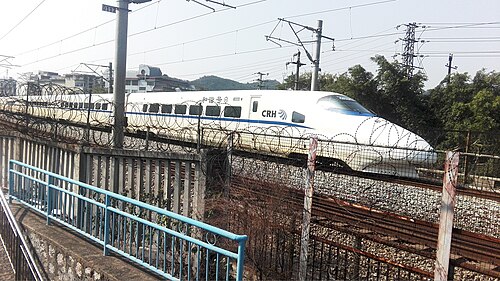
D-trains skim 1,450 km of fishing ports, tea hills and sea bridges between the Yangtze and Pearl deltas. China’s window seat on the East China Sea.
Wikipedia ↗ - Chengdu–Chongqing HSR
Fuxings at 350 km/h stitch the twin megacities of the southwest into 62 minutes: hotpot in Chengdu, riverside neon in Chongqing before it cools.
Wikipedia ↗ - Xi’an–Chengdu HSR
The first bullet line across the Qinling: 127 km of tunnels under the range that divides north and south China, Terracotta Army to pandas in three hours.
Wikipedia ↗ - Hainan Ring HSR
The world’s only circular high-speed railway: 653 km looping a tropical island past surf beaches, rocket launch pads and coconut groves.
Wikipedia ↗ - Guangzhou–Hong Kong XRL
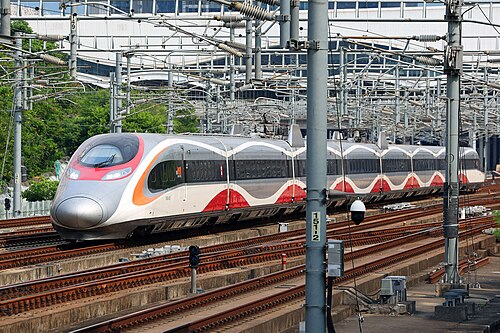
Under the Pearl River Delta in 47 minutes: dim sum in Guangzhou, and the harbour skyline rising over West Kowloon’s station roof by mid-morning.
Wikipedia ↗ - Beijing–Zhangjiakou HSR
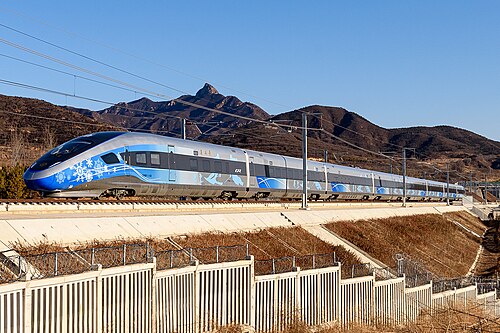
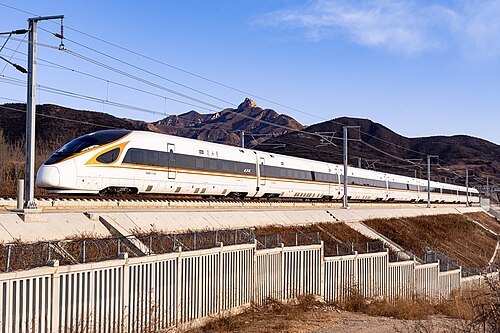
The world’s first autonomous 350 km/h railway, built for the 2022 Winter Games above Zhan Tianyou’s 1909 line: one station lies 102 m beneath the Great Wall.
Wikipedia ↗ - Harbin–Dalian HSR
The world’s first alpine high-speed line: 921 km from Siberian-cold Harbin to the ice-free port of Dalian on EMUs winterised for −40 °C.
Wikipedia ↗ - Guiyang–Guangzhou HSR
Eighty-three percent tunnel and bridge: 238 bores through Guizhou’s karst down to the Pearl Delta, four hours where the road once took a day and a night.
Wikipedia ↗ - Zhengzhou–Xi’an HSR
One of China’s first mountain bullet lines, boring through the loess hills of the Yellow River valley to link Zhengzhou with the ancient capital Xi’an in about two hours.
Wikipedia ↗ - Datong–Xi’an HSR
Runs the length of Shanxi from the Datong grottoes past walled Pingyao, crossing the Yellow River into Shaanxi to reach Xi’an.
Wikipedia ↗ - Nanning–Guangzhou HSR
Follows the Xijiang (West River) valley out of Guangxi down to the Pearl River Delta, linking Nanning with Guangzhou.
Wikipedia ↗ - Zhengzhou–Chongqing HSR
A 1,068 km route crossing the Funiu and Daba ranges, cutting Zhengzhou–Chongqing from about eight hours to under four and a half.
Wikipedia ↗ - Fuzhou–Xiamen HSR
China’s first 350 km/h cross-sea railway, vaulting three bays on the Taiwan Strait coast to link Fuzhou and Xiamen in 55 minutes.
Wikipedia ↗ - Jinan–Qingdao HSR
A 350 km/h dash across Shandong from the provincial capital Jinan to the seaside beer city of Qingdao.
Wikipedia ↗ - Hefei–Fuzhou HSR
Nicknamed China’s most beautiful high-speed line, curving past Mount Huangshan and the Wuyi Mountains through Jiangnan tea country.
Wikipedia ↗ - Shitai HSR
Burrows under the Taihang range through the 27.8 km Taihang Tunnel, once China’s longest railway tunnel, to join Hebei and Shanxi.
Wikipedia ↗ - Guiyang–Nanning HSR
350 km/h through Guizhou–Guangxi karst on a line that is mostly bridge and tunnel, passing the Libo World Heritage limestone scenery.
Wikipedia ↗ - Nanning–Kunming HSR
Crosses the folded uplands and Nanpan River gorges between Guangxi and Yunnan’s capital, Kunming.
Wikipedia ↗ - Chengdu–Guiyang HSR
Billed as the first high-speed railway through such deeply folded karst, spanning Jinsha River gorges on some of the world’s highest rail bridges.
Wikipedia ↗ - Yinchuan–Xi’an HSR
The first bullet line to reach Ningxia, climbing the Loess Plateau and Ziwuling forests from Yellow River Yinchuan to Xi’an.
Wikipedia ↗ - Yinlan High-Speed
Two halves opened three years apart to the day, 29 December 2019 and 2022, and Yinchuan to Lanzhou fell to 2 h 56 min across the loess of Ningxia and Gansu.
Wikipedia ↗ - Zhengzhou–Jinan HSR
A fast diagonal across the North China Plain that crosses the Yellow River to knot together two provincial capitals.
Wikipedia ↗ - Baoji–Lanzhou HSR
The final link of the east–west corridor to Lanzhou, over 90% bridge and loess tunnel, tracing the old Silk Road past Tianshui.
Wikipedia ↗ - Zhanghu HSR
Crosses the Inner Mongolian plateau via Ulanqab; linked to the Beijing–Zhangjiakou line it put Hohhot about two hours from Beijing.
Wikipedia ↗ - Beijing–Tianjin Intercity
China’s first high-speed line, opened for the 2008 Olympics: 350 km/h across the North China Plain, capital to port city in half an hour.
Wikipedia ↗ - Shanghai–Chengdu HSR
The great east–west artery takes in Nanjing, Wuhan and the Three Gorges country, reaching Sichuan’s capital from the coast in a single day.
Wikipedia ↗ - Hangzhou–Huangshan HSR
Dubbed China’s most beautiful high-speed line, it slips through tea hills and water towns from West Lake to the granite of Yellow Mountain.
Wikipedia ↗ - Guiyang–Chongqing HSR
Almost entirely bridge and tunnel, this 2018 line vaults the karst gorges of Guizhou to join two of the mountain south-west’s biggest cities.
Wikipedia ↗ - Shanghai–Hangzhou HSR
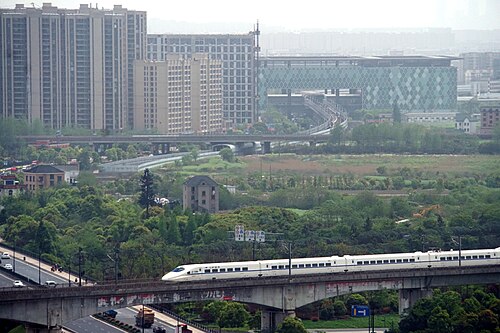
A 45-minute dash from the metropolis to West Lake, the willow-lined water garden that has drawn Chinese poets for a thousand years.
Wikipedia ↗ - Chuanqing Railway
China’s mountain railway to fairyland: 200 km/h from the Chengdu plain up the Min valley to Huangshengguan, the new gateway station for Jiuzhaigou and Huanglong.
Wikipedia ↗


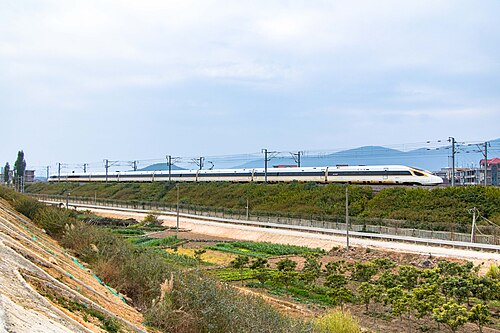
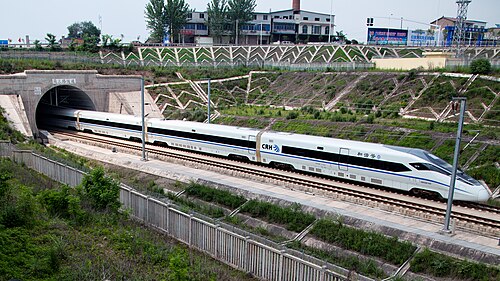
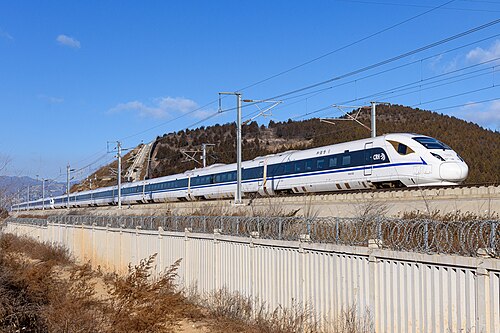
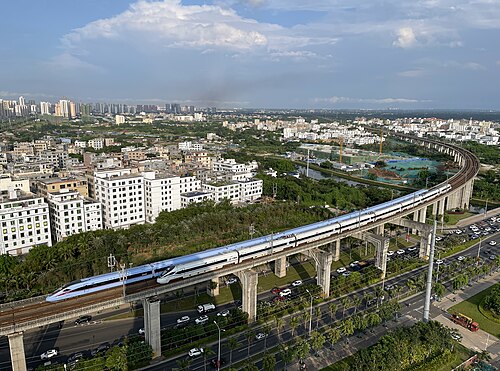



Classic (8)
- Lanxin Railway
Over Wushaoling at 3,000 m, down the Hexi Corridor past Jiayuguan and along the Tianshan to Turpan: the 1962 railway that first joined Xinjiang to the network.
Wikipedia ↗ - Laos–China Railway
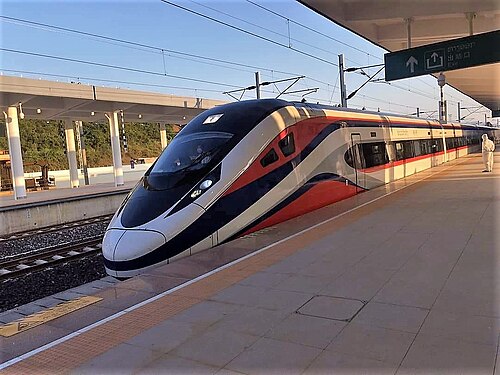
Punched through jungle karst in 167 tunnels, it gave landlocked Laos its first real railway.
Wikipedia ↗ - Chengdu–Kunming Railway
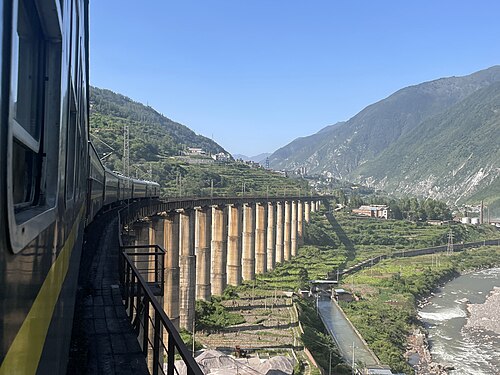
The impossible mountain line of 1970: 427 tunnels and 991 bridges through the Daliangshan, where 5-yuan slow trains still double as the Yi villages’ market bus.
Wikipedia ↗ - Longhai Railway
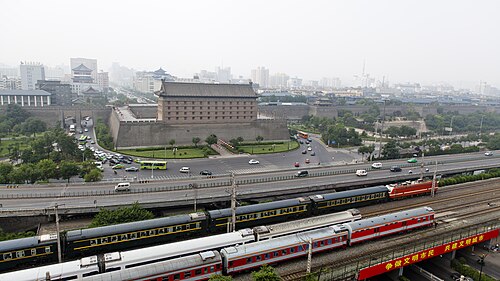
China’s east–west trunk, begun at Kaifeng in 1905 and forty-eight years reaching Lanzhou: the high-speed lines beside it were built to take its passengers off it.
Wikipedia ↗ - Chengdu–Ya’an Railway
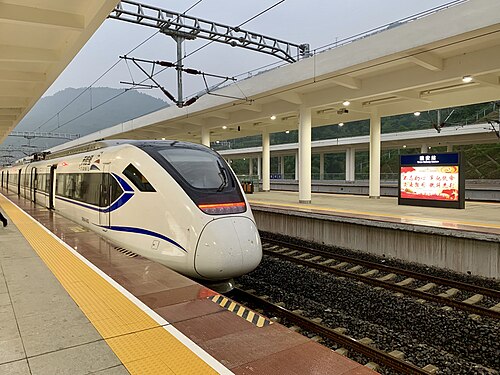
The first completed stretch of the epic Sichuan–Tibet railway, heading west from Chengdu along the old Tea-Horse Road toward the plateau.
Wikipedia ↗ - Lanzhou–Chongqing Railway
Twenty years in the building through the folded Qinling ranges: hundreds of tunnels that finally gave Gansu a fast way down to the Yangtze.
Wikipedia ↗ - Binsui Line
The eastern arm of the old Chinese Eastern Railway, running provisionally from November 1901 and opened properly on 14 July 1903; ten hours from Harbin to the Russian border at Suifenhe.
Wikipedia ↗ - Jingha Railway
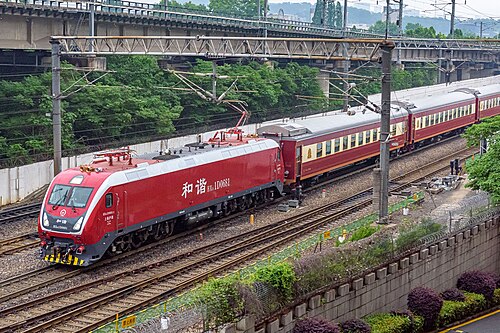
Its Tangshan–Tianjin end opened in 1881 as the Kaiping Tramway and is the oldest railway still working in China; the Z15 runs the whole 1,249 km overnight in ten hours.
Wikipedia ↗


Night train (8)
- Trans-Mongolian
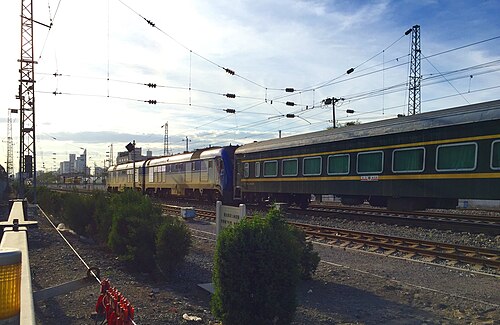
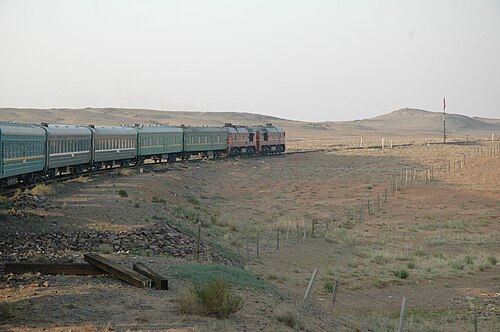
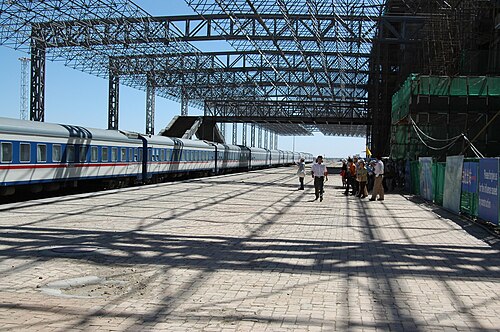
The Trans-Mongolian’s Gobi crossing: gers, camels, and a bogie change at the Chinese border, where every coach is jacked up for the narrower gauge.
Wikipedia ↗ - Hong Kong–Beijing High-Speed Sleeper
Fuxing sleeper EMUs leave Kowloon’s skyline at dusk and cross five provinces overnight, rolling into Beijing West before seven in the morning.
- Southern Xinjiang Railway
All-night sleepers skirt the Tian Shan and the Taklamakan’s rim to Kashgar, the last great Silk Road bazaar before the Pamirs.
Wikipedia ↗ - Harbin–Mohe Snow Country Train
The “Snow Country Train” heads 17 hours north to China’s northernmost station at Mohe, where −40 °C winters, frost forests and the odd aurora reward the ride.
- Binzhou Railway
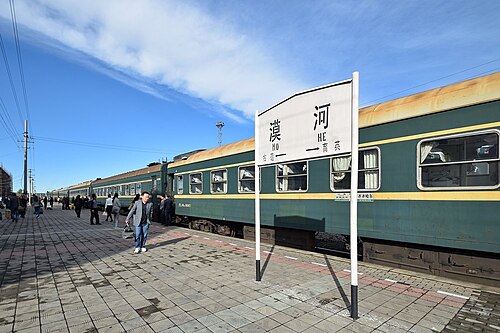
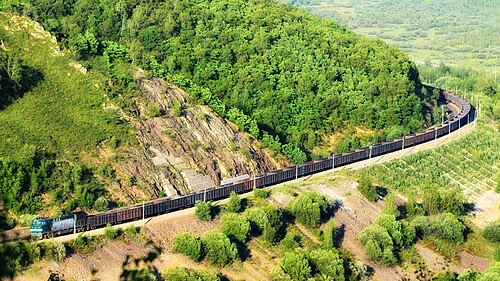
The Chinese Eastern Railway’s west arm, working since 1902: over the Greater Khingan to the Russian border at Manzhouli, where the Trans-Manchurian crosses to Zabaikalsk.
Wikipedia ↗ - Dunhuang Sleeper Y667/668
The branded “Dunhuang” sleeper leaves Lanzhou at 18:00 and follows the Hexi Corridor’s Great Wall forts overnight, arriving near the Mogao caves by dawn.
Wikipedia ↗ - Golmud–Korla Railway
Opened 2020 across the Altun Shan between Qinghai and Xinjiang: 1,206 km of salt flats, desert and near-total emptiness — one of the loneliest overnight rides on Earth.
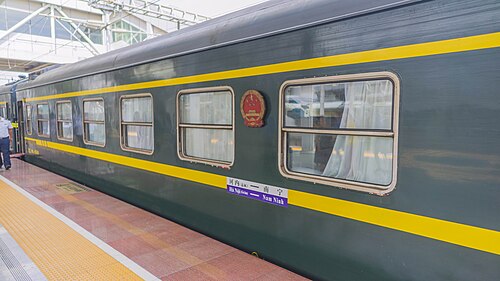
Wikipedia ↗ - Nanning–Hanoi International
Out of Nanning by night through Chongzuo and Pingxiang, over the border at Đồng Đăng, down to Gia Lâm in Hanoi: through since 1955, stopped in 2020, running again from 25 May 2025.
Wikipedia ↗
Scenic (5)
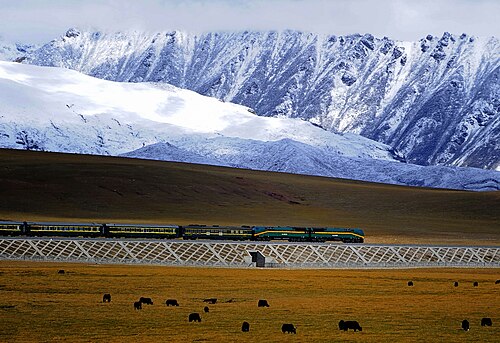
- Qinghai–Tibet Railway
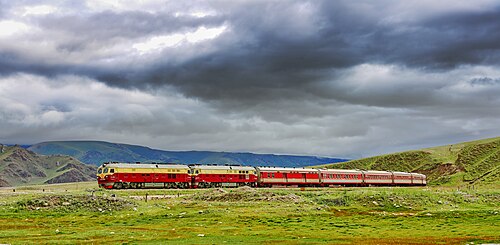
The roof-of-the-world railway: 5,072 m over the Tanggula Pass on permafrost, with oxygen piped to every seat.
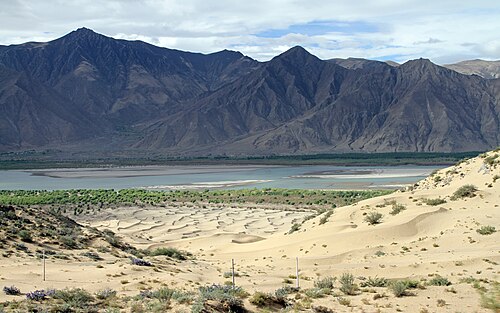
Wikipedia ↗ - Lhasa–Nyingchi Railway
Oxygen-fed Fuxings trace the Yarlung Tsangpo at 3,500 m, crossing the great river 16 times between Lhasa and the peach orchards of Nyingchi.
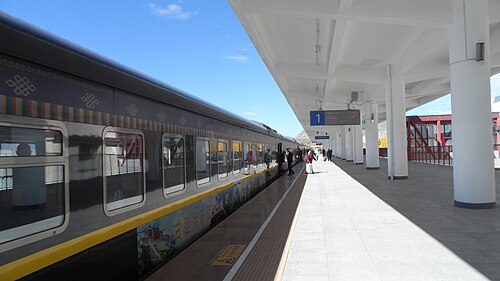
Wikipedia ↗ - Lhasa–Shigatse Railway
A high-altitude spur off the Qinghai–Tibet line, tunnelling through the mountains to trace the Yarlung Tsangpo canyon to Tibet’s second city.
Wikipedia ↗ - Dali–Lijiang Railway
Climbs from Dali’s Erhai Lake toward the Jade Dragon Snow Mountain and the old town of Lijiang, nearly all on bridges and through tunnels.
Wikipedia ↗ - Hotan–Ruoqiang Railway
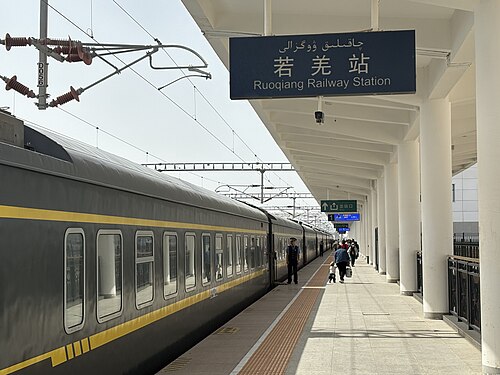
The 2022 desert line that closed the world’s first rail loop around a sand sea — 825 km along the Taklamakan’s southern rim on viaducts built to let the dunes blow through.
Wikipedia ↗
Heritage (1)
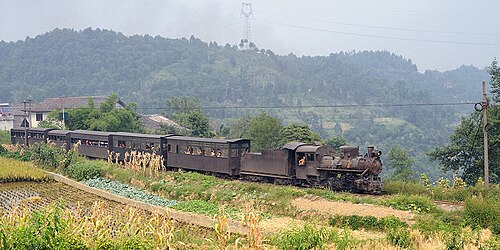
- Jiayang Steam Train
One of the world’s last everyday steam railways: C2 engines built for 1950s coal pits still haul villagers past rapeseed terraces for pocket change.
Wikipedia ↗
Photos via Wikimedia Commons — each route page credits the author & licence
What is the fastest train in China?
The Shanghai Maglev, running Shanghai to Pudong Airport at up to 431 km/h. It is one of 58 routes in China in this atlas.
Are there night trains in China?
Yes — 8 sleeper services in this atlas serve China: Trans-Mongolian (Ulaanbaatar – Beijing), Hong Kong–Beijing High-Speed Sleeper (Hong Kong – Beijing), Southern Xinjiang Railway (Urumqi – Kashgar), Harbin–Mohe Snow Country Train (Harbin – Mohe), and others.
Can you cross the border by train from China?
Yes — 5 of its 58 routes continue into another country: Laos–China Railway (Kunming – Vientiane), Trans-Mongolian (Ulaanbaatar – Beijing), Hong Kong–Beijing High-Speed Sleeper (Hong Kong – Beijing), Guangzhou–Hong Kong XRL (Guangzhou – Hong Kong), among others.
Which is the most scenic railway in China?
China has 5 scenic or mountain lines in this atlas. The longest is the Qinghai–Tibet Railway, 1,956 km.
Cross-border lines continue into
- 🇭🇰 Train routes in Hong Kong 3 routes
- 🇱🇦 Train routes in Laos 2 routes
- 🇲🇳 Train routes in Mongolia 3 routes
- 🇻🇳 Train routes in Vietnam 6 routes