
Classic route
Kaiji
Tokyo (Shinjuku) → Kofu · Japan
View on the map →Wikipedia ↗Stations · 38
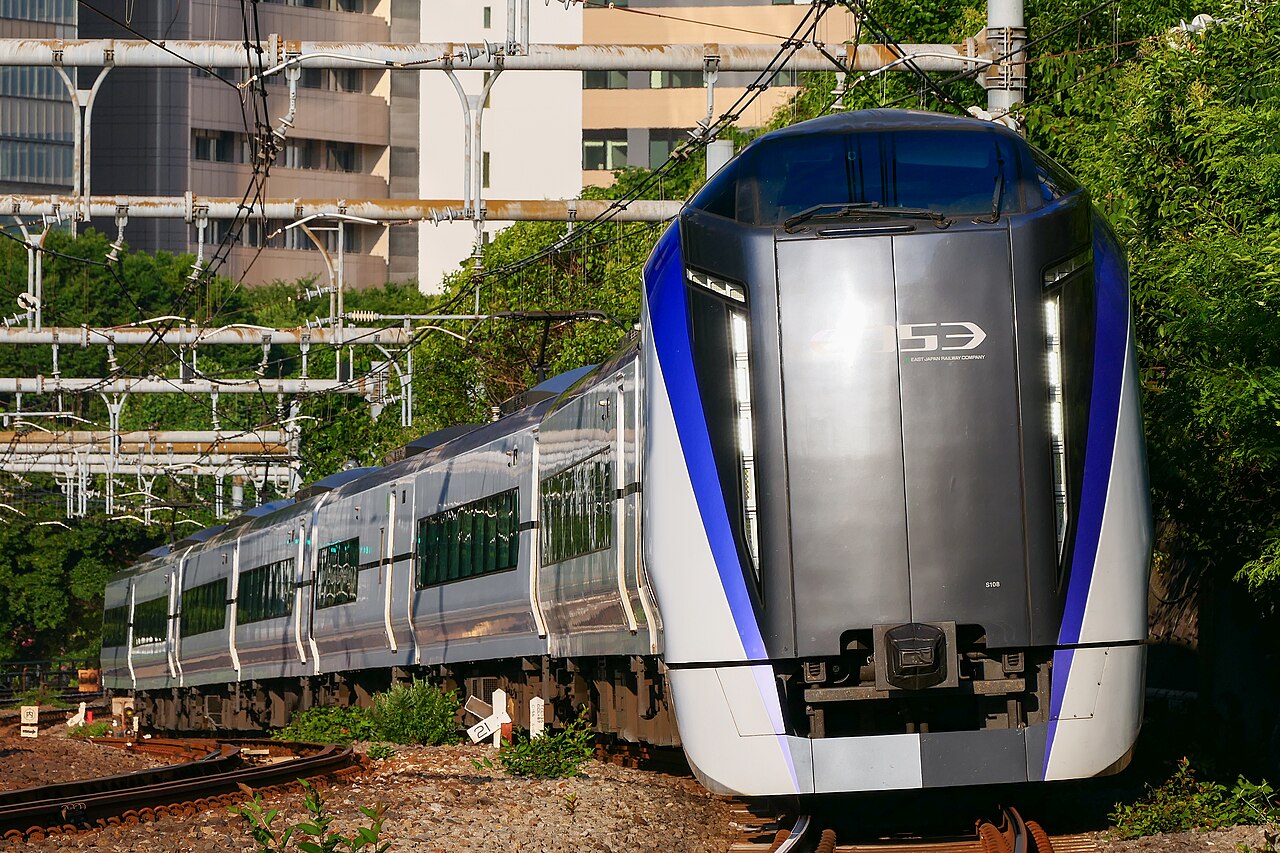
Chuo Line express using the E353’s active tilt to swing through the mountain-walled Katsura valleys up to the vineyard capital of Kofu.
Stations
- 0 kmShinjuku +2
- 4 kmNakano
- 6 kmKōenji
- 7 kmAsagaya
- 9 kmOgikubo
- 10 kmNishi-Ogikubo
Show 27 more stations
- 12 kmKichijoji
- 14 kmMitaka
- 15 kmMusashi-Sakai
- 17 kmHigashi-Koganei
- 19 kmMusashi-Koganei
- 21 kmKokubunji
- 22 kmNishi-Kokubunji
- 24 kmKunitachi
- 27 kmTachikawa +1
- 30 kmHino
- 33 kmToyoda
- 37 kmHachioji +1
- 40 kmNishi-Hachioji
- 43 kmTakao
- 52 kmSagamiko
- 56 kmFujino
- 59 kmUenohara
- 63 kmShiotsu
- 67 kmYanagawa
- 71 kmTorisawa
- 74 kmSaruhashi
- 77 kmOtsuki +1
- 83 kmHatsukari
- 89 kmSasago
- 94 kmKai-Yamato
- 100 kmKatsunumabudokyo
- 104 kmEnzan +1
- 107 kmHigashi-Yamanashi
- 109 kmYamanashishi +1
- 112 kmKasugaicho
- 115 kmIsawa-Onsen +1
- 121 kmKofu +1
The stations OpenStreetMap lists for this service, in order, with the distance along the line as drawn here. A train may skip some of them. A +N after a station: N other routes on this map stop or end there, and the map draws it as a station where lines meet.
How this line was checked
- Line drawn from OpenStreetMap relation 9069258 — the same nodes OpenStreetMap holds for this railway, thinned to within under 25 m of them
- Checked against OpenStreetMap: the whole line lies on real track, a median 5 m from it
- The operator publishes this line's timetable: JR East — a place to look it up, not a check of our drawing
- Wikipedia has an article for this line
- See for yourself: open this line on the map with OpenStreetMap's own railway drawn underneath it
Questions and answers
How long is the Kaiji?
The Kaiji runs 134 km from Tokyo (Shinjuku) to Kofu.
How long does the Kaiji take?
The fastest scheduled journey is 1 h 30 min for the 134 km. That is an average of 89 km/h end to end. The line's top service speed is 130 km/h.
Who runs the Kaiji?
JR East, with E353 series.
How old is the Kaiji?
The line has been in service since 1988. That is the year the atlas dates it from: for a modern brand running over an older railway, it is the railway's date, not the brand's.
More classic routes
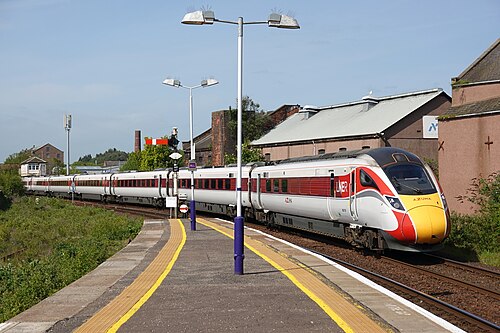
- LNER Azuma
The Flying Scotsman’s route since 1862: and where Mallard set the never-beaten steam record of 203 km/h in 1938.
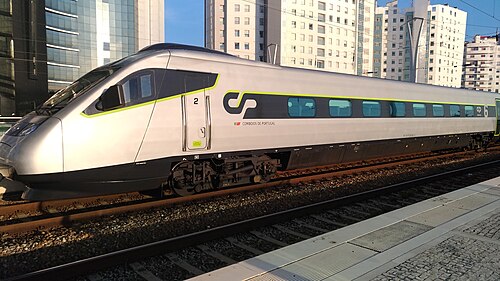
Wikipedia ↗ - Alfa Pendular
A tilting Pendolino leaning through the curves of the 19th-century Linha do Norte between Portugal’s two great cities.
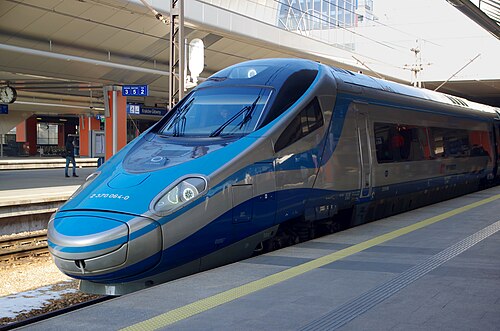
Wikipedia ↗ - EIP Pendolino
Rides Poland’s 1970s Central Main Line (CMK), engineered decades ahead of its time and now being upgraded to 250 km/h.
Wikipedia ↗ - Railjet
Follows the old Orient Express alignment down the Danube plain: centre to centre faster than any flight.
Wikipedia ↗
More train routes in Japan.