
🇯🇵 Country
Train routes in Japan
82 routes · high-speed 9 · classic 22 · night train 1 · scenic 35 · heritage 7 · mountain 5 · luxury 3
82 routes cross Japan in the World Train Map atlas. The longest is the Train Suite Shiki-shima at 1,522 km; the fastest is the Hayabusa, running up to 320 km/h; the oldest line dates to 1898. Every route links to its facts, photo and story, and to the interactive world map.
Open the world railway map →High-speed (9)
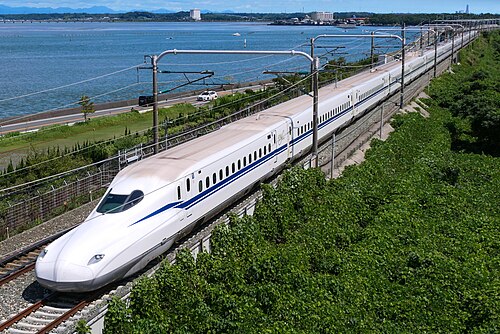
- Tokaido Shinkansen
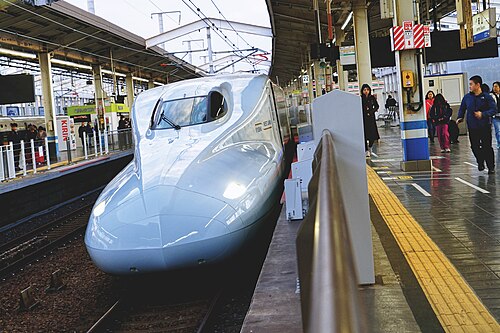
The original bullet train, opened for the 1964 Olympics: the world’s busiest high-speed line, with departures every few minutes past Mount Fuji.
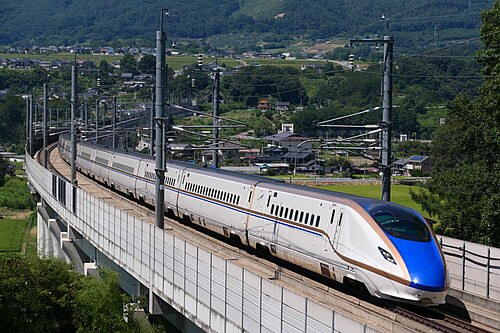
Wikipedia ↗ - Hokuriku Shinkansen
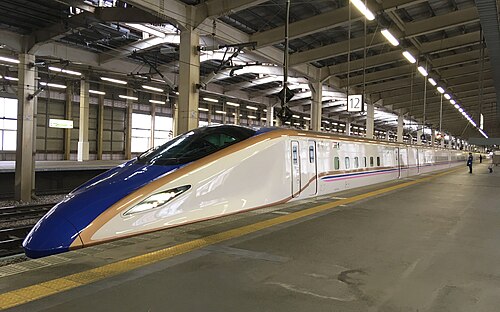
Over the Japanese Alps to the samurai gardens of Kanazawa: copper-and-blue E7s built for deep snow country.
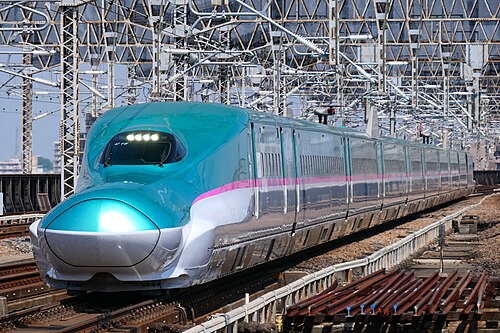
Wikipedia ↗ - Hayabusa
Japan’s fastest trains dive beneath the sea through the 53.9 km Seikan Tunnel to reach Hokkaido.
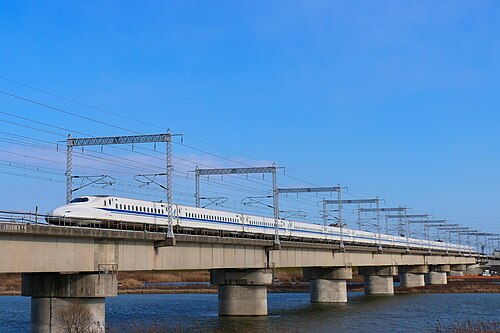
Wikipedia ↗ - Sanyo Shinkansen
The Inland Sea corridor past Himeji Castle and Hiroshima, and the home turf of the needle-nosed 500 Series.
Wikipedia ↗ - Kyushu Shinkansen
Down the volcanic spine of Kyushu toward Sakurajima’s smoking cone: mostly inside tunnels, all speed.
Wikipedia ↗ - Joetsu Shinkansen
Dives under the Tanigawa range into Kawabata’s snow country. Tokyo to metres-deep Echigo-Yuzawa powder and Niigata’s sake coast in under ninety minutes.
Wikipedia ↗ - Akita Shinkansen
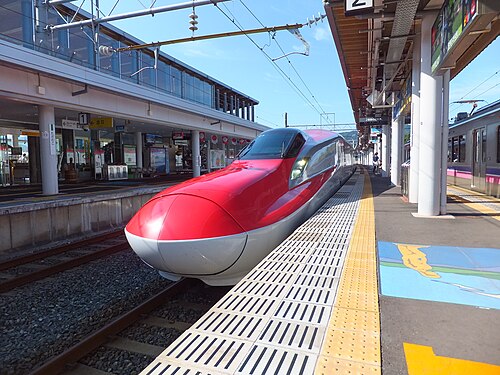
Crimson “Komachi” units ride the Hayabusa at 320 km/h to Morioka, then swap to single-track mountain rails past Lake Tazawa: a bullet train on a branch-line stage.
Wikipedia ↗ - Yamagata Shinkansen
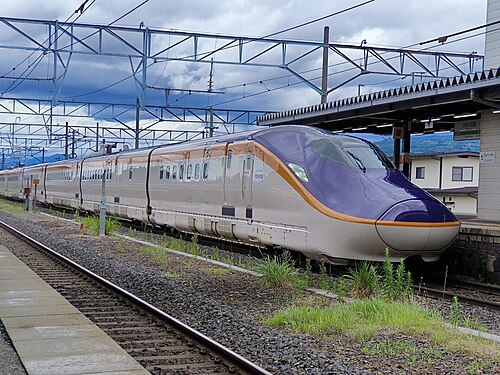
Japan’s first mini-shinkansen: beyond Fukushima the “Tsubasa” runs re-gauged valley rails below Zao’s slopes into cherry and soba country.
Wikipedia ↗ - Nishi-Kyushu Shinkansen
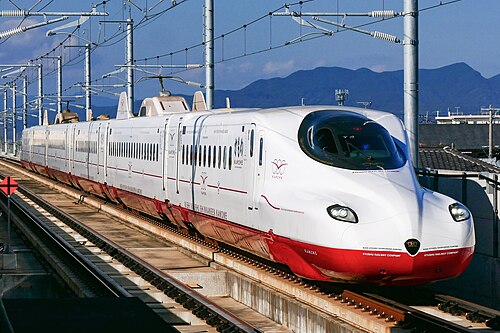
Japan’s newest and shortest bullet line. The white-and-red “Kamome” skims Omura Bay to Nagasaki while politics still debates the missing link to Hakata.
Wikipedia ↗
Classic (22)
- Limited Express Azusa
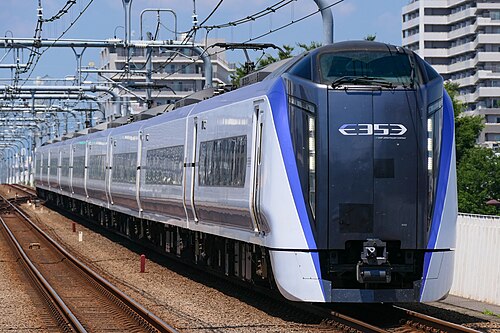
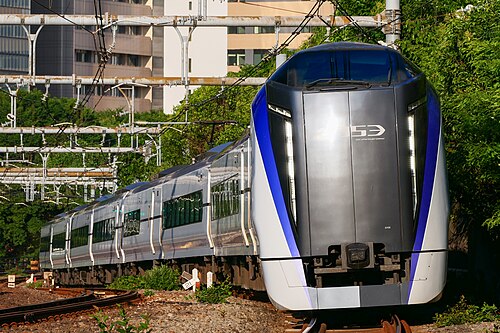
The alpinists’ express. E353s bank through Katsunuma’s vineyards and the Suwa lake basin to Matsumoto’s black castle, gateway to the Japan Alps.
Wikipedia ↗ - Limited Express Sonic
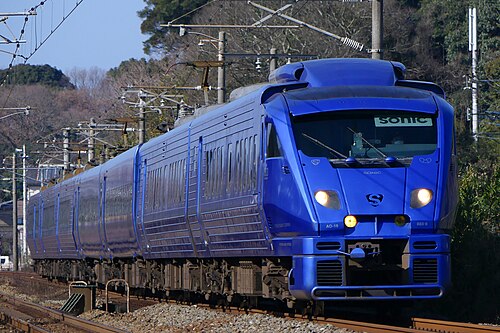
The blue “wonderland express”: tilting 883s reverse at Kokura and chase the coast past Nakatsu to the steaming hells of Beppu and Oita.
Wikipedia ↗ - Spacia X
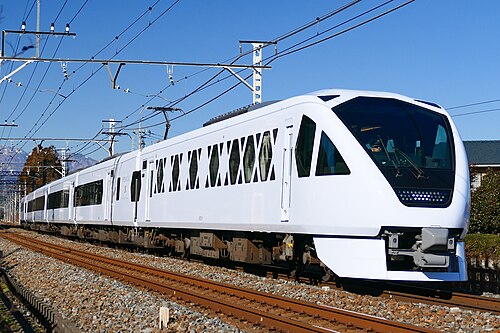
Tobu’s champagne-white flagship to Nikko’s shrine forest: a cockpit lounge, craft beer on draught, and Tokyo Skytree receding from the rear window.
Wikipedia ↗ - Odakyu Romancecar
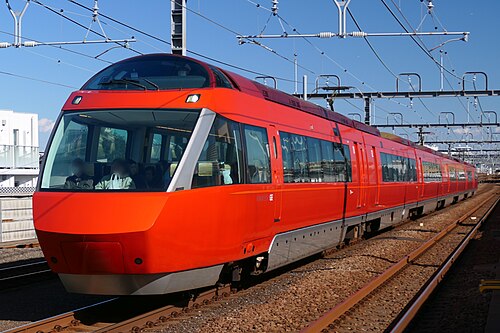
Front-row observation seats since 1957, when the SE set a world narrow-gauge speed record. Shinjuku to Hakone’s hot springs without a change.
Wikipedia ↗ - Narita Express
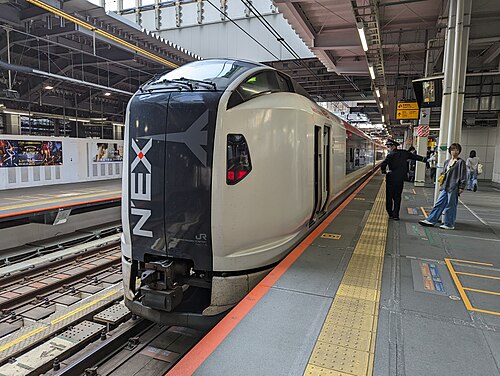
Twin sets from Yokohama and Shinjuku couple at Tokyo Station, then run as one red-and-black E259 through the Sobu tunnels out to Narita Airport.
Wikipedia ↗ - Thunderbird
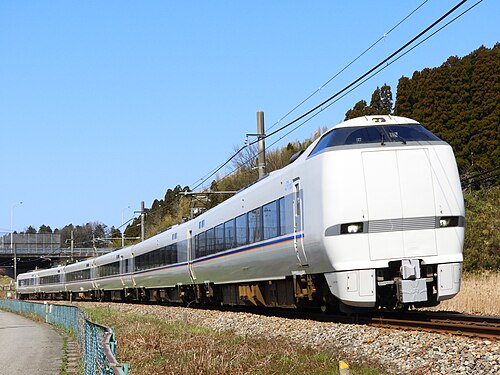
Since the 2024 bullet-train extension it sprints from Osaka up the wild western shore of Lake Biwa to Tsuruga, Hokuriku’s new shinkansen gateway.
Wikipedia ↗ - Haruka
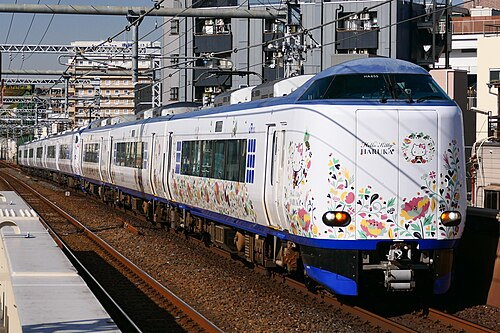
Kansai Airport’s purple-and-white express, covering 99 km from Kyoto’s temples out across the bay to the man-made island runway.
Wikipedia ↗ - Kaiji
Chuo Line express using the E353’s active tilt to swing through the mountain-walled Katsura valleys up to the vineyard capital of Kofu.
Wikipedia ↗ - Hokuto
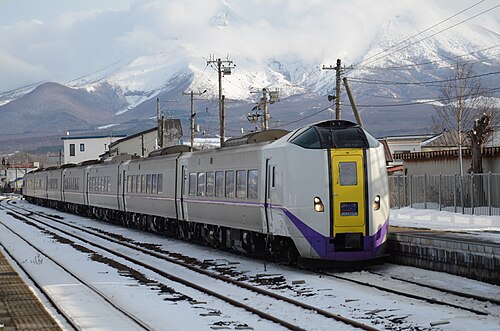
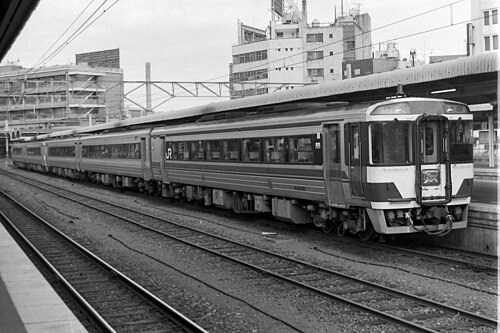
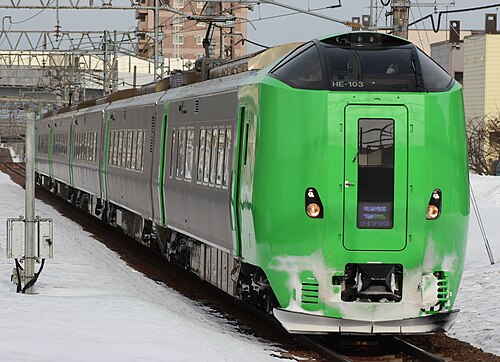
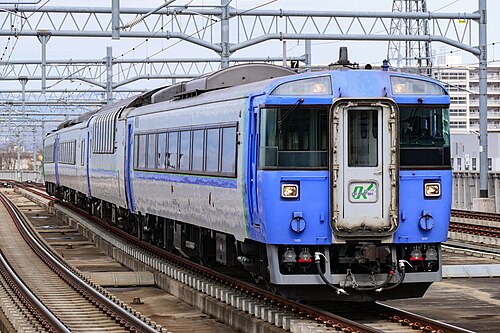
Diesel tilting express curving 319 km around Uchiura Bay past the volcanoes Usu and Komagatake, linking Sapporo with old Hakodate.
Wikipedia ↗ - Ozora
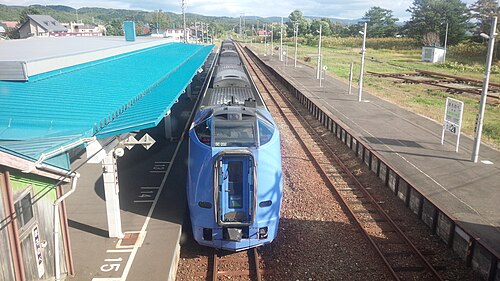
Crosses Hokkaido’s wild interior, the Hidaka range and the Sekisho tunnels, to the crane marshes of Kushiro on the far Pacific coast.
Wikipedia ↗ - Laview
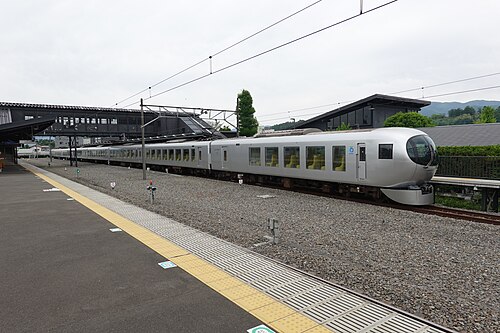
Seibu’s radical Laview, with a huge curved windscreen and yellow living-room windows, climbs from Ikebukuro into the Chichibu mountains.
Wikipedia ↗ - Yakumo
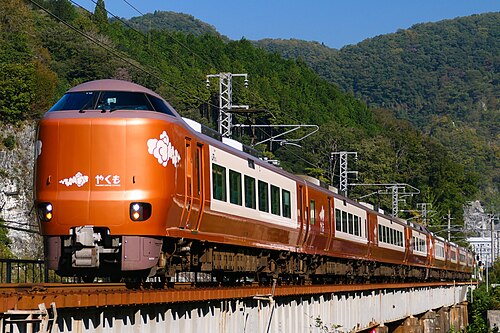
JR West’s new 2024 tilting 273 series takes the Hakubi line’s passes to Izumo, home of Japan’s oldest grand shrine.
Wikipedia ↗ - Marine Liner
Every half hour it rides the lower deck of the 13.1 km Great Seto Bridge: the Seto Inland Sea’s only rail crossing, strung across five islands since 1988.
Wikipedia ↗ - Aoniyoshi
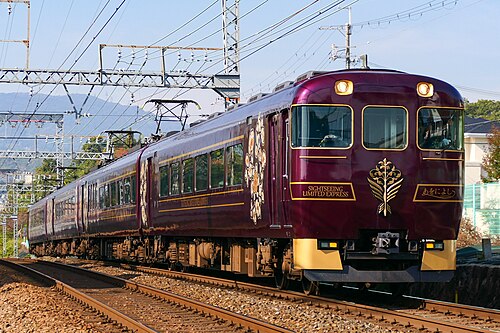
A 2022 salon train styled on Nara’s Tenpyō court art, linking Osaka, the old capital Nara and Kyoto with a library bar and a sweets counter.
Wikipedia ↗ - Limited Express Shinano
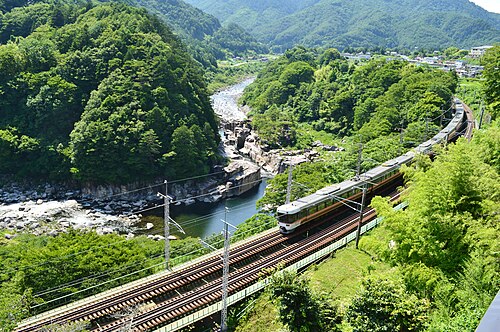
Tilting up the Kiso Valley: the old Nakasendō post road’s gorge and pass country on the classic mountain road to Nagano.
Wikipedia ↗ - Limited Express Shiokaze
Along the Seto Inland Sea’s island-studded shore to Dōgo Onsen, Japan’s oldest hot spring — Shikoku’s busiest express, tilting the whole way.
Wikipedia ↗ - Limited Express Kamui
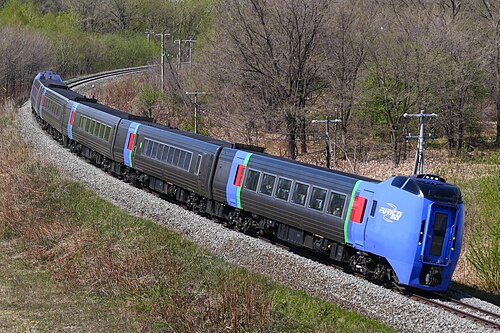
Hokkaido’s busiest shuttle: near-hourly across the Ishikari plain to Asahikawa, the doorway to Biei’s hills and Daisetsuzan’s peaks.
Wikipedia ↗ - Limited Express Okhotsk
One of Japan’s last great remote expresses: over the Kitami Pass through forest-empty interior to the drift-ice coast of the Sea of Okhotsk.
Wikipedia ↗ - Limited Express Sōya
One return working a day to Japan’s northernmost station: five hours up the Sōya Main Line to Wakkanai, in sight of Sakhalin on a clear day.
Wikipedia ↗ - Jōban Line
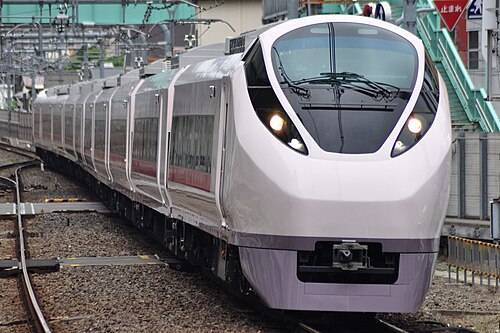
Tokyo to Sendai up the Pacific coast, inland of the Shinkansen: complete on 1 April 1905, and reopened right through Fukushima in March 2020 after nine years shut.
Wikipedia ↗ - Kounotori
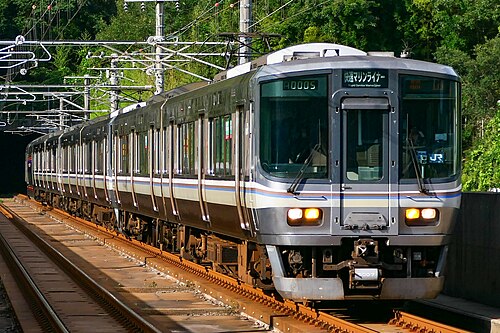
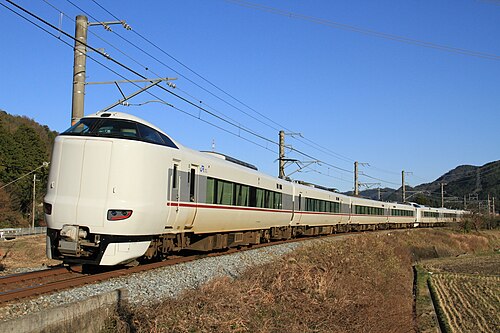
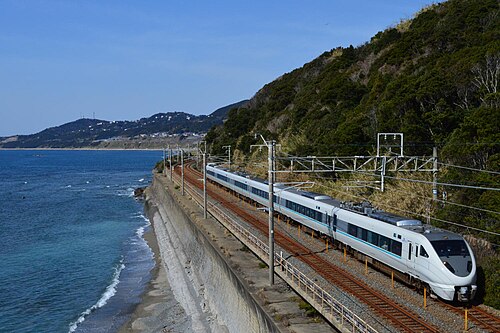
Named in 2011 for the storks bred back into the wild at Toyooka: a limited express from Shin-Osaka through the Tamba hills and down the San’in line to the hot-spring town of Kinosaki.
Wikipedia ↗ - Etsumi-Hoku Line
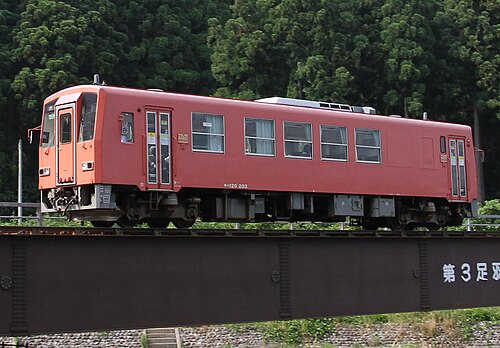
The Kuzuryū Line, completed in 1972: one-car KiHa 120s climb from Fukui through the castle town of Ōno to a dam lake, the last stretch still worked with a single staff, one of two left on JR.
Wikipedia ↗
Night train (1)
- Sunrise Express
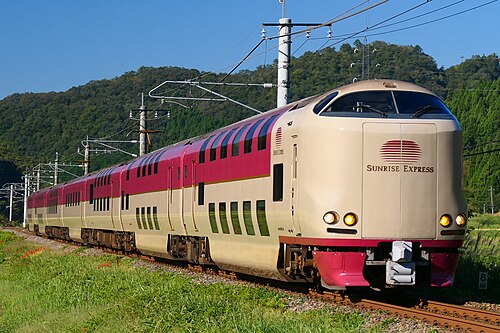
Japan’s last regular sleeper; the Izumo half splits at Okayama and takes the Hakubi Line gorges to the sacred San’in coast by breakfast.
Wikipedia ↗
Scenic (35)
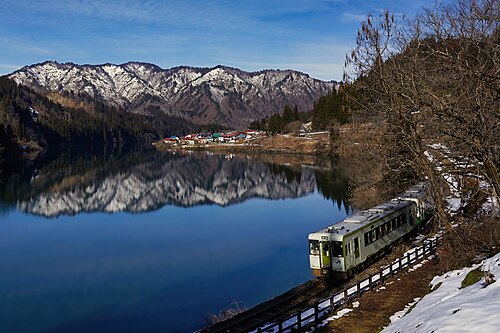
- Tadami Line
Reopened in 2022 after 11 years of flood repairs; drifts over the mist-wreathed Tadami River bridges through Japan’s deepest snow country.
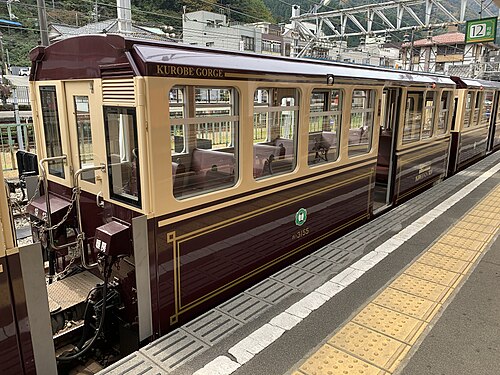
Wikipedia ↗ - Kurobe Gorge Railway
Dam-builders’ narrow-gauge torokko clinging to Japan’s deepest gorge: the full line to Keyakidaira returns in October 2026 after the Noto quake.
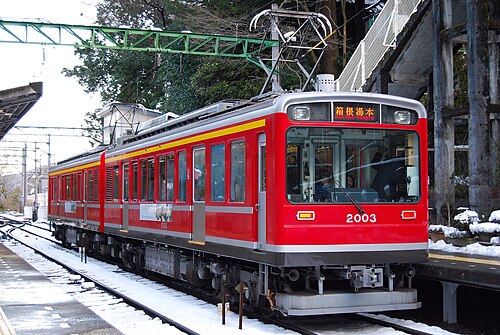
Wikipedia ↗ - Hakone Tozan Railway
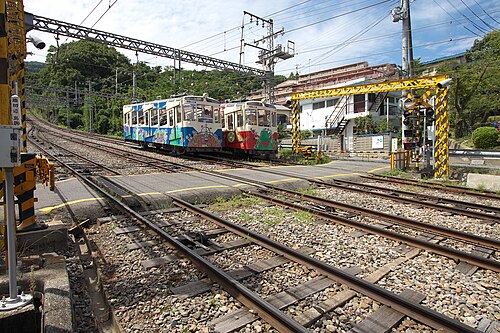
Japan’s oldest mountain railway hauls itself up 1-in-12.5 grades through three switchbacks, hydrangeas brush the windows each June.
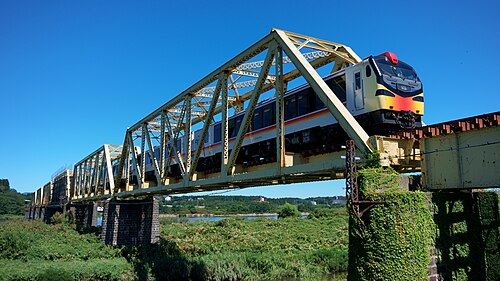
Wikipedia ↗ - Resort Shirakami
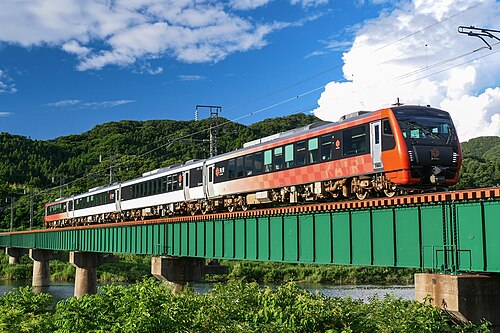
A rapid that idles on purpose: shamisen players aboard, the Sea of Japan breaking at Senjojiki, and UNESCO’s Shirakami beech forests behind the dunes.
Wikipedia ↗ - Yufuin no Mori
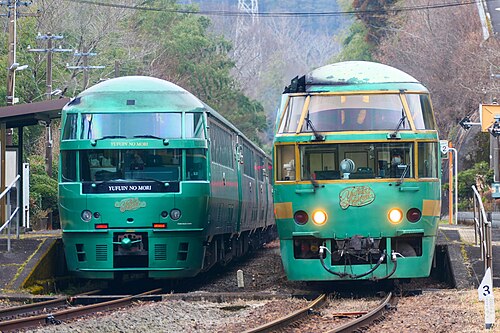
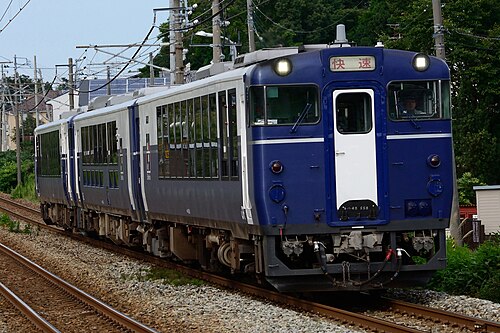
Forest-green parlour cars with a buffet of Kyushu treats: over the Mino passes and along the Kusu valley to the boutique onsen town under Mount Yufu.
Wikipedia ↗ - Saphir Odoriko
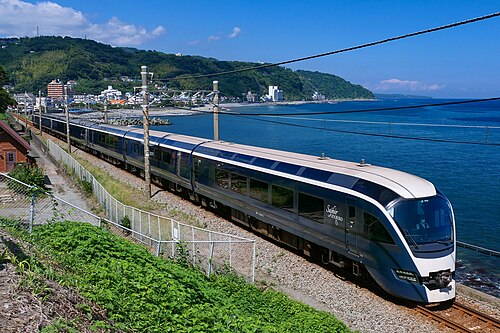
All-Green-Car luxury down the Izu coast: nose windows, a fresh noodle bar, and Sagami Bay filling the glass roof beyond Atami’s tunnels.
Wikipedia ↗ - Limited Express Hida
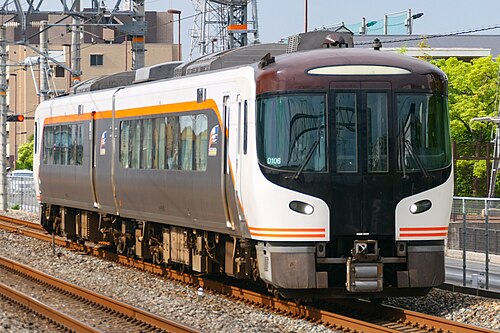
Hybrid HC85s shadow the jade-green Hida River for hours of gorge: riverside onsen at Gero, morning markets at Takayama, then down to Toyama Bay.
Wikipedia ↗ - Marumaru no Hanashi
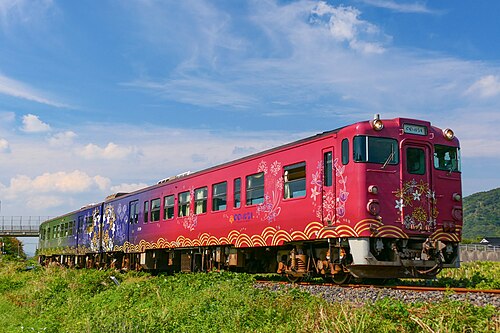
A KiHa 47 dawdling along the San’in coast between Shimonoseki and Hagi, timed so the Sea of Japan fills the windows — back running after 2025’s storm damage.
Wikipedia (JA) ↗ - Enoden
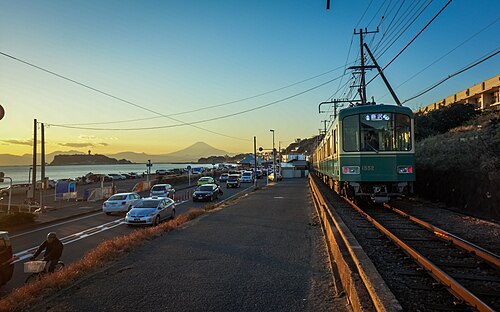
Century-old seaside interurban that skims Shonan’s surf beaches and brushes past house walls; its Kamakurakokomae crossing is an anime shrine.
Wikipedia ↗ - Isumi Railway
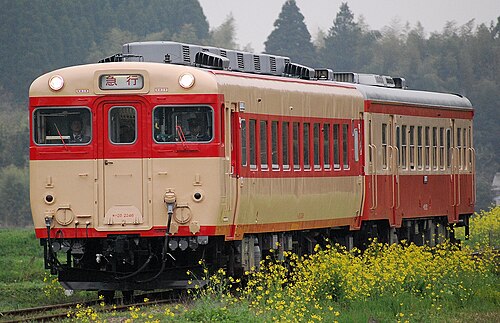
Restored 1960s diesel railcars trundle past rice paddies and spring nanohana blossoms through the rural heart of the Boso Peninsula.
Wikipedia ↗ - Shimakaze
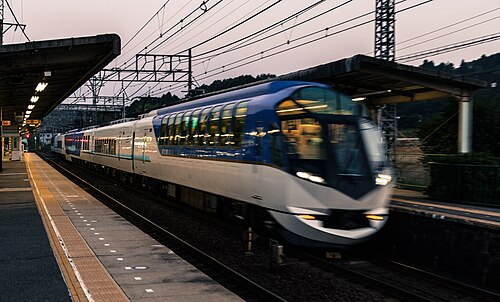
Kintetsu’s luxury Shimakaze (double-decker observation cars, leather saloons and a café) glides to the pearl bays and shrines of Ise-Shima.
Wikipedia ↗ - Fujisan View Express
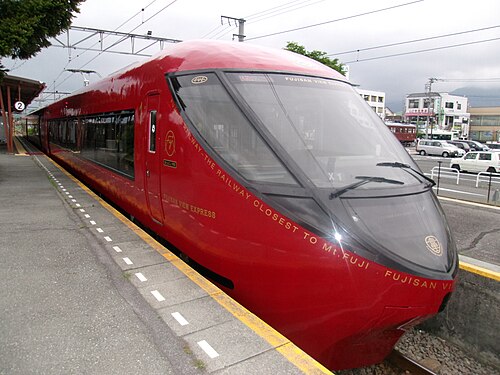
Steep little Fujikyu line to Lake Kawaguchi, its wide panorama windows framing Mt Fuji rising straight ahead.
Wikipedia ↗ - Ibusuki no Tamatebako
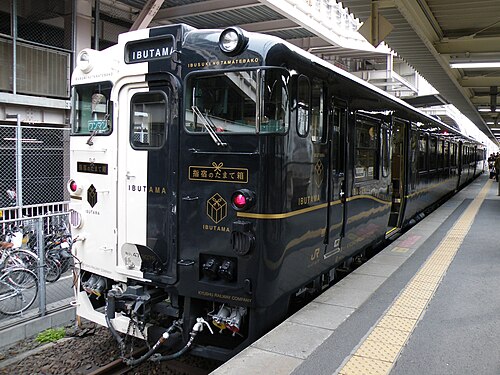
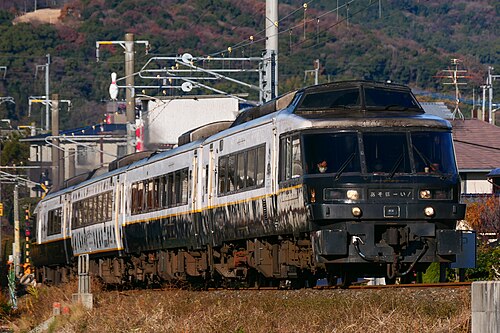
Split black-and-white treasure box train that puffs a cloud of mist from its doors, rounding Kinko Bay to the hot-sand baths of Ibusuki.
Wikipedia ↗ - Aso Boy!
Family sightseeing express with a panorama cab and play areas, zig-zagging the Tateno switchback into the vast Mt Aso caldera.
Wikipedia ↗ - Watarase Keikoku Railway
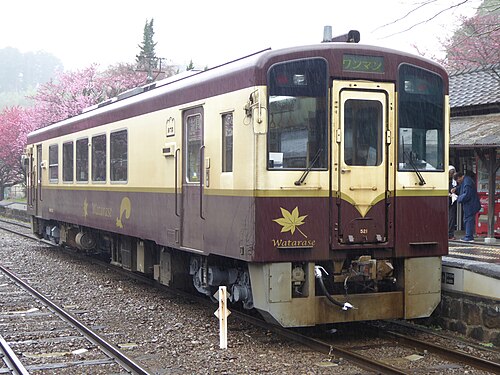
Open-sided torokko trolleys wind up the Watarase gorge on the old Ashio copper-mine line, ablaze with wisteria and autumn maple.
Wikipedia ↗ - Sanriku Railway Rias Line
Japan’s longest third-sector railway follows 163 km of tsunami-rebuilt coast; the final gap closed in 2019, eight years after the 2011 wave.
Wikipedia ↗ - Limited Express Kuroshio
Around the Kii Peninsula with the Pacific at the window: Shirahama’s sands, Honshu’s southernmost cape and the Kumano pilgrim coast.
Wikipedia ↗ - Limited Express Nanpu
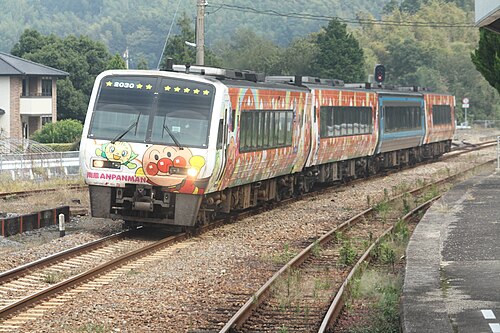
Across the Great Seto Bridge, then up the Yoshino river’s Oboke and Koboke gorges, tilting over the island spine to Kochi.
Wikipedia ↗ - TOHOKU EMOTION
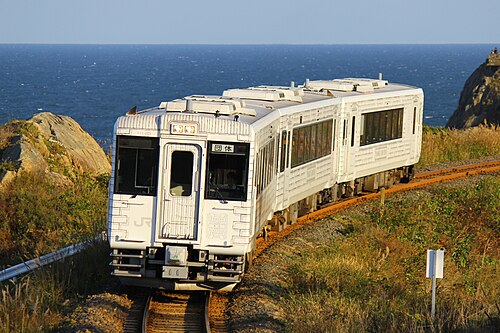
A restaurant on rails — open kitchen car, chef’s courses at every seat — rolling the Sanriku surf from Hachinohe to Kuji along the Tanesashi coast.
Wikipedia (JA) ↗ - Tama Densha
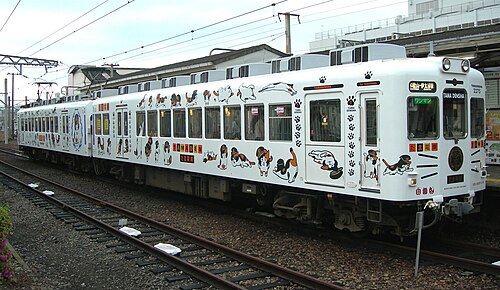
Eiji Mitooka’s white train painted with 101 cartoon Tamas trundles to Kishi, where calico stationmaster Tama famously saved the line — a cat shrine now guards the platform.
Wikipedia ↗ - Setsugekka
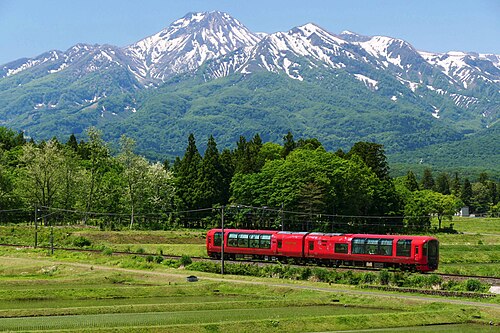
Crimson-and-silver resort train with Japan’s largest train windows, serving regional courses on a slow sweep from Mt Myoko’s snow country to the Sea of Japan at Itoigawa.
Wikipedia ↗ - Iyonada Monogatari
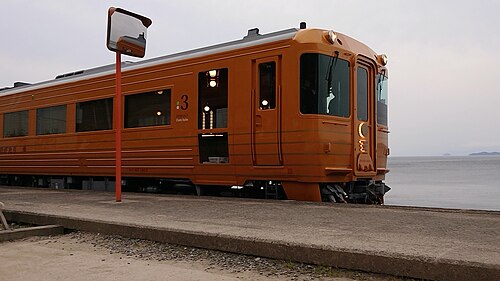
A retro maroon-and-gold diner idling along the Iyonada shore — brunch above the waves and a pause at Shimonada, Japan’s most photographed seaside platform.
Wikipedia ↗ - Kairi
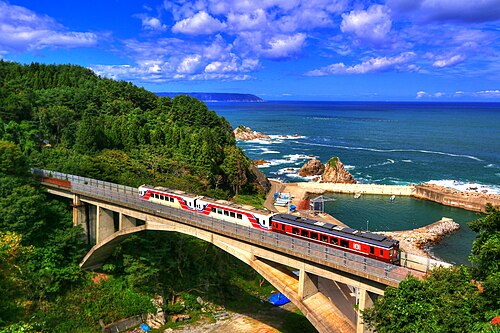
Kairi means “sea and village”: a hybrid diner serving Niigata and Shonai delicacies while threading the Sasagawa-nagare, 11 km of wave-gnawed rocks on the Uetsu coast.
Wikipedia (JA) ↗ - GRAN Tenku
Nankai’s deep-red 2026 flagship runs through from Namba’s neon to Gokurakubashi, grinding up 50‰ cedar slopes to the cable car for sacred Koyasan — lounge and bar aboard.
Wikipedia (JA) ↗ - Umisachi-Yamasachi
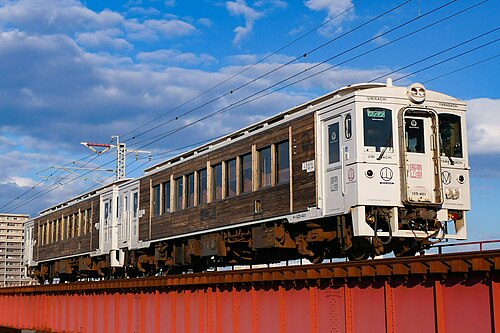
Obi-cedar railcars named for the sea-luck, mountain-luck myth skim the Nichinan palm coast past Aoshima’s Devil’s Washboard reefs to the fishing port of Nango.
Wikipedia ↗ - A-Train (Amakusa)
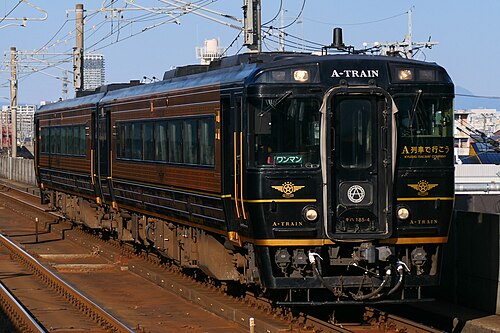
A jazz-soundtracked bar on rails — dark wood, stained glass, “A-Highball” in hand — swinging along the Ariake tidal flats from Kumamoto to the Amakusa ferry at Misumi.
Wikipedia (JA) ↗ - HIGH RAIL 1375
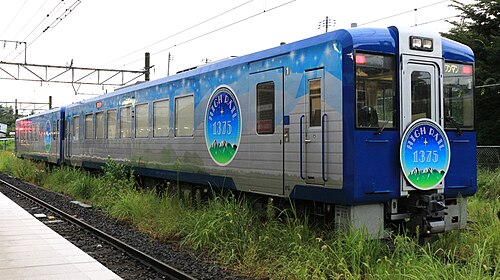
Grinds to 1,375 m at JR’s highest rail point below Yatsugatake — observatory seats by day, a stargazing dome and astronomer-guided night runs under the Milky Way.
Wikipedia (JA) ↗ - etSETOra
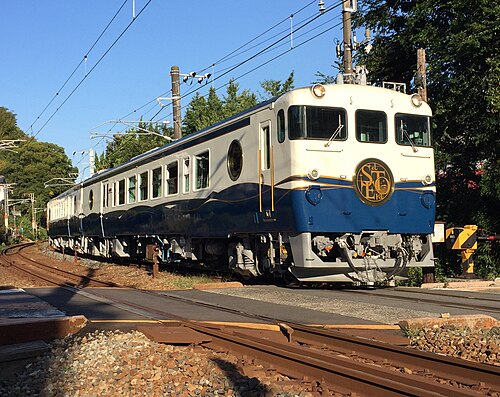
etSETOra drifts the Kure Line’s island-studded Seto shore with Hiroshima patissiers’ sweets courses and a sake bar — extended in 2025 to run clear through to Fukuyama.
Wikipedia (JA) ↗ - Koshino Shu*Kura
A sake brewery on wheels — Niigata tasting bar, live jazz, a long pause on the sea cliff at Aoumigawa — winding via Nagaoka into snow-country Tokamachi.
Wikipedia (JA) ↗ - Belles montagnes et mer
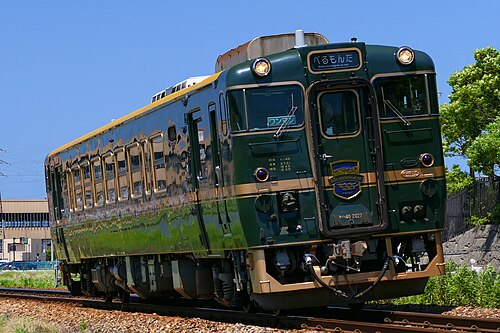
“Beautiful mountains and sea”: an emerald art-gallery railcar where a sushi chef works the counter as Amaharashi bay frames 3,000-metre Tateyama across the water.
Wikipedia ↗ - Blue Symphony
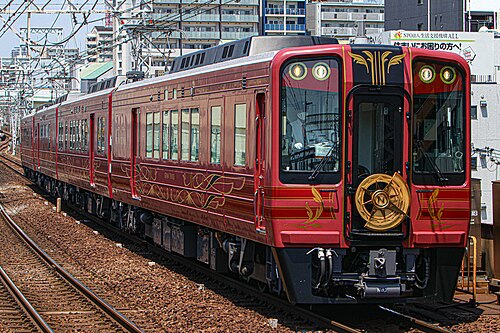
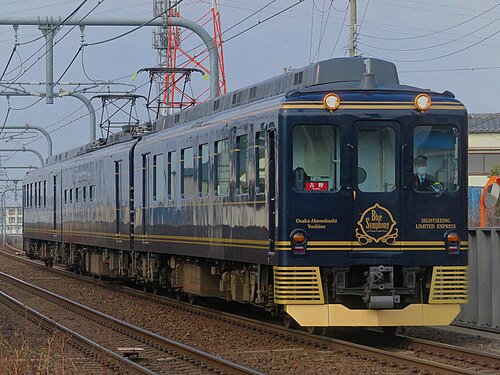
Navy-and-gold Blue Symphony glides from Osaka Abenobashi to holy Yoshino — UNESCO cherry mountain — with a lounge bar, cake sets and armchairs in a reborn commuter train.
Wikipedia ↗ - Tosa Toki no Yoake no Monogatari
Ryoma-themed “dawn of a new era” train pairs Tosa seafood with Pacific panoramas above Susaki and Tosa-Kure bays, locals waving it through tea fields to Kubokawa.
Wikipedia ↗ - Hanayome Noren
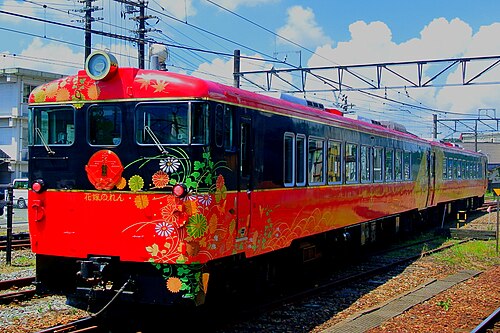
A rolling Kaga bridal curtain: vermilion-and-black cars finished in Wajima-lacquer motifs and gold leaf, serving Ishikawa sweets en route to Wakura Onsen’s seaside baths.
Wikipedia (JA) ↗ - Rokumon
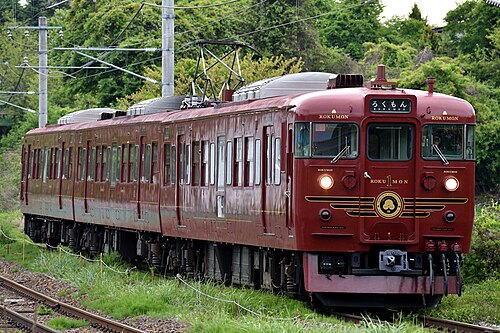
Rokumon wears the Sanada clan’s six-coin crest in deep crimson, serving kaiseki under Mt Asama on the old Shinetsu main line from Karuizawa down to Zenko-ji’s Nagano.
Wikipedia (JA) ↗ - Ametsuchi
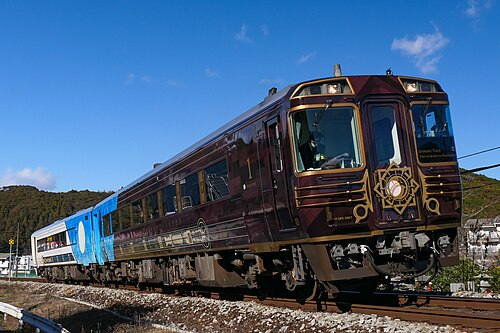
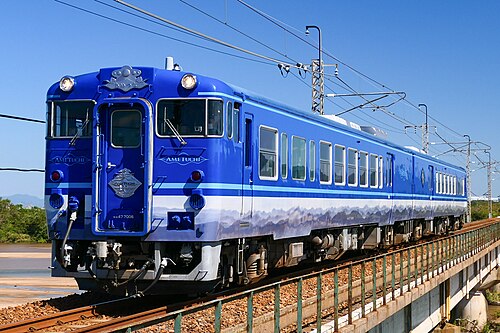
Lapis-blue Ametsuchi — “heaven and earth” from the Kojiki’s opening line — roams the San’in coast’s breakers past Mt Daisen and Lake Shinji from Tottori to Izumo.
Wikipedia (JA) ↗
Heritage (7)
- Sagano Scenic Railway
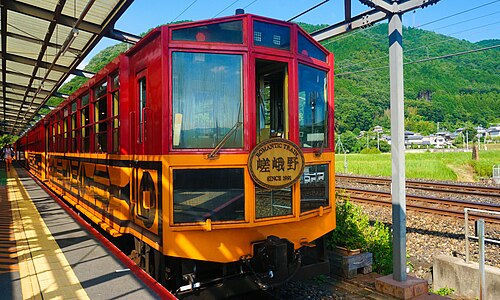
A retired JR alignment above the Hozugawa rapids: twenty-five slow minutes of maples and gorge that the modern main line skips through tunnels.
Wikipedia ↗ - SL Gunma
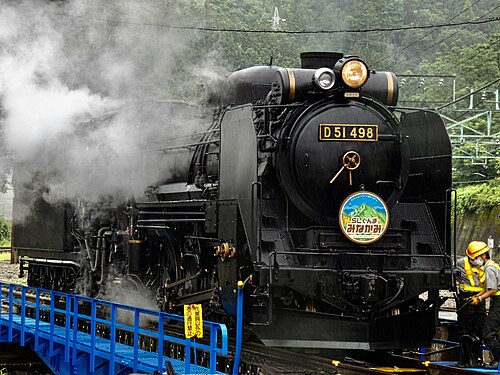
Restored D51 498 “Degoichi” and C61 20 haul retro coaches up the Joetsu Line on weekends: steam echoing off the Tone gorge under Tanigawa’s wall.
Wikipedia (JA) ↗ - Oigawa SL Kawane-ji
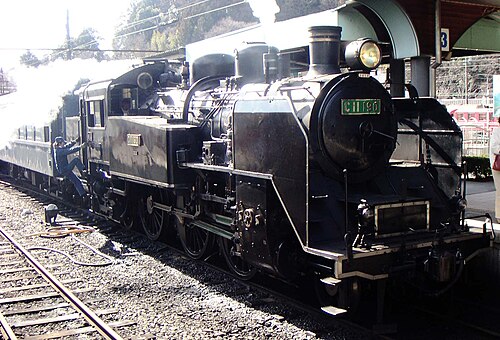
Vintage C11 steam locomotives haul old coaches up the Oi River valley: the same railway that runs Japan’s Thomas the Tank Engine trains.
Wikipedia ↗ - Tsugaru Stove Train
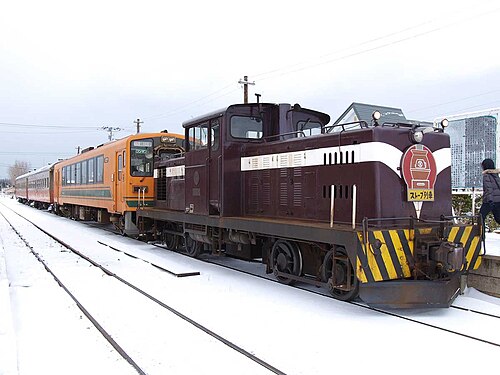
Aboard Japan’s northernmost private railway, attendants grill squid on pot-belly coal stoves while blizzards bury the Tsugaru plain outside.
Wikipedia ↗ - SL Yamaguchi
A pacific steam locomotive has hauled this special up the Yamaguchi line to the little castle town of Tsuwano, the “Kyoto of San-in”, since 1979.
Wikipedia ↗ - SL Banetsu Monogatari
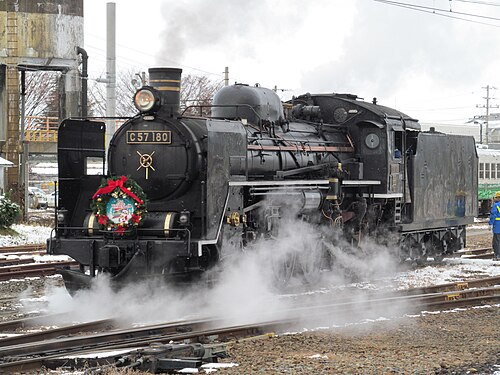
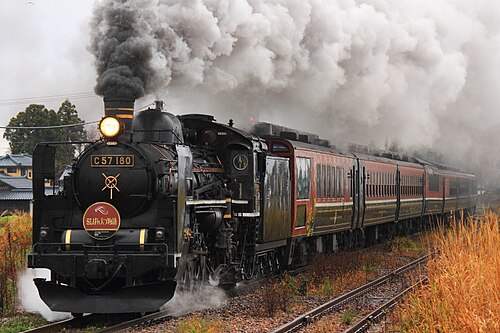
C57 180 — “the Lady” — hauls seven retro coaches up the Agano river gorge from Niitsu to castle-town Aizu-Wakamatsu, one of Japan’s last full-size mainline steam runs.
Wikipedia ↗ - SL Paleo Express
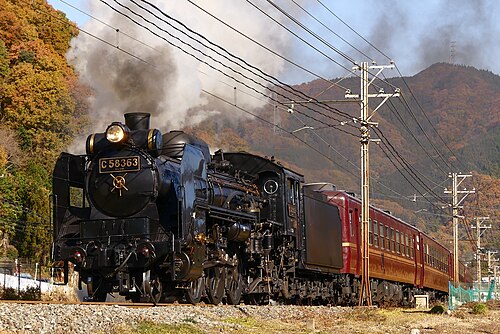
The closest steam to Tokyo: wartime C58 363 huffs four retro coaches from Kumagaya into the Chichibu hills past Nagatoro’s rock terraces — running since 1988.
Wikipedia (JA) ↗
Mountain (5)
- Koyasan Cable Car
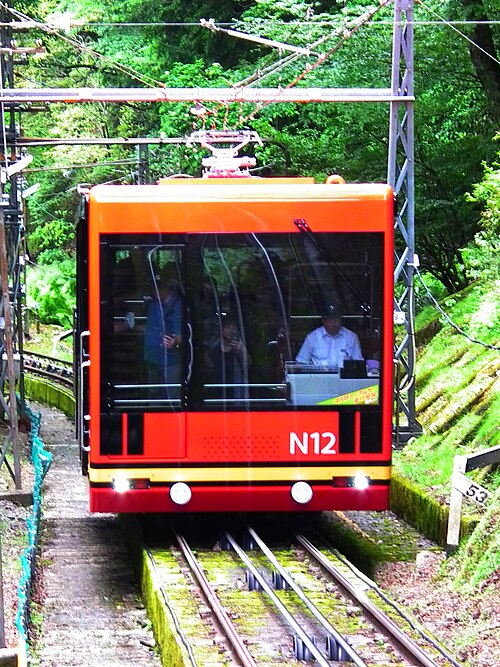
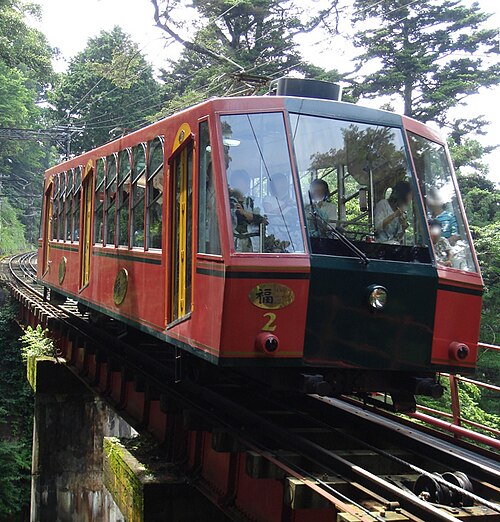
Nankai’s 1930 cable car hoists pilgrims up the final 328 m to UNESCO-listed Kōyasan, the mountaintop monastery town of Shingon Buddhism.
Wikipedia ↗ - Hakone Tozan Cable Car
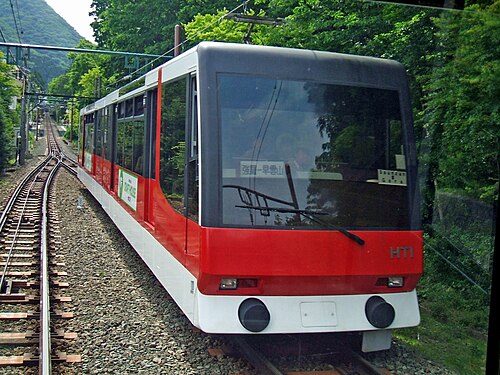
Japan’s second-oldest funicular (1921) links Gōra with the Hakone Ropeway at Sōunzan — the cable-hauled leg of the classic Hakone circuit.
Wikipedia ↗ - Mount Takao Cable Car
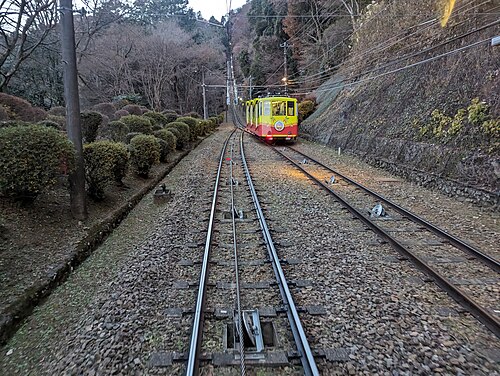
Japan’s steepest railway — a 608 permil grade near the top — lifting hikers up Michelin three-star Mount Takao since 1927.
Wikipedia ↗ - Ikoma Cable Car
Japan’s first cable railway (1918) still climbs Mount Ikoma as the country’s only double-track funicular, famed for its animal-faced cars.
Wikipedia ↗ - Sakamoto Cable
Japan’s longest funicular — 2,025 m up Mount Hiei to UNESCO-listed Enryaku-ji, with Lake Biwa views — running since 1927.
Wikipedia ↗
Luxury (3)
- Seven Stars in Kyushu
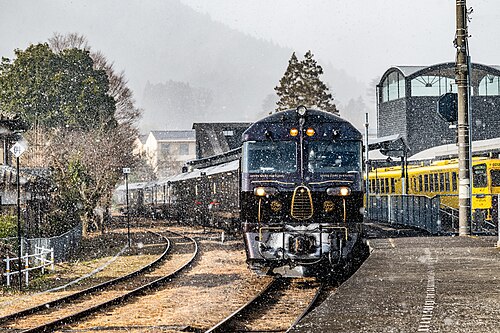
Japan’s first luxury cruise train: ten suites and a piano bar on a slow lap of Kyushu’s volcano country; berths routinely go to a lottery.
Wikipedia ↗ - Twilight Express Mizukaze
Heir to the beloved Twilight Express: emerald art-deco suites and open observation decks drifting along the San’in coast’s empty beaches.
Wikipedia ↗ - Train Suite Shiki-shima
JR East’s champagne-gold cruise train: four days from Ueno through Tōhoku and under the Seikan Tunnel to Hokkaido, in suites with cypress baths — Japan’s hardest train ticket.
Wikipedia ↗
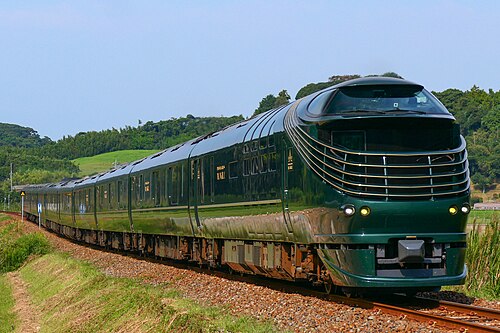
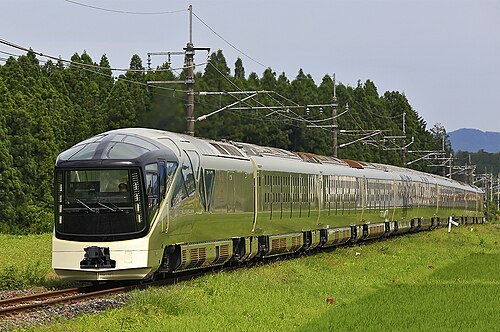
Photos via Wikimedia Commons — each route page credits the author & licence
What is the fastest train in Japan?
The Hayabusa, running Tokyo to Hakodate at up to 320 km/h. It is one of 82 routes in Japan in this atlas.
Are there night trains in Japan?
Yes — 1 sleeper service in this atlas serves Japan: Sunrise Express (Tokyo – Izumo).
Can you cross the border by train from Japan?
No route in this atlas crosses a land border out of Japan. Every line listed here begins and ends inside the country.
Which is the most scenic railway in Japan?
Japan has 40 scenic or mountain lines in this atlas. The longest is the Limited Express Kuroshio, 275 km.