
Scenic route
Rhine Valley Line
Mainz → Koblenz · Germany
View on the map →Wikipedia ↗Stations · 21
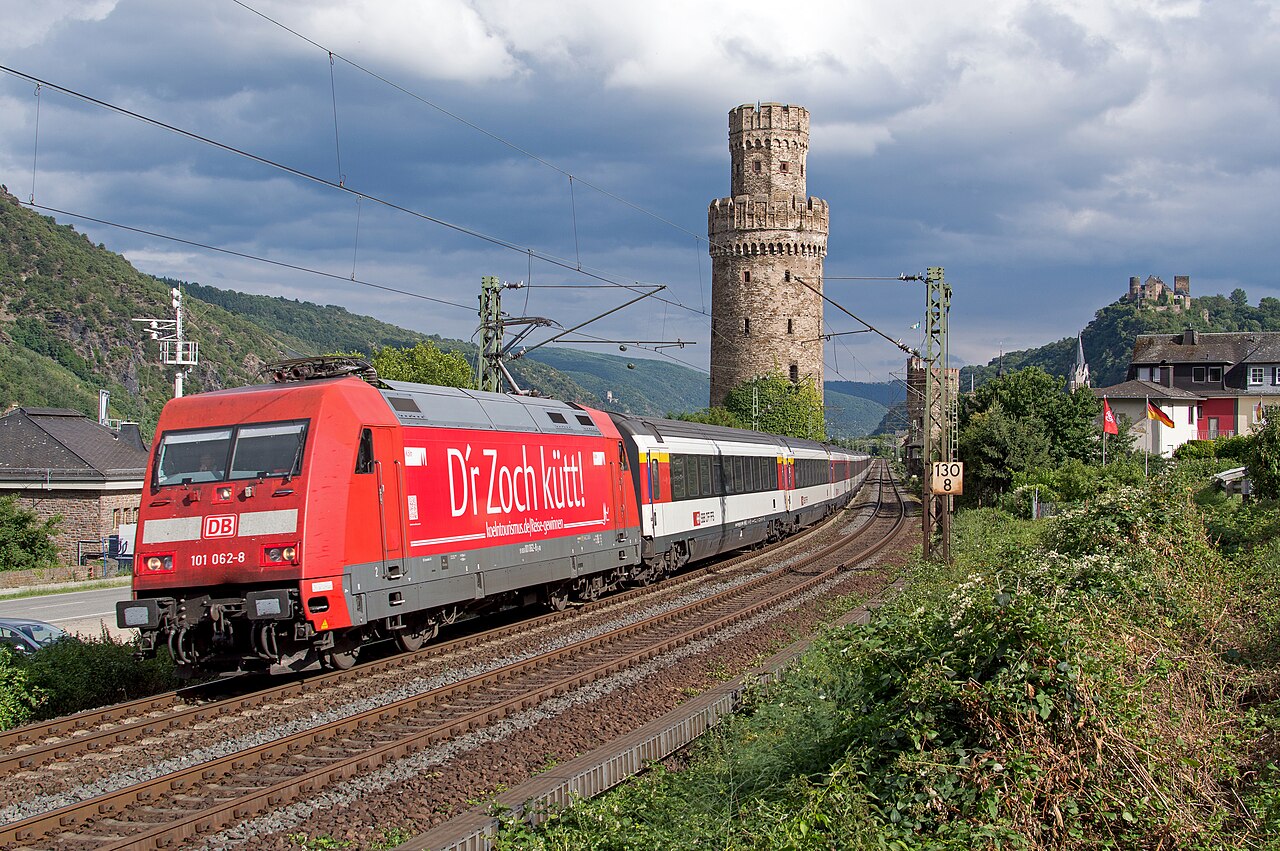
Castle after castle past the Lorelei rock: the left bank of the Rhine is one long UNESCO postcard.
Stations
- 0 kmMainz Hauptbahnhof
- 3 kmMainz-Mombach
- 7 kmBudenheim
- 10 kmUhlerborn
- 13 kmHeidesheim (Rheinhessen)
- 18 kmIngelheim am Rhein
Show 10 more stations
- 21 kmGau-Algesheim
- 26 kmBingen-Gaulsheim
- 29 kmBingen(Rhein) Stadt
- 31 kmBingen (Rhein) Hauptbahnhof
- 36 kmTrechtingshausen
- 41 kmNiederheimbach
- 44 kmBacharach
- 51 kmOberwesel
- 57 kmSt. Goar
- 63 kmBoppard-Hirzenach
- 67 kmBoppard-Bad Salzig
- 72 kmBoppard Hbf
- 79 kmSpay
- 83 kmRhens
- 91 kmKoblenz Hbf
The stations OpenStreetMap lists for this service, in order, with the distance along the line as drawn here. A train may skip some of them.
How this line was checked
- Line drawn from OpenStreetMap relation 1988239 — the same nodes OpenStreetMap holds for this railway, thinned to within under 25 m of them
- Checked against OpenStreetMap: the whole line lies on real track, a median 4 m from it
- Checked against the running timetable via ÖBB Scotty: our line sits under 100 m from the shape of RB 26
- Wikipedia has an article for this line
- See for yourself: open this line on the map with OpenStreetMap's own railway drawn underneath it
Questions and answers
How long is the Rhine Valley Line?
The Rhine Valley Line runs 92 km from Mainz to Koblenz.
How long does the Rhine Valley Line take?
The fastest scheduled journey is ≈ 1 h 30 min for the 92 km. That is an average of 61 km/h end to end. The line's top service speed is 120 km/h.
Who runs the Rhine Valley Line?
DB and trans regio, with MittelrheinBahn.
How old is the Rhine Valley Line?
The line has been in service since 1859. That is the year the atlas dates it from: for a modern brand running over an older railway, it is the railway's date, not the brand's.
How often does the Rhine Valley Line run?
32 direct trains on a weekday (counted on 2 September 2026).
More scenic routes
- Glacier Express
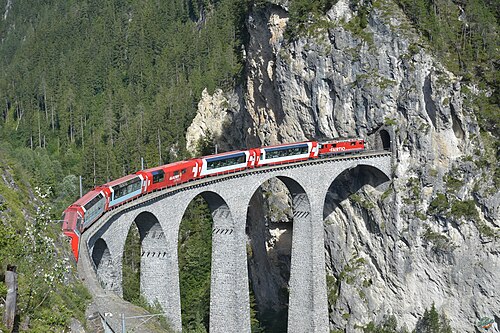
“The world’s slowest express”: 291 bridges, 91 tunnels and the 2,033 m Oberalp Pass at an average of 36 km/h.
Wikipedia ↗ - Bernina Express
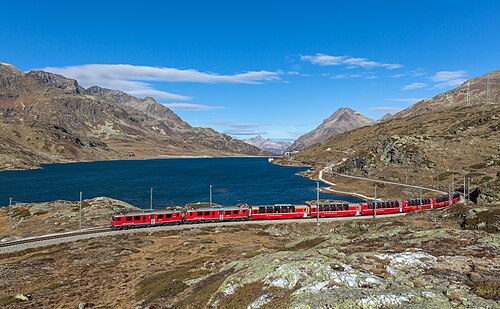
A UNESCO World Heritage railway: 7 % grades with no rack, the Brusio spiral, and the highest rail crossing of the Alps at 2,253 m.
Wikipedia ↗ - Bergensbanen
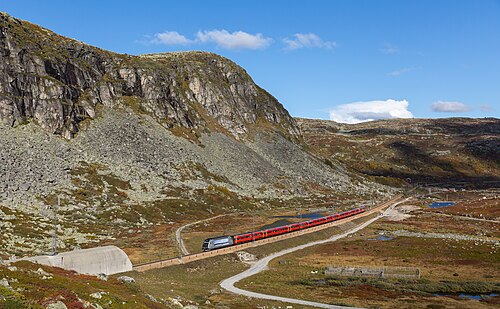
Northern Europe’s highest main line: over the bare Hardangervidda plateau at 1,237 m, through 182 tunnels.
Wikipedia ↗ - West Highland Line
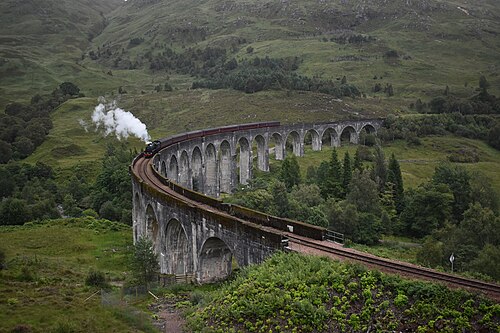
Regularly voted the world’s most scenic railway: around Rannoch Moor and over the 21-arch Glenfinnan Viaduct of film fame.
Wikipedia ↗
More train routes in Germany.