
🇩🇪 Country
Train routes in Germany
138 routes · high-speed 15 · classic 78 · night train 9 · scenic 20 · heritage 10 · mountain 6
138 routes cross Germany in the World Train Map atlas. The longest is the Snälltåget at 1,290 km; the fastest is the TGV / ICE, running up to 320 km/h; the oldest line dates to 1844. Every route links to its facts, photo and story, and to the interactive world map.
Open the world railway map →Part of the Europe train map: every route on the continent, one map.
High-speed (15)
- ICE Sprinter
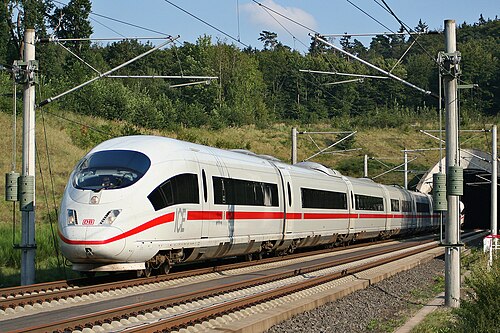
The €10bn VDE 8 project: 26 tunnels and 37 viaducts through the Thuringian Forest halved the Berlin–Munich journey.
Wikipedia ↗ - ICE
A roller-coaster alignment beside the A3 autobahn with 40 ‰ grades: only the most powerful ICE sets are cleared for it.
Wikipedia ↗ - ICE
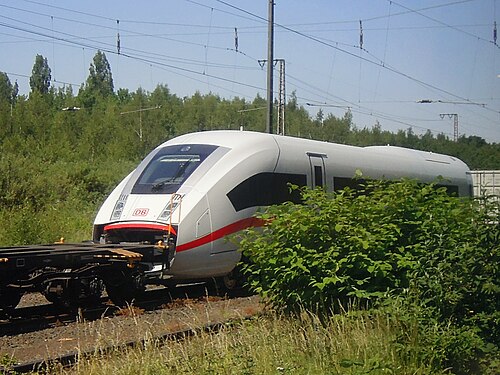
Races the length of the North German Plain; the dead-straight Hanover–Berlin racetrack, partly laid on old border land, lets ICE 4 sets hold 250 km/h.
Wikipedia ↗ - ICE
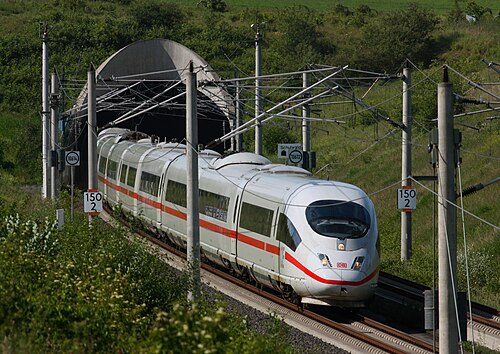
Sprints down the 300 km/h Nuremberg–Ingolstadt high-speed line, one of Germany’s fastest, on gradients so steep that freight trains are banned.
Wikipedia ↗ - ICE
Runs the Hanover–Würzburg route, Germany’s first Neubaustrecke of 1991, boring through a chain of long tunnels under the hills of Hesse.
Wikipedia ↗ - ICE
Joins the political and banking capitals via Kassel and the Fulda gap, the Velaro D holding 250 km/h over the wooded ridges of northern Hesse.
Wikipedia ↗ - ICE
Opened in December 2022, the Wendlingen–Ulm line tunnels under the Swabian Jura and cut the Stuttgart–Ulm leg to just 42 minutes.
Wikipedia ↗ - ICE
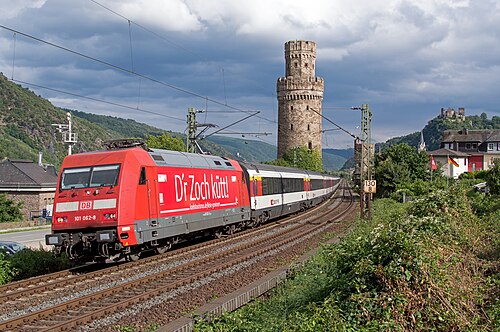
Crosses Germany from end to end, Berlin to the Swiss border, finishing down the Upper Rhine past Freiburg to Basel in about seven hours.
Wikipedia ↗ - ICE International
Upgraded to new ICE 3neo trains in late 2025, replacing loco-hauled Intercitys on the roughly six-hour cross-border run to the Dutch capital.
Wikipedia (DE) ↗ - ICE International
ICE 3M multi-system sets leave Amsterdam and, past Cologne, dive onto the 300 km/h Cologne–Rhine/Main line with its motorway-style gradients.
Wikipedia (DE) ↗ - TGV / ICE
A Franco-German alliance since 2007: 320 km/h on the LGV Est to Lorraine, then the Saar and Rhine-Main into Frankfurt, TGV and ICE sharing the run.
Wikipedia (FR) ↗ - ICE
Germany’s busiest long-distance axis, the length of the country from the Elbe to the Isar via Hanover, the Fulda gap and Nuremberg.
Wikipedia ↗ - ICE
Down the Rhine-Neckar to Mannheim and up into the Swabian capital: a hard-worked spine of the south-west ICE network.
Wikipedia ↗ - Railjet
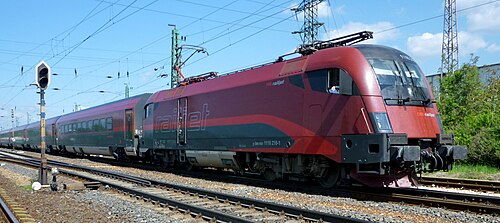
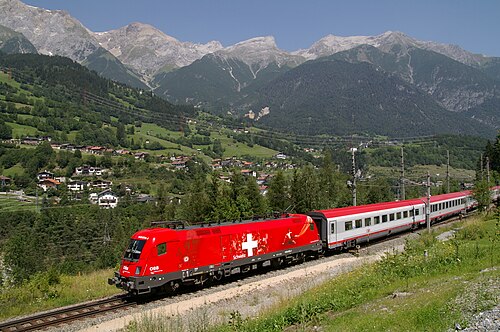
Bavaria to the Danube capital along the Westbahn, past Salzburg’s fortress and the baroque abbeys of Upper Austria.
Wikipedia ↗ - ICE
The high-speed link binding Belgium to the Rhineland: past Liège’s soaring Calatrava station and over the language border at Aachen, Charlemagne’s capital, at 300 km/h.
Wikipedia (DE) ↗
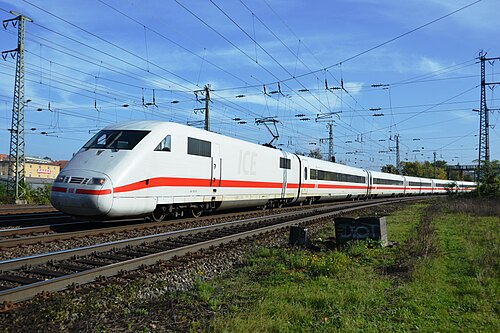
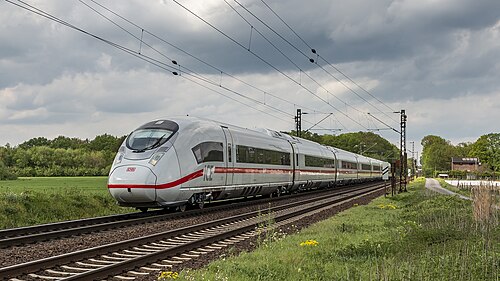
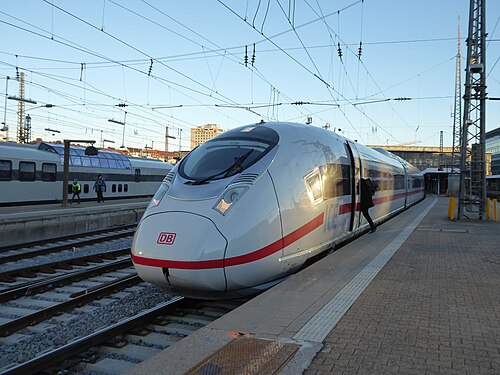
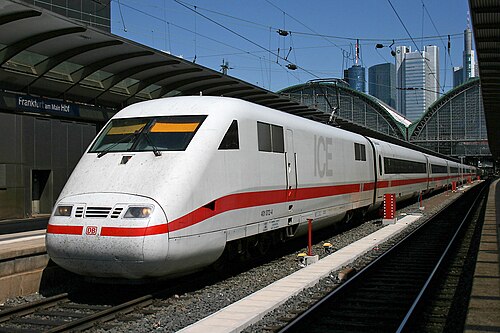
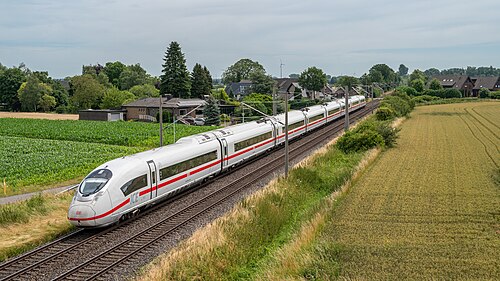
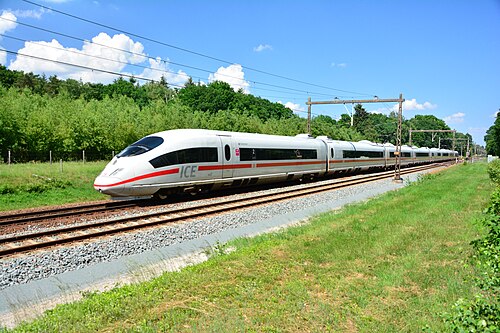
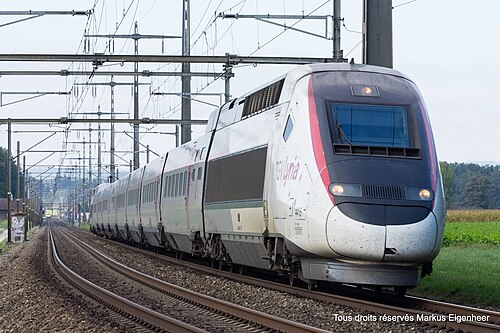
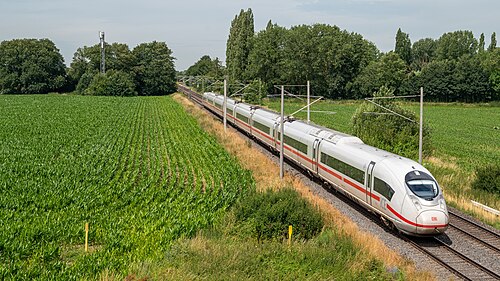
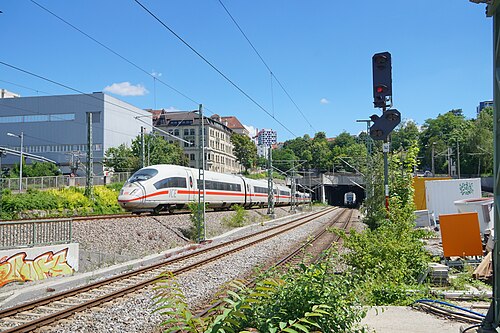
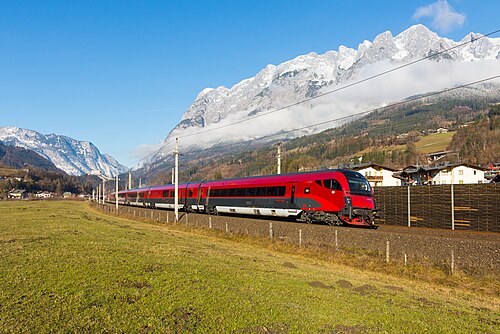
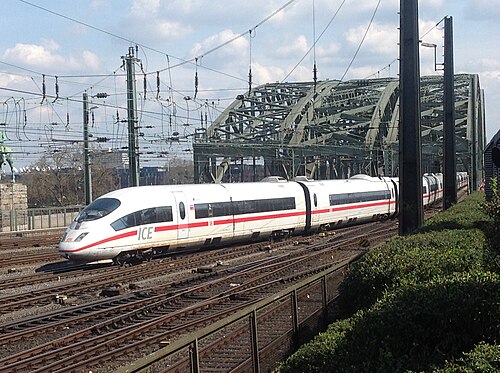
Classic (78)
- ICE
Germany’s busiest city pair rides an alignment opened in 1846, dead straight across the northern plain.
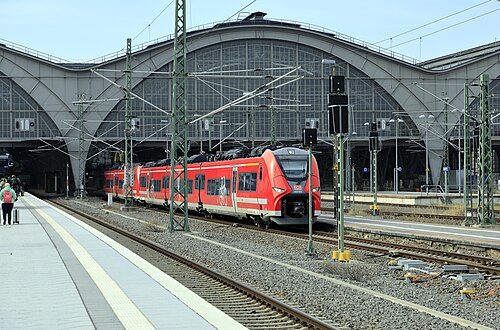
Wikipedia ↗ - RE10 Leipzig–Frankfurt (Oder)
The long way across Lusatia, three hours and ten minutes from Leipzig to the Polish border at Frankfurt an der Oder by way of Torgau, Falkenberg, Cottbus and the Neisse at Guben, over the Halle to Sorau to Guben railway of 1872.
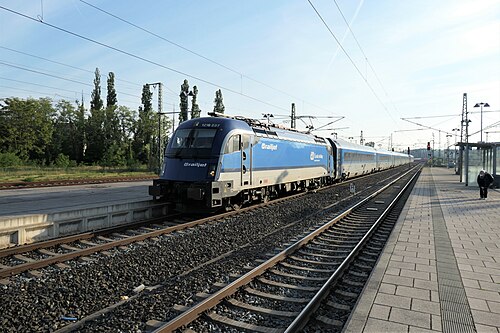
- Railjet
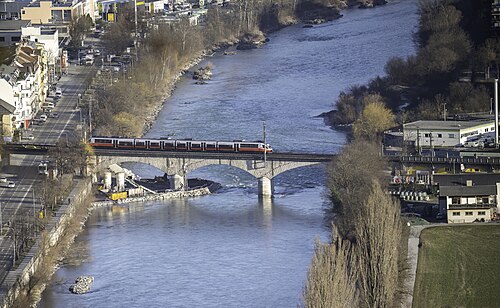
Four countries in eleven hours, Danube Bend to Brandenburg by way of Bratislava, Brno and Prague, and through the sandstone gorge of the Elbe on a railway the Saxons and the Austrians opened together in 1851.
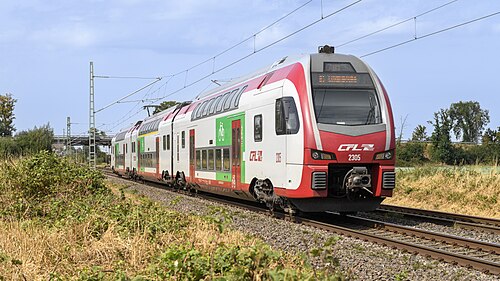
- RE 11 Mosel
The RE 11 follows the Moselle from Luxembourg into Germany, boring through the 4.2 km Kaiser-Wilhelm-Tunnel at Cochem to bypass the river’s huge loop.
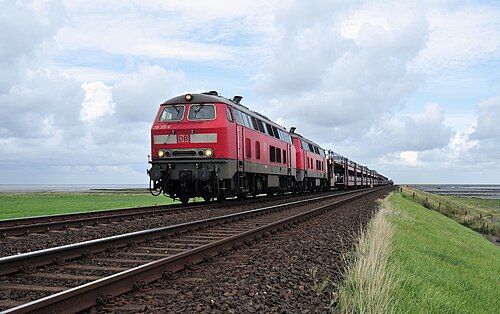
Wikipedia ↗ - Marschbahn
Reaches the car-free island of Sylt over the 11 km Hindenburgdamm causeway of 1927, a dead-straight embankment laid across the tidal Wadden Sea.
Wikipedia ↗ - Südbahn
Württemberg’s Südbahn, electrified at last: Ulm’s minster to Lake Constance at Friedrichshafen, then along the shore to Lindau island.
Wikipedia (DE) ↗ - RE5 Berlin–Rostock
Berlin to the Baltic in one seat: the Mecklenburg lake district at Neustrelitz and Waren, then Rostock and the ferries.
- Railjet Vienna–Bregenz
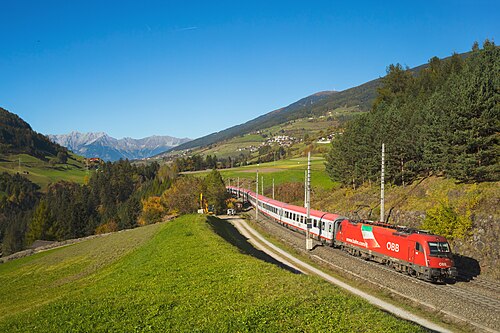
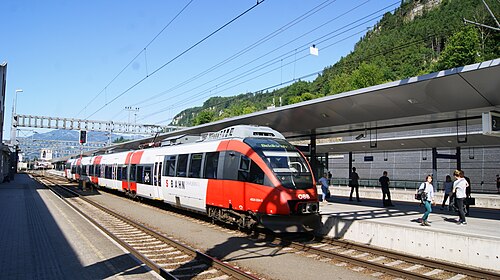
The full west-bound railjet: Salzburg, Innsbruck, the Arlberg tunnel and out at the Bodensee — Austria end to end in one train.
Wikipedia ↗ - Gäubahn IC
The Gäubahn intercity: over the Rhine at Schaffhausen, past the Bodensee’s back country and down the Neckar cuttings into Stuttgart.
Wikipedia ↗ - Berlin-Warszawa-Express
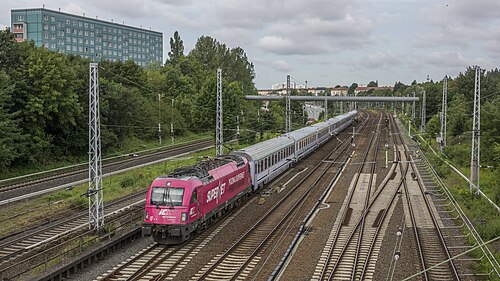
Six EuroCitys a day across the North European Plain, with the cult WARS dining car serving pierogi between the Oder and the Vistula.
Wikipedia ↗ - Brenner Railway
Munich to Verona over the first railway across the main Alpine crest (1867), still topping the open pass at 1,371 m: no summit tunnel, just a border station.
Wikipedia ↗ - EuroCity Allgäu
Electrified in 2020 to speed the Munich–Zürich EuroCitys across the Allgäu past baroque abbeys and Alpine foothills to the island station of Lindau on Lake Constance.
Wikipedia ↗ - Usedomer Bäderbahn
The imperial spa line: along Usedom’s beaches from Züssow over the Peene bridge to Ahlbeck’s pier, then across the border into Świnoujście.
Wikipedia ↗ - München–Innsbruck
The Brenner corridor’s northern approach: out of Munich, across the Inn at Rosenheim, into Tyrol at Kufstein and up the valley beneath the Karwendel wall.
- Railjet · Deutsches Eck
Tyrol to Salzburg the fast way — through Bavaria: Austrian expresses cut the German corner nonstop via Rosenheim, Alps on the horizon the whole run.
Wikipedia ↗ - IC Hamburg–Köln
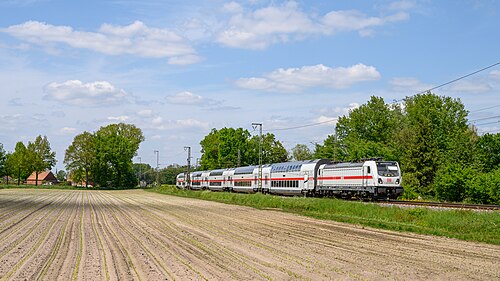
Germany’s busiest conventional corridor: ports to Ruhr through Bremen, Münster and five more big cities — twice an hour, no high-speed line in sight.
Wikipedia ↗ - alex München–Praha
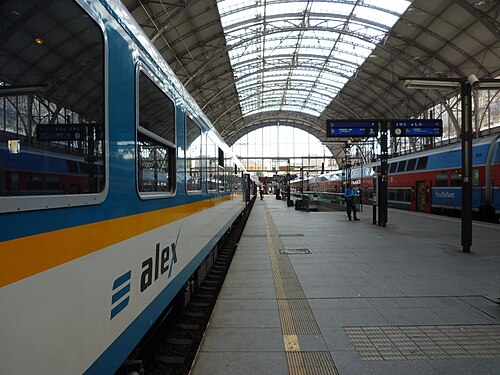
The only direct Munich–Prague train: a famously unhurried crossing of the Bavarian Forest and Bohemia while the corridor awaits its wires.
Wikipedia (DE) ↗ - Main-Weser Railway
One of Germany’s first trunk railways, opened in stages between 1849 and 1852 through Gießen and Marburg; its 160 km/h ceiling is only reachable on the southern half.
Wikipedia ↗ - Halle–Halberstadt railway
The Halle end of the line that reached Vienenburg in 1872, ninety two kilometres by Könnern, Sandersleben and Aschersleben to Halberstadt on the northern edge of the Harz.
Wikipedia ↗ - Lower Left Rhine Railway
The Rhine’s quiet left bank to the Dutch border: Kempen, Geldern, the pilgrim town of Kevelaer and Goch, on rails that reached Kleve on 1 March 1863.
Wikipedia ↗ - Dresden–Görlitz railway
Saxony end to end through Bautzen and the Lusatian hills, opened in stages from November 1845 and formally complete on 1 September 1847.
Wikipedia ↗ - Gotha–Leinefelde railway
Forty two minutes across the Thuringian Basin through Bad Langensalza and Mühlhausen, opened in 1870 and now rebuilt for 160 km/h.
Wikipedia ↗ - Oldenburg–Osnabrück railway
Across the Oldenburg moors and the Artland by Cloppenburg and Quakenbrück; opened as far as Quakenbrück in October 1875 and through to Osnabrück on 15 November 1876.
Wikipedia ↗ - Saalbahn
Forty two minutes up the Saale gorge from Jena by Kahla, Orlamünde and Rudolstadt, on a line opened through to Saalfeld on 30 April 1874.
Wikipedia ↗ - Lahn Valley Railway
The Lahn from Wetzlar down to the Rhine through Weilburg, Limburg, Nassau and the spa at Bad Ems; opened in three pieces and finished on 10 January 1863.
Wikipedia ↗ - Hohenlohebahn
Up the Kocher from Heilbronn through Schwäbisch Hall to Crailsheim; the first half opened in August 1862 and the rest waited until 10 December 1867.
Wikipedia ↗ - Frankenwaldbahn
The climb over the Frankenwald from the Main valley to the Thuringian border at Probstzella by Kronach and Ludwigsstadt, finished in October 1885 and steep enough to need banking engines.
Wikipedia ↗ - Delmenhorst–Hesepe railway
The Oldenburg south line through Vechta and Lohne, built in four pieces between 1888 and 1 May 1900, and still eighty kilometres an hour the whole way.
Wikipedia ↗ - Stralsund–Berlin railway
One of the oldest railways in Western Pomerania, built from 1863 by the Berlin-Stettin company and now the fast run down from Stralsund to Berlin.
Wikipedia ↗ - Danube Valley Railway
Threads the young Danube from Ulm through Blaubeuren and Riedlingen to Sigmaringen, single-tracked and largely unelectrified — once part of the Munich–Freiburg main line.
Wikipedia ↗ - Treuchtlingen–Würzburg railway
Opened in three sections from 1859 and one of Germany's oldest main lines, running through Franconia via Ansbach and Ochsenfurt into Würzburg.
Wikipedia ↗ - Stendal–Uelzen railway
Mostly single track yet electrified and main-line rated, crossing the Altmark from Stendal to Uelzen with Salzwedel the one town of any size on the way.
Wikipedia ↗ - Main-Neckar Railway
Opened in 1846 down the Upper Rhine plain west of the Odenwald, one of Germany's oldest railways and still the local road from Frankfurt through Darmstadt and Bensheim to Heidelberg.
Wikipedia ↗ - Saar Railway
The Saarstrecke of 1858–60 follows the Saar from Trier up to Saarbrücken, one of the oldest railways in Germany and still the valley's stopping service.
Wikipedia ↗ - Regensburg–Ingolstadt railway
Single track but electrified up the Danube valley from Regensburg to Ingolstadt — with the Ingolstadt–Neuoffingen line, the Bavarian Donautalbahn.
Wikipedia ↗ - Stralsund–Rostock railway
Joins the two Hanseatic cities of the Baltic coast — single track, electrified, and rebuilt as German Unity transport project no. 1.
Wikipedia ↗ - Augsburg–Nördlingen railway
Part of the Ludwig South-North Railway of 1844: fast electrified track from Augsburg to Donauwörth, then the branch on to the walled crater town of Nördlingen.
Wikipedia ↗ - Vorarlbergbahn
Vorarlberg end to end: from Lindau on Lake Constance up the Rhine valley and the Walgau to Bludenz, where the Arlberg and Montafon lines begin.
Wikipedia ↗ - Aachen–Mönchengladbach railway
Built by the Aachen-Düsseldorf-Ruhrort company between 1852 and 1854 — one of Germany's oldest lines, and still the freight road from the Ruhr to Belgium.
Wikipedia ↗ - Palatine Ludwig Railway
The Pfälzische Ludwigsbahn of 1847, the Palatinate's main artery through Neustadt, Kaiserslautern and Homburg — and today part of the Paris–Frankfurt run.
Wikipedia ↗ - Munich–Simbach railway
Opened on 1 May 1871 east from Munich through Markt Schwaben and Dorfen to Mühldorf and the Inn at Simbach — one of Germany's identified capacity bottlenecks.
Wikipedia (DE) ↗ - Mühldorf–Freilassing railway
The south-east Bavarian cross-link of 1908, from the Salzburg border at Freilassing over the Alz and Salzach country to Mühldorf.
Wikipedia ↗ - Magdeburg-Wittenberge railway
Double track and electrified across the Altmark, opened in 1849 by the Magdeburg-Wittenberge company and among the oldest railways in Germany.
Wikipedia ↗ - Kiel–Lübeck railway
Mostly single track and still without wires, joining the only two cities in Schleswig-Holstein with more than 100,000 people.
Wikipedia ↗ - Bad Kleinen–Rostock railway
Opened in 1850 by the Mecklenburg Railway Company and now part of the electrified main line that carries Berlin and Hamburg trains to the Baltic at Rostock.
Wikipedia ↗ - Paar Valley Railway
The Paartalbahn: 63 km of single unelectrified main line from Augsburg through Friedberg, Aichach and Schrobenhausen to Ingolstadt.
Wikipedia ↗ - Neumarkt-Sankt Veit–Landshut railway
Single track and unelectrified down the Vils valley from Neumarkt-Sankt Veit to the Isar at Landshut, open since 1883.
Wikipedia ↗ - Heath Railway
The Heidebahn crosses the Lüneburg Heath from Hanover to Buchholz — single track, no wires, and one of only two railways of any weight on the heath.
Wikipedia ↗ - Lübeck–Lüneburg railway
Single track, unelectrified, opened in sections between 1851 and 1864 — one of Germany's oldest railways, from the Elbe salt town to the Baltic.
Wikipedia ↗ - Gäu Railway
The Stuttgart end of the Gäubahn, built by the Württemberg and Baden state railways and still the through road toward Zurich.
Wikipedia ↗ - Eiderstedt Line
Out along the Eiderstedt peninsula through Tönning and Garding to the North Sea beach at Sankt Peter-Ording, on track laid in 1854.
Wikipedia ↗ - Münster–Rheine railway
Double track and electrified across the Münsterland, opened by the Royal Westphalian Railway Company in 1856.
Wikipedia ↗ - Donauwörth–Treuchtlingen railway
Double track over the Franconian Jura, part of the trans-European core network and of the Munich–Augsburg–Nuremberg main road.
Wikipedia ↗ - Neckarelz–Osterburken railway
Opened in 1866 as part of the Baden Odenwald Railway from Heidelberg to Würzburg, now double track and electrified along the edge of the Odenwald.
Wikipedia ↗ - Rostock–Tessin railway
What is left of the 1895 branch east of Rostock: trains still run to Tessin, while the track on to Tribsees has been lifted.
Wikipedia (DE) ↗ - Deister Railway
The Deisterbahn of 1872 skirts the wooded Deister ridge west of Hanover, now worked as a link in the city's S-Bahn.
Wikipedia ↗ - Tüßling–Burghausen railway
A short Bavarian branch to the Salzach and the longest castle complex in the world at Burghausen.
Wikipedia (DE) ↗ - EuroCity Zürich–München
Electrified through in 2020, which cut an hour off the run: out of Zurich by Winterthur and St Gallen, over the Rhine at St Margrethen, along Lake Constance through Bregenz and Lindau, then the Allgäu to Munich.
- IC Köln–Norddeich
DB’s seaside Intercity: down the Rhine-Ruhr, through Münster and the Emsland flats to the North Sea pier at Norddeich Mole.
- ICE Frankfurt–Dresden
The Saxony ICE: Fulda’s wooded hills, Luther’s Eisenach and Erfurt, the 2015 high-speed line into Leipzig, then the Elbe plain to Dresden.
- IC Karlsruhe–Nürnberg
The cross-country IC via the 1861 Remsbahn: Stuttgart, the Rems valley vineyards, then Aalen and Crailsheim’s hills to Nuremberg.
- Braunschweig–Uelzen railway
The emigrants’ road: Braunschweig via Gifhorn to Uelzen, on to the America ships at Bremen and Hamburg; single track since the war, never wired, famously Germany’s most delayed line.
- ICE Hamburg–Binz
The Rügen through train: out of Hamburg past Schwerin and Rostock to Stralsund, over the Rügendamm and on to the chalk coast at Binz.
- ICE Dortmund–Oberstdorf
The Ruhr to the Allgäu in one train: Dortmund, the Rhine gorge past the Lorelei, Mannheim and Ulm, then up the Iller valley to Oberstdorf under the Alps.
- IC Gera–Düsseldorf
East Thuringia to the Rhine: Gera and Jena, Erfurt and Eisenach under the Wartburg, then Kassel, the Ruhr and Düsseldorf.
- IC Leipzig–Norddeich
Saxony to the North Sea ferry pier: Leipzig, Magdeburg and Hannover, then Bremen and the East Frisian flats to the quayside at Norddeich Mole.
- IC Leipzig–Warnemünde
Leipzig to the Baltic beach: Halle and Magdeburg, the Stendal cut-off and Schwerin, then Rostock and out to the pier at Warnemünde.
- EC Wawel
The EuroCity across Poland: Berlin and the Oder, Wrocław and Opole, the Silesian cities and Kraków, then on east to Przemyśl at the Ukrainian border.
Wikipedia ↗ - RE 3 Dresden–Hof
Saxony corner to corner: out of Dresden up the Tharandt ramp, then Freiberg, Chemnitz, Zwickau and the Vogtland to Hof, on a chain of lines the Freiberg link joined up in 1869.
- RE 6 Chemnitz–Leipzig
An hour between Saxony’s two biggest cities, Chemnitz to Leipzig by way of Geithain and Borna, on a line opened in April 1872.
- RB 45 Chemnitz–Elsterwerda
North out of Chemnitz down the Zschopau valley to Döbeln and Riesa on the Elbe, then on to Elsterwerda, joining a railway of 1852 to one of 1875.
- RB 1 Zwickau–Kraslice
Out of the Zwickau coalfield into the Vogtland hills and over the Czech border above Klingenthal to Kraslice, on rails a coal railway company opened in November 1875.
- RB 59 Gammertingen–Schelklingen
Across the Swabian Alb at sixty kilometres an hour: Gammertingen to Engstingen and Münsingen, then down to Schelklingen and the Danube, on branch lines opened in 1901.
- RE 2 Liberec–Dresden
Bohemia into Saxony on the Lusatian branches: Liberec down the Neisse to Zittau, then Ebersbach and Bischofswerda, on a chain the Oberoderwitz link completed in October 1879.
- Innkreisbahn
Neumarkt-Kallham to Braunau opened on 20 December 1870 and the bridge over the Inn to Simbach on 1 June 1871; from 1883 to 1897 the Orient Express took this way between Vienna and Munich.
Wikipedia ↗ - EBOE Elmshorn–Ulzburg
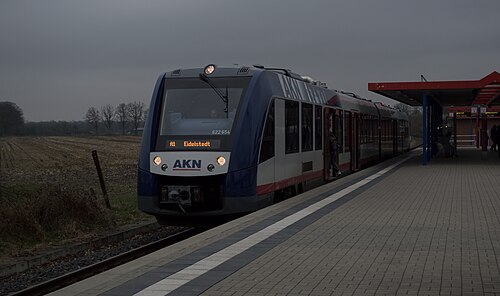
Elmshorn to Barmstedt opened as a light railway on 15 July 1896; the Barmstedt to Oldesloe company carried it on to Ulzburg on 9 June 1907, and the AKN has run it since 1981.
Wikipedia ↗ - Koleje Dolnośląskie D25
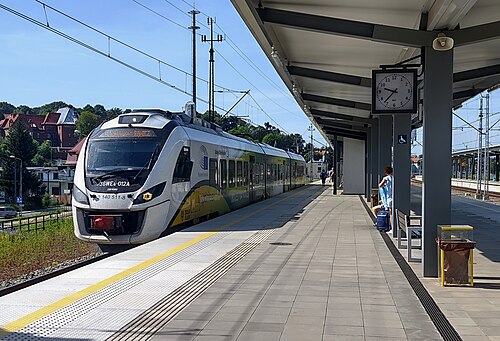
Most of the old Breslau–Berlin trunk, in its 1875 alignment through Żagań: a single Lower Silesian sprinter crosses the Nysa at Zasieki and runs 189 km to Wrocław.
- EuroCity Via Regia
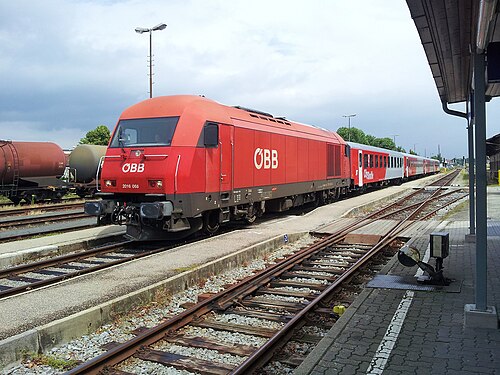
Named for the medieval road it shadows: the EuroCity takes the Oberlausitz company’s line of 1874 and crosses at Horka, a border that carried no scheduled passenger trains for decades.
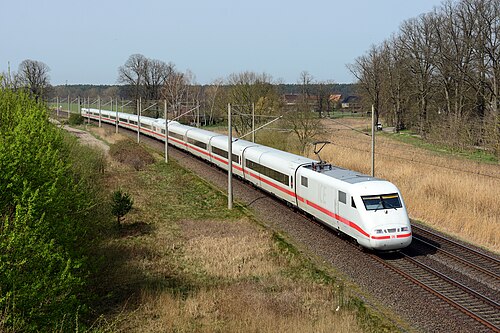
.jpg/500px-111_147_-_DB_Regio_NRW_--_Geilenkirchen_-_16._April_2014_(14028750302).jpg)

Night train (9)
- EuroNight
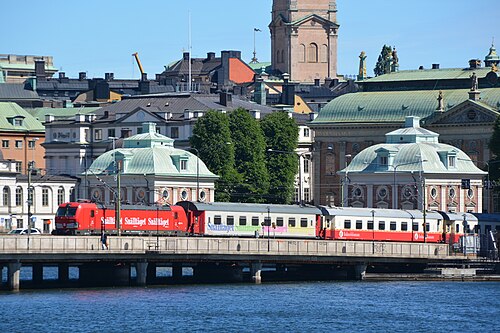
Scandinavia’s night-train revival: across the Öresund while you sleep, into Germany by breakfast.
Wikipedia ↗ - Nightjet
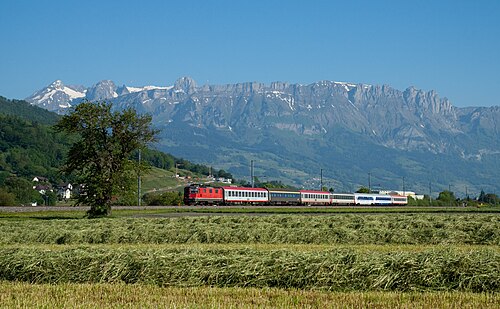
The founding route of the Nightjet brand: over the Arlberg while you sleep, Alps at both ends.
Wikipedia ↗ - European Sleeper
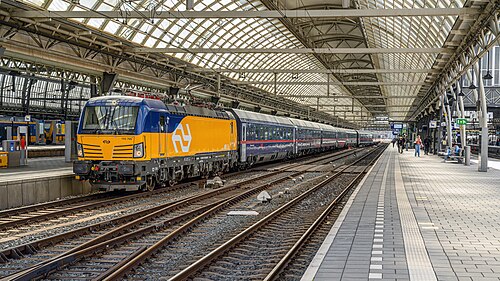
Crowdfunded start-up that gave the Low Countries their night train back: via The Hague and Amsterdam to Berlin and the Elbe valley to Prague.
Wikipedia ↗ - Nightjet
First route to get ÖBB’s new-generation Nightjets in 2023. Mini Cabin pods for solo travellers and 230 km/h sleeper stock.
Wikipedia ↗ - Nightjet Munich–Rome
Board after dinner in Bavaria, wake to Tuscan hills: mini-cabins and wireless charging on ÖBB’s newest sleepers, crossing the Tauern by night. From Villach south it runs coupled with the Vienna portion — one train into Rome.
Wikipedia ↗ - Nightjet Zurich–Amsterdam
Asleep along the Rhine, awake on the IJ: the 2021 revival that re-linked the Alps to the canals, sliding past Cologne’s floodlit cathedral at midnight.
Wikipedia ↗ - Snälltåget
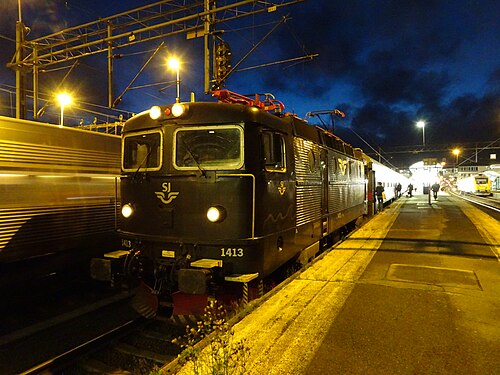
A private summer sleeper down through Sweden, over the Öresund bridge past Copenhagen and across Denmark to Berlin, outlasting the state night trains.
Wikipedia ↗ - EuroNight Praha–Zürich
The Czech–Swiss night link revived in 2023: the Elbe sandstone gorge at dusk, the Rhine plain at dawn, Zurich by breakfast.
Wikipedia ↗ - European Sleeper
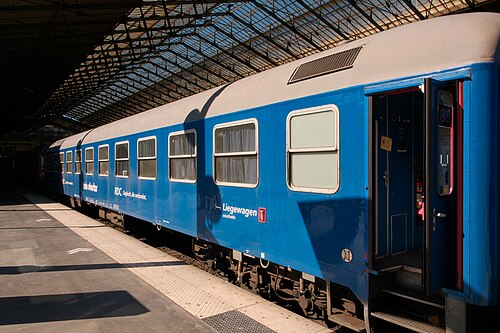
The night train that replaced the lost Nightjet: Paris to Berlin via Brussels three times a week since March 2026, the open-access sleeper’s boldest route yet.
Wikipedia ↗
Scenic (20)
- Rhine Valley Line
Castle after castle past the Lorelei rock: the left bank of the Rhine is one long UNESCO postcard.
Wikipedia ↗ - Schwarzwaldbahn
Robert Gerwig’s 1873 blueprint for mountain railways climbs about 650 m through 39 tunnels and two sweeping double loops high above Triberg.
Wikipedia ↗ - Brockenbahn
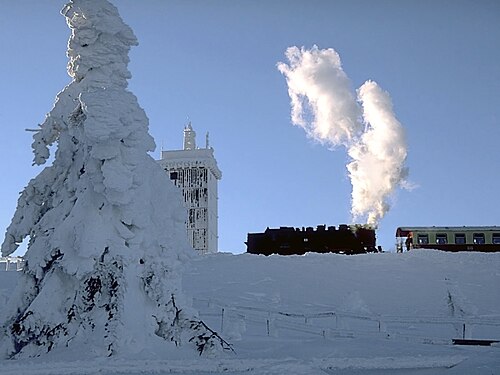
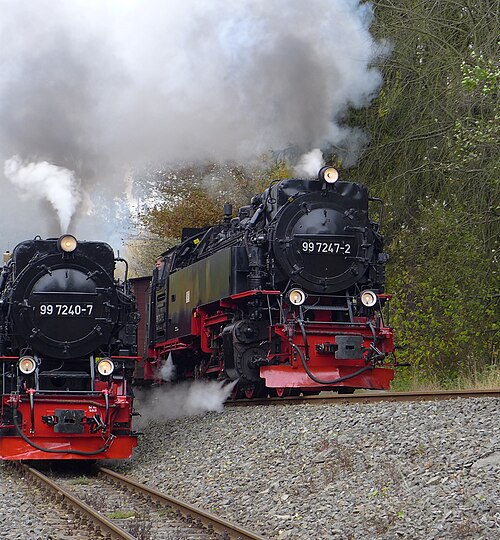
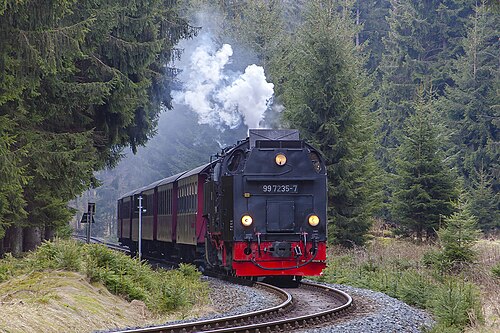
Metre-gauge steam still storms year-round to the 1,141 m Brocken. Goethe’s witches’ mountain, sealed off as a Soviet listening post until 1989.
Wikipedia ↗ - Höllentalbahn
Germany’s steepest main line climbs Hell’s Valley at 55 ‰: through the Hirschsprung gorge and over the Ravenna viaduct into the high Black Forest.
Wikipedia ↗ - Moselstrecke
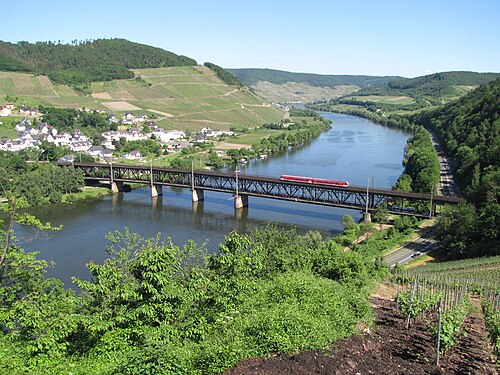
Follows the wine-terraced Moselle past Cochem, crossing the river on the historic two-tier Alf–Bullay bridge below Germany’s steepest vineyards.
Wikipedia ↗ - Molli
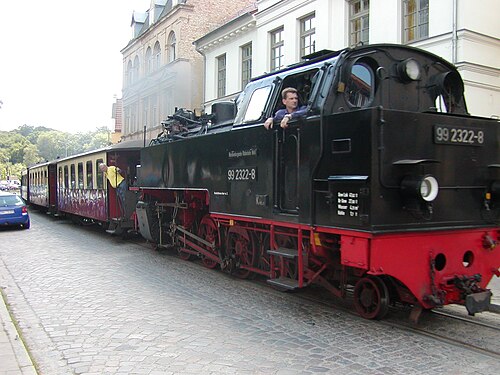
A rare 900 mm-gauge steam line running since 1886, Molli puffs right down the middle of Bad Doberan’s tree-lined avenue on its way to the Baltic shore.
Wikipedia ↗ - Rasender Roland
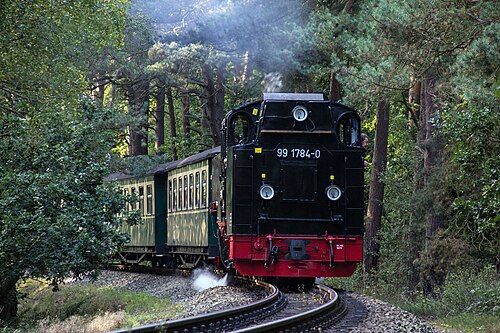
Nicknamed the Racing Roland, this 750 mm-gauge steam railway has linked Rügen’s white-sand Baltic resorts of Binz, Sellin and Göhren since 1895.
Wikipedia ↗ - Eifelbahn
Rebuilt after the 2021 flood tore it out: Cologne into the volcanic Eifel over Gerolstein’s crags and down the Kyll gorge to Trier.
Wikipedia ↗ - Selketalbahn (Harz Narrow Gauge)
Metre-gauge Mallet steam locomotives still double-head trains out of Alexisbad on this Harz valley line, opened for timber and ore in 1887.
Wikipedia ↗ - Arlberg Railway
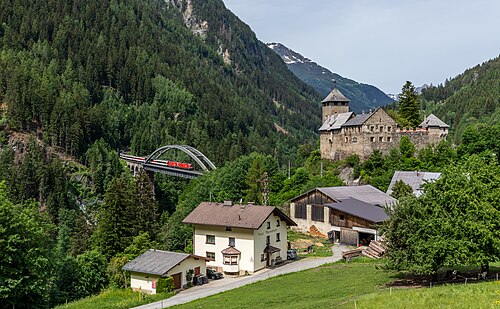
Eight hours Zurich to Vienna on Austria’s only east–west mountain mainline: the Trisanna gorge, Wiesberg Castle and a 1,310 m summit in the 10.2 km Arlberg tunnel.
Wikipedia ↗ - Wuppertal Schwebebahn
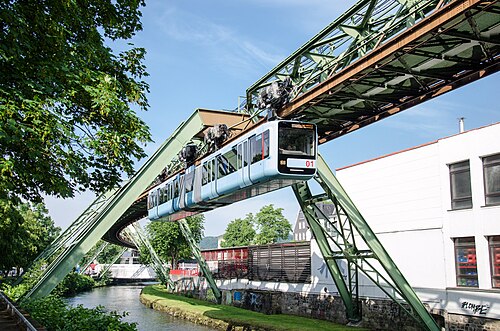
The world’s oldest electric suspension railway, hanging from a steel frame above the Wupper river since 1901, a monorail that never stopped commuting.
Wikipedia ↗ - Mittenwaldbahn
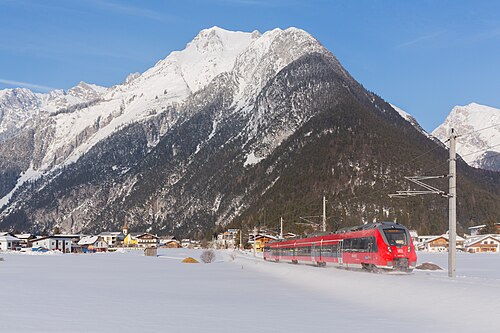
Munich to the Tyrol over the Karwendel: the electrified 1912 Mittenwaldbahn climbs from Garmisch through Alpine meadows and horseshoe curves to the Seefeld saddle before dropping into Innsbruck.
Wikipedia ↗ - Harzquerbahn
HSB’s metre-gauge trunk across the Harz: 2-10-2 tank engines storm out of Nordhausen up the Zorge valley to Drei Annen Hohne, the junction where the Brocken steam begins.
Wikipedia ↗ - Borkumer Kleinbahn
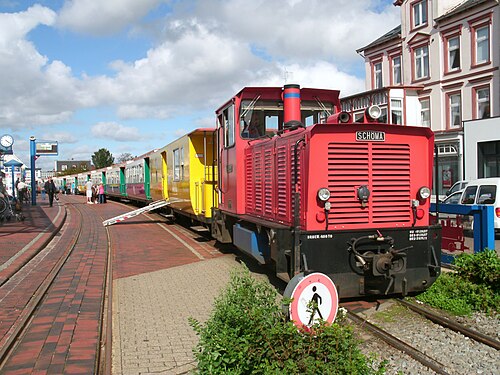
Timed to the tide: Borkum’s 900 mm railway (1888) meets every ferry at the Reede pier and rolls 7 km along the dike into the North Sea island’s town.
Wikipedia ↗ - Wangerooger Inselbahn
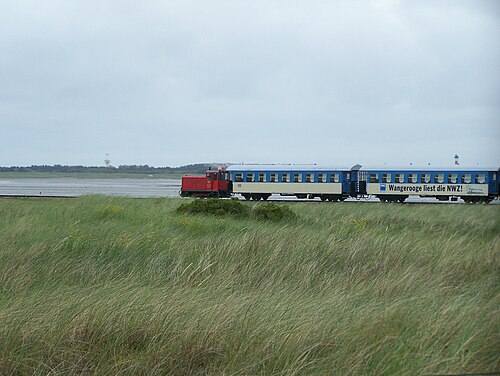
Deutsche Bahn’s only narrow gauge: the tide writes the timetable as diesels haul ferry passengers across the salt marsh from Westanleger pier to car-free Wangerooge village.
Wikipedia ↗ - Kochelsee Railway
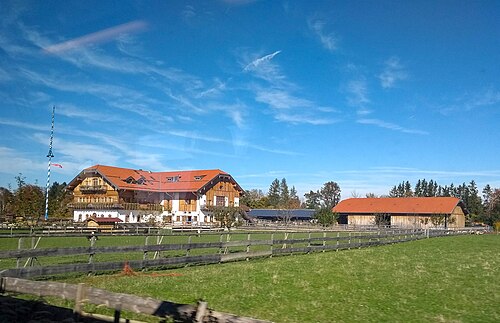
Bavarian lakes branch of 1865: from Tutzing on the Starnberger See south to the Kochelsee under the first peaks of the Alps.
Wikipedia ↗ - Ammersee Railway
The Ammerseebahn, single track from Mering near Augsburg past Geltendorf and the Ammersee to Weilheim under the Bavarian Alps.
Wikipedia ↗ - Haller Willem
The Haller Willem climbs the Teutoburg Forest on a gradient built in 1886 — the tunnel that would have eased it was left out to save money.
Wikipedia ↗ - Lauter Valley Railway
The Lautertalbahn follows its river out of Kaiserslautern to Lauterecken — a branch the Bundesbahn planned to close in the 1980s and never did.
Wikipedia ↗ - Marktoberdorf–Füssen railway
The Allgäu branch to Füssen, opened by a private local railway in 1889 and now the train that delivers visitors below Neuschwanstein.
Wikipedia ↗
Heritage (10)
- Rübelandbahn
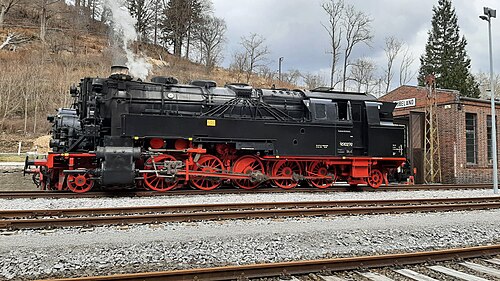
Heritage steam storms a fierce Harz grade once worked by rack rail; the 1926 tank engine 95 027, the Bergkönigin, still climbs to the caves at Rübeland.
Wikipedia ↗ - Zittauer Schmalspurbahn
750 mm-gauge steam climbs from Zittau to the sandstone crags of the Zittau Mountains, serving the pilgrimage village of Oybin since 1890.
Wikipedia ↗ - Sauschwänzlebahn (Wutach Valley Railway)
Germany’s only spiral railway tunnel: a 1,700 m loop at Stockhalde lets the line climb the Black Forest by circling back over itself.
Wikipedia ↗ - Chiemsee-Bahn
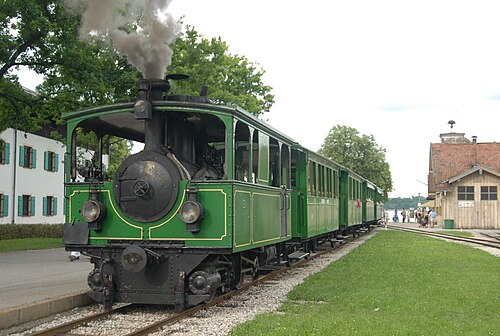
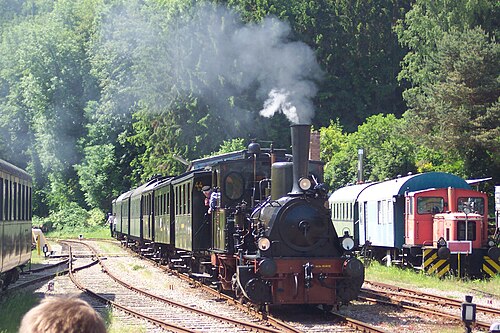
The world’s oldest steam tram still in service, an 1887 green Krauss engine that shuttles down to the Chiemsee jetty for the boat to Ludwig II’s island palace.
Wikipedia (DE) ↗ - Fichtelbergbahn
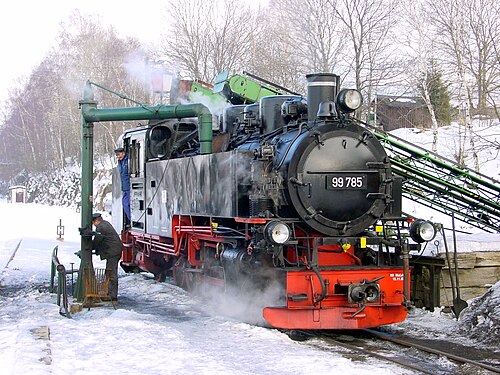
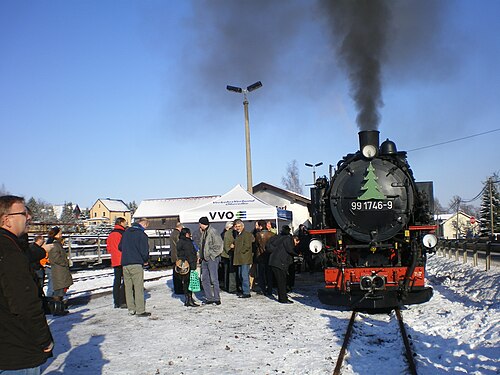
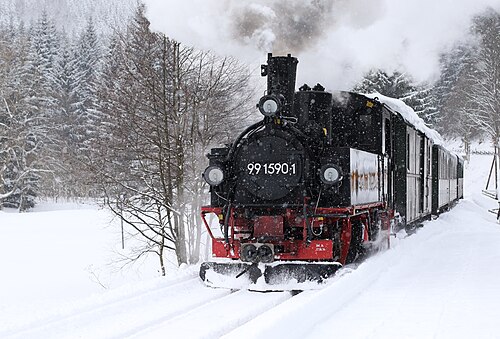
Saxon narrow-gauge steam, every day of the year: 750 mm VII K locomotives hauling green coaches 238 m uphill to Oberwiesenthal, Germany’s highest town.
Wikipedia ↗ - Weißeritztalbahn
Germany’s oldest working public narrow gauge (1882): 750 mm steam daily through the Rabenauer Grund gorge and past Malter dam, 350 m up into the Ore Mountains to Kipsdorf.
Wikipedia ↗ - Lößnitzgrundbahn
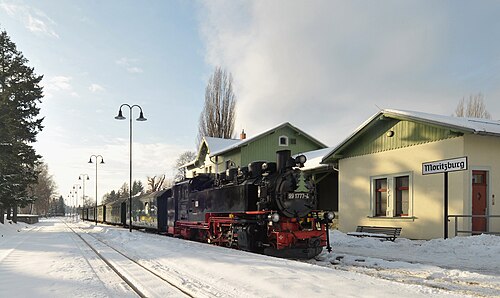
Daily steam on Dresden’s doorstep since 1884: out of Radebeul’s villa streets into the wooded Lößnitzgrund, past Moritzburg’s moated hunting palace to little Radeburg.
Wikipedia ↗ - Brohltalbahn
The Vulkan-Expreß ambles at Tempo 20 from the Rhine at Brohl 400 m up into the volcanic Eifel, on metre gauge laid in 1901 to carry the region’s tuff and phonolite.
Wikipedia (DE) ↗ - Preßnitztalbahn
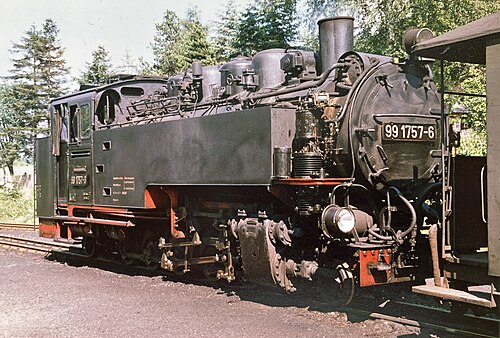
Torn up in 1986, relaid 1992–2000 by volunteers: Saxon IV K tanks once more steam the upper Preßnitz valley from Steinbach to Jöhstadt on weekends through the year.
Wikipedia ↗ - Kandertalbahn
Sunday steam up the Kandertal from the Rhine plain at Haltingen to Kandern, the 1895 branch kept running by the society that saved it.
Wikipedia ↗
Mountain (6)
- Bayerische Zugspitzbahn
Germany’s highest railway: cogwheels from Garmisch past the Eibsee, then 4.5 km of tunnel to snowfields at 2,588 m below the country’s highest summit.
Wikipedia ↗ - Heidelberg Bergbahnen
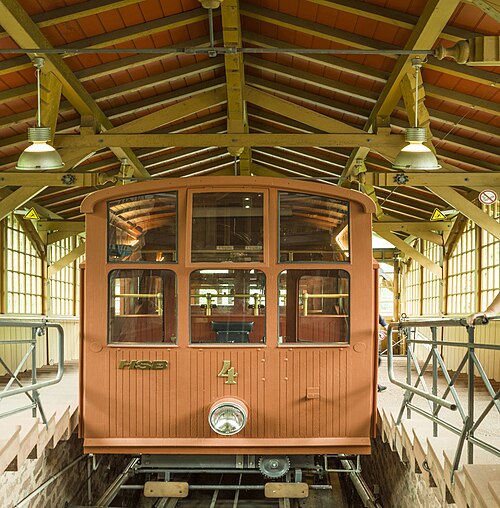
Two funiculars stacked end to end: a modern car to the castle, then 1890s wooden carriages on up to the Königstuhl summit — Germany’s longest funicular climb.
Wikipedia ↗ - Dresden Standseilbahn
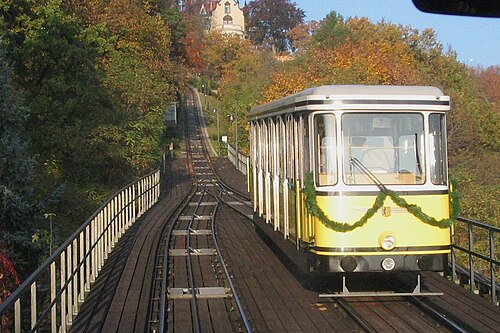
From Loschwitz villa streets to the Weißer Hirsch heights since 1895, sister to the suspension railway one valley over.
Wikipedia ↗ - Wendelsteinbahn
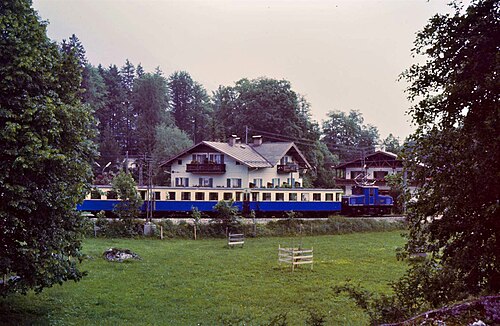
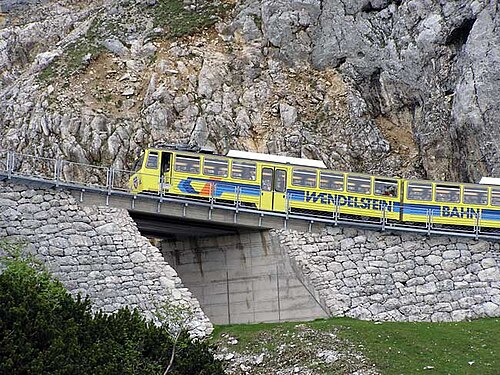
Bavaria’s oldest high-mountain railway of 1912 racks up from Brannenburg through tunnels and 25% grades toward the Wendelstein’s summit cave, observatory and panorama over the Inn valley.
Wikipedia ↗ - Drachenfelsbahn
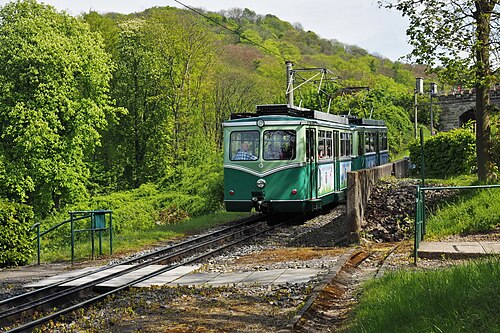
Germany’s oldest rack railway (1883) climbs 220 m in eight minutes from Königswinter past Schloss Drachenburg to the Drachenfels ruin above the Rhine — Siegfried’s dragon mountain.
Wikipedia ↗ - Nerobergbahn
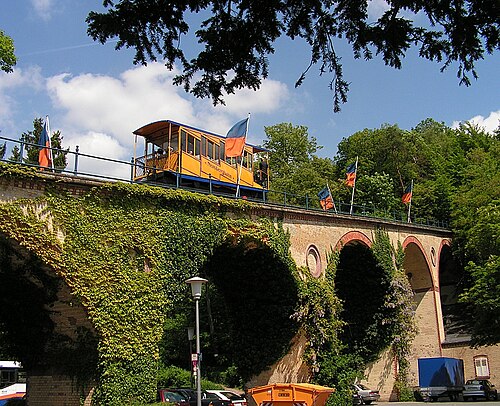
Germany’s only surviving water-ballast funicular (1888), still climbing Wiesbaden’s Neroberg on 7,000 litres of tank water and no engine.
Wikipedia ↗
Photos via Wikimedia Commons — each route page credits the author & licence
What is the fastest train in Germany?
The TGV / ICE, running Paris to Frankfurt at up to 320 km/h. It is one of 138 routes in Germany in this atlas.
Are there night trains in Germany?
Yes — 9 sleeper services in this atlas serve Germany: EuroNight (Stockholm – Hamburg), Nightjet (Vienna – Zurich), European Sleeper (Brussels – Prague), Nightjet (Hamburg – Vienna), and others.
Can you cross the border by train from Germany?
Yes — 35 of its 138 routes continue into another country: EuroNight (Stockholm – Hamburg), Nightjet (Vienna – Zurich), European Sleeper (Brussels – Prague), Nightjet (Hamburg – Vienna), among others.
Which is the most scenic railway in Germany?
Germany has 26 scenic or mountain lines in this atlas. The longest is the Arlberg Railway, 811 km.
Cross-border lines continue into
- 🇦🇹 Train routes in Austria 63 routes
- 🇧🇪 Train routes in Belgium 27 routes
- 🇨🇿 Train routes in Czechia 31 routes
- 🇩🇰 Train routes in Denmark 25 routes
- 🇫🇷 Train routes in France 109 routes
- 🇭🇺 Train routes in Hungary 41 routes
- 🇮🇹 Train routes in Italy 83 routes
- 🇱🇮 Train routes in Liechtenstein 4 routes
- 🇱🇺 Train routes in Luxembourg 7 routes
- 🇳🇱 Train routes in Netherlands 19 routes
- 🇵🇱 Train routes in Poland 53 routes
- 🇸🇰 Train routes in Slovakia 20 routes
- 🇸🇪 Train routes in Sweden 29 routes
- 🇨🇭 Train routes in Switzerland 71 routes