
High-speed route
Akita Shinkansen
Tokyo → Akita · Japan
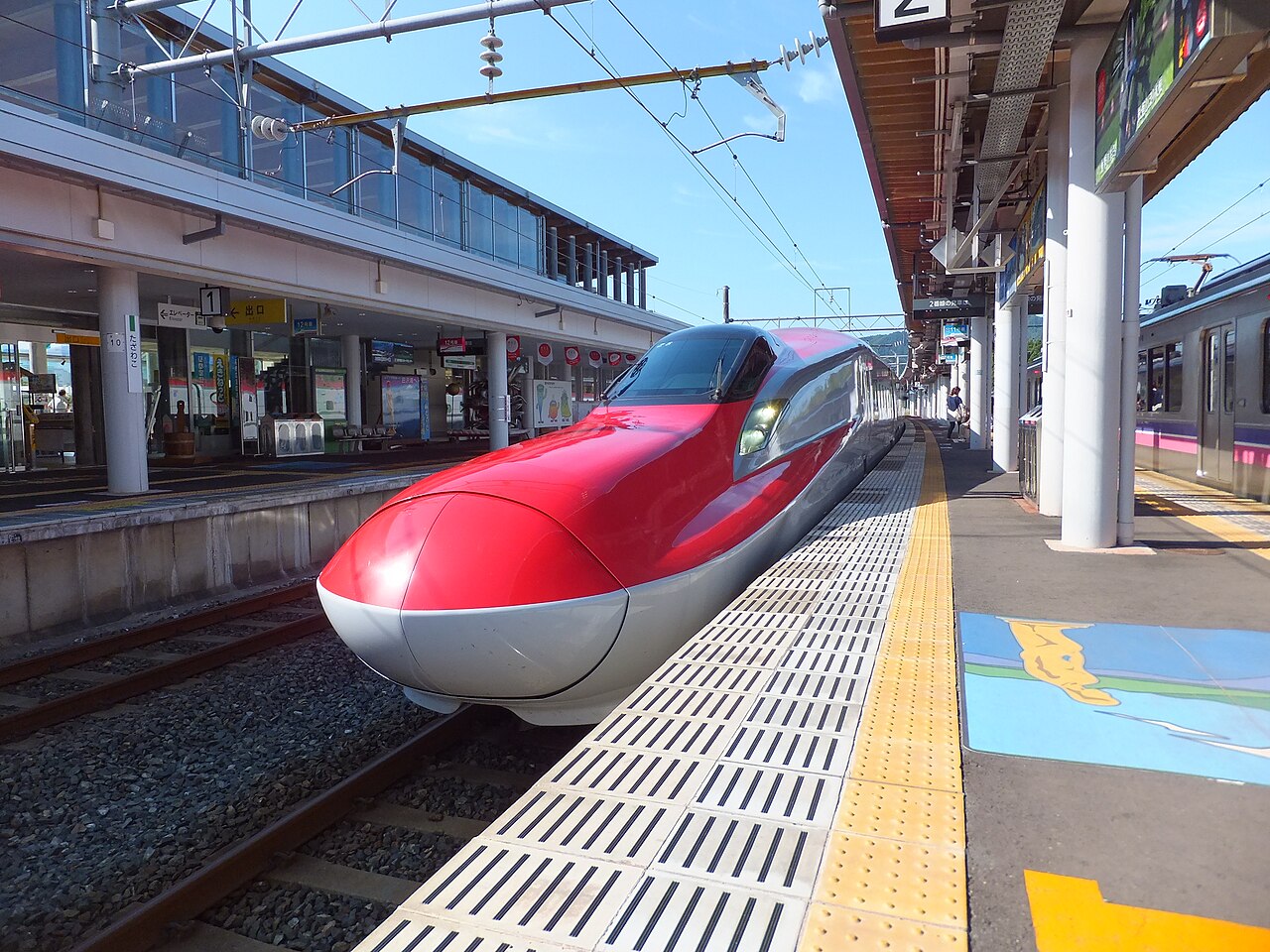
Crimson “Komachi” units ride the Hayabusa at 320 km/h to Morioka, then swap to single-track mountain rails past Lake Tazawa: a bullet train on a branch-line stage.
Rather than drive a new line through the Ōu mountains, JR East re-gauged a country railway, so the same train that races the Tōhoku corridor finishes its journey at country-railway tempo, pausing at passing loops for oncoming locals. The Komachi name honours Ono no Komachi, the ninth-century poet whose legendary beauty these parts claim as their own. Out the window: Kakunodate’s samurai streets, Lake Tazawa, Japan’s deepest at 423 m, and the rice plains that fill Akita’s sake vats.
Along the way
- Mt. Iwate from Morioka
- Shizukuishi valley
- Lake Tazawa — Japan’s deepest
- Kakunodate samurai quarter
- Ōmagari — fireworks capital
- Akita rice plains
How this line was checked
- The 127 km this route shares with OpenStreetMap relation 5361971 is drawn from that relation's own nodes, thinned to within under 25 m of them
- Checked against OpenStreetMap: 99.4% of this line lies within 250 m of real track (median 21 m); the longest stretch away from it is 2 km
- The operator publishes this line's timetable: JR East — a place to look it up, not a check of our drawing
- Wikipedia has an article for this line
- See for yourself: open this line on the map with OpenStreetMap's own railway drawn underneath it
Questions and answers
How long is the Akita Shinkansen?
The Akita Shinkansen runs 663 km from Tokyo to Akita.
How long does the Akita Shinkansen take?
The fastest scheduled journey is 3 h 37 min for the 663 km. That is an average of 183 km/h end to end. The line's top service speed is 320 km/h.
Who runs the Akita Shinkansen?
JR East, with E6 “Komachi”.
How old is the Akita Shinkansen?
The line has been in service since 1997. That is the year the atlas dates it from: for a modern brand running over an older railway, it is the railway's date, not the brand's.
How often does the Akita Shinkansen run?
≈ hourly.
More high-speed routes
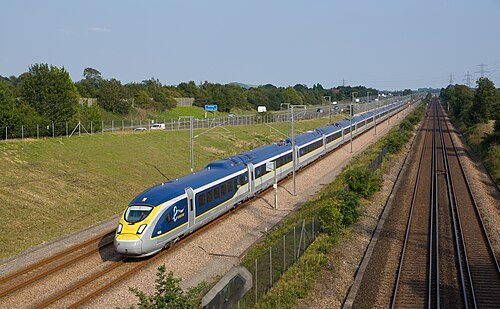
- Eurostar
Drops 75 m below the sea through the 50.5 km Channel Tunnel, 37.9 km of it under the seabed, the longest undersea stretch of any rail tunnel.
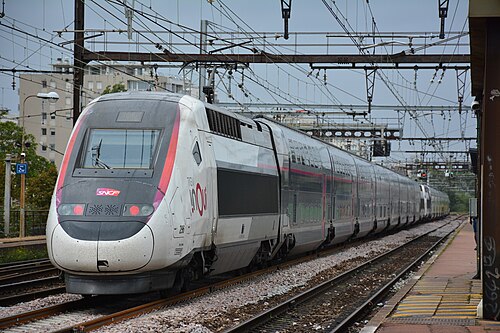
Wikipedia ↗ - TGV inOui
France’s original 1981 LGV forms the first leg; today the TGV holds 320 km/h nearly all the way to the Mediterranean.
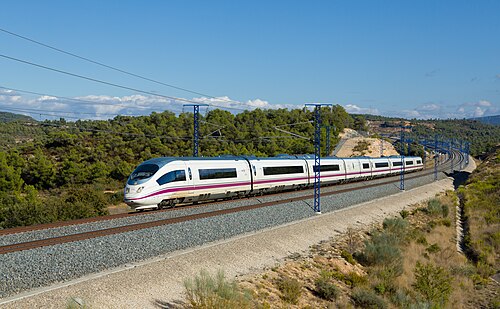
Wikipedia ↗ - AVE
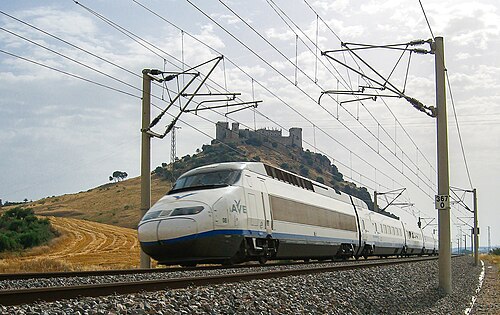
Scheduled at 300 km/h, this line flipped one of the world’s busiest air routes to rail.
Wikipedia ↗ - AVE
Spain’s first AVE, built for Expo ’92 in standard gauge, the line that reset Spanish railways.
Wikipedia ↗
More train routes in Japan.