
Mountain route
Budavári Sikló
Budapest (Clark Ádám tér) → Buda Castle · Hungary
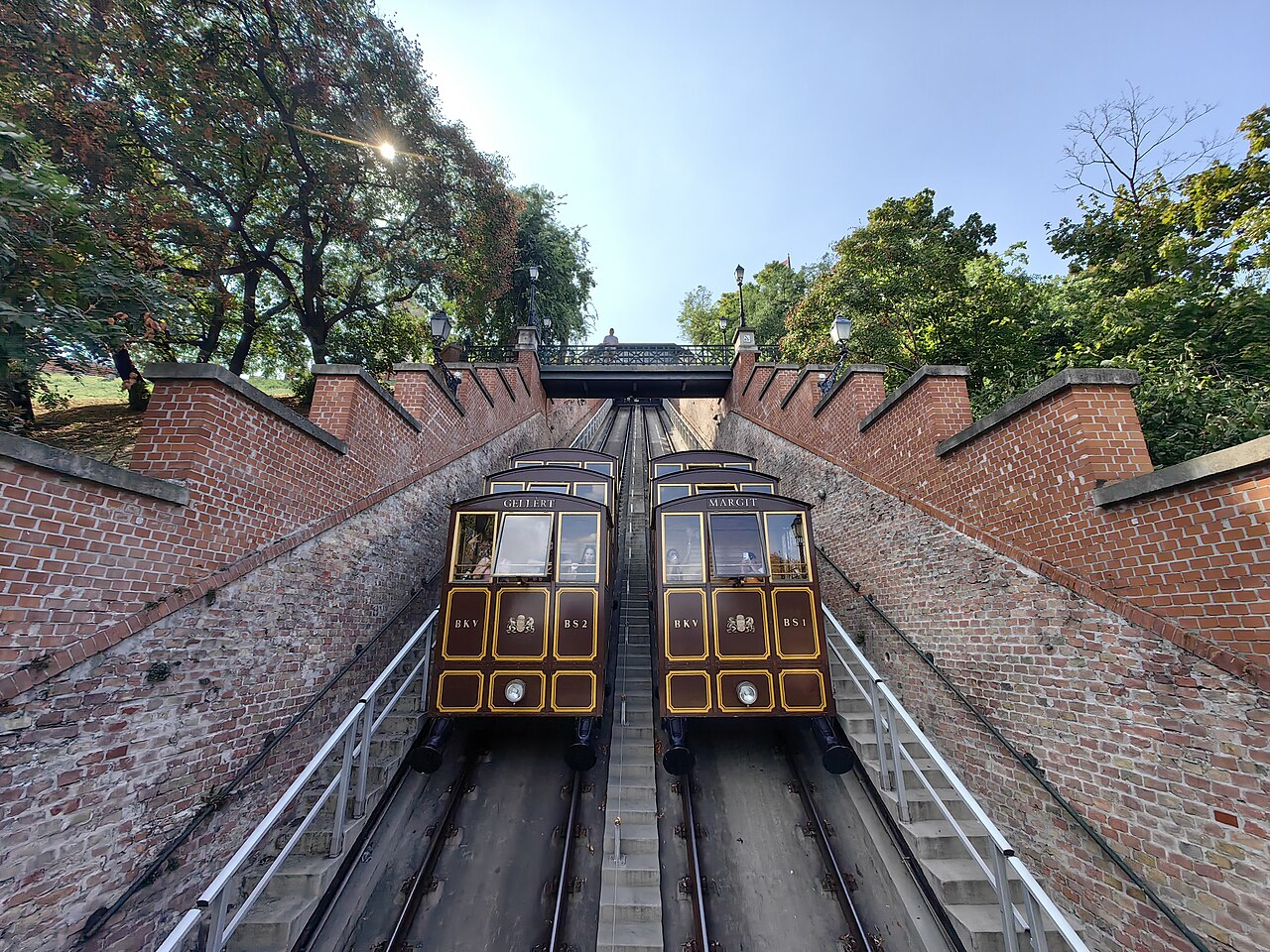
Opened 1870 as Europe’s second funicular; destroyed in WWII and rebuilt in 1986, it climbs to Buda Castle inside the UNESCO Danube panorama.
How this line was checked
- Line drawn from OpenStreetMap relation 16111079 — the same nodes OpenStreetMap holds for this railway, thinned to within under 25 m of them
- Checked against OpenStreetMap: the whole line lies on real track, a median 159 m from it
- The operator publishes this line's timetable: BKV — a place to look it up, not a check of our drawing
- Wikipedia has an article for this line
- See for yourself: open this line on the map with OpenStreetMap's own railway drawn underneath it
Questions and answers
How long is the Budavári Sikló?
The Budavári Sikló runs 100 m from Budapest (Clark Ádám tér) to Buda Castle.
How long does the Budavári Sikló take?
The fastest scheduled journey is 2 min for the 100 m. That is an average of 3 km/h end to end.
Who runs the Budavári Sikló?
BKV, with replica 19th-century wooden cars Margit and Gellért (1986).
How old is the Budavári Sikló?
The line has been in service since 1870. That is the year the atlas dates it from: for a modern brand running over an older railway, it is the railway's date, not the brand's.
More mountain routes
- Jungfraubahn
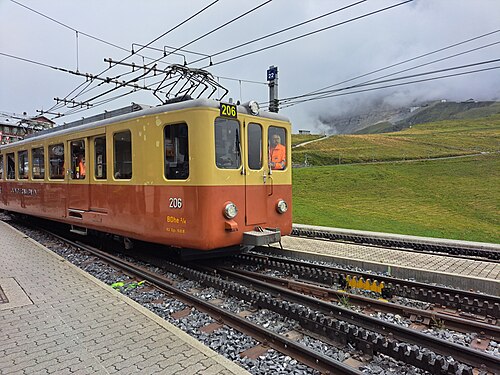
Tunnels INSIDE the Eiger to Europe’s highest station at 3,454 m, the “Top of Europe” since 1912.
Wikipedia ↗ - Nilgiri Mountain Railway
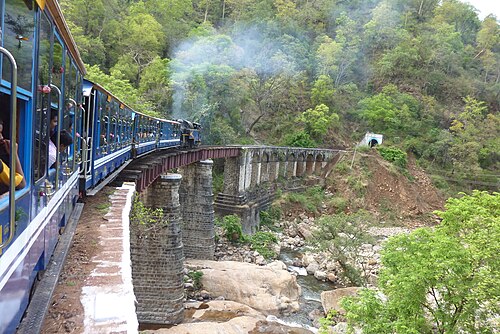
India’s only rack railway: X-class steam pushes the blue coaches up 1-in-12 grades from palm plains to Ooty’s tea hills; UNESCO-listed in 2005.
Wikipedia ↗ - West Coast Wilderness Railway
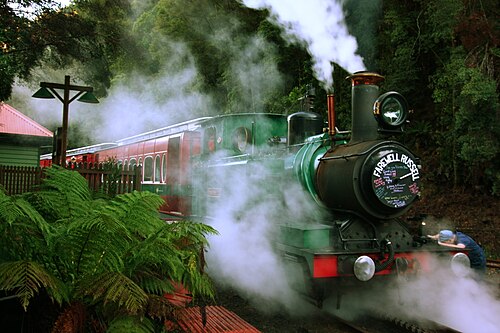
The 1896 copper railway hauls itself up 1-in-16 grades on Abt rack cogs, steaming once more from Queenstown’s bare hills into the King River rainforest.
Wikipedia ↗ - Gornergrat Bahn
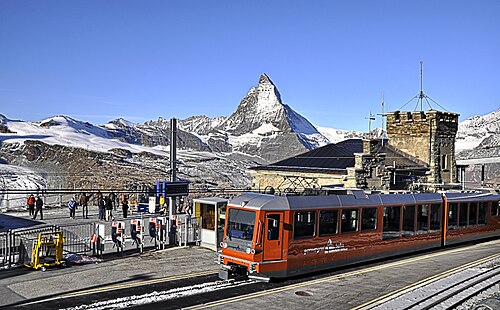
Europe’s highest open-air railway climbs from Zermatt to 3,089 m: the Matterhorn framed in the window from the first curve to the summit ridge.
Wikipedia ↗
More train routes in Hungary.