
🇭🇺 Country
Train routes in Hungary
41 routes · classic 33 · night train 1 · scenic 2 · heritage 4 · mountain 1
41 routes cross Hungary in the World Train Map atlas. The longest is the Railjet at 992 km; the fastest is the Railjet, running up to 230 km/h; the oldest line dates to 1851. Every route links to its facts, photo and story, and to the interactive world map.
Open the world railway map →Part of the Europe train map: every route on the continent, one map.
Classic (33)
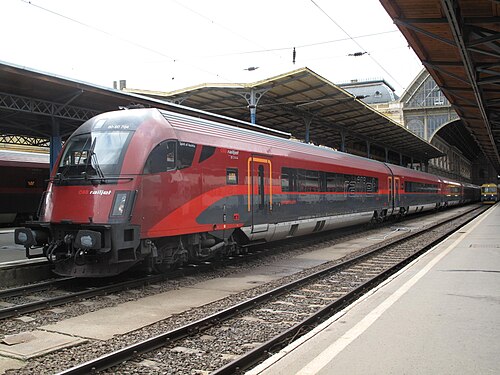
- Railjet
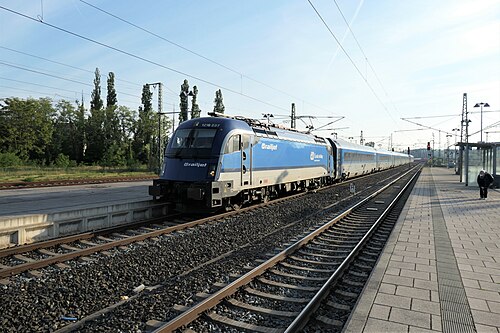
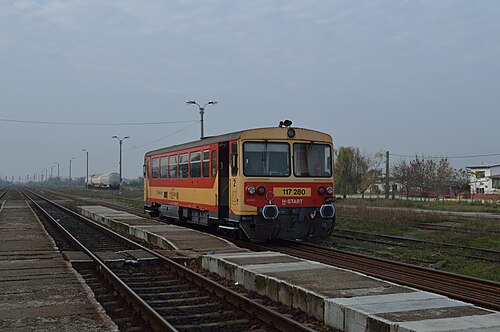
Follows the old Orient Express alignment down the Danube plain: centre to centre faster than any flight.
Wikipedia ↗ - Balaton InterCity
Summer expresses to Siófok on the south shore of Lake Balaton, central Europe’s largest lake and Hungary’s beach playground.
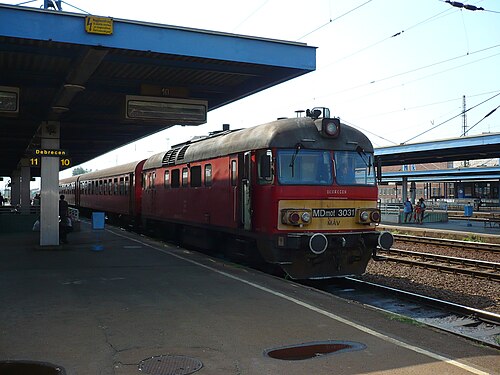
Wikipedia (HU) ↗ - InterCity Debrecen
Hourly InterCity across the Great Hungarian Plain to Debrecen, the nation’s second city, on the 160 km/h eastern main line.
Wikipedia ↗ - InterCity Pécs
InterCity to Pécs, a sun-warmed city of Roman tombs and an Ottoman mosque near the Croatian border in southern Hungary.
Wikipedia (HU) ↗ - Railjet
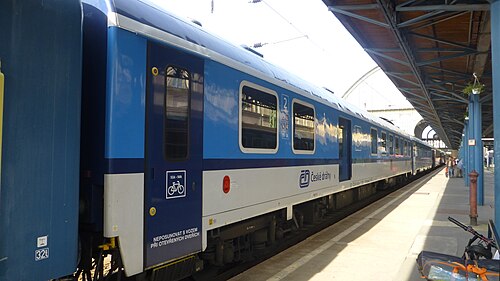
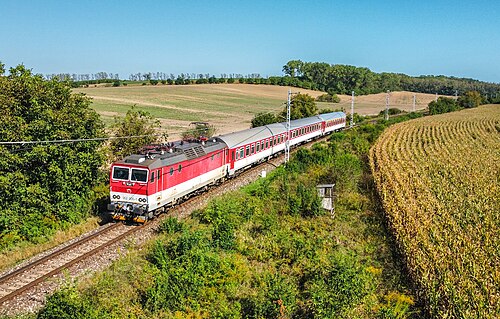
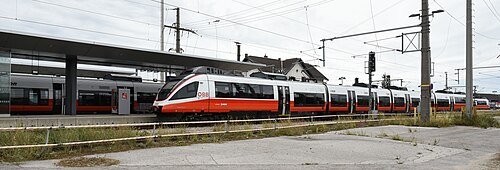
Four countries in eleven hours, Danube Bend to Brandenburg by way of Bratislava, Brno and Prague, and through the sandstone gorge of the Elbe on a railway the Saxons and the Austrians opened together in 1851.
- REX Wien–Sopron
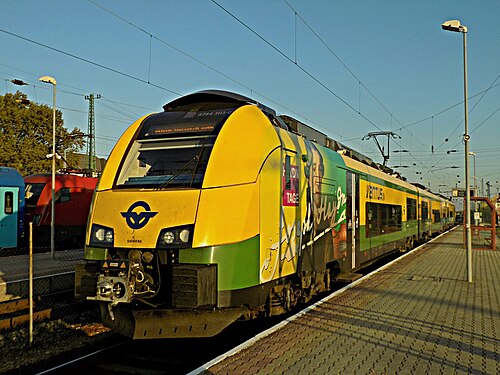
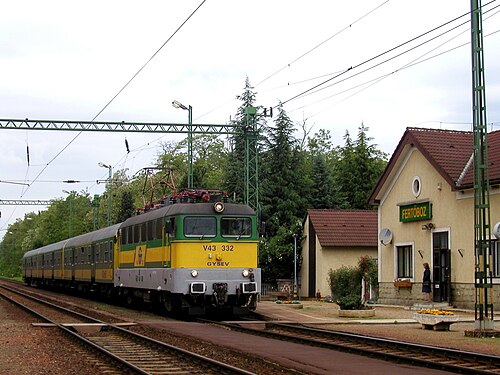
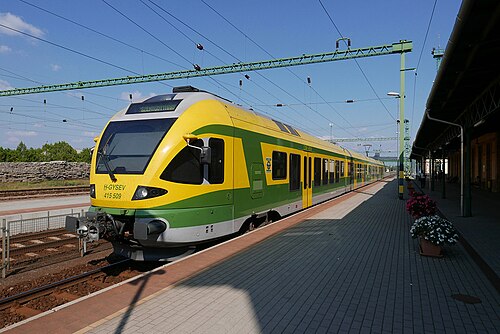
Vienna into Hungary the old imperial way: Wiener Neustadt, the Ödenburg plain, and GySEV’s green-and-yellow home town of Sopron.
- EuroCity Hungaria corridor
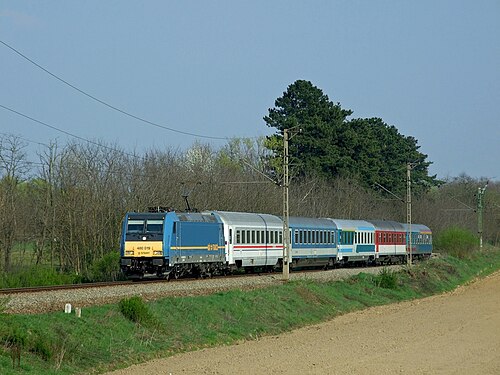
The Danube-bend main line: EuroCities every two hours sweeping past Štúrovo and the great river’s knee at Visegrád into Budapest.
Wikipedia (HU) ↗ - EuroCity Budapest–Zagreb
The only Hungary–Croatia day train: along Balaton’s southern shore, over the Drava at Gyékényes and down through Zagorje to Zagreb.
Wikipedia (HU) ↗ - EC Hornád
Budapest’s only direct reach into eastern Slovakia: the little EuroCity that grows at Miskolc, bound for Košice’s Gothic cathedral square.
- IC Budapest–Szeged
Hourly ICs across the Great Plain to Hungary’s paprika capital and its vast Votive Church — the southern spoke of the MÁV intercity star.
Wikipedia ↗ - Szeged–Békéscsaba railway
Line 135 strikes east across the Great Hungarian Plain through Hódmezővásárhely and Orosháza; the rails carry on past Békéscsaba to Salonta, over a border drawn in 1920.
Wikipedia (HU) ↗ - Zalaegerszeg–Boba railway
Up the Zala valley on rails the Transdanubian local company laid: Boba to Ukk in January 1889, on through Zalaegerszeg in October 1890, and now the first leg of the line to Slovenia.
Wikipedia (HU) ↗ - Mátészalka–Záhony railway
Opened on 27 September 1905 as a local line from Nagykároly to Csap; the border of 1920 cut it in three, and this is the Hungarian piece, out to the frontier at Záhony.
Wikipedia (HU) ↗ - Hatvan–Újszász railway
Down the Zagyva through the Jaszsag, opened on 10 March 1873 with four stations on it and electrified a century later in 1975.
Wikipedia (HU) ↗ - Miskolc–Bánréve–Ózd railway
Branches off the Hatvan–Miskolc main line and runs up the Sajó through Bánréve to the steel town of Ózd, on the Slovak border.
Wikipedia (HU) ↗ - Székesfehérvár–Szombathely railway
Electrified but mostly single track, crossing western Hungary from Szombathely through the Bakony foothills to Székesfehérvár.
Wikipedia (HU) ↗ - Debrecen–Füzesabony railway
Single track and unelectrified across the Great Plain, crossing the Tisza and the shallows of Lake Tisza at Tiszafüred.
Wikipedia (HU) ↗ - Győr–Sopron railway
Opened on 2 January 1876 by the Raab-Oedenburg-Ebenfurth company, and still run by its successor GYSEV rather than by MÁV.
Wikipedia (HU) ↗ - Győr–Celldömölk railway
MÁV line 10, single track and still unelectrified, running south-west from Győr across the Kisalföld plain to the junction at Celldömölk.
Wikipedia ↗ - Dombóvár–Bátaszék-line
The Danube–Drava branch through southern Transdanubia, single track between the junctions at Dombóvár and Bátaszék.
Wikipedia (HU) ↗ - Szombathely–Szentgotthárd railway
The old Hungarian Western Railway toward Graz, now the through run from Szombathely to Szentgotthárd on the Austrian border.
Wikipedia (HU) ↗ - Miskolc–Tornanádaska railway
Hungarian line 94, a slow branch north of Miskolc up the Bódva valley to the Slovak border at Tornanádaska.
Wikipedia (HU) ↗ - Kiskunhalas–Kiskunfélegyháza railway
Line 155 across the sandy Kiskunság between two market towns of the Great Plain, opened in 1912.
Wikipedia (HU) ↗ - Szombathely–Nagykanizsa railway
Western Hungary north to south since 1865, from the Croatian-border junction at Nagykanizsa up past Zalaegerszeg to Szombathely.
Wikipedia (HU) ↗ - Székesfehérvár–Komárom railway
Single track and still unelectrified, running from the Danube crossing at Komárom south through the Vértes foothills to Székesfehérvár.
Wikipedia (HU) ↗ - Sopron–Szombathely railway
GYSEV's own line along the Austrian border since 1865, linking Szombathely to Sopron in the corner of Hungary that voted to stay.
Wikipedia (HU) ↗ - Pápa–Csorna railway
A slow 1896 branch across the Kisalföld between the junction at Csorna and the baroque town of Pápa.
Wikipedia (HU) ↗ - Oradea–Püspökladány railway
Over the Hungarian border on rails the Tisza Railway Company put into service on 22 April 1858, still the way out of Oradea onto the Great Plain at Püspökladány.
- Hatvan–Somoskőújfalu railway
Coal from Salgótarján is why it exists: Hatvan to the pits opened on 9 May 1867, and the single track on through Somoskőújfalu to Losonc followed in 1871.
Wikipedia ↗ - Baja–Kiskunhalas railway
Trianon cut two branch lines in half and Hungary joined the stumps: the Baja end opened on 8 January 1885, the Kiskunhalas end on 31 October 1903.
Wikipedia ↗ - Békéscsaba–Salonta railway
The Alföld to Fiume company opened it on 14 September 1871 and then went broke; Trianon cut the line in two, but nobody lifted the rails and the crossing still works.
Wikipedia ↗ - Neusiedler Seebahn
It opened on 19 December 1897 with all 109 km of it inside Hungary; Trianon moved the northern part into Austria in 1921, and trains have crossed the border at Pamhagen ever since.
Wikipedia ↗ - Vác–Balassagyarmat railway
Two railways meet at Drégelypalánk: the Ipoly valley line reached Balassagyarmat on 15 August 1891, and the line south through the Börzsöny to Vác carried its first train on 11 July 1909.
Wikipedia ↗
.jpg/500px-18.09.94_Celld%C3%B6m%C3%B6lk_M62_213_(3380196710).jpg)
.jpg/500px-Afternoon_goods_from_Szendr%C5%91_hauled_by_MAV_M62_245._May_1988_(3249687200).jpg)
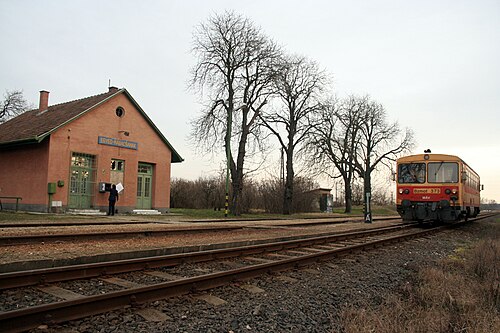
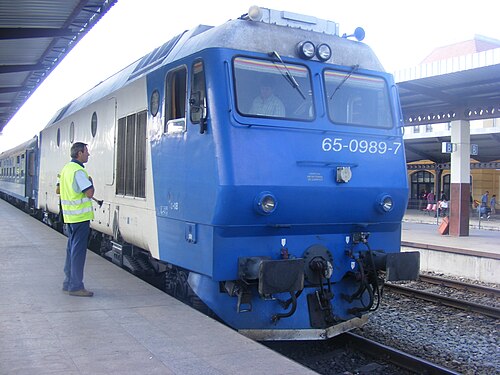
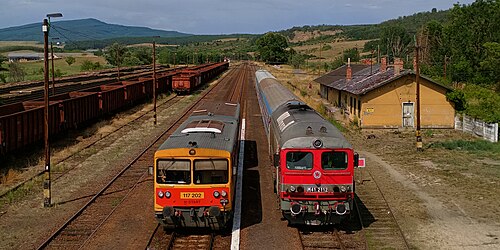
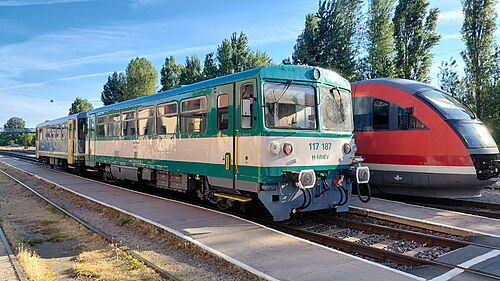
Night train (1)
- EN Ister
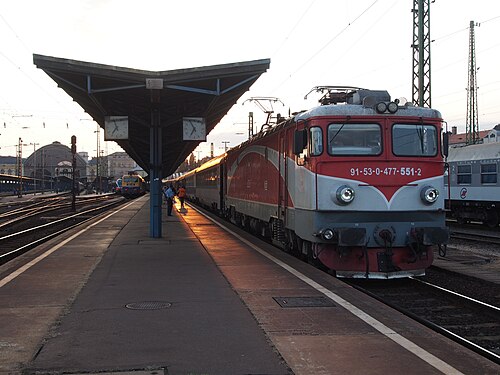
Retraces the original 1883 Orient Express alignment through Transylvania’s castles and the Carpathian passes.
Wikipedia (HU) ↗
Scenic (2)
- Győr–Veszprém railway
The Bakonyvasút: a slow single track that leaves the Győr–Szentgotthárd line and climbs through the wooded Bakony hills to Veszprém.
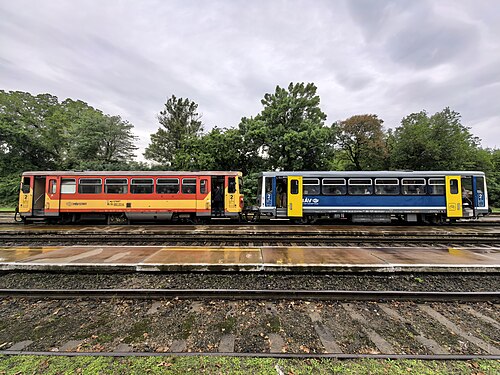
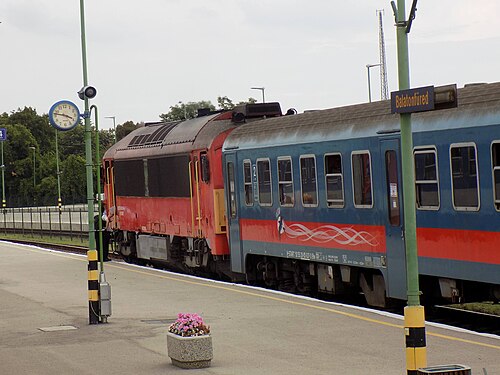
Wikipedia (HU) ↗ - Kék Hullám
The Kék Hullám (Blue Wave) IC along Balaton’s vineyard-clad north shore: Balatonfüred, the basalt hills of Badacsony, then inland to Tapolca.
Heritage (4)
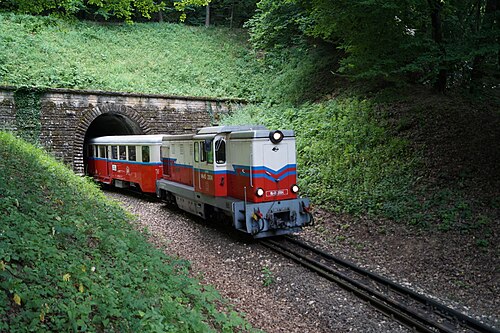
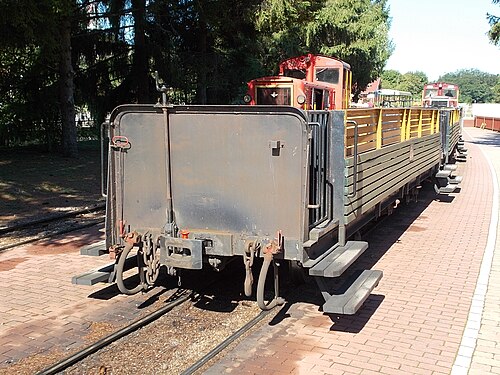
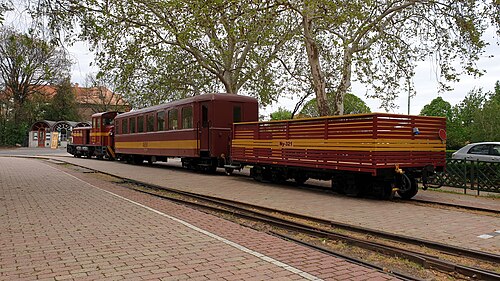
- Children’s Railway (Gyermekvasút)
A 760 mm line through the Buda Hills staffed almost entirely by children aged 10–14: a Young Pioneer legacy still running today.
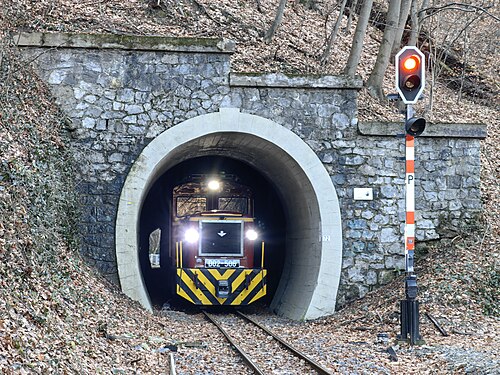
Wikipedia ↗ - Lillafüred Forest Railway
Narrow-gauge line through the Bükk mountains via two tunnels and two viaducts, opened for timber and now Hungary’s best-loved forest train.
Wikipedia ↗ - Szilvásvárad Forest Railway (Szalajka Valley)
Hungary’s busiest narrow-gauge railway: a steep timber line up the Szalajka valley to a waterfall, now carrying 300,000-plus riders a year.
Wikipedia (HU) ↗ - Mátravasút (Mátra Forest Railway)
Seven-sixty gauge out of Gyöngyös into the Mátra hills: a 1920s timber railway carrying holidaymakers to Mátrafüred behind an Mk48 in open-sided coaches.
Mountain (1)
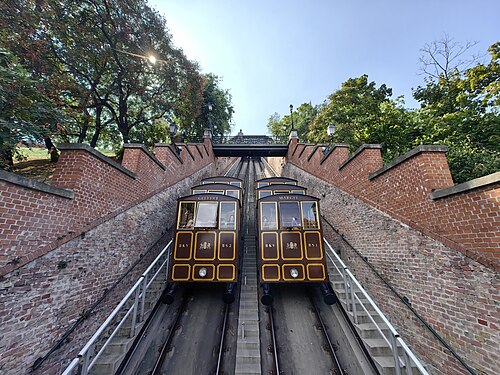
- Budavári Sikló
Opened 1870 as Europe’s second funicular; destroyed in WWII and rebuilt in 1986, it climbs to Buda Castle inside the UNESCO Danube panorama.
Wikipedia ↗
Photos via Wikimedia Commons — each route page credits the author & licence
What is the fastest train in Hungary?
The Railjet, running Vienna to Budapest at up to 230 km/h. It is one of 41 routes in Hungary in this atlas.
Are there night trains in Hungary?
Yes — 1 sleeper service in this atlas serves Hungary: EN Ister (Budapest – Bucharest).
Can you cross the border by train from Hungary?
Yes — 10 of its 41 routes continue into another country: Railjet (Vienna – Budapest), EN Ister (Budapest – Bucharest), Railjet (Budapest – Berlin), REX Wien–Sopron (Vienna – Sopron), among others.
Which is the most scenic railway in Hungary?
Hungary has 3 scenic or mountain lines in this atlas. The longest is the Kék Hullám, 190 km.
Cross-border lines continue into
- 🇦🇹 Train routes in Austria 63 routes
- 🇭🇷 Train routes in Croatia 14 routes
- 🇨🇿 Train routes in Czechia 31 routes
- 🇩🇪 Train routes in Germany 138 routes
- 🇷🇴 Train routes in Romania 25 routes
- 🇸🇰 Train routes in Slovakia 20 routes