
High-speed route
Southeastern Highspeed London–Margate
London → Margate · England
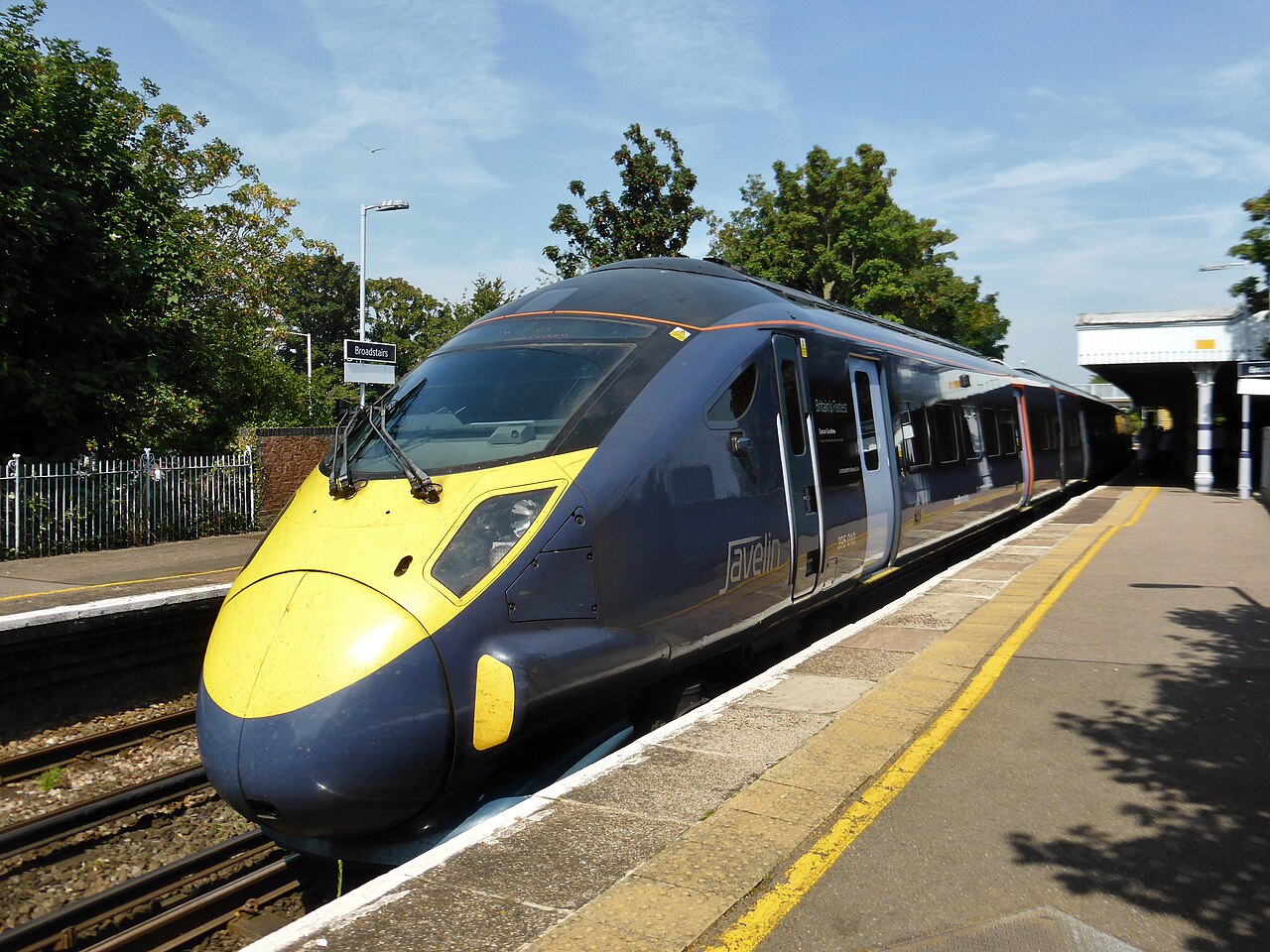
The Javelin put Margate 86 minutes from London — HS1 at 225 km/h as far as Ashford, then the 1846 Canterbury line across east Kent to the Thanet coast.
The Class 395 got its Javelin name shuttling spectators to the 2012 Olympics in seven minutes flat, but its lasting effect was on the Kent coast. Thanet had been a slow corner of England — two hours and more from London — and the high-speed timetable brought Margate inside ninety minutes. The trick is a hybrid: 225 km/h on HS1 as far as Ashford, then third rail and 160 km/h on the line the South Eastern Railway opened to Canterbury and Ramsgate in 1846, running through the Stour gap past Wye and Chilham before crossing east Kent to the sea.
Along the way
- St Pancras International
- HS1 across the Kent Downs
- Ashford International
- The Stour gap at Wye and Chilham
- Canterbury West and the cathedral city
- Ramsgate’s Royal Harbour
- Margate sands and the Turner Contemporary
How this line was checked
- The 137 km this route shares with OpenStreetMap relation 452778 is drawn from that relation's own nodes, thinned to within under 25 m of them
- Checked against OpenStreetMap: 99% of this line lies within 250 m of real track, a median 5 m from it
- Checked against the running timetable via ÖBB Scotty: our line sits under 100 m from the shape of the scheduled train on this line
- Wikipedia has an article for this line
- See for yourself: open this line on the map with OpenStreetMap's own railway drawn underneath it
Questions and answers
How long is the Southeastern Highspeed?
The Southeastern Highspeed runs 147 km from London to Margate.
How long does the Southeastern Highspeed take?
The fastest scheduled journey is 1 h 26 min for the 147 km. That is an average of 103 km/h end to end. The line's top service speed is 225 km/h.
Who runs the Southeastern Highspeed?
Southeastern, with Class 395 Javelin.
How old is the Southeastern Highspeed?
The line has been in service since 2009. That is the year the atlas dates it from: for a modern brand running over an older railway, it is the railway's date, not the brand's.
How often does the Southeastern Highspeed run?
Hourly.
More high-speed routes
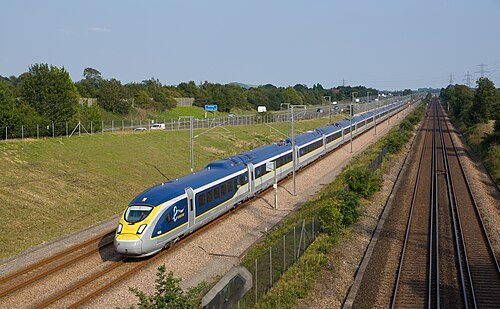
- Eurostar
Drops 75 m below the sea through the 50.5 km Channel Tunnel, 37.9 km of it under the seabed, the longest undersea stretch of any rail tunnel.
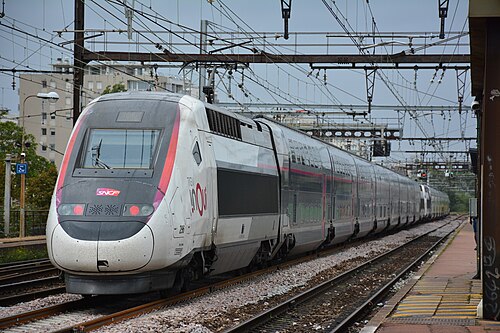
Wikipedia ↗ - TGV inOui
France’s original 1981 LGV forms the first leg; today the TGV holds 320 km/h nearly all the way to the Mediterranean.
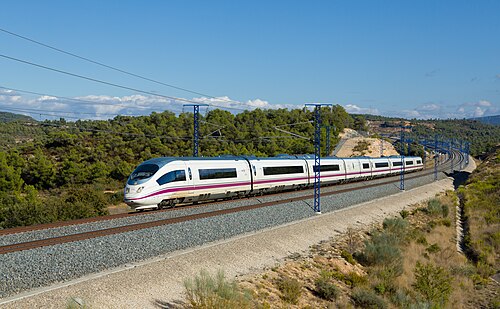
Wikipedia ↗ - AVE
Scheduled at 300 km/h, this line flipped one of the world’s busiest air routes to rail.
Wikipedia ↗ - AVE
Spain’s first AVE, built for Expo ’92 in standard gauge, the line that reset Spanish railways.
Wikipedia ↗
More train routes in United Kingdom · England.