
🏴 Country
Train routes in England
69 routes · high-speed 6 · classic 33 · night train 2 · scenic 7 · heritage 20 · mountain 1
69 routes cross England in the World Train Map atlas. The longest is the CrossCountry at 1,118 km; the fastest is the Eurostar, running up to 300 km/h; the oldest line dates to 1835. Every route links to its facts, photo and story, and to the interactive world map.
Open the world railway map →Part of the 🇬🇧 United Kingdom — all 98 UK routes on one page.
Part of the Europe train map: every route on the continent, one map.
High-speed (6)
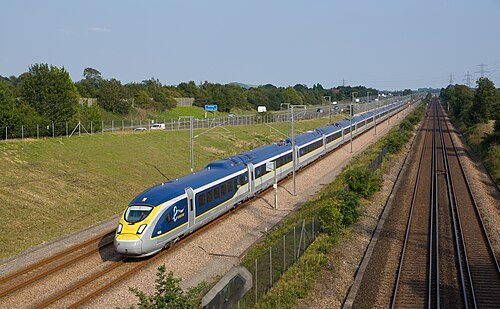
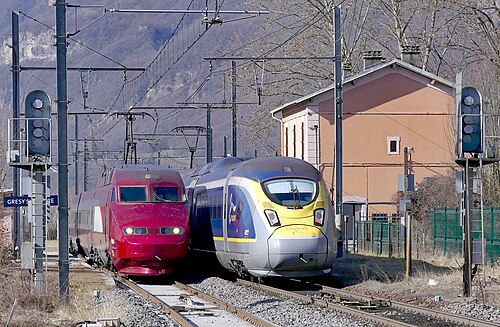
- Eurostar
Drops 75 m below the sea through the 50.5 km Channel Tunnel, 37.9 km of it under the seabed, the longest undersea stretch of any rail tunnel.
Wikipedia ↗ - Eurostar
The original Channel Tunnel service to the EU capital takes St Pancras to Bruxelles-Midi in under two hours, city centre to city centre.
Wikipedia ↗ - Eurostar
A single train from St Pancras to Amsterdam Centraal since 2018: under the Channel, across Flanders and over the Dutch polders in about four hours.
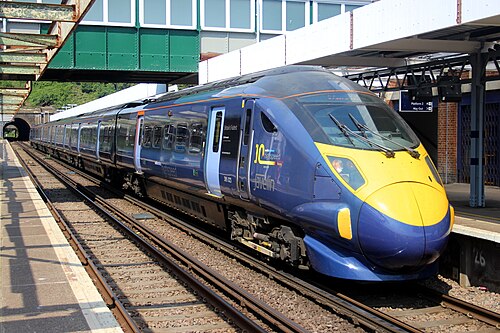
Wikipedia ↗ - Southeastern Highspeed
Britain’s only domestic high-speed service: 225 km/h down HS1 to Ashford, then the 1844 South Eastern main line past Folkestone and under the white cliffs into Dover.
Wikipedia ↗ - Southeastern Highspeed
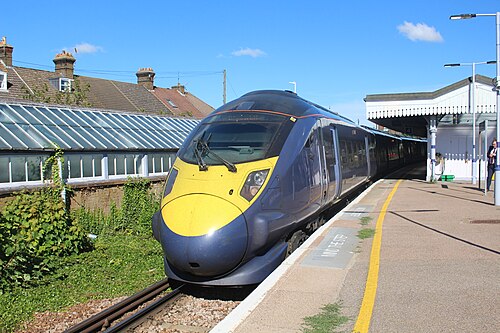
The Javelin put Margate 86 minutes from London — HS1 at 225 km/h as far as Ashford, then the 1846 Canterbury line across east Kent to the Thanet coast.
Wikipedia ↗ - Javelin North Kent
The other Javelin to Margate: off HS1 at Ebbsfleet onto the 1846 North Kent line — Rochester’s castle and cathedral, Faversham’s breweries, then the seaside string of Whitstable, Herne Bay and Margate.
Wikipedia ↗


Classic (33)
- LNER Azuma
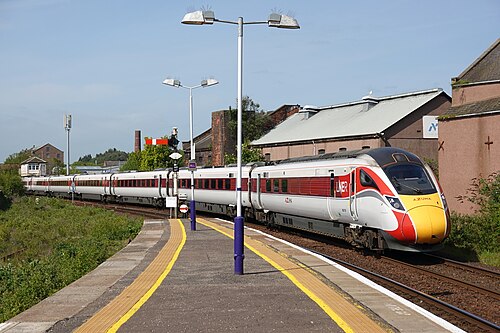
The Flying Scotsman’s route since 1862: and where Mallard set the never-beaten steam record of 203 km/h in 1938.
Wikipedia ↗ - Avanti West Coast
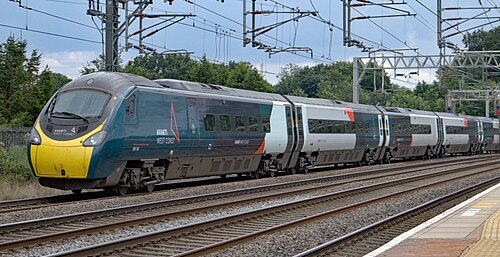
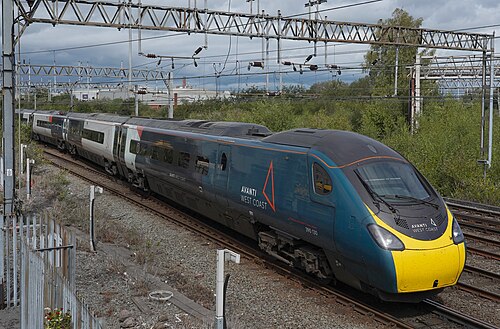
Tilting Pendolinos sway through the Lune Gorge and over Shap summit on Britain’s busiest mixed-traffic artery.
Wikipedia ↗ - Midland Main Line
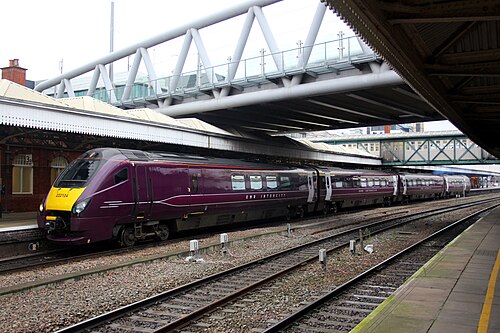
St Pancras’s own main line: Leicester, Derby and Chesterfield’s crooked spire, into Sheffield under the Bramall Lane floodlights.
Wikipedia ↗ - Hull Trains
An open-access original: Hull’s own train to London since 2000, off the East Coast racetrack at Doncaster and over the Ouse into Paragon station.
Wikipedia ↗ - Cardiff–Portsmouth
Wales to the Solent the slow, lovely way: the Severn Tunnel, Bath’s crescents, Salisbury’s spire and the harbour at Portsmouth.
- Liverpool–Norwich
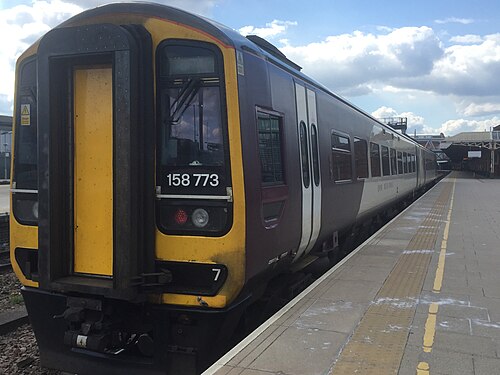
England corner to corner: five hours and a bit through Sheffield, Nottingham and the Fens — the longest all-stops cross-country ride in the country.
- Cornish Riviera Express
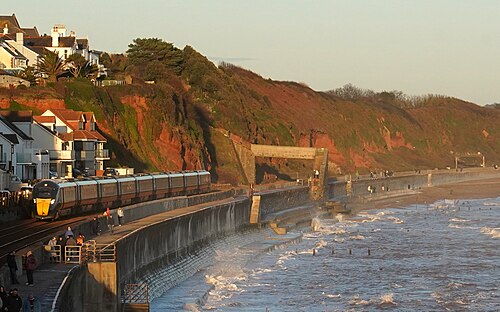
The daytime flyer to Britain’s far south-west since 1904, racing 300 miles past Dartmoor and along the wave-battered Dawlish sea wall to Penzance.
Wikipedia ↗ - South Wales Main Line
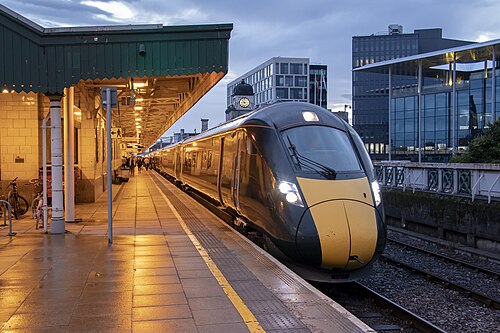
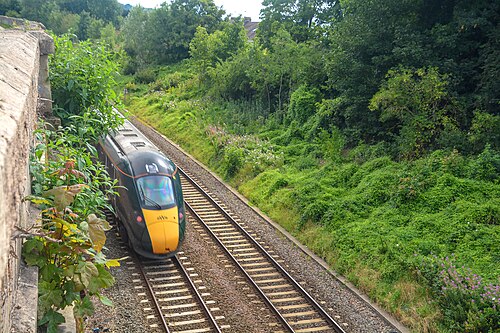
GWR’s flagship South Wales express; Hitachi bi-modes drop off the 25 kV wires west of Cardiff and switch to diesel for the last dash to Swansea.
Wikipedia ↗ - Great Western Main Line
Brunel’s original 1841 main line: billiard-table levels from Paddington to Didcot, then a 1 in 100 fall through the 3 km Box Tunnel, said to face the sunrise on his birthday.
Wikipedia ↗ - Avanti West Coast
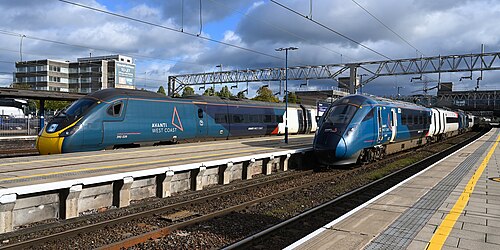
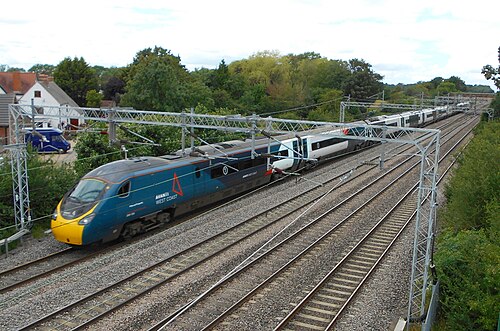
Italian-built tilting Pendolinos lean into the curves of the West Coast Main Line, holding 125 mph where an upright train would have to brake.
Wikipedia ↗ - Avanti West Coast
Fast tilting Pendolinos finish at Liverpool Lime Street, opened 1836 and one of the world’s oldest grand terminus stations still in daily use.
Wikipedia ↗ - Avanti West Coast
Traces the pioneering 1838 London and Birmingham Railway, the first great trunk line driven into the capital, from Euston to England’s second city.
Wikipedia ↗ - LNER
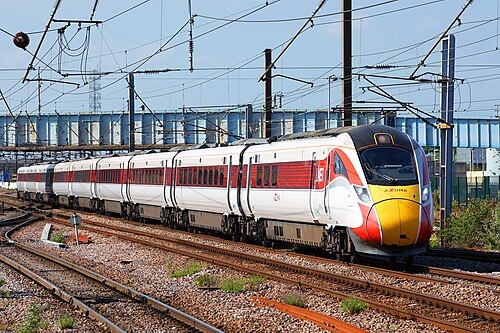
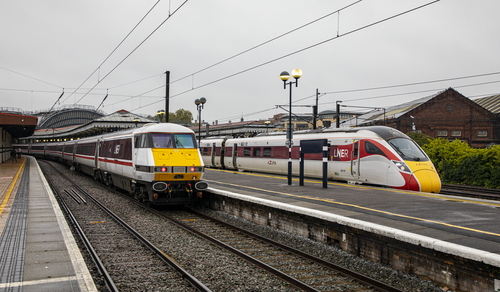
Japanese-designed Azuma bi-modes sprint the East Coast Main Line out of King’s Cross (1852) to reach Leeds in a little over two hours.
Wikipedia ↗ - LNER
Azuma expresses hold 125 mph down the East Coast Main Line, coming over the Tyne into Newcastle on Robert Stephenson’s High Level Bridge.
Wikipedia ↗ - CrossCountry
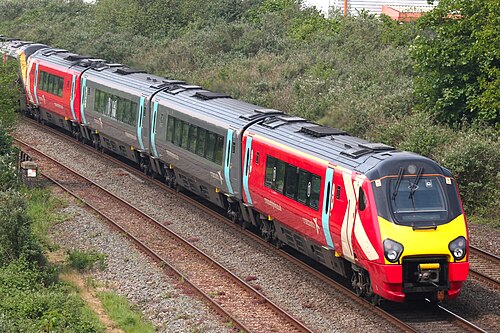
Britain’s longest direct train: one Voyager grinding 695 miles and nearly 40 stops from Aberdeen on the North Sea to Plymouth on the Channel.
Wikipedia ↗ - North Wales Coast Line
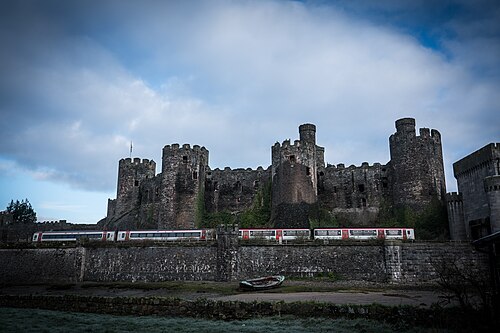
The old Irish Mail route to the Dublin ferries, crossing Robert Stephenson’s Britannia Bridge to Anglesey and skirting the walls of Conwy Castle.
Wikipedia ↗ - Dartmoor Line
The first line reopened under Britain’s Restoring Your Railway plan, bringing regular trains back to Okehampton on the edge of Dartmoor half a century after closure.
Wikipedia ↗ - TransPennine Express
Coast to coast across northern England: Liverpool to Manchester, over the Pennines by way of Huddersfield and Leeds, then up the East Coast Main Line to the Tyne.
Wikipedia ↗ - Tarka Line
Along the Taw through Henry Williamson’s Tarka the Otter country — Devon’s surviving branch line winding from Exeter’s cathedral city to Barnstaple.
Wikipedia ↗ - Midland Main Line
St Pancras’s own intercity: the Midland Main Line under Barlow’s great arch, up through Bedford and Leicester to Nottingham — Britain’s last classic trunk to join the atlas.
Wikipedia ↗ - Great Eastern Main Line
“Norwich in 90”: East Anglia’s main line across Constable country with its all-new Swiss-built FLIRT fleet — a whole English region in one green run.
Wikipedia ↗ - Welsh Marches Line
The great spine outside England’s trunk lines: Cardiff to Manchester up the castle-studded Welsh border through Abergavenny, Ludlow and Shrewsbury.
Wikipedia ↗ - Brighton Main Line
Victorian London’s dash to the sea, once home of the all-Pullman Brighton Belle — still under the hour from Victoria to the pier and the Lanes.
Wikipedia ↗ - South Western Main Line
Waterloo’s main line to the sea: Winchester’s cathedral close, Southampton’s ocean-liner docks, Bournemouth sands and the Jurassic Coast at Weymouth.
Wikipedia ↗ - Leeds–Morecambe
The 1850 “Little North Western” the slow way out of Airedale: Bentham’s fell country, the Lune valley at Wennington, and the sands of Morecambe Bay to finish.
Wikipedia ↗ - Shrewsbury–Chester
The 1848 border line between two walled towns: over Telford’s country at Chirk and the great Cefn viaduct, down the Dee valley through Wrexham to Chester.
Wikipedia ↗ - Borderlands Line
Wrexham to the Wirral: 1860s Wrexham, Mold and Connah’s Quay metals joined to the 1896 North Wales and Liverpool line, crossing the Dee on the Hawarden swing bridge and running on to Bidston for Liverpool.
Wikipedia ↗ - Eurotunnel Le Shuttle
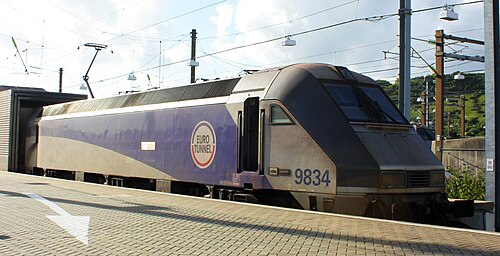
Drive on at Folkestone, drive off at Calais: thirty five minutes under the Channel on the shuttle that carries the cars, and the only fixed link between Britain and the continent.
- Chiltern Main Line
The other main line from London to Birmingham: finished in 1910, when the Bicester cut-off shortened it by thirty kilometres and let the Great Western match its rival on two hours.
Wikipedia ↗ - West Coastway line
Five companies built this coast road in rails between 1840 and 1889; the last of it runs out over the water on piles into Portsmouth Harbour, opened on 2 October 1876.
Wikipedia ↗ - c2c Shoeburyness–London
The Tilbury company reached Shoeburyness in 1884 and finished its direct line through Upminster to a re-sited Pitsea in 1886, the way the stopping trains from the sea to Fenchurch Street run today.
Wikipedia ↗ - Chiltern Marylebone–Aylesbury Vale Parkway
Marylebone opened on 15 March 1899, the last main line terminus London built for a century; the train runs out over the old Metropolitan and Great Central road to a station opened on 14 December 2008.
Wikipedia ↗ - Leamington–Stratford line
The Stratford-on-Avon Railway opened its branch from Hatton on 9 October 1860; Chiltern trains still use it to reach Shakespeare’s town off the Birmingham–Oxford main line.

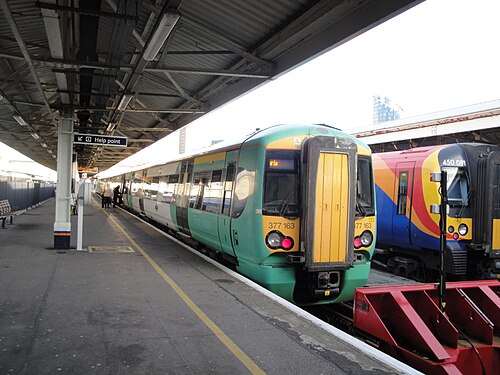
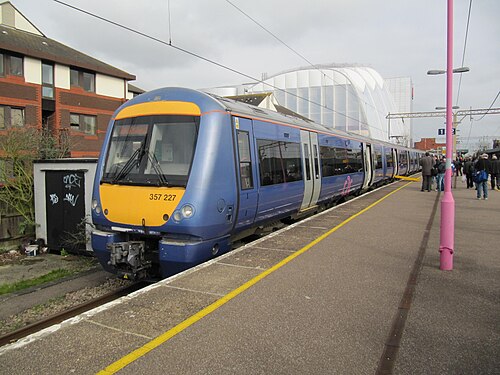
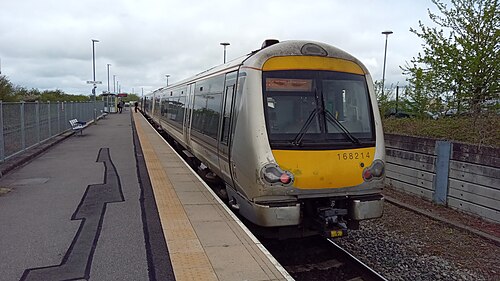
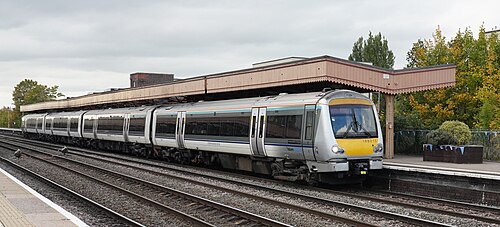
Night train (2)
- Caledonian Sleeper
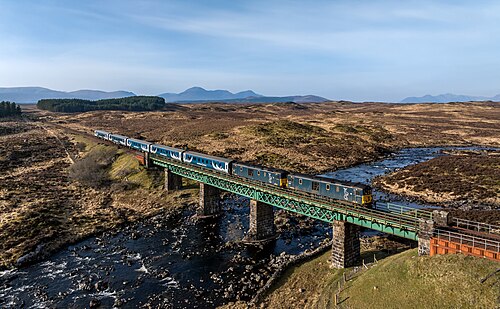
The “Deerstalker Express”: fall asleep at Euston, wake up crossing Rannoch Moor with red deer at the window.
Wikipedia ↗ - Night Riviera
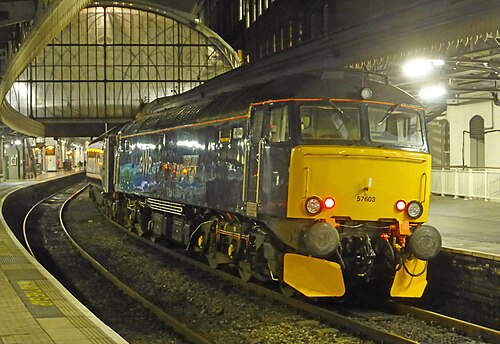
Sleeping cars have run west from Paddington since 1877; today’s train hugs Brunel’s storm-lashed Dawlish sea wall to the far tip of Cornwall.
Wikipedia ↗
Scenic (7)
- Settle–Carlisle Line
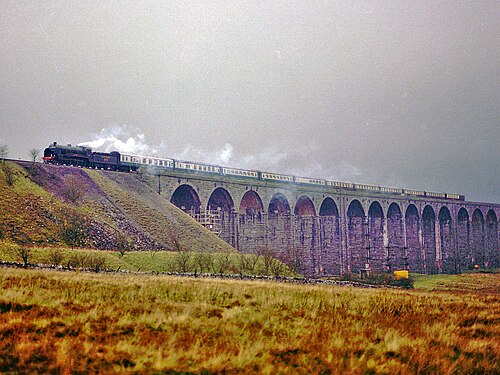
England’s highest main line crests Ais Gill at 356 m after striding across the 24-arch Ribblehead Viaduct, built by navvies camped on Batty Moss.
Wikipedia ↗ - Esk Valley Line
An hour and a half from Teesside across the North York Moors and down the river to the sea, on rails that reached Whitby in 1835 and were worked by horses for the first ten years.
Wikipedia ↗ - Cambrian Line
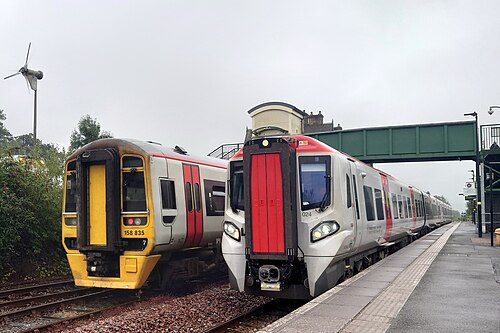
Birmingham to the Irish Sea over the Cambrian Mountains: Welshpool, the Talerddig summit cutting, Machynlleth and the estuary into Aberystwyth.
Wikipedia ↗ - Heart of Wales Line
A 121-mile request-stop ramble through empty Mid Wales, crossing the castle-like 13-arch Knucklas Viaduct where trains halt only if you flag them down.
Wikipedia ↗ - Hope Valley Line
Straight through the Peak District: Edale, Kinder Scout and the Hope valley between England’s steel and cotton cities — the hikers’ line.
Wikipedia ↗ - Cumbrian Coast Line
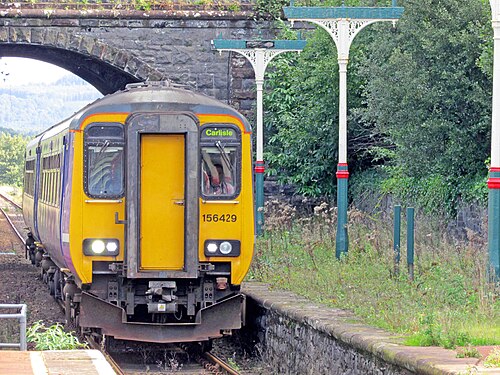
England’s forgotten coastal railway: the Irish Sea one side, the Lakeland fells the other, all the way round from Hadrian’s city to shipbuilding Barrow.
Wikipedia ↗ - Tyne Valley Line
One of the world’s first cross-country railways (1838), shadowing Hadrian’s Wall from the Tyne to the Solway — the Roman frontier out the window.
Wikipedia ↗

Heritage (20)
- North Yorkshire Moors Railway
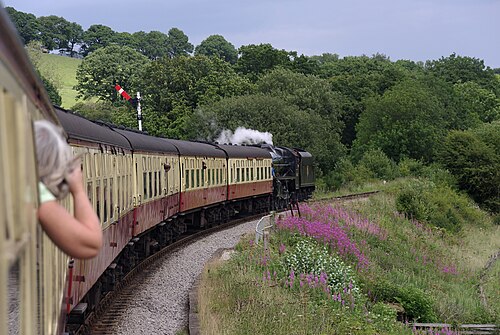
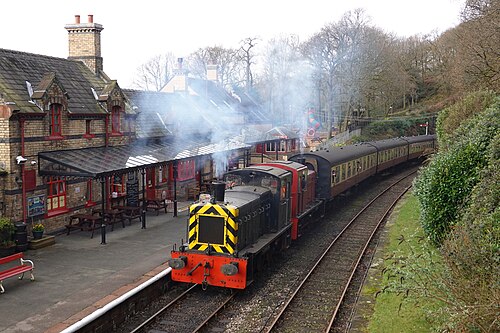
One of the world’s busiest steam heritage lines, climbing Stephenson’s 1836 route over the moors to Goathland, Hogsmeade in the Harry Potter films.
Wikipedia ↗ - Severn Valley Railway
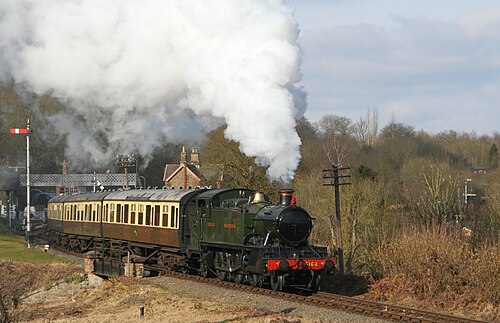
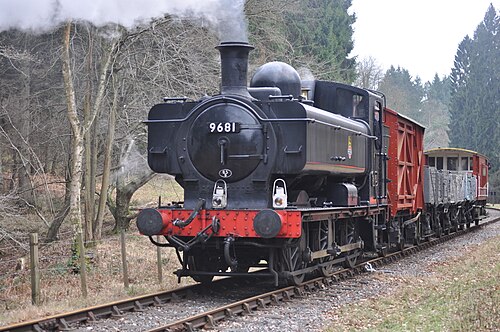
Sixteen miles of preserved Great Western branch line tracing the River Severn, crossing the water on the graceful iron span of Victoria Bridge.
Wikipedia ↗ - Bluebell Railway
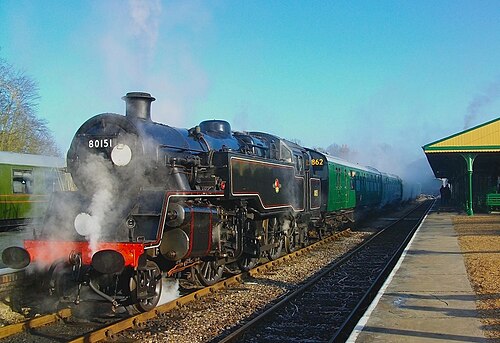
The world’s first preserved standard-gauge passenger railway, running vintage steam through the Sussex Weald without a break since 1960.
Wikipedia ↗ - West Somerset Railway
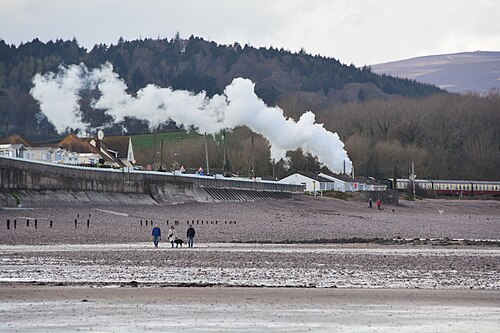
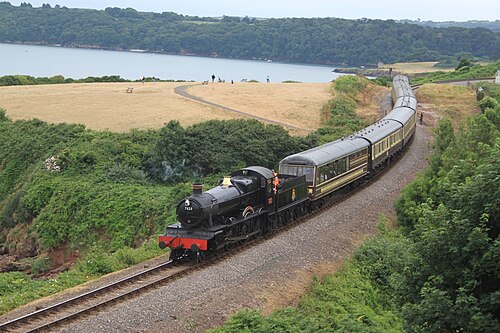
Britain’s longest standard-gauge independent heritage railway: 22¾ miles of steam from the Quantock Hills down to the Bristol Channel shore at Minehead.
Wikipedia ↗ - Romney, Hythe & Dymchurch Railway
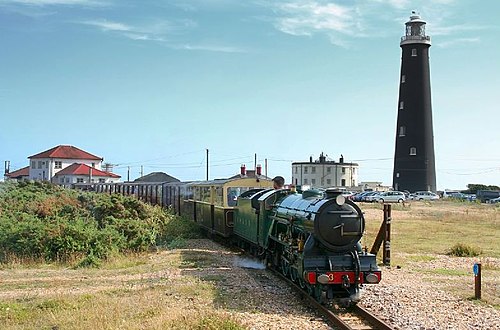
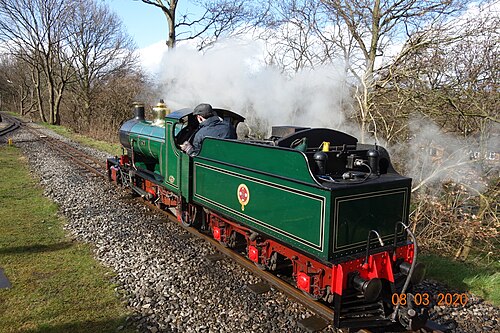
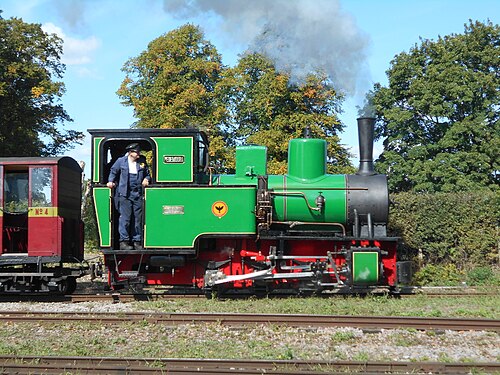
Marketed as the world’s smallest public railway, its steam expresses still get local schoolchildren to class along Romney Marsh.
Wikipedia ↗ - Great Central Railway
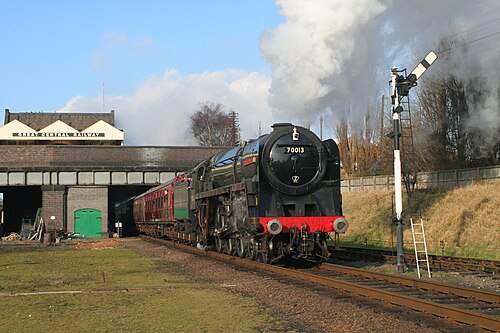
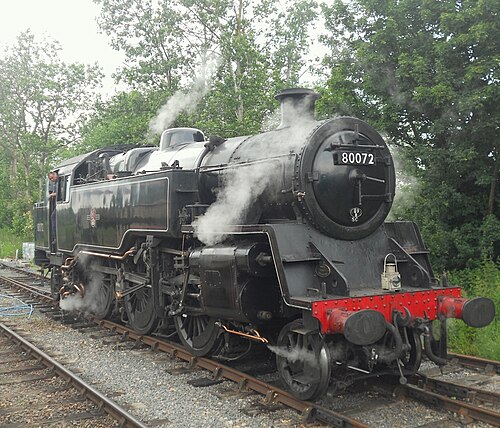
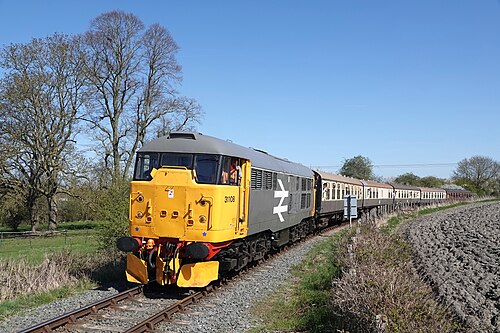
Britain’s only double-track heritage main line, where two steam expresses can pass at speed just as they did on the last main line built towards the Continent.
Wikipedia ↗ - Keighley & Worth Valley Railway
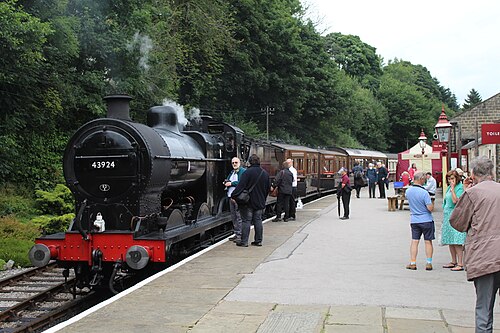
The branch that starred in the 1970 film “The Railway Children”, steaming up the Brontë moors past Haworth to the mill village of Oxenhope.
Wikipedia ↗ - Ravenglass & Eskdale Railway
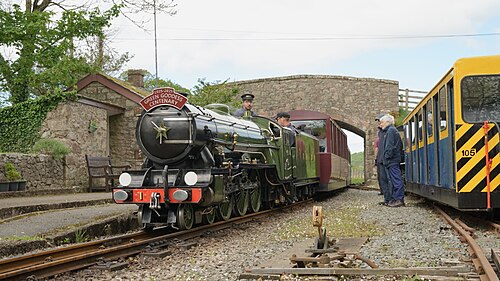
Fifteen-inch gauge up Eskdale from the Cumbrian coast, laid for iron ore in 1875 and run since as a miniature main line that Cumbria calls La’al Ratty.
Wikipedia ↗ - Dartmouth Steam Railway
The Kingswear branch of 1864, sold by British Rail to the Dart Valley company in 1972: steam from Paignton over Goodrington Sands and along the Dart estuary to Kingswear, for the ferry to Dartmouth.
Wikipedia ↗ - North Norfolk Railway
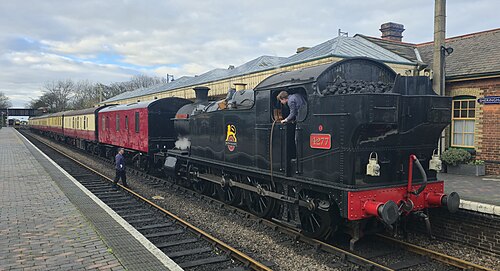
The Poppy Line: the last stretch of the Midland & Great Northern in Norfolk, carrying passengers again since July 1975, from the seaside at Sheringham past Weybourne to Holt.
Wikipedia ↗ - Epping Ongar Railway
The Central line’s lost end: London Underground closed Epping to Ongar in 1994, and heritage steam and diesel have run it again since 2012, from Ongar through North Weald to the edge of Epping Forest.
Wikipedia ↗ - Embsay & Bolton Abbey Steam Railway
Four miles of the Midland’s Skipton–Ilkley line, closed in 1965 and reopened by volunteers in 1981, with trains back into Bolton Abbey station, for the priory estate, since 1997.
Wikipedia ↗ - Dean Forest Railway
The Severn & Wye’s line into the Forest of Dean, rebuilt by volunteers: passenger trains since 1991, down to Lydney Junction in 1995 and up through the woods to Parkend.
Wikipedia ↗ - Lakeside & Haverthwaite Railway
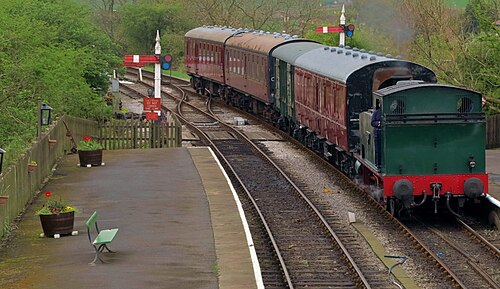
The Furness Railway’s 1869 branch to Windermere, reopened in 1973: three and a half miles of steam from Haverthwaite to Lakeside, where trains still connect with the lake steamers.
Wikipedia ↗ - Bure Valley Railway
Norfolk’s 15-inch-gauge railway, laid in 1990 on the old East Norfolk trackbed: nine miles from the Broads at Wroxham, over the River Bure and under the A140 by tunnel, to Aylsham.
Wikipedia ↗ - Chinnor & Princes Risborough Railway
A surviving piece of the Great Western’s Watlington branch at the foot of the Chilterns, reopened to passengers in 1994 and reconnected to the main line at Princes Risborough in 2016.
Wikipedia ↗ - Cholsey & Wallingford Railway
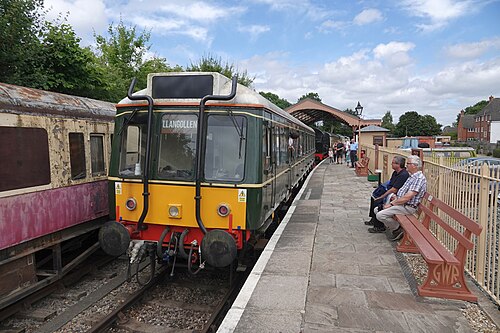
The Great Western’s 1866 Wallingford branch, kept alive into preservation by the town’s maltings traffic: two and a half miles from Wallingford to the main line at Cholsey.
Wikipedia ↗ - Kirklees Light Railway
A 15-inch-gauge railway opened in 1991 on the Lancashire & Yorkshire’s Clayton West branch: through Skelmanthorpe and the 511-yard Shelley Woodhouse tunnel, with Emley Moor mast in view.
Wikipedia ↗ - Leighton Buzzard Light Railway
Built in 1919 to carry sand from the Bedfordshire quarries and running passenger trains since 1968: two-foot-gauge industrial steam and diesel from Page’s Park to Stonehenge Works.
Wikipedia ↗ - Volk’s Electric Railway
The world’s oldest operating electric railway: Magnus Volk opened it on Brighton seafront in August 1883, and its cars still run along the beach from Aquarium to Black Rock.
Wikipedia ↗


Mountain (1)
- Lynton & Lynmouth Cliff Railway
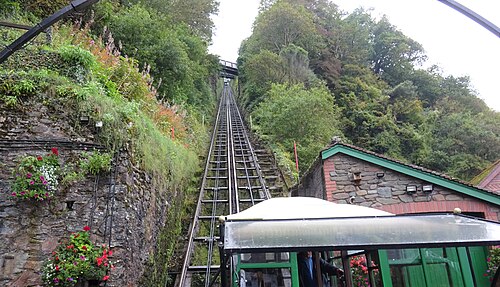
The world’s highest and steepest fully water-powered railway (1890): gravity and 700-gallon tanks alone work its twin cars on a 58% grade.
Wikipedia ↗
Photos via Wikimedia Commons — each route page credits the author & licence
What is the fastest train in England?
The Eurostar, running London to Paris at up to 300 km/h. It is one of 69 routes in England in this atlas.
Are there night trains in England?
Yes — 2 sleeper services in this atlas serve England: Caledonian Sleeper (London – Fort William), Night Riviera (London – Penzance).
Can you cross the border by train from England?
Yes — 4 of its 69 routes continue into another country: Eurostar (London – Paris), Eurostar (London – Brussels), Eurostar (London – Amsterdam), Eurotunnel Le Shuttle (Folkestone – Calais).
Which is the most scenic railway in England?
England has 8 scenic or mountain lines in this atlas. The longest is the Cambrian Line, 200 km.
Cross-border lines continue into
- 🇧🇪 Train routes in Belgium 27 routes
- 🇫🇷 Train routes in France 109 routes
- 🇳🇱 Train routes in Netherlands 19 routes