


Scenic route
Bayonne–Saint-Jean-Pied-de-Port railway
Bayonne → Saint-Jean-Pied-de-Port · France
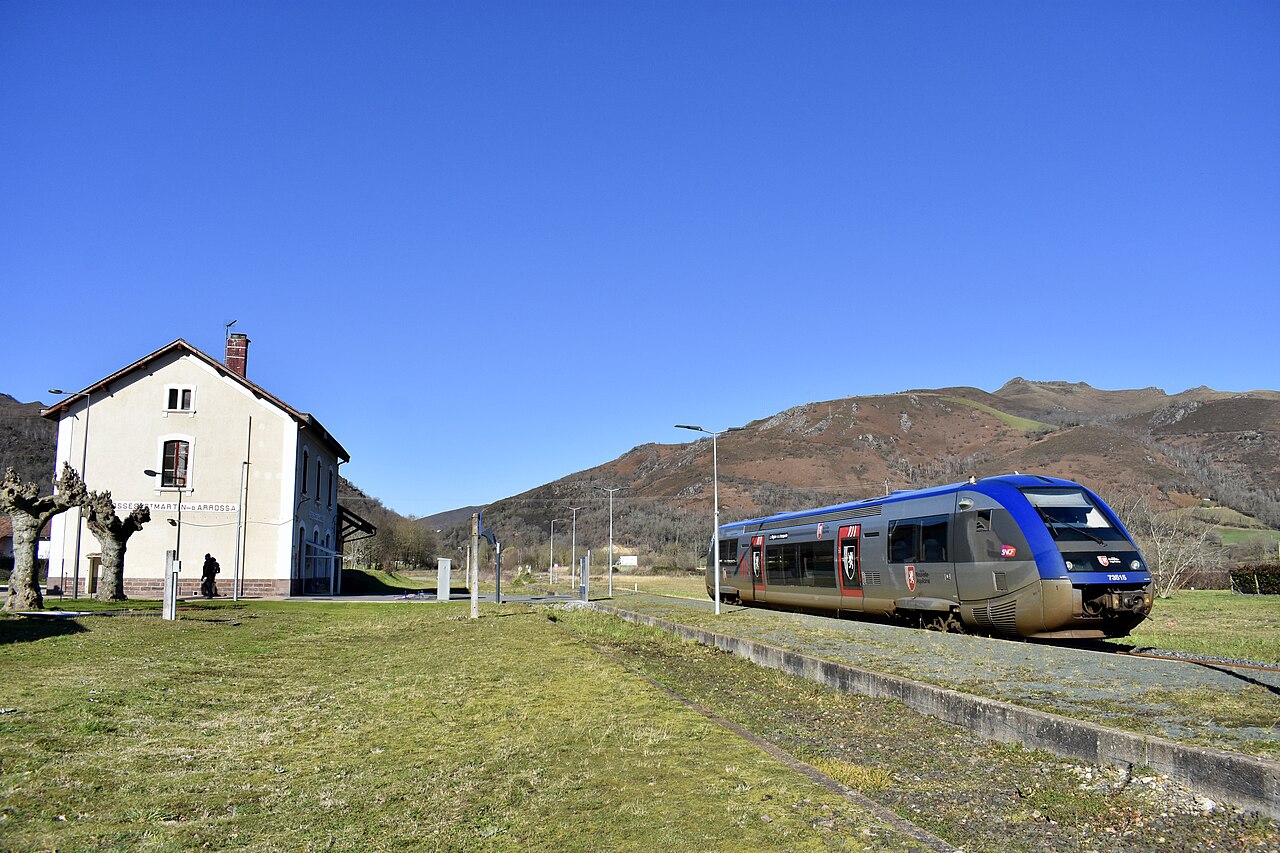
Up the Nive valley from Bayonne by Cambo-les-Bains into the Basque hills to Saint-Jean-Pied-de-Port, where pilgrims set out over the Pyrenees to Roncesvalles; the last stretch, from Ossès, opened on 11 December 1898.
- Distance
- 52 km
- Fastest time
- 1 h 3 min
- Average speed
- 50 km/h
Stations
- 0 kmBayonne +2
- 9 kmVillefranque
- 12 kmUstaritz
- 16 kmHalsou-Larressore
- 19 kmCambo-les-Bains
- 35 kmPont Noblia-Bidarray
- 41 kmOssès-St Martin d'Arrossa
- 52 kmSaint-Jean-Pied-de-Port
The stations OpenStreetMap lists for this service, in order, with the distance along the line as drawn here. A train may skip some of them. A +N after a station: N other routes on this map stop or end there, and the map draws it as a station where lines meet.
How this line was checked
- Line drawn from OpenStreetMap relation 4762747: the same nodes OpenStreetMap holds for this railway, thinned to within under 25 m of them
- Checked against OpenStreetMap: the whole line lies on real track, a median 4 m from it
- Checked against the running timetable via ÖBB Scotty: our line sits under 100 m from the shape of TER 67301
- Wikipedia has an article for this line
Questions and answers
How long is the Bayonne–Saint-Jean-Pied-de-Port railway?
The Bayonne–Saint-Jean-Pied-de-Port railway runs 52 km from Bayonne to Saint-Jean-Pied-de-Port.
How long does the Bayonne–Saint-Jean-Pied-de-Port railway take?
The fastest scheduled journey is 1 h 3 min for the 52 km. That is an average of 50 km/h end to end.
Who runs the Bayonne–Saint-Jean-Pied-de-Port railway?
SNCF, with TER Nouvelle-Aquitaine.
How old is the Bayonne–Saint-Jean-Pied-de-Port railway?
The line has been in service since 1898. That is the year the atlas dates it from: for a modern brand running over an older railway, it is the railway's date, not the brand's.
More scenic routes
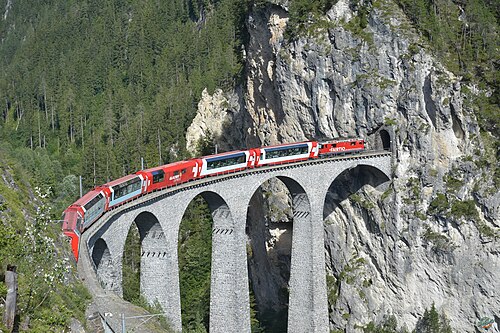
- Glacier Express
“The world’s slowest express”: 291 bridges, 91 tunnels and the 2,033 m Oberalp Pass at an average of 36 km/h.
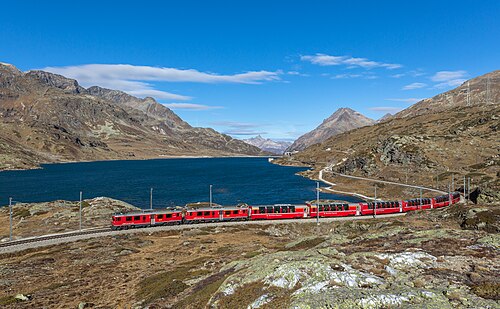
Wikipedia ↗ - Bernina Express
A UNESCO World Heritage railway: 7 % grades with no rack, the Brusio spiral, and the highest rail crossing of the Alps at 2,253 m.
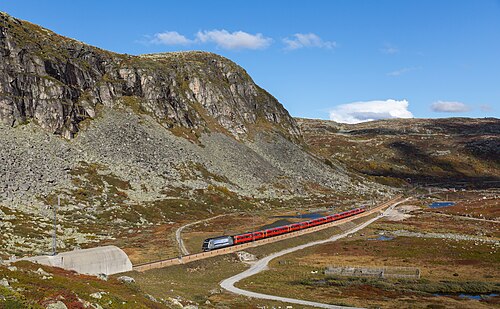
Wikipedia ↗ - Bergensbanen
Northern Europe’s highest main line: over the bare Hardangervidda plateau at 1,237 m, through 182 tunnels.
Wikipedia ↗ - West Highland Line
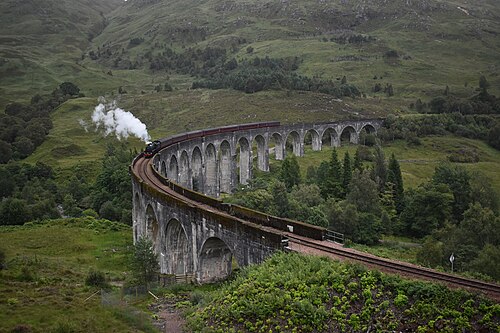
Regularly voted the world’s most scenic railway: around Rannoch Moor and over the 21-arch Glenfinnan Viaduct of film fame.
Wikipedia ↗

More train routes in France.