
🇫🇷 Country
Train routes in France
109 routes · high-speed 23 · classic 44 · night train 6 · scenic 19 · heritage 9 · mountain 6 · luxury 2
109 routes cross France in the World Train Map atlas. The longest is the Le Grand Tour at 4,000 km; the fastest is the TGV inOui, running up to 320 km/h; the oldest line dates to 1830. Every route links to its facts, photo and story, and to the interactive world map.
Open the world railway map →Part of the Europe train map: every route on the continent, one map.
High-speed (23)
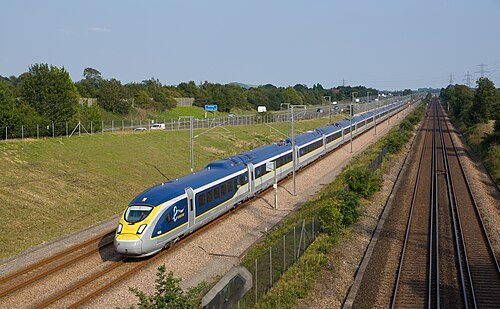
- Eurostar
Drops 75 m below the sea through the 50.5 km Channel Tunnel, 37.9 km of it under the seabed, the longest undersea stretch of any rail tunnel.
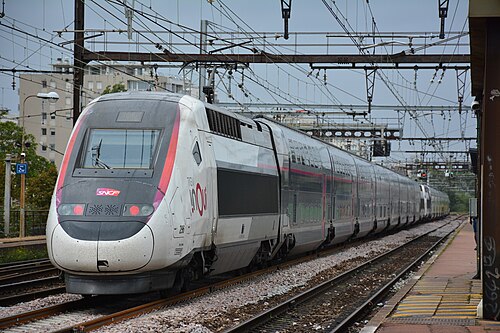
Wikipedia ↗ - TGV inOui
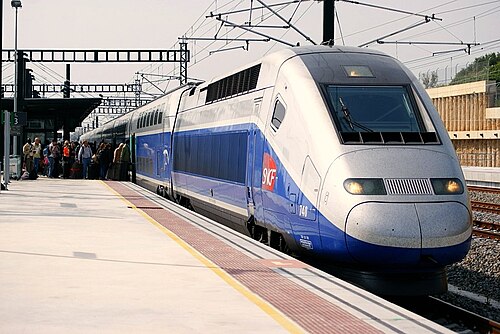
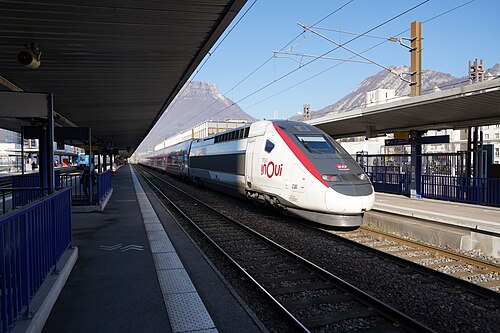
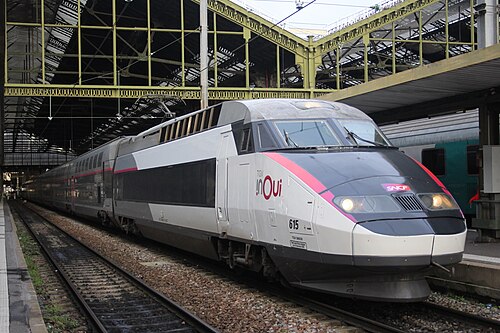
France’s original 1981 LGV forms the first leg; today the TGV holds 320 km/h nearly all the way to the Mediterranean.
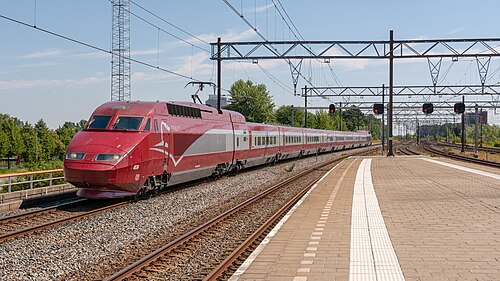
Wikipedia ↗ - Eurostar (Thalys)
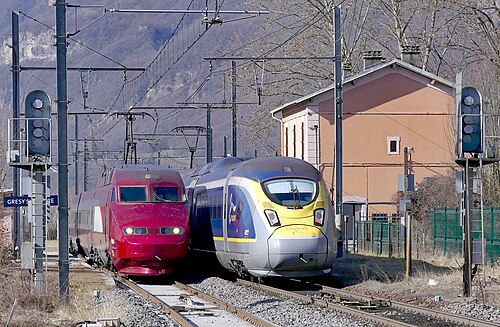
The crimson Thalys, folded into Eurostar in 2023, chains French, Belgian and Dutch high-speed lines into one dash.
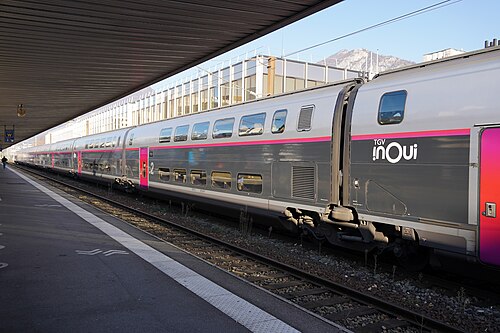
Wikipedia ↗ - TGV inOui
The LGV Sud Europe Atlantique put Bordeaux’s vineyards two hours from Paris, and emptied the air shuttle.
Wikipedia ↗ - TGV Est
Where a modified TGV hit 574.8 km/h in 2007: still the world rail speed record for steel wheels.
Wikipedia ↗ - TGV inOui
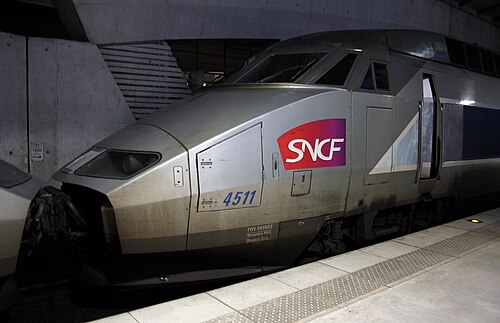
France’s first high-speed line, opened in 1981: the Paris–Lyon route that launched the whole TGV era, now run in under two hours.
Wikipedia ↗ - TGV inOui
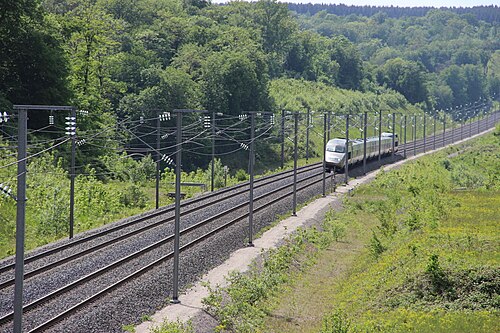
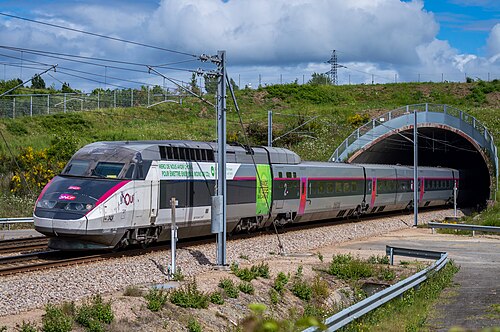
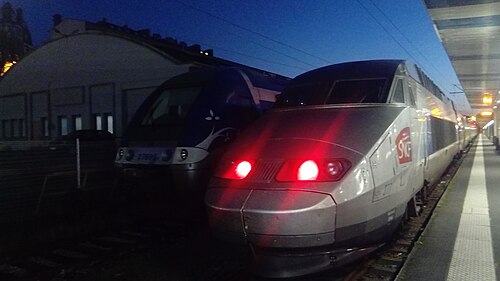
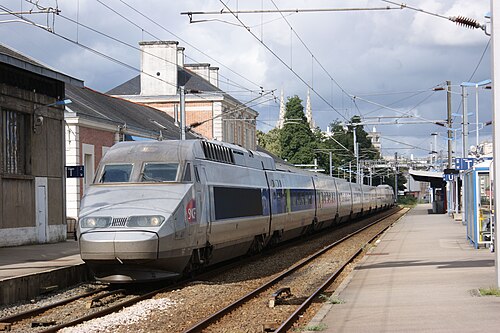
The 2017 Bretagne–Pays de la Loire high-speed line cut Paris–Rennes to 1 h 25 min, sending TGVs racing across Brittany at 320 km/h.
Wikipedia (FR) ↗ - TGV inOui
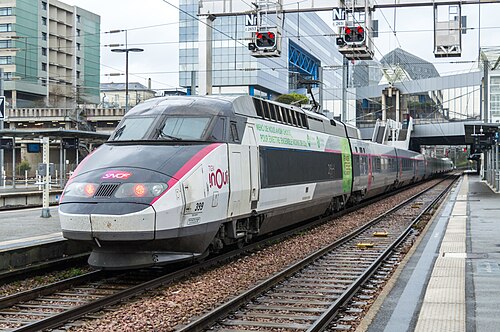
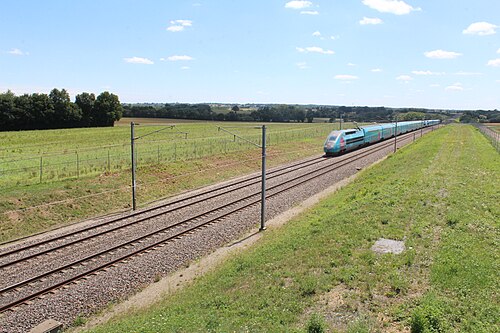
TGV Atlantique runs Paris to the Loire estuary city of Nantes in about two hours, topping 300 km/h across the plains of the west.
Wikipedia (FR) ↗ - TGV Lyria
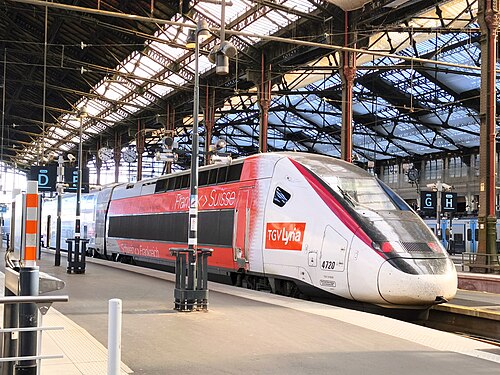
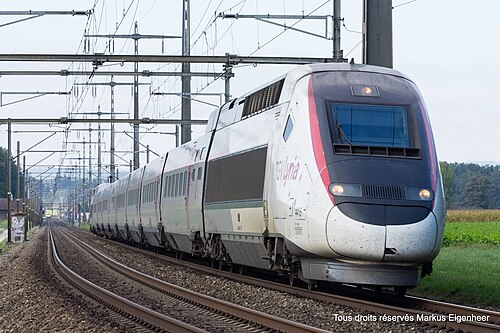
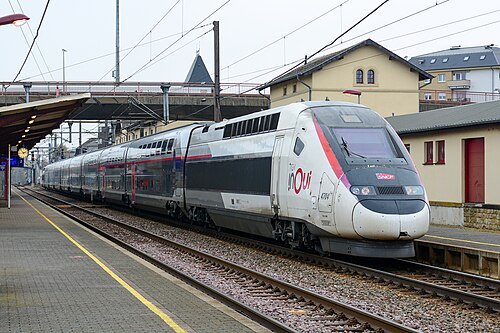
A Lyria Euroduplex glides from Paris into Switzerland at Genève-Cornavin; the 2010 Haut-Bugey line trimmed the run to about three hours.
Wikipedia ↗ - Ouigo
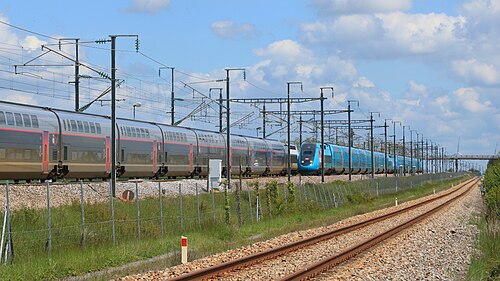
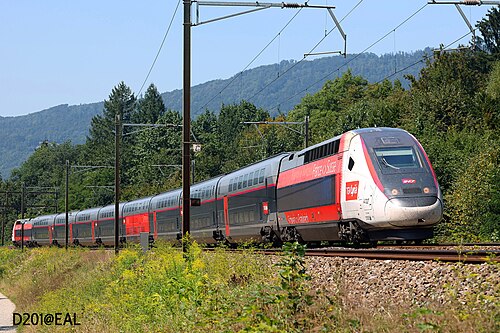
SNCF’s low-cost double-decker TGV, launched in 2013 with fares from €10, races Paris to Lyon at up to 300 km/h.
Wikipedia ↗ - TGV inOui
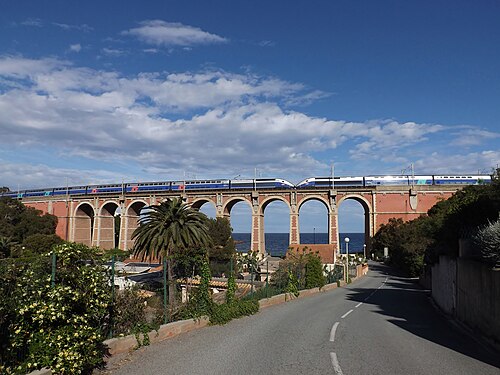
France’s longest domestic TGV run: 300 km/h to Marseille, then the classic Riviera line along the Mediterranean to Nice.
Wikipedia (FR) ↗ - TGV inOui
The dead-straight LGV Nord links Paris to Lille in just 62 minutes at 300 km/h, France’s fastest big-city hop.
Wikipedia ↗ - TGV inOui
Paris to Barcelona in 6 h 39 min, diving under the Pyrenees through the 8.3 km Perthus tunnel at the Spanish border.
Wikipedia ↗ - Frecciarossa Paris–Milan
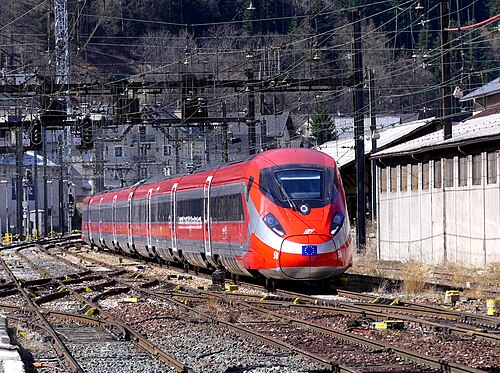
Italy’s 300 km/h flagship on French rails, using the 13.7 km Fréjus tunnel of 1871: back since April 2025 after a 19-month landslide closure.
Wikipedia ↗ - Eurostar
The original Channel Tunnel service to the EU capital takes St Pancras to Bruxelles-Midi in under two hours, city centre to city centre.
Wikipedia ↗ - Eurostar
A single train from St Pancras to Amsterdam Centraal since 2018: under the Channel, across Flanders and over the Dutch polders in about four hours.
Wikipedia ↗ - TGV / ICE
A Franco-German alliance since 2007: 320 km/h on the LGV Est to Lorraine, then the Saar and Rhine-Main into Frankfurt, TGV and ICE sharing the run.
Wikipedia (FR) ↗ - TGV inOui
Races down the Rhône on the LGV Méditerranée, then rides the 2017 Montpellier bypass, the first new stretch of French high-speed line in a decade, to the edge of the Camargue.
Wikipedia (FR) ↗ - TGV Lyria
Via the LGV Rhin-Rhône to the Swiss border at Basel, then along the Aare to Zürich. Paris to Switzerland’s largest city in almost exactly four hours.
Wikipedia ↗ - TGV Paris–Luxembourg
The only direct rail link between the two capitals: 320 km/h across Champagne on the LGV Est, then down the Moselle past Metz’s golden cathedral.
- TGV Rhin-Rhône
France’s only province-to-province LGV: Burgundy to Alsace without a glance at Paris, Dijon and Belfort on the way to the cathedral city.
Wikipedia ↗ - TGV Paris–Brest
To Brittany’s Atlantic tip: the 2017 LGV to Rennes, then the granite north coast by Saint-Brieuc and Morlaix’s viaduct to the naval roadstead of Brest.
Wikipedia ↗ - TGV Paris–Quimper
Brittany’s other arm: the same 2017 high speed line to Rennes, where the Brest and Quimper halves of the train part company, then south to the Morbihan coast by Vannes, Auray and Lorient to Quimper in Finistère.

Classic (44)
- TER Nancy–Luxembourg
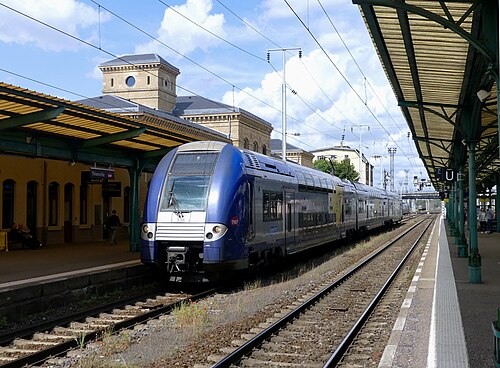
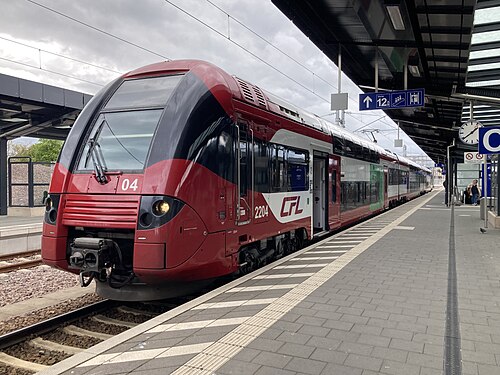
The whole sillon lorrain in an hour and a half: Nancy to Metz on the line of 1850, then down the Moselle through Thionville and over the border into Luxembourg.
- Intercity
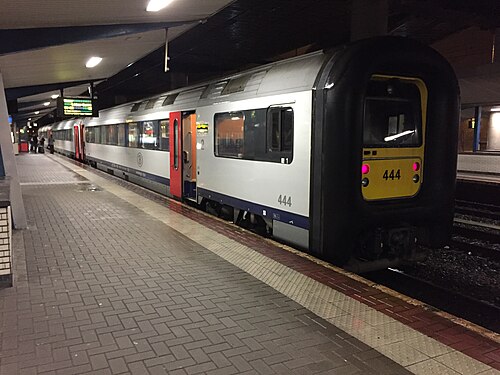
Wallonia end to end and out the other side, up the Sambre from Namur through Charleroi, La Louviere and Mons and over the French border to Lille, on a valley line opened in 1843 to move coal and steel.
- TER
A short cross-border hop from Luxembourg’s Ville-Haute down to the old French steel town of Longwy, one of the busiest daily commuter runs into the Grand Duchy.
- Intercités
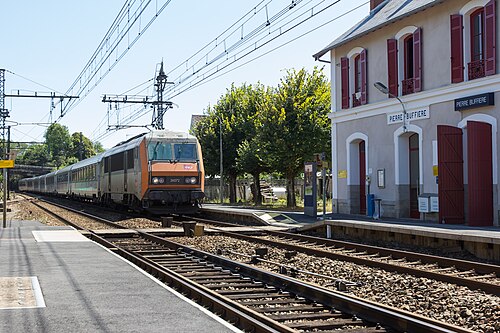
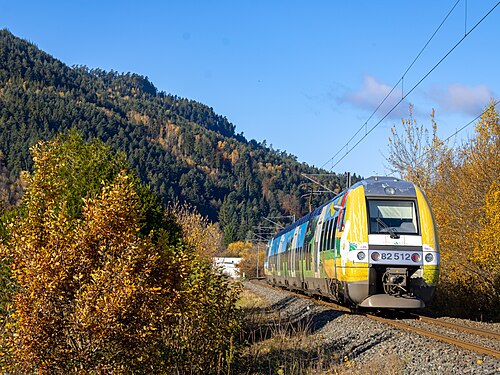
The Bourbonnais line to the Auvergne volcanoes; new Oxygène trainsets arrive from 2026 to retire its veteran Corail carriages.
Wikipedia ↗ - Intercités
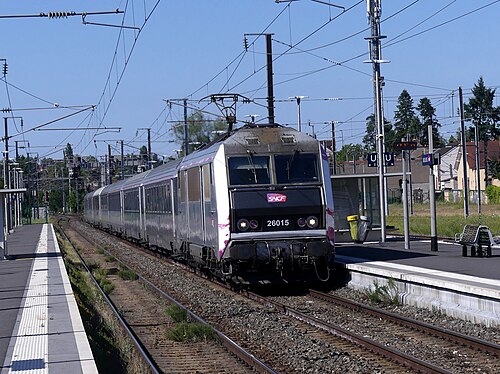
The cross-country POLT line, Paris-Orléans-Limoges-Toulouse, runs 713 km through the Massif Central on France’s classic north–south artery.
Wikipedia ↗ - Riviera Line
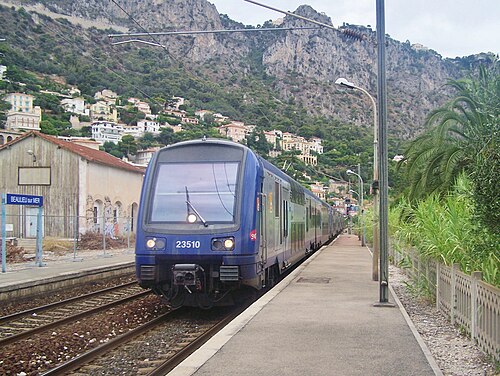
The Riviera on rails: Nice, Villefranche, Monaco’s covered station, Menton lemon groves and over the border to Ventimiglia — forty minutes of Mediterranean out the right-hand window.
Wikipedia (FR) ↗ - Clermont–Lyon
Across the top of the Massif Central: volcano country out of Clermont, the Gorges over Roanne, then down into the Rhône at Lyon.
- Caen–Le Mans–Tours
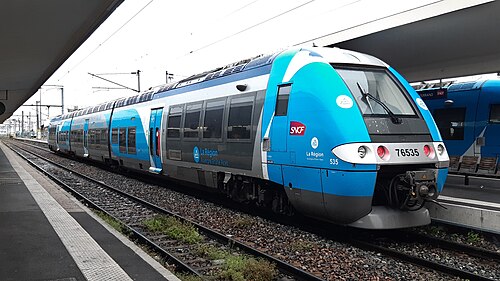
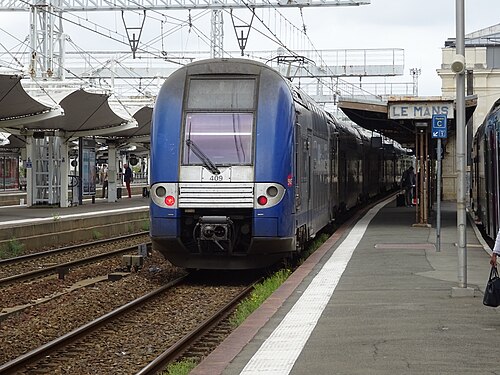
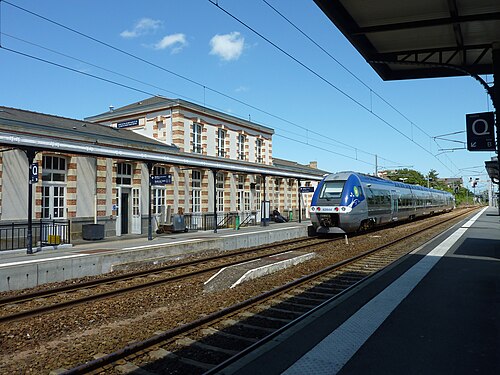
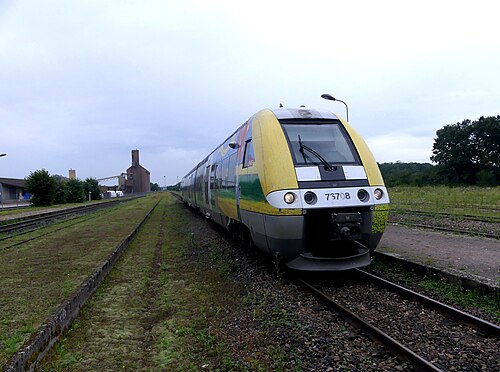
Normandy to the Loire without touching Paris: the cross-country line through Alençon and Le Mans that the TGV network forgot.
Wikipedia (FR) ↗ - Caen–Rennes
The western way round: Saint-Lô, the Vire bocage, a glimpse of Mont-Saint-Michel country at Dol, then Rennes.
Wikipedia (FR) ↗ - Reims–Dijon
Champagne to Burgundy behind the front: Châlons, Chaumont’s viaduct and the Langres plateau, four departements of France nobody flies over.
- Metz–Strasbourg
Lorraine to Alsace under the Vosges foothills, through Sarrebourg and the Saverne gap — the historic Paris–Strasbourg corridor’s eastern half.
- Paris–Granville Line
Paris to the Channel the Norman way: through Dreux and Argentan to the walled harbour of Granville, no TGV in sight.
Wikipedia (FR) ↗ - Nantes–Quimper
South Brittany strung together: Redon, the Gulf of Morbihan at Vannes, Lorient and the Odet valley into Quimper.
Wikipedia (FR) ↗ - Intercités
The great southern transversale, Atlantic to Mediterranean with no Paris detour: Garonne vineyards, Carcassonne’s citadel and the Sète lagoons on the slow way round to Marseille.
Wikipedia ↗ - Ligne des Horlogers
The Watchmakers’ Line: out of Besançon and up the Doubs gorges to 1,000 m Jura plateaus, crossing into Switzerland at Le Locle for watch-capital La Chaux-de-Fonds.
Wikipedia (FR) ↗ - Poitiers–La Rochelle railway
The Paris TGVs peel off at Poitiers and finish on this line, opened to Niort in 1856 and to La Rochelle the year after: ninety minutes across the Poitou plain to the Atlantic.
Wikipedia (FR) ↗ - Bordeaux–Hendaye railway
Dead straight down the Landes pine forest to the Basque coast; the rails left Bordeaux in 1841 and took until 1864 to reach the Spanish border at Irun.
Wikipedia ↗ - Amiens–Rouen railway
Opened complete on 18 April 1867 rather than in stages, and still the cross country way from Picardy into Normandy by Poix-de-Picardie, Abancourt and Serqueux.
Wikipedia ↗ - Nomad Krono+
Normandy’s trunk from Saint-Lazare: Lisieux, Caen and Bayeux of the Tapestry, out along the Cotentin to the great naval harbour of Cherbourg.
Wikipedia (FR) ↗ - Nomad Krono
The Impressionists’ line down the Seine: Vernon for Giverny, Rouen’s spires, and the ferro-concrete UNESCO city at the river’s mouth.
Wikipedia ↗ - Intercités
The Atlantic link that skips Paris: marshes of the Vendée, La Rochelle’s towers and the Charente to Bordeaux — ridership doubled, contracted to 2036.
Wikipedia ↗ - Intercités
France’s great west–east diagonal, no Paris required: the Loire at Angers and Tours, Bourges’ cathedral, then Roanne and the Lyon hills.
Wikipedia ↗ - Toulouse–Bayonne railway
Runs the whole width of the south-west along the foothills of the Pyrenees, opened in stages between 1861 and 1867 and still the direct way from the Atlantic to Toulouse.
Wikipedia ↗ - Coutras–Tulle line
Single track, never electrified, opened piece by piece from 1857: the cross-country link between the Paris–Bordeaux and Orléans–Montauban main lines.
Wikipedia (FR) ↗ - Libourne–Le Buisson line
97 km of single track east from the Paris–Bordeaux main line into the Périgord, opened in 1869 and still the cross-country link toward Agen and Cahors.
Wikipedia (FR) ↗ - Rennes–Saint-Malo railway
Brittany's run to the sea: 81 km from Rennes to the walled port of Saint-Malo, opened in 1864 and now covered non-stop in three quarters of an hour.
Wikipedia ↗ - Valence–Moirans railway
Built by the PLM and opened on 9 May 1864 to join Valence to Grenoble, double track over two thirds of its length and electrified in the 2010s.
Wikipedia ↗ - Rennes–Redon railway
The 1862 line down the Vilaine from Rennes to Redon, the shared first leg of Brittany's runs to Nantes and to Quimper.
Wikipedia ↗ - Grenoble–Montmélian railway
Built double-track by the PLM and opened on 15 September 1864 to join Grenoble to the Savoy main line; fully electrified only in December 2013.
Wikipedia ↗ - Neuchâtel–Pontarlier railway
The Franco-Suisse line of 1860 through the Val-de-Travers, single track over the Jura from Pontarlier down to the Neuchâtel lakeshore.
Wikipedia ↗ - Figeac–Arvant railway
170 km of single unelectrified track across the Massif Central, tying the Brive–Toulouse main line to the Cévennes line at Arvant.
Wikipedia (FR) ↗ - Delémont–Delle railway
Opened in stages from 1872 through the Jura canton — Glovelier, Porrentruy, Boncourt — and over the French border to Delle.
Wikipedia ↗ - Niversac–Agen railway
A slow country line opened in 1863: three and a half hours for 164 km from the Garonne at Agen up through the Périgord to the Périgueux junction at Niversac.
Wikipedia (FR) ↗ - Montluçon–Saint-Sulpice-Laurières line
An 1864 cross-country line over the western edge of the Massif Central, from the Paris–Toulouse main line at Saint-Sulpice-Laurière to Montluçon.
Wikipedia (FR) ↗ - Limoges–Périgueux railway
An 1861 line across the Limousin plateau, one stop in 99 km between the porcelain city of Limoges and Périgueux in the Dordogne.
Wikipedia (FR) ↗ - Angoulême–Saintes line
Down the Charente from Angoulême toward Saintes and the Atlantic, opened in 1867 through Cognac and its cellars.
Wikipedia (FR) ↗ - Reims-Laon railway
52 km across the Champagne vineyards and the Chemin des Dames country, from Reims to the cathedral on the hill at Laon.
Wikipedia ↗ - Saintes–Royan line
Half an hour down the Seudre country from Saintes to the Atlantic resort of Royan, a branch open since 1875.
Wikipedia (FR) ↗ - Saint-Étienne–Lyon railway
Continental Europe's first railway line, built by Marc and Camille Seguin between 1828 and 1833 to bring Loire coal down to the Rhône.
Wikipedia ↗ - Lunéville–Saint-Dié line
Fifty km of electrified single track up the Meurthe into the Vosges — never doubled, because unlike its neighbours it carried no strategic traffic.
Wikipedia (FR) ↗ - Amiens–Laon railway
Double track the whole way and still without wires, running east from Amiens through Tergnier to the hill town of Laon since 1857.
Wikipedia (FR) ↗ - Clisson–Cholet line
Follows the Sèvre Nantaise east from Clisson to Cholet, 39 km of single unelectrified track joining two north–south main lines.
Wikipedia (FR) ↗ - Eurotunnel Le Shuttle
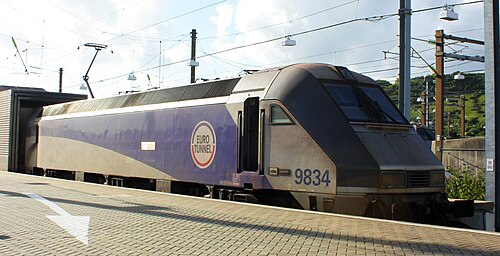
Drive on at Folkestone, drive off at Calais: thirty five minutes under the Channel on the shuttle that carries the cars, and the only fixed link between Britain and the continent.
- Maubeuge–Charleroi railway
Charleroi to the French frontier at Erquelinnes opened on 6 November 1852, and the Nord company’s line from Saint-Quentin met it there on 11 August 1855, on the old main road from Paris to Brussels.
Wikipedia ↗
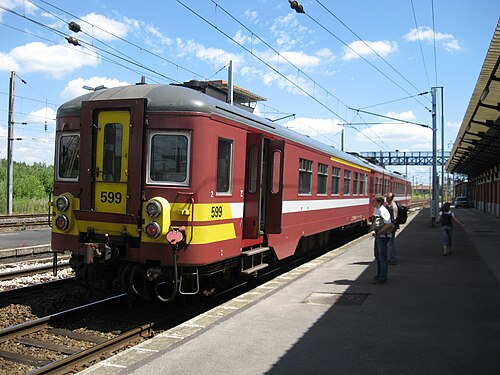
.JPG/500px-TER_%C3%A0_Saint-%C3%89tienne-Bellevue_(2011).JPG)
Night train (6)
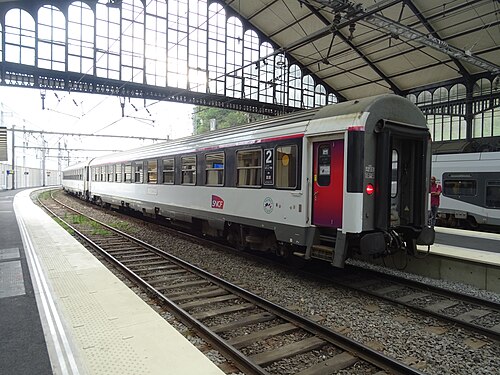
- Intercités de Nuit Paris–Nice
Relaunched in 2021 as heir to the fabled Train Bleu: board at Austerlitz, wake to the red Estérel cliffs and the sea glittering at Saint-Raphaël.
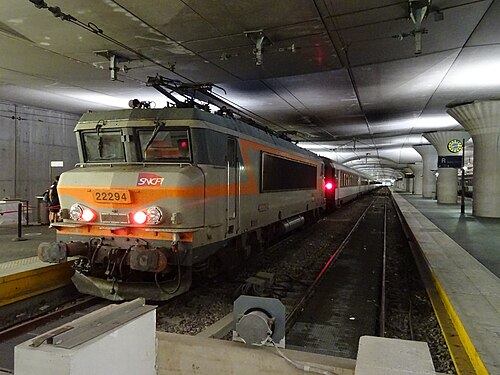
Wikipedia ↗ - Intercités de Nuit Paris–Briançon
France’s southern-Alps sleeper: lights out at Austerlitz, blinds up in the Durance valley, arrival under the Vauban walls of France’s highest city.
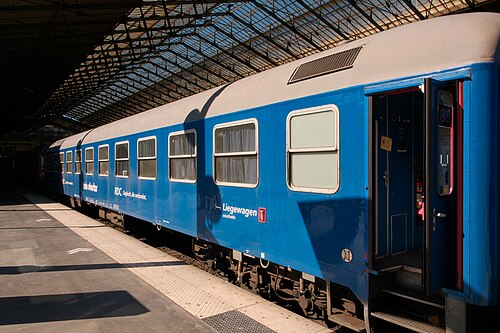
Wikipedia ↗ - European Sleeper
The night train that replaced the lost Nightjet: Paris to Berlin via Brussels three times a week since March 2026, the open-access sleeper’s boldest route yet.
Wikipedia ↗ - Intercités de Nuit
The Pyrenean pilgrim night train: out of Austerlitz every evening on the classic line through Poitiers and Dax, waking beneath the mountains at Lourdes.
Wikipedia (FR) ↗ - Intercités de Nuit
Asleep out of Austerlitz, awake on the Côte Vermeille: the sleeper threads Collioure, Port-Vendres and Banyuls to the last stop before Spain.
Wikipedia ↗ - Intercités de Nuit
The Aveyron sleeper: off the Limoges main line at Brive, then Rocamadour, the Lot valley and Rodez by breakfast — Albi through-cars on weekends.
Wikipedia ↗
Scenic (19)
- Train Jaune
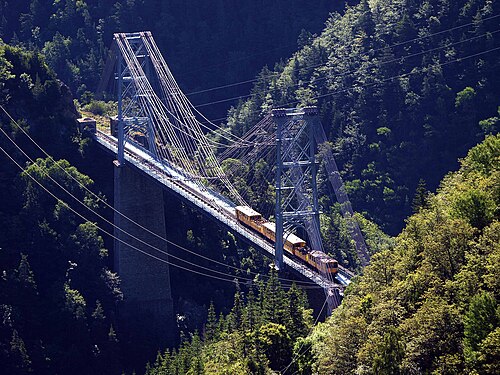
The canary-yellow metre gauge of the Pyrenees: open-air cars over the Séjourné and Gisclard bridges to France’s highest station at 1,593 m.
Wikipedia ↗ - Le Cévenol
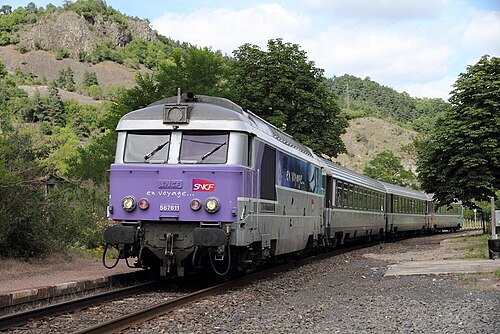
Down the Allier gorges on viaducts stacked over a river with no road: the Massif Central crossing the TGV era forgot, kept alive by sheer beauty.
Wikipedia (FR) ↗ - Ligne des Hirondelles
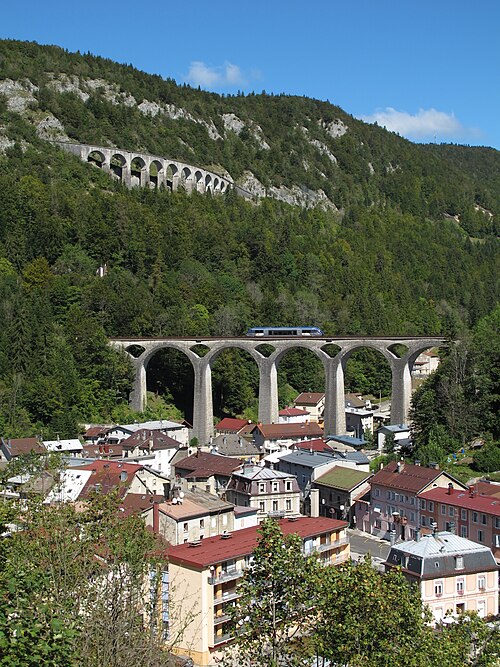
36 tunnels and 18 viaducts swooping like its namesake swallows through the high Jura: stacked stone arches right above the rooftops of Morez.
Wikipedia (FR) ↗ - Train des Pignes
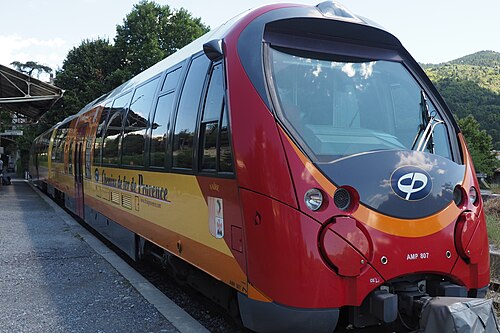
Metre-gauge “pine-cone train” climbing 151 km from Nice to Digne over some 25 tunnels and 16 viaducts, inaugurated in 1911.
Wikipedia ↗ - Train des Merveilles
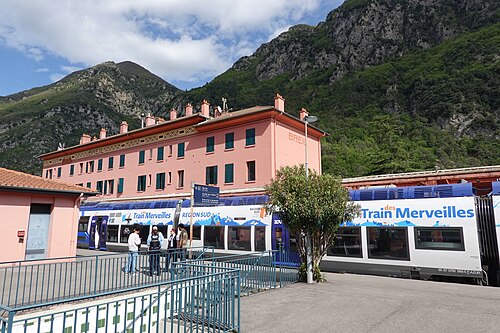
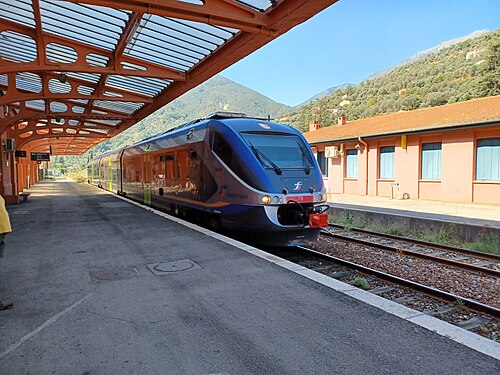
Spirals up the wild Roya valley past the Bronze-Age rock carvings of the Vallée des Merveilles, looping through helicoidal tunnels to Tende at 1,040 m.
Wikipedia (FR) ↗ - Mont-Blanc Express
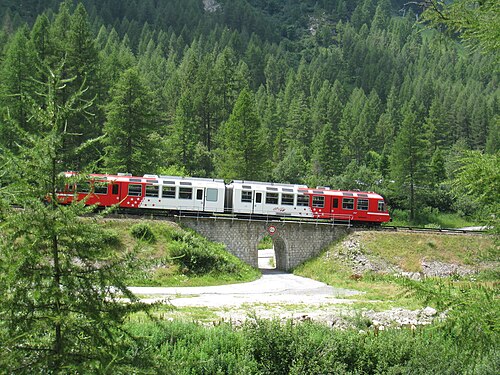
A metre-gauge mountain line under Mont Blanc, using third-rail power and a rack section to climb the Chamonix valley from Saint-Gervais into Switzerland.
Wikipedia (FR) ↗ - Chemins de fer de la Corse
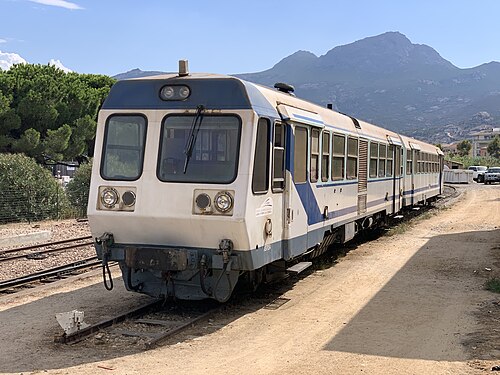
Corsica’s beloved “U Trinichellu” crosses the island’s granite spine, piercing the 3.9 km Vizzavona tunnel at 906 m altitude.
Wikipedia ↗ - Ferrovia delle Meraviglie
The “Railway of Wonders” spirals up the Alps through helical tunnels and viaducts into France; wrecked in WWII, it reopened only in 1979.
Wikipedia (IT) ↗ - Marseille–Briançon
The Durance valley all the way up: Aix, Sisteron’s citadel, Gap, Embrun above the lake, and the highest town in France at the buffer stops.
Wikipedia (FR) ↗ - Ligne des Pyrénées
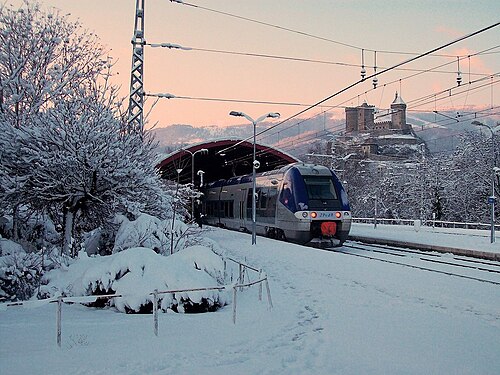
Four daily trains climb past Foix’s castle and Ax-les-Thermes to Latour-de-Carol, where three different rail gauges meet.
Wikipedia (FR) ↗ - Train de l’Aubrac
One daily train across the empty heart of France: over Garabit’s red Eiffel viaduct, the Truyère gorges and the Causses down to the Med — six hours, change at Neussargues.
Wikipedia (FR) ↗ - Bastia–Calvi
The Trinighellu’s Balagne arm: inland from Bastia to Ponte-Leccia, then down to a beach-hugging crawl from Île-Rousse to Calvi’s citadel.
Wikipedia ↗ - Rodalies R3
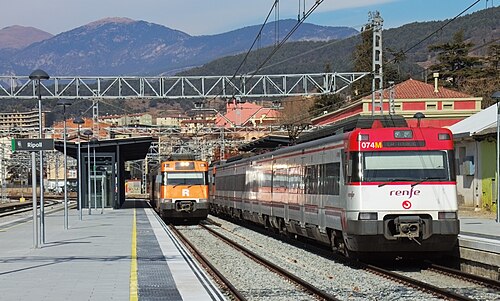
Climbs from Barcelona to 1,494 m at Toses — the roof of the Spanish network — to meet the Yellow Train across the platform at Latour-de-Carol.
Wikipedia ↗ - Le Train Rouge
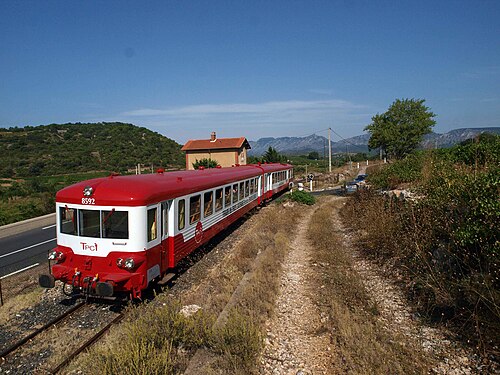
France’s longest tourist railway: 60 km from Rivesaltes’ vineyards into the Fenouillèdes gorges beneath the Cathar castles of Quéribus and Puilaurens.
Wikipedia (FR) ↗ - Ligne de la Côte Bleue
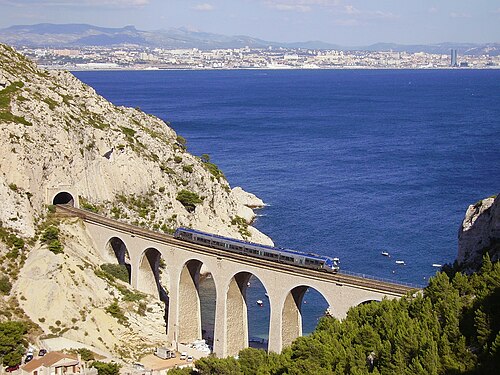
An everyday TER on a corniche of 23 tunnels and 18 viaducts: calanque after calanque between L’Estaque and Martigues for a few euros.
Wikipedia (FR) ↗ - Mouchard–Bourg-en-Bresse railway
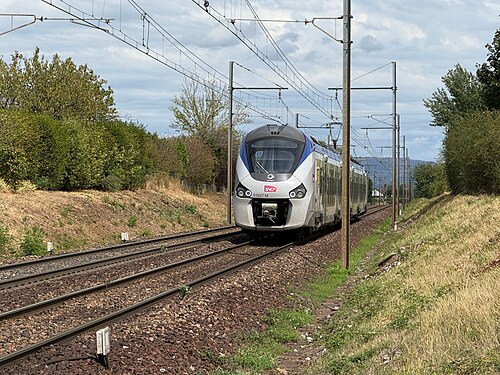
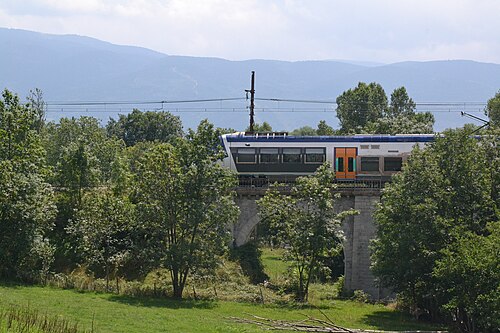
Part of the Mulhouse–Besançon–Lyon route: a demanding northern section of climbs and falls through the Jura before it runs out onto the Bresse plain.
Wikipedia (FR) ↗ - Perpignan–Villefranche line
Up the Têt from the Mediterranean at Perpignan into the Pyrenean foothills, ending where the metre-gauge Train Jaune takes over at Villefranche.
Wikipedia (FR) ↗ - Colmar–Metzeral line
Alsace's valley branch of 1868, from Colmar and its vineyards up the Fecht into the high Vosges at Metzeral.
Wikipedia (FR) ↗ - Lutterbach–Kruth line
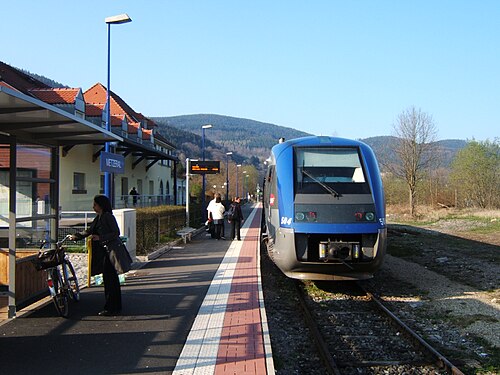
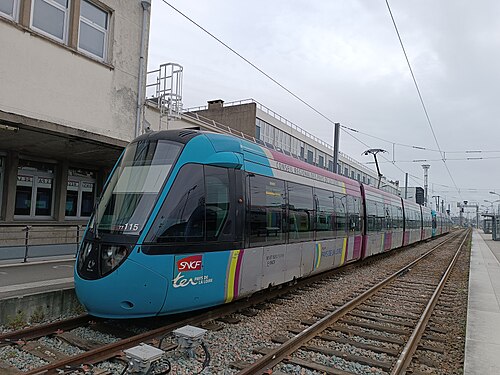
Up the Thur valley from Mulhouse through Thann to Kruth in the high Vosges, worked by SNCF trains and the Mulhouse tram-train together.
Wikipedia (FR) ↗
Heritage (9)
- Chemin de Fer de la Baie de Somme
Belle-Époque steam trains skirt the Somme estuary’s tidal salt marshes, with locomotives running round their own train at each terminus.
Wikipedia ↗ - Chemin de fer de La Mure
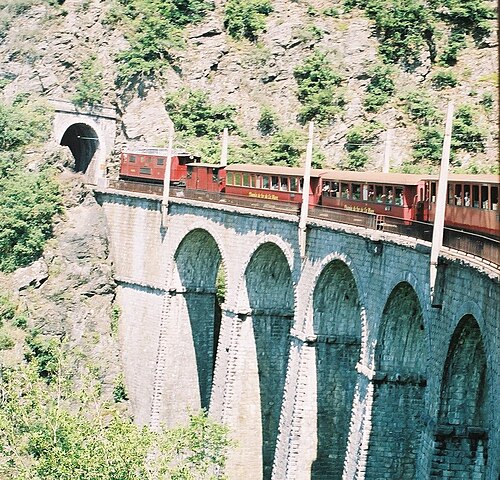
Reopened in 2021, this cliffside metre-gauge line hangs on ledges and viaducts high above the turquoise Monteynard reservoir in the Isère.
Wikipedia ↗ - Le Mastrou (Vivarais)
A metre-gauge steam survivor climbing the granite gorge of the Doux from the Rhône at Tournon to the chestnut country of Lamastre, hauled by 1903 Mallet engines.
Wikipedia ↗ - Petit train d’Artouste
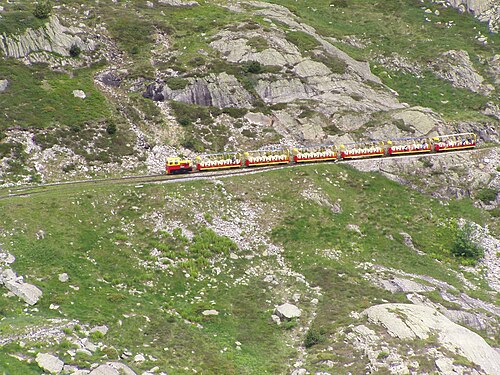
Built for the dam works of the 1920s: 500 mm open cars creep along a cliff ledge at 1,940 m from the La Sagette gondola to Lac d’Artouste.
Wikipedia ↗ - Train à Vapeur des Cévennes
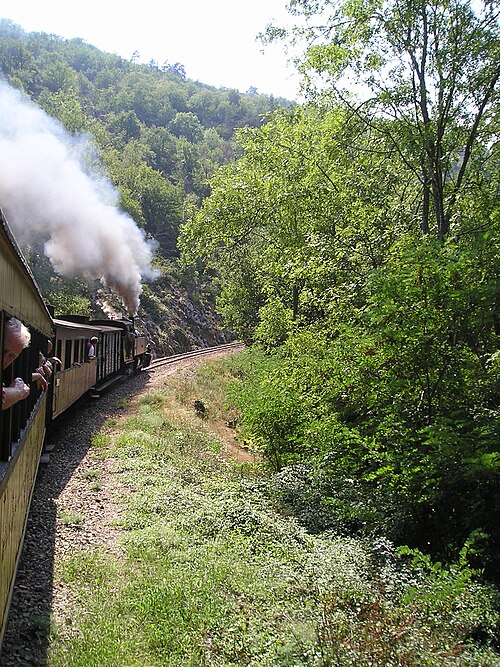
Steam between Anduze and Saint-Jean-du-Gard: across the Gardon on four viaducts, past the giant bamboo of Prafrance — 40 open-window minutes in the Cévennes.
Wikipedia (FR) ↗ - Velay Express
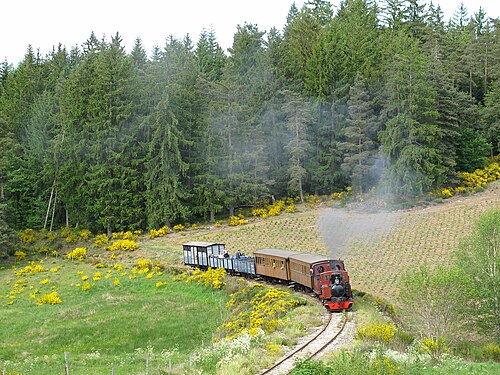
France’s highest steam railway: a 1906 Mallet hauls metre-gauge trains across the 1,000 m Velay plateau between Raucoules and Saint-Agrève.
Wikipedia (FR) ↗ - Chemin de fer de la Vendée
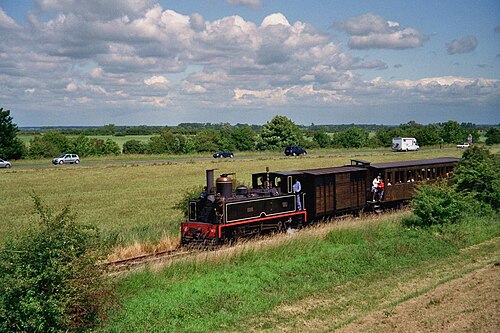
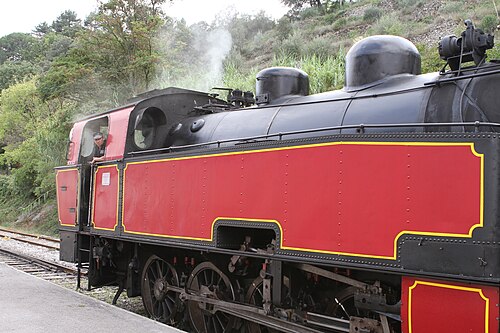
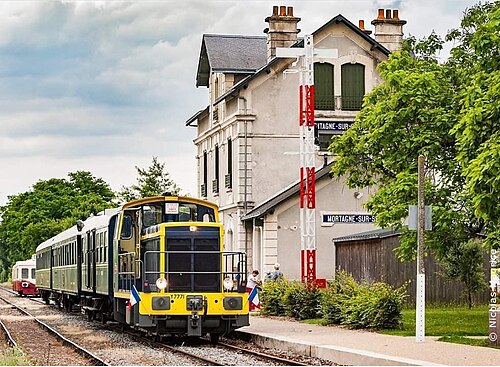
Belle-Époque dining on the move: restored CIWL Orient Express diners behind an 030 T steam engine, three viaducts between Mortagne and Les Herbiers.
Wikipedia (FR) ↗ - Train des Mouettes
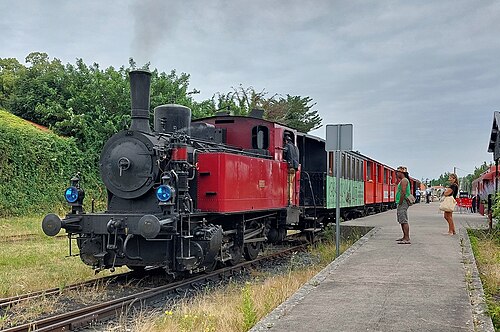
Steam at 30 km/h beside the Seudre oyster beds: an 1891 Schneider — France’s oldest working steam engine — still hauls the gulls’ train to La Tremblade.
Wikipedia ↗ - Train Thur Doller Alsace
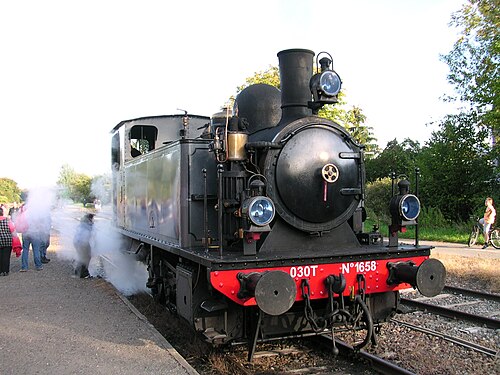
Sunday steam in the Doller valley: a century-old 030 T ambles from Cernay to Sentheim past storks, orchards and the first folds of the Vosges.
Wikipedia ↗
Mountain (6)
- Petit Train de la Rhune
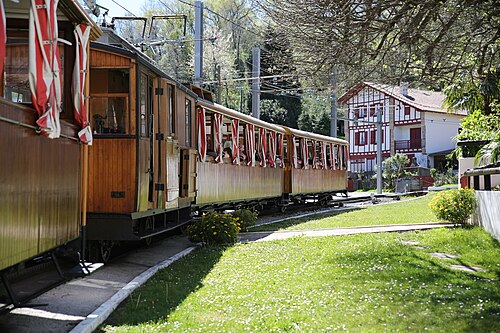
A 1924 wooden cog train grinds up to the 905 m Basque summit of La Rhune, past pottok ponies and griffon vultures, with the Bay of Biscay spread out below.
Wikipedia ↗ - Montenvers Railway
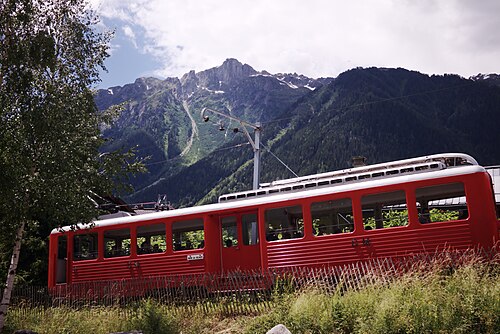
A rack railway since 1908, climbing from Chamonix to a balcony above the Mer de Glace, France’s largest glacier, under the Drus and the Grandes Jorasses.
Wikipedia ↗ - Mont-Blanc Tramway
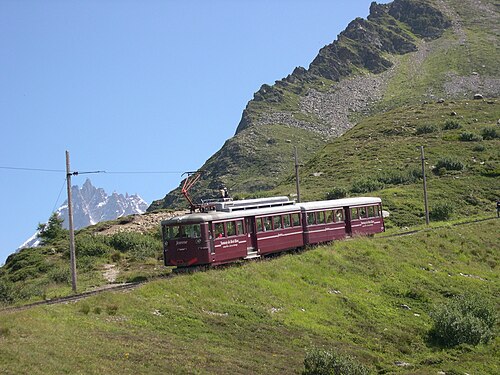
France’s highest railway grinds up the flank of Mont Blanc to the Nid d’Aigle at 2,372 m, where the climbers’ route to the summit begins.
Wikipedia ↗ - Panoramique des Dômes
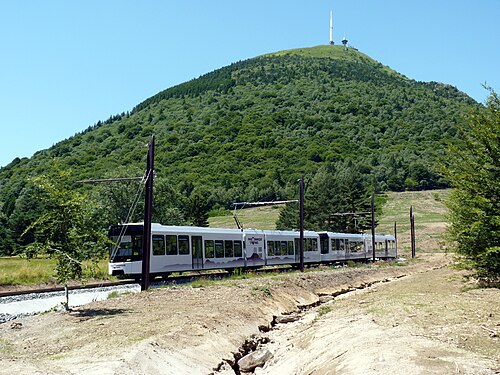
A Strub rack railway spirals up the dormant Puy de Dôme volcano: 5.3 km and 500 vertical metres to the Roman Temple of Mercury at 1,406 m.
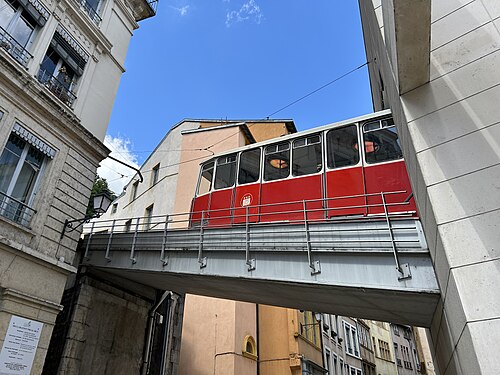
Wikipedia ↗ - Montmartre Funicular
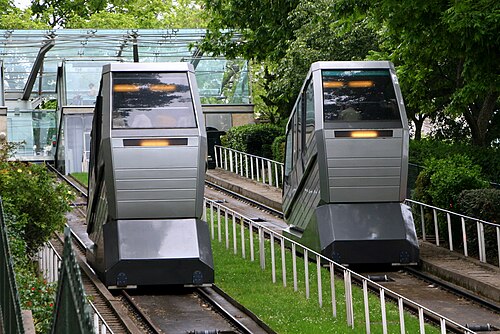
Paris’s shortcut to Sacré-Cœur since 1900 — 108 m of track, 36 m of rise and about two million riders a year.
Wikipedia ↗ - Fourvière Funicular (la ficelle)
Lyon ran the world’s first urban funiculars from 1862; today’s F2 of 1900 lifts riders from UNESCO-listed Vieux Lyon to the Fourvière basilica.
Wikipedia ↗
Luxury (2)
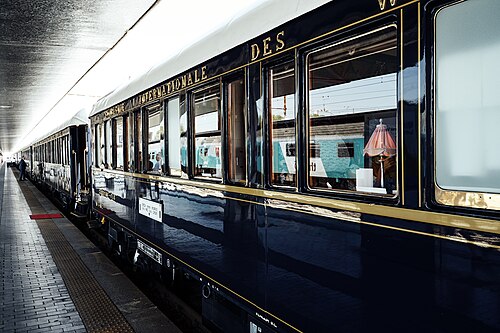
- Venice Simplon-Orient-Express
Belmond’s restored Art Deco sleepers of the 1920s–30s: black tie encouraged as the Alps slide past the champagne bar.
Wikipedia ↗ - Le Grand Tour
Puy du Fou’s rolling theatre: a Belle Époque sleeper loops 4,000 km around France in six days, actors staging a mystery from Reims to Chenonceau.
Photos via Wikimedia Commons — each route page credits the author & licence
What is the fastest train in France?
The TGV inOui, running Paris to Marseille at up to 320 km/h. It is one of 109 routes in France in this atlas.
Are there night trains in France?
Yes — 6 sleeper services in this atlas serve France: Intercités de Nuit Paris–Nice (Paris – Nice), Intercités de Nuit Paris–Briançon (Paris – Briançon), European Sleeper (Paris – Berlin), Intercités de Nuit (Paris – Lourdes), and others.
Can you cross the border by train from France?
Yes — 24 of its 109 routes continue into another country: Eurostar (London – Paris), Eurostar (Thalys) (Paris – Amsterdam), Venice Simplon-Orient-Express (Paris – Venice), TER Nancy–Luxembourg (Nancy – Luxembourg), among others.
Which is the most scenic railway in France?
France has 25 scenic or mountain lines in this atlas. The longest is the Train de l’Aubrac, 380 km.
Cross-border lines continue into
- 🇦🇹 Train routes in Austria 63 routes
- 🇧🇪 Train routes in Belgium 27 routes
- 🇩🇪 Train routes in Germany 138 routes
- 🇮🇹 Train routes in Italy 83 routes
- 🇱🇮 Train routes in Liechtenstein 4 routes
- 🇱🇺 Train routes in Luxembourg 7 routes
- 🇳🇱 Train routes in Netherlands 19 routes
- 🇪🇸 Train routes in Spain 67 routes
- 🇨🇭 Train routes in Switzerland 71 routes
- 🇬🇧 Train routes in United Kingdom 98 routes