
🇫🇷 Operator
Train routes operated by SNCF
43 routes · high-speed 6 · classic 31 · scenic 6
SNCF runs 43 of the routes in the World Train Map atlas, 9,351 km of railway across 5 countries. The longest is the TGV inOui at 971 km; the fastest is the TGV inOui, running up to 320 km/h; the oldest line it runs over here opened in 1830. 3 of its routes cross an international border.
The company itself dates to 1938, filed on Wikidata as a railway company. What this page says about the company comes from SNCF's own Wikidata item, checked against the countries its routes here actually cross before any of it is used; everything about the railway is counted from this atlas. Official site ↗ · Wikipedia ↗ · Wikidata Q13646 ↗
Open the world railway map →- Routes here
- 43
- Total length
- 9,351 km
- Fastest
- TGV inOui · 320 km/h
- Longest
- TGV inOui · 971 km
- Oldest line here
- 1830
- Company founded
- 1938
- Type
- railway company
- Countries
- France, Luxembourg, Switzerland, Monaco, Italy
High-speed (6)
- TGV inOui
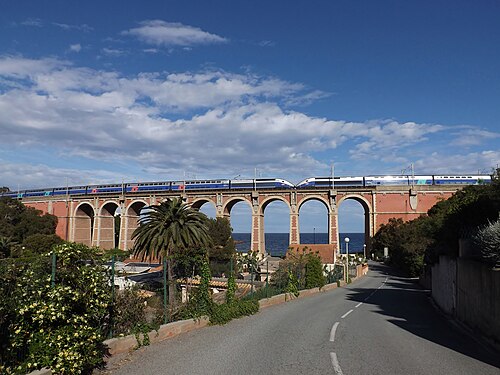
France’s longest domestic TGV run: 300 km/h to Marseille, then the classic Riviera line along the Mediterranean to Nice.
Wikipedia (FR) ↗ - TGV inOui
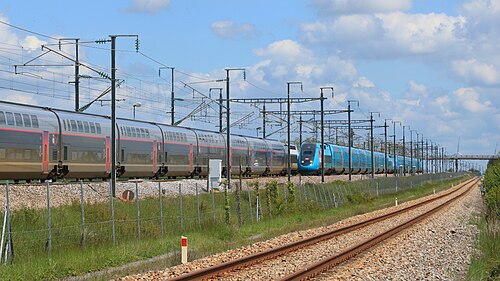
France’s first high-speed line, opened in 1981: the Paris–Lyon route that launched the whole TGV era, now run in under two hours.
Wikipedia ↗ - Ouigo
SNCF’s low-cost double-decker TGV, launched in 2013 with fares from €10, races Paris to Lyon at up to 300 km/h.
Wikipedia ↗ - TGV inOui
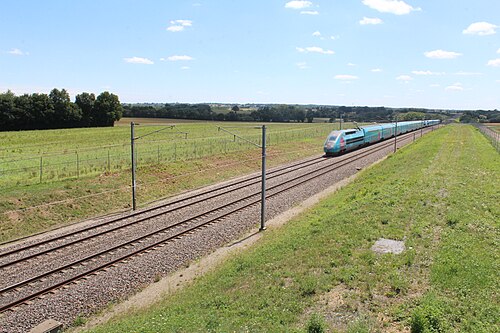
TGV Atlantique runs Paris to the Loire estuary city of Nantes in about two hours, topping 300 km/h across the plains of the west.
Wikipedia (FR) ↗ - TGV inOui
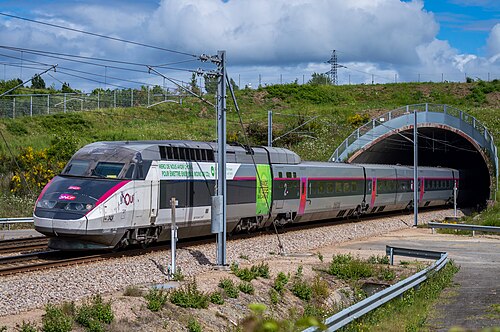
The 2017 Bretagne–Pays de la Loire high-speed line cut Paris–Rennes to 1 h 25 min, sending TGVs racing across Brittany at 320 km/h.
Wikipedia (FR) ↗ - TGV inOui
The dead-straight LGV Nord links Paris to Lille in just 62 minutes at 300 km/h, France’s fastest big-city hop.
Wikipedia ↗
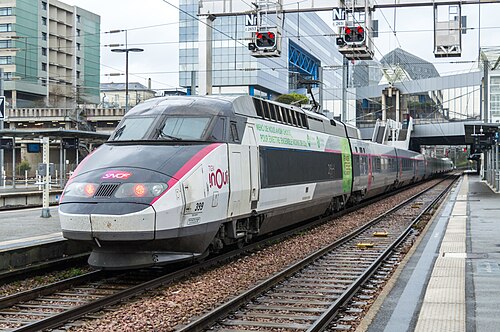
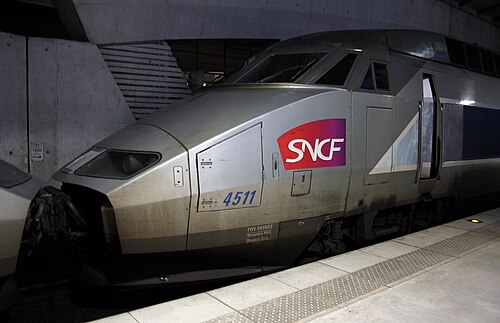
Classic (31)
- Intercités
The cross-country POLT line, Paris-Orléans-Limoges-Toulouse, runs 713 km through the Massif Central on France’s classic north–south artery.
Wikipedia ↗ - Intercités
The great southern transversale, Atlantic to Mediterranean with no Paris detour: Garonne vineyards, Carcassonne’s citadel and the Sète lagoons on the slow way round to Marseille.
Wikipedia ↗ - Intercités
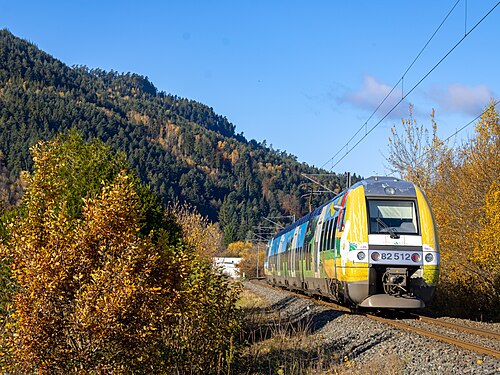
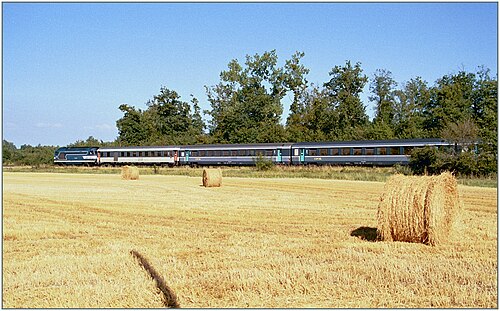
The Bourbonnais line to the Auvergne volcanoes; new Oxygène trainsets arrive from 2026 to retire its veteran Corail carriages.
Wikipedia ↗ - Paris–Granville Line
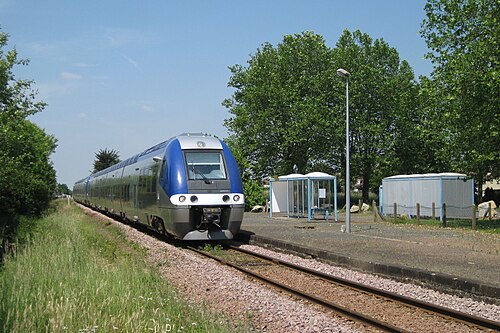
Paris to the Channel the Norman way: through Dreux and Argentan to the walled harbour of Granville, no TGV in sight.
Wikipedia (FR) ↗ - Toulouse–Bayonne railway
Runs the whole width of the south-west along the foothills of the Pyrenees, opened in stages between 1861 and 1867 and still the direct way from the Atlantic to Toulouse.
Wikipedia ↗ - Reims–Dijon
Champagne to Burgundy behind the front: Châlons, Chaumont’s viaduct and the Langres plateau, four departements of France nobody flies over.
- Caen–Rennes
The western way round: Saint-Lô, the Vire bocage, a glimpse of Mont-Saint-Michel country at Dol, then Rennes.
Wikipedia (FR) ↗ - Caen–Le Mans–Tours
Normandy to the Loire without touching Paris: the cross-country line through Alençon and Le Mans that the TGV network forgot.
Wikipedia (FR) ↗ - Nantes–Quimper
South Brittany strung together: Redon, the Gulf of Morbihan at Vannes, Lorient and the Odet valley into Quimper.
Wikipedia (FR) ↗ - Clermont–Lyon
Across the top of the Massif Central: volcano country out of Clermont, the Gorges over Roanne, then down into the Rhône at Lyon.
- Coutras–Tulle line
Single track, never electrified, opened piece by piece from 1857: the cross-country link between the Paris–Bordeaux and Orléans–Montauban main lines.
Wikipedia (FR) ↗ - Figeac–Arvant railway
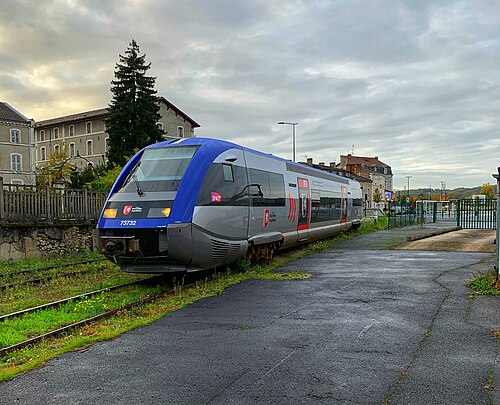
170 km of single unelectrified track across the Massif Central, tying the Brive–Toulouse main line to the Cévennes line at Arvant.
Wikipedia (FR) ↗ - Niversac–Agen railway
A slow country line opened in 1863: three and a half hours for 164 km from the Garonne at Agen up through the Périgord to the Périgueux junction at Niversac.
Wikipedia (FR) ↗ - Metz–Strasbourg
Lorraine to Alsace under the Vosges foothills, through Sarrebourg and the Saverne gap — the historic Paris–Strasbourg corridor’s eastern half.
- Montluçon–Saint-Sulpice-Laurières line
An 1864 cross-country line over the western edge of the Massif Central, from the Paris–Toulouse main line at Saint-Sulpice-Laurière to Montluçon.
Wikipedia (FR) ↗ - TER Nancy–Luxembourg
The whole sillon lorrain in an hour and a half: Nancy to Metz on the line of 1850, then down the Moselle through Thionville and over the border into Luxembourg.
- Amiens–Laon railway
Double track the whole way and still without wires, running east from Amiens through Tergnier to the hill town of Laon since 1857.
Wikipedia (FR) ↗ - Libourne–Le Buisson line
97 km of single track east from the Paris–Bordeaux main line into the Périgord, opened in 1869 and still the cross-country link toward Agen and Cahors.
Wikipedia (FR) ↗ - Limoges–Périgueux railway
An 1861 line across the Limousin plateau, one stop in 99 km between the porcelain city of Limoges and Périgueux in the Dordogne.
Wikipedia (FR) ↗ - Ligne des Horlogers
The Watchmakers’ Line: out of Besançon and up the Doubs gorges to 1,000 m Jura plateaus, crossing into Switzerland at Le Locle for watch-capital La Chaux-de-Fonds.
Wikipedia (FR) ↗ - Rennes–Saint-Malo railway
Brittany's run to the sea: 81 km from Rennes to the walled port of Saint-Malo, opened in 1864 and now covered non-stop in three quarters of an hour.
Wikipedia ↗ - Valence–Moirans railway
Built by the PLM and opened on 9 May 1864 to join Valence to Grenoble, double track over two thirds of its length and electrified in the 2010s.
Wikipedia ↗ - Angoulême–Saintes line
Down the Charente from Angoulême toward Saintes and the Atlantic, opened in 1867 through Cognac and its cellars.
Wikipedia (FR) ↗ - Rennes–Redon railway
The 1862 line down the Vilaine from Rennes to Redon, the shared first leg of Brittany's runs to Nantes and to Quimper.
Wikipedia ↗ - Saint-Étienne–Lyon railway
Continental Europe's first railway line, built by Marc and Camille Seguin between 1828 and 1833 to bring Loire coal down to the Rhône.
Wikipedia ↗ - Grenoble–Montmélian railway
Built double-track by the PLM and opened on 15 September 1864 to join Grenoble to the Savoy main line; fully electrified only in December 2013.
Wikipedia ↗ - Reims-Laon railway
52 km across the Champagne vineyards and the Chemin des Dames country, from Reims to the cathedral on the hill at Laon.
Wikipedia ↗ - Lunéville–Saint-Dié line
Fifty km of electrified single track up the Meurthe into the Vosges — never doubled, because unlike its neighbours it carried no strategic traffic.
Wikipedia (FR) ↗ - Clisson–Cholet line
Follows the Sèvre Nantaise east from Clisson to Cholet, 39 km of single unelectrified track joining two north–south main lines.
Wikipedia (FR) ↗ - Saintes–Royan line
Half an hour down the Seudre country from Saintes to the Atlantic resort of Royan, a branch open since 1875.
Wikipedia (FR) ↗ - Riviera Line
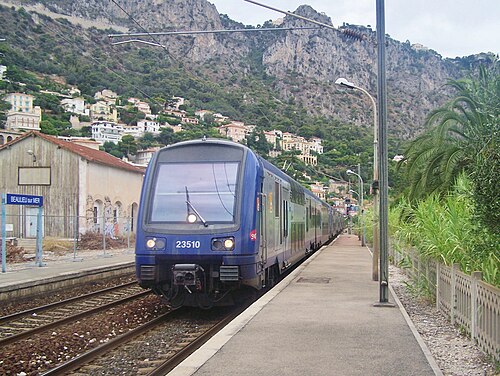
The Riviera on rails: Nice, Villefranche, Monaco’s covered station, Menton lemon groves and over the border to Ventimiglia — forty minutes of Mediterranean out the right-hand window.
Wikipedia (FR) ↗
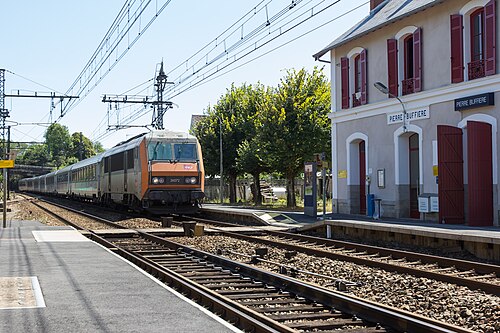
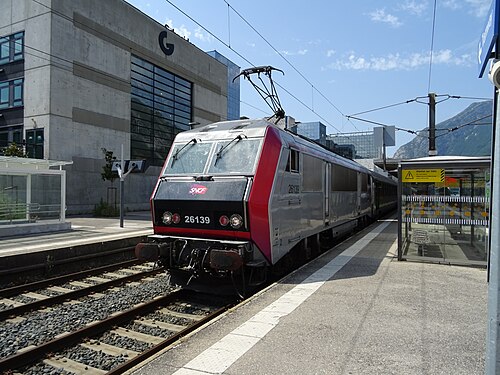
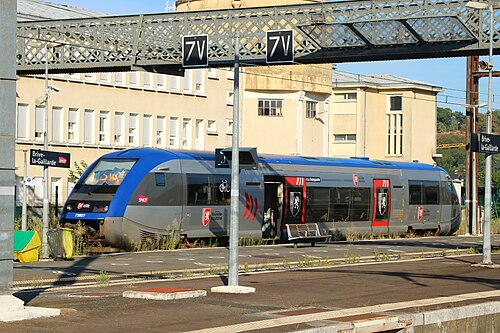
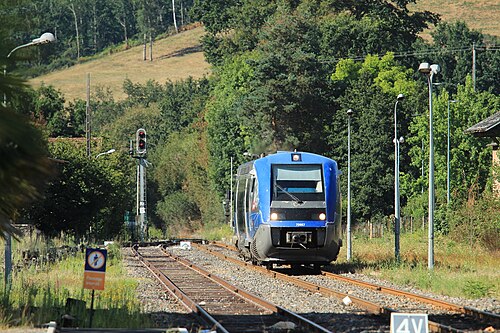
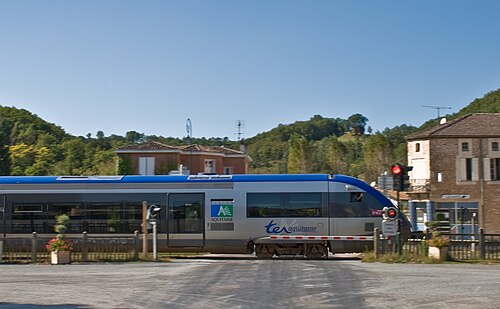
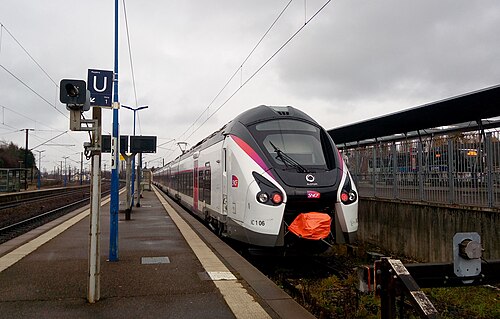
.JPG/500px-TER_%C3%A0_Saint-%C3%89tienne-Bellevue_(2011).JPG)
Scenic (6)
- Train de l’Aubrac
One daily train across the empty heart of France: over Garabit’s red Eiffel viaduct, the Truyère gorges and the Causses down to the Med — six hours, change at Neussargues.
Wikipedia (FR) ↗ - Marseille–Briançon
The Durance valley all the way up: Aix, Sisteron’s citadel, Gap, Embrun above the lake, and the highest town in France at the buffer stops.
Wikipedia (FR) ↗ - Mouchard–Bourg-en-Bresse railway
Part of the Mulhouse–Besançon–Lyon route: a demanding northern section of climbs and falls through the Jura before it runs out onto the Bresse plain.
Wikipedia (FR) ↗ - Perpignan–Villefranche line
Up the Têt from the Mediterranean at Perpignan into the Pyrenean foothills, ending where the metre-gauge Train Jaune takes over at Villefranche.
Wikipedia (FR) ↗ - Lutterbach–Kruth line
Up the Thur valley from Mulhouse through Thann to Kruth in the high Vosges, worked by SNCF trains and the Mulhouse tram-train together.
Wikipedia (FR) ↗ - Colmar–Metzeral line
Alsace's valley branch of 1868, from Colmar and its vineyards up the Fecht into the high Vosges at Metzeral.
Wikipedia (FR) ↗
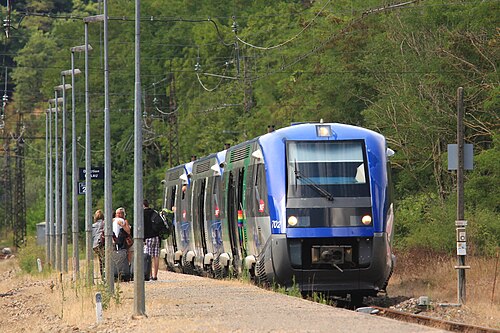
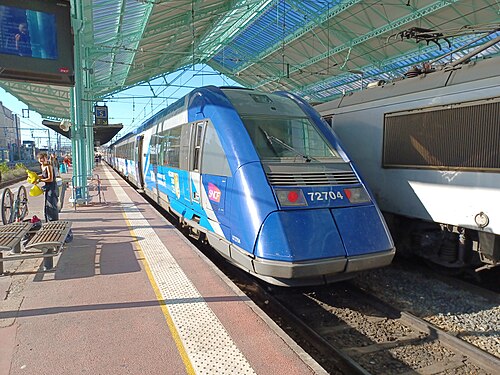
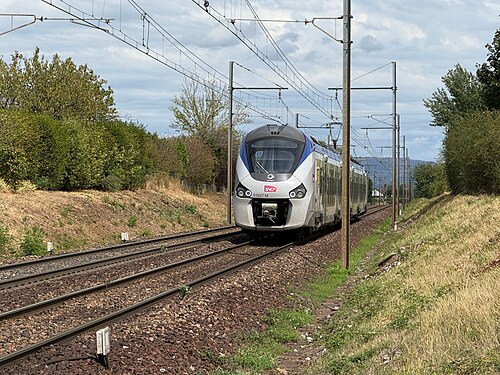
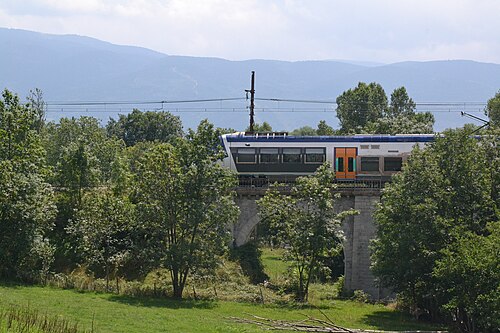
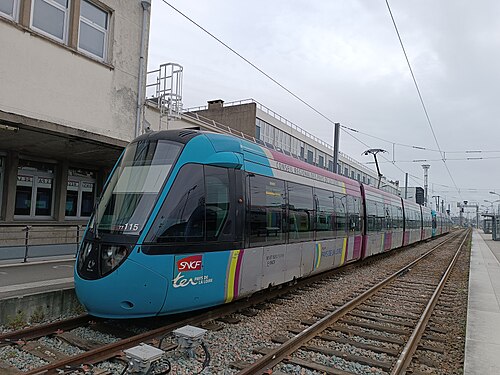
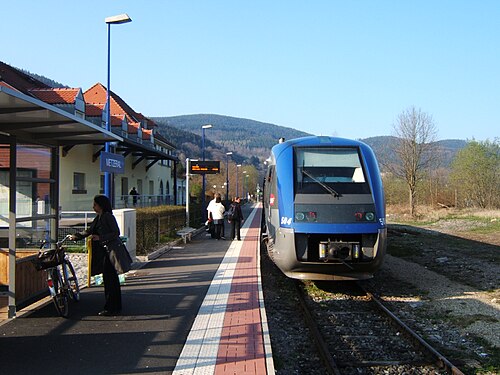
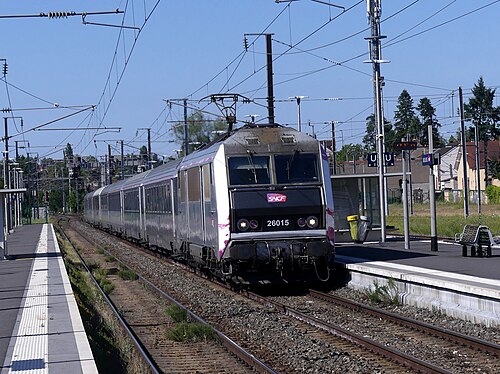
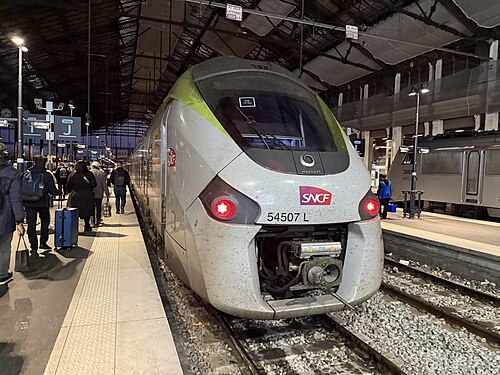
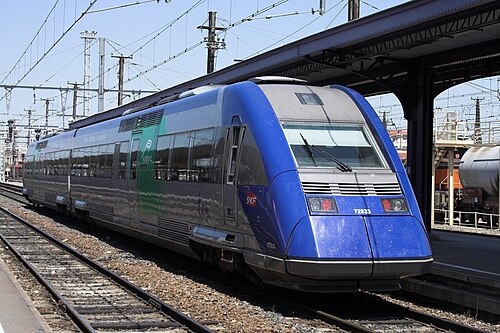
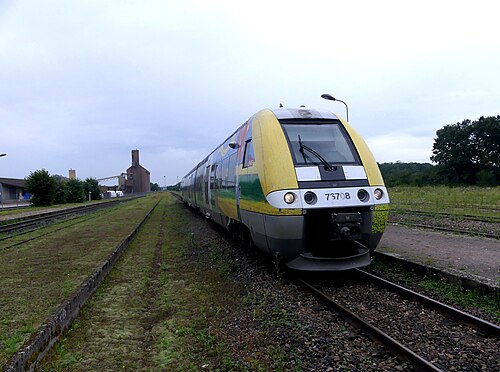
Photos via Wikimedia Commons — each route page credits the author & licence
How many train routes does SNCF run?
43 of the routes in this atlas are SNCF services, covering 9,351 km across 5 countries (France, Luxembourg, Switzerland, Monaco, Italy). That is what this atlas draws, not the operator's whole network — a national railway runs thousands of local services no map of notable journeys would list.
What is the fastest SNCF train?
The TGV inOui, Paris to Rennes, at up to 320 km/h. Its fastest scheduled run takes 1 h 25 min over 350 km.
Does SNCF run night trains?
Not in this atlas. All 43 SNCF routes listed here are daytime services.
When was SNCF founded?
Wikidata records the company's inception as 1938, and files it as a railway company. The oldest railway it runs over in this atlas opened in 1830 — the line and the company are rarely the same age, and this page dates both.
Countries SNCF runs in
- 🇫🇷 Train routes in France 109 routes
- 🇮🇹 Train routes in Italy 83 routes
- 🇨🇭 Train routes in Switzerland 71 routes
- 🇱🇺 Train routes in Luxembourg 7 routes
Other operators in France
- SNCF Voyageurs 22 routes
- CFC 2 routes
- Compagnie du Mont-Blanc 2 routes
- Région Normandie · SNCF 2 routes
- SNCF (TER Sud PACA) 2 routes