
High-speed route
Frecciarossa Rome–Naples
Rome → Naples · Italy
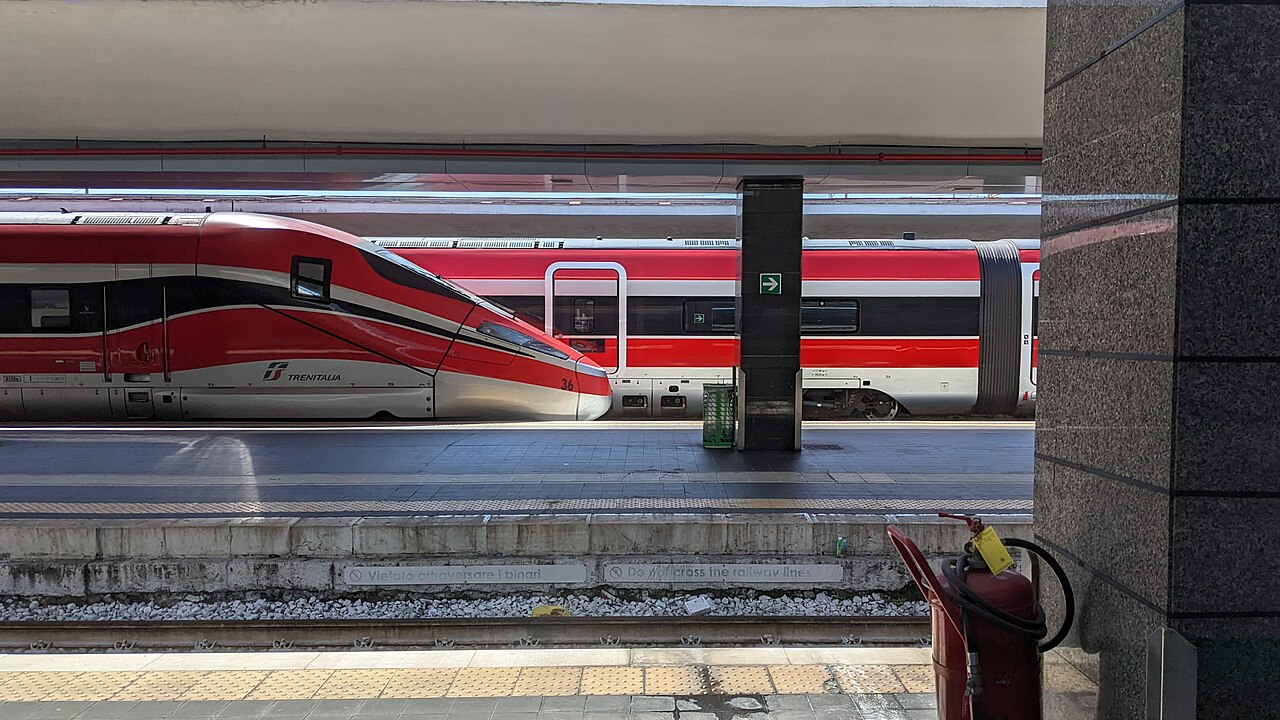
Italy’s first true alta velocità line. Vesuvius on the horizon barely an hour after leaving Rome.
Italy’s first true high-speed line opened here in December 2005, and the geography still startles: Rome and Naples, three regions and two ancient kingdoms apart, are 70 minutes door to door. The line leaves the aqueduct-strewn campagna, runs the volcanic tuff country past Anagni and the Caserta plain, then makes its final approach with Vesuvius filling the left-hand windows. Frecciarossa and Italo between them offer a departure every few minutes at peak. Europe’s densest high-speed shuttle.
Along the way
- Roman aqueducts leaving the campagna
- Ciociaria hill towns
- Caserta plain — palace country
- Vesuvius on the approach
- Napoli Centrale
How this line was checked
- Line drawn from OpenStreetMap relation 2169082 — the same nodes OpenStreetMap holds for this railway, thinned to within under 25 m of them
- Checked against OpenStreetMap: the whole line lies on real track, a median 4 m from it
- Checked against the running timetable via ÖBB Scotty: our line sits under 100 m from the shape of FR 9501
- Wikipedia has an article for this line
- See for yourself: open this line on the map with OpenStreetMap's own railway drawn underneath it
Questions and answers
How long is the Frecciarossa?
The Frecciarossa runs 225 km from Rome to Naples.
How long does the Frecciarossa take?
The fastest scheduled journey is 1 h 10 min for the 225 km. That is an average of 193 km/h end to end. The line's top service speed is 300 km/h.
Who runs the Frecciarossa?
Trenitalia, with Frecciarossa 1000.
How old is the Frecciarossa?
The line has been in service since 2005. That is the year the atlas dates it from: for a modern brand running over an older railway, it is the railway's date, not the brand's.
How often does the Frecciarossa run?
Every 10–30 min across operators.
More high-speed routes
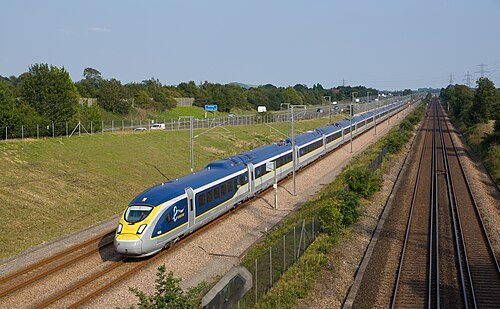
- Eurostar
Drops 75 m below the sea through the 50.5 km Channel Tunnel, 37.9 km of it under the seabed, the longest undersea stretch of any rail tunnel.
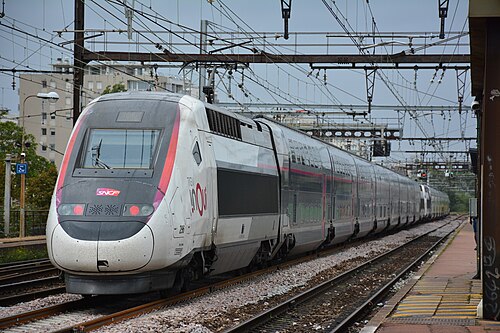
Wikipedia ↗ - TGV inOui
France’s original 1981 LGV forms the first leg; today the TGV holds 320 km/h nearly all the way to the Mediterranean.
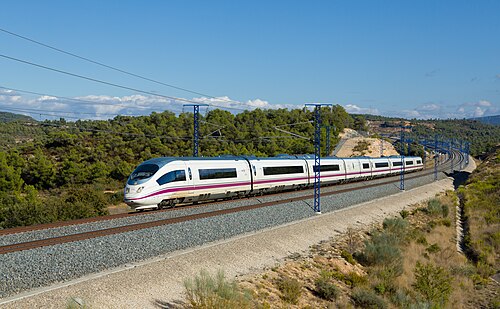
Wikipedia ↗ - AVE
Scheduled at 300 km/h, this line flipped one of the world’s busiest air routes to rail.
Wikipedia ↗ - AVE
Spain’s first AVE, built for Expo ’92 in standard gauge, the line that reset Spanish railways.
Wikipedia ↗
More train routes in Italy.
Planning this trip? Journey time & direct trains: Naples → Rome · Rome → Naples.