
High-speed route
ICE Berlin–Basel
Berlin → Basel · Germany · Switzerland
View on the map →Wikipedia ↗Stations · 16
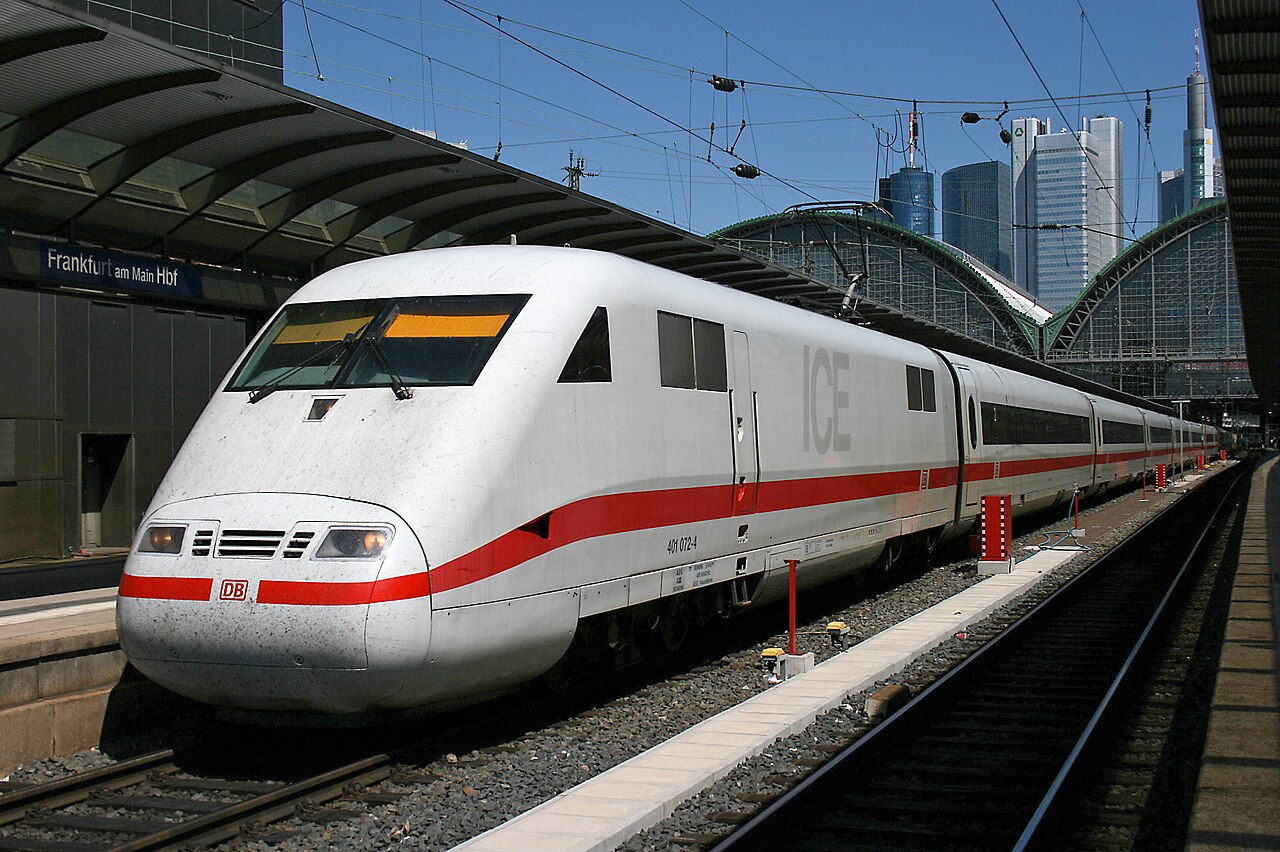
Crosses Germany from end to end, Berlin to the Swiss border, finishing down the Upper Rhine past Freiburg to Basel in about seven hours.
Stations
- 0 kmBerlin Hauptbahnhof
- 15 kmBerlin-Spandau
- 183 kmWolfsburg Hauptbahnhof
- 216 kmBraunschweig Hauptbahnhof
- 258 kmHildesheim Hauptbahnhof
- 336 kmGöttingen
Show 5 more stations
- 381 kmKassel-Wilhelmshöhe
- 470 kmFulda
- 551 kmHanau Hbf
- 573 kmFrankfurt (Main) Hauptbahnhof
- 651 kmMannheim Hauptbahnhof
- 722 kmKarlsruhe Hauptbahnhof
- 791 kmOffenburg
- 854 kmFreiburg (Breisgau) Hauptbahnhof
- 911 kmBasel Badischer Bahnhof
- 916 kmBasel SBB
The stations OpenStreetMap lists for this service, in order, with the distance along the line as drawn here. A train may skip some of them.
How this line was checked
- Line drawn from OpenStreetMap relation 1085700 — the same nodes OpenStreetMap holds for this railway, thinned to within 30 m of them
- Checked against OpenStreetMap: 99.5% of this line lies within 250 m of real track (median 8 m); the longest stretch away from it is 4.5 km
- The operator publishes this line's timetable: Deutsche Bahn — a place to look it up, not a check of our drawing
- Wikipedia has an article for this line
- See for yourself: open this line on the map with OpenStreetMap's own railway drawn underneath it
Questions and answers
How long is the ICE?
The ICE runs 843 km from Berlin to Basel. It runs through Germany and Switzerland.
How long does the ICE take?
The fastest scheduled journey is 7 h 7 min for the 843 km. That is an average of 118 km/h end to end. The line's top service speed is 280 km/h.
Who runs the ICE?
DB Fernverkehr, with ICE 1, Class 401.
How old is the ICE?
The line has been in service since 1991. That is the year the atlas dates it from: for a modern brand running over an older railway, it is the railway's date, not the brand's.
More high-speed routes
- Eurostar
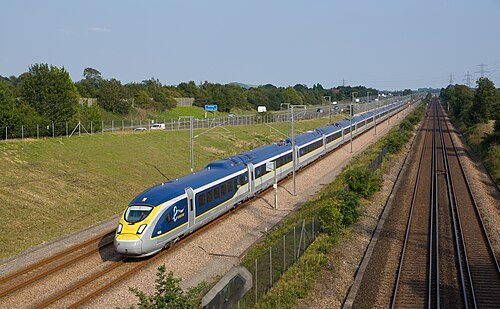
Drops 75 m below the sea through the 50.5 km Channel Tunnel, 37.9 km of it under the seabed, the longest undersea stretch of any rail tunnel.
Wikipedia ↗ - TGV inOui
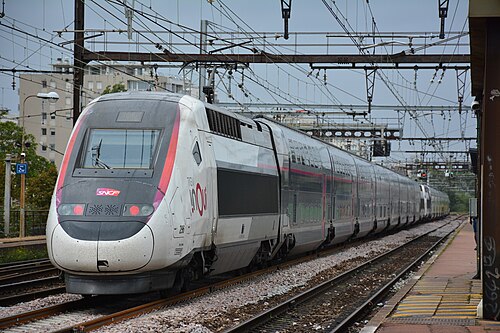
France’s original 1981 LGV forms the first leg; today the TGV holds 320 km/h nearly all the way to the Mediterranean.
Wikipedia ↗ - AVE
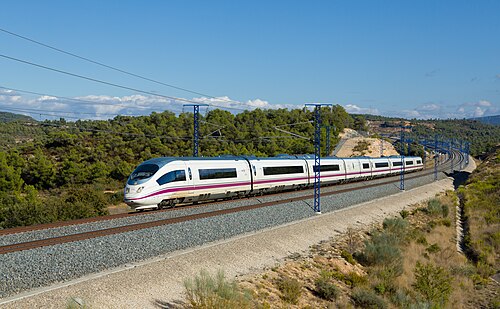
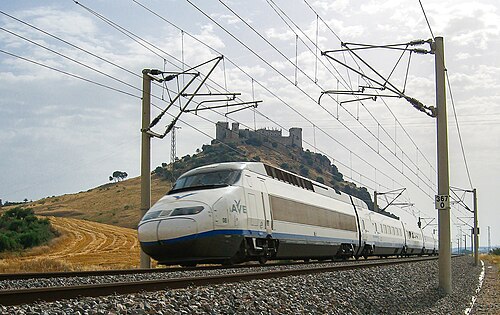
Scheduled at 300 km/h, this line flipped one of the world’s busiest air routes to rail.
Wikipedia ↗ - AVE
Spain’s first AVE, built for Expo ’92 in standard gauge, the line that reset Spanish railways.
Wikipedia ↗
More train routes in Germany · Switzerland.