
High-speed route
ICE Sprinter
Berlin → Munich · Germany
View on the map →Wikipedia ↗Stations · 6
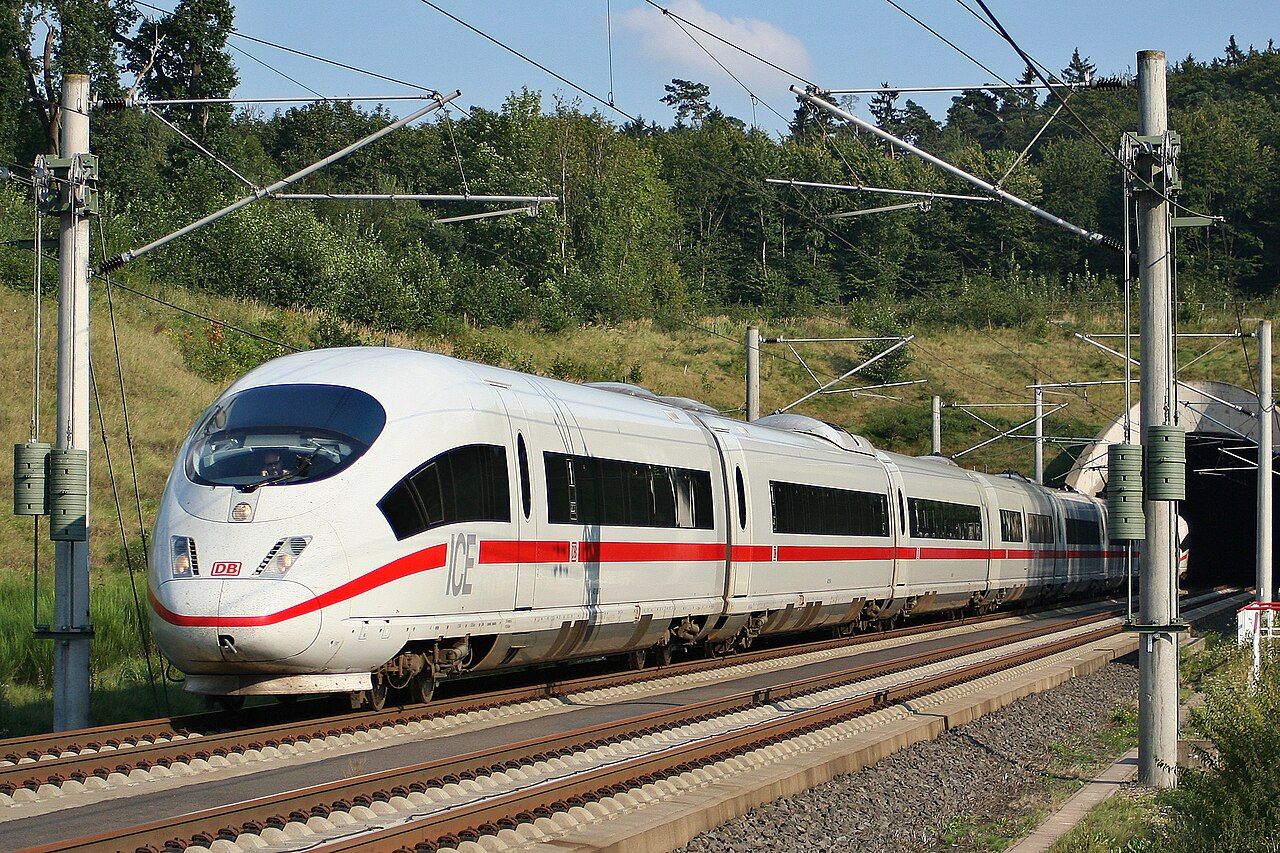
The €10bn VDE 8 project: 26 tunnels and 37 viaducts through the Thuringian Forest halved the Berlin–Munich journey.
For most of a century the Berlin–Munich run meandered; reunified Germany’s flagship rail project rebuilt it as a near-straight ribbon of slab track. The Sprinter leaves the capital across flat Saxon-Anhalt plains, calls at Erfurt’s cathedral city, then dives into the tunnel chain beneath the Thuringian Forest, riding high concrete spans over wooded valleys. Since December 2025 the fast trains have run hourly, and Franconia and the Danube at Ingolstadt flash past almost unnoticed on the final descent to Munich.
Stations
- 0 kmBerlin Hauptbahnhof (tief)
- 6 kmBerlin Südkreuz
- 164 kmHalle (Saale) Hauptbahnhof
- 256 kmErfurt Hbf
- 446 kmNürnberg Hauptbahnhof
- 617 kmMunich Central Station
The stations OpenStreetMap lists for this service, in order, with the distance along the line as drawn here. A train may skip some of them.
Along the way
- Brandenburg heath out of Berlin
- Erfurt’s medieval skyline
- Thuringian Forest tunnel chain
- Nuremberg old town interchange
- Danube crossing at Ingolstadt
How this line was checked
- Line drawn from OpenStreetMap relation 7796142 — the same nodes OpenStreetMap holds for this railway, thinned to within under 25 m of them
- Checked against OpenStreetMap: the whole line lies on real track, a median 7 m from it
- Checked against the running timetable via ÖBB Scotty: our line sits under 100 m from the shape of ICE 1503
- Wikipedia has an article for this line
- See for yourself: open this line on the map with OpenStreetMap's own railway drawn underneath it
Questions and answers
How long is the ICE Sprinter?
The ICE Sprinter runs 623 km from Berlin to Munich.
How long does the ICE Sprinter take?
The fastest scheduled journey is 3 h 55 min for the 623 km. That is an average of 159 km/h end to end. The line's top service speed is 300 km/h.
Who runs the ICE Sprinter?
Deutsche Bahn, with ICE 3.
How old is the ICE Sprinter?
The line has been in service since 2017. That is the year the atlas dates it from: for a modern brand running over an older railway, it is the railway's date, not the brand's.
How often does the ICE Sprinter run?
Hourly Sprinters (16× daily each way).
More high-speed routes
- Eurostar
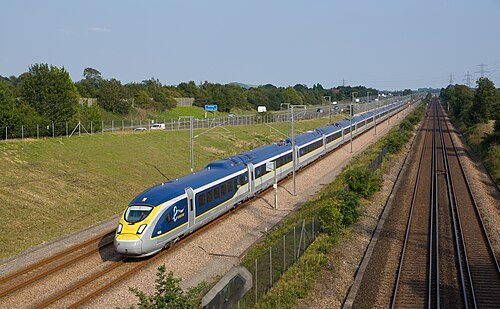
Drops 75 m below the sea through the 50.5 km Channel Tunnel, 37.9 km of it under the seabed, the longest undersea stretch of any rail tunnel.
Wikipedia ↗ - TGV inOui
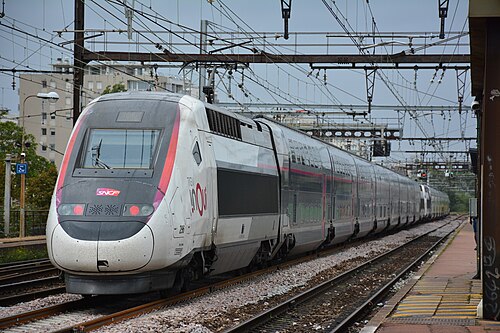
France’s original 1981 LGV forms the first leg; today the TGV holds 320 km/h nearly all the way to the Mediterranean.
Wikipedia ↗ - AVE
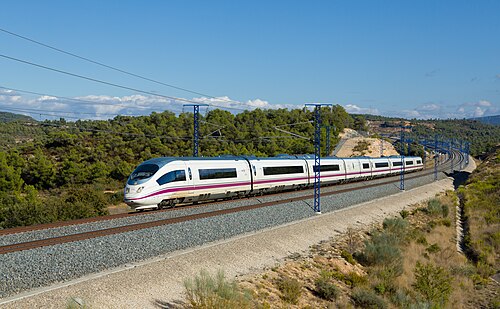
Scheduled at 300 km/h, this line flipped one of the world’s busiest air routes to rail.
Wikipedia ↗ - AVE
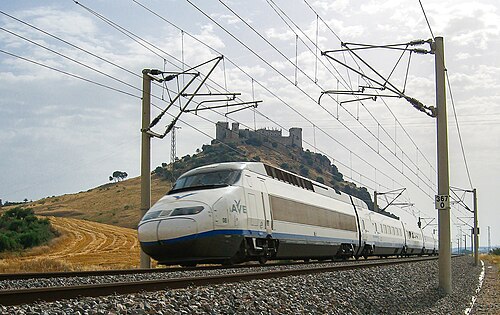
Spain’s first AVE, built for Expo ’92 in standard gauge, the line that reset Spanish railways.
Wikipedia ↗
More train routes in Germany.
Planning this trip? Journey time & direct trains: Berlin → Munich · Munich → Berlin.