
Classic route
HaEmek (Jezreel Valley) Line
Haifa → Beit She’an · Israel
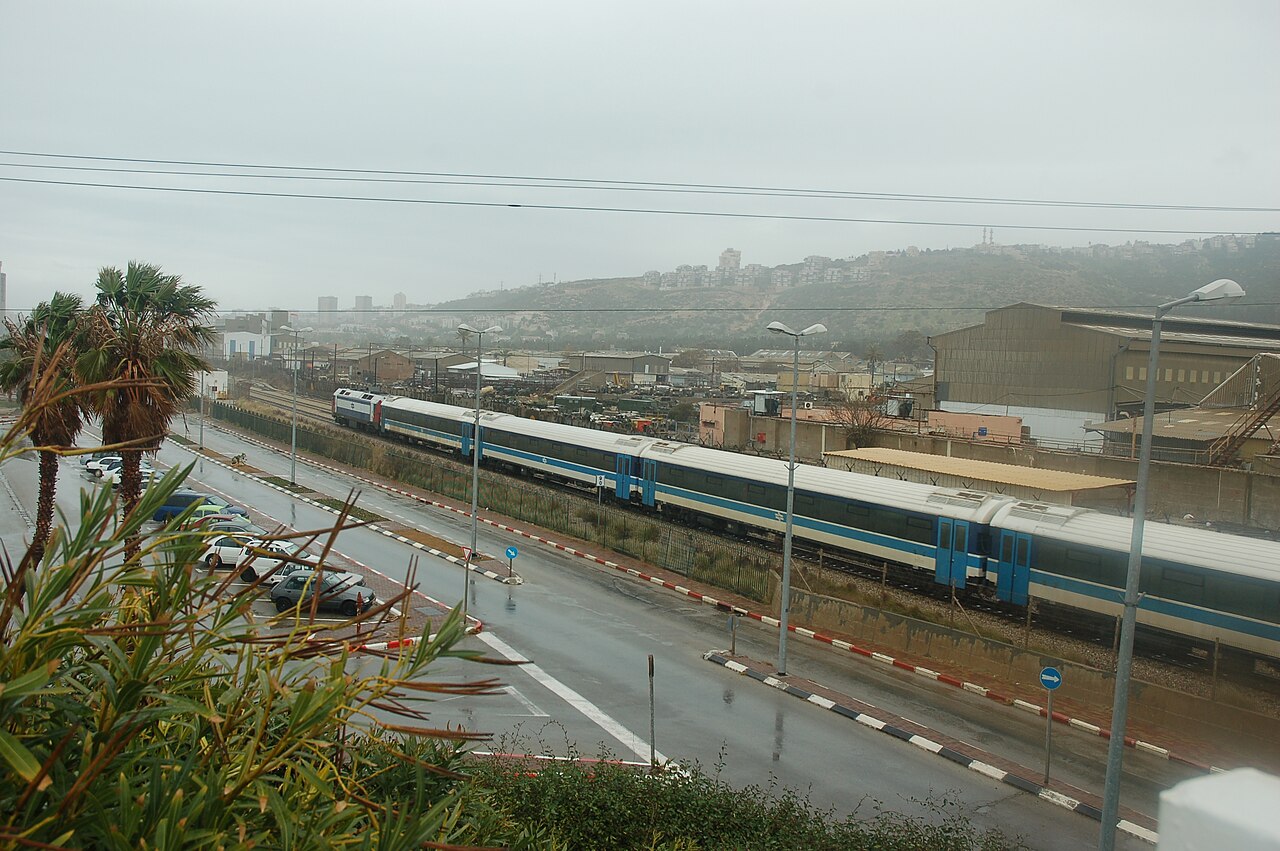
Rebuilt on the 1905 Ottoman Hejaz alignment, it ends at Beit She’an: about 120 m below sea level, among the world’s lowest stations.
The Ottomans opened the original Valley Train in 1905 as a Hejaz Railway branch, hauling Damascus-bound pilgrims down through the Jezreel Valley; the last train ran in 1948. Israel Railways rebuilt the corridor in standard gauge and reopened it in 2016: a billion-dollar, 60 km line now worked by fast double-deckers. From Haifa Bay the train crosses the valley’s farmland below Nazareth’s hills and slides below sea level to Beit She’an, one of the lowest railway stations on earth.
Along the way
- Haifa Bay and Mount Carmel
- Kishon valley farmland
- Old Hejaz station at Kfar Yehoshua
- Afula, the valley capital
- Mount Gilboa slopes
- Beit She’an’s Roman ruins
How this line was checked
- Line drawn from OpenStreetMap relation 6656111 — the same nodes OpenStreetMap holds for this railway, thinned to within under 25 m of them
- Checked against OpenStreetMap: the whole line lies on real track, a median 5 m from it
- The operator publishes this line's timetable: Israel Railways — a place to look it up, not a check of our drawing
- Wikipedia has an article for this line
Questions and answers
How long is the HaEmek (Jezreel Valley) Line?
The HaEmek (Jezreel Valley) Line runs 60 km from Haifa to Beit She’an.
How long does the HaEmek (Jezreel Valley) Line take?
The fastest scheduled journey is 50 min for the 60 km. That is an average of 72 km/h end to end. The line's top service speed is 160 km/h.
Who runs the HaEmek (Jezreel Valley) Line?
Israel Railways, with Double-deck push–pull intercity.
How old is the HaEmek (Jezreel Valley) Line?
The line has been in service since 2016. That is the year the atlas dates it from: for a modern brand running over an older railway, it is the railway's date, not the brand's.
How often does the HaEmek (Jezreel Valley) Line run?
1–2× hourly each way.
More classic routes
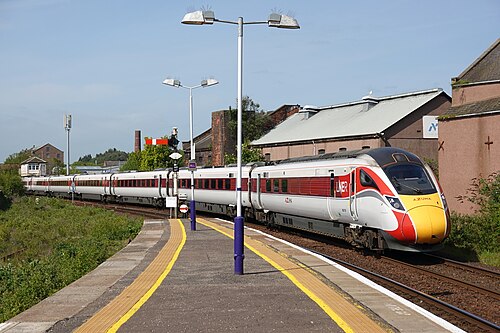
- LNER Azuma
The Flying Scotsman’s route since 1862: and where Mallard set the never-beaten steam record of 203 km/h in 1938.
Wikipedia ↗ - Alfa Pendular
A tilting Pendolino leaning through the curves of the 19th-century Linha do Norte between Portugal’s two great cities.
Wikipedia ↗ - EIP Pendolino
Rides Poland’s 1970s Central Main Line (CMK), engineered decades ahead of its time and now being upgraded to 250 km/h.
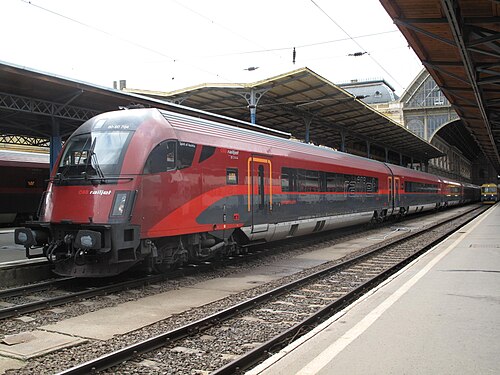
Wikipedia ↗ - Railjet
Follows the old Orient Express alignment down the Danube plain: centre to centre faster than any flight.
Wikipedia ↗


More train routes in Israel.