
Scenic route
Sanriku Railway Rias Line
Sakari → Kuji · Japan
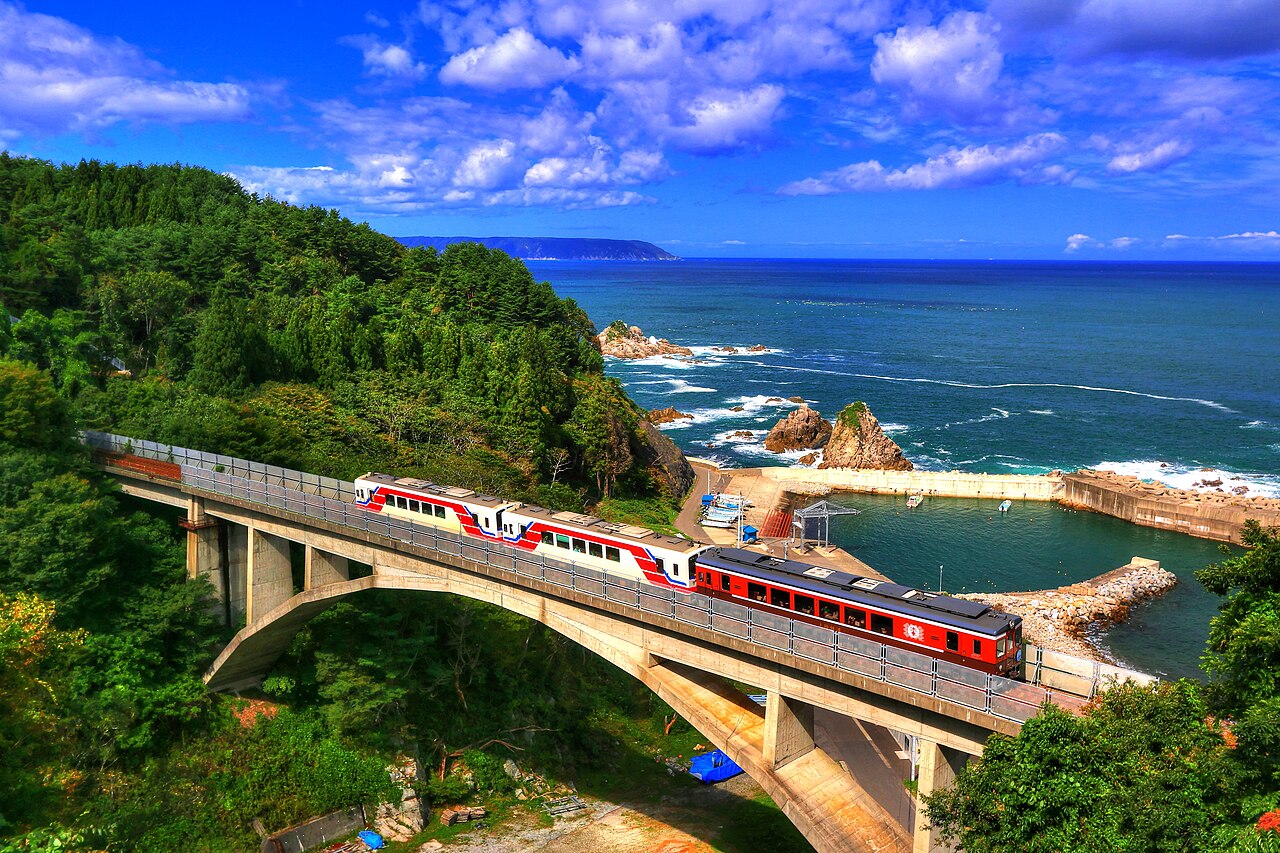
Japan’s longest third-sector railway follows 163 km of tsunami-rebuilt coast; the final gap closed in 2019, eight years after the 2011 wave.
The Rias Line hugs one of the world’s great drowned coastlines, diving between tunnels to burst onto viaducts above tiny fishing harbours. The 2011 tsunami tore the railway apart, and its station-by-station rebuilding, finished when the last gap closed in 2019, made the red-and-white railcars a national symbol of recovery. In winter, kotatsu trains with heated quilt tables run along the same cliffs.
Along the way
- Ofunato’s rebuilt harbour
- Sea-cliff viaducts at Okirai
- Kamaishi steel town
- Jodogahama’s white rocks near Miyako
- Taro’s giant sea walls
- Kuji’s amber coast
How this line was checked
- Line drawn from OpenStreetMap relation 9422260 — the same nodes OpenStreetMap holds for this railway, thinned to within under 25 m of them
- Checked against OpenStreetMap: the whole line lies on real track, a median 5 m from it
- The operator publishes this line's timetable: Sanriku Railway — a place to look it up, not a check of our drawing
- Wikipedia has an article for this line
Questions and answers
How long is the Sanriku Railway Rias Line?
The Sanriku Railway Rias Line runs 163 km from Sakari to Kuji.
How long does the Sanriku Railway Rias Line take?
The fastest scheduled journey is 4 h 25 min for the 163 km. That is an average of 37 km/h end to end. The line's top service speed is 90 km/h.
Who runs the Sanriku Railway Rias Line?
Sanriku Railway, with Sanriku 36-700 series railcars.
How old is the Sanriku Railway Rias Line?
The line has been in service since 1984. That is the year the atlas dates it from: for a modern brand running over an older railway, it is the railway's date, not the brand's.
How often does the Sanriku Railway Rias Line run?
Every 1–2 h per section; several through runs daily.
More scenic routes
- Glacier Express
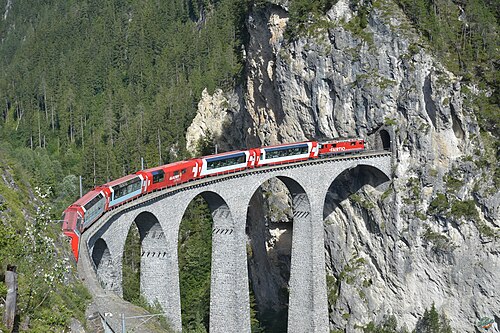
“The world’s slowest express”: 291 bridges, 91 tunnels and the 2,033 m Oberalp Pass at an average of 36 km/h.
Wikipedia ↗ - Bernina Express
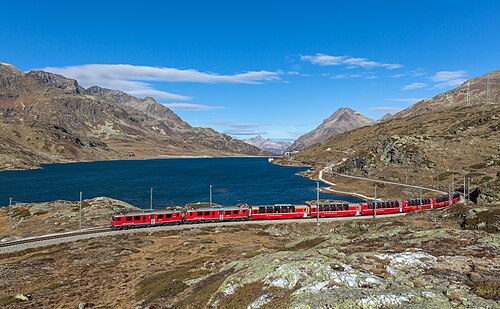
A UNESCO World Heritage railway: 7 % grades with no rack, the Brusio spiral, and the highest rail crossing of the Alps at 2,253 m.
Wikipedia ↗ - Bergensbanen
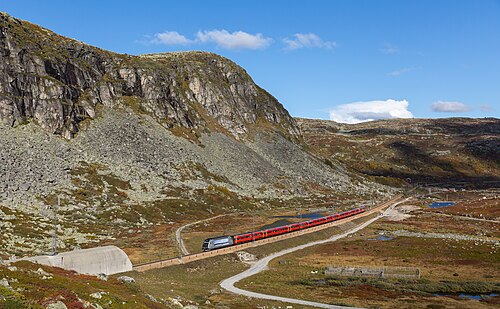
Northern Europe’s highest main line: over the bare Hardangervidda plateau at 1,237 m, through 182 tunnels.
Wikipedia ↗ - West Highland Line
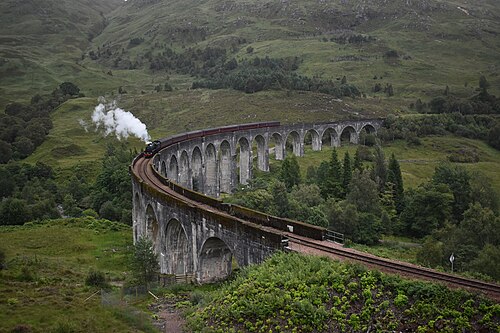
Regularly voted the world’s most scenic railway: around Rannoch Moor and over the 21-arch Glenfinnan Viaduct of film fame.
Wikipedia ↗
More train routes in Japan.