
🇫🇷 Operator
Train routes operated by SNCF Voyageurs
22 routes · high-speed 9 · classic 5 · night train 5 · scenic 3
SNCF Voyageurs runs 22 of the routes in the World Train Map atlas, 12,070 km of railway across 3 countries. The longest is the Intercités de Nuit Paris–Nice at 1,088 km; the fastest is the TGV inOui, running up to 320 km/h; the oldest line it runs over here opened in 1857. 2 of its routes cross an international border.
The company itself dates to 2020, filed on Wikidata as a railway undertaking. What this page says about the company comes from SNCF Voyageurs's own Wikidata item, checked against the countries its routes here actually cross before any of it is used; everything about the railway is counted from this atlas. Official site ↗ · Wikipedia ↗ · Wikidata Q93090957 ↗
Open the world railway map →- Routes here
- 22
- Total length
- 12,070 km
- Countries
- France, Spain, Luxembourg
- Fastest
- TGV inOui · 320 km/h
- Oldest line here
- 1857
- Company founded
- 2020
- Type
- railway undertaking
- Longest
- Intercités de Nuit Paris–Nice · 1,088 km
High-speed (9)
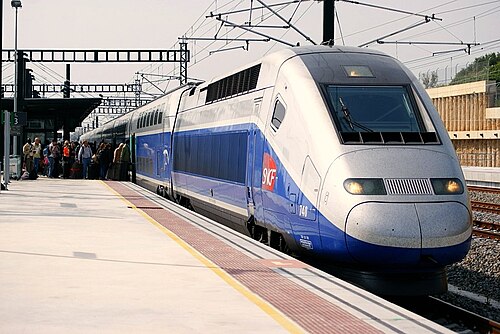
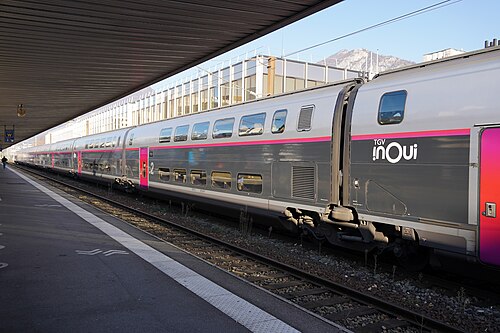
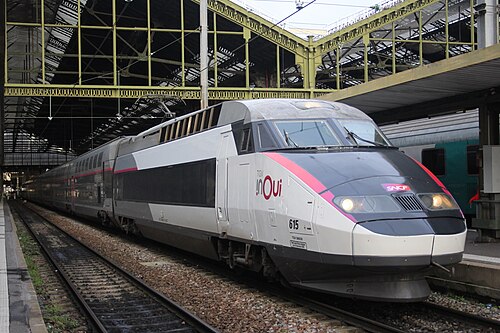
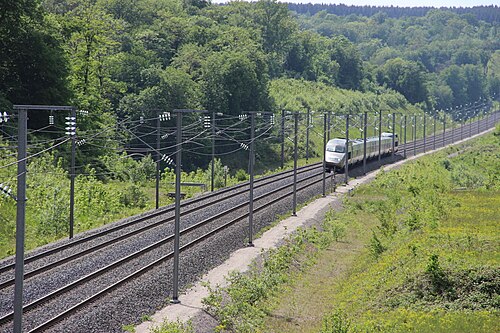
- TGV inOui
Paris to Barcelona in 6 h 39 min, diving under the Pyrenees through the 8.3 km Perthus tunnel at the Spanish border.
Wikipedia ↗ - TGV inOui
France’s original 1981 LGV forms the first leg; today the TGV holds 320 km/h nearly all the way to the Mediterranean.
Wikipedia ↗ - TGV inOui
Races down the Rhône on the LGV Méditerranée, then rides the 2017 Montpellier bypass, the first new stretch of French high-speed line in a decade, to the edge of the Camargue.
Wikipedia (FR) ↗ - TGV Paris–Brest
To Brittany’s Atlantic tip: the 2017 LGV to Rennes, then the granite north coast by Saint-Brieuc and Morlaix’s viaduct to the naval roadstead of Brest.
Wikipedia ↗ - TGV Paris–Quimper
Brittany’s other arm: the same 2017 high speed line to Rennes, where the Brest and Quimper halves of the train part company, then south to the Morbihan coast by Vannes, Auray and Lorient to Quimper in Finistère.
- TGV inOui
The LGV Sud Europe Atlantique put Bordeaux’s vineyards two hours from Paris, and emptied the air shuttle.
Wikipedia ↗ - TGV Rhin-Rhône
France’s only province-to-province LGV: Burgundy to Alsace without a glance at Paris, Dijon and Belfort on the way to the cathedral city.
Wikipedia ↗ - TGV Est
Where a modified TGV hit 574.8 km/h in 2007: still the world rail speed record for steel wheels.
Wikipedia ↗ - TGV Paris–Luxembourg
The only direct rail link between the two capitals: 320 km/h across Champagne on the LGV Est, then down the Moselle past Metz’s golden cathedral.




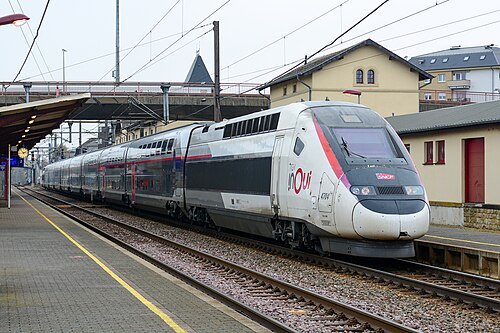
Classic (5)
- Intercités
France’s great west–east diagonal, no Paris required: the Loire at Angers and Tours, Bourges’ cathedral, then Roanne and the Lyon hills.
Wikipedia ↗ - Intercités
The Atlantic link that skips Paris: marshes of the Vendée, La Rochelle’s towers and the Charente to Bordeaux — ridership doubled, contracted to 2036.
Wikipedia ↗ - Bordeaux–Hendaye railway
Dead straight down the Landes pine forest to the Basque coast; the rails left Bordeaux in 1841 and took until 1864 to reach the Spanish border at Irun.
Wikipedia ↗ - Poitiers–La Rochelle railway
The Paris TGVs peel off at Poitiers and finish on this line, opened to Niort in 1856 and to La Rochelle the year after: ninety minutes across the Poitou plain to the Atlantic.
Wikipedia (FR) ↗ - Amiens–Rouen railway
Opened complete on 18 April 1867 rather than in stages, and still the cross country way from Picardy into Normandy by Poix-de-Picardie, Abancourt and Serqueux.
Wikipedia ↗


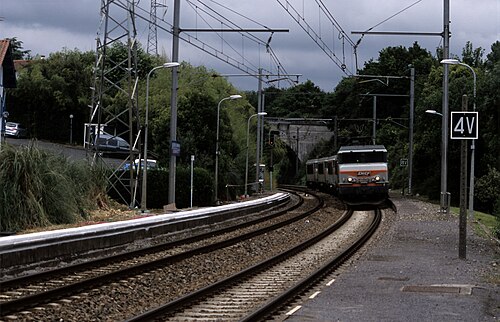


Night train (5)
- Intercités de Nuit Paris–Nice
Relaunched in 2021 as heir to the fabled Train Bleu: board at Austerlitz, wake to the red Estérel cliffs and the sea glittering at Saint-Raphaël.
Wikipedia ↗ - Intercités de Nuit
Asleep out of Austerlitz, awake on the Côte Vermeille: the sleeper threads Collioure, Port-Vendres and Banyuls to the last stop before Spain.
Wikipedia ↗ - Intercités de Nuit Paris–Briançon
France’s southern-Alps sleeper: lights out at Austerlitz, blinds up in the Durance valley, arrival under the Vauban walls of France’s highest city.
Wikipedia ↗ - Intercités de Nuit
The Pyrenean pilgrim night train: out of Austerlitz every evening on the classic line through Poitiers and Dax, waking beneath the mountains at Lourdes.
Wikipedia (FR) ↗ - Intercités de Nuit
The Aveyron sleeper: off the Limoges main line at Brive, then Rocamadour, the Lot valley and Rodez by breakfast — Albi through-cars on weekends.
Wikipedia ↗

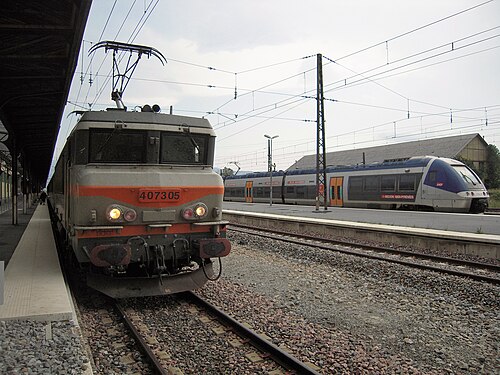



Scenic (3)
- Le Cévenol
Down the Allier gorges on viaducts stacked over a river with no road: the Massif Central crossing the TGV era forgot, kept alive by sheer beauty.
Wikipedia (FR) ↗ - Ligne des Hirondelles
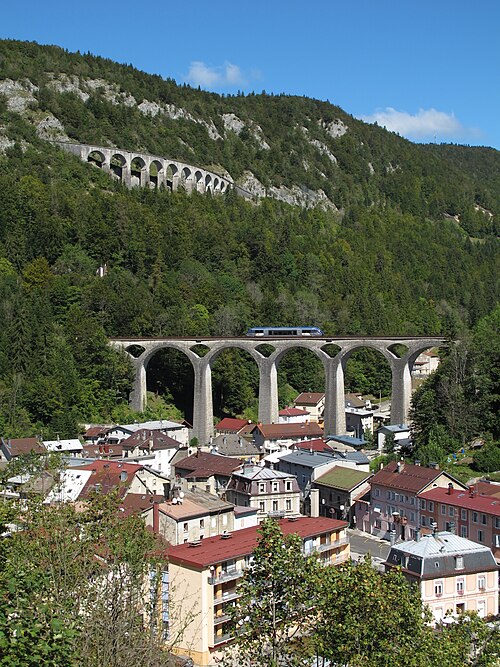
36 tunnels and 18 viaducts swooping like its namesake swallows through the high Jura: stacked stone arches right above the rooftops of Morez.
Wikipedia (FR) ↗ - Train Jaune
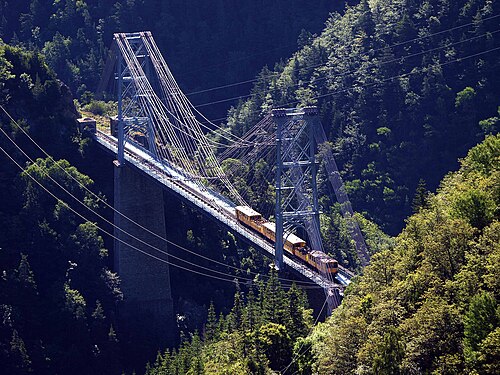
The canary-yellow metre gauge of the Pyrenees: open-air cars over the Séjourné and Gisclard bridges to France’s highest station at 1,593 m.
Wikipedia ↗
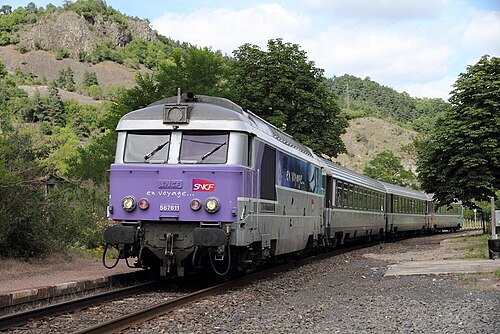
Photos via Wikimedia Commons — each route page credits the author & licence
How many train routes does SNCF Voyageurs run?
22 of the routes in this atlas are SNCF Voyageurs services, covering 12,070 km across 3 countries (France, Spain, Luxembourg). That is what this atlas draws, not the operator's whole network — a national railway runs thousands of local services no map of notable journeys would list.
What is the fastest SNCF Voyageurs train?
The TGV inOui, Paris to Barcelona, at up to 320 km/h. Its fastest scheduled run takes 6 h 39 min over 1,073 km.
Does SNCF Voyageurs run night trains?
Yes — 5 sleeper services in this atlas: Intercités de Nuit Paris–Nice (Paris – Nice), Intercités de Nuit (Paris – Cerbère), Intercités de Nuit Paris–Briançon (Paris – Briançon), Intercités de Nuit (Paris – Lourdes), and others.
When was SNCF Voyageurs founded?
Wikidata records the company's inception as 2020, and files it as a railway undertaking. The oldest railway it runs over in this atlas opened in 1857 — the line and the company are rarely the same age, and this page dates both.
Countries SNCF Voyageurs runs in
- 🇫🇷 Train routes in France 109 routes
- 🇪🇸 Train routes in Spain 67 routes
- 🇱🇺 Train routes in Luxembourg 7 routes
Other operators in France
- SNCF 43 routes
- CFC 2 routes
- Compagnie du Mont-Blanc 2 routes
- Région Normandie · SNCF 2 routes
- SNCF (TER Sud PACA) 2 routes