
High-speed route
ICE Frankfurt–Munich
Frankfurt → Munich · Germany
View on the map →Wikipedia ↗Stations · 6
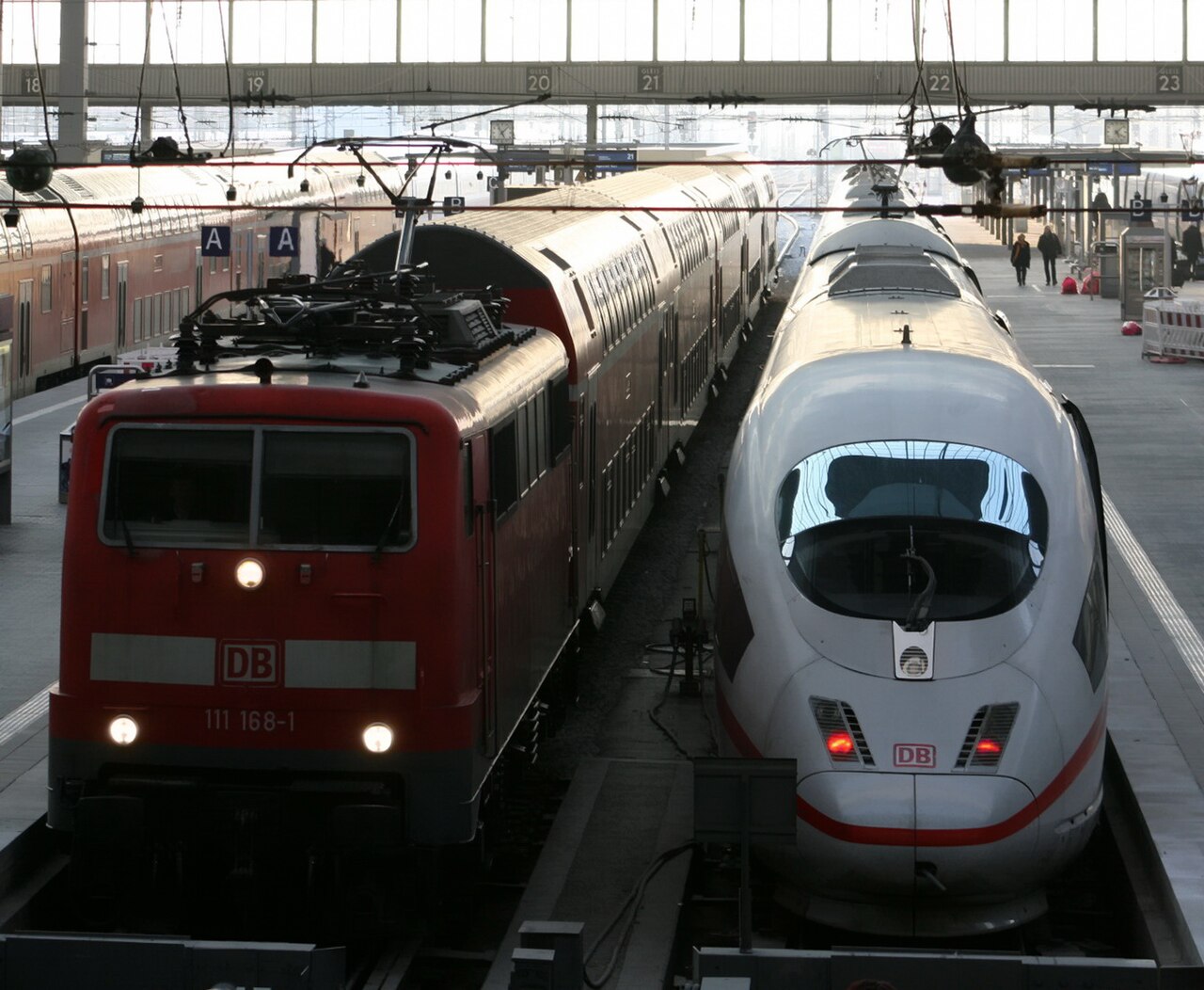
Sprints down the 300 km/h Nuremberg–Ingolstadt high-speed line, one of Germany’s fastest, on gradients so steep that freight trains are banned.
The Frankfurt–Munich ICEs collect three generations of German railway building in one ticket: the classic Main valley climb through the Spessart oaks, the 1980s line into Würzburg beneath the Marienberg fortress, and the 2006 Nuremberg–Ingolstadt sprint at 300 km/h through the Franconian Jura’s cuttings. The Danube passes at Ingolstadt, then the Hallertau hop gardens see the train home across the Bavarian plateau. Around three and a quarter hours, hourly, dining car included.
Stations
- 1 kmFrankfurt (Main) Hauptbahnhof
- 47 kmAschaffenburg Hbf
- 125 kmWürzburg Hauptbahnhof
- 227 kmNürnberg Hauptbahnhof
- 317 kmIngolstadt Hbf
- 397 kmMunich Central Station
The stations OpenStreetMap lists for this service, in order, with the distance along the line as drawn here. A train may skip some of them.
Along the way
- Spessart forest climb
- Würzburg under the Marienberg
- Franconian wine slopes
- Nuremberg interchange
- 300 km/h through the Jura to Ingolstadt
- Hallertau hop gardens
How this line was checked
- The 396 km this route shares with OpenStreetMap relation 382440 is drawn from that relation's own nodes, thinned to within 30 m of them
- Checked against OpenStreetMap: 98.5% of this line lies within 250 m of real track (median 9 m); the longest stretch away from it is 6 km
- Checked against the running timetable via ÖBB Scotty: our line sits under 100 m from the shape of ICE 827
- Wikipedia has an article for this line
- See for yourself: open this line on the map with OpenStreetMap's own railway drawn underneath it
Questions and answers
How long is the ICE?
The ICE runs 410 km from Frankfurt to Munich.
How long does the ICE take?
The fastest scheduled journey is 3 h 15 min for the 410 km. That is an average of 126 km/h end to end. The line's top service speed is 300 km/h.
Who runs the ICE?
DB Fernverkehr, with ICE 3, Class 403.
How old is the ICE?
The line has been in service since 2006. That is the year the atlas dates it from: for a modern brand running over an older railway, it is the railway's date, not the brand's.
How often does the ICE run?
Hourly.
More high-speed routes
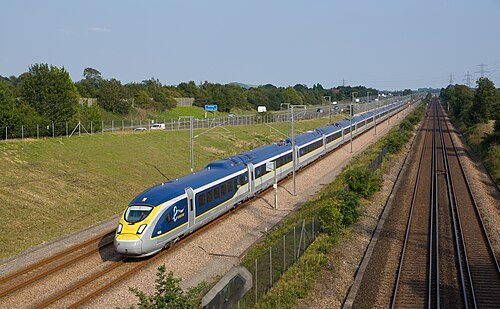
- Eurostar
Drops 75 m below the sea through the 50.5 km Channel Tunnel, 37.9 km of it under the seabed, the longest undersea stretch of any rail tunnel.
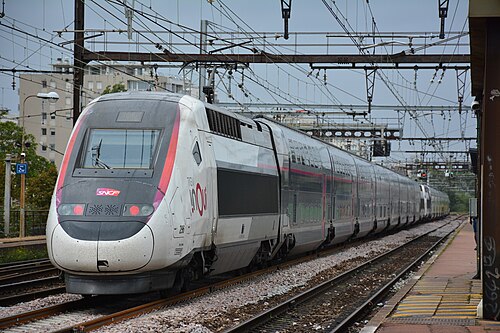
Wikipedia ↗ - TGV inOui
France’s original 1981 LGV forms the first leg; today the TGV holds 320 km/h nearly all the way to the Mediterranean.
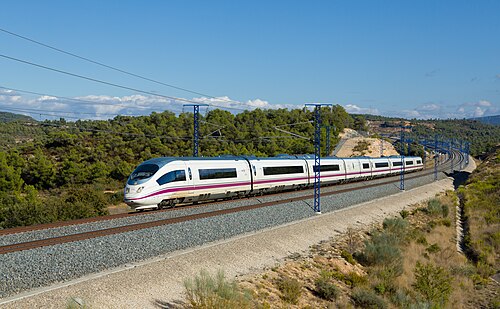
Wikipedia ↗ - AVE
Scheduled at 300 km/h, this line flipped one of the world’s busiest air routes to rail.
Wikipedia ↗ - AVE
Spain’s first AVE, built for Expo ’92 in standard gauge, the line that reset Spanish railways.
Wikipedia ↗
More train routes in Germany.
Planning this trip? Journey time & direct trains: Frankfurt → Munich · Munich → Frankfurt.