
High-speed route
TGV Est
Paris → Strasbourg · France
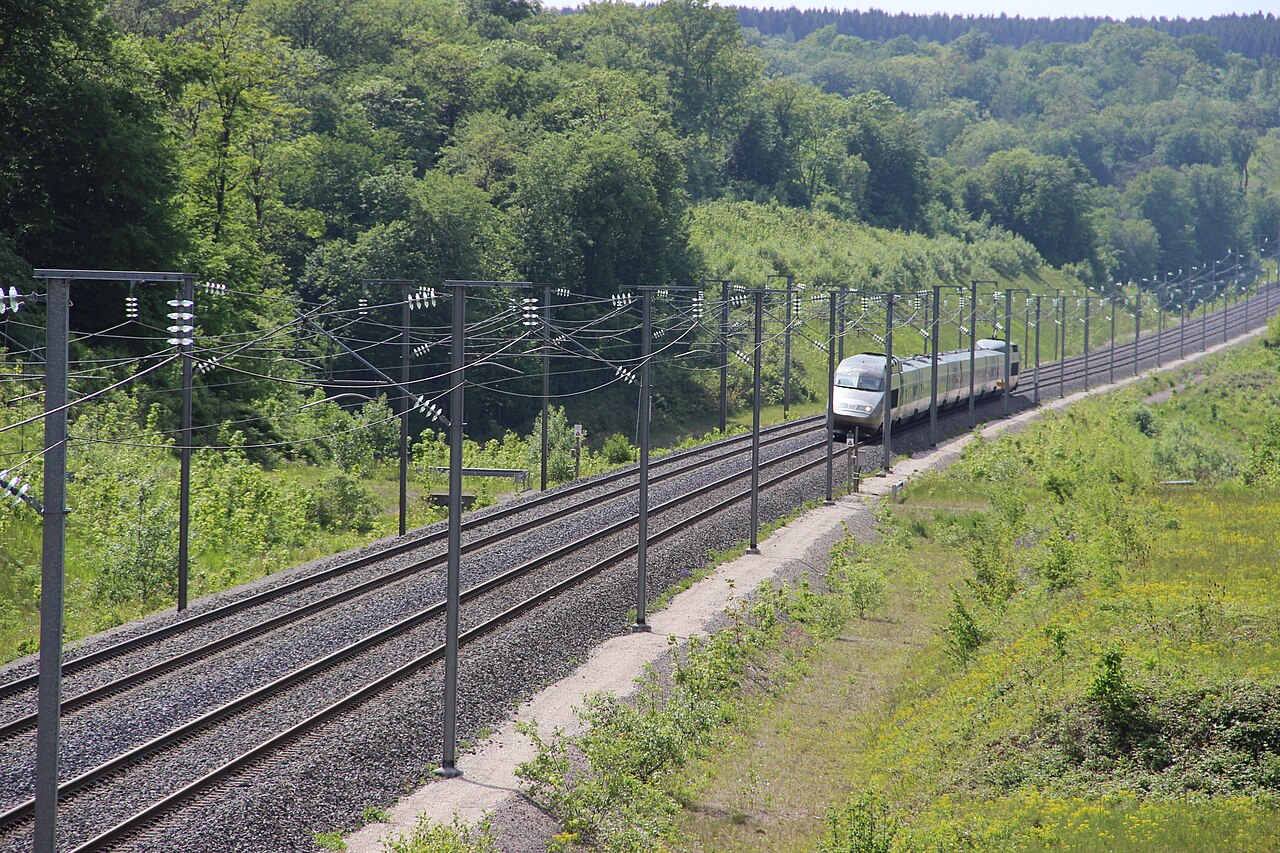
Where a modified TGV hit 574.8 km/h in 2007: still the world rail speed record for steel wheels.
The LGV Est carries France’s fastest scheduled running, 320 km/h across the Champagne chalk, and holds a deeper claim to fame: a modified trainset on this line took the world rail speed record of 574.8 km/h in April 2007. Regular Euroduplexes leave Gare de l’Est and put Strasbourg an hour and three-quarters away, ducking the Vosges foothills through the Saverne tunnel before the cathedral’s single sandstone spire rises over the Alsace plain. Lorraine’s field-station at Meuse TGV, alone among the crops, is the line’s odd landmark.
Along the way
- Champagne plains at record-line speed
- Meuse TGV — a station in the fields
- Moselle valley near Metz junction
- Saverne tunnel under the Vosges edge
- Strasbourg cathedral spire
How this line was checked
- Line drawn from OpenStreetMap relation 5920986 — the same nodes OpenStreetMap holds for this railway, thinned to within under 25 m of them
- Checked against OpenStreetMap: the whole line lies on real track, a median 5 m from it
- Checked against the running timetable via ÖBB Scotty: our line sits 0.1 km from the shape of TGV 2363
- Wikipedia has an article for this line
- See for yourself: open this line on the map with OpenStreetMap's own railway drawn underneath it
Questions and answers
How long is the TGV Est?
The TGV Est runs 439 km from Paris to Strasbourg.
How long does the TGV Est take?
The fastest scheduled journey is 1 h 46 min for the 439 km. That is an average of 248 km/h end to end. The line's top service speed is 320 km/h.
Who runs the TGV Est?
SNCF Voyageurs, with TGV Euroduplex.
How old is the TGV Est?
The line has been in service since 2007. That is the year the atlas dates it from: for a modern brand running over an older railway, it is the railway's date, not the brand's.
How often does the TGV Est run?
Roughly hourly.
More high-speed routes
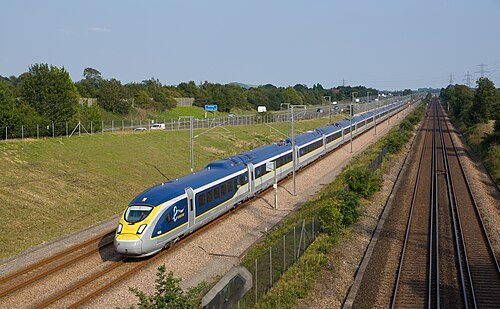
- Eurostar
Drops 75 m below the sea through the 50.5 km Channel Tunnel, 37.9 km of it under the seabed, the longest undersea stretch of any rail tunnel.
Wikipedia ↗ - TGV inOui
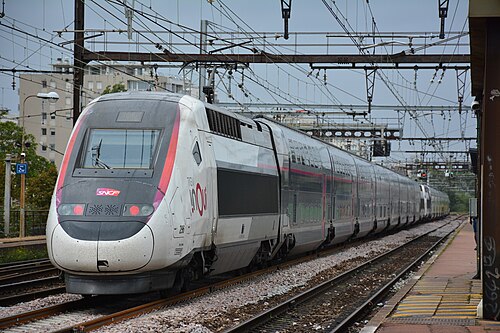
France’s original 1981 LGV forms the first leg; today the TGV holds 320 km/h nearly all the way to the Mediterranean.
Wikipedia ↗ - AVE
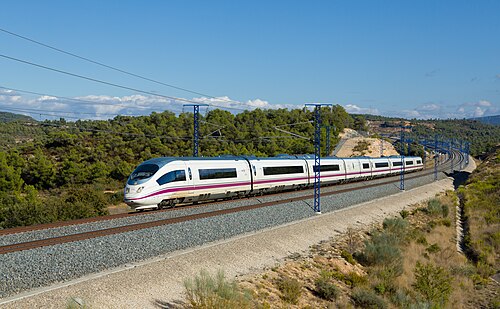
Scheduled at 300 km/h, this line flipped one of the world’s busiest air routes to rail.
Wikipedia ↗ - AVE
Spain’s first AVE, built for Expo ’92 in standard gauge, the line that reset Spanish railways.
Wikipedia ↗
More train routes in France.
Planning this trip? Journey time & direct trains: Paris → Strasbourg · Strasbourg → Paris.