


 Train routes in Denmark
29 routes · classic 26 · night train 2 · heritage 1
29 routes cross Denmark in the World Train Map atlas. The longest is the Snälltåget at 1,290 km; the fastest is the EuroNight, running up to 200 km/h; the oldest line dates to 1865. Every route links to its facts, photo and story, and to the interactive world map.
Open the world railway map →Part of the Europe train map: every route on the continent, one map.
Classic (26)
- Lyntog Copenhagen–Aarhus
Zealand to Jutland with no ferry: an 8 km tunnel and the 6.6 km West Bridge across the Great Belt made Denmark one rail country in 1997.
Wikipedia (DA) ↗ - Öresundståg
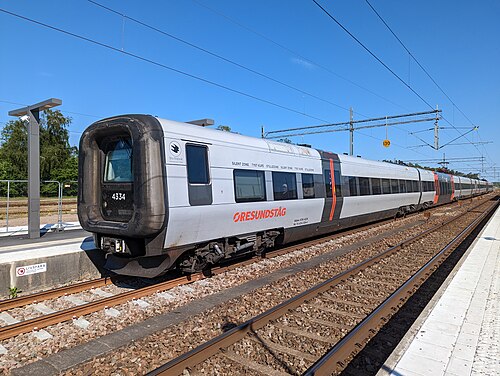
Rolls off Sweden’s West Coast Line and over the 8 km Øresund Bridge, plunging into the Drogden tunnel to reach Copenhagen.
Wikipedia ↗ - DSB InterCity
DSB’s long haul up Jutland, crossing the Great Belt Fixed Link, to Aalborg, gateway to Denmark’s north.
- DSB InterCity
Runs west to Esbjerg, Denmark’s North Sea port and the historic embarkation point for steamers and emigrants to Britain.
- Skagen Line (Skagensbanen)
Runs to Denmark’s northernmost station through dune plantations to the sand-blown artists’ town where two seas meet at Grenen.
Wikipedia ↗ - Vendsyssel Line
The last railway in Jutland, through Brønderslev and Hjørring to the ferry quays at Frederikshavn; it reached Aalborg itself in 1879, when the Limfjord bridge opened.
Wikipedia ↗ - Northwest Line
Zealand from Roskilde out to the Great Belt at Kalundborg, opened on 30 December 1874 and doubled as far as Holbæk in 2014.
Wikipedia ↗ - Lemvigbanen
A Danish local line that never belonged to the state: Vemb to the fishing port of Thyborøn by Lemvig and Harboøre, finished on 1 November 1899 and still privately run.
Wikipedia ↗ - Langå–Struer railway
Central Jutland end to end: single track opened section by section from 1863, Langå to Viborg to Skive to the fjord port at Struer.
Wikipedia ↗ - Lollandsbanen
Opened in 1874 and still crossing Lolland from Nykøbing Falster through Maribo to the shipyard town of Nakskov.
Wikipedia ↗ - Kystbanen
The Sound coast line of 1897, one of Denmark's busiest: Copenhagen out past the Øresund beaches to Elsinore and Kronborg.
Wikipedia ↗ - Frederiksværk Line
North Zealand branch line: Hillerød to Frederiksværk from 1897, on to the Kattegat ferry harbour at Hundested from 1916.
Wikipedia ↗ - Vejle–Holstebro railway
Single track right across Jutland, built in pieces between 1894 and 1914 from the Vejle fjord to Herning and the west.
Wikipedia ↗ - Tølløse Line
A rural single track across western Zealand, joining the Northwest Line at Tølløse to the Copenhagen–Fredericia main line at Slagelse.
Wikipedia ↗ - Vestbanen
Nebelgrisen, the 'Nebel pig': 37 km of unelectrified West Jutland branch line from Varde out to the dune coast at Nørre Nebel.
Wikipedia ↗ - Thy Line
Denmark's north-west corner by rail: 73 km from the fjord port of Struer through Thy to Thisted, open since 1882.
Wikipedia ↗ - Odsherredsbanen
Point one of the great railway act of 1894: Holbæk county took the concession on 6 May 1896, and the line up the peninsula to Nykøbing opened on 18 May 1899.
Wikipedia ↗ - Østbanen
The East Zealand line began service on 1 July 1879, Køge through Hårlev to the sea at Faxe Ladeplads; the trains from Køge still divide at Hårlev, one half for the coast and the other for Rødvig.
Wikipedia ↗ - Gribskovbanen
Built in 1880 to carry timber out of the Gribskov forest as far as Græsted; the line reached the sea at Gilleleje on 14 May 1896, and its passengers have called it the Pig ever since.
Wikipedia ↗ - Hornbækbanen
North Zealand’s coast line: Elsinore out past the Øresund bathing towns to Hornbæk from 1906, and on to Gilleleje from July 1916.
- Østbanen
Every station on it was drawn by Heinrich Wenck: the East Zealand line of 1879 across Stevns to the chalk cliffs at Rødvig, rebuilt and reopened in October 2024.
- Tisvildeleje branch
The Gribskovbanen’s western arm: built in 1880 to bring timber out of the Gribskov forest, on to Helsinge in 1897 and to the Kattegat dunes at Tisvildeleje in 1924.
- Svendborgbanen
Across Funen from Svendborg, the harbour for the ferries to Ærø and the small islands of the South Funen archipelago, by Kværndrup and Ringe to Odense; the line opened in July 1876.
Wikipedia ↗ - Bramming–Tønder railway
From Esbjerg by Bramming to Ribe, Denmark’s oldest town, and on across the marsh to Tønder; the line south of Ribe was opened from the German side in 1887, when the border lay just beyond the town.
Wikipedia (DA) ↗ - Varde–Nørre Nebel railway
The Nebelbanen, a private railway opened in 1903, from Nørre Nebel by Outrup and Oksbøl to Varde, where its trains carry on to Esbjerg.
Wikipedia (DA) ↗ - Skjern–Holstebro
North along the West Jutland line from Skjern past Ringkøbing Fjord to Holstebro, a stretch finished in 1875 when the line through Ringkøbing opened.
Wikipedia (DA) ↗
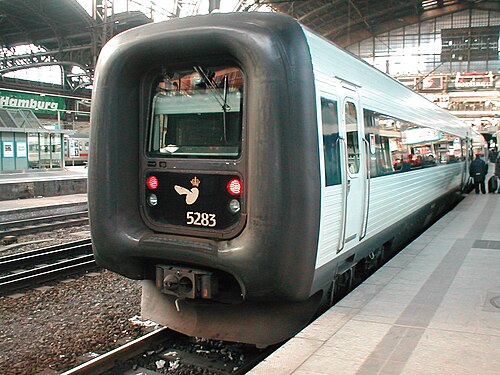
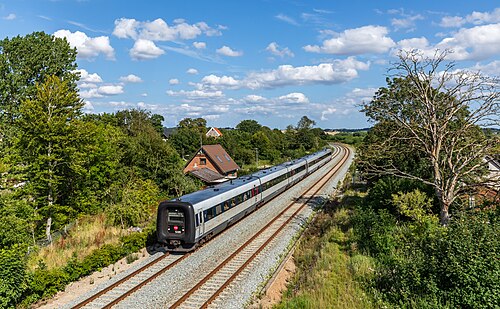
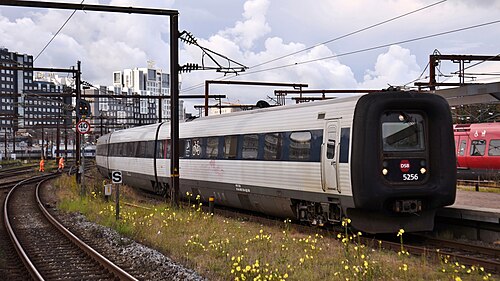
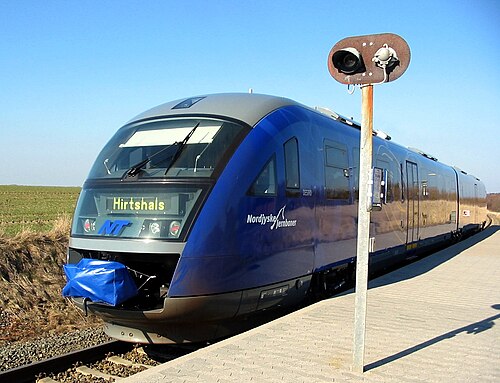
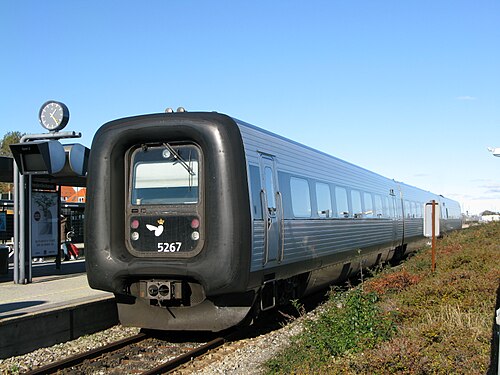
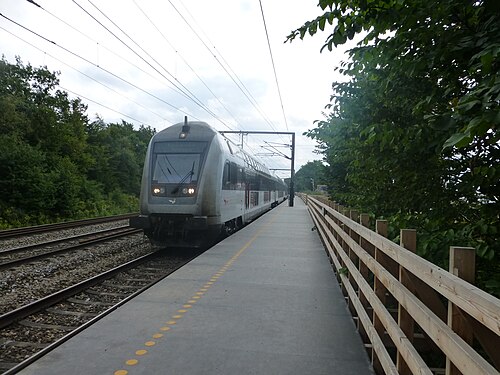
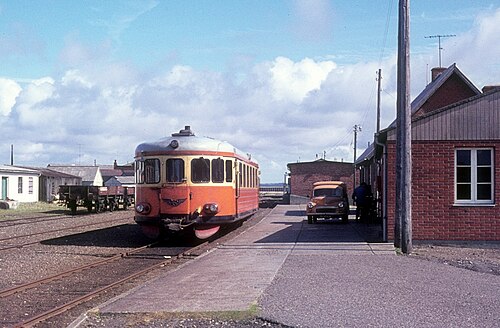
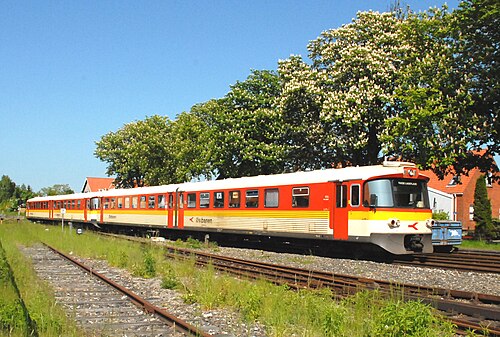
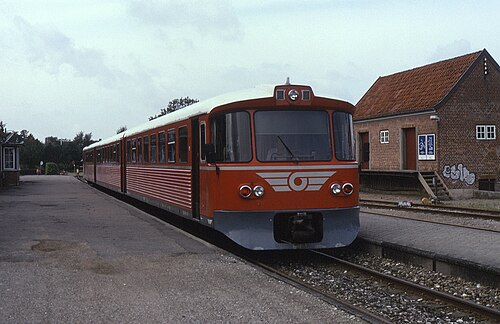
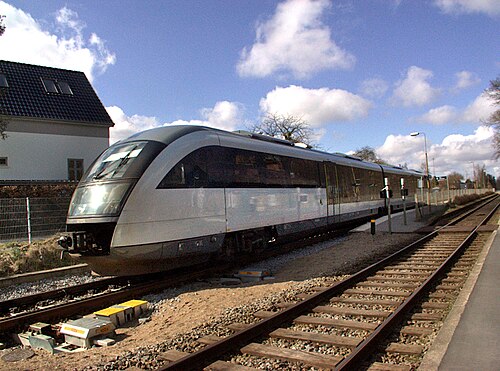
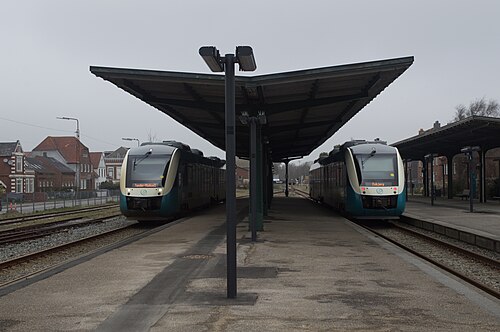
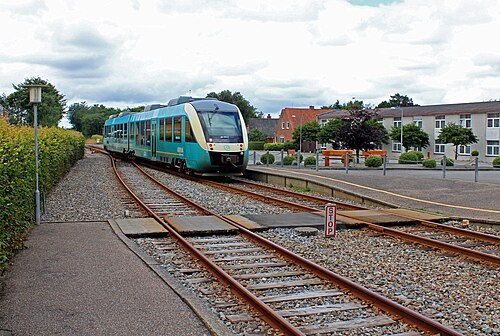
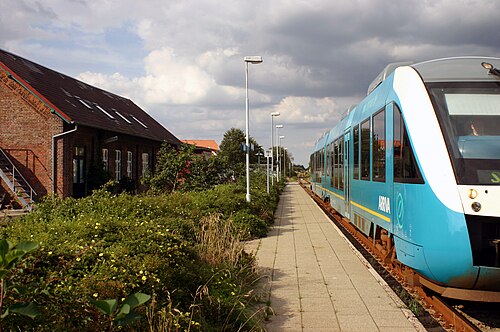
Night train (2)
- EuroNight
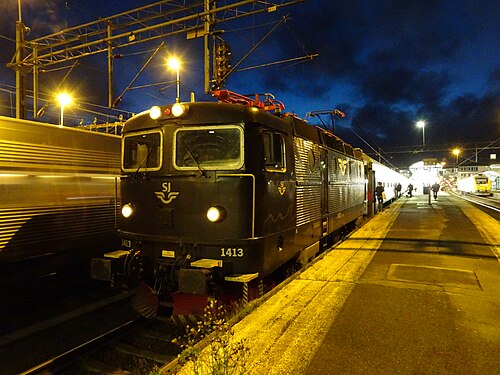
Scandinavia’s night-train revival: across the Öresund while you sleep, into Germany by breakfast.
Wikipedia ↗ - Snälltåget
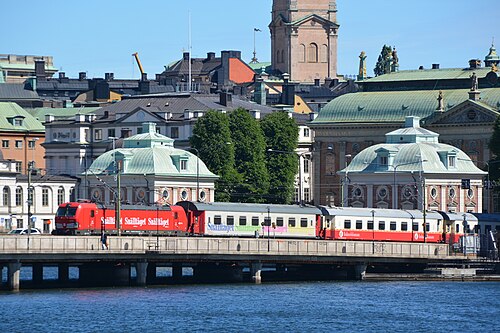
A private summer sleeper down through Sweden, over the Öresund bridge past Copenhagen and across Denmark to Berlin, outlasting the state night trains.
Wikipedia ↗
Heritage (1)
- Mariager–Handest Veteranjernbane
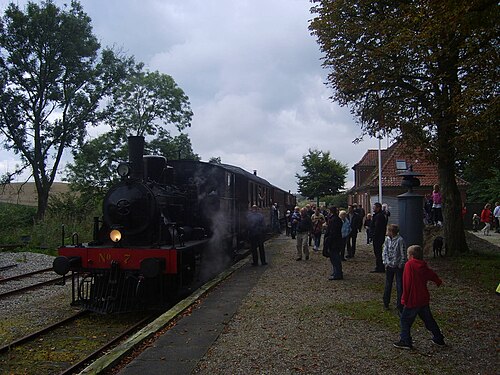
Denmark’s leading veteran railway: 1909 Henschel steam from the fjord port of Mariager over rolling moraine hills to Handest, run in 1950s private-railway style.
Wikipedia (DA) ↗
Photos via Wikimedia Commons; each route page credits the author & licence
What is the fastest train in Denmark?
The EuroNight, running Stockholm to Hamburg at up to 200 km/h. It is one of 29 routes in Denmark in this atlas.
Are there night trains in Denmark?
Yes, 2 sleeper services in this atlas serve Denmark: EuroNight (Stockholm – Hamburg), Snälltåget (Stockholm – Berlin).
Can you cross the border by train from Denmark?
Yes, 3 of its 29 routes continue into another country: EuroNight (Stockholm – Hamburg), Öresundståg (Gothenburg – Copenhagen), Snälltåget (Stockholm – Berlin).
Which is the most scenic railway in Denmark?
No line in Denmark is classed scenic or mountain in this atlas; its 29 routes are everyday services rather than journeys taken for the view.
Cross-border lines continue into
 Train routes in Germany 144 routes
 Train routes in Sweden 29 routes