
Europe
Europe train map
972 train routes · 38 countries · ≈ 200,900 km of routes
Open the interactive Europe train map →Europe is the densest rail continent on earth, and this map draws its highlights on one screen: the high-speed spines (TGV, ICE, AVE, Eurostar, Frecciarossa), the 36 night trains that stitch its cities together while you sleep, and the mountain and coastal lines people fly in just to ride. Every route below is plotted on the interactive map with its distance, fastest journey time, top speed and operator. Useful whether you're planning an Interrail or Eurail trip or just want to see how far the rails reach.
European train routes by country
- 🇦🇹 Train routes in Austria 63 routes
- 🇧🇾 Train routes in Belarus 4 routes
- 🇧🇪 Train routes in Belgium 27 routes
- 🇧🇦 Train routes in Bosnia and Herzegovina 3 routes
- 🇧🇬 Train routes in Bulgaria 13 routes
- 🇭🇷 Train routes in Croatia 14 routes
- 🇨🇿 Train routes in Czechia 31 routes
- 🇩🇰 Train routes in Denmark 25 routes
- 🇪🇪 Train routes in Estonia 7 routes
- 🇫🇮 Train routes in Finland 25 routes
- 🇫🇷 Train routes in France 109 routes
- 🇩🇪 Train routes in Germany 138 routes
- 🇬🇷 Train routes in Greece 13 routes
- 🇭🇺 Train routes in Hungary 41 routes
- 🇮🇪 Train routes in Ireland 15 routes
- 🇮🇹 Train routes in Italy 83 routes
- 🇱🇻 Train routes in Latvia 9 routes
- 🇱🇮 Train routes in Liechtenstein 4 routes
- 🇱🇹 Train routes in Lithuania 9 routes
- 🇱🇺 Train routes in Luxembourg 7 routes
- 🇲🇩 Train routes in Moldova 2 routes
- 🇲🇪 Train routes in Montenegro 2 routes
- 🇳🇱 Train routes in Netherlands 19 routes
- 🇲🇰 Train routes in North Macedonia 2 routes
- 🇳🇴 Train routes in Norway 26 routes
- 🇵🇱 Train routes in Poland 53 routes
- 🇵🇹 Train routes in Portugal 18 routes
- 🇷🇴 Train routes in Romania 25 routes
- 🇷🇸 Train routes in Serbia 6 routes
- 🇸🇰 Train routes in Slovakia 20 routes
- 🇸🇮 Train routes in Slovenia 12 routes
- 🇪🇸 Train routes in Spain 67 routes
- 🇸🇪 Train routes in Sweden 29 routes
- 🇨🇭 Train routes in Switzerland 71 routes
- 🇺🇦 Train routes in Ukraine 14 routes
- 🇬🇧 Train routes in United Kingdom 98 routes
High-speed routes in Europe (75)
- Eurostar
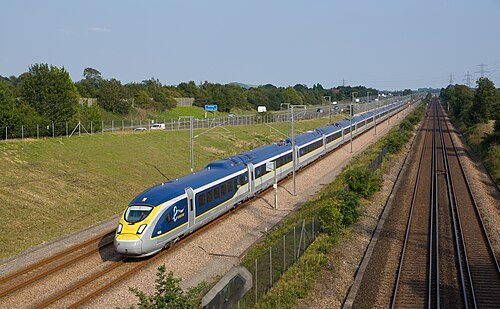
Drops 75 m below the sea through the 50.5 km Channel Tunnel, 37.9 km of it under the seabed, the longest undersea stretch of any rail tunnel.
Wikipedia ↗ - TGV inOui
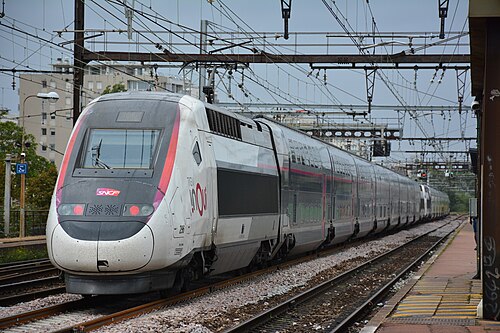
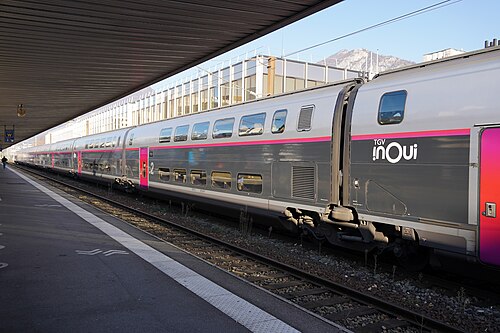
France’s original 1981 LGV forms the first leg; today the TGV holds 320 km/h nearly all the way to the Mediterranean.
Wikipedia ↗ - AVE
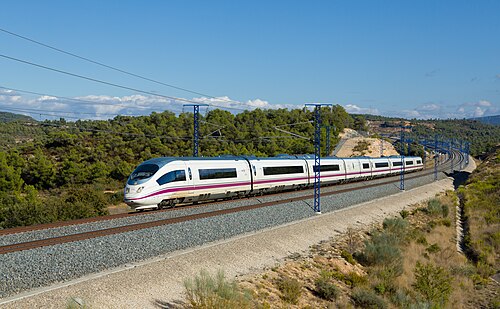
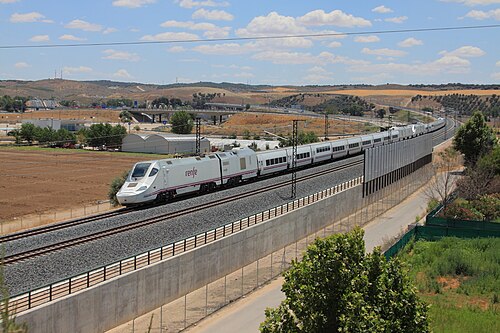
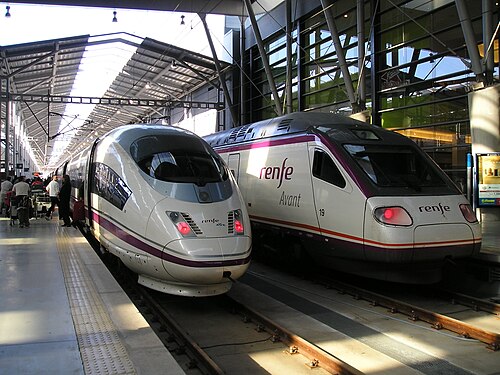
Scheduled at 300 km/h, this line flipped one of the world’s busiest air routes to rail.
Wikipedia ↗ - AVE
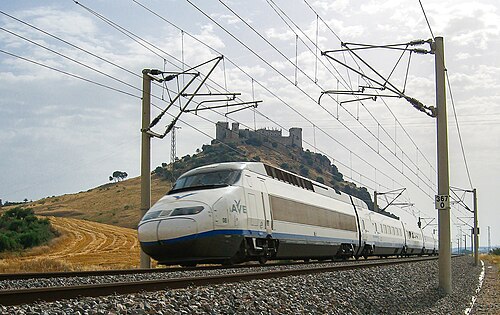
Spain’s first AVE, built for Expo ’92 in standard gauge, the line that reset Spanish railways.
Wikipedia ↗ - ICE Sprinter
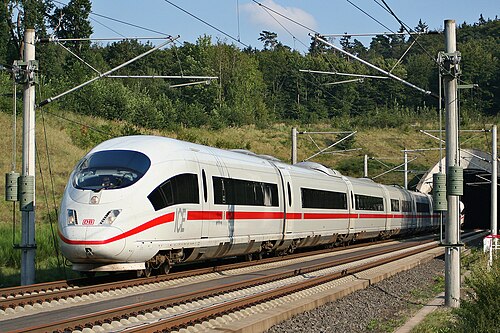
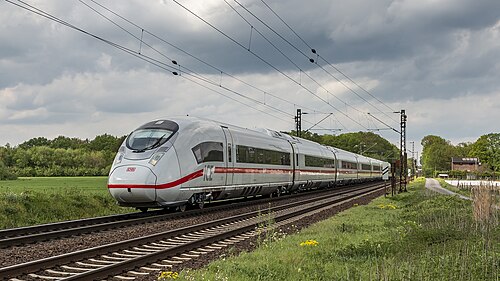
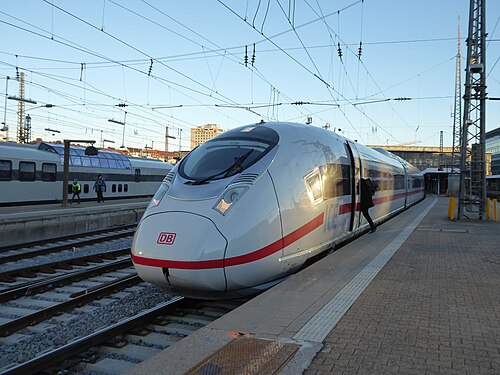
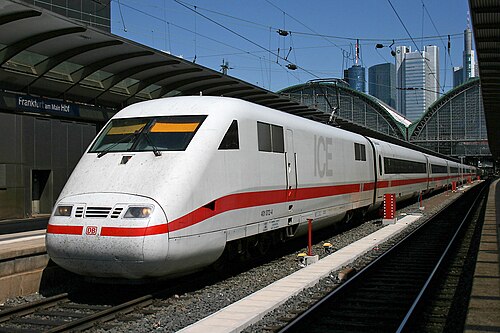
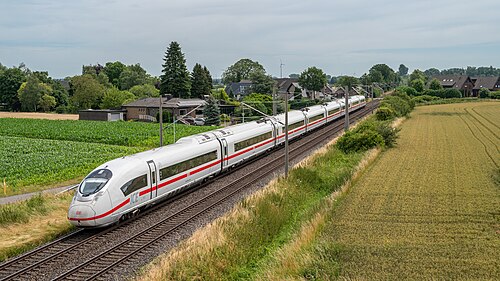
The €10bn VDE 8 project: 26 tunnels and 37 viaducts through the Thuringian Forest halved the Berlin–Munich journey.
Wikipedia ↗ - ICE
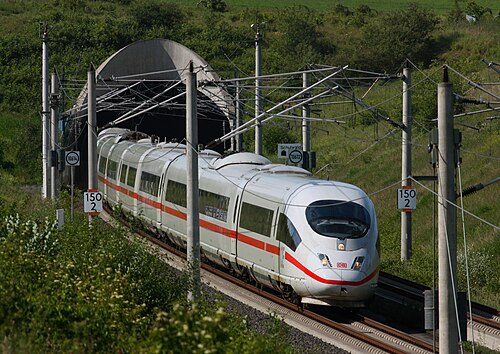
A roller-coaster alignment beside the A3 autobahn with 40 ‰ grades: only the most powerful ICE sets are cleared for it.
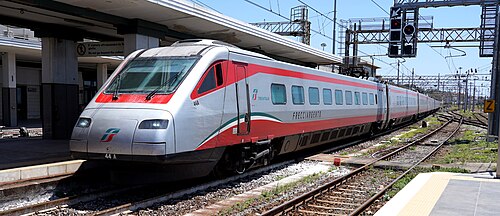
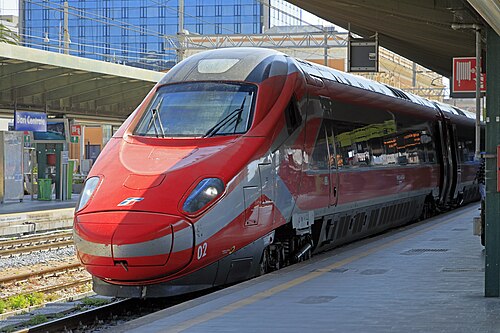
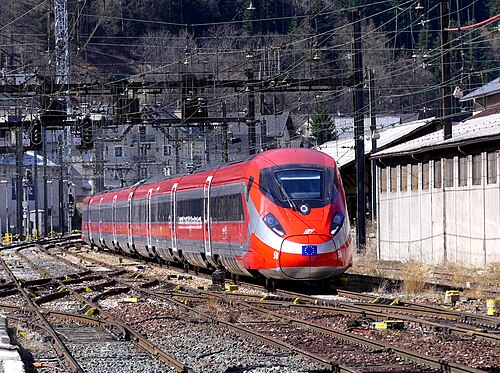
Wikipedia ↗ - Frecciarossa
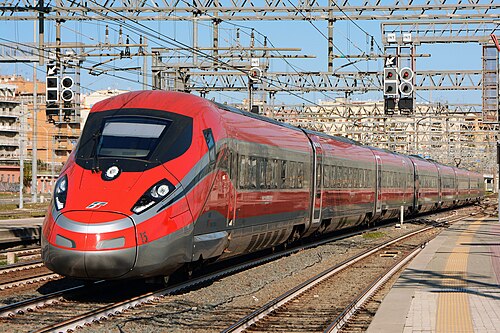
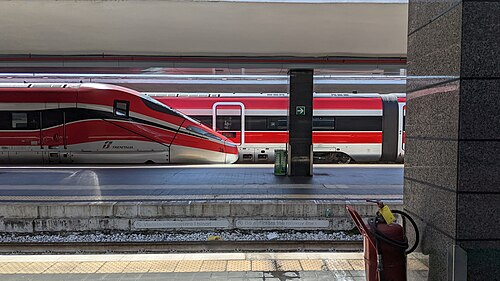
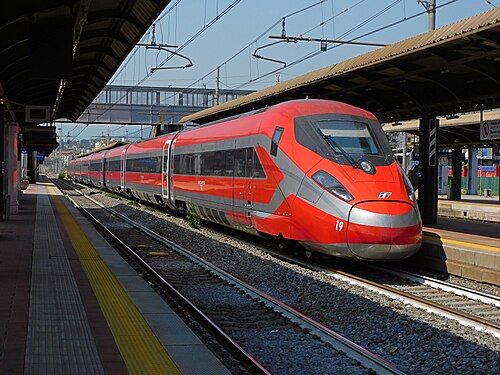
Italy’s flagship corridor: since 2009 the airlines’ share has collapsed, and the ETR 1000 is engineered for 360 km/h.
Wikipedia ↗ - Eurostar (Thalys)
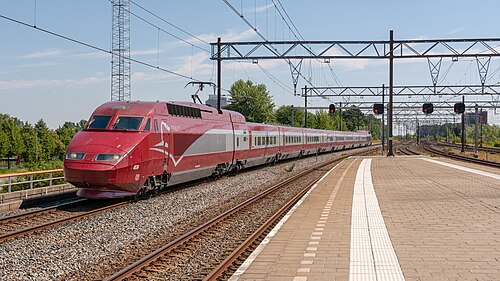
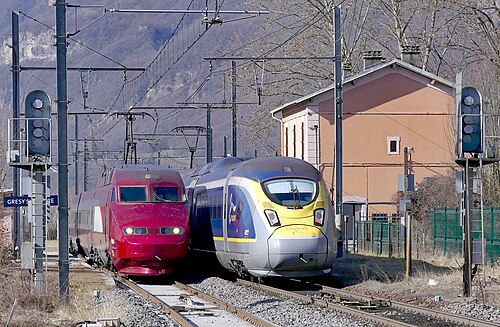
The crimson Thalys, folded into Eurostar in 2023, chains French, Belgian and Dutch high-speed lines into one dash.
Wikipedia ↗ - TGV inOui
The LGV Sud Europe Atlantique put Bordeaux’s vineyards two hours from Paris, and emptied the air shuttle.
Wikipedia ↗ - TGV Est
Where a modified TGV hit 574.8 km/h in 2007: still the world rail speed record for steel wheels.
Wikipedia ↗ - AVE
Madrid to the Mediterranean paella coast in 100 minutes aboard the duck-nosed “Pato”.
Wikipedia ↗ - AVE
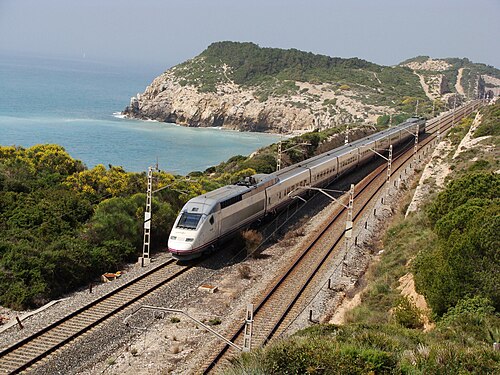
Splits from the Seville line at Córdoba and dives through the Sierra to the Costa del Sol.
Wikipedia ↗ - Frecciarossa
Italy’s first true alta velocità line. Vesuvius on the horizon barely an hour after leaving Rome.
Wikipedia ↗ - Euromed
Talgo tilting sets swap the Madrid high-speed line for the classic Mediterranean corridor at Camp de Tarragona, then follow the coast and the Iberian-gauge line beyond Valencia to Alicante.
Wikipedia ↗ - Soko
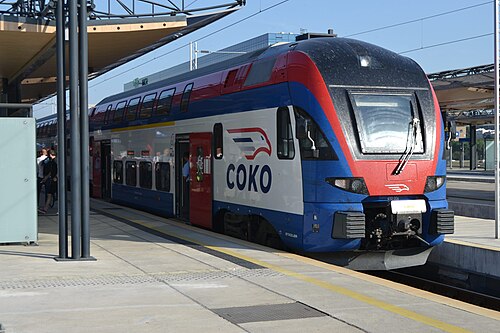
Serbia’s first 200 km/h railway, built with Chinese and Russian contractors. Novi Sad in 36 minutes since 2022, Subotica since October 2025.
Wikipedia ↗ - Frecciarossa Milan–Venice
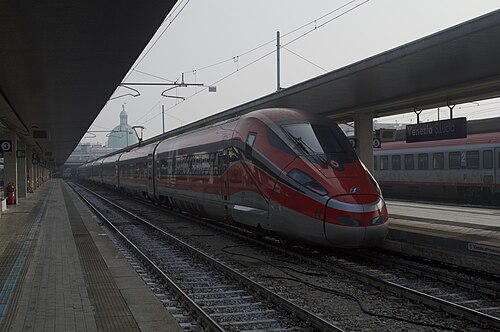
300 km/h out of Milan, then Verona, Vicenza and Padua: finishing with the causeway glide across the lagoon to Santa Lucia’s doorstep on the Grand Canal.
Wikipedia ↗ - Avant Málaga–Granada
The Bobadilla branch of 1874 served Granada for a century and a half; its high speed replacement opened in 2019, but Málaga meant a change at Antequera until the Gobantes chord made it direct in 2022.
Wikipedia ↗ - ICE
Races the length of the North German Plain; the dead-straight Hanover–Berlin racetrack, partly laid on old border land, lets ICE 4 sets hold 250 km/h.
Wikipedia ↗ - ICE
Sprints down the 300 km/h Nuremberg–Ingolstadt high-speed line, one of Germany’s fastest, on gradients so steep that freight trains are banned.
Wikipedia ↗ - ICE
Runs the Hanover–Würzburg route, Germany’s first Neubaustrecke of 1991, boring through a chain of long tunnels under the hills of Hesse.
Wikipedia ↗ - ICE
Joins the political and banking capitals via Kassel and the Fulda gap, the Velaro D holding 250 km/h over the wooded ridges of northern Hesse.
Wikipedia ↗ - ICE
Opened in December 2022, the Wendlingen–Ulm line tunnels under the Swabian Jura and cut the Stuttgart–Ulm leg to just 42 minutes.
Wikipedia ↗ - ICE
Crosses Germany from end to end, Berlin to the Swiss border, finishing down the Upper Rhine past Freiburg to Basel in about seven hours.
Wikipedia ↗ - ICE International
Upgraded to new ICE 3neo trains in late 2025, replacing loco-hauled Intercitys on the roughly six-hour cross-border run to the Dutch capital.
Wikipedia (DE) ↗ - ICE International
ICE 3M multi-system sets leave Amsterdam and, past Cologne, dive onto the 300 km/h Cologne–Rhine/Main line with its motorway-style gradients.
Wikipedia (DE) ↗ - TGV inOui
France’s first high-speed line, opened in 1981: the Paris–Lyon route that launched the whole TGV era, now run in under two hours.
Wikipedia ↗ - TGV inOui
The 2017 Bretagne–Pays de la Loire high-speed line cut Paris–Rennes to 1 h 25 min, sending TGVs racing across Brittany at 320 km/h.
Wikipedia (FR) ↗ - TGV inOui
TGV Atlantique runs Paris to the Loire estuary city of Nantes in about two hours, topping 300 km/h across the plains of the west.
Wikipedia (FR) ↗ - TGV Lyria
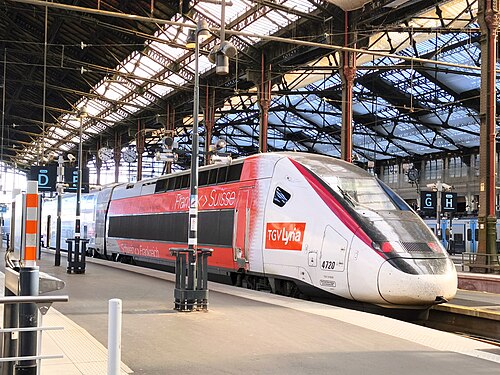
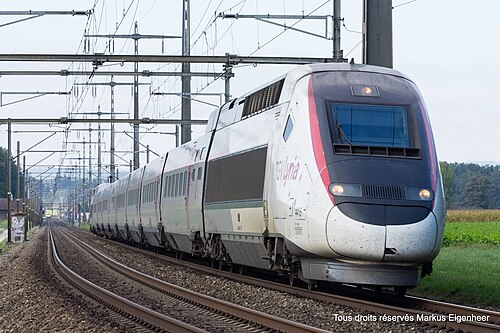
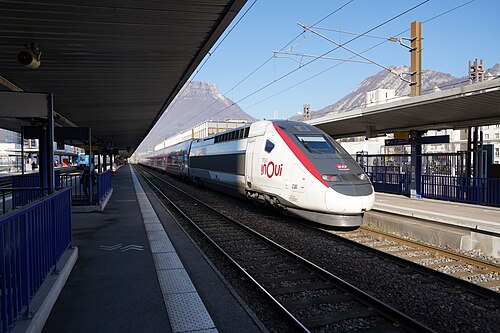
A Lyria Euroduplex glides from Paris into Switzerland at Genève-Cornavin; the 2010 Haut-Bugey line trimmed the run to about three hours.
Wikipedia ↗ - Ouigo
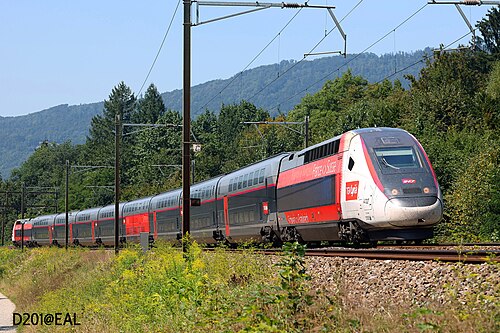
SNCF’s low-cost double-decker TGV, launched in 2013 with fares from €10, races Paris to Lyon at up to 300 km/h.
Wikipedia ↗ - TGV inOui
France’s longest domestic TGV run: 300 km/h to Marseille, then the classic Riviera line along the Mediterranean to Nice.
Wikipedia (FR) ↗ - TGV inOui
The dead-straight LGV Nord links Paris to Lille in just 62 minutes at 300 km/h, France’s fastest big-city hop.
Wikipedia ↗ - AVE
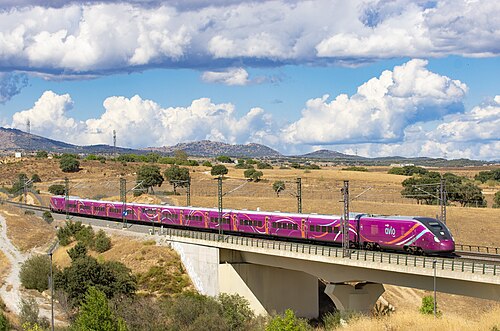
Branches off the Madrid–Levante high-speed line to reach the Costa Blanca, opened in 2013 and worked by S-112 “Pato” trainsets.
- AVE
The first stretch of Spain’s Madrid–Barcelona line (2003), crossing the Guadalajara plateau and Ebro valley to Zaragoza in 75 minutes.
- AVE
Leaps into Galicia through 30 tunnels, including the 8.6 km O Corno bore, then runs on down the Atlantic axis through Santiago de Compostela to the coast at A Coruña.
Wikipedia (ES) ↗ - AVE
Opened in 2019, it branches off the Córdoba–Málaga line at Antequera to lift the AVE network into the foothills of the Sierra Nevada.
Wikipedia ↗ - AVE
A single high-speed run tying the Mediterranean to the Costa del Sol, skirting Madrid to stitch two AVE corridors together.
Wikipedia ↗ - Frecciarossa
A Frecciarossa 1000 hit 393.8 km/h on this Turin–Milan high-speed line in a 2016 test, an Italian rail speed record.
Wikipedia ↗ - Frecciarossa
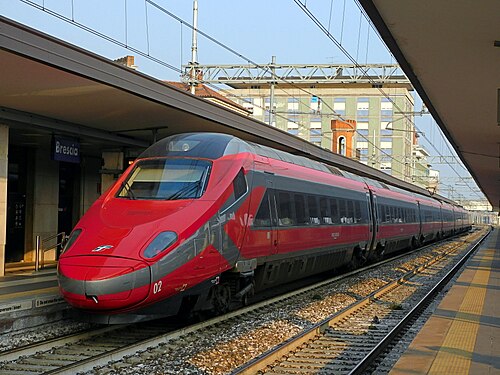
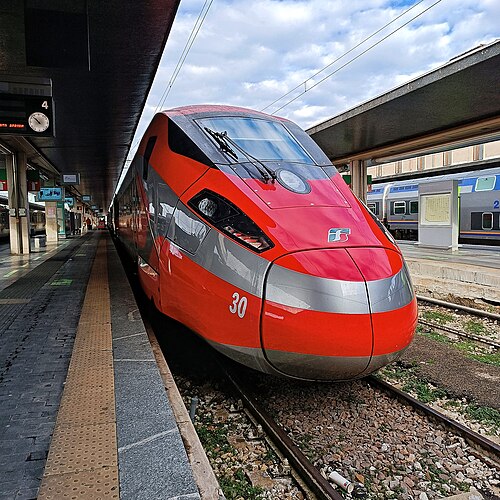
The 300 km/h spine of Italy. Milan–Bologna–Florence–Rome–Naples runs almost entirely on dedicated high-speed track finished in 2009.
Wikipedia ↗ - Frecciarossa
South of Caserta the Freccia climbs through the Apennines to Foggia, then races across the Tavoliere plain to the Adriatic port of Bari.
Wikipedia ↗ - Frecciargento
One of Italy’s longest Freccia runs: some 671 km down the Tyrrhenian coast, the tilting ETR 485 leaning through curves toward the Strait of Messina.
Wikipedia ↗ - Italo
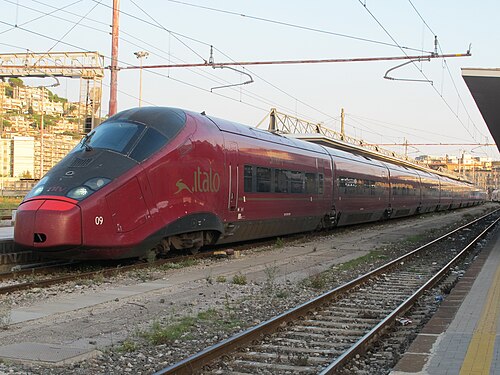
Italo was Europe’s first private open-access high-speed operator; its Alstom AGV 575 links Milan and Rome in under three hours.
Wikipedia ↗ - Frecciarossa
A tilting ETR 600 Frecciarossa crosses the Po plain and Veneto from Milan to Trieste on the Adriatic, a run it took over in June 2023.
Wikipedia ↗ - Frecciarossa
Frecciarossa 1000 sets cross from Rome over the Apennines and the Po plain via Florence and Bologna to reach Venice in under four hours.
Wikipedia ↗ - Avant Málaga–Sevilla
Andalusia’s own high-speed shuttle: Málaga to Seville via Córdoba’s mezquita city in two hours, on the S-104 sets built for exactly this.
Wikipedia ↗ - Frecciargento
A tilting ETR 485 runs Rome to the heel of Italy’s boot via Foggia, Bari and Brindisi, reaching baroque Lecce in the Salento.
Wikipedia ↗ - Frecciarossa Adriatica
Frecciarossas run the whole Adriatic seaboard: high-speed to Bologna, then the classic 1872 Adriatica within sight of the sea past Rimini, Ancona and Pescara to Bari.
Wikipedia (IT) ↗ - TGV inOui
Paris to Barcelona in 6 h 39 min, diving under the Pyrenees through the 8.3 km Perthus tunnel at the Spanish border.
Wikipedia ↗ - Frecciarossa Paris–Milan
Italy’s 300 km/h flagship on French rails, using the 13.7 km Fréjus tunnel of 1871: back since April 2025 after a 19-month landslide closure.
Wikipedia ↗ - Eurostar
The original Channel Tunnel service to the EU capital takes St Pancras to Bruxelles-Midi in under two hours, city centre to city centre.
Wikipedia ↗ - Eurostar
A single train from St Pancras to Amsterdam Centraal since 2018: under the Channel, across Flanders and over the Dutch polders in about four hours.
Wikipedia ↗ - TGV / ICE
A Franco-German alliance since 2007: 320 km/h on the LGV Est to Lorraine, then the Saar and Rhine-Main into Frankfurt, TGV and ICE sharing the run.
Wikipedia (FR) ↗ - Alvia
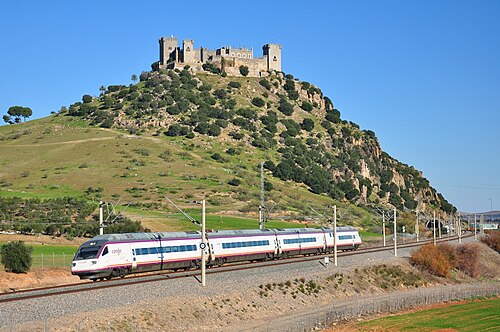
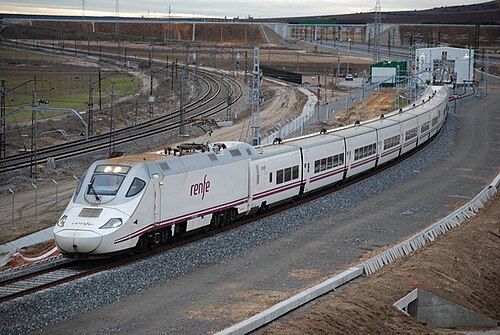
Off the 1992 Madrid–Seville high-speed spine, a gauge-changing Talgo carries on through sherry country to the Atlantic at Cádiz.
Wikipedia ↗ - AVE Madrid–Oviedo
The 2023 Variante de Pajares pierced the Cantabrian wall with a 25 km base tunnel, cutting Asturias’ link to Madrid to about three hours.
Wikipedia ↗ - Alvia Madrid–Badajoz
High speed reached long-isolated Extremadura in 2022, passing the Roman city of Mérida to the Portuguese border at Badajoz.
Wikipedia ↗ - AVE Madrid–Murcia
High speed reached the Segura in December 2022, running Madrid to Murcia via Cuenca and Albacete on a new elevated approach into the palm-country capital.
Wikipedia ↗ - Frecciarossa Milan–Reggio Calabria
The red arrow’s longest domestic run: the length of Italy from Milan down the Tyrrhenian coast to the Strait of Messina at Reggio Calabria.
Wikipedia ↗ - TGV inOui
Races down the Rhône on the LGV Méditerranée, then rides the 2017 Montpellier bypass, the first new stretch of French high-speed line in a decade, to the edge of the Camargue.
Wikipedia (FR) ↗ - TGV Lyria
Via the LGV Rhin-Rhône to the Swiss border at Basel, then along the Aare to Zürich. Paris to Switzerland’s largest city in almost exactly four hours.
Wikipedia ↗ - ICE
Germany’s busiest long-distance axis, the length of the country from the Elbe to the Isar via Hanover, the Fulda gap and Nuremberg.
Wikipedia ↗ - ICE
Down the Rhine-Neckar to Mannheim and up into the Swabian capital: a hard-worked spine of the south-west ICE network.
Wikipedia ↗ - Railjet
Bavaria to the Danube capital along the Westbahn, past Salzburg’s fortress and the baroque abbeys of Upper Austria.
Wikipedia ↗ - Koralmbahn
Austria’s game-changer of December 2025: the 33 km Koralm Tunnel cuts Graz–Klagenfurt from nearly three hours to 45 minutes, forging a new Baltic–Adriatic high-speed axis.
Wikipedia ↗ - ICE
The high-speed link binding Belgium to the Rhineland: past Liège’s soaring Calatrava station and over the language border at Aachen, Charlemagne’s capital, at 300 km/h.
Wikipedia (DE) ↗ - TGV Paris–Luxembourg
The only direct rail link between the two capitals: 320 km/h across Champagne on the LGV Est, then down the Moselle past Metz’s golden cathedral.
- Alvia
Gauge-changing Alvias to the Basque coast: the 2022 Burgos high-speed line, Vitoria’s green ring and the belle-époque bay of La Concha at the end.
Wikipedia ↗ - Alvia
Off the high-speed line at Palencia and over the 1866 Reinosa pass — a mountain descent to the Cantabrian Sea and Santander’s curved bay.
Wikipedia ↗ - Avant Eje Atlántico
Galicia’s rebuilt Atlantic spine: 250 km/h between the rías with Santiago de Compostela halfway — the north–south line Madrid’s radial map forgets.
Wikipedia ↗ - TGV Rhin-Rhône
France’s only province-to-province LGV: Burgundy to Alsace without a glance at Paris, Dijon and Belfort on the way to the cathedral city.
Wikipedia ↗ - TGV Paris–Brest
To Brittany’s Atlantic tip: the 2017 LGV to Rennes, then the granite north coast by Saint-Brieuc and Morlaix’s viaduct to the naval roadstead of Brest.
Wikipedia ↗ - TGV Paris–Quimper
Brittany’s other arm: the same 2017 high speed line to Rennes, where the Brest and Quimper halves of the train part company, then south to the Morbihan coast by Vannes, Auray and Lorient to Quimper in Finistère.
- Avant Madrid–Toledo
Thirty-three minutes off the Seville high-speed line to the city on the Tagus bend — El Greco’s Toledo as a Madrid day trip.
Wikipedia ↗ - Southeastern Highspeed
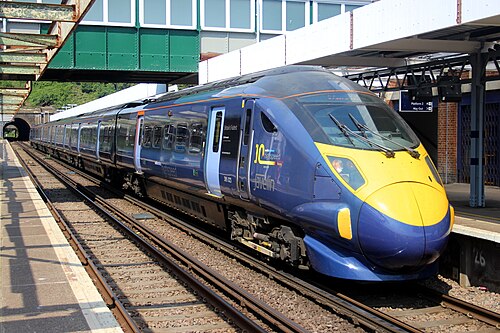
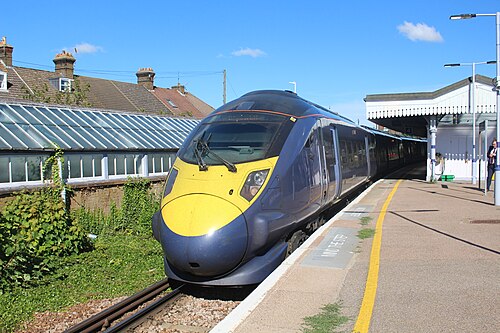
Britain’s only domestic high-speed service: 225 km/h down HS1 to Ashford, then the 1844 South Eastern main line past Folkestone and under the white cliffs into Dover.
Wikipedia ↗ - Southeastern Highspeed
The Javelin put Margate 86 minutes from London — HS1 at 225 km/h as far as Ashford, then the 1846 Canterbury line across east Kent to the Thanet coast.
Wikipedia ↗ - Javelin North Kent
The other Javelin to Margate: off HS1 at Ebbsfleet onto the 1846 North Kent line — Rochester’s castle and cathedral, Faversham’s breweries, then the seaside string of Whitstable, Herne Bay and Margate.
Wikipedia ↗
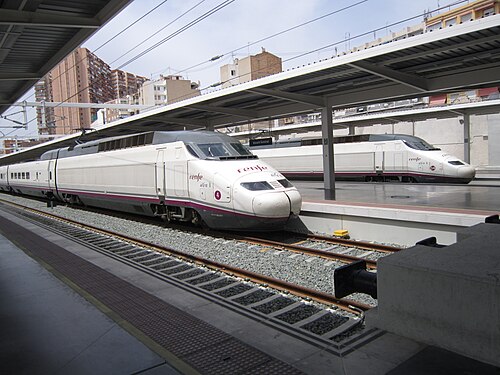
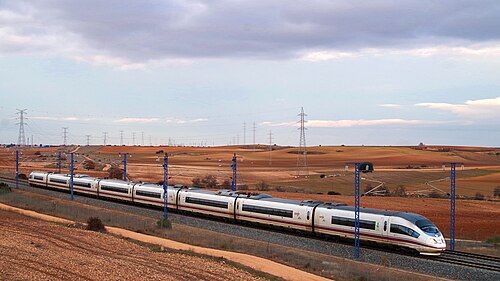
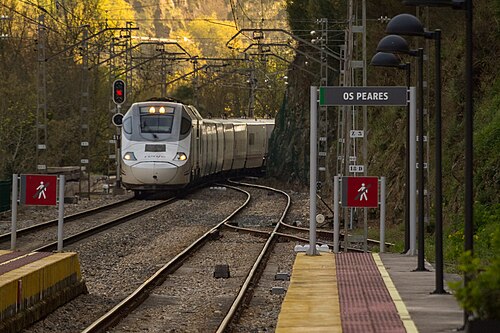
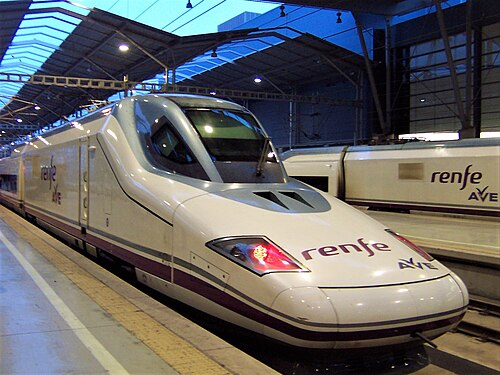


Classic routes in Europe (548)
- LNER Azuma
The Flying Scotsman’s route since 1862: and where Mallard set the never-beaten steam record of 203 km/h in 1938.
Wikipedia ↗ - Alfa Pendular
A tilting Pendolino leaning through the curves of the 19th-century Linha do Norte between Portugal’s two great cities.
Wikipedia ↗ - EIP Pendolino
Rides Poland’s 1970s Central Main Line (CMK), engineered decades ahead of its time and now being upgraded to 250 km/h.
Wikipedia ↗ - Railjet
Follows the old Orient Express alignment down the Danube plain: centre to centre faster than any flight.
Wikipedia ↗ - SJ X2000
Sweden’s tilting flagship since 1990, sprinting the Western Main Line between the country’s two biggest cities.
Wikipedia ↗ - ICE
Germany’s busiest city pair rides an alignment opened in 1846, dead straight across the northern plain.
Wikipedia ↗ - Gotthard Express
Threads the 57.1 km Gotthard Base Tunnel: the longest and deepest railway tunnel on the planet.
- EIP Pendolino
Capital to the Baltic amber coast, Gdańsk’s Hanseatic old town, in under three hours.
Wikipedia ↗ - Railjet
Follows the Habsburg Empire’s first steam railway of 1839. Prague, Brno and Vienna strung like pearls.
Wikipedia ↗ - Hellenic InterCity
Past Thermopylae and under Mount Olympus. Greece’s spine line, now run by tilting Italian arrows.
Wikipedia ↗ - InterCity
Heuston to Kent in 2 h 15 on Mark 4 push-pull sets, over the 1849 Great Southern and Western main line through Limerick Junction and Mallow.
Wikipedia ↗ - Avanti West Coast
Tilting Pendolinos sway through the Lune Gorge and over Shap summit on Britain’s busiest mixed-traffic artery.
Wikipedia ↗ - Enterprise
Jointly run from both capitals since 1947, it rolls over the 1855 Boyne Viaduct at Drogheda and crosses the invisible Irish border without a pause.
Wikipedia ↗ - Prahova Valley Railway
Climbs the Prahova gorge past Peleș Castle at Sinaia to Predeal, Romania’s highest station at 1,032 m, under the Bucegi’s 2,500 m walls.
Wikipedia (RO) ↗ - ZSSK InterCity
Up the Váh valley, then along the 1872 Košice–Bohumín railway: the High Tatras panorama, crowned by 2,655 m Gerlach, rolls past at Poprad.
- WESTbahn
Austria’s first open-access challenger, running since 2011: 200 km/h Stadler KISS double-deckers that drove fares down on the Vienna–Salzburg run.
Wikipedia ↗ - Kyiv–Lviv Intercity+
Launched for Euro 2012 and never stopped: the Hyundai-built Intercity+ keeps capital and Galicia linked across the steppe, through blackout and war.
Wikipedia (UK) ↗ - Rantarata Coastal Line
Finland’s two capitals on the 1903 Rantarata: “coast line” by name, though the track runs mostly inland through granite cuttings and forest. Pendolino Plus sets joined the double-deck ICs in late 2025.
Wikipedia ↗ - Lyntog Copenhagen–Aarhus
Zealand to Jutland with no ferry: an 8 km tunnel and the 6.6 km West Bridge across the Great Belt made Denmark one rail country in 1997.
Wikipedia (DA) ↗ - Sørlandsbanen
Norway’s south-coast main line, completed in wartime 1944: inland through pine and moor, touching salt water only at Kristiansand and the Jæren flats.
Wikipedia ↗ - Express InterCity Premium
Poland’s fastest train, hitting 200 km/h on the dead-straight Central Rail Line (CMK) engineered for high speed back in the 1970s.
Wikipedia ↗ - Express InterCity
Historic trunk line on the Paris–Berlin–Warszawa–Moscow corridor; the same rails carry the Berlin-Warszawa-Express onward to Germany.
Wikipedia ↗ - IC Przemyślanin
Crosses Poland to Przemyśl, the southeastern gateway where standard gauge meets Ukraine’s broad gauge, handover point for Kyiv-bound trains.
- SC Pendolino
Czechia’s flagship tilting Pendolino links Prague with Moravia’s industrial capital Ostrava via the cathedral city of Olomouc.
Wikipedia ↗ - RegioJet
Yellow open-access trains with steward service and free coffee. RegioJet broke the state railway’s grip on the Prague–Brno run.
Wikipedia ↗ - Praha–Cheb Express
Heads west through Plzeň, birthplace of Pilsner lager, to the spa-country town of Cheb near the German border.
Wikipedia (CS) ↗ - Balaton InterCity
Summer expresses to Siófok on the south shore of Lake Balaton, central Europe’s largest lake and Hungary’s beach playground.
Wikipedia (HU) ↗ - InterCity Debrecen
Hourly InterCity across the Great Hungarian Plain to Debrecen, the nation’s second city, on the 160 km/h eastern main line.
Wikipedia ↗ - InterCity Pécs
InterCity to Pécs, a sun-warmed city of Roman tombs and an Ottoman mosque near the Croatian border in southern Hungary.
Wikipedia (HU) ↗ - InterRegio Cluj
The long haul from Bucharest over the Carpathians via Brașov and medieval Sighișoara to Cluj-Napoca, heart of Transylvania.
Wikipedia (RO) ↗ - InterRegio Timișoara
Follows the Danube past the Iron Gates gorge, then climbs to Timișoara, the Banat city where Romania’s 1989 revolution ignited.
Wikipedia (RO) ↗ - InterRegio Sibiu–Brașov
Runs under the Făgăraș Mountains, Romania’s highest, along the Olt valley between the Saxon citadels of Sibiu and Brașov.
- BDŽ Fast Train Plovdiv
Bulgaria’s busiest intercity corridor, being rebuilt for 200 km/h, tying the capital to Plovdiv, one of Europe’s oldest cities.
Wikipedia (BG) ↗ - BDŽ Fast Train Varna
Crosses the Balkan range and the Danubian plain to Varna, Bulgaria’s summer capital on the Black Sea coast.
Wikipedia (BG) ↗ - BDŽ Fast Train Burgas
Runs via Plovdiv and Stara Zagora to Burgas, the port at the heart of Bulgaria’s southern Black Sea beaches.
- Intercity+
Ukraine’s flagship Intercity+ express, launched for Euro 2012, races across the steppe from Kyiv to Kharkiv via Poltava.
Wikipedia (UK) ↗ - Intercity+
Runs south from Kyiv through the black-earth farmland via the Znamianka junction to Odesa, the grand imperial port on the Black Sea.
Wikipedia (UK) ↗ - R13 Barcelona–Lleida
Barcelona to Lleida the slow way, three and three quarter hours down the coast to Vilanova and then inland by Valls and Montblanc, on the Valls to Vilanova line of 29 December 1881.
- Dolenjska Line
The Lower Carniola line south east out of Ljubljana, over the Grosuplje watershed and down the Krka valley to Novo mesto, opened in 1894 and still the fastest way there.
- Kočevje Line
Built in 1893 for the Kocevje coal and the forests behind it, closed to passengers for half a century, and carrying them again since 2021 through Ribnica and the Slovene karst.
- C-1 Gijon-Puente de los Fierros
Up the Caudal valley from the Asturian coast through Oviedo and Pola de Lena to Puente de los Fierros, where the line stops at the foot of the Pajares ramp and the climb to Leon begins.
- MD León–Ponferrada
The Rampa de Brañuelas took more than a decade to build and helped bankrupt the company that began it. León to Ponferrada over the Montes de León in under two hours, through since 4 February 1882.
- Alvia Vigo–Barcelona
Fourteen hours from the Atlantic to the Mediterranean, Vigo to Barcelona by Santiago, the Bierzo, León, Pamplona and Zaragoza. At 1,371 km it is the longest scheduled domestic run on this map.
- TER Nancy–Luxembourg
The whole sillon lorrain in an hour and a half: Nancy to Metz on the line of 1850, then down the Moselle through Thionville and over the border into Luxembourg.
- Mantova–Monselice Line
Straight across the Po plain from Lombardy into the Veneto, Mantova to Monselice by Nogara, Legnago and Montagnana, on a secondary line whose first stretch opened with a special train on 16 May 1885.
- Šibenik Line
Up from the Adriatic into the Dalmatian hinterland, Šibenik to Knin in under two hours, on rails opened on 4 October 1877 to bring the coal of the Drniš basin down to the harbour.
- Triesting Valley Line
Nineteen kilometres down the Triesting out of the Vienna Woods to the main line at Leobersdorf, the surviving stub of a branch the Leobersdorfer Bahn opened as far as Kaumberg in September 1877.
- Linha da Beira Alta
The last forty five kilometres of Portugal, Guarda out to the Spanish frontier at Vilar Formoso across the high Beira, on the line to the border inaugurated on 3 August 1882.
Wikipedia ↗ - Bergamo–Treviglio Line
The line Bergamo had to fight for, because the Milan to Venice railway was first planned to miss the city altogether. A convention of November 1856 settled it and the trains ran from 12 October 1857.
Wikipedia ↗ - Malpensa Express
Terminal 2 to Milano Cadorna in three quarters of an hour, the airport link the Ferrovie Nord opened in May 1999 and the reason Malpensa has a railway station under it at all.
Wikipedia ↗ - Bergamo–Brescia Line
Milan to Venice once ran this way. Forty nine kilometres from Bergamo to Brescia, opened on 12 October 1857 and left a local line in 1878 when the direct cut from Treviglio to Rovato took the traffic.
Wikipedia ↗ - Linha do Leste
Twenty nine minutes up the Tagus from the junction at Entroncamento to Abrantes, the first leg of the line Portugal opened on 28 October 1863 to reach the Spanish border.
Wikipedia ↗ - Zabok–Hromec Line
Twenty four kilometres north through the hills of the Hrvatsko Zagorje towards the Slovenian border, on a branch the Hungarian state railways opened on 4 September 1886.
- Linha do Vouga
The last metre gauge railway carrying passengers in Portugal, an hour from the Atlantic at Espinho inland to Oliveira de Azeméis, opened on 21 December 1908 and still running on the same narrow track.
Wikipedia ↗ - Vinkovci–Gunja Line
Forty nine kilometres south across the Slavonian plain to Gunja on the Bosnian border, a line finished in 1886 whose bridge over the Sava carried it into Bosnia in 1894 and on to Tuzla in 1946.
- Osijek–Beli Manastir Line
Half an hour north out of Osijek, over the Drava and up into Baranja towards the Hungarian border, on a line put into service at the end of 1870.
- Ormož–Čakovec Line
Twenty kilometres from Ormož over the Drava into Croatia, on the railway opened on 24 April 1860 to join Budapest to the Vienna to Trieste main line by way of Nagykanizsa and Pragersko.
- Comboio Raiano
The borderland train across the cork oaks of the Alentejo, Abrantes to Badajoz by way of Ponte de Sor, Crato and Elvas, on the link to Spain that opened in September 1863.
- Evros Line
Two and a half hours up the Evros with Turkey out of the right-hand window the whole way, on a line the Oriental Railway opened in 1874 and a border drawn across it in 1923.
- Intercity Dendermonde–Kortrijk
Flanders corner to corner through the middle of Brussels, Dendermonde to Kortrijk and the French border beyond, on the Halle to Tournai line the young Belgian state opened in 1842.
- Intercity Zwolle–Roosendaal
The long Dutch diagonal, Overijssel to the Belgian border in two and three quarter hours down the IJssel through Deventer and Zutphen and across Brabant, on the state railway the act of 1860 ordered built.
- RE10 Leipzig–Frankfurt (Oder)
The long way across Lusatia, three hours and ten minutes from Leipzig to the Polish border at Frankfurt an der Oder by way of Torgau, Falkenberg, Cottbus and the Neisse at Guben, over the Halle to Sorau to Guben railway of 1872.
- Intercity
Wallonia end to end and out the other side, up the Sambre from Namur through Charleroi, La Louviere and Mons and over the French border to Lille, on a valley line opened in 1843 to move coal and steel.
- Maaslijn
The Meuse line, Nijmegen to Roermond down the east bank in an hour and eighteen minutes, the one long Dutch railway that runs north to south rather than in and out of the Randstad.
- Aberdeen–Inverness Line
Scotland the other way round, coast to coast across the whin and barley of Aberdeenshire and Moray by way of Huntly, Keith, Elgin and Nairn, on a single track finished in 1858 and still mostly single today.
Wikipedia ↗ - Railjet
Four countries in eleven hours, Danube Bend to Brandenburg by way of Bratislava, Brno and Prague, and through the sandstone gorge of the Elbe on a railway the Saxons and the Austrians opened together in 1851.
- InterRegio 1831
Romania corner to corner in sixteen hours without going near Bucharest, from the Banat over the Eastern Carpathians at Vatra Dornei on a crossing finished in 1938, and down through Bukovina to Moldavia.
- Omulew
Masuria east to west without going near Warsaw, on a single track the Prussian army threw across the Narew in five weeks in 1915 to move troops to the Eastern Front.
- Intercity+
The first Intercity+ to cross a border, and since 2022 the way most of Ukraine reaches the European Union: Kyiv to the Polish frontier at Przemysl in nine hours, through Vinnytsia, Khmelnytskyi, Ternopil and Lviv.
Wikipedia (UK) ↗ - Intercity+
Fast Intercity+ from Kyiv to Dnipro, the rocket-building metropolis on the mighty Dnieper in Ukraine’s industrial east.
Wikipedia (UK) ↗ - Minsk–Brest Business Class
Follows the old Moscow–Warsaw corridor to Brest, the fortress city on the Bug where Belarus’s broad gauge meets the EU frontier.
Wikipedia ↗ - Minsk–Gomel Regional Express
Links the capital with Gomel, Belarus’s second city near the Ukrainian border and the fringe of the Chernobyl zone.
Wikipedia (BE) ↗ - Chișinău–Iași Cross-Border
A symbolic cross-Prut service reopened in 2021, switching from Moldova’s broad gauge to Romania’s standard gauge at the Ungheni frontier.
- Intercity
The northbound Intercity crosses the young Flevoland polders on the Hanzelijn — the Almere–Lelystad stretch past the Oostvaardersplassen wetlands was voted the Netherlands’ most beautiful train journey by NS passengers in 2016 — then skirts the low Hondsrug ridge to Groningen in a little over two hours.
- Intercity
Double-deck VIRM Intercitys run almost the whole length of the country to Maastricht, the old Dutch city on the Meuse near the Belgian border.
- Intercity Direct
New ICNG trains take the HSL-Zuid high-speed line, hitting 200 km/h as they link Amsterdam, Rotterdam and Breda without a change.
Wikipedia ↗ - Intercity
One of Belgium’s original 1838 trunk lines, running dead-flat across Flanders through Ghent and Bruges to the North Sea ferry port of Ostend.
- Intercity
Terminates beneath Santiago Calatrava’s soaring white vault of steel and glass at Liège-Guillemins, one of Europe’s boldest modern stations.
Wikipedia (NL) ↗ - Intercity
Climbs from Brussels through the forested Ardennes via Namur and Arlon; planned upgrades aim to cut the three-hour run to Luxembourg below two hours by 2030.
- Intercity
Traces the route of continental Europe’s first passenger railway of 1835 and ends under the vast domed railway cathedral of Antwerpen-Centraal.
Wikipedia (NL) ↗ - RE 11 Mosel
The RE 11 follows the Moselle from Luxembourg into Germany, boring through the 4.2 km Kaiser-Wilhelm-Tunnel at Cochem to bypass the river’s huge loop.
Wikipedia ↗ - TER
A short cross-border hop from Luxembourg’s Ville-Haute down to the old French steel town of Longwy, one of the busiest daily commuter runs into the Grand Duchy.
- Marschbahn
Reaches the car-free island of Sylt over the 11 km Hindenburgdamm causeway of 1927, a dead-straight embankment laid across the tidal Wadden Sea.
Wikipedia ↗ - Intercités
The Bourbonnais line to the Auvergne volcanoes; new Oxygène trainsets arrive from 2026 to retire its veteran Corail carriages.
Wikipedia ↗ - Intercités
The cross-country POLT line, Paris-Orléans-Limoges-Toulouse, runs 713 km through the Massif Central on France’s classic north–south artery.
Wikipedia ↗ - Alfa Pendular
Portugal’s tilting Pendolino leans into the curves at up to 220 km/h, dropping down the Alentejo to the Algarve at Faro.
Wikipedia ↗ - Intercidades
Climbs the Beira Alta line to Guarda, Portugal’s highest city at 1,056 m, on the historic Sud Express path toward the Spanish border.
Wikipedia ↗ - Linha do Minho
Follows the Atlantic, then the Minho river, to the star-fort town of Valença, staring across the water at Spain’s Tui.
Wikipedia ↗ - Linha do Oeste
A slow, winding single-track line through the vineyards and spa towns of Estremadura (Torres Vedras, Caldas da Rainha) to the Atlantic at Figueira da Foz.
Wikipedia ↗ - Proastiakos
Athens’s fast electric suburban line skirts the Saronic Gulf and crosses the Corinth Canal on its run from the port of Piraeus out to Kiato — and since 2020 on along the Gulf of Corinth to Aigio.
Wikipedia ↗ - Zagreb–Rijeka line
Climbs through the forested Gorski Kotar highlands, through tunnels and curves before the steep final plunge to the Adriatic at Rijeka.
Wikipedia ↗ - Zagreb–Osijek line
Runs east across the flat Pannonian farmland of Slavonia to Osijek, Croatia’s fourth-largest city, on the Drava near the Hungarian border.
- Ljubljana–Koper line
Drops nearly 500 m off the Karst plateau to the sea, twisting through tunnels and curves on the descent to Slovenia’s only seaport, Koper.
Wikipedia ↗ - Podgorica–Nikšić line
Reopened to passengers after electrification in 2012, the line takes 12 tunnels and 9 bridges below the cliffs of Ostrog Monastery.
Wikipedia ↗ - Skopje–Bitola line
Climbs from the Vardar at Veles over the Babuna mountains on the looping Bogomila grade before dropping onto the Pelagonia plain to Bitola.
- Skopje–Gevgelija line
Follows the Vardar south and squeezes through the Demir Kapija, the “Iron Gate” gorge, on Corridor X’s run toward Greece.
Wikipedia ↗ - Pristina–Peja line
Kosovo’s sole surviving passenger service: two little diesel trains a day amble west via Klina to Peja under the Accursed Mountains.
- Bolzano–Merano Railway
Half-hourly FLIRTs climb the Etsch valley between South Tyrol’s capital and the spa town of Merano, the 1881 line that feeds the Vinschgau reopening.
Wikipedia (IT) ↗ - Ex7 Praha–Český Krumlov
A direct express from Prague to the UNESCO town inside the Vltava’s double bend, over rails laid in 1891 to carry Schwarzenberg timber and graphite rather than tourists.
- Plzeň–České Budějovice Railway
The rychlík between Pilsner country and Budweiser country: 136 km through the wooded south Bohemian hills via Strakonice, on rails laid in 1868.
Wikipedia (CS) ↗ - Summerauerbahn
The Summerauerbahn: out of Budweis, over the granite hills where Europe’s first horse-drawn railway ran, down the Mühlviertel to the Danube at Linz.
Wikipedia (CS) ↗ - Riviera Line
The Riviera on rails: Nice, Villefranche, Monaco’s covered station, Menton lemon groves and over the border to Ventimiglia — forty minutes of Mediterranean out the right-hand window.
Wikipedia (FR) ↗ - Clermont–Lyon
Across the top of the Massif Central: volcano country out of Clermont, the Gorges over Roanne, then down into the Rhône at Lyon.
- Caen–Le Mans–Tours
Normandy to the Loire without touching Paris: the cross-country line through Alençon and Le Mans that the TGV network forgot.
Wikipedia (FR) ↗ - Caen–Rennes
The western way round: Saint-Lô, the Vire bocage, a glimpse of Mont-Saint-Michel country at Dol, then Rennes.
Wikipedia (FR) ↗ - Reims–Dijon
Champagne to Burgundy behind the front: Châlons, Chaumont’s viaduct and the Langres plateau, four departements of France nobody flies over.
- Metz–Strasbourg
Lorraine to Alsace under the Vosges foothills, through Sarrebourg and the Saverne gap — the historic Paris–Strasbourg corridor’s eastern half.
- Südbahn
Württemberg’s Südbahn, electrified at last: Ulm’s minster to Lake Constance at Friedrichshafen, then along the shore to Lindau island.
Wikipedia (DE) ↗ - RE5 Berlin–Rostock
Berlin to the Baltic in one seat: the Mecklenburg lake district at Neustrelitz and Waren, then Rostock and the ferries.
- Cagliari–Sassari
The Sardinian main line: three hours up the island’s spine through Oristano and the Campidano plain — the mainline Sardinia most visitors never know exists.
Wikipedia (IT) ↗ - Alvia Madrid–Salamanca
Over the Guadarrama by high-speed line, then across Castile to the golden sandstone of Salamanca in well under two hours.
Wikipedia ↗ - Midland Main Line
St Pancras’s own main line: Leicester, Derby and Chesterfield’s crooked spire, into Sheffield under the Bramall Lane floodlights.
Wikipedia ↗ - Hull Trains
An open-access original: Hull’s own train to London since 2000, off the East Coast racetrack at Doncaster and over the Ouse into Paragon station.
Wikipedia ↗ - Cardiff–Portsmouth
Wales to the Solent the slow, lovely way: the Severn Tunnel, Bath’s crescents, Salisbury’s spire and the harbour at Portsmouth.
- Liverpool–Norwich
England corner to corner: five hours and a bit through Sheffield, Nottingham and the Fens — the longest all-stops cross-country ride in the country.
- Kust till kust-banan
Coast to coast across Småland: Borås, the glass country around Växjö, and Kalmar castle on the Baltic at the far end.
Wikipedia ↗ - REX Wien–Sopron
Vienna into Hungary the old imperial way: Wiener Neustadt, the Ödenburg plain, and GySEV’s green-and-yellow home town of Sopron.
- Railjet Vienna–Bregenz
The full west-bound railjet: Salzburg, Innsbruck, the Arlberg tunnel and out at the Bodensee — Austria end to end in one train.
Wikipedia ↗ - Gäubahn IC
The Gäubahn intercity: over the Rhine at Schaffhausen, past the Bodensee’s back country and down the Neckar cuttings into Stuttgart.
Wikipedia ↗ - Celta
The only train across the Portugal–Spain border in the north: down the Minho, over the Valença bridge, into Galicia — two countries, one ticket, 2 h 35.
Wikipedia (PT) ↗ - IC Kraków–Przemyśl
The old Galician main line east: Kraków, Tarnów, Rzeszów and the fortress town of Przemyśl, last stop before Ukraine.
Wikipedia (PL) ↗ - Paris–Granville Line
Paris to the Channel the Norman way: through Dreux and Argentan to the walled harbour of Granville, no TGV in sight.
Wikipedia (FR) ↗ - Nantes–Quimper
South Brittany strung together: Redon, the Gulf of Morbihan at Vannes, Lorient and the Odet valley into Quimper.
Wikipedia (FR) ↗ - RE7 Bern–Luzern
The Emmental cut-through: cheese country and covered bridges between the federal city and the lake at Lucerne, hourly.
Wikipedia (IT) ↗ - IC61 Basel–Interlaken
Basel to the Bernese Oberland in one seat: Olten, Bern, then the lakeside crawl past Thun and Spiez to Interlaken under the Eiger.
Wikipedia (DE) ↗ - InterCity Slovenija
SŽ’s tilting Pendolino links Slovenia’s two largest cities along the 1840s Austrian Southern Railway, weaving down the Sava and Savinja valleys.
- SJ Snabbtåg
SJ’s tilting X2000 links Stockholm with Malmö and the Øresund gateway at up to 200 km/h. Sweden’s flagship fast run down the Southern Main Line.
Wikipedia ↗ - SJ Snabbtåg
Fast SJ trains climb the East Coast Line along the Gulf of Bothnia’s shore to the old timber city of Sundsvall.
Wikipedia ↗ - Norrtåg
A rare passenger run through Norrland’s forests joining two northern university cities near the head of the Gulf of Bothnia.
Wikipedia ↗ - Öresundståg
Rolls off Sweden’s West Coast Line and over the 8 km Øresund Bridge, plunging into the Drogden tunnel to reach Copenhagen.
Wikipedia ↗ - DSB InterCity
DSB’s long haul up Jutland, crossing the Great Belt Fixed Link, to Aalborg, gateway to Denmark’s north.
- DSB InterCity
Runs west to Esbjerg, Denmark’s North Sea port and the historic embarkation point for steamers and emigrants to Britain.
- Østfoldbanen
Vy’s RE20 traces the Østfold Line down the east shore of the Oslofjord toward the Swedish border at Halden.
Wikipedia ↗ - Gjøvikbanen
Climbs out of Oslo through the deep Nordmarka forest and over Hadeland to Lake Mjøsa at Gjøvik.
Wikipedia ↗ - Vestfoldbanen
RE11 starts at Eidsvoll, calls at the airport, then runs down the fjord’s west side through Tønsberg, Norway’s oldest town, to industrial Grenland.
Wikipedia ↗ - Lokaltog L1
Crosses Oslo end to end: the 1872 Drammen Line’s original alignment out to Spikkestad at one end, Norway’s first railway of 1854 to Lillestrøm at the other.
- Regiontog RE10
Threads Oslo from Drammen, calls at the airport, then follows the east shore of Mjøsa, Norway’s largest lake, north to the Olympic town of Lillehammer.
- Flytoget
Norway’s fastest train at 210 km/h, running out to Gardermoen through the 14.6 km Romeriksporten tunnel under the Romerike ridge.
Wikipedia ↗ - InterCity 25
Finland’s Main Line north to the Gulf of Bothnia: the double-deck IC25 is now the fastest to Oulu, with ex-Russia Allegro sets running alongside as Pendolino Plus since late 2025.
Wikipedia (FI) ↗ - VR InterCity
A double-deck InterCity east along the Karelian line to Joensuu, gateway to Finland’s forested North Karelia.
Wikipedia (FI) ↗ - VR InterCity
The Savo line threads through Finland’s lake district to Kuopio, water rarely out of sight; InterCitys continue north to Iisalmi and Kajaani.
Wikipedia (FI) ↗ - Elron
Estonia’s busiest intercity run: orange Stadler FLIRTs linking Tallinn with Tartu, the country’s ancient university city.
Wikipedia ↗ - Elron
Runs east to Narva on the Russian frontier, where two medieval castles face off across the border river.
Wikipedia ↗ - Elron
A rural FLIRT ride south through Estonia’s forests and bogs to the lakeside hill town of Viljandi.
Wikipedia ↗ - Vivi
The historic Riga–Dünaburg line to Daugavpils, Latvia’s second city, hard by the Lithuanian and Belarusian borders.
Wikipedia ↗ - Vivi
Vivi’s new PESA railcars reach the twin border town of Valga/Valka, split between Estonia and Latvia, now a link in the Baltic capitals chain.
- Vivi
A once-daily run reborn in 2017, crossing Courland to Liepāja, the windswept Baltic port and former Tsarist naval base.
Wikipedia ↗ - LTG Link
Hourly express between Lithuania’s two largest cities along a segment of the old St Petersburg–Warsaw Railway.
Wikipedia ↗ - LTG Link
LTG Link’s longest domestic haul, crossing Samogitia to Klaipėda, Lithuania’s only seaport on the Baltic.
Wikipedia ↗ - LTG Link
The first direct Vilnius–Riga train in decades, restored in 2023, reconnecting two Baltic capitals via Šiauliai and Jelgava.
Wikipedia ↗ - LTG Link
For years the Baltics’ only rail gateway to the rest of Europe. Vilnius to Warsaw through the Suwałki Gap, changing trains at Mockava.
Wikipedia ↗ - Cornish Riviera Express
The daytime flyer to Britain’s far south-west since 1904, racing 300 miles past Dartmoor and along the wave-battered Dawlish sea wall to Penzance.
Wikipedia ↗ - South Wales Main Line
GWR’s flagship South Wales express; Hitachi bi-modes drop off the 25 kV wires west of Cardiff and switch to diesel for the last dash to Swansea.
Wikipedia ↗ - Great Western Main Line
Brunel’s original 1841 main line: billiard-table levels from Paddington to Didcot, then a 1 in 100 fall through the 3 km Box Tunnel, said to face the sunrise on his birthday.
Wikipedia ↗ - Avanti West Coast
Italian-built tilting Pendolinos lean into the curves of the West Coast Main Line, holding 125 mph where an upright train would have to brake.
Wikipedia ↗ - Avanti West Coast
Fast tilting Pendolinos finish at Liverpool Lime Street, opened 1836 and one of the world’s oldest grand terminus stations still in daily use.
Wikipedia ↗ - Avanti West Coast
Traces the pioneering 1838 London and Birmingham Railway, the first great trunk line driven into the capital, from Euston to England’s second city.
Wikipedia ↗ - LNER
Japanese-designed Azuma bi-modes sprint the East Coast Main Line out of King’s Cross (1852) to reach Leeds in a little over two hours.
Wikipedia ↗ - LNER
Azuma expresses hold 125 mph down the East Coast Main Line, coming over the Tyne into Newcastle on Robert Stephenson’s High Level Bridge.
Wikipedia ↗ - CrossCountry
Britain’s longest direct train: one Voyager grinding 695 miles and nearly 40 stops from Aberdeen on the North Sea to Plymouth on the Channel.
Wikipedia ↗ - North Wales Coast Line
The old Irish Mail route to the Dublin ferries, crossing Robert Stephenson’s Britannia Bridge to Anglesey and skirting the walls of Conwy Castle.
Wikipedia ↗ - InterCity
Iarnród Éireann’s diesel railcars strike west across the boggy Irish Midlands, crossing the Shannon at Athlone to the Atlantic city of Galway.
Wikipedia ↗ - InterCity
Leaves the Dublin–Cork main line at Limerick Junction, a curious station where trains long had to reverse, before the final run to the Shannon at Limerick.
Wikipedia ↗ - InterCity
The old Midland Great Western route from Dublin Connolly over the drumlin lakelands to Sligo, W. B. Yeats’s country beneath flat-topped Ben Bulben.
Wikipedia ↗ - InterCity
Curves south-west from Dublin through medieval Kilkenny to Waterford, Ireland’s oldest city, founded by Vikings on the tidal River Suir.
Wikipedia ↗ - DART
Ireland’s only electrified railway, running around Dublin Bay from the Howth peninsula past Killiney’s Irish Riviera to Greystones since 1984.
Wikipedia ↗ - Dartmoor Line
The first line reopened under Britain’s Restoring Your Railway plan, bringing regular trains back to Okehampton on the edge of Dartmoor half a century after closure.
Wikipedia ↗ - Belgrade–Niš Line
Serbia’s first main line squeezes through the Grdelica Gorge on stone viaducts. Corridor X’s slowest link, now rebuilding for 200 km/h.
Wikipedia ↗ - EuroCity “Sava”
The EC “Sava” restored a direct Zagreb–Ljubljana run, and since June 2025 extends once a week onward to Pula for the first time in 30 years.
Wikipedia ↗ - Bucharest–Constanța InterCity
Romania’s fastest domestic run crosses the Danube on Anghel Saligny’s 1895 bridge before new EMUs race on to the Black Sea.
Wikipedia ↗ - Trenčín Electric Railway (TREŽ)
One of Europe’s oldest surviving interurban tramways: 1950s narrow-gauge electric railcars still shuttle up to a Habsburg-era spa town.
Wikipedia ↗ - Skagen Line (Skagensbanen)
Runs to Denmark’s northernmost station through dune plantations to the sand-blown artists’ town where two seas meet at Grenen.
Wikipedia ↗ - IR 90 Geneva–Brig
The IR 90 follows the whole north shore of Lake Geneva, then turns up the Rhône between towering valley walls: Lavaux vineyards, the castles of Aigle and Sion, and the Simplon railhead at Brig.
Wikipedia (FR) ↗ - TransPennine Express
Coast to coast across northern England: Liverpool to Manchester, over the Pennines by way of Huddersfield and Leeds, then up the East Coast Main Line to the Tyne.
Wikipedia ↗ - Intercités
The great southern transversale, Atlantic to Mediterranean with no Paris detour: Garonne vineyards, Carcassonne’s citadel and the Sète lagoons on the slow way round to Marseille.
Wikipedia ↗ - Intercity Riviera
Down the Po plain to Genoa, then the full Italian Riviera westward: tunnel after tunnel between the mountains and the sea to San Remo and the French border at Ventimiglia.
- Berlin-Warszawa-Express
Six EuroCitys a day across the North European Plain, with the cult WARS dining car serving pierogi between the Oder and the Vistula.
Wikipedia ↗ - Brenner Railway
Munich to Verona over the first railway across the main Alpine crest (1867), still topping the open pass at 1,371 m: no summit tunnel, just a border station.
Wikipedia ↗ - Sarajevo–Maglaj line
North out of Sarajevo through the Bosna gorge and past Zenica’s steelworks to Maglaj, the surviving stub of the 1947 youth railway to the Sava.
- EIP Pendolino
Southwest across the Polish plain via Łódź to Lower Silesia’s handsome market city of Wrocław, threaded with its hundred bridges.
Wikipedia ↗ - EuroCity Allgäu
Electrified in 2020 to speed the Munich–Zürich EuroCitys across the Allgäu past baroque abbeys and Alpine foothills to the island station of Lindau on Lake Constance.
Wikipedia ↗ - České dráhy Express
A winding cross-country run to the grand colonnades of Karlovy Vary, the Bohemian spa where Goethe, Beethoven and half of Europe’s royalty took the waters.
Wikipedia ↗ - Oslo–Göteborg
The busiest cross-border run in Scandinavia: down Norway’s Østfold Line to the frontier at Kornsjø, then through Dalsland’s forests and lakes to Sweden’s second city; a new fast line is planned to halve the time.
- Oslo–Stockholm
Two Scandinavian capitals across the forests and lakes of Värmland, via Kongsvinger and Karlstad on Lake Vänern: a near-five-hour run that new open-access operators are racing to cut.
- Meråkerbanen
Up the Stjørdal valley from the Trondheim fjord to the Swedish border at Storlien: freshly electrified in 2024, the northern rail gateway between Norway and Sweden toward Östersund.
Wikipedia ↗ - Ligne des Horlogers
The Watchmakers’ Line: out of Besançon and up the Doubs gorges to 1,000 m Jura plateaus, crossing into Switzerland at Le Locle for watch-capital La Chaux-de-Fonds.
Wikipedia (FR) ↗ - Usedomer Bäderbahn
The imperial spa line: along Usedom’s beaches from Züssow over the Peene bridge to Ahlbeck’s pier, then across the border into Świnoujście.
Wikipedia ↗ - Tarka Line
Along the Taw through Henry Williamson’s Tarka the Otter country — Devon’s surviving branch line winding from Exeter’s cathedral city to Barnstaple.
Wikipedia ↗ - Hel Peninsula Line
A railway down a sandbar: 34 km along the Hel spit, at points 200 m wide, open Baltic one side and lagoon the other — packed solid every Polish summer.
Wikipedia ↗ - InterCity
Across the midland bogs and Mayo’s drumlin country to Clew Bay: Ireland’s western rails since 1866, with Croagh Patrick rising past the buffer stops.
Wikipedia ↗ - Midland Main Line
St Pancras’s own intercity: the Midland Main Line under Barlow’s great arch, up through Bedford and Leicester to Nottingham — Britain’s last classic trunk to join the atlas.
Wikipedia ↗ - Great Eastern Main Line
“Norwich in 90”: East Anglia’s main line across Constable country with its all-new Swiss-built FLIRT fleet — a whole English region in one green run.
Wikipedia ↗ - Welsh Marches Line
The great spine outside England’s trunk lines: Cardiff to Manchester up the castle-studded Welsh border through Abergavenny, Ludlow and Shrewsbury.
Wikipedia ↗ - InterCity
Ireland’s longest ride: off the Cork line at Mallow and west past Killarney’s lakes to Tralee — Kerry and the Atlantic at the end of the rails.
Wikipedia ↗ - Brighton Main Line
Victorian London’s dash to the sea, once home of the all-Pullman Brighton Belle — still under the hour from Victoria to the pier and the Lanes.
Wikipedia ↗ - Edinburgh–Glasgow Express
Scotland’s busiest corridor since 1842: four electric expresses an hour between its two great cities over the Falkirk high route.
Wikipedia ↗ - InterCity
Into Finnish Lakeland by the tunnel-heavy Jämsä gorge cutoff, to Alvar Aalto’s university city among a thousand lakes.
Wikipedia (FI) ↗ - South Western Main Line
Waterloo’s main line to the sea: Winchester’s cathedral close, Southampton’s ocean-liner docks, Bournemouth sands and the Jurassic Coast at Weymouth.
Wikipedia ↗ - InterCity
Fourteen direct ICs a day to Finland’s sunniest city, down the Ostrobothnian flats to Vaasa and the UNESCO Kvarken archipelago.
Wikipedia (FI) ↗ - Borders Railway
The Waverley Route reborn: Britain’s longest railway reopening in a century (2015), winding out of Edinburgh to Walter Scott’s Abbotsford.
Wikipedia ↗ - Dalabanan
To Dalarna, Sweden’s folklore heart: Lake Siljan, Leksand’s midsummer poles and the Vasaloppet town of Mora, where the Inlandsbanan begins.
Wikipedia ↗ - Jūrmala Line
Latvia’s beach train: across the Lielupe to the villas and pines of Jūrmala’s resort strip, then the bog boardwalks of Ķemeri national park.
Wikipedia ↗ - Western Rail Corridor
The Western Rail Corridor, reopened in 2010 after 34 years: north from Limerick through Ennis and the stone-walled edge of the Burren to Galway Bay, west of the Shannon the whole way and never near Dublin.
Wikipedia ↗ - InterRegio
Wallachia to the old Moldavian capital: Romania’s busiest eastern corridor, hours of steppe and vineyards ending in university-city Iași.
Wikipedia ↗ - BDZ Fast Train
Capital to the Danube: through the Iskar gorge, across the Pleven plain, down to Ruse’s Habsburg-flavoured riverfront and the bridge to Romania.
- InterRegio
The Moldavia main line north through Bacău and Roman to Suceava, jumping-off point for Bukovina’s painted monasteries.
Wikipedia ↗ - Railjet Wien–Lienz
Osttirol’s capital link restored: two railjets a day over the Semmering, through the new Koralm tunnel and up the Drau valley — a child of the Dec 2025 timetable.
Wikipedia ↗ - Jižní expres
Czechia’s first 200 km/h running: the rebuilt Fourth Corridor past Tábor’s Hussite hilltop to the Budweiser city, a record 85 minutes on the fastest Pendolinos.
Wikipedia (CS) ↗ - München–Innsbruck
The Brenner corridor’s northern approach: out of Munich, across the Inn at Rosenheim, into Tyrol at Kufstein and up the valley beneath the Karwendel wall.
- Railjet · Deutsches Eck
Tyrol to Salzburg the fast way — through Bavaria: Austrian expresses cut the German corner nonstop via Rosenheim, Alps on the horizon the whole run.
Wikipedia ↗ - IC Hamburg–Köln
Germany’s busiest conventional corridor: ports to Ruhr through Bremen, Münster and five more big cities — twice an hour, no high-speed line in sight.
Wikipedia ↗ - IC 1
Switzerland’s flagship express and spine of the clockface timetable: Zurich to Geneva across the Mittelland, Bern and Lausanne on the way, every half hour.
Wikipedia (DE) ↗ - REX Wien–Bratislava
Europe’s closest capital pair, an hour apart on the 1848 Marchegg line across the Morava floodplain — two countries, one commuter corridor.
Wikipedia (DE) ↗ - EuroCity Hungaria corridor
The Danube-bend main line: EuroCities every two hours sweeping past Štúrovo and the great river’s knee at Visegrád into Budapest.
Wikipedia (HU) ↗ - alex München–Praha
The only direct Munich–Prague train: a famously unhurried crossing of the Bavarian Forest and Bohemia while the corridor awaits its wires.
Wikipedia (DE) ↗ - EuroCity Budapest–Zagreb
The only Hungary–Croatia day train: along Balaton’s southern shore, over the Drava at Gyékényes and down through Zagorje to Zagreb.
Wikipedia (HU) ↗ - EC Hornád
Budapest’s only direct reach into eastern Slovakia: the little EuroCity that grows at Miskolc, bound for Košice’s Gothic cathedral square.
- IC Kraków–Wrocław
Poland’s two great tourist cities linked across industrial Silesia on the 1847 Upper Silesian Railway — the mesh line no Warsaw-bound train covers.
- IC Budapest–Szeged
Hourly ICs across the Great Plain to Hungary’s paprika capital and its vast Votive Church — the southern spoke of the MÁV intercity star.
Wikipedia ↗ - IC 3
The approach every Glacier and Bernina rider actually takes: along Lake Zurich and the Walensee’s cliff wall to Chur, where the narrow gauge begins.
Wikipedia (DE) ↗ - IC Poznań–Szczecin
Continuation of the Warsaw expresses to the Baltic’s big absent city: Szczecin’s Prussian boulevards and the gateway to Świnoujście.
Wikipedia ↗ - Szeged–Békéscsaba railway
Line 135 strikes east across the Great Hungarian Plain through Hódmezővásárhely and Orosháza; the rails carry on past Békéscsaba to Salonta, over a border drawn in 1920.
Wikipedia (HU) ↗ - Poznań–Piła railway
Built in 1879 to hook Poznań onto the Prussian Eastern Railway; a recent rebuild cut about fifteen minutes off the run north through Chodzież to Piła.
Wikipedia ↗ - Main-Weser Railway
One of Germany’s first trunk railways, opened in stages between 1849 and 1852 through Gießen and Marburg; its 160 km/h ceiling is only reachable on the southern half.
Wikipedia ↗ - Rome–Sulmona–Pescara railway
Rome to the Adriatic the hard way, over the Apennines by Tivoli, the drained Fucino basin at Avezzano and Sulmona, where the Transiberiana d’Italia branches into the Abruzzo highlands.
Wikipedia ↗ - Ionian Railway
Six hours down the instep and toe of Italy, from Taranto by Metaponto, Sibari and Crotone to the Strait of Messina; the sections were joined into one railway in 1875.
Wikipedia ↗ - Zafra–Huelva railway
Built in 1889 to carry Sierra de Aracena ore down to the quays at Huelva, and still crossing it past halts named for villages miles from the line: Jabugo, Almonaster, Valdelamusa.
Wikipedia ↗ - Stångådalsbanan
Four separate railways stitched into one 235 kilometre run across Småland; the last section opened in 1902, and only since 1996 has the trip been possible without changing trains.
Wikipedia (SV) ↗ - Poitiers–La Rochelle railway
The Paris TGVs peel off at Poitiers and finish on this line, opened to Niort in 1856 and to La Rochelle the year after: ninety minutes across the Poitou plain to the Atlantic.
Wikipedia (FR) ↗ - Bordeaux–Hendaye railway
Dead straight down the Landes pine forest to the Basque coast; the rails left Bordeaux in 1841 and took until 1864 to reach the Spanish border at Irun.
Wikipedia ↗ - Amiens–Rouen railway
Opened complete on 18 April 1867 rather than in stages, and still the cross country way from Picardy into Normandy by Poix-de-Picardie, Abancourt and Serqueux.
Wikipedia ↗ - Halle–Halberstadt railway
The Halle end of the line that reached Vienenburg in 1872, ninety two kilometres by Könnern, Sandersleben and Aschersleben to Halberstadt on the northern edge of the Harz.
Wikipedia ↗ - Lower Left Rhine Railway
The Rhine’s quiet left bank to the Dutch border: Kempen, Geldern, the pilgrim town of Kevelaer and Goch, on rails that reached Kleve on 1 March 1863.
Wikipedia ↗ - Manresa–Lleida railway
Inland Catalonia the slow way, over the Segarra plateau by Calaf and Cervera; the first trains ran into Lleida in 1860 while the coastal route through Valls took the traffic.
Wikipedia (CA) ↗ - Turin–Genoa railway
Five years of tunnelling under the Apennines opened this line in December 1853, and the 3.3 km Giovi tunnel at its summit was then the longest in the world.
Wikipedia ↗ - Domodossola–Milan railway
The Simplon’s Italian approach, down the Toce and along the western shore of Lake Maggiore by Stresa and Arona; the rails reached Domodossola in 1888.
Wikipedia ↗ - Verona–Bologna railway
Thirty seven years to cross the Po plain: begun at Bologna in 1887, over the river at Ostiglia in 1911 and finished into Verona on 1 February 1924. Fifty two minutes now.
Wikipedia ↗ - Milan–Bologna classic line
The old road through Emilia by Lodi, Piacenza, Parma, Reggio and Modena, single track when it opened in 1861 and doubled by 1894; the Frecce take the high speed line beside it.
Wikipedia ↗ - Dresden–Görlitz railway
Saxony end to end through Bautzen and the Lusatian hills, opened in stages from November 1845 and formally complete on 1 September 1847.
Wikipedia ↗ - Vendsyssel Line
The last railway in Jutland, through Brønderslev and Hjørring to the ferry quays at Frederikshavn; it reached Aalborg itself in 1879, when the Limfjord bridge opened.
Wikipedia ↗ - Zalaegerszeg–Boba railway
Up the Zala valley on rails the Transdanubian local company laid: Boba to Ukk in January 1889, on through Zalaegerszeg in October 1890, and now the first leg of the line to Slovenia.
Wikipedia (HU) ↗ - Udine–Trieste railway
Friuli to the Adriatic through Gorizia and out along the Carso above Miramare; the last two sections opened three days apart in October 1860.
Wikipedia ↗ - Prato–Bologna Direttissima
The 1934 Direttissima under the Apennines: an 18.5 km base tunnel, then the second longest in the world, and 180 km/h where the old line over the pass managed 75.
Wikipedia ↗ - Ljubljana–Jesenice railway
The Slovenian half of the Rudolf Railway, opened complete on 14 December 1870, up the Sava by Škofja Loka and Kranj to the mouth of the Karawanks tunnel.
Wikipedia ↗ - Gotha–Leinefelde railway
Forty two minutes across the Thuringian Basin through Bad Langensalza and Mühlhausen, opened in 1870 and now rebuilt for 160 km/h.
Wikipedia ↗ - Northwest Line
Zealand from Roskilde out to the Great Belt at Kalundborg, opened on 30 December 1874 and doubled as far as Holbæk in 2014.
Wikipedia ↗ - Oldenburg–Osnabrück railway
Across the Oldenburg moors and the Artland by Cloppenburg and Quakenbrück; opened as far as Quakenbrück in October 1875 and through to Osnabrück on 15 November 1876.
Wikipedia ↗ - Saalbahn
Forty two minutes up the Saale gorge from Jena by Kahla, Orlamünde and Rudolstadt, on a line opened through to Saalfeld on 30 April 1874.
Wikipedia ↗ - Plovdiv–Karlovo railway
North out of Plovdiv to the Rose Valley at Karlovo under the Balkan range, sixty one kilometres opened on 28 September 1933.
Wikipedia (BG) ↗ - Kinnekullebanan
Four small railways stitched round the flat-topped hill of Kinnekulle by Lidköping and Mariestad, the last piece laid in 1910 and the whole of it regauged to standard by 1953.
Wikipedia ↗ - Lahn Valley Railway
The Lahn from Wetzlar down to the Rhine through Weilburg, Limburg, Nassau and the spa at Bad Ems; opened in three pieces and finished on 10 January 1863.
Wikipedia ↗ - Civitanova Marche–Fabriano railway
Off the Adriatic at Civitanova and up the Chienti and Potenza valleys by Macerata and Matelica; begun in 1884 at the far end and joined up in 1888.
Wikipedia (IT) ↗ - Lemvigbanen
A Danish local line that never belonged to the state: Vemb to the fishing port of Thyborøn by Lemvig and Harboøre, finished on 1 November 1899 and still privately run.
Wikipedia ↗ - Hohenlohebahn
Up the Kocher from Heilbronn through Schwäbisch Hall to Crailsheim; the first half opened in August 1862 and the rest waited until 10 December 1867.
Wikipedia ↗ - Frankenwaldbahn
The climb over the Frankenwald from the Main valley to the Thuringian border at Probstzella by Kronach and Ludwigsstadt, finished in October 1885 and steep enough to need banking engines.
Wikipedia ↗ - Delmenhorst–Hesepe railway
The Oldenburg south line through Vechta and Lohne, built in four pieces between 1888 and 1 May 1900, and still eighty kilometres an hour the whole way.
Wikipedia ↗ - Avezzano–Roccasecca railway
Up the Liri from Roccasecca by Arce, Sora and Balsorano into the Fucino basin; eighteen years from the first section in 1884 to the last on 20 August 1902.
Wikipedia (IT) ↗ - Mátészalka–Záhony railway
Opened on 27 September 1905 as a local line from Nagykároly to Csap; the border of 1920 cut it in three, and this is the Hungarian piece, out to the frontier at Záhony.
Wikipedia (HU) ↗ - Golești–Câmpulung railway
Inaugurated on 21 June 1887 and derailed two months later between Mihăești and Stâlpeni; still an hour and a half up the Râul Târgului to Câmpulung.
Wikipedia (RO) ↗ - Hatvan–Újszász railway
Down the Zagyva through the Jaszsag, opened on 10 March 1873 with four stations on it and electrified a century later in 1975.
Wikipedia (HU) ↗ - Nomad Krono+
Normandy’s trunk from Saint-Lazare: Lisieux, Caen and Bayeux of the Tapestry, out along the Cotentin to the great naval harbour of Cherbourg.
Wikipedia (FR) ↗ - Nomad Krono
The Impressionists’ line down the Seine: Vernon for Giverny, Rouen’s spires, and the ferro-concrete UNESCO city at the river’s mouth.
Wikipedia ↗ - Intercités
The Atlantic link that skips Paris: marshes of the Vendée, La Rochelle’s towers and the Charente to Bordeaux — ridership doubled, contracted to 2036.
Wikipedia ↗ - Intercités
France’s great west–east diagonal, no Paris required: the Loire at Angers and Tours, Bourges’ cathedral, then Roanne and the Lyon hills.
Wikipedia ↗ - Intercity Tirreno
The Tyrrhenian artery the high-speed network bypasses: Maremma’s coast, Pisa, the marble Apuans and the whole Riviera di Levante into Genoa.
Wikipedia ↗ - Bari–Matera
The only railway to the Sassi: a 950 mm oddity climbing the Murgia plateau from Bari to cave-city Matera — every visitor’s first sight of Basilicata.
Wikipedia (IT) ↗ - Intercidades
Across the Tagus and into the cork-oak Alentejo: ninety minutes from Lisbon to Évora’s Roman temple and bone chapel.
Wikipedia ↗ - Linha do Algarve
The Algarve coast end to end: Portimão, Silves’ red castle, Faro and the Ria Formosa lagoons out to Vila Real de Santo António on the Guadiana — every summer visitor’s slow shuttle.
Wikipedia ↗ - Thrace InterCity
Greece’s only train across Thrace: 440 km laid in 1896 for the Salonika–Constantinople railway, threading the Nestos gorge between Drama and Xanthi.
Wikipedia ↗ - Toulouse–Bayonne railway
Runs the whole width of the south-west along the foothills of the Pyrenees, opened in stages between 1861 and 1867 and still the direct way from the Atlantic to Toulouse.
Wikipedia ↗ - Stralsund–Berlin railway
One of the oldest railways in Western Pomerania, built from 1863 by the Berlin-Stettin company and now the fast run down from Stralsund to Berlin.
Wikipedia ↗ - Mälaren Line
Follows the northern shore of Lake Mälaren from Stockholm through Västerås to Örebro — double track most of the way and rebuilt for high-speed running in 2005.
Wikipedia ↗ - Rome–Ancona railway
Crosses the Apennines sea to sea, from the Adriatic at Ancona through Foligno, Spoleto and Terni to Orte on the Rome main line.
Wikipedia ↗ - Coutras–Tulle line
Single track, never electrified, opened piece by piece from 1857: the cross-country link between the Paris–Bordeaux and Orléans–Montauban main lines.
Wikipedia (FR) ↗ - Haparanda Line
Sweden's only railway to the Finnish border, and freight-only from 1992 until passengers came back in 2021.
Wikipedia ↗ - Danube Valley Railway
Threads the young Danube from Ulm through Blaubeuren and Riedlingen to Sigmaringen, single-tracked and largely unelectrified — once part of the Munich–Freiburg main line.
Wikipedia ↗ - Treuchtlingen–Würzburg railway
Opened in three sections from 1859 and one of Germany's oldest main lines, running through Franconia via Ansbach and Ochsenfurt into Würzburg.
Wikipedia ↗ - Ruse–Kaspichan railway
The first railway ever built in Bulgaria, opened on 7 November 1866 from the Danube quays at Ruse toward the Black Sea — still line 9 of the national network.
- Blekinge Coast Line
The coast line through Skåne and Blekinge, opened in 1898 and now the Öresundståg run east to the naval city of Karlskrona.
Wikipedia (SV) ↗ - Skåne Line
Skånebanan links eastern and western Skåne by way of Hässleholm — an 1865 railway that only got its collective name from Banverket in 1990.
Wikipedia ↗ - Stendal–Uelzen railway
Mostly single track yet electrified and main-line rated, crossing the Altmark from Stendal to Uelzen with Salzwedel the one town of any size on the way.
Wikipedia ↗ - Craiova–Calafat railway
A secondary single line down to the Danube, largely unelectrified, that found new purpose when the Calafat–Vidin bridge opened the way into Bulgaria.
Wikipedia (RO) ↗ - Bari–Taranto railway
104 km across the Murge plateau from Bari through Gioia del Colle to Taranto, now covered end to end by Frecciarossa in a little over an hour.
Wikipedia ↗ - Langå–Struer railway
Central Jutland end to end: single track opened section by section from 1863, Langå to Viborg to Skive to the fjord port at Struer.
Wikipedia ↗ - Bratislava–Komárno railway
Follows the Danube across the Žitný ostrov plain, and in 2012 became the first Slovak line handed over to a private operator.
Wikipedia ↗ - Libourne–Le Buisson line
97 km of single track east from the Paris–Bordeaux main line into the Périgord, opened in 1869 and still the cross-country link toward Agen and Cahors.
Wikipedia (FR) ↗ - Košice–Prešov railway
Slovakia’s second city reached from its first: the Kaschau–Oderberg company opened the branch on 1 September 1870, north up the Hornád and off the Bohumín main line at Kysak.
- Livorno–Florence railway
The Ferrovia Leopolda of the 1840s, still carrying Tuscany's busiest regional run from Livorno and Pisa through Pontedera and Empoli into Florence.
Wikipedia ↗ - Main-Neckar Railway
Opened in 1846 down the Upper Rhine plain west of the Odenwald, one of Germany's oldest railways and still the local road from Frankfurt through Darmstadt and Bensheim to Heidelberg.
Wikipedia ↗ - Łódź–Kutno railway
Łódź's link north to the Warsaw–Poznań main line at Kutno, through Zgierz, Ozorków and Łęczyca, part of it doubling as the city's freight ring.
Wikipedia ↗ - Saar Railway
The Saarstrecke of 1858–60 follows the Saar from Trier up to Saarbrücken, one of the oldest railways in Germany and still the valley's stopping service.
Wikipedia ↗ - Rennes–Saint-Malo railway
Brittany's run to the sea: 81 km from Rennes to the walled port of Saint-Malo, opened in 1864 and now covered non-stop in three quarters of an hour.
Wikipedia ↗ - Valence–Moirans railway
Built by the PLM and opened on 9 May 1864 to join Valence to Grenoble, double track over two thirds of its length and electrified in the 2010s.
Wikipedia ↗ - Regensburg–Ingolstadt railway
Single track but electrified up the Danube valley from Regensburg to Ingolstadt — with the Ingolstadt–Neuoffingen line, the Bavarian Donautalbahn.
Wikipedia ↗ - Stralsund–Rostock railway
Joins the two Hanseatic cities of the Baltic coast — single track, electrified, and rebuilt as German Unity transport project no. 1.
Wikipedia ↗ - Rennes–Redon railway
The 1862 line down the Vilaine from Rennes to Redon, the shared first leg of Brittany's runs to Nantes and to Quimper.
Wikipedia ↗ - Augsburg–Nördlingen railway
Part of the Ludwig South-North Railway of 1844: fast electrified track from Augsburg to Donauwörth, then the branch on to the walled crater town of Nördlingen.
Wikipedia ↗ - Ystad Line
Malmö to the ferry town of Ystad across southern Scania, where the Österlen Line carries on to Simrishamn.
Wikipedia ↗ - Vorarlbergbahn
Vorarlberg end to end: from Lindau on Lake Constance up the Rhine valley and the Walgau to Bludenz, where the Arlberg and Montafon lines begin.
Wikipedia ↗ - Miskolc–Bánréve–Ózd railway
Branches off the Hatvan–Miskolc main line and runs up the Sajó through Bánréve to the steel town of Ózd, on the Slovak border.
Wikipedia (HU) ↗ - Grenoble–Montmélian railway
Built double-track by the PLM and opened on 15 September 1864 to join Grenoble to the Savoy main line; fully electrified only in December 2013.
Wikipedia ↗ - Zemitāni–Skulte railway
Latvian 1,520 mm track north from Riga to the Gulf coast at Skulte — what remains in service of the old Riga–Rūjiena and Riga–Tallinn route, cut at the Estonian border in 1992.
Wikipedia ↗ - Neuchâtel–Pontarlier railway
The Franco-Suisse line of 1860 through the Val-de-Travers, single track over the Jura from Pontarlier down to the Neuchâtel lakeshore.
Wikipedia ↗ - Lollandsbanen
Opened in 1874 and still crossing Lolland from Nykøbing Falster through Maribo to the shipyard town of Nakskov.
Wikipedia ↗ - Tallinn–Paldiski railway
Estonia's oldest railway west from Tallinn, opened in 1870 to the ice-free naval harbour at Paldiski on the Baltic.
Wikipedia (ET) ↗ - Seetalbahn
Opened in 1883 by British investors down the Seetal lakes to Lucerne — for a century a roadside light railway, and rebuilt on its own alignment in the 2000s.
Wikipedia ↗ - Kystbanen
The Sound coast line of 1897, one of Denmark's busiest: Copenhagen out past the Øresund beaches to Elsinore and Kronborg.
Wikipedia ↗ - Frederiksværk Line
North Zealand branch line: Hillerød to Frederiksværk from 1897, on to the Kattegat ferry harbour at Hundested from 1916.
Wikipedia ↗ - Arendal Line
The surviving southern stub of a line that once ran 90 km inland: electrified feeder trains down from the Sørland main line at Nelaug to the coast at Arendal.
Wikipedia ↗ - Figeac–Arvant railway
170 km of single unelectrified track across the Massif Central, tying the Brive–Toulouse main line to the Cévennes line at Arvant.
Wikipedia (FR) ↗ - Székesfehérvár–Szombathely railway
Electrified but mostly single track, crossing western Hungary from Szombathely through the Bakony foothills to Székesfehérvár.
Wikipedia (HU) ↗ - Tampere–Pori railway
Opened in 1895 and following the Kokemäenjoki river down to the Gulf of Bothnia, with only five intermediate stations in 132 km.
Wikipedia ↗ - Vejle–Holstebro railway
Single track right across Jutland, built in pieces between 1894 and 1914 from the Vejle fjord to Herning and the west.
Wikipedia ↗ - Debrecen–Füzesabony railway
Single track and unelectrified across the Great Plain, crossing the Tisza and the shallows of Lake Tisza at Tiszafüred.
Wikipedia (HU) ↗ - Győr–Sopron railway
Opened on 2 January 1876 by the Raab-Oedenburg-Ebenfurth company, and still run by its successor GYSEV rather than by MÁV.
Wikipedia (HU) ↗ - Jyväskylä–Pieksämäki railway
Finnish 1,524 mm track through the lake country, one stop in 79 km between the junction town of Pieksämäki and Jyväskylä.
Wikipedia ↗ - Győr–Celldömölk railway
MÁV line 10, single track and still unelectrified, running south-west from Győr across the Kisalföld plain to the junction at Celldömölk.
Wikipedia ↗ - Vercelli–Pavia railway
Opened in 1882–83 across the rice paddies between Piedmont and Lombardy, linking Vercelli to Pavia and the Po.
Wikipedia ↗ - Aachen–Mönchengladbach railway
Built by the Aachen-Düsseldorf-Ruhrort company between 1852 and 1854 — one of Germany's oldest lines, and still the freight road from the Ruhr to Belgium.
Wikipedia ↗ - Dombóvár–Bátaszék-line
The Danube–Drava branch through southern Transdanubia, single track between the junctions at Dombóvár and Bátaszék.
Wikipedia (HU) ↗ - Thur Valley Line
Switzerland's fourth-oldest railway, opened on 16 May 1855 down the Thur valley to Romanshorn, where trains once met the Lake Constance ferries.
Wikipedia ↗ - Olten–Lucerne railway
Built by the Schweizerische Centralbahn and open to Lucerne since 1856 — double track, electrified, and still the fast way north to Olten and Basel.
Wikipedia ↗ - Szombathely–Szentgotthárd railway
The old Hungarian Western Railway toward Graz, now the through run from Szombathely to Szentgotthárd on the Austrian border.
Wikipedia (HU) ↗ - Tølløse Line
A rural single track across western Zealand, joining the Northwest Line at Tølløse to the Copenhagen–Fredericia main line at Slagelse.
Wikipedia ↗ - Miskolc–Tornanádaska railway
Hungarian line 94, a slow branch north of Miskolc up the Bódva valley to the Slovak border at Tornanádaska.
Wikipedia (HU) ↗ - Kiskunhalas–Kiskunfélegyháza railway
Line 155 across the sandy Kiskunság between two market towns of the Great Plain, opened in 1912.
Wikipedia (HU) ↗ - Bern–Neuchâtel railway
The Direkt Linie of 1901, driven almost dead straight across the Grand Marais — and still part of the shortest rail route from Bern to Paris.
Wikipedia ↗ - Burgdorf–Thun railway
Opened in 1899 as the first electrified main-line railway in Europe, running from Burgdorf over Konolfingen to Thun.
Wikipedia ↗ - Delémont–Delle railway
Opened in stages from 1872 through the Jura canton — Glovelier, Porrentruy, Boncourt — and over the French border to Delle.
Wikipedia ↗ - Vestbanen
Nebelgrisen, the 'Nebel pig': 37 km of unelectrified West Jutland branch line from Varde out to the dune coast at Nørre Nebel.
Wikipedia ↗ - Fribourg–Ins railway
Single track built by the Fribourg–Morat–Anet company, running from Fribourg past Murten and its lake to Ins in the Seeland.
Wikipedia ↗ - Ciudad Real–Badajoz railway
338 km west across La Mancha and the Extremadura dehesa, from Ciudad Real to the Portuguese border city of Badajoz, on track opened in 1866.
Wikipedia (ES) ↗ - Linares Baeza–Almería railway
Iberian gauge from the Alcázar–Cádiz main line at Linares down through the Sierra to the Mediterranean at Almería, through the desert country the spaghetti Westerns made famous.
Wikipedia ↗ - Pieksämäki–Joensuu railway
Single track, unelectrified, running east through the Finnish lakes from the junction at Pieksämäki to Joensuu near the Russian border.
Wikipedia (FI) ↗ - Joensuu–Nurmes railway
Dm12 railbuses up the shore of Lake Pielinen: the rails carry on to Kontiomäki, but passenger trains have stopped at Nurmes since 1993.
- Oulu–Kontiomäki railway
166 km of single electrified track inland from Oulu on the Gulf of Bothnia to Kontiomäki, where five railways meet.
Wikipedia ↗ - Wrocław–Poznań railway
Silesia to Wielkopolska via Leszno, opened in 1856 and now part of TEN-T corridor E59 from Scandinavia south to Vienna and Budapest.
Wikipedia ↗ - Niversac–Agen railway
A slow country line opened in 1863: three and a half hours for 164 km from the Garonne at Agen up through the Périgord to the Périgueux junction at Niversac.
Wikipedia (FR) ↗ - Iisalmi–Ylivieska railway
Opened in 1923 as the cross-country link between Finland's Savonia and Ostrobothnia main lines, 154 km through the forests of Kainuu.
Wikipedia (FI) ↗ - Castejón–Alsasua railway
Iberian-gauge track up the Ebro and over into Navarre, opened in 1865 and still the Madrid–Basque Country road through Altsasu.
- Palatine Ludwig Railway
The Pfälzische Ludwigsbahn of 1847, the Palatinate's main artery through Neustadt, Kaiserslautern and Homburg — and today part of the Paris–Frankfurt run.
Wikipedia ↗ - Turku–Toijala railway
Finnish 1,524 mm gauge across Southwest Finland and Häme, joining the port of Turku to the Helsinki–Tampere main line at Toijala since 1876.
Wikipedia ↗ - Montluçon–Saint-Sulpice-Laurières line
An 1864 cross-country line over the western edge of the Massif Central, from the Paris–Toulouse main line at Saint-Sulpice-Laurière to Montluçon.
Wikipedia (FR) ↗ - Haapamäki–Seinäjoki railway
The middle section of the old Tampere–Vaasa railway of 1882, still carrying the diesel run west from the junction at Haapamäki.
Wikipedia ↗ - Munich–Simbach railway
Opened on 1 May 1871 east from Munich through Markt Schwaben and Dorfen to Mühldorf and the Inn at Simbach — one of Germany's identified capacity bottlenecks.
Wikipedia (DE) ↗ - Tampere–Haapamäki railway
Opened in 1902 north from Tampere into the lake and forest country of central Finland, meeting the Vaasa and Jyväskylä lines at Haapamäki.
Wikipedia (FI) ↗ - Iisalmi–Kontiomäki railway
Opened in 1904 through the forests of Kainuu, the northern half of the Savonia route from Iisalmi up to the five-way junction at Kontiomäki.
Wikipedia (FI) ↗ - Szombathely–Nagykanizsa railway
Western Hungary north to south since 1865, from the Croatian-border junction at Nagykanizsa up past Zalaegerszeg to Szombathely.
Wikipedia (HU) ↗ - Limoges–Périgueux railway
An 1861 line across the Limousin plateau, one stop in 99 km between the porcelain city of Limoges and Périgueux in the Dordogne.
Wikipedia (FR) ↗ - Krustpils–Rēzekne railway
Latvian 1,524 mm track through Latgale, built as part of the Ventspils–Moscow railway and still the fast way east from the Daugava.
Wikipedia ↗ - Székesfehérvár–Komárom railway
Single track and still unelectrified, running from the Danube crossing at Komárom south through the Vértes foothills to Székesfehérvár.
Wikipedia (HU) ↗ - Thy Line
Denmark's north-west corner by rail: 73 km from the fjord port of Struer through Thy to Thisted, open since 1882.
Wikipedia ↗ - Daugavpils–Indra railway
Unelectrified 1,520 mm single track south-east from Daugavpils to Indra — the only direct rail link between Latvia and Belarus.
Wikipedia ↗ - Angoulême–Saintes line
Down the Charente from Angoulême toward Saintes and the Atlantic, opened in 1867 through Cognac and its cellars.
Wikipedia (FR) ↗ - Mühldorf–Freilassing railway
The south-east Bavarian cross-link of 1908, from the Salzburg border at Freilassing over the Alz and Salzach country to Mühldorf.
Wikipedia ↗ - Sopron–Szombathely railway
GYSEV's own line along the Austrian border since 1865, linking Szombathely to Sopron in the corner of Hungary that voted to stay.
Wikipedia (HU) ↗ - Riihimäki–Lahti railway
Opened in 1869 as the first stretch of the Riihimäki–Saint Petersburg railway, and still the connection from the Helsinki main line east to Lahti.
Wikipedia (FI) ↗ - Kouvola–Kotka railway
Opened in 1890 down the Kymi river to the Gulf of Finland, ending on the quays of the port of Kotka.
Wikipedia ↗ - Reims-Laon railway
52 km across the Champagne vineyards and the Chemin des Dames country, from Reims to the cathedral on the hill at Laon.
Wikipedia ↗ - Brig–Domodossola railway
The Swiss–Italian side of the Simplon: 41 km from Brig to Domodossola, almost half of it inside the 19.8 km Simplon Tunnel of 1906.
Wikipedia (IT) ↗ - Saintes–Royan line
Half an hour down the Seudre country from Saintes to the Atlantic resort of Royan, a branch open since 1875.
Wikipedia (FR) ↗ - Pápa–Csorna railway
A slow 1896 branch across the Kisalföld between the junction at Csorna and the baroque town of Pápa.
Wikipedia (HU) ↗ - Winterthur–Etzwilen railway
An 1875 single track north out of Winterthur through the Thur valley wine villages to Etzwilen near the Rhine.
Wikipedia ↗ - Liège–Maastricht railway
Down the Meuse from Liège to Maastricht, a cross-border run open since 1861 and now worked by Arriva's Dutch regional trains.
Wikipedia ↗ - Sevnica–Trebnje railway
Built in 1938 over the hills of Dolenjska, joining the Ljubljana–Novo mesto line at Trebnje to the Sava valley at Sevnica.
Wikipedia ↗ - Monza–Molteno railway
Brianza branch of 1911 climbing gently from Monza into the Lecco hills, twelve stops in twenty-nine kilometres.
Wikipedia ↗ - Fidenza–Fornovo railway
A 1907 cut-off across the Emilian plain that lets Parma-bound freight and regional trains reach the Pontremolese line at Fornovo.
Wikipedia ↗ - Huttwil–Wolhusen railway
Emmental single track of 1895, running from Huttwil down to the Little Emme and the junction at Wolhusen.
Wikipedia ↗ - Magdeburg-Wittenberge railway
Double track and electrified across the Altmark, opened in 1849 by the Magdeburg-Wittenberge company and among the oldest railways in Germany.
Wikipedia ↗ - Człuchów–Słosinko railway
PKP line 413 across the Pomeranian lakes and forests, capped at 50 km/h — an hour and a half for 84 km.
Wikipedia ↗ - Kiel–Lübeck railway
Mostly single track and still without wires, joining the only two cities in Schleswig-Holstein with more than 100,000 people.
Wikipedia ↗ - Haapamäki–Jyväskylä railway
Single track east from the Haapamäki junction to Jyväskylä, opened in 1897 through the lakes of central Finland.
Wikipedia (FI) ↗ - Bad Kleinen–Rostock railway
Opened in 1850 by the Mecklenburg Railway Company and now part of the electrified main line that carries Berlin and Hamburg trains to the Baltic at Rostock.
Wikipedia ↗ - Manzanares–Ciudad Real line
Single Iberian-gauge track across La Mancha, opened in 1861 by the MZA company and electrified today as Adif's line 522.
Wikipedia (ES) ↗ - Paar Valley Railway
The Paartalbahn: 63 km of single unelectrified main line from Augsburg through Friedberg, Aichach and Schrobenhausen to Ingolstadt.
Wikipedia ↗ - Saint-Étienne–Lyon railway
Continental Europe's first railway line, built by Marc and Camille Seguin between 1828 and 1833 to bring Loire coal down to the Rhône.
Wikipedia ↗ - Lunéville–Saint-Dié line
Fifty km of electrified single track up the Meurthe into the Vosges — never doubled, because unlike its neighbours it carried no strategic traffic.
Wikipedia (FR) ↗ - Broye Line
Single track across Romandy's Broye valley, crossing its sister line at Payerne on the way from Lake Neuchâtel to Fribourg.
Wikipedia ↗ - Österlen Line
Rebuilt from two closed Skåne railways and reopened in 2003, electrified and single track along the Österlen coast to Simrishamn.
Wikipedia ↗ - Neumarkt-Sankt Veit–Landshut railway
Single track and unelectrified down the Vils valley from Neumarkt-Sankt Veit to the Isar at Landshut, open since 1883.
Wikipedia ↗ - Olsztyn–Ełk railway
Across Masuria through Szczytno and Pisz — the old East Prussian line from Allenstein to Lyck, still one train's ride end to end.
Wikipedia (PL) ↗ - Vilnius–Turmantas railway
Part of the 1862 Saint Petersburg–Warsaw railway, running north from Vilnius past Ignalina's lakes to the Latvian border at Turmantas.
Wikipedia ↗ - Heath Railway
The Heidebahn crosses the Lüneburg Heath from Hanover to Buchholz — single track, no wires, and one of only two railways of any weight on the heath.
Wikipedia ↗ - Amiens–Laon railway
Double track the whole way and still without wires, running east from Amiens through Tergnier to the hill town of Laon since 1857.
Wikipedia (FR) ↗ - Vilnius–Marcinkonys railway
Another surviving arm of the Warsaw–Saint Petersburg railway, single track down through the Dzūkija pine forests to Marcinkonys.
Wikipedia ↗ - Tartu-Koidula railway
One train a day each way in winter across Põlvamaa to the border station at Koidula — in summer the service carries on to Piusa.
Wikipedia (ET) ↗ - Elron
How Estonian trains reach Latvia: the Baltic Railway’s 1887 branch to Valga, built to meet the Riga line, and the Riga train still runs on it.
Wikipedia ↗ - Lübeck–Lüneburg railway
Single track, unelectrified, opened in sections between 1851 and 1864 — one of Germany's oldest railways, from the Elbe salt town to the Baltic.
Wikipedia ↗ - Valencia–Alicante line
The Iberian-gauge coastal alternative to the AVE: 1,668 mm single track through Xàtiva and Villena, still worked end to end by the Euromed.
- Alicante–Murcia line
Iberian gauge since 1884, threading the Elche palm groves and the Segura valley between two provincial capitals in under an hour.
Wikipedia ↗ - Gäu Railway
The Stuttgart end of the Gäubahn, built by the Württemberg and Baden state railways and still the through road toward Zurich.
Wikipedia ↗ - Kalwaria Zebrzydowska–Bielsko-Biała railway
Built as the Kaiser Ferdinand Northern Railway's Bielitz–Kalwaria local line, running through Wadowice under the Beskids.
Wikipedia (PL) ↗ - Eiderstedt Line
Out along the Eiderstedt peninsula through Tönning and Garding to the North Sea beach at Sankt Peter-Ording, on track laid in 1854.
Wikipedia ↗ - Clisson–Cholet line
Follows the Sèvre Nantaise east from Clisson to Cholet, 39 km of single unelectrified track joining two north–south main lines.
Wikipedia (FR) ↗ - Münster–Rheine railway
Double track and electrified across the Münsterland, opened by the Royal Westphalian Railway Company in 1856.
Wikipedia ↗ - Donauwörth–Treuchtlingen railway
Double track over the Franconian Jura, part of the trans-European core network and of the Munich–Augsburg–Nuremberg main road.
Wikipedia ↗ - Neckarelz–Osterburken railway
Opened in 1866 as part of the Baden Odenwald Railway from Heidelberg to Würzburg, now double track and electrified along the edge of the Odenwald.
Wikipedia ↗ - Rostock–Tessin railway
What is left of the 1895 branch east of Rostock: trains still run to Tessin, while the track on to Tribsees has been lifted.
Wikipedia (DE) ↗ - Deister Railway
The Deisterbahn of 1872 skirts the wooded Deister ridge west of Hanover, now worked as a link in the city's S-Bahn.
Wikipedia ↗ - Tüßling–Burghausen railway
A short Bavarian branch to the Salzach and the longest castle complex in the world at Burghausen.
Wikipedia (DE) ↗ - Lausanne–Vallorbe line
The climb from Lake Geneva into the Jura at Vallorbe — since 1870 the shortest rail route between Paris and Milan.
Wikipedia (FR) ↗ - Thessaloniki–Florina
West on the 1894 Salonika–Monastir line: orchard country past Veroia, Edessa of the waterfalls, then the high lakes plateau to Florina.
Wikipedia ↗ - Proastiakos Patras Π2
Eight metre-gauge kilometres north along the Gulf of Patras to Rio, under the cables of the Rio–Antirrio bridge, on track reopened for the suburban in July 2010.
Wikipedia (EL) ↗ - Proastiakos Patras Π1
West out of Patras on the old metre-gauge Pyrgos line, running the beach villages of the Achaean coast to Kato Achaia, which got its trains back in February 2020.
Wikipedia (EL) ↗ - Sevilla–Huelva
The 1880 MZA line west over the Guadalquivir plain and Condado vineyards to the Atlantic at Huelva, whose neo-Mudéjar terminus has stood empty since 2019 and lost its roof to a fire in 2022.
Wikipedia (ES) ↗ - Ballina Branch
Mayo’s surviving branch: half an hour down the Moy valley from Ballina to Manulla Junction, meeting the Dublin trains on the Westport line.
Wikipedia ↗ - Limerick–Waterford
Ireland’s quiet cross-country line of 1854: a change of trains at Limerick Junction, then the Suir valley through Cahir and Clonmel to Waterford.
Wikipedia ↗ - Limerick–Ballybrophy
The Nenagh branch, joined up in 1864: along the Shannon past Castleconnell’s rapids, then North Tipperary farmland through Nenagh and Roscrea to the mainline junction at Ballybrophy. Two through trains a day.
Wikipedia ↗ - Leeds–Morecambe
The 1850 “Little North Western” the slow way out of Airedale: Bentham’s fell country, the Lune valley at Wennington, and the sands of Morecambe Bay to finish.
Wikipedia ↗ - Athens–Chalkida
Athens’s other suburban artery: up the mainline past Oinoi, then the 1904 branch down to the Euripus strait at Chalkida, the gateway to Evia.
Wikipedia ↗ - Proastiakos Airport Line
Port to plane on one ticket: from Piraeus through central Athens, then east along the Attiki Odos motorway median to the airport at Spata.
Wikipedia ↗ - Shrewsbury–Chester
The 1848 border line between two walled towns: over Telford’s country at Chirk and the great Cefn viaduct, down the Dee valley through Wrexham to Chester.
Wikipedia ↗ - Almería–Granada
Across the high desert of the Hoya de Guadix: Almería’s palms to Granada by way of Moreda, through the badlands the spaghetti Westerns loved.
- Jaén–Cádiz
One train across all Andalucía: olive country at Jaén, the Guadalquivir at Córdoba and Seville, sherry country at Jerez, and the Atlantic at Cádiz.
- Jaén–Madrid
The classic climb out of Andalucía: through the Despeñaperros gorge, the old gateway pass, then straight across La Mancha to Madrid.
- Sevilla–Zafra
North out of Seville into the Sierra Morena: cork oaks and mining country by Cazalla and Llerena to the junction town of Zafra.
Wikipedia ↗ - West Wales Line
The 1856 line west: Llanelli’s sands, the Tywi at Carmarthen, then deep Pembrokeshire to the haven Nelson called the finest port in Christendom.
Wikipedia ↗ - Pembroke Dock Branch
Branch line to the sea at every turn: Tenby’s walls and beaches, Saundersfoot, and the Cleddau at Pembroke Dock.
Wikipedia ↗ - Fishguard Harbour Line
The boat train’s line since 1906: over the Preseli foothills to Fishguard Harbour, where the ferry sails for the Rosslare this atlas draws from the Irish side.
- Rhymney Line
The Rhymney Railway’s own valley, opened to passengers in March 1858: out of Cardiff through the Caerphilly tunnel under the mountain, then Ystrad Mynach and Bargoed to the head of the valley at Rhymney.
Wikipedia ↗ - Ebbw Vale Line
A coal line carrying people again: passenger trains ended in 1962, came back to Ebbw Vale Parkway in February 2008 and reached Ebbw Vale Town in May 2015, climbing the Ebbw valley off the Newport main line.
Wikipedia ↗ - Maesteg Line
West along the South Wales main line to Bridgend, then up the Llynfi valley on Llynvi and Ogmore metals through Tondu to Maesteg — reopened to passengers in 1992, twenty-two years after the last train.
Wikipedia ↗ - Vale of Glamorgan Line
The coast road to Bridgend: through Barry and out along the Glamorgan shore past Rhoose, where the airport is, and Llantwit Major. Passenger trains stopped in June 1964 and returned in June 2005 with two new stations.
Wikipedia ↗ - Borderlands Line
Wrexham to the Wirral: 1860s Wrexham, Mold and Connah’s Quay metals joined to the 1896 North Wales and Liverpool line, crossing the Dee on the Hawarden swing bridge and running on to Bidston for Liverpool.
Wikipedia ↗ - EuroCity Zürich–München
Electrified through in 2020, which cut an hour off the run: out of Zurich by Winterthur and St Gallen, over the Rhine at St Margrethen, along Lake Constance through Bregenz and Lindau, then the Allgäu to Munich.
- Intercity Vlissingen
The long way to the sea: Haarlem, Leiden, The Hague and Rotterdam, then over the Hollands Diep into Zeeland and along the Scheldt through Goes and Middelburg to Vlissingen, on rails finished in 1873.
- Bucharest–Sofia
Two capitals in a day: south from Bucharest to the Danube, over the 1954 Friendship Bridge at Giurgiu into Ruse, then across the Bulgarian plain by Gorna Oryahovitsa and Pleven to Sofia.
- EIC Warszawa–Szczecin
Warsaw to the Oder in four and a quarter hours, on the old Prussian main line west through Poznań, then Krzyż and Stargard to Szczecin, where Poland meets the German border.
- Intercity Den Helder–Nijmegen
Coast to the German border in one train: from Den Helder at the tip of North Holland through Alkmaar and Amsterdam, then Utrecht, the edge of the Veluwe and Arnhem to Nijmegen on the Waal.
- Zagreb–Vinkovci
East across Slavonia on the old Zagreb to Belgrade main line: out through Dugo Selo, the Sava plain by Novska and Slavonski Brod, then the oak country beyond Đakovo to Vinkovci.
- Linha de Guimarães
Metre gauge until 2004, when it was rebuilt to Iberian gauge and wired: out of Porto through Ermesinde and up the Ave valley by Trofa and Santo Tirso to Guimarães, where Portugal was founded.
Wikipedia ↗ - IC Antwerpen–Hasselt
An hour east from the Scheldt to the Demer: out of Antwerp through Lier, then Heist-op-den-Berg and Diest across the Campine to Hasselt, on rails joined up in the 1860s.
- Østfoldbanen: Oslo–Ski
The original 1879 Østfold line out of Oslo, hugging the fjord shore through Nordstrand and Ljan before climbing the ridge to Ski, now the all stations companion to the Blix tunnel bored beneath it.
Wikipedia ↗ - Østre linje
Norway’s 1882 eastern line: through the Blix tunnel to Ski in eleven minutes, then out across the grain fields and timber towns of indre Østfold, calling at Askim and Mysen on the way to Rakkestad.
Wikipedia ↗ - Bratsbergbanen
Built in 1917 to carry Norsk Hydro’s fertiliser from the Notodden works to the sea, the Bratsberg line climbs from the Telemark canal towns past Skien and crosses the Sørland main line at Nordagutu.
Wikipedia ↗ - R10 Krakonoš
Rychlík from Prague across the Elbe lowlands to Hradec Králové, then up the foothills to Trutnov beneath the Krkonoše mountains.
- RegioJet R8
RegioJet’s yellow trains on the R8: through the Moravian Gate via Přerov, on rails the Nordbahn laid toward Bohumín in 1847.
Wikipedia ↗ - IC Warszawa–Lublin
The 1877 Vistula River Railroad east from Warsaw, rebuilt for 160 km/h: under two hours to Lublin’s renaissance old town.
- IC Warszawa–Olsztyn
Off the Gdańsk main line at Działdowo, then through the wooded lake country via Nidzica and Olsztynek into Olsztyn, gateway to Masuria.
- IC Brda
The 1862 Warsaw–Bydgoszcz Railway via the brick-gothic city of Toruń, Copernicus’s birthplace, to the Brda riverside.
- Nadodrzanka
The Nadodrzanka: down the Oder valley through Głogów and Zielona Góra, the quiet 1870s corridor between Silesia and the Baltic.
Wikipedia ↗ - R Urpín
Named for the hill above Banská Bystrica: the southern rychlík route via Levice and Zvolen into the heart of central Slovakia.
- Railjet Wien–Venezia
One seat Vienna to Venice: over the Semmering, through the new Koralm tunnel to Klagenfurt and Villach, then the 1879 Pontebbana across the Julian Alps.
- EC Wien–Ljubljana
The EuroCity to Slovenia on the 1857 Southern Railway: over the Semmering to Graz, the Drava at Maribor, then the Sava valley into Ljubljana.
- IC Köln–Norddeich
DB’s seaside Intercity: down the Rhine-Ruhr, through Münster and the Emsland flats to the North Sea pier at Norddeich Mole.
- R9 Vysočina
The slow way to Brno: the 1953-completed Vysočina highland line via Havlíčkův Brod and Žďár, the second main line between the two cities.
- Košice–Humenné railway
Eastern Slovakia’s REX corridor via Trebišov toward the Vihorlat hills; the Humenné sleeper from Prague finishes on the same rails.
- ICE Frankfurt–Dresden
The Saxony ICE: Fulda’s wooded hills, Luther’s Eisenach and Erfurt, the 2015 high-speed line into Leipzig, then the Elbe plain to Dresden.
- IC Karlsruhe–Nürnberg
The cross-country IC via the 1861 Remsbahn: Stuttgart, the Rems valley vineyards, then Aalen and Crailsheim’s hills to Nuremberg.
- IC Poznań–Gdynia
Across Wielkopolska and Pomerania: Gniezno’s cathedral hill, Bydgoszcz, then the Vistula crossing at Tczew and the Tri-City coast to Gdynia.
- Braunschweig–Uelzen railway
The emigrants’ road: Braunschweig via Gifhorn to Uelzen, on to the America ships at Bremen and Hamburg; single track since the war, never wired, famously Germany’s most delayed line.
- ICE Hamburg–Binz
The Rügen through train: out of Hamburg past Schwerin and Rostock to Stralsund, over the Rügendamm and on to the chalk coast at Binz.
- ICE Dortmund–Oberstdorf
The Ruhr to the Allgäu in one train: Dortmund, the Rhine gorge past the Lorelei, Mannheim and Ulm, then up the Iller valley to Oberstdorf under the Alps.
- IC Gera–Düsseldorf
East Thuringia to the Rhine: Gera and Jena, Erfurt and Eisenach under the Wartburg, then Kassel, the Ruhr and Düsseldorf.
- IC Leipzig–Norddeich
Saxony to the North Sea ferry pier: Leipzig, Magdeburg and Hannover, then Bremen and the East Frisian flats to the quayside at Norddeich Mole.
- IC Leipzig–Warnemünde
Leipzig to the Baltic beach: Halle and Magdeburg, the Stendal cut-off and Schwerin, then Rostock and out to the pier at Warnemünde.
- Eurotunnel Le Shuttle
Drive on at Folkestone, drive off at Calais: thirty five minutes under the Channel on the shuttle that carries the cars, and the only fixed link between Britain and the continent.
- Vereina Car Shuttle
Metre gauge under the Silvretta: cars loaded at Selfranga near Klosters and carried through the 19 km Vereina tunnel to the Engadine, open when the Flüela pass is shut.
- Tauernschleuse
Salzburg to Carinthia without the pass: the car shuttle through the 1909 Tauern tunnel, hourly under the Alpine main ridge from Böckstein to Mallnitz.
Wikipedia ↗ - EC Wawel
The EuroCity across Poland: Berlin and the Oder, Wrocław and Opole, the Silesian cities and Kraków, then on east to Przemyśl at the Ukrainian border.
Wikipedia ↗ - Intercity
West Flanders end to end: out of the dunes at De Panne past Veurne and Diksmuide, then Tielt and Deinze to Ghent, on the line that finally reached the coast in 1870.
- Intercity
East across the Campine heath from Antwerp, through Lier, Herentals, Geel and Mol to Hamont in the far corner of Limburg, on rails completed in 1879.
- Intercity
Flanders’ two great cities in an hour, straight through the Waasland at Sint-Niklaas and Lokeren, on the line that reached Ghent in 1847.
- Intercity
The long way to the sea: from the airport out to Denderleeuw, then Oudenaarde, Kortrijk and Roeselare through the Flemish Ardennes before Bruges and Ostend.
- Intercity
Down the oldest railway on the Continent, Brussels to Mechelen in 1835, then the 1843 line south past Nivelles into the Sambre coalfield at Charleroi.
- Intercity
Forty-six minutes down the Meuse, Liège to Namur under the cliffs and citadels of the valley, on the line the Namur to Liège company opened along the riverbank in 1850.
- IC Warszawa–Terespol
Warsaw east to the Bug on the 1866 Terespol railway, the third line built in Congress Poland, running through Siedlce and Biała Podlaska to the Belarusian frontier.
Wikipedia ↗ - Piła–Szczecin railway
Across Pomerania on a railway the Prussians finished in 1895 and Poland gave up on in 2000: through trains came back to Wałcz and Choszczno in 2012, five pairs a day.
- Szczecin–Świnoujście railway
Szczecin to the Baltic across Wolin island, over the Dziwna and through Międzyzdroje to the ferry berths at Świnoujście, on rails that reached the Świna in 1900.
Wikipedia ↗ - IC Olsztyn–Elbląg
Warmia end to end, Olsztyn through Morąg to Elbląg and the Vistula Lagoon, on a line that reached Olsztyn from Bogaczewo in August 1883.
- Inowrocław–Olsztyn railway
Kuyavia to Masuria across the Vistula at Toruń, then Iława and Ostróda to Olsztyn, on the Prussian trunk that joined Poznań to East Prussia in 1873.
- Sierpc–Nowy Dwór railway
A Mazovian branch line: Sierpc down the Wkra valley to Nasielsk, then Modlin and Nowy Dwór, on a First World War military narrow gauge regauged and opened properly in 1924.
- Lublin–Zamość railway
Lublin south east to Zamość and its Renaissance old town, through Rejowiec and the Wieprz valley, on the section of the Rejowiec to Hrebenne line opened in 1916.
- Dęblin–Łuków railway
Dęblin to Łuków across the Lublin plain, on rails that took sixty years to join up: Łuków reached Stawy in 1876 and the last stretch into Dęblin waited until 1935.
- Kutno–Płock railway
Kutno north to Płock and the Vistula, on a line opened on the last day of 1925, the bridge over the river into the city following in 1938.
- RE 3 Dresden–Hof
Saxony corner to corner: out of Dresden up the Tharandt ramp, then Freiberg, Chemnitz, Zwickau and the Vogtland to Hof, on a chain of lines the Freiberg link joined up in 1869.
- RE 6 Chemnitz–Leipzig
An hour between Saxony’s two biggest cities, Chemnitz to Leipzig by way of Geithain and Borna, on a line opened in April 1872.
- RB 45 Chemnitz–Elsterwerda
North out of Chemnitz down the Zschopau valley to Döbeln and Riesa on the Elbe, then on to Elsterwerda, joining a railway of 1852 to one of 1875.
- RB 1 Zwickau–Kraslice
Out of the Zwickau coalfield into the Vogtland hills and over the Czech border above Klingenthal to Kraslice, on rails a coal railway company opened in November 1875.
- RB 59 Gammertingen–Schelklingen
Across the Swabian Alb at sixty kilometres an hour: Gammertingen to Engstingen and Münsingen, then down to Schelklingen and the Danube, on branch lines opened in 1901.
- R-1 Madrid–Ávila
Out of Madrid past El Escorial and over the Guadarrama to Ávila and its complete medieval walls, on the main line to the French border built between 1860 and 1864.
- Oradea–Püspökladány railway
Over the Hungarian border on rails the Tisza Railway Company put into service on 22 April 1858, still the way out of Oradea onto the Great Plain at Püspökladány.
- Hanko line
Finland’s first private railway, opened in 1873 and paid for by St Petersburg merchants who wanted an ice free winter port: forty minutes down the branch from Karjaa to Hanko.
- RE 2 Liberec–Dresden
Bohemia into Saxony on the Lusatian branches: Liberec down the Neisse to Zittau, then Ebersbach and Bischofswerda, on a chain the Oberoderwitz link completed in October 1879.
- S6 Lienz–Villach
Down the Drau from East Tyrol into Carinthia, Lienz past Oberdrauburg and Spittal to Villach, on the original Drautalbahn of 20 November 1871: an S-Bahn since 2015, renumbered S6 in December 2025.
Wikipedia ↗ - S4 Villach–Hermagor
South out of Villach to Arnoldstein, then west up the Gail valley to Hermagor, on a branch opened on 11 August 1894 and ridden by 310 people on its first train.
Wikipedia (DE) ↗ - Pitești–Craiova railway
Opened on 9 May 1878, six years after the line from Bucharest had reached Pitești, and still an unelectrified single track running west across the Olt to Craiova.
- Varna–Shumen railway
The last 24 km into Shumen opened on 20 June 1895; everything east of Kaspichan is the first railway built in what is now Bulgaria, the Ruse to Varna line of 1866.
- Niš–Zaječar railway
The Timok valley line, finished in 1922 by Russian emigre labour through nineteen tunnels in the Svrljig gorge, and still the only rail link between Niš and the eastern border country.
- R Zakarpatia
The daily crossing out of Transcarpathia into the European gauge, over the Tisza at Cierna nad Tisou on a line whose last section opened on 22 October 1873.
- Kraljevo–Rudnica railway
Up the Ibar valley past Mataruska Banja and Josanicka Banja, on rails completed in 1931 to carry ore north out of the Ibar mines, and the only atlas line for a hundred kilometres in any direction.
- Chiltern Main Line
The other main line from London to Birmingham: finished in 1910, when the Bicester cut-off shortened it by thirty kilometres and let the Great Western match its rival on two hours.
Wikipedia ↗ - West Coastway line
Five companies built this coast road in rails between 1840 and 1889; the last of it runs out over the water on piles into Portsmouth Harbour, opened on 2 October 1876.
Wikipedia ↗ - Hatvan–Somoskőújfalu railway
Coal from Salgótarján is why it exists: Hatvan to the pits opened on 9 May 1867, and the single track on through Somoskőújfalu to Losonc followed in 1871.
Wikipedia ↗ - L2 Děčín–Liberec
Four companies laid it in pieces from 1869 onwards; the last link opened on 16 September 1900, climbing to Liberec through five tunnels and over the 30 m viaduct at Novina.
Wikipedia ↗ - Monforte de Lemos–A Coruña railway
For seventy years the only railway between Galicia and the meseta: Lugo to A Coruña opened on 10 October 1875, and the last stretch east of Monforte on 4 September 1883.
Wikipedia ↗ - Baja–Kiskunhalas railway
Trianon cut two branch lines in half and Hungary joined the stumps: the Baja end opened on 8 January 1885, the Kiskunhalas end on 31 October 1903.
Wikipedia ↗ - Skövde–Nässjö railway
The Jönköpingsbanan was the Southern main line’s own way north, finished on 1 December 1864; ten years later a shorter line through Katrineholm took its traffic away.
Wikipedia ↗ - Sierpc–Toruń railway
One of the last railways the Second Republic built: eighty kilometres laid between 1935 and 1937, and the Drwęca bridge at Lubicz was the first in Poland to carry welded girders.
Wikipedia ↗ - Varna–Burgas railway
Begun in 1916, abandoned, and finished in the war: Karnobat to Komunari opened in 1942 and the last stretch down the Kamchia valley in 1943, joining Bulgaria’s two Black Sea cities directly.
Wikipedia ↗ - Valladolid–Puebla de Sanabria railway
Thirty years of building, some of it by Republican prisoners at forced labour: the climb from Zamora to Puebla de Sanabria opened on 23 September 1952.
Wikipedia ↗ - Fossano–San Giuseppe di Cairo railway
The 1874 road to Savona ran the long way round through Bra; this double track shortcut by way of Mondovì and Ceva replaced it in 1933.
Wikipedia ↗ - Békéscsaba–Salonta railway
The Alföld to Fiume company opened it on 14 September 1871 and then went broke; Trianon cut the line in two, but nobody lifted the rails and the crossing still works.
Wikipedia ↗ - Évora–Beja railway
Two railways of the 1860s meet at Casa Branca: the branch up to Évora opened on 14 September 1863, and the main line reached Beja on 15 February 1864.
Wikipedia ↗ - Almtalbahn
Wels built it to keep the Almtal from Lambach: the branch from Sattledt opened in 1901, owned by a local company until 1942 and run by the state railway from the first day.
Wikipedia ↗ - Neusiedler Seebahn
It opened on 19 December 1897 with all 109 km of it inside Hungary; Trianon moved the northern part into Austria in 1921, and trains have crossed the border at Pamhagen ever since.
Wikipedia ↗ - Biella–Novara railway
Mussolini opened it on 18 May 1939 and no train ran for fourteen months, because the rolling stock was not ready; promised electric in 1925, it never was, and the state took it over in 1961.
Wikipedia ↗ - Chivasso–Casale Monferrato railway
A third class line under the Baccarini law of 1879, built to reach the Monferrato from the main line at Chivasso: the stretch from Castelrosso to Casale Popolo opened on 30 April 1887.
Wikipedia ↗ - Markarydsbanan
The Southern main line nearly came this way in the 1850s and went east instead; two small companies built it anyway, Hässleholm to Vittsjö in 1890 and on to Markaryd in 1892.
Wikipedia ↗ - Vác–Balassagyarmat railway
Two railways meet at Drégelypalánk: the Ipoly valley line reached Balassagyarmat on 15 August 1891, and the line south through the Börzsöny to Vác carried its first train on 11 July 1909.
Wikipedia ↗ - Hausruckbahn
The northern half of the Salzkammergutbahn, opened on 23 October 1877 by the Crown Prince Rudolf company to bring Hausruck coal down to the salt pans of Ebensee and Ischl.
Wikipedia ↗ - Innkreisbahn
Neumarkt-Kallham to Braunau opened on 20 December 1870 and the bridge over the Inn to Simbach on 1 June 1871; from 1883 to 1897 the Orient Express took this way between Vienna and Munich.
Wikipedia ↗ - Linzer Lokalbahn
Electric from the start: Waizenkirchen to Peuerbach opened in 1908, the link on to Eferding and Linz on 16 December 1912, and Stern & Hafferl have run it since 1 January 1913.
Wikipedia ↗ - Franz-Josefs-Bahn
The first 22 km of the line to Gmünd and Prague: the Vienna end opened in 1870, once the delayed stretch in from Eggenburg was finished, and ran as part of the Stadtbahn from 1898 to 1925.
Wikipedia ↗ - EBOE Elmshorn–Ulzburg
Elmshorn to Barmstedt opened as a light railway on 15 July 1896; the Barmstedt to Oldesloe company carried it on to Ulzburg on 9 June 1907, and the AKN has run it since 1981.
Wikipedia ↗ - Biel–Bern railway
Bern to Zollikofen opened on 16 June 1857 as part of the Centralbahn line to Olten; the Bernese state railway carried it on over Lyss to Biel in 1864.
Wikipedia ↗ - Odsherredsbanen
Point one of the great railway act of 1894: Holbæk county took the concession on 6 May 1896, and the line up the peninsula to Nykøbing opened on 18 May 1899.
Wikipedia ↗ - Østbanen
The East Zealand line began service on 1 July 1879, Køge through Hårlev to the sea at Faxe Ladeplads; the trains from Køge still divide at Hårlev, one half for the coast and the other for Rødvig.
Wikipedia ↗ - Gribskovbanen
Built in 1880 to carry timber out of the Gribskov forest as far as Græsted; the line reached the sea at Gilleleje on 14 May 1896, and its passengers have called it the Pig ever since.
Wikipedia ↗ - Parikkala–Savonlinna railway
The Savonlinna line was built from Elisenvaara on the Karelian railway: Punkaharju was reached in November 1906 and the whole line on 1 February 1908; the junction it started from is now in Russia.
Wikipedia ↗ - Tjustbanan
Västervik to Åtvidaberg was laid in 1879 as an 891 mm narrow gauge line; the link to Bjärka-Säby in 1906 joined it to Linköping, and the whole of it was widened to standard gauge in 1964.
Wikipedia ↗ - Laskowice–Czersk railway
A Prussian act of 20 July 1902 ordered it, and the 55 km from Laskowice to Czersk opened on 2 October 1906; the stretch beyond to Bąk came in 1928 to feed the building of the coal trunk line.
Wikipedia ↗ - Czersk–Tuchola railway
A piece of the coal trunk line built to reach the new port at Gdynia without crossing the Free City of Danzig: the whole Bydgoszcz to Gdynia stretch opened on 9 November 1930.
Wikipedia ↗ - Catania–Caltagirone railway
Valsavoia to Scordia opened in November 1889 and the whole climb to Caltagirone on 31 October 1892; the 1979 extension to Gela has been shut since a viaduct collapsed, reopening promised for 2026.
Wikipedia ↗ - Ponitran Prievidza–Bratislava
Down the Nitra valley on the StEG line of 1876 to 1896 and across to the Váh at Leopoldov on the link of 1898 that first gave Prievidza a fast train to Bratislava.
Wikipedia ↗ - Zaragoza–Barcelona by Caspe
MZA’s second way from Zaragoza to the sea, built to cut out Lleida: Reus to Móra opened in 1891, Caspe was reached in 1893, the line was complete in 1894 and carried its first trains in 1895.
Wikipedia ↗ - Medgidia–Tulcea railway
Begun in 1911, stopped by the war, opened to Babadag on 1 October 1925 and finished on 25 March 1938, when Tulcea, the last county town in Romania without a railway, got its first train.
Wikipedia ↗ - R11 České Budějovice–Brno
Three railways end to end: the Franz Josef line to Veselí from 1871, the Bohemian transversal on to Jihlava from 1887, and the line through Třebíč to Brno, whose middle section opened in June 1886.
Wikipedia ↗ - Sp Strakonice–Tábor
Opened in 1889 across South Bohemia: out of the Otava valley at Strakonice, through Písek, over the Vltava at Červená and past the stone viaducts above Milevsko to Tábor.
Wikipedia ↗ - Târgu Jiu–Craiova railway
Filiași to Craiova is the 1878 line; the branch up the Jiu opened in two pieces in 1888, to Cărbunești and then to Târgu Jiu, which stayed the end of the railway for another 27 years.
Wikipedia ↗ - Palermo–Trapani railway
The long way round the west of Sicily, by Castelvetrano, Mazara and Marsala: the through line was finished on 5 June 1881, and since the short route by Milo closed in 2013 it is the only one.
Wikipedia ↗ - Maubeuge–Charleroi railway
Charleroi to the French frontier at Erquelinnes opened on 6 November 1852, and the Nord company’s line from Saint-Quentin met it there on 11 August 1855, on the old main road from Paris to Brussels.
Wikipedia ↗ - c2c Shoeburyness–London
The Tilbury company reached Shoeburyness in 1884 and finished its direct line through Upminster to a re-sited Pitsea in 1886, the way the stopping trains from the sea to Fenchurch Street run today.
Wikipedia ↗ - Chiltern Marylebone–Aylesbury Vale Parkway
Marylebone opened on 15 March 1899, the last main line terminus London built for a century; the train runs out over the old Metropolitan and Great Central road to a station opened on 14 December 2008.
Wikipedia ↗ - Hornbækbanen
North Zealand’s coast line: Elsinore out past the Øresund bathing towns to Hornbæk from 1906, and on to Gilleleje from July 1916.
- Østbanen
Every station on it was drawn by Heinrich Wenck: the East Zealand line of 1879 across Stevns to the chalk cliffs at Rødvig, rebuilt and reopened in October 2024.
- Tisvildeleje branch
The Gribskovbanen’s western arm: built in 1880 to bring timber out of the Gribskov forest, on to Helsinge in 1897 and to the Kattegat dunes at Tisvildeleje in 1924.
- Utrecht–Rotterdam railway
The Rhenish Railway Company built it between 1855 and 1858; after the Maas station was bombed out of Rotterdam in 1940 the city end was rebuilt on an embankment and reopened in 1953.
- Santhià–Biella railway
Inaugurated on 8 September 1856 with the public works minister aboard the special from Turin: 27 km down from the Biellese wool towns to the Turin–Milan main line at Santhià.
- Leamington–Stratford line
The Stratford-on-Avon Railway opened its branch from Hatton on 9 October 1860; Chiltern trains still use it to reach Shakespeare’s town off the Birmingham–Oxford main line.
- Intercity
The Louvain-to-Charleroi company opened its whole route in 1855, Leuven to Wavre in February and the last stretch into the Sambre coalfield that August; the IC-24 still runs it end to end.
- West Friesland line
Schiphol and Amsterdam at one end, then the Hollandsche IJzeren’s branch of 1884 north through Purmerend into West Friesland, extended past Hoorn in 1885.
- Koleje Dolnośląskie D25
Most of the old Breslau–Berlin trunk, in its 1875 alignment through Żagań: a single Lower Silesian sprinter crosses the Nysa at Zasieki and runs 189 km to Wrocław.
- EuroCity Via Regia
Named for the medieval road it shadows: the EuroCity takes the Oberlausitz company’s line of 1874 and crosses at Horka, a border that carried no scheduled passenger trains for decades.
- LTG Link
The old Tilsit–Memel line of 1875 along the edge of the Nemunas delta, joined at Klaipėda to the German military railway of 1915 up to Kretinga; trains came back to the Šilutė stretch in 2018.
- Banja Luka–Doboj railway
One of the last lines built by Yugoslavia’s youth work brigades, opened in 1951, from Banja Luka up the Vrbanja valley to Doboj. Rebuilt for 120 km/h in 2018; a daily train since December 2025.
Wikipedia ↗ - Macomer–Nuoro railway
Nuoro’s only railway: the narrow-gauge line reached the town in February 1889, and ARST railcars still run down it to the main line at Macomer several times each weekday.
Wikipedia ↗ - Varna–Dobrich railway
Built to carry Dobruja’s harvest to the sea: the branch from Devnya reached Dobrich in 1910, and five BDŽ trains a day still link the town with the port of Varna.
Wikipedia ↗
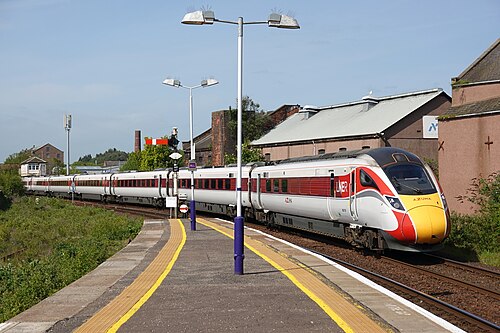
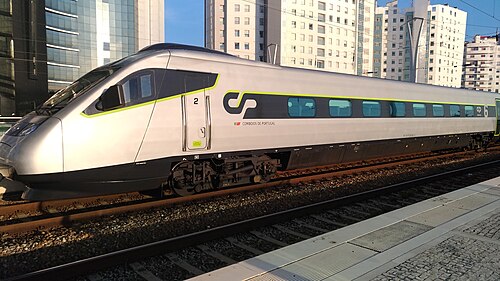
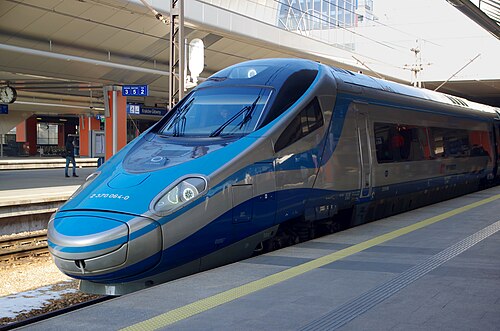
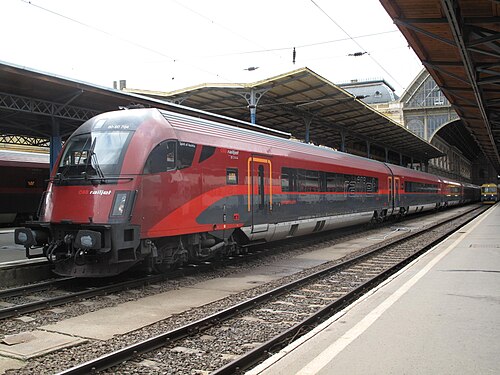
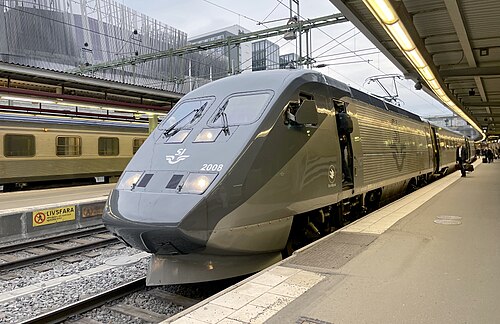
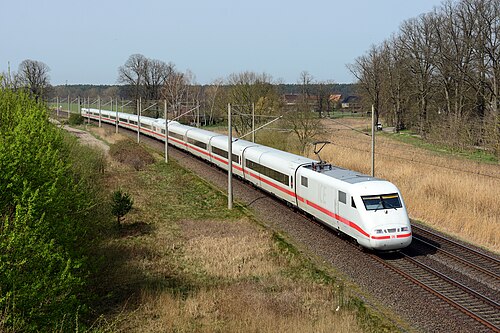
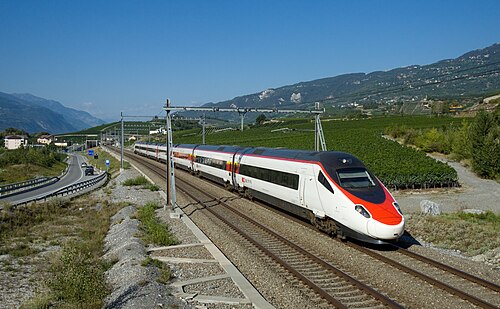
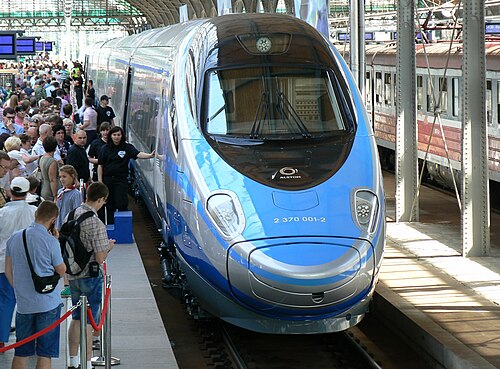
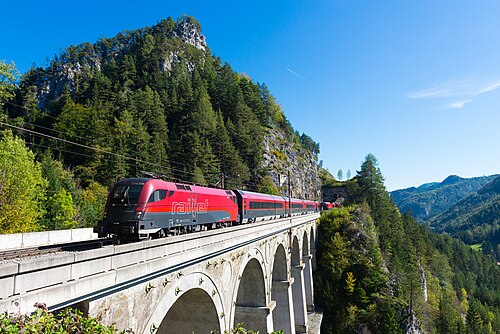
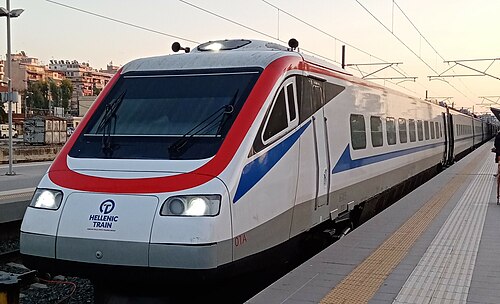
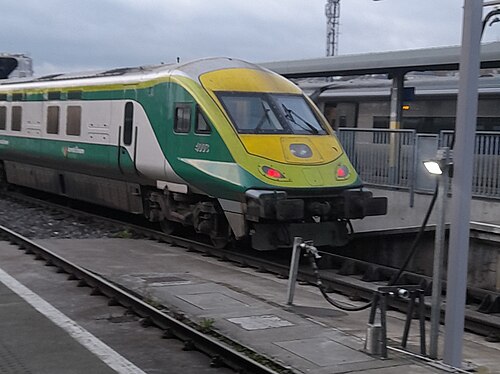
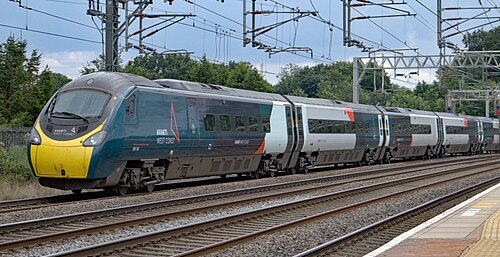
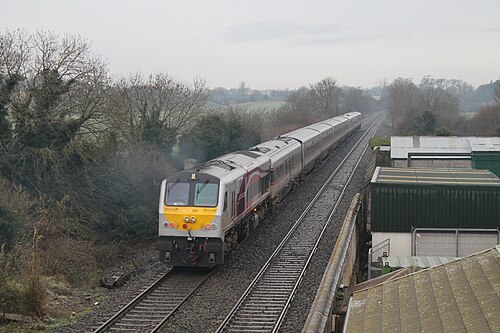
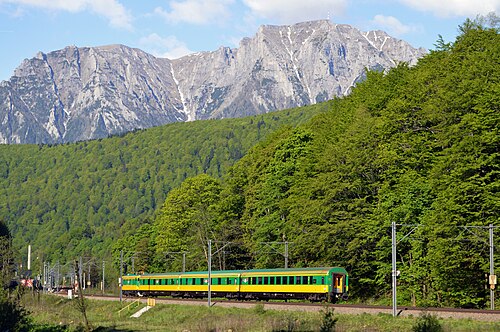
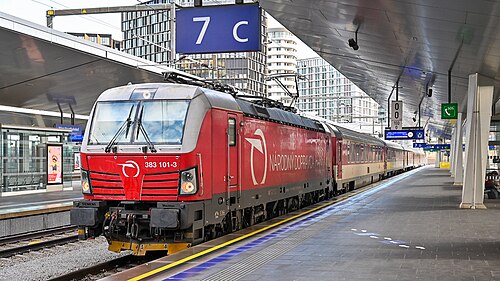
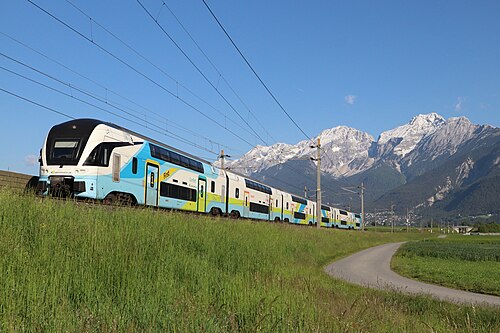
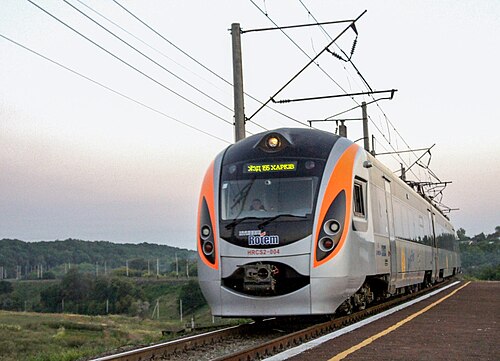
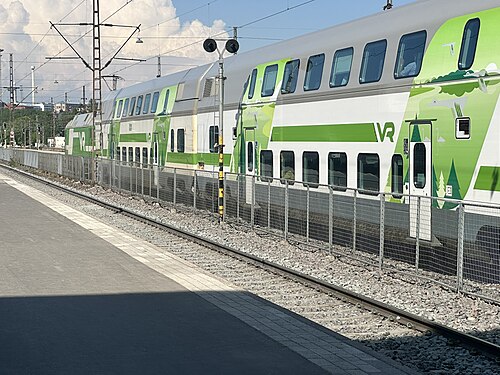
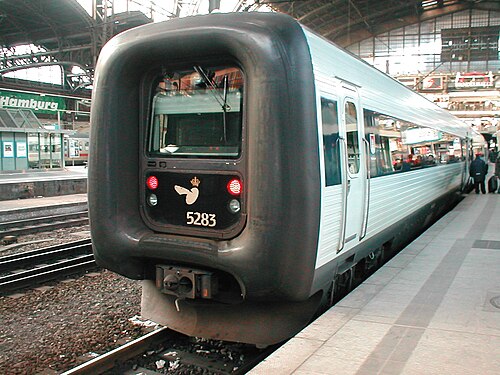
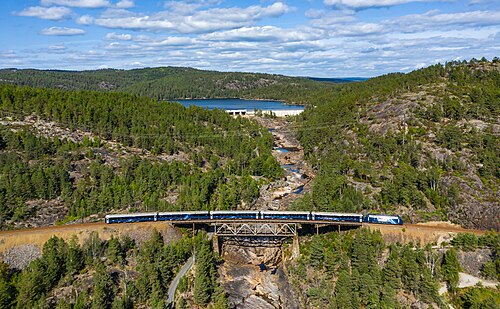
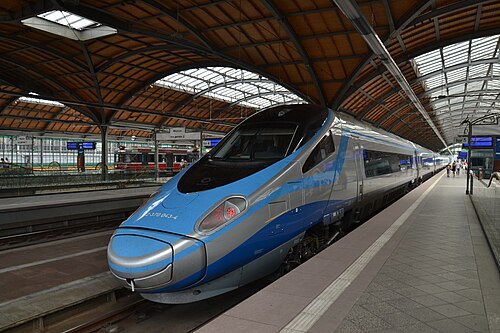
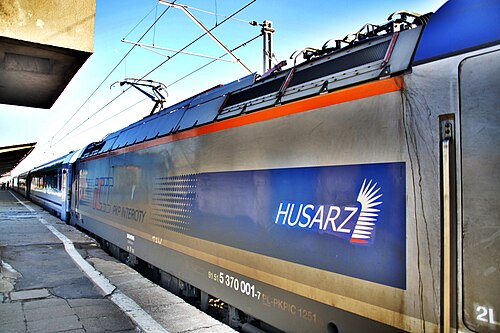
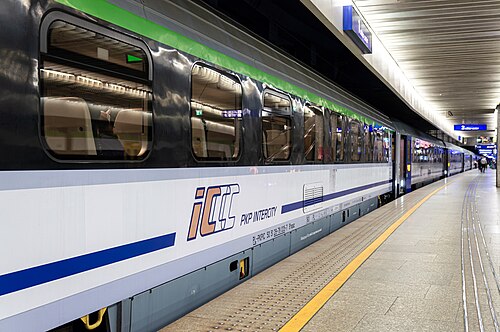
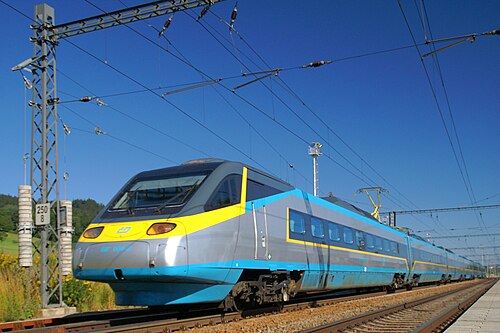
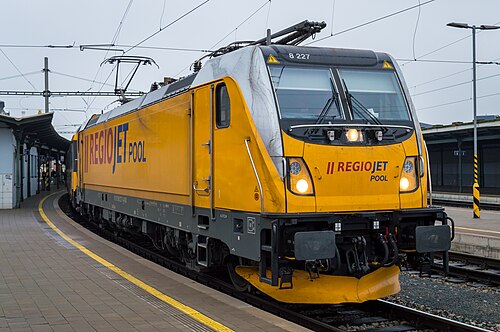
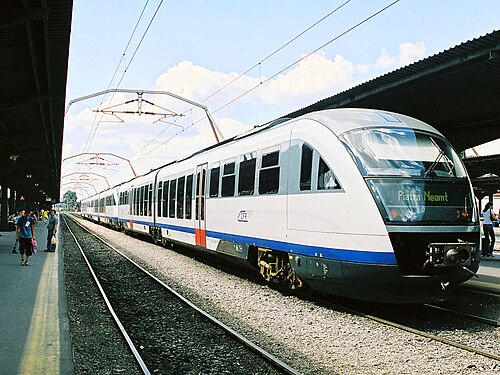
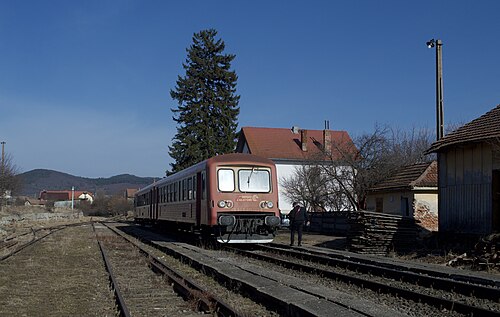
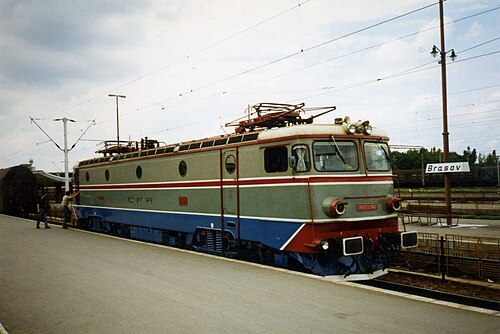
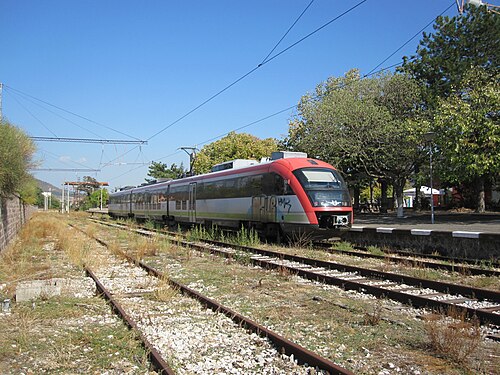
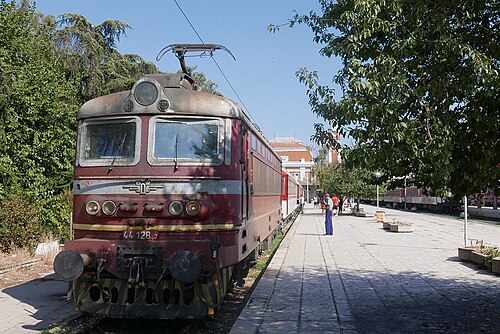
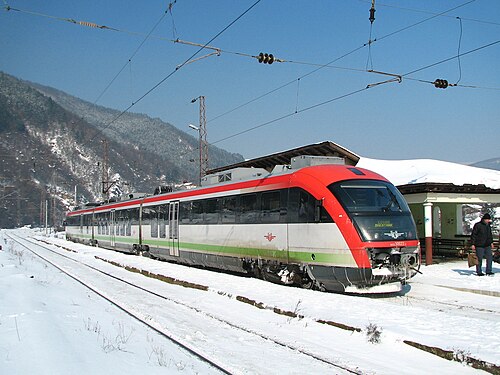
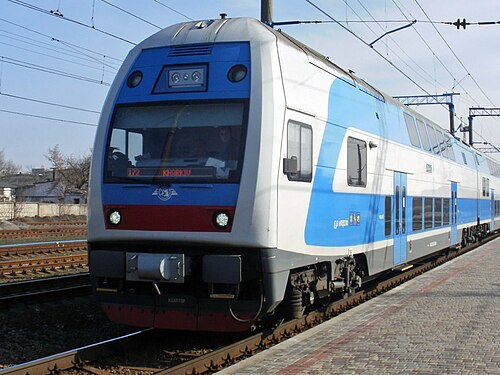
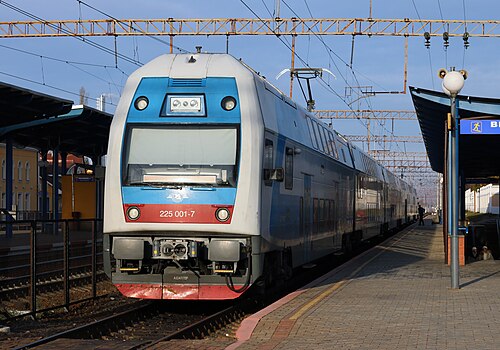
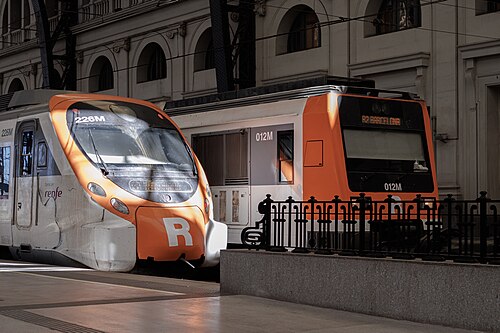
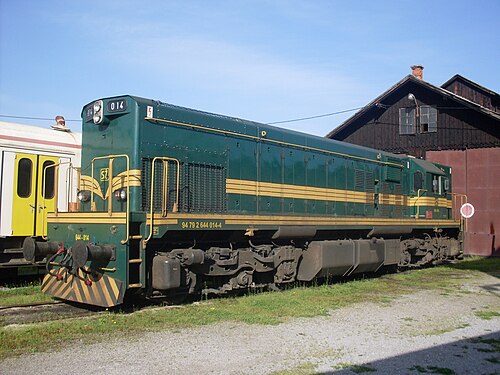
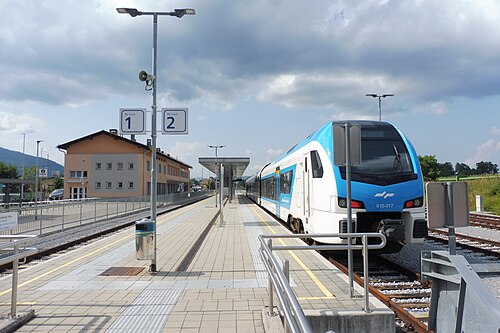
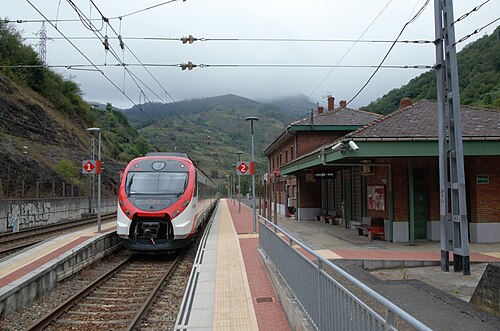
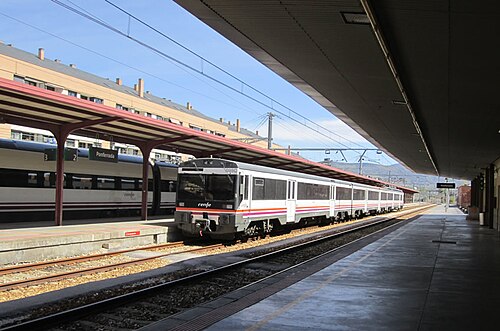
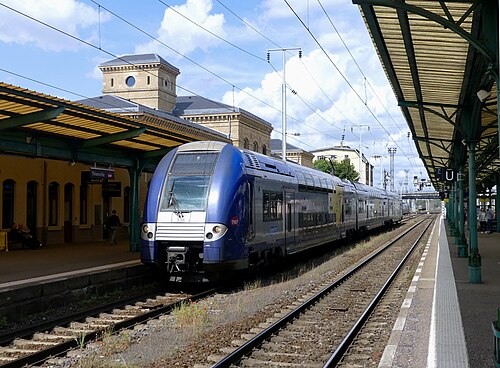
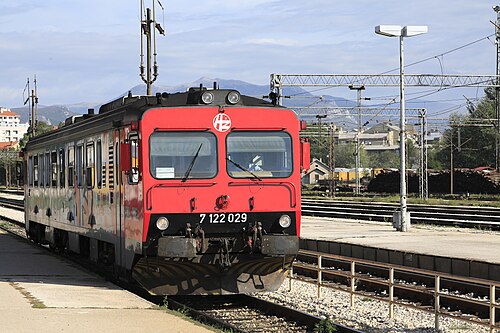
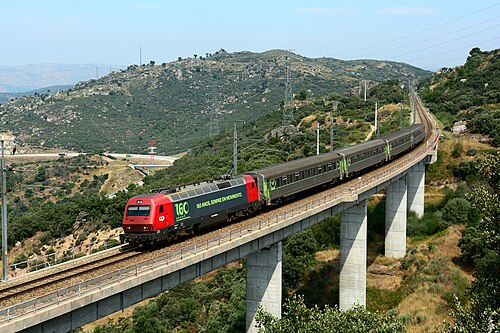
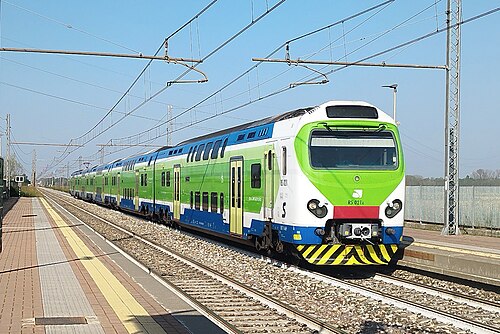
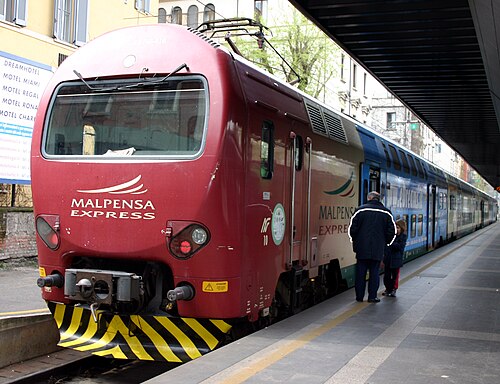
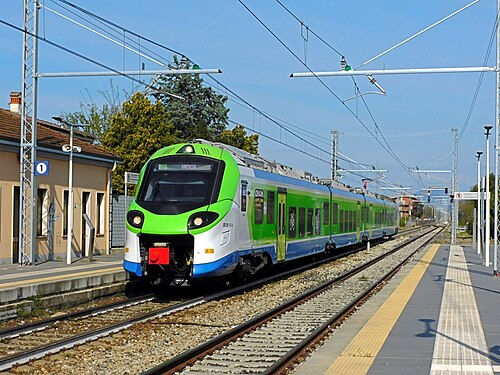
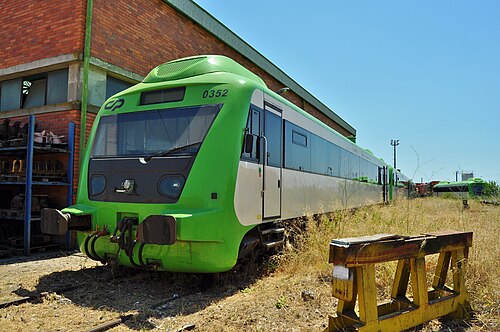
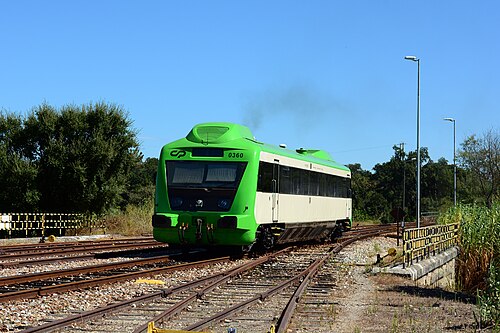
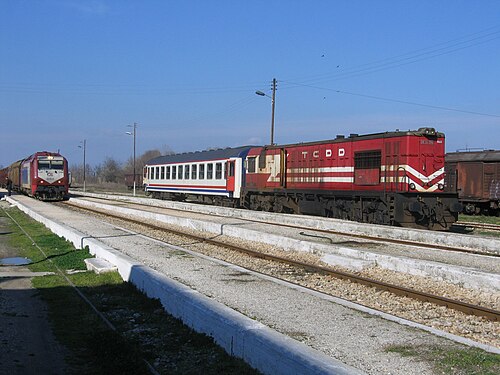
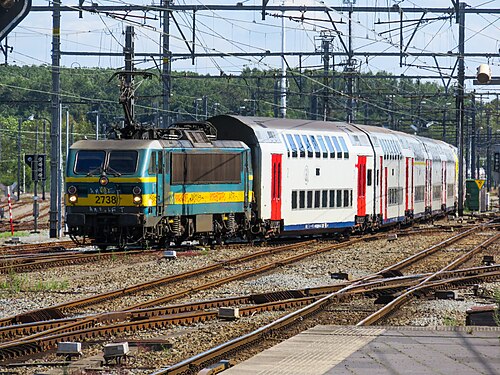
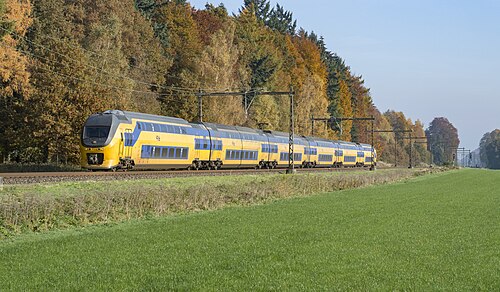
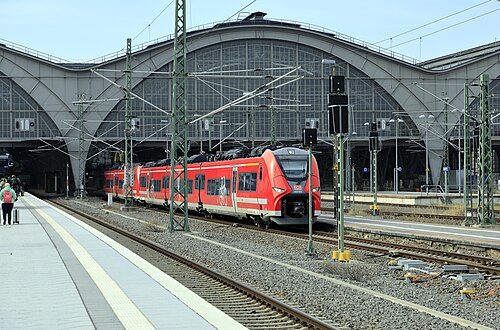
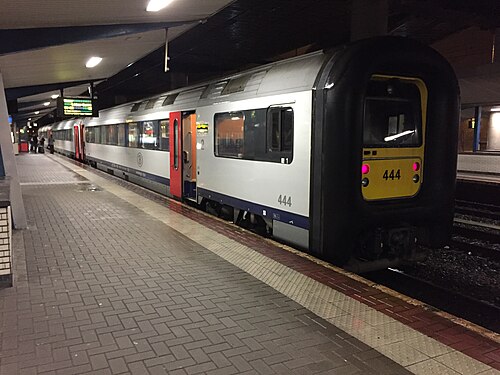
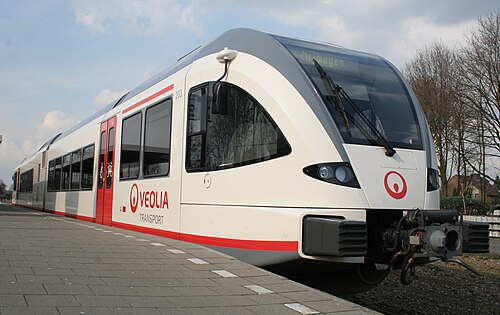
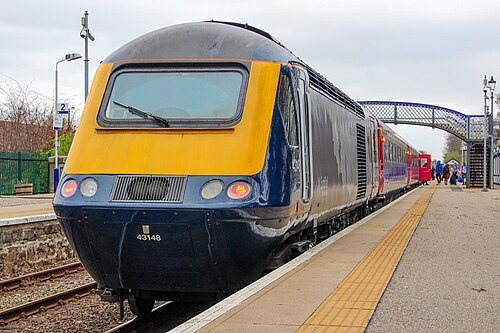
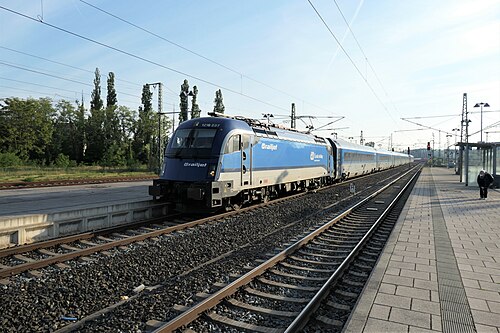
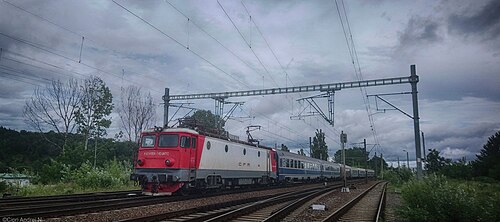
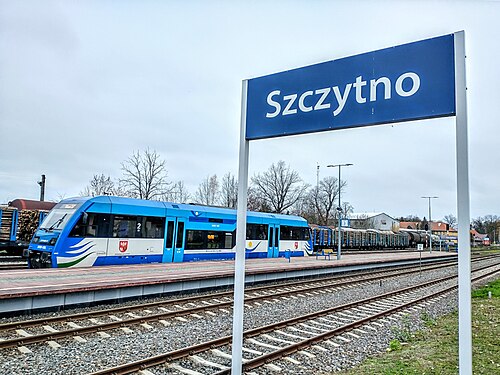
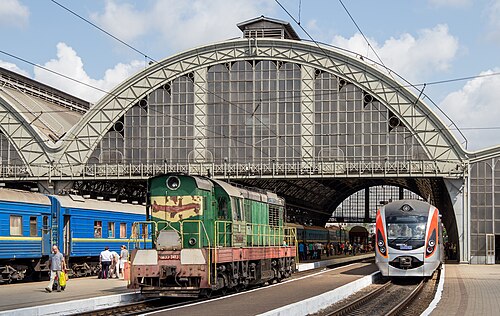
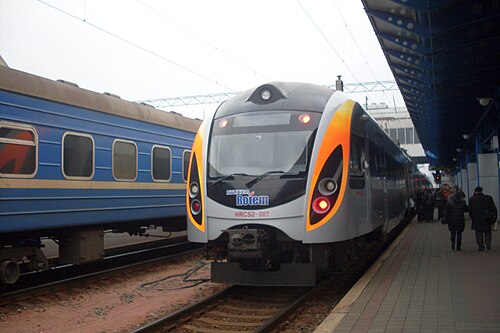
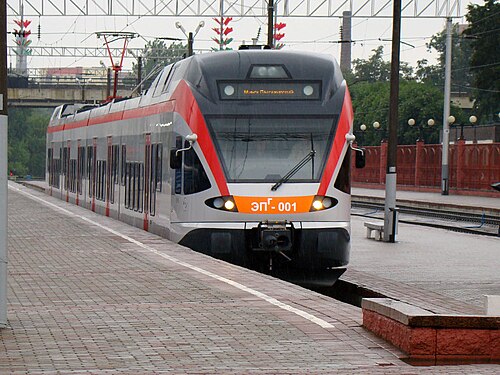
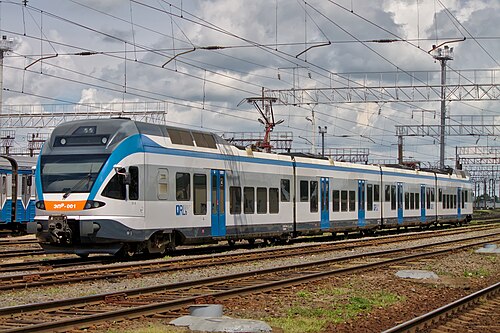
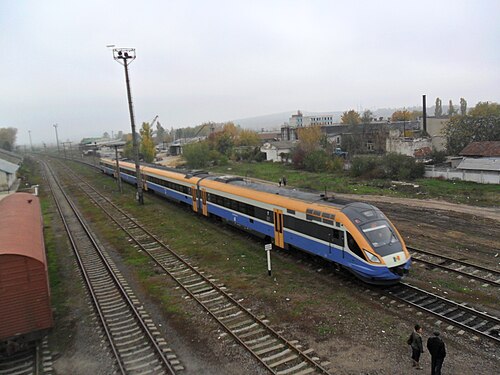
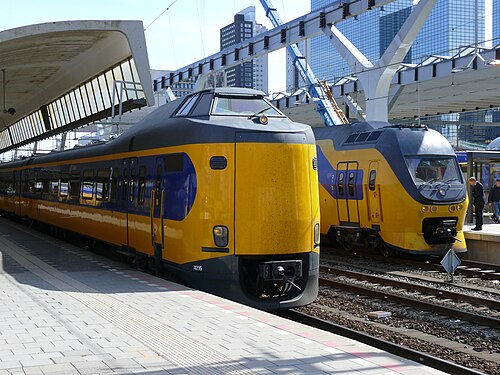
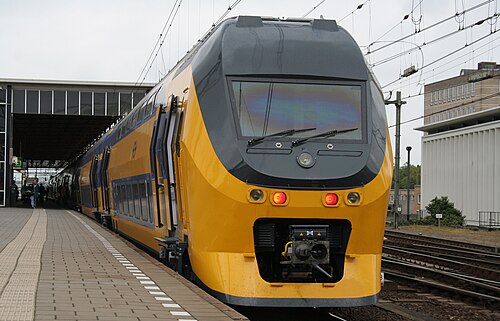
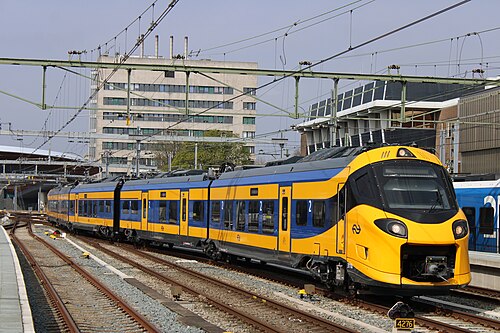
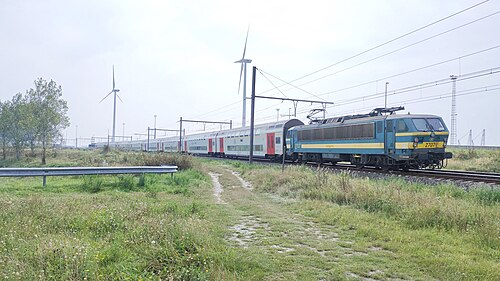
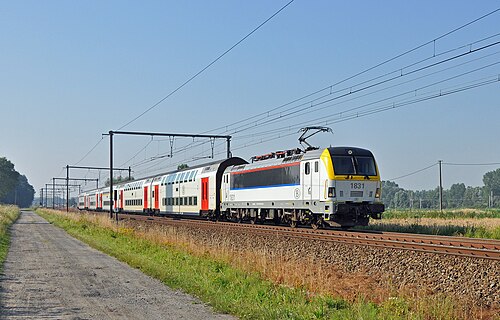
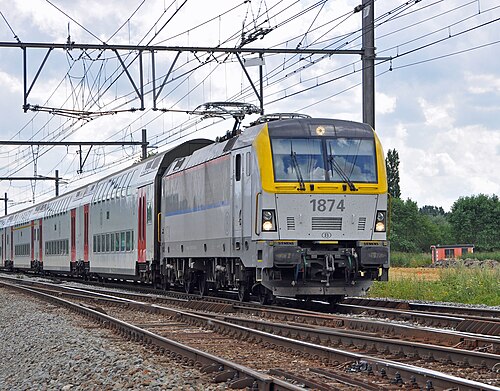
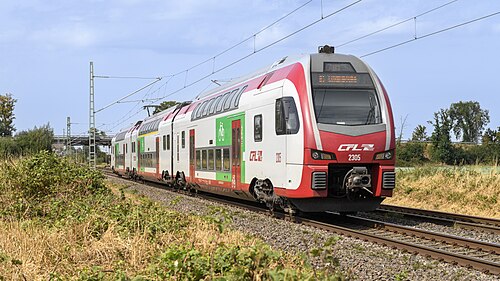
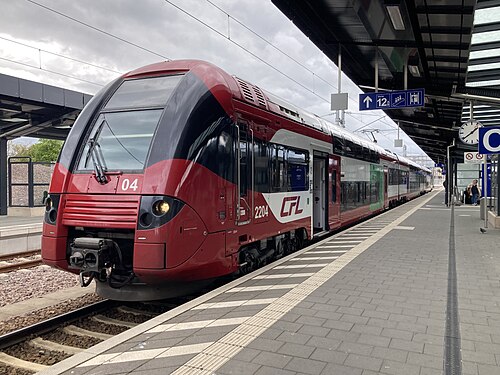
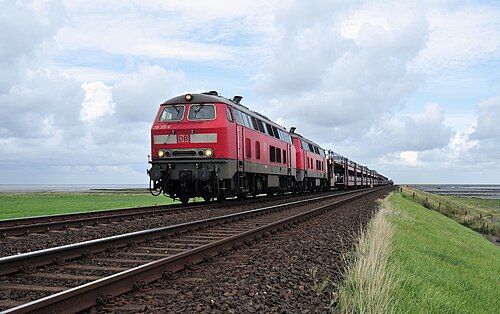
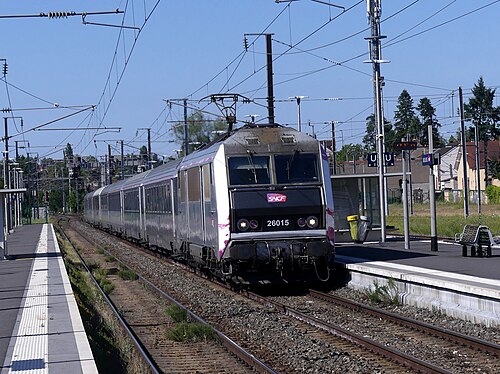
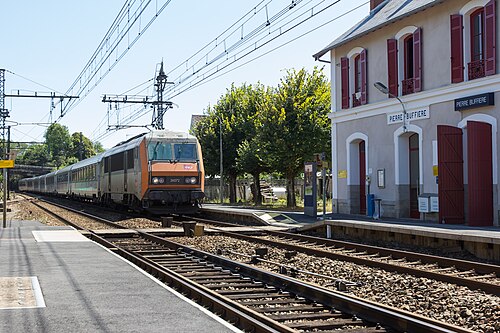
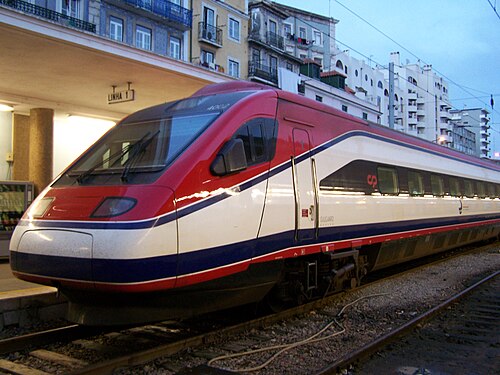
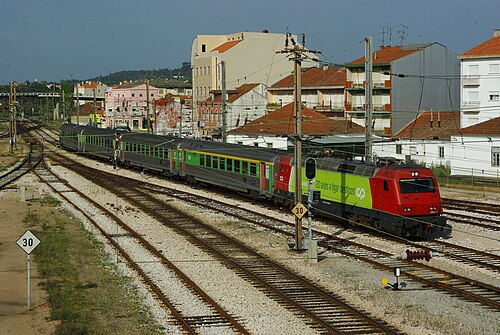
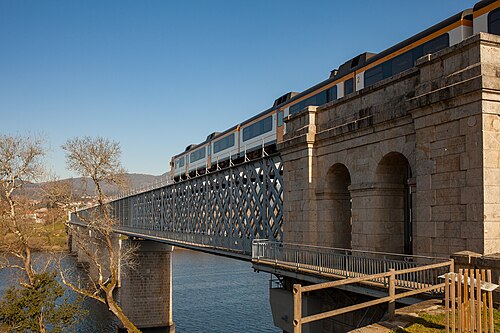
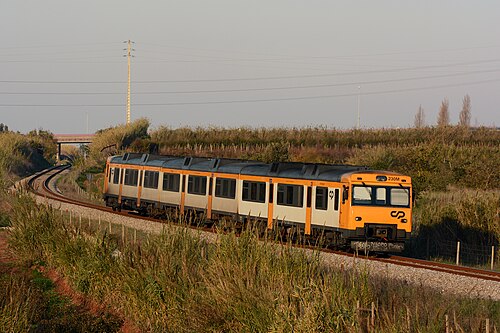
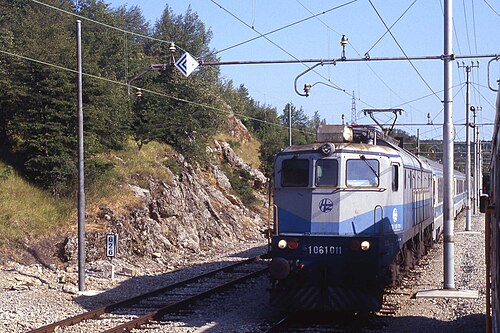
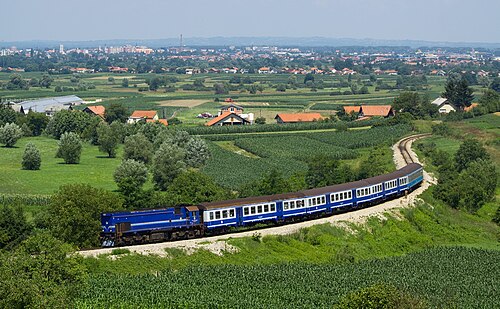
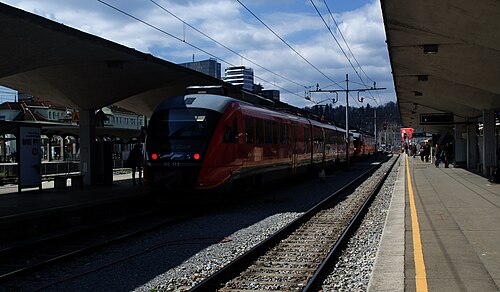
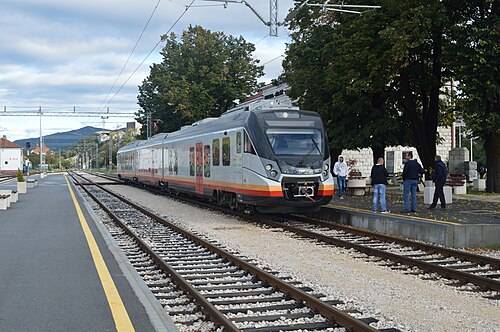
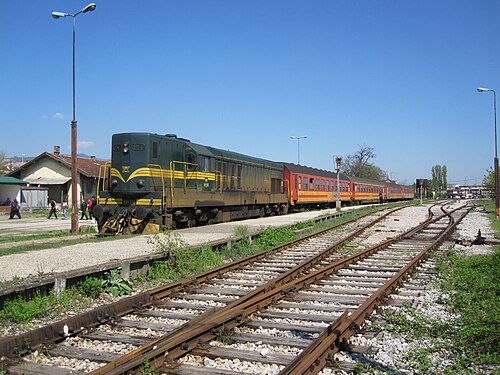
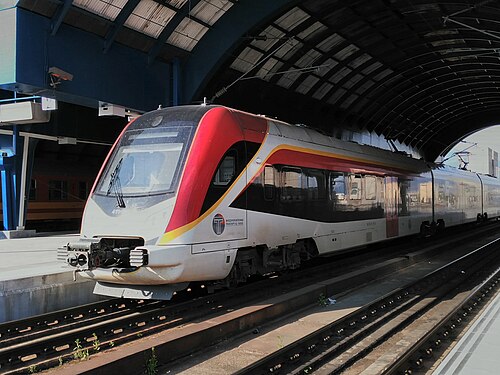
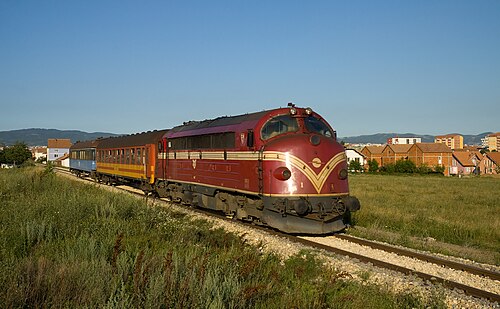
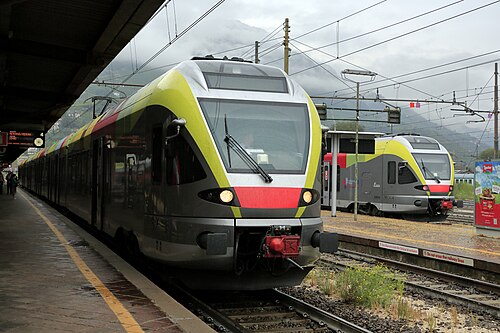
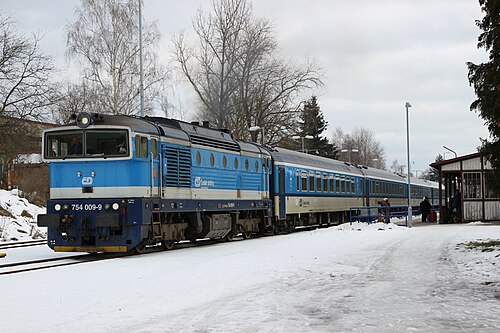
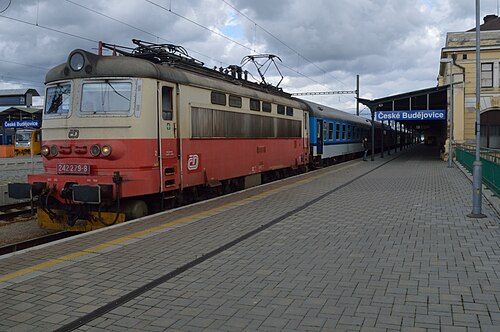
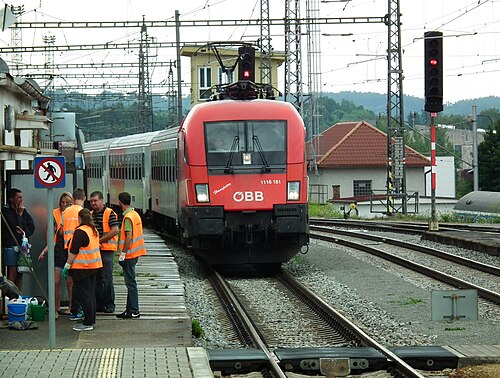
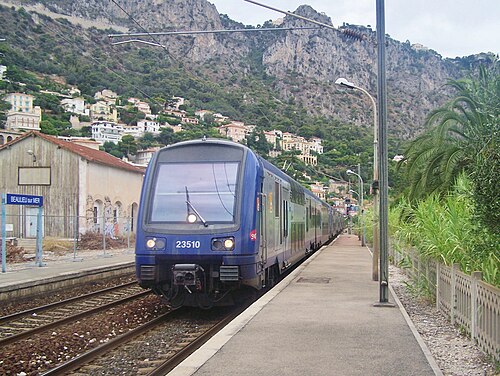
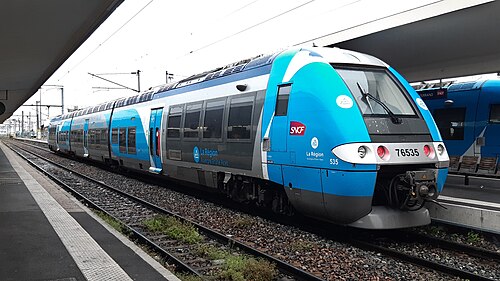
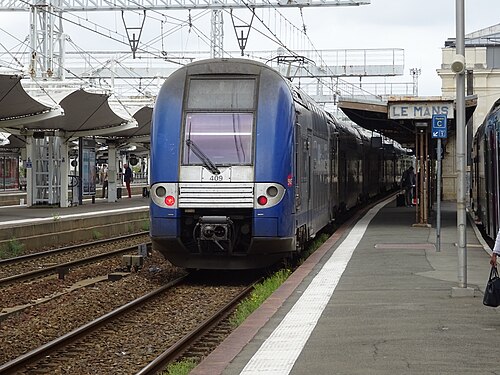
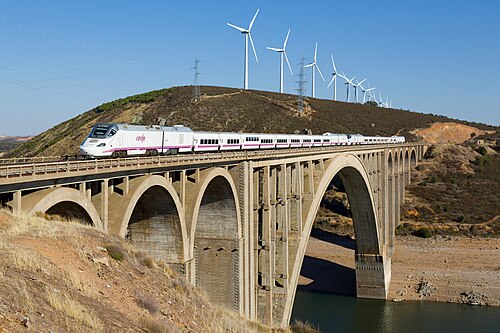
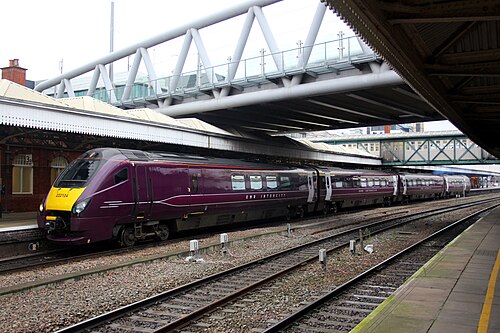
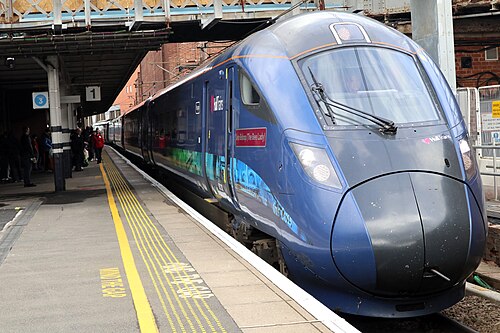
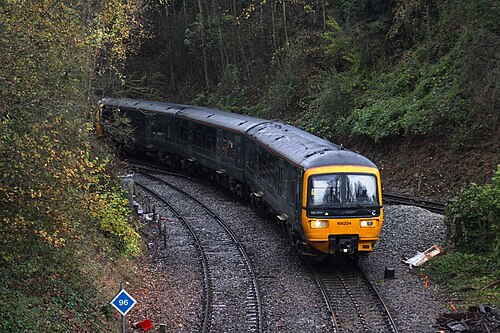
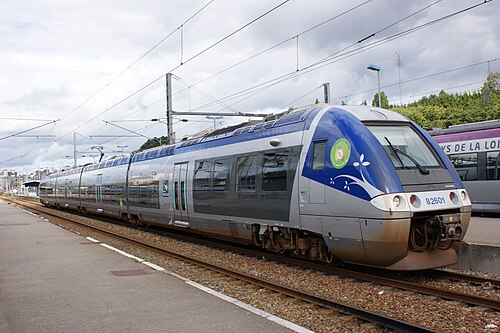
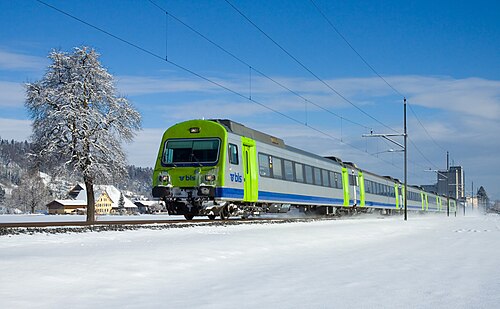
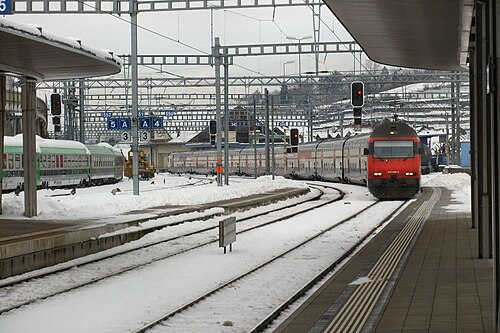
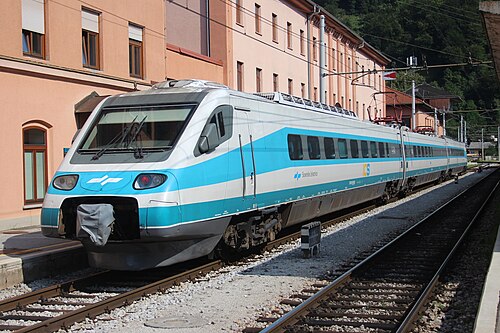
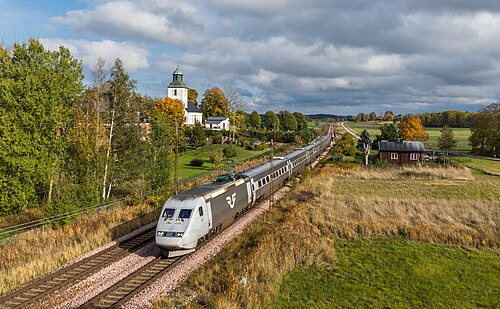
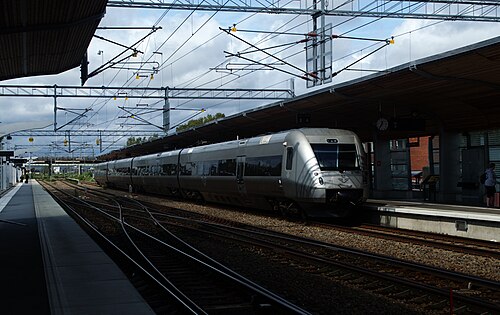
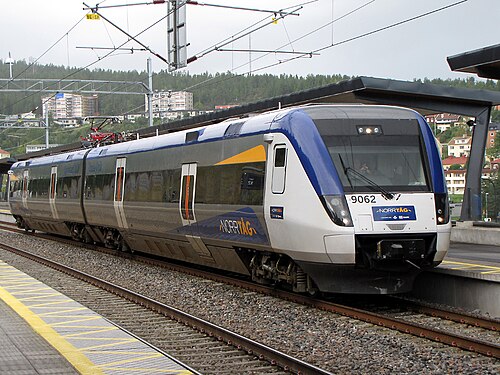
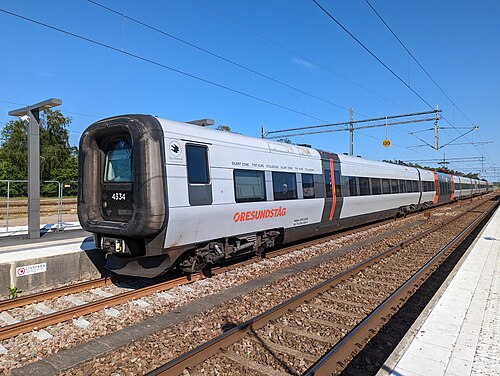
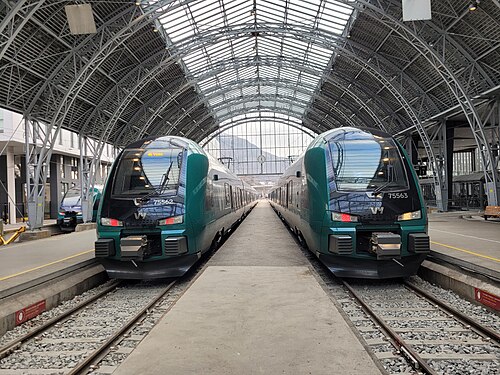
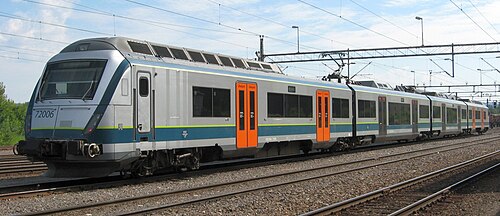
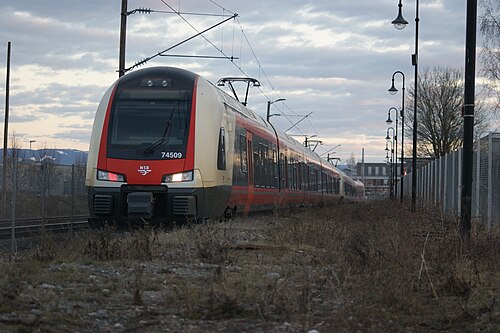
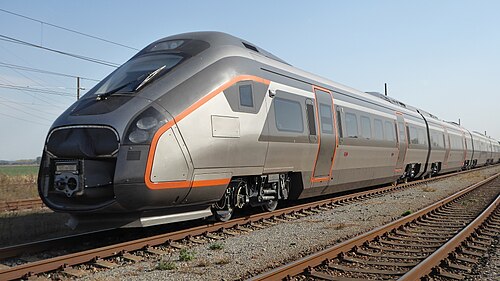
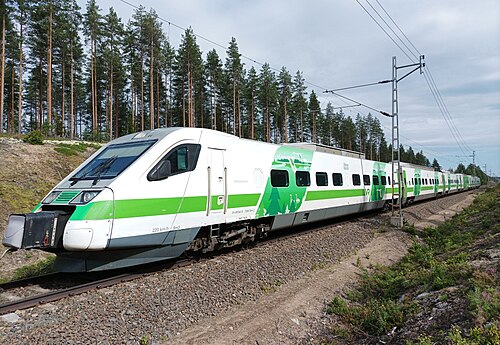
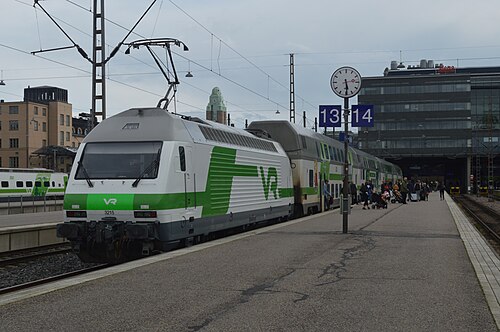
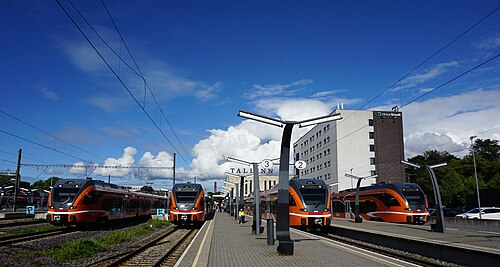
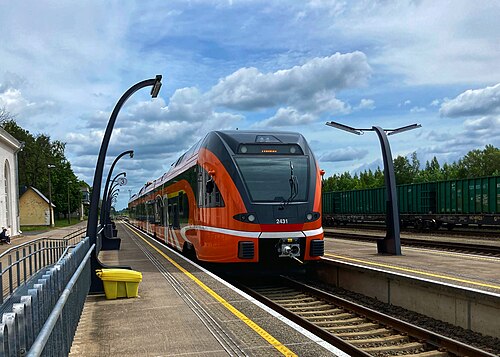
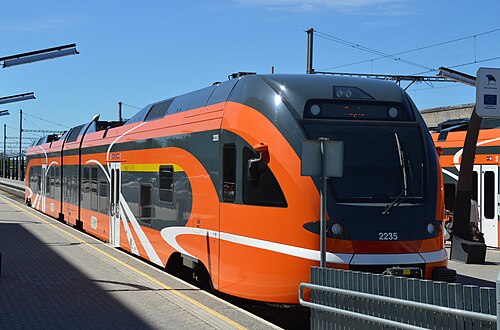
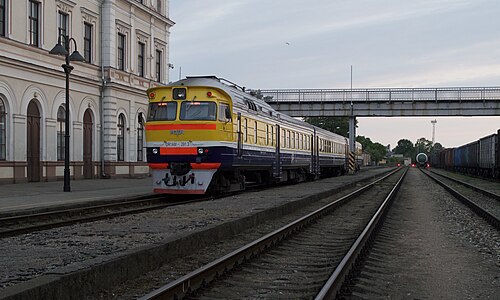
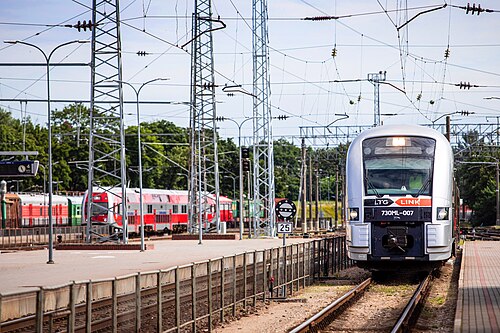
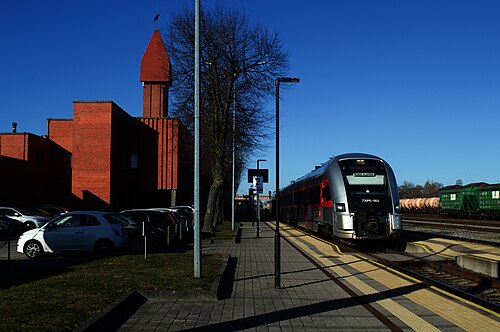
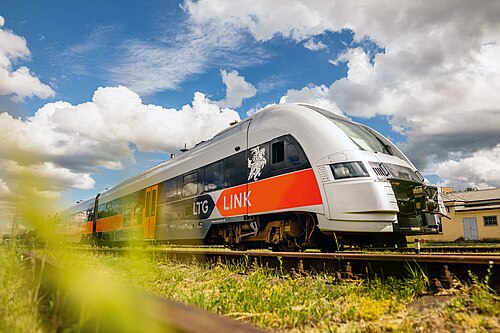
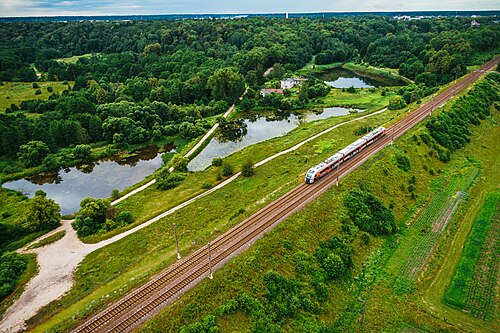
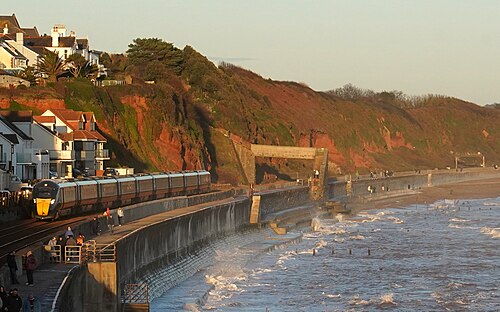
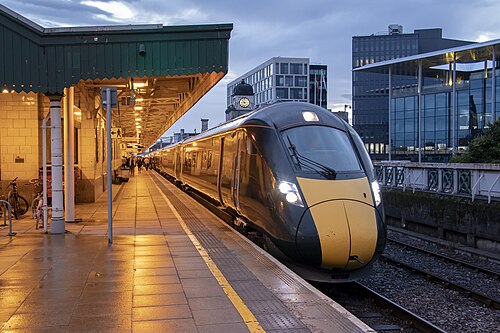
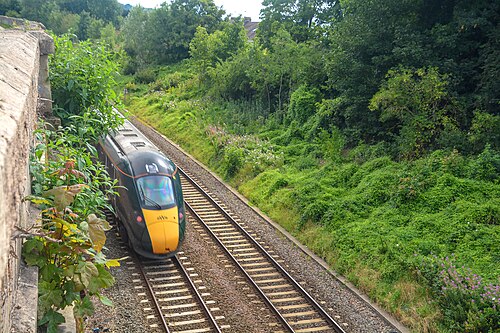
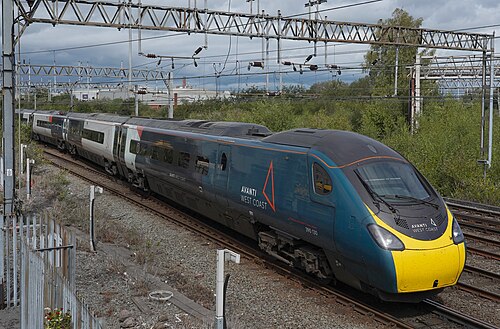
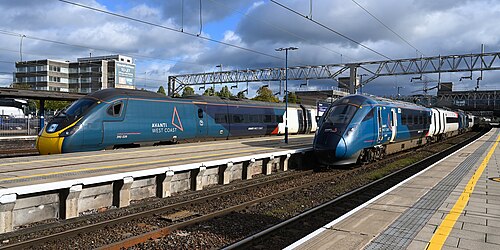
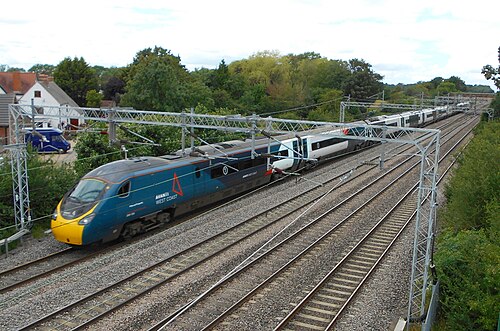
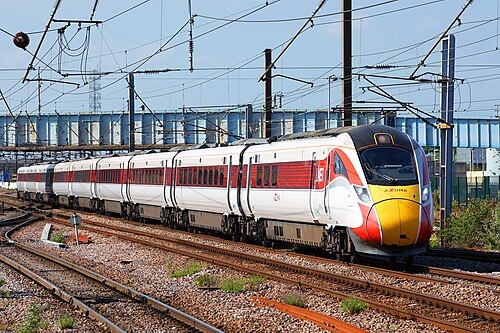
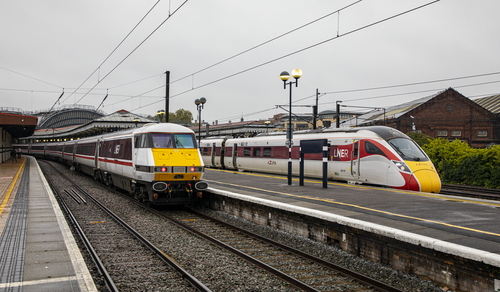
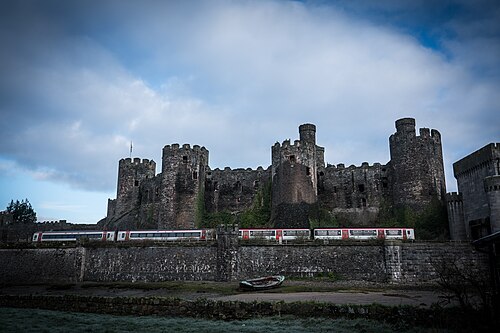
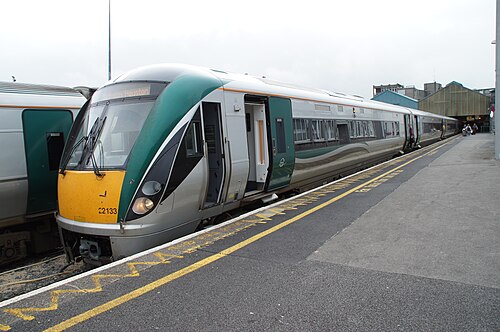
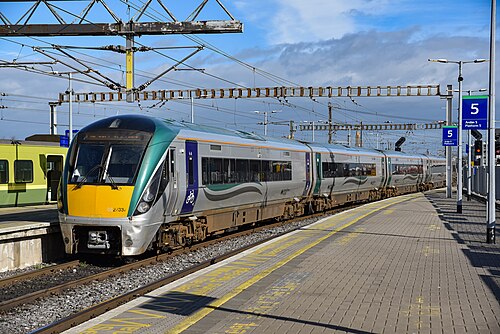
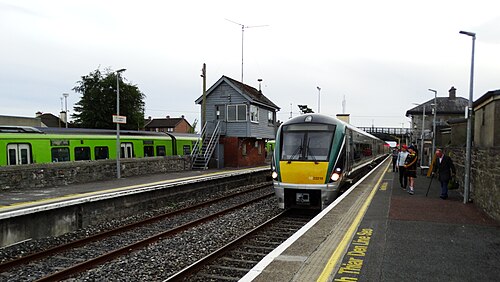
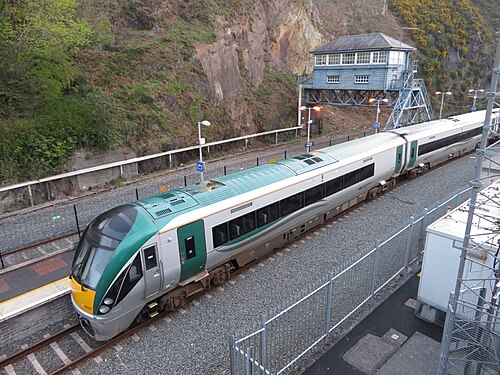
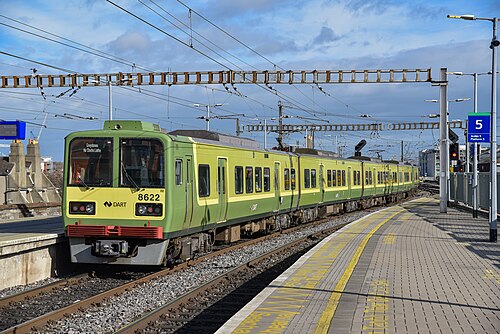
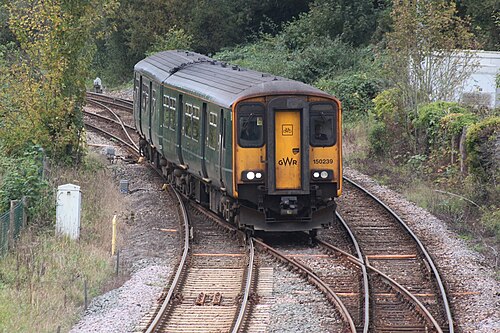
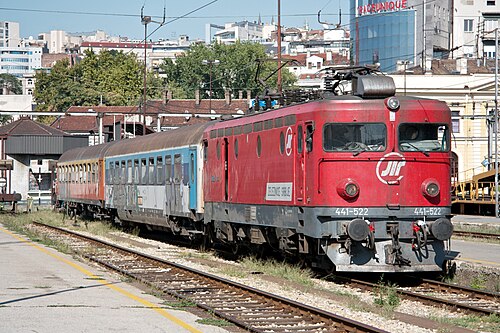
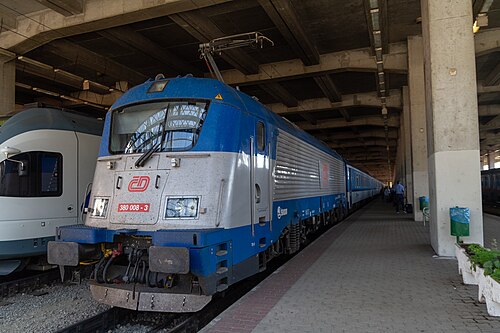
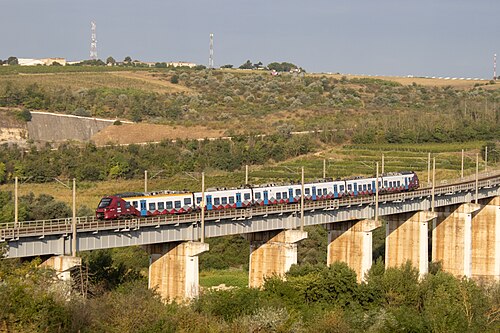
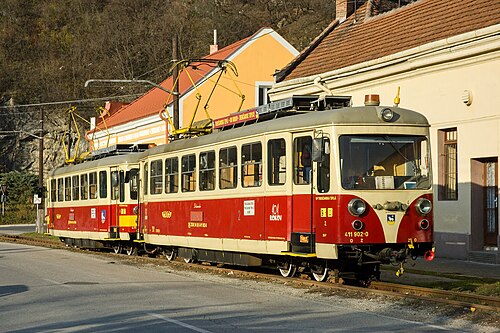
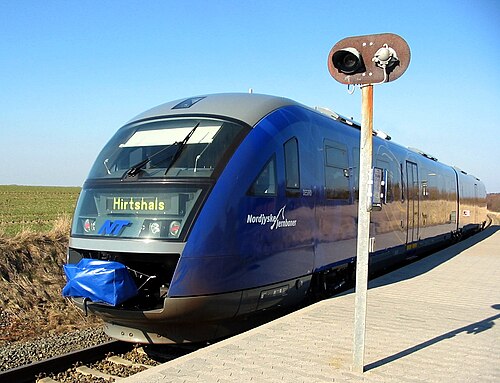
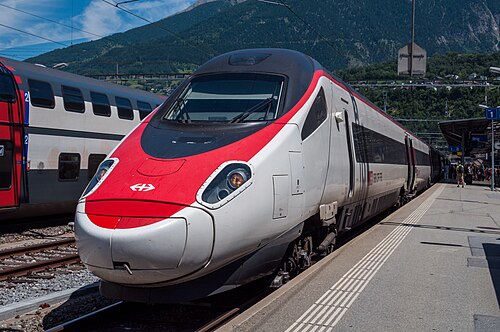
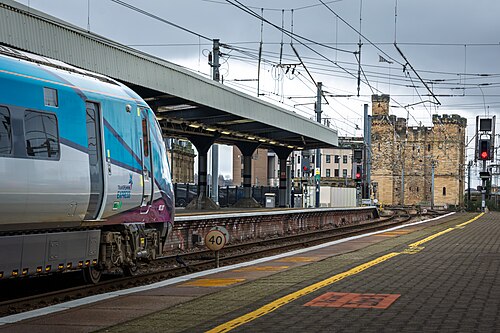
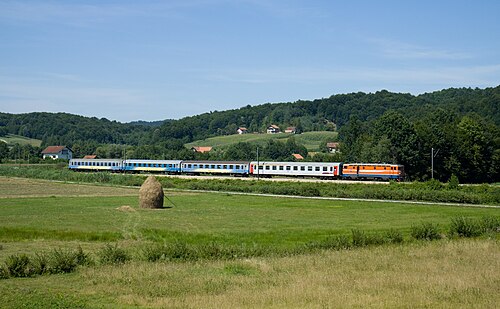
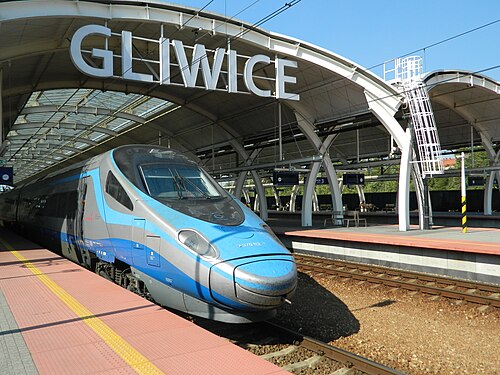
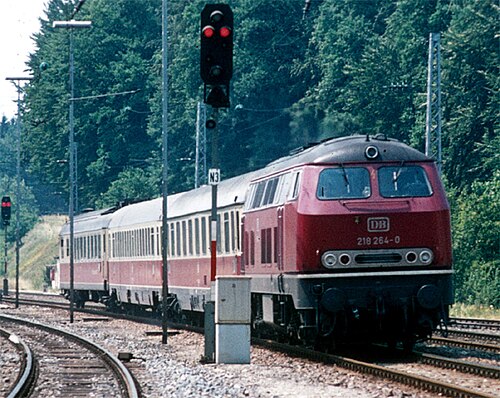
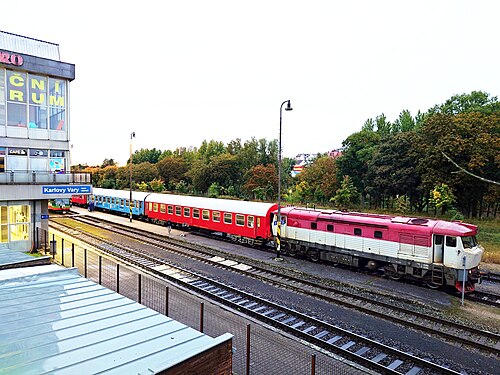
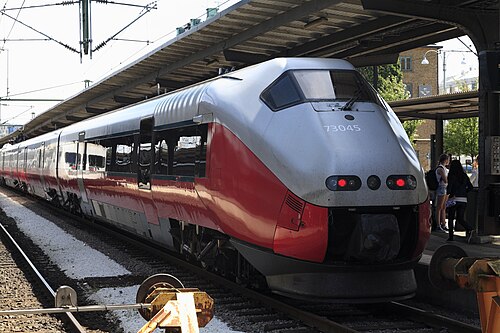
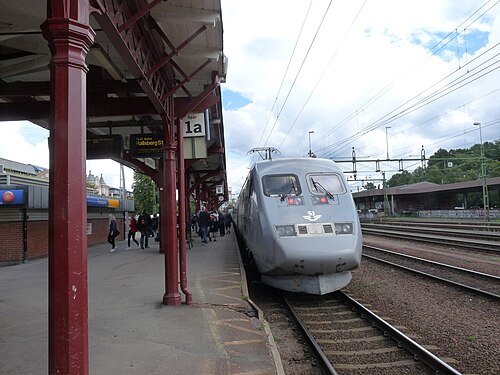
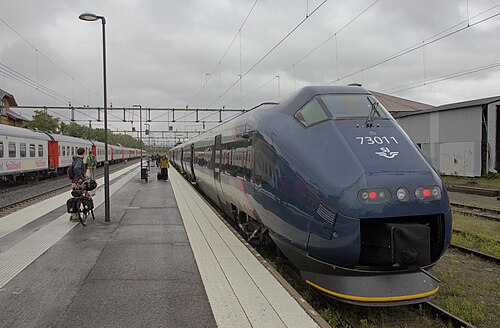
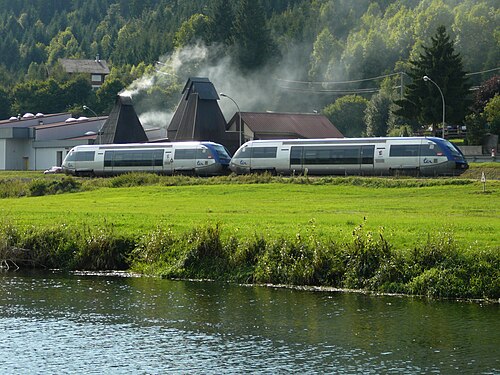

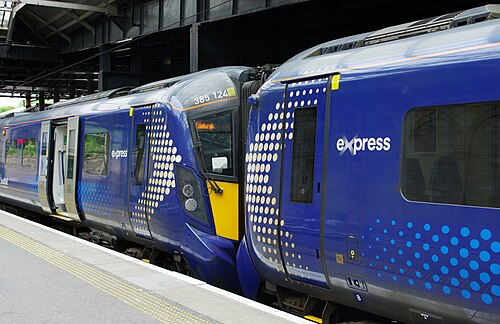
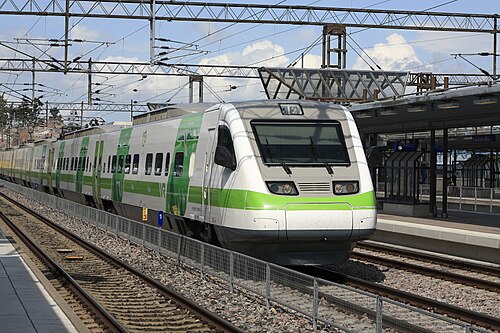
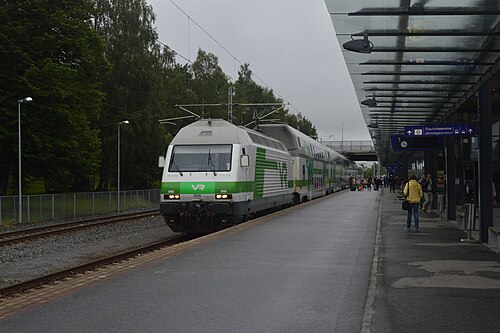
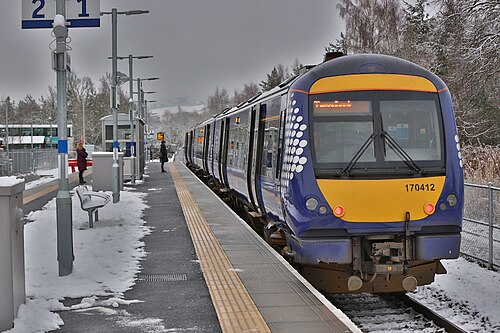
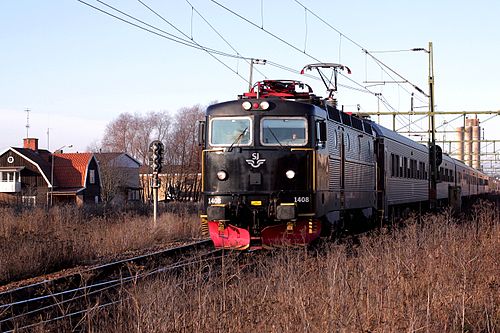
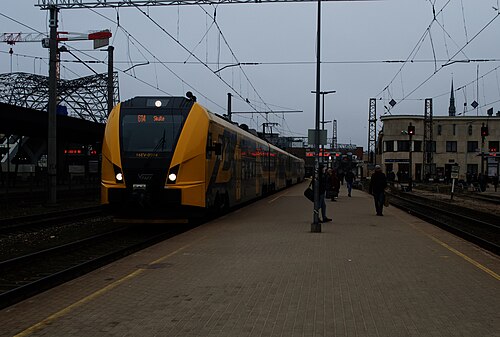
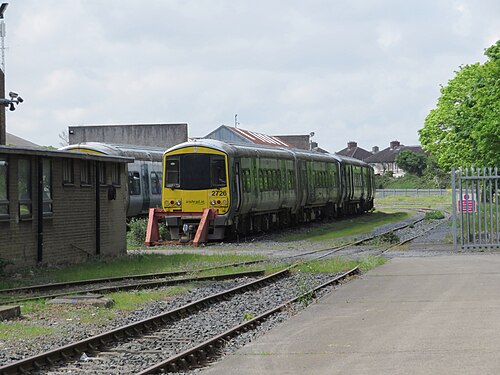
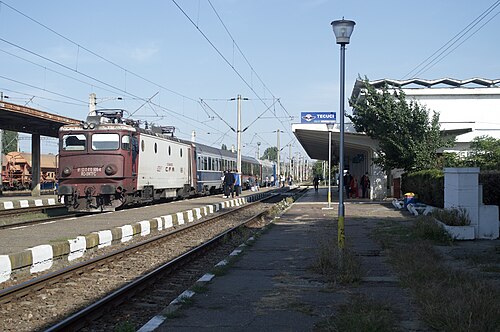
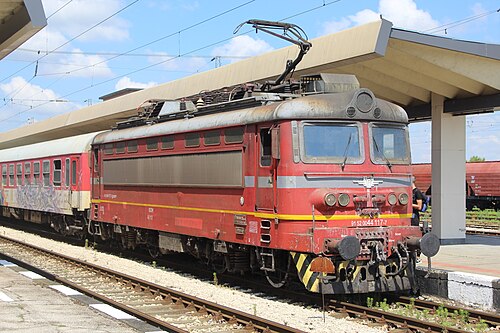
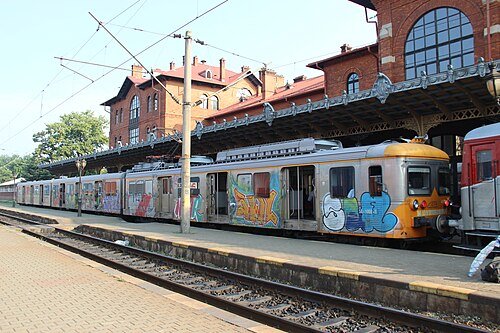
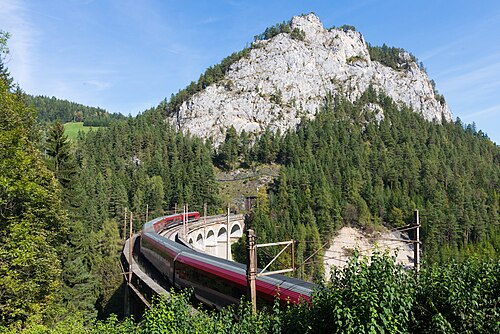
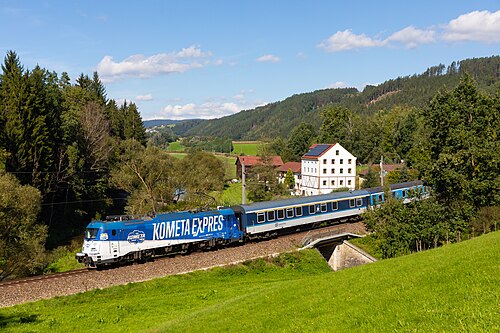
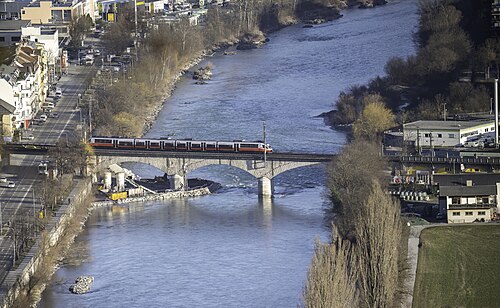
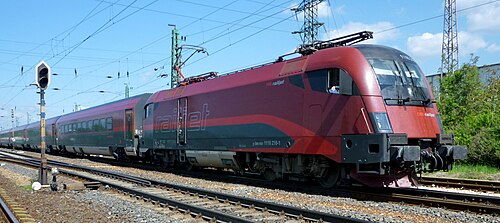
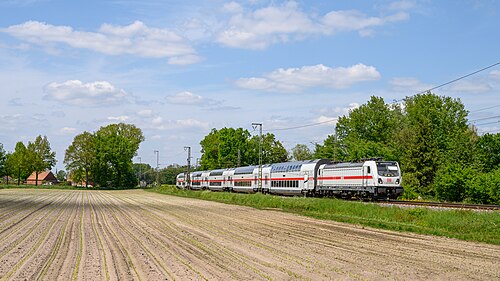
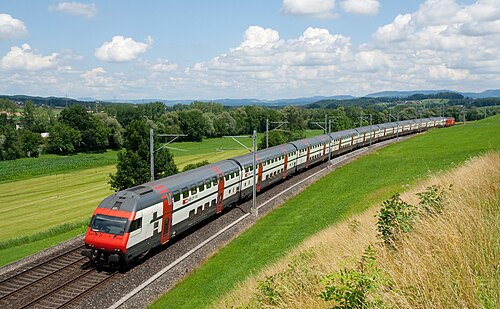
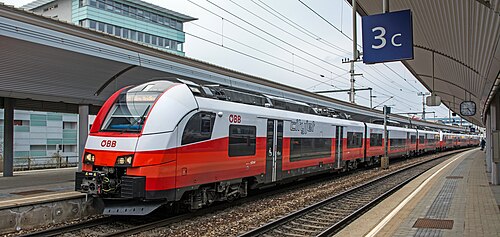
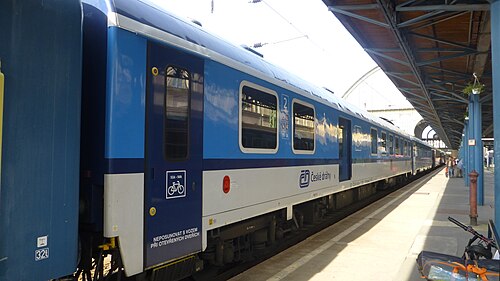
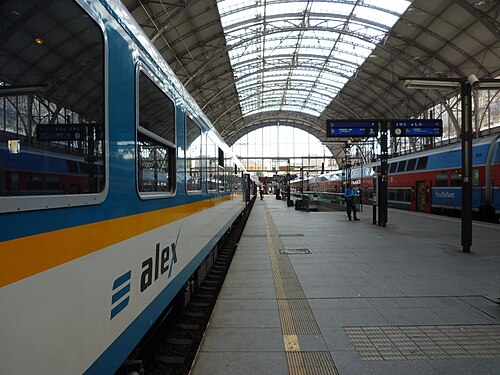
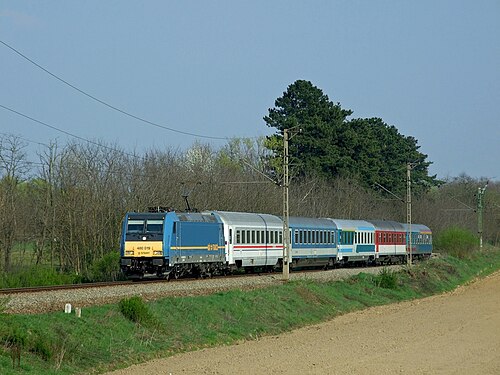
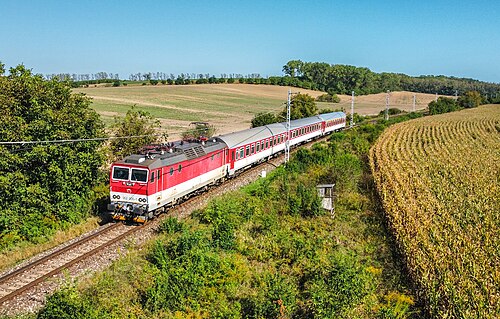
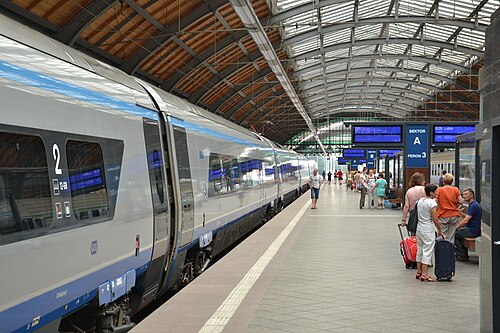
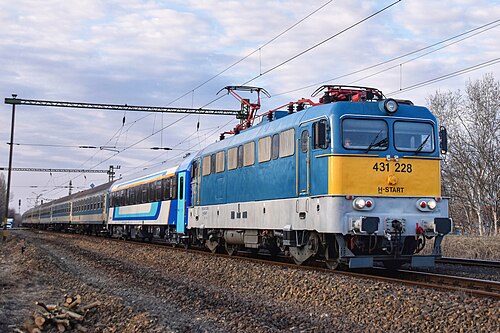
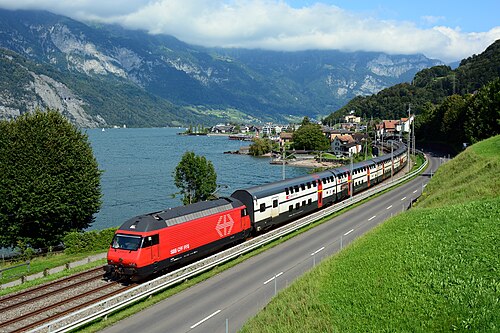
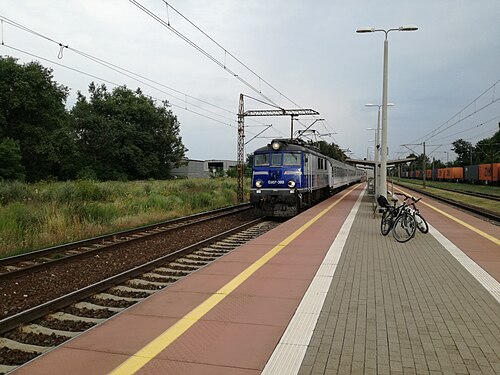
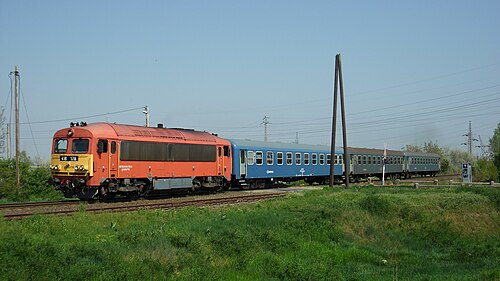
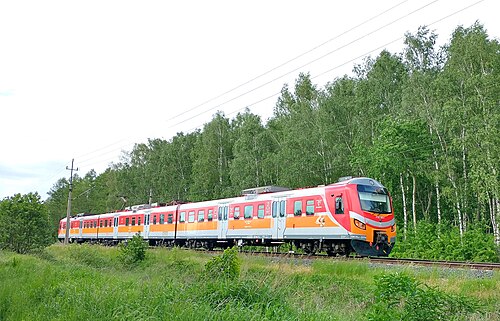
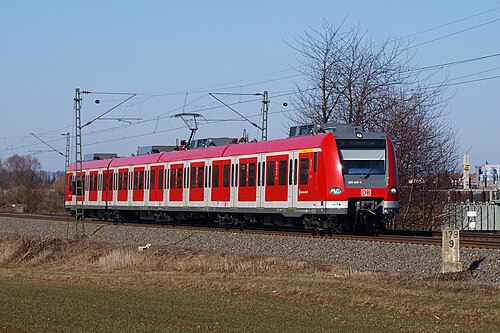
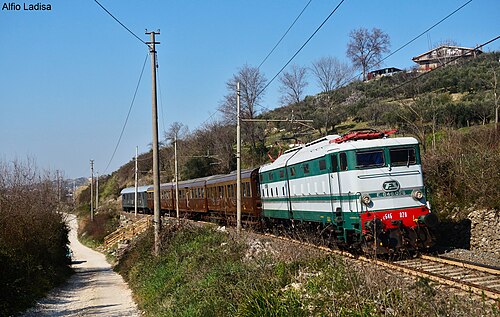
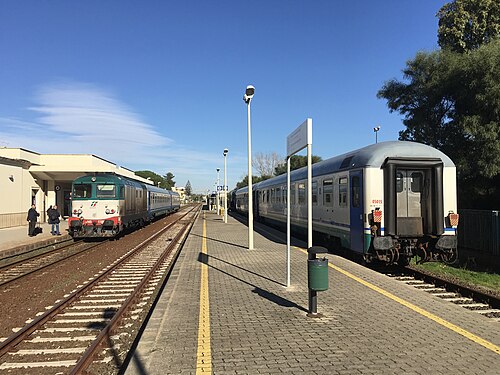
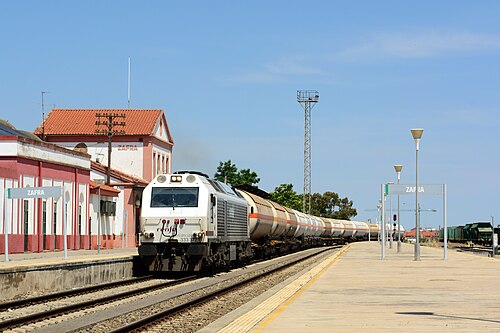
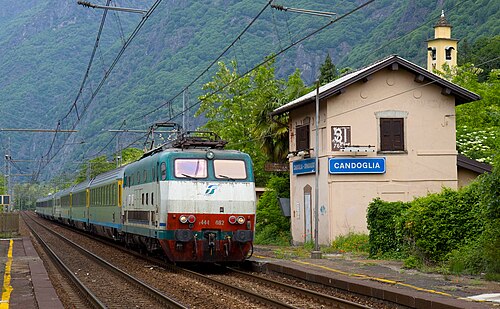
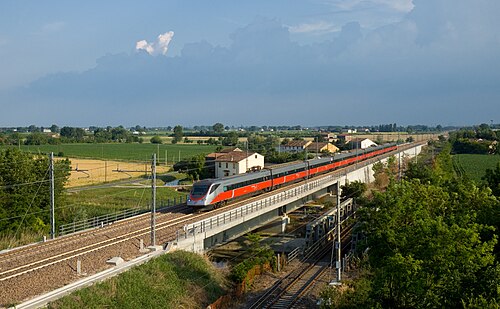
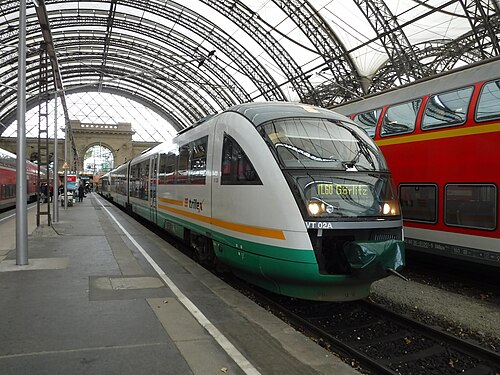
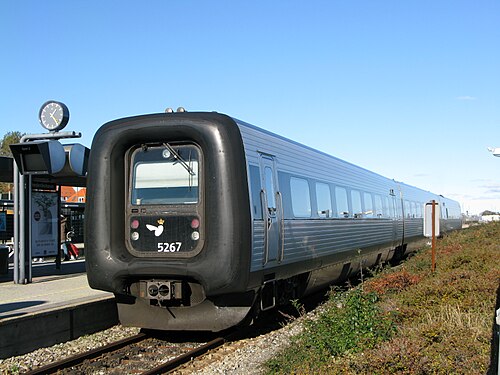
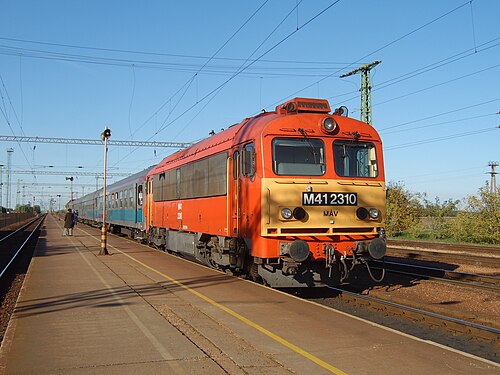
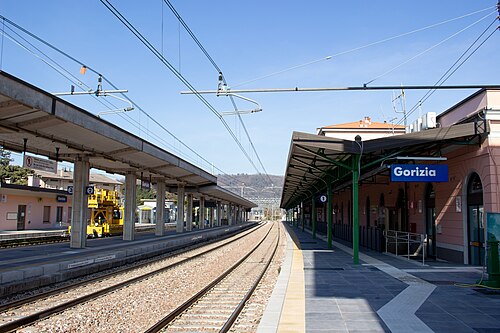
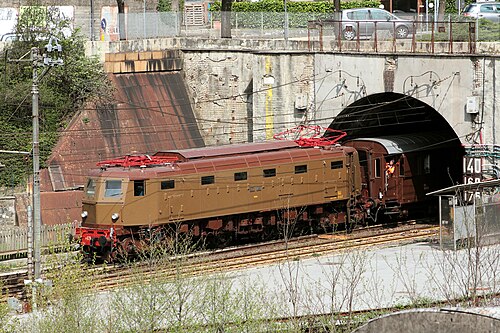
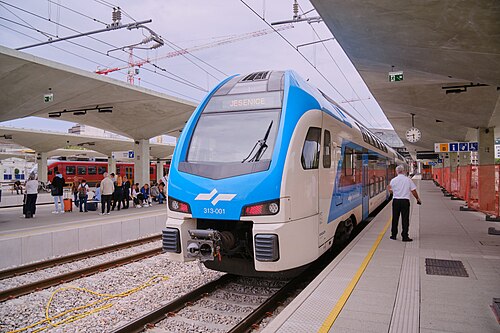
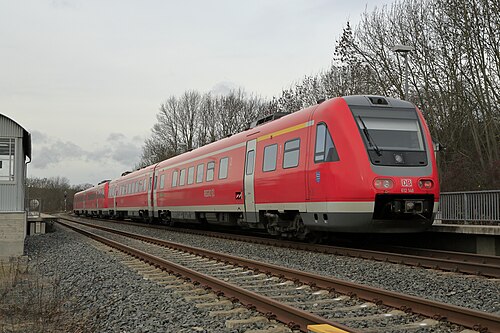
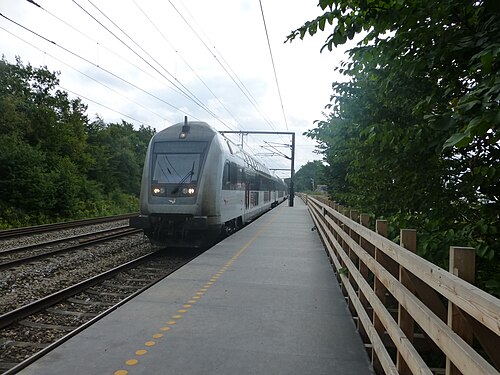
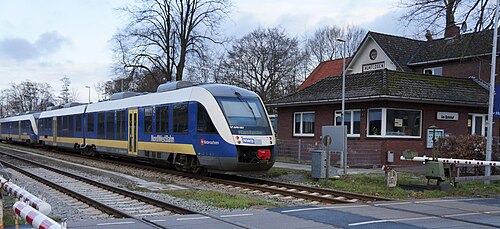
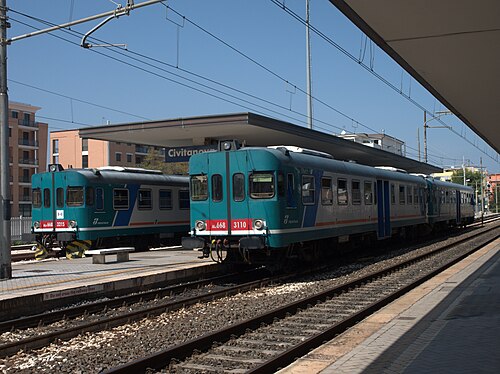
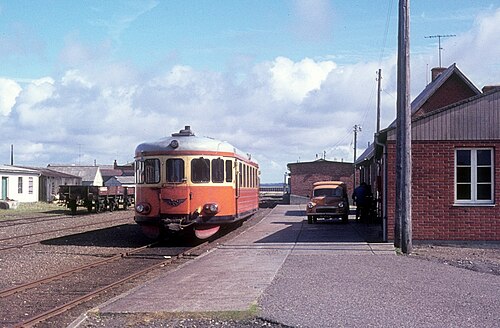
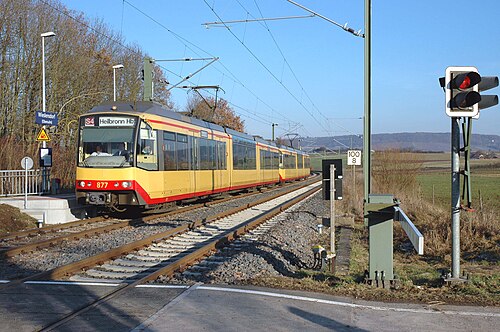
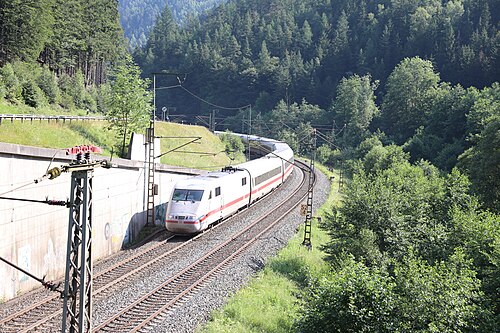
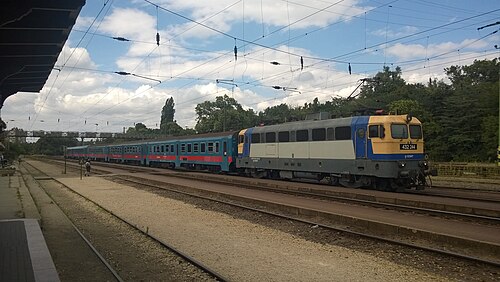
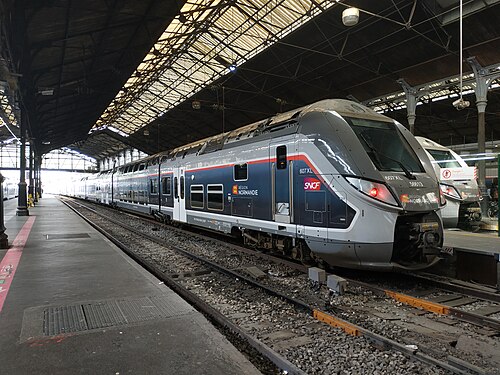
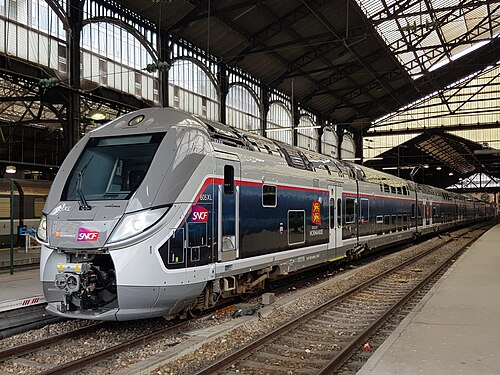
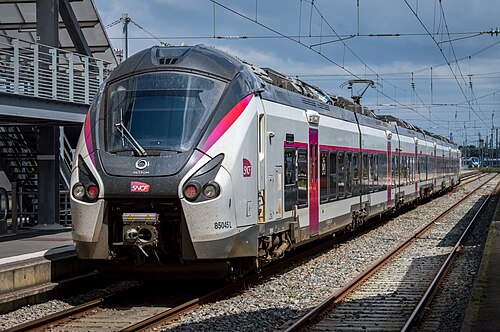
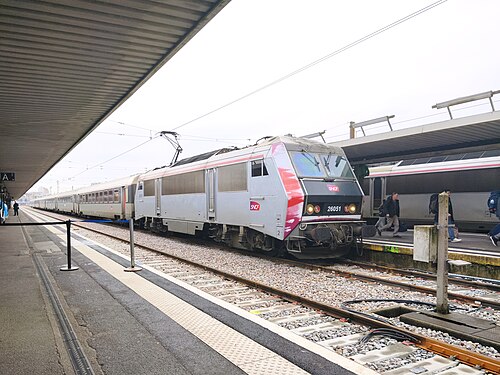
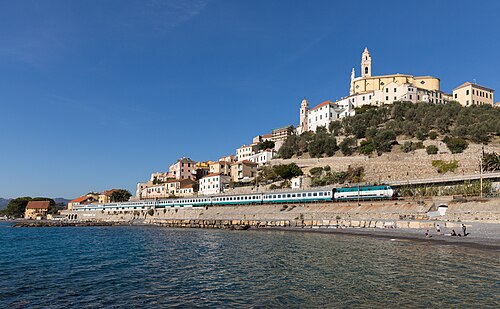
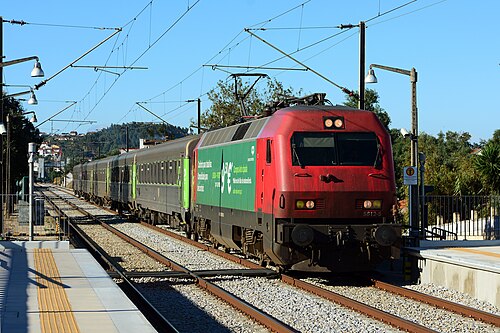
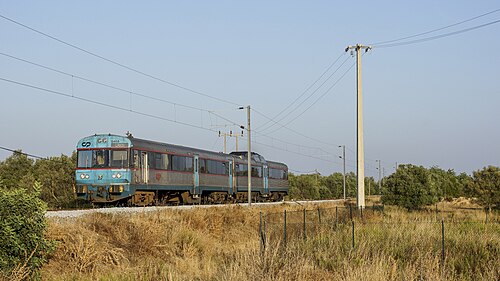
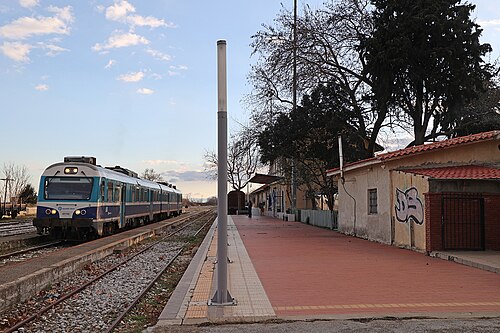
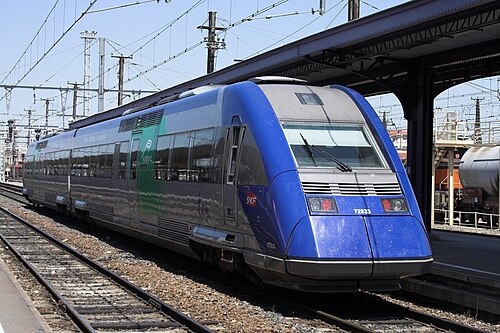
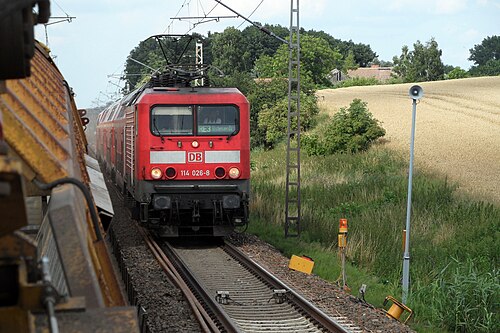
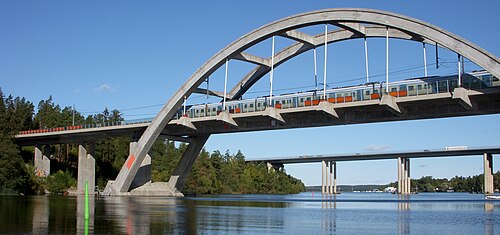
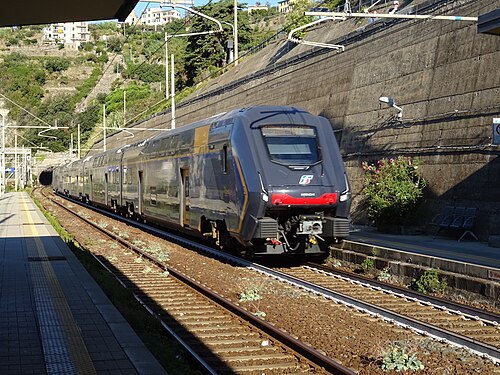
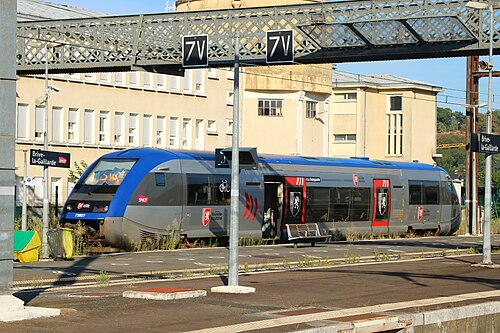
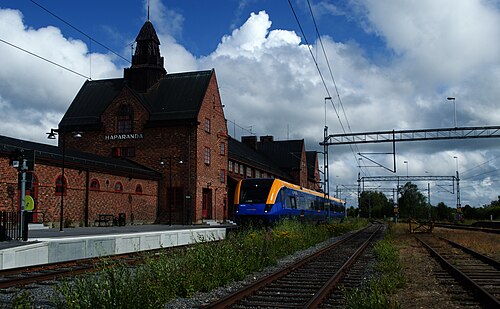
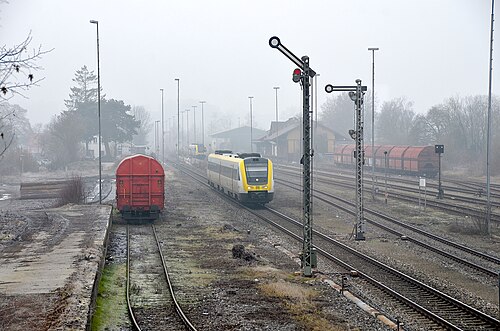
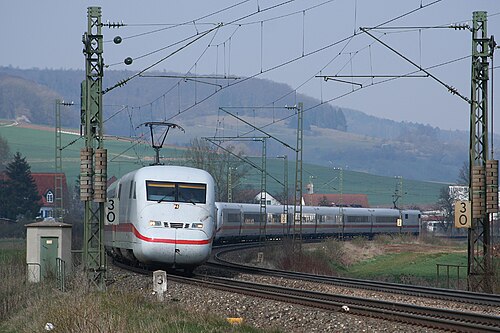
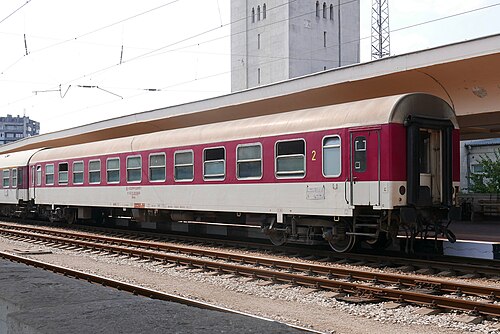
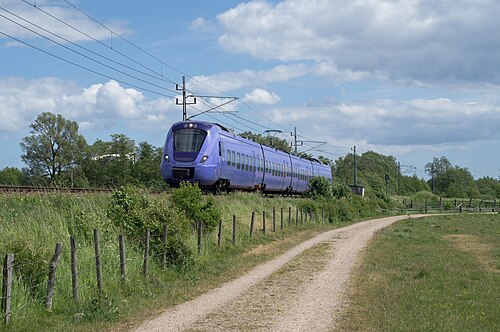
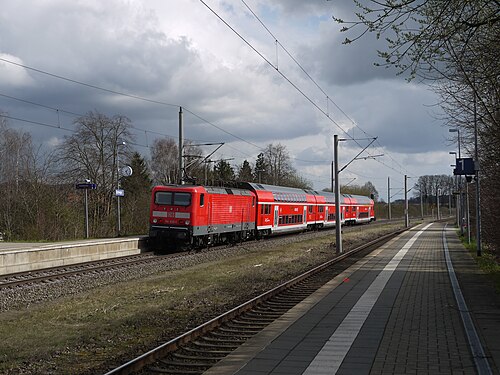
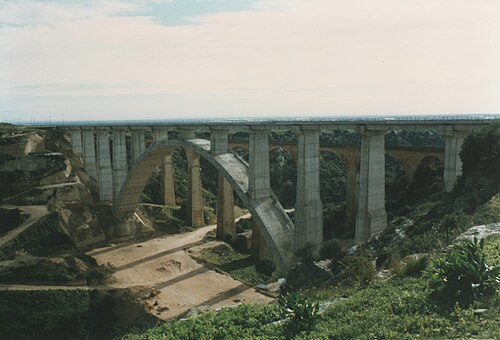
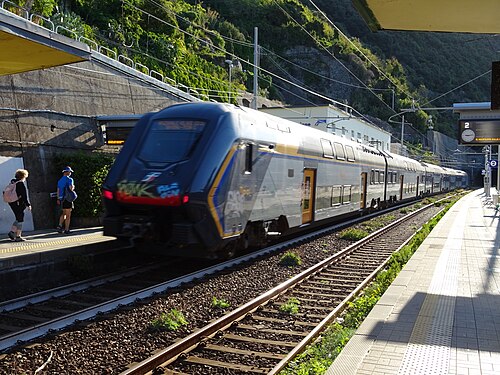
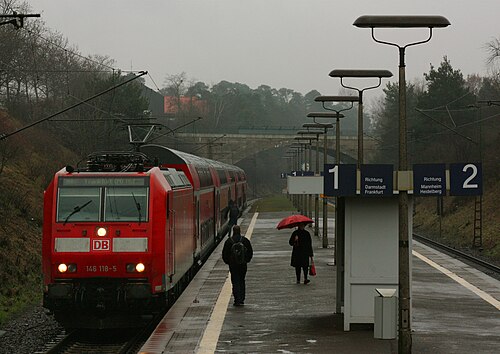
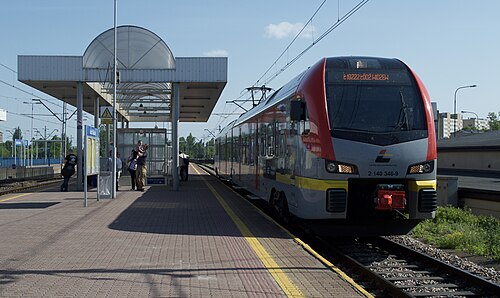
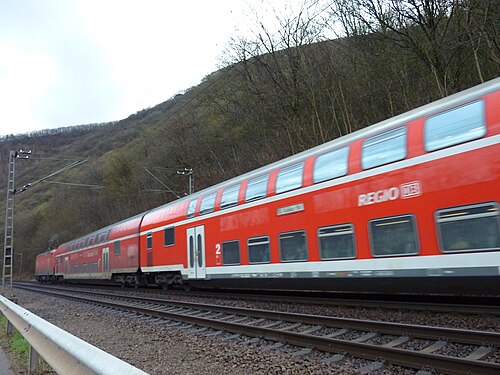
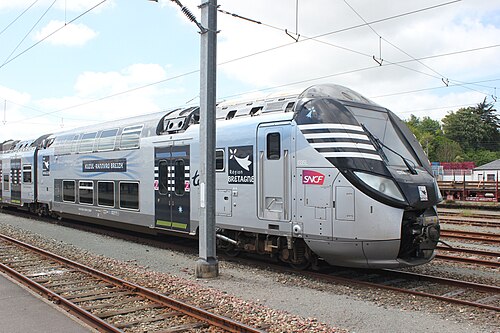
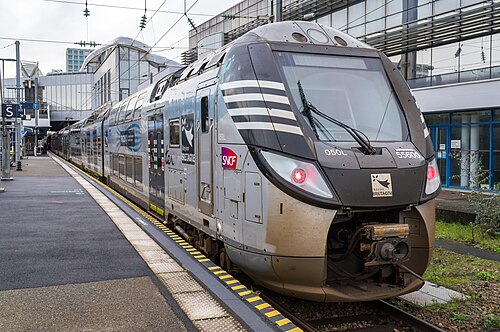
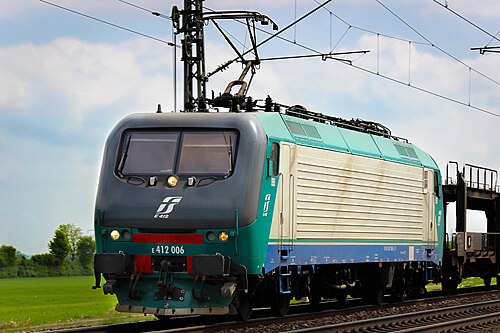
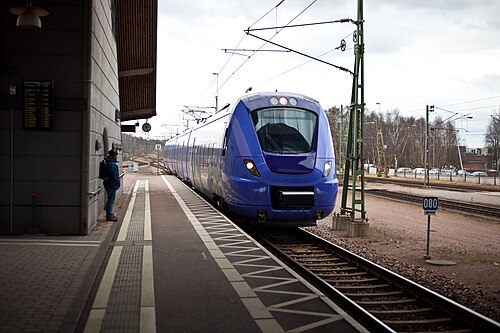
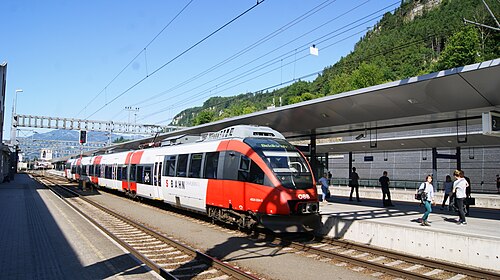
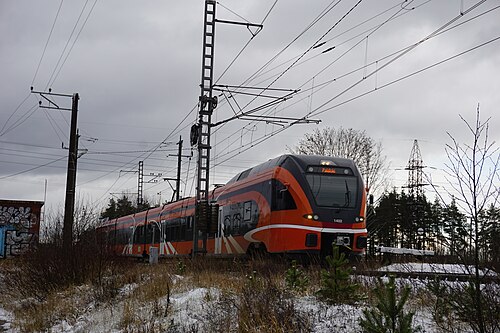
.jpg/500px-08.07.16_Tampere_Sr1_3063_(27794576064).jpg)
.jpg/500px-18.09.94_Celld%C3%B6m%C3%B6lk_M62_213_(3380196710).jpg)
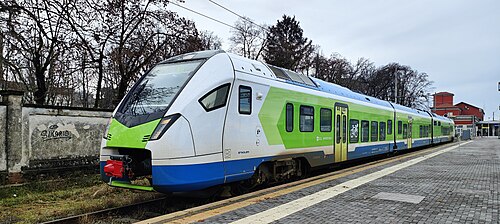
.jpg/500px-111_147_-_DB_Regio_NRW_--_Geilenkirchen_-_16._April_2014_(14028750302).jpg)
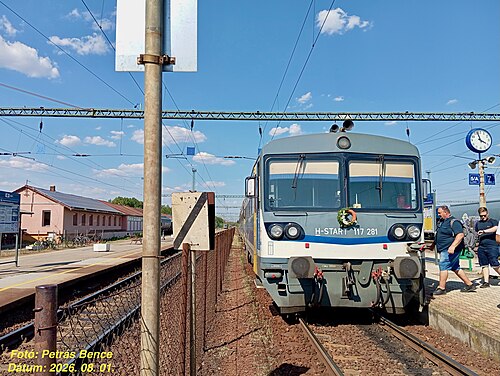
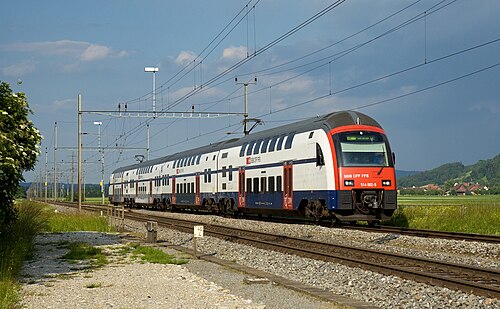
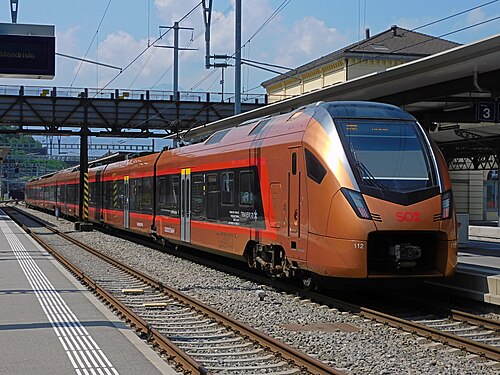
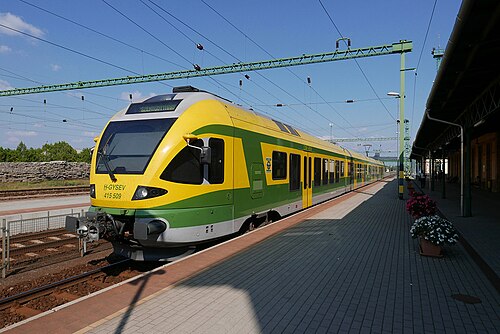
.jpg/500px-Afternoon_goods_from_Szendr%C5%91_hauled_by_MAV_M62_245._May_1988_(3249687200).jpg)
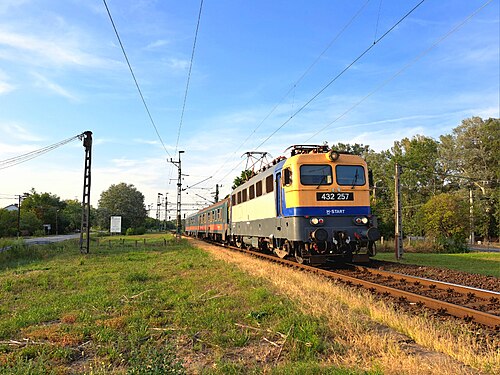
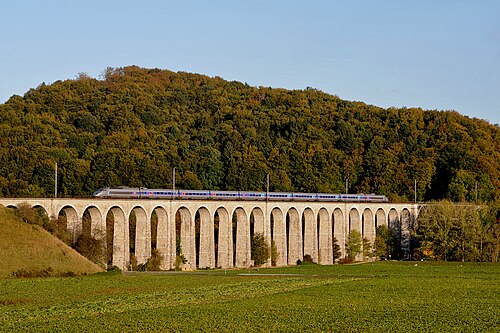
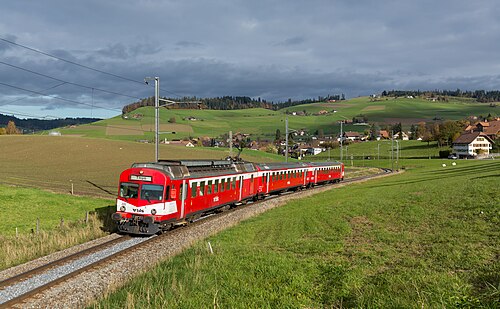
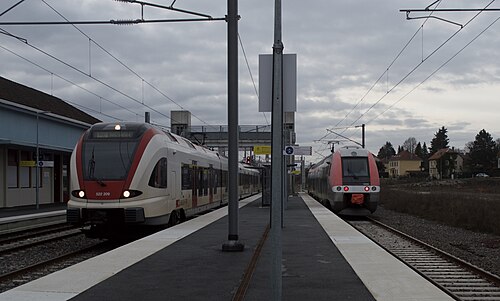
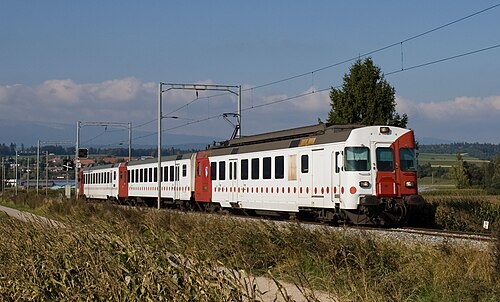
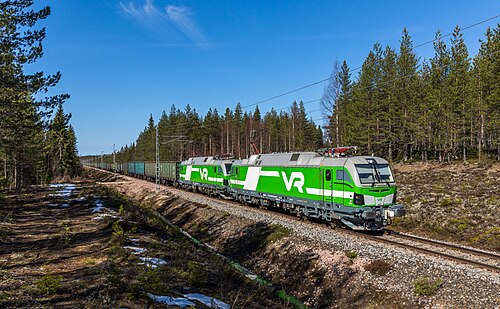
_i_Pi%C4%99kna_Helena.JPG/500px-I%C5%82owiec_(Pecna)_i_Pi%C4%99kna_Helena.JPG)
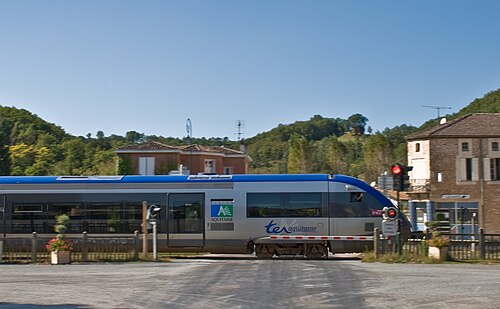
.jpg/500px-07.07.16_Ylivieska_Dm12_4405_(27731896414).jpg)
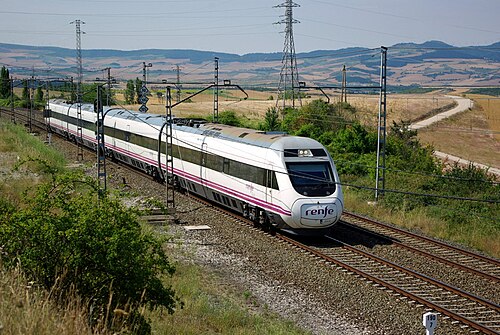
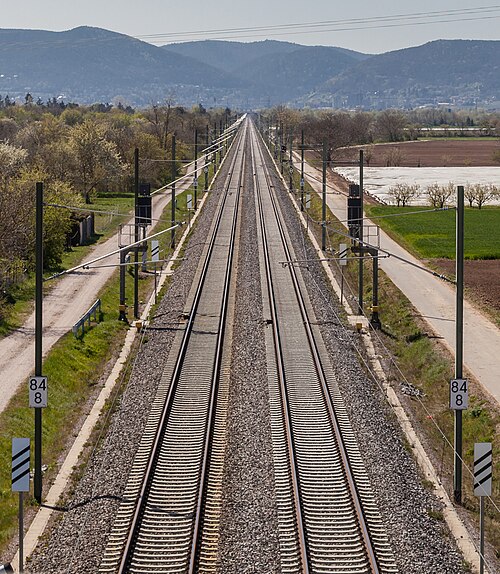
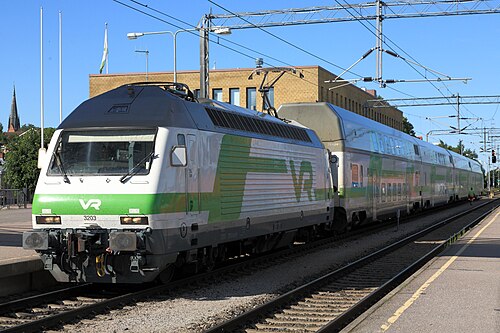
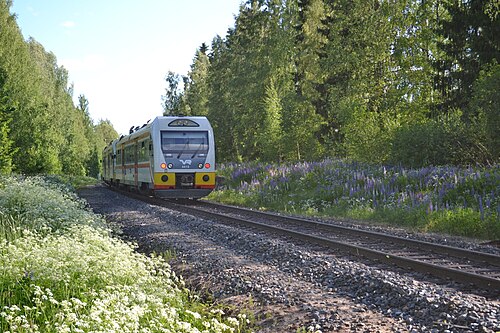
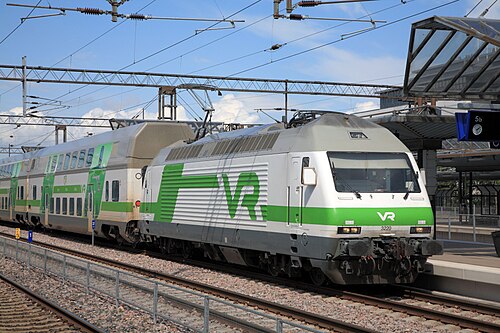
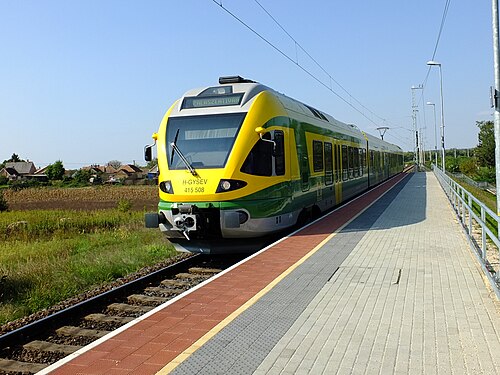
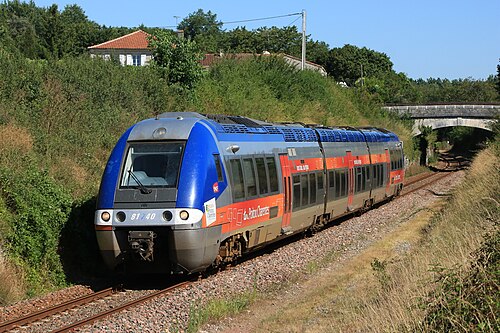
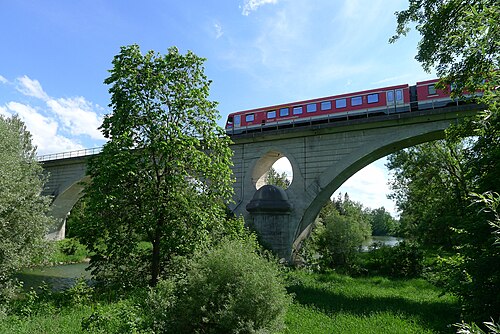
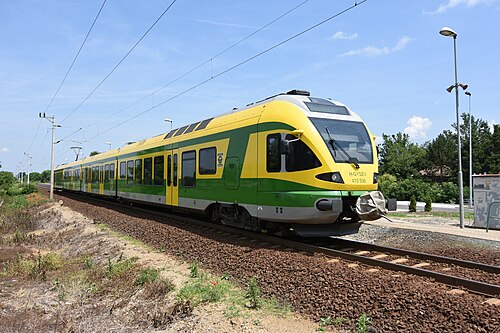
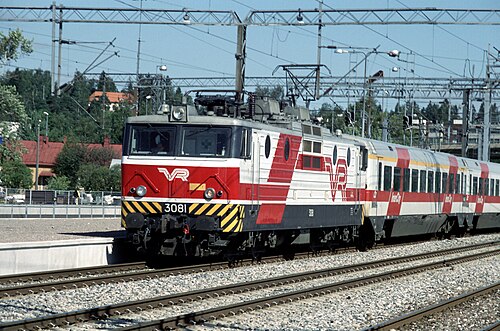
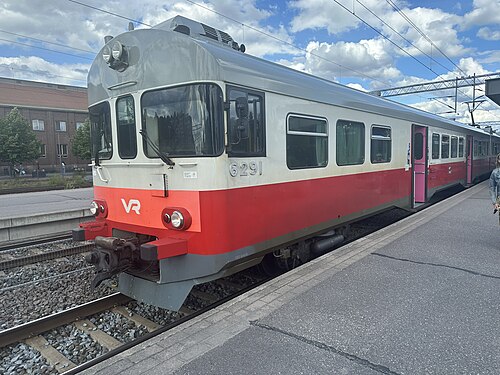
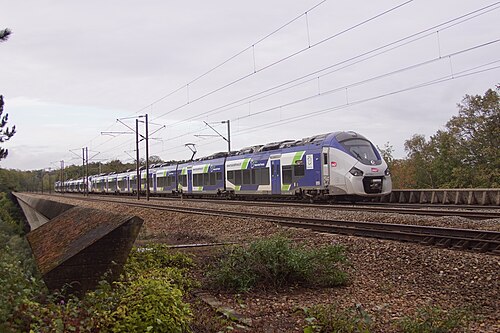
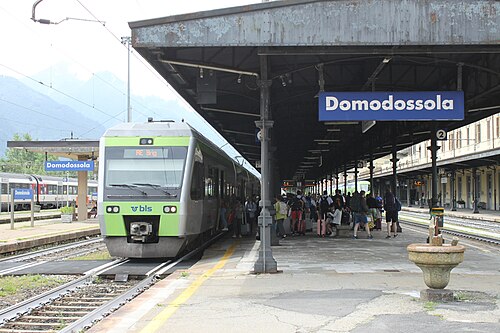
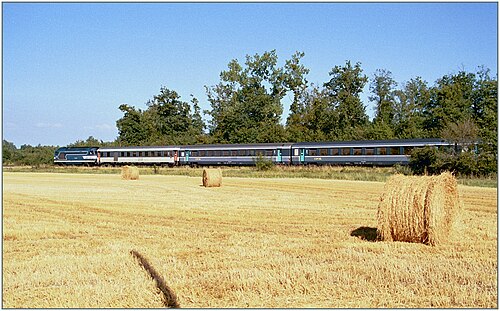
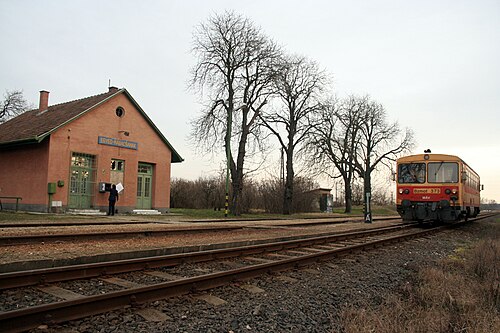
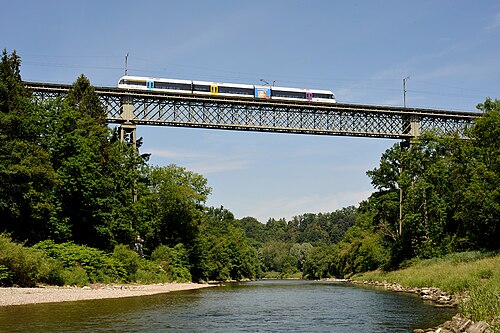
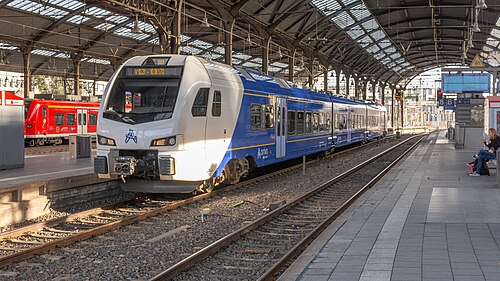
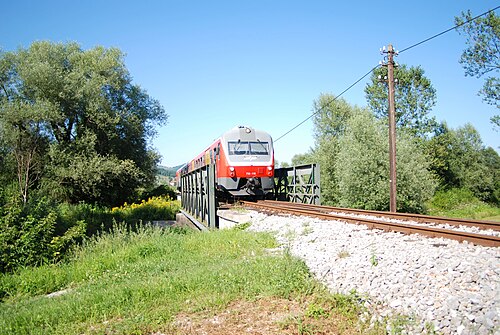
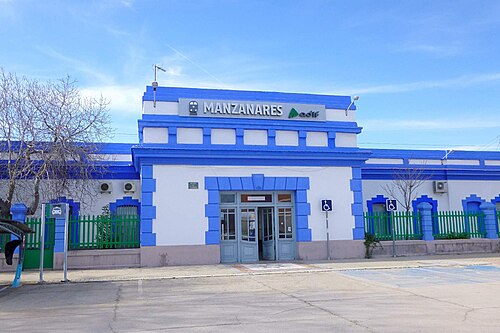
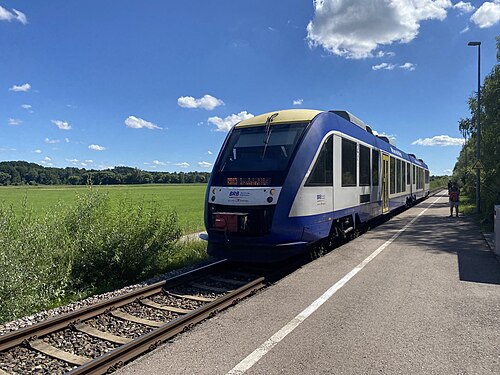
.JPG/500px-TER_%C3%A0_Saint-%C3%89tienne-Bellevue_(2011).JPG)
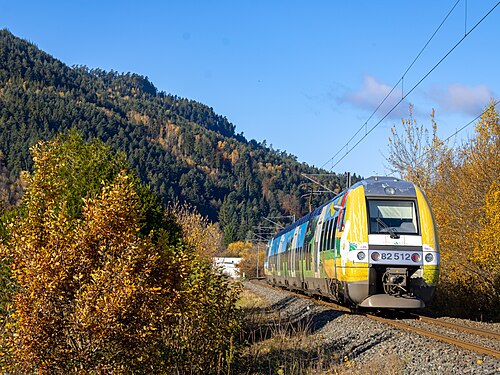
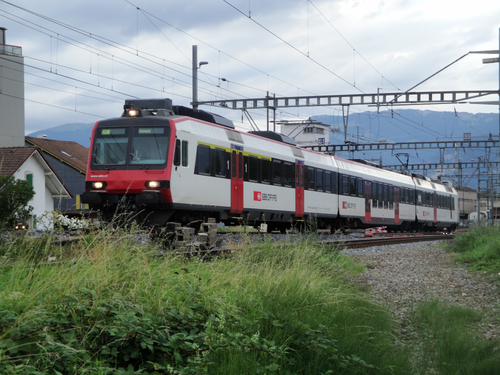
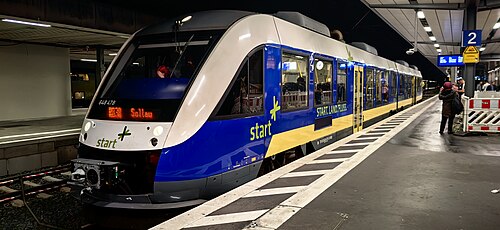
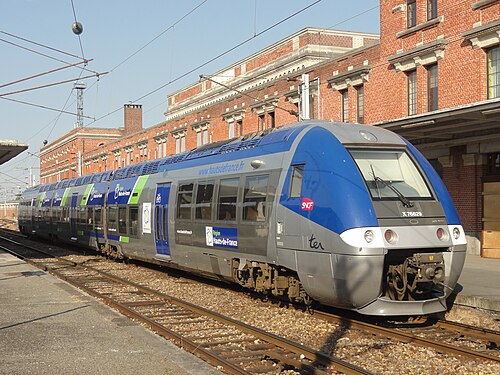
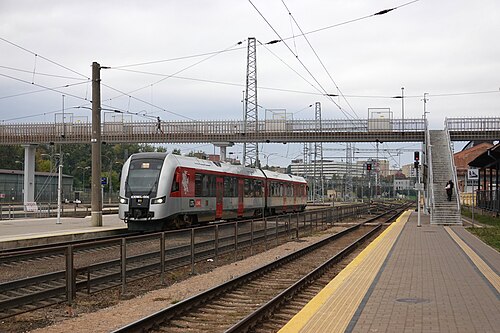
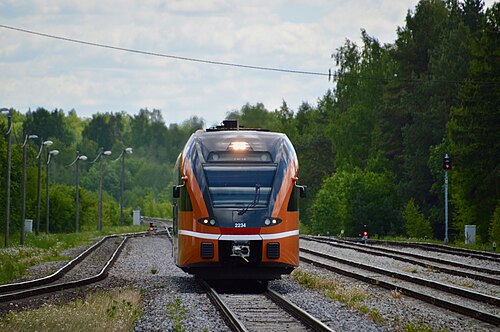
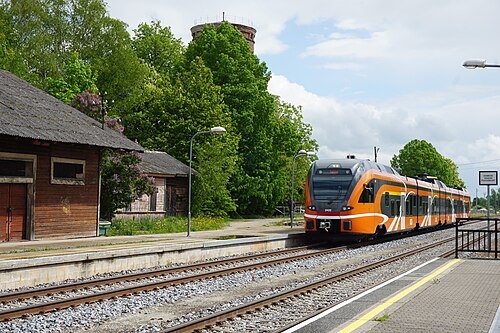
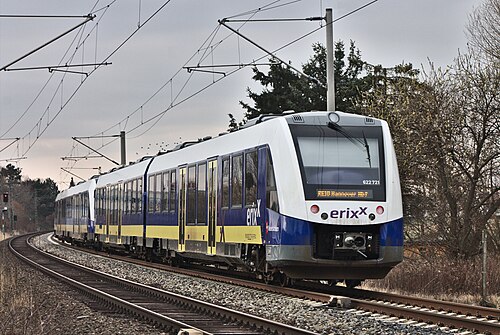
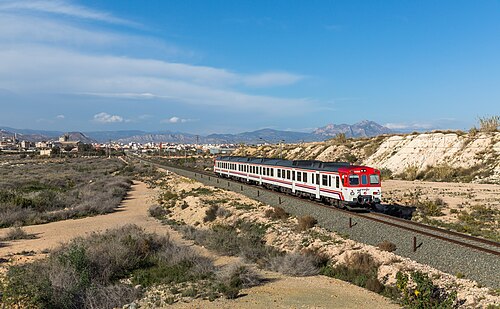
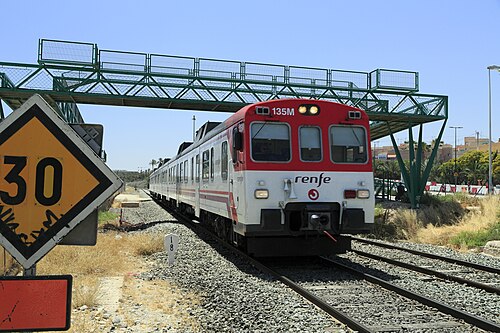
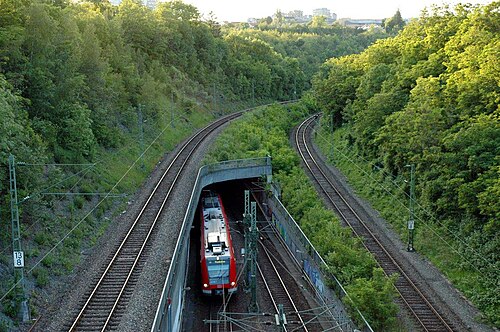
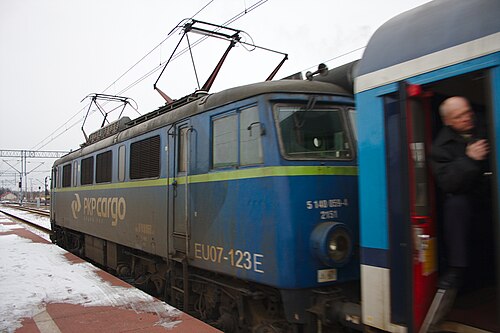
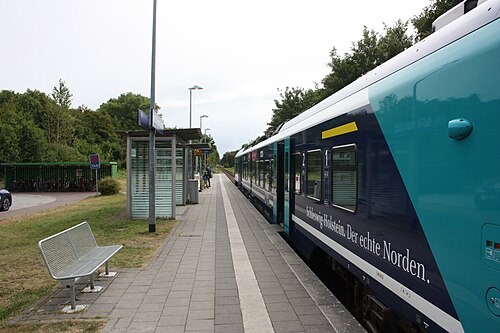
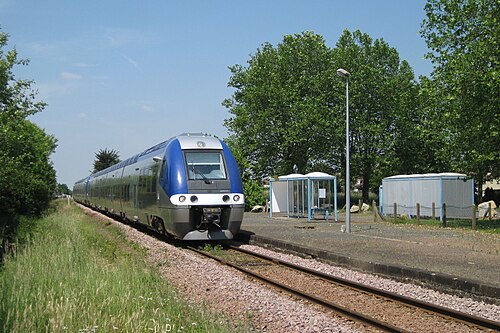
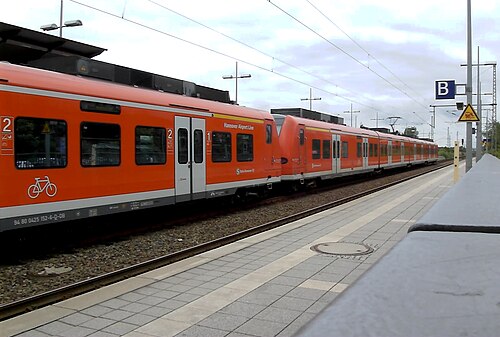
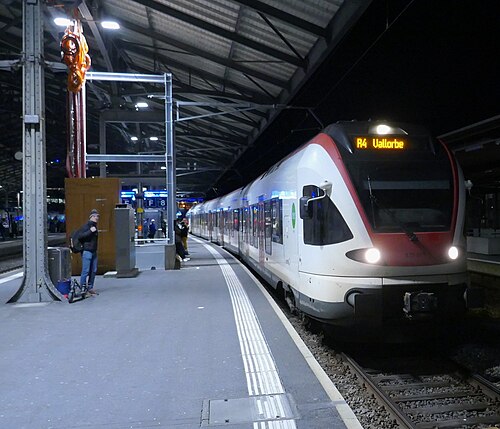
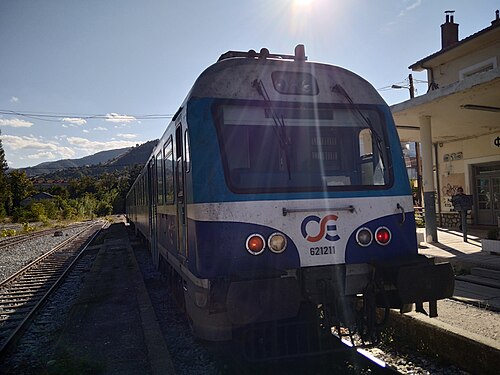
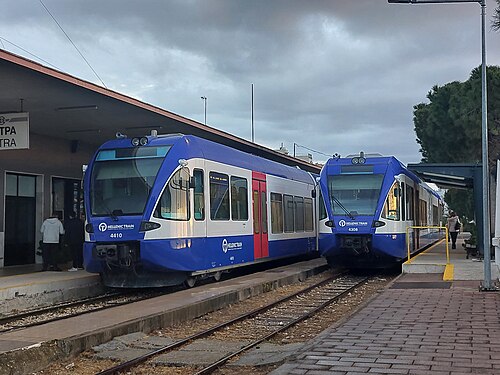
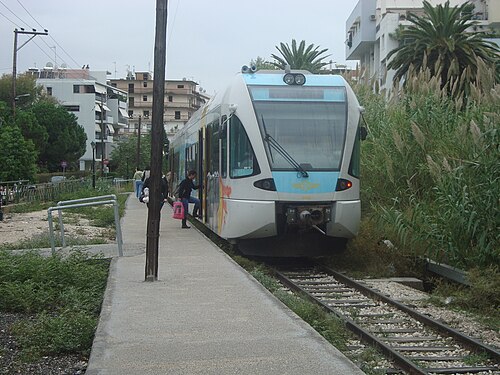
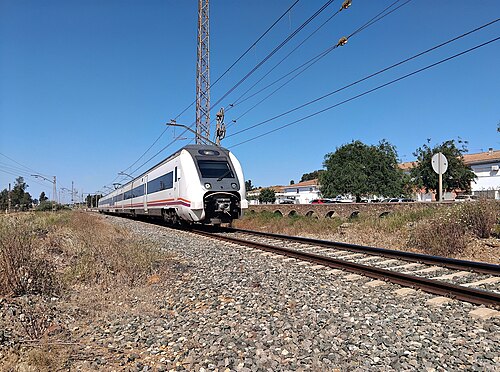
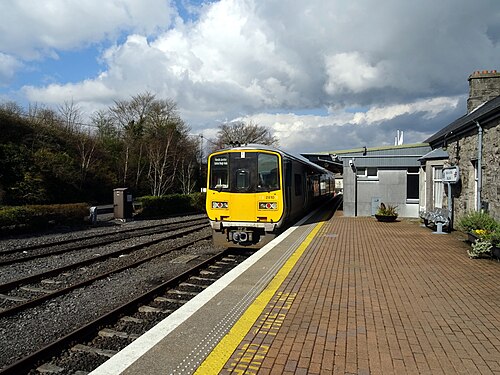
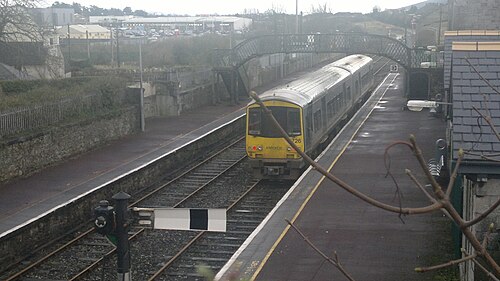
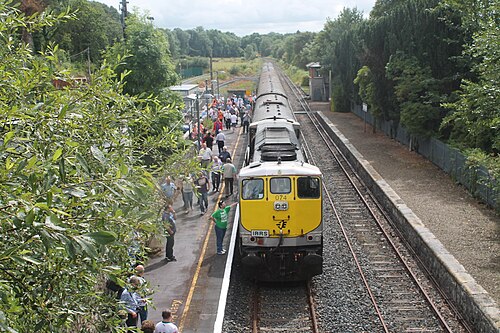
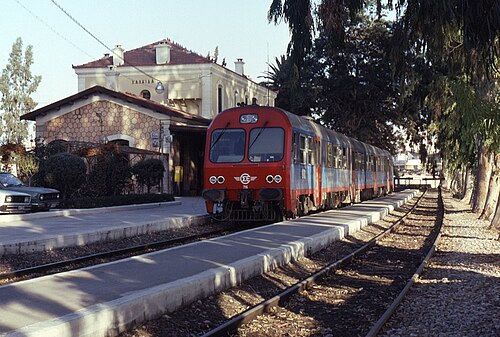
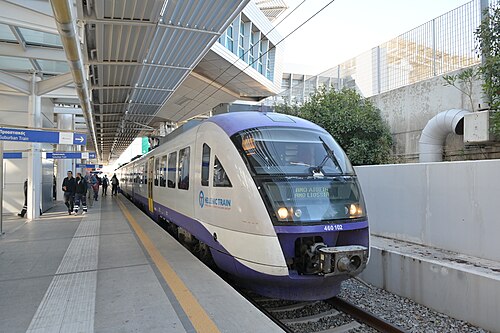
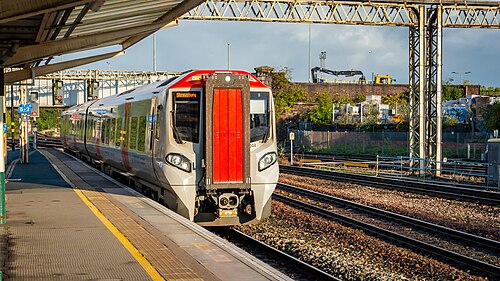
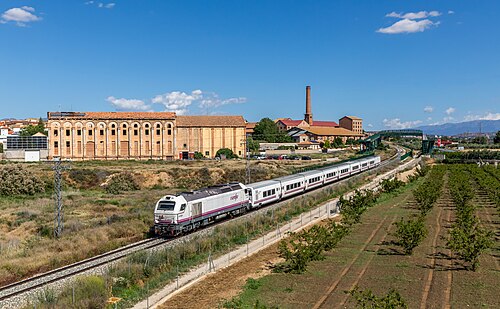
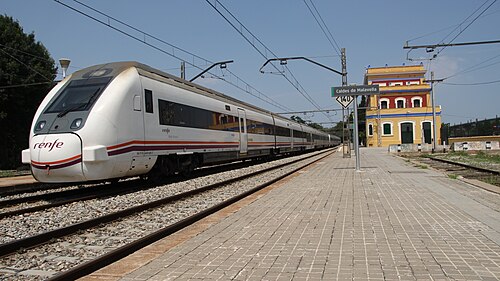
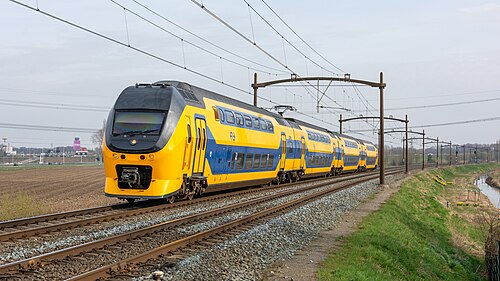
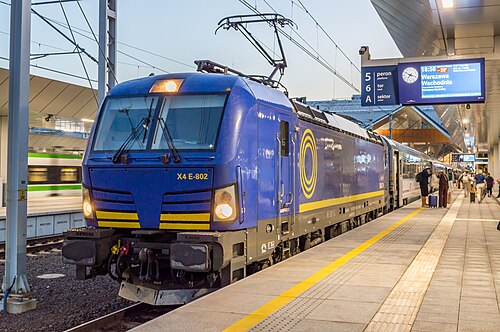
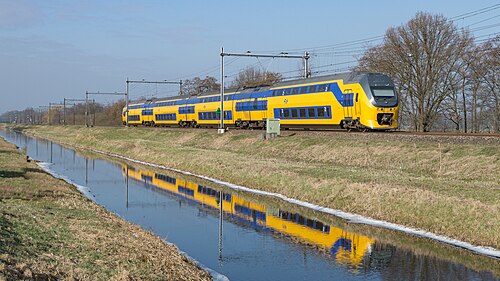
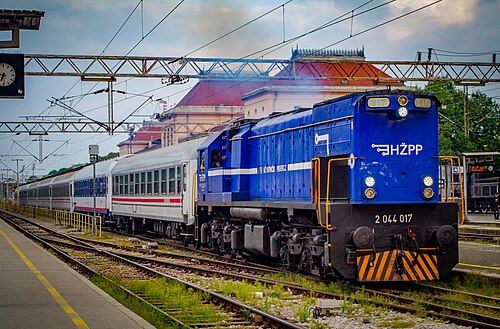
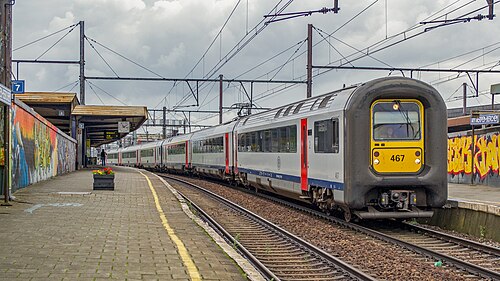
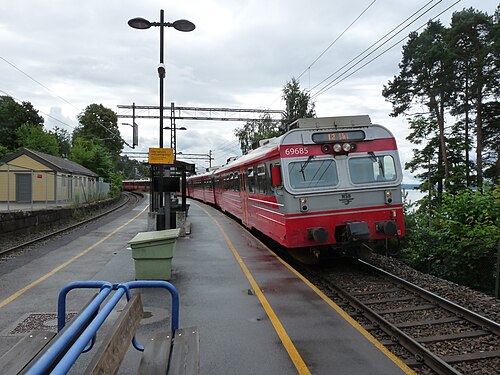
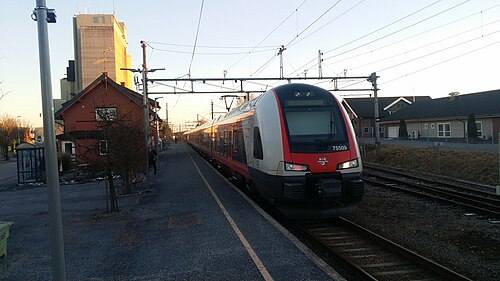
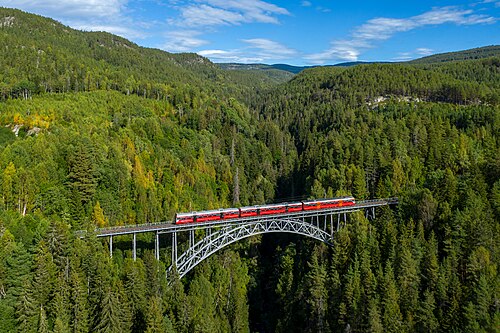
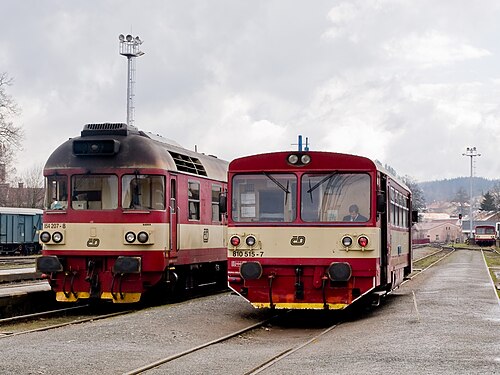
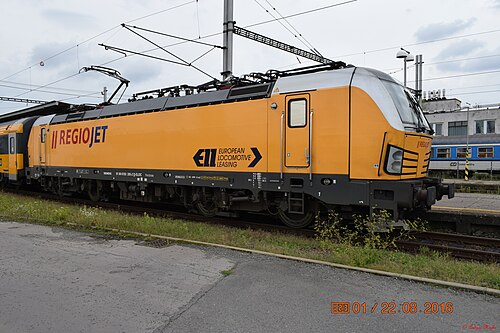
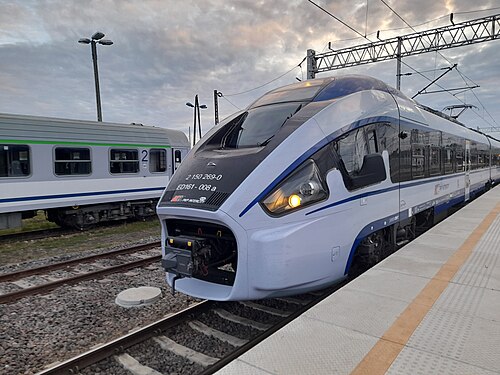
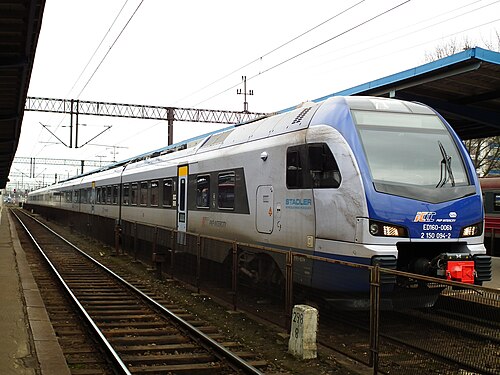
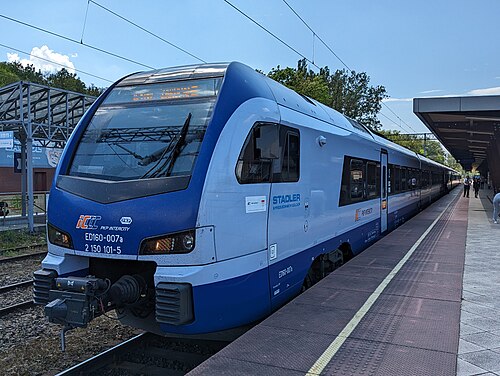
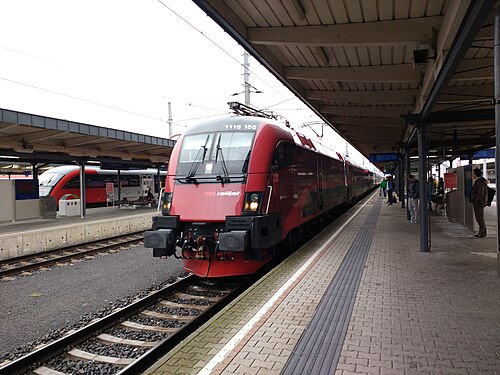
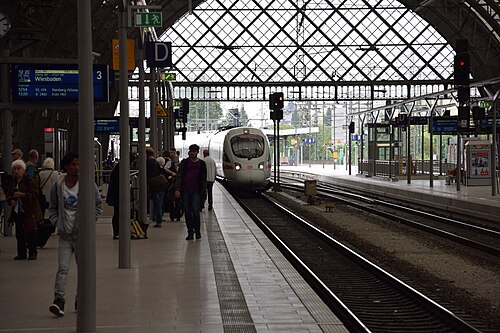
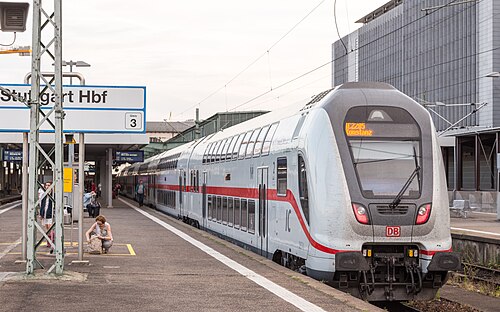
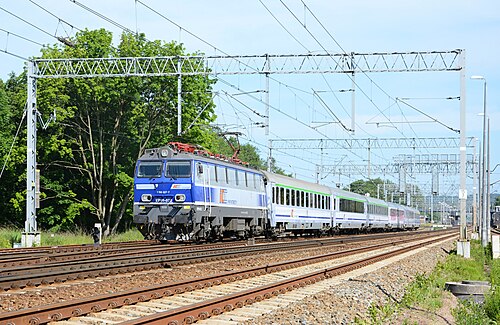
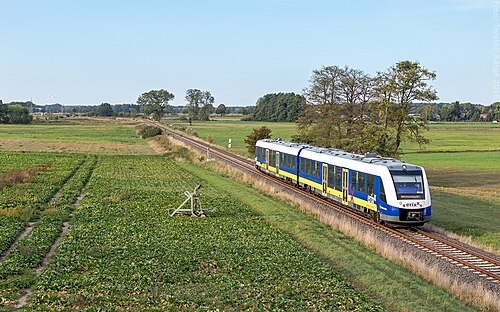
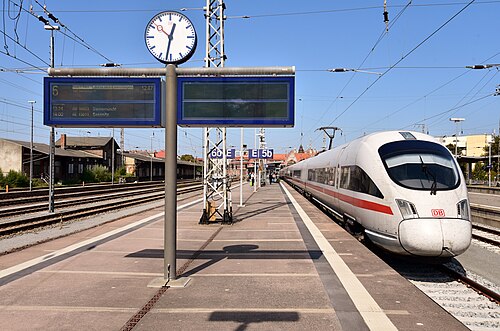
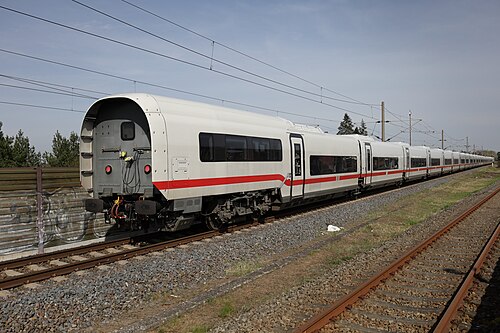
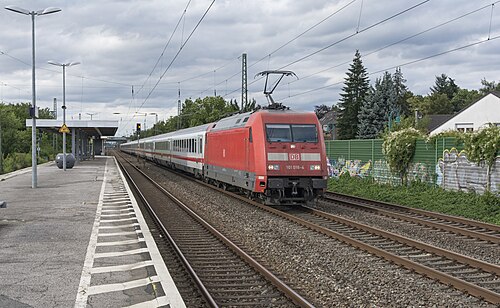
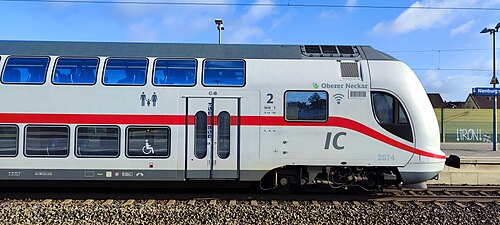
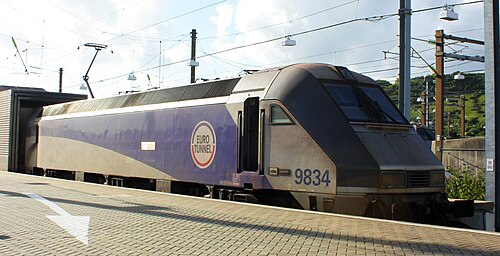
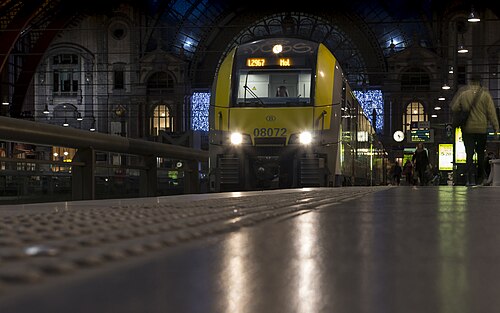
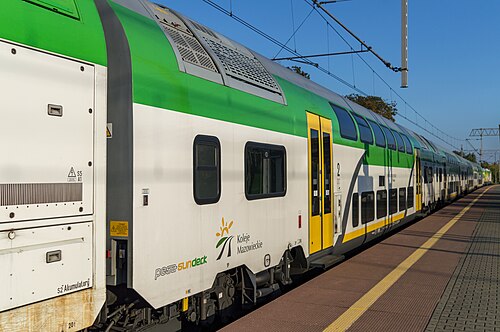
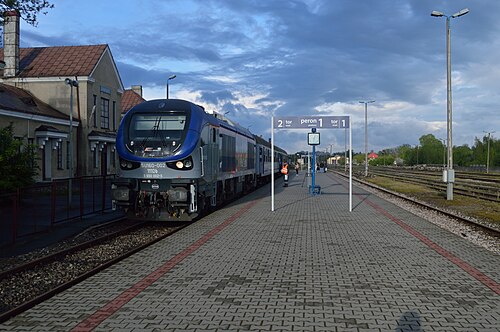
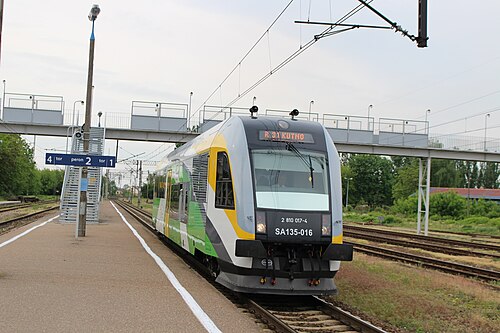
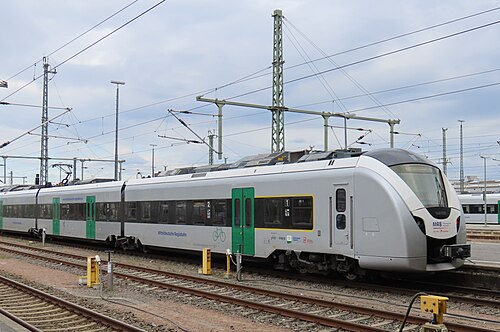
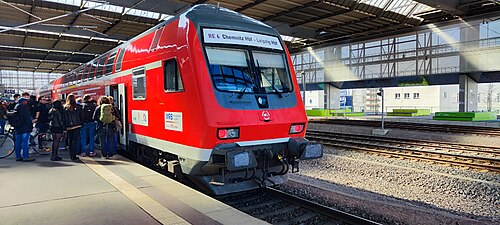
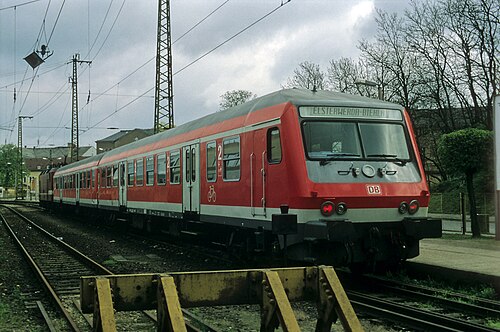
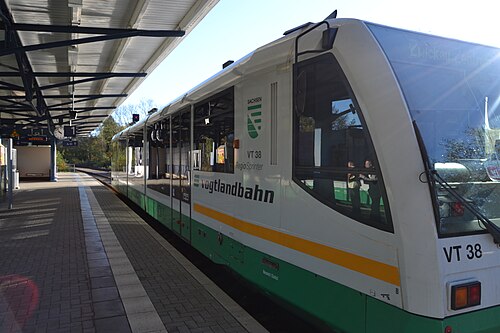
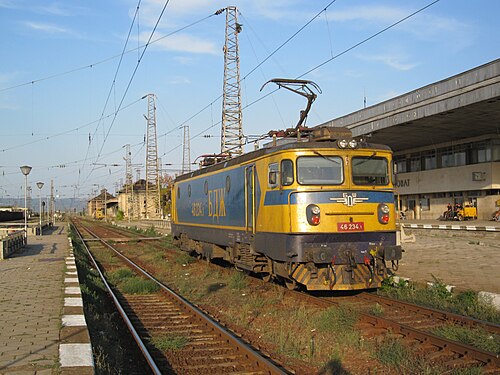
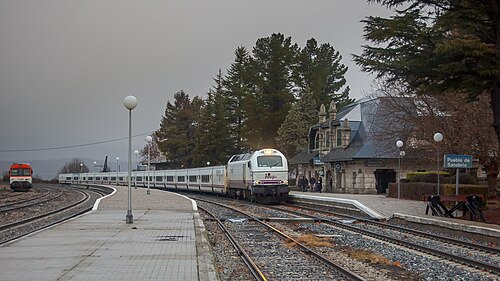
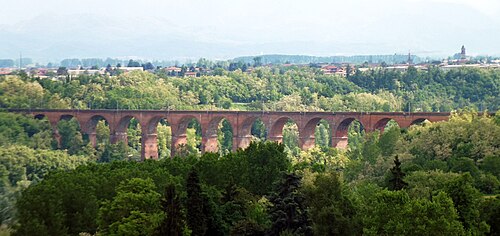
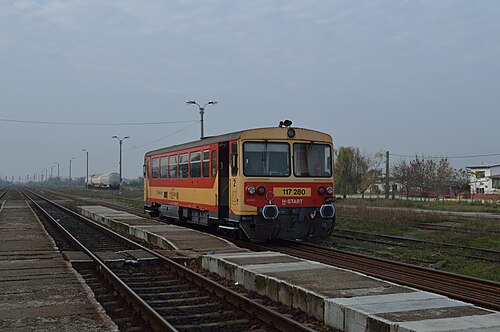
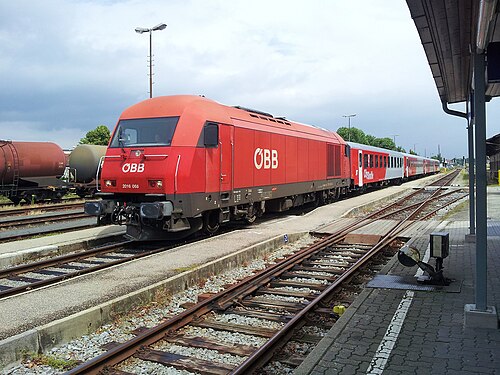
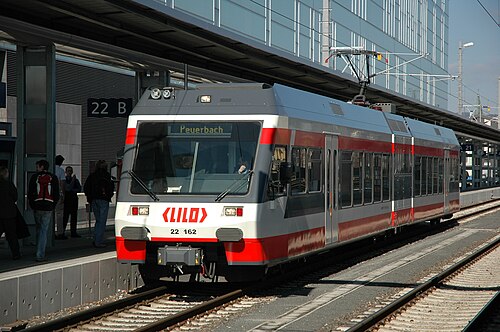
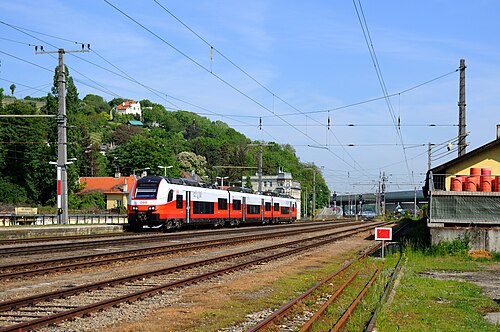
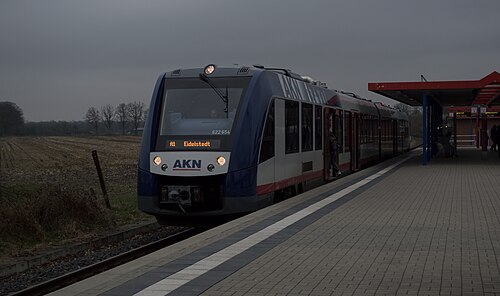
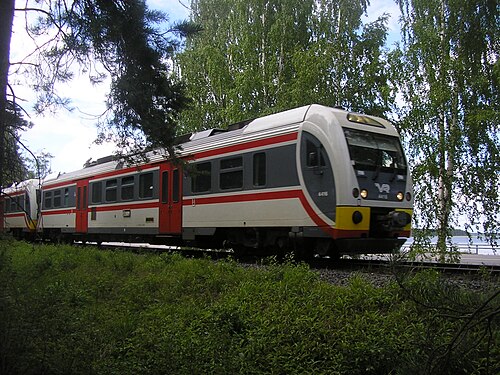
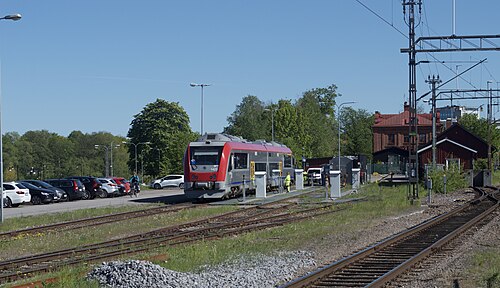
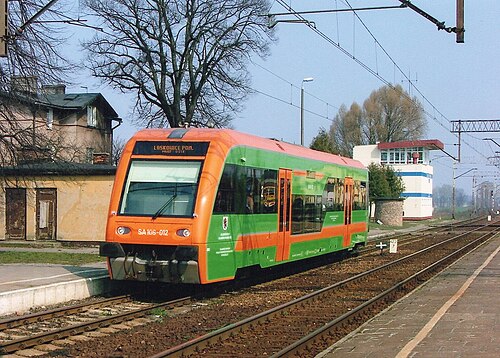
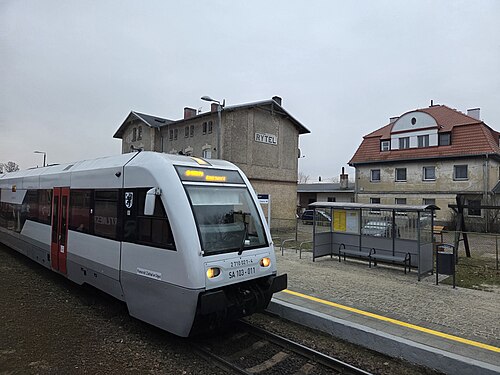

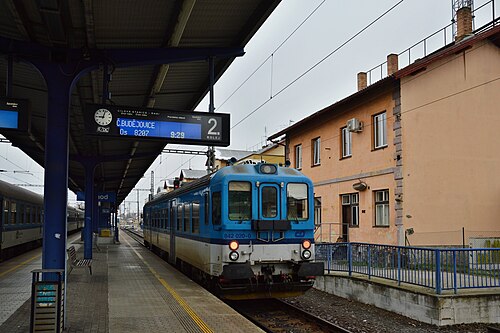
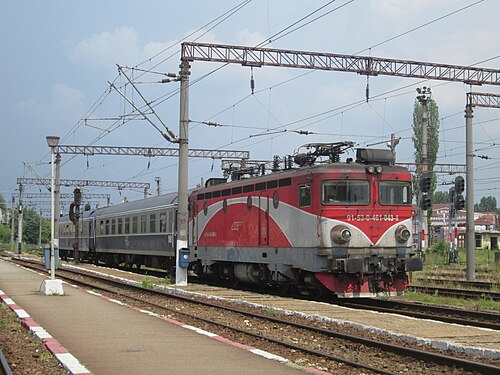
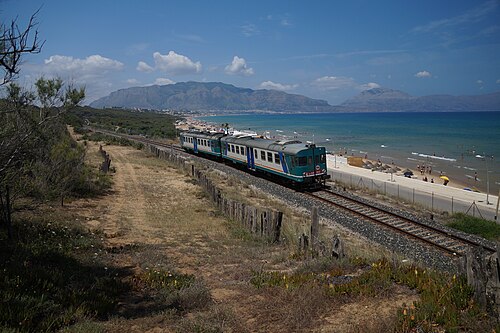
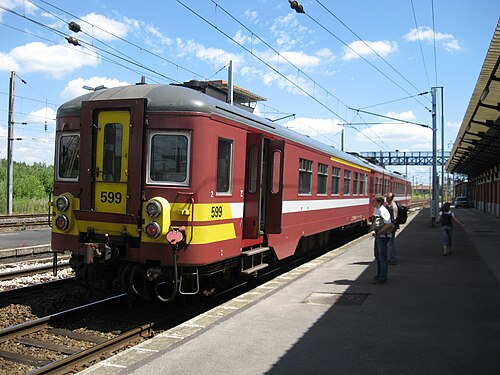
.jpg/500px-16.09.97_Tisvildeleje_GDS_Ym2_(8398862416).jpg)
.jpg/500px-Hogebrug_VIRM_8658_als_IC_11744_Enschede_-_Den_Haag_Centraal_(25449816862).jpg)


.jpg/500px-07.03.24_Šilutė_620Mc-019_(53582543417).jpg)
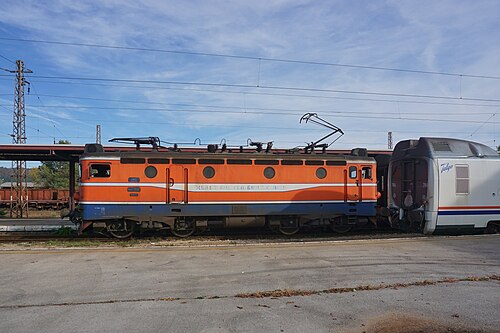
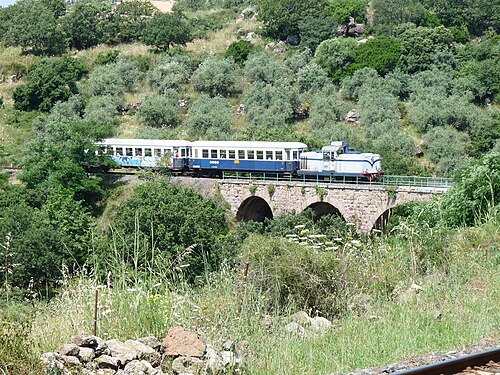
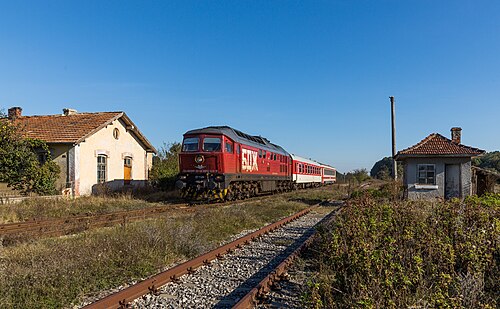
Night train routes in Europe (36)
- EuroNight
Scandinavia’s night-train revival: across the Öresund while you sleep, into Germany by breakfast.
Wikipedia ↗ - Santa Claus Express
Rolls out of Helsinki by night and crosses into Lapland by morning: sleepers and car carriers bound for the Arctic Circle.
- Caledonian Sleeper
The “Deerstalker Express”: fall asleep at Euston, wake up crossing Rannoch Moor with red deer at the window.
Wikipedia ↗ - Nightjet
The founding route of the Nightjet brand: over the Arlberg while you sleep, Alps at both ends.
Wikipedia ↗ - Arctic Circle Train
Crosses the Arctic Circle bound for the aurora: the Iron Ore Line’s fjord finale into Narvik is pure drama.
- EN Ister
Retraces the original 1883 Orient Express alignment through Transylvania’s castles and the Carpathian passes.
Wikipedia (HU) ↗ - Night Riviera
Sleeping cars have run west from Paddington since 1877; today’s train hugs Brunel’s storm-lashed Dawlish sea wall to the far tip of Cornwall.
Wikipedia ↗ - Intercités de Nuit Paris–Nice
Relaunched in 2021 as heir to the fabled Train Bleu: board at Austerlitz, wake to the red Estérel cliffs and the sea glittering at Saint-Raphaël.
Wikipedia ↗ - European Sleeper
Crowdfunded start-up that gave the Low Countries their night train back: via The Hague and Amsterdam to Berlin and the Elbe valley to Prague.
Wikipedia ↗ - Nightjet
First route to get ÖBB’s new-generation Nightjets in 2023. Mini Cabin pods for solo travellers and 230 km/h sleeper stock.
Wikipedia ↗ - Kyiv–Warsaw Sleeper
Wartime lifeline to the EU: at the Bug border every carriage is jacked up and its bogies swapped from 1,520 to 1,435 mm gauge while passengers doze.
Wikipedia (UK) ↗ - RegioJet Night Train
Open-access yellow night train since 2015: cheap couchettes out of Prague, over the Jablunkov Pass and under the dark High Tatras to Košice.
Wikipedia ↗ - Intercités de Nuit Paris–Briançon
France’s southern-Alps sleeper: lights out at Austerlitz, blinds up in the Durance valley, arrival under the Vauban walls of France’s highest city.
Wikipedia ↗ - Nightjet Munich–Rome
Board after dinner in Bavaria, wake to Tuscan hills: mini-cabins and wireless charging on ÖBB’s newest sleepers, crossing the Tauern by night. From Villach south it runs coupled with the Vienna portion — one train into Rome.
Wikipedia ↗ - Nightjet Zurich–Amsterdam
Asleep along the Rhine, awake on the IJ: the 2021 revival that re-linked the Alps to the canals, sliding past Cologne’s floodlit cathedral at midnight.
Wikipedia ↗ - Mykolaiv
The named train to the Black Sea shipyards, out of Kyiv in the evening and into a station the Russian Empire opened in 1908 at six in the morning. It has run daily right through the war.
Wikipedia (UK) ↗ - Svitiaz
The overnight named train to Volhynia, out of Kyiv at 22:50 and into Kovel at first light, over a junction the Russian Empire built in 1873 and the gateway to the Shatskyi lakes it is named after.
Wikipedia (UK) ↗ - Prietenia
Overnight Friendship sleeper whose coaches are jacked up for a bogie swap at Ungheni. Soviet 1,520 mm broad gauge to European standard.
- SJ Nattåg
SJ’s sleeper rolls out of Stockholm at night and wakes among the snow-clad fells of Jämtland at the Åre ski resort.
- VR Night Train
Finland’s northernmost railhead: an overnight car-carrier sleeper above the Arctic Circle to the fells of Ylläs and Levi.
Wikipedia (FI) ↗ - Chopin
The Chopin sleeper has linked Vienna and Warsaw since at least the 1980s, slipping through the Moravian Gate by night and finishing down Poland’s CMK fast line into the capital before six.
Wikipedia ↗ - Intercity Notte Rome–Palermo
Europe’s last train on a ship: the sleeper is split at Villa San Giovanni and floated across the Strait of Messina before breakfast.
- Snälltåget
A private summer sleeper down through Sweden, over the Öresund bridge past Copenhagen and across Denmark to Berlin, outlasting the state night trains.
Wikipedia ↗ - Bosfor Express
The overnight heir to the Orient Express, crossing the Thracian plain from Istanbul over the Bulgarian border to Sofia as the berths are made up.
Wikipedia ↗ - Nightjet Vienna–Rome
Board in Vienna after dinner, cross the Carinthian Alps and the Venetian plain by night, and wake rolling into Rome, a sleeper between two imperial capitals. From Villach south it runs coupled with the Munich portion — one train.
Wikipedia ↗ - IRN Corona
Romania’s classic night loop: asleep through Székely Land and the Maramureș foothills, waking at the far northwestern corner of the country.
- EuroNight Praha–Zürich
The Czech–Swiss night link revived in 2023: the Elbe sandstone gorge at dusk, the Rhine plain at dawn, Zurich by breakfast.
Wikipedia ↗ - European Sleeper
The night train that replaced the lost Nightjet: Paris to Berlin via Brussels three times a week since March 2026, the open-access sleeper’s boldest route yet.
Wikipedia ↗ - Intercités de Nuit
The Pyrenean pilgrim night train: out of Austerlitz every evening on the classic line through Poitiers and Dax, waking beneath the mountains at Lourdes.
Wikipedia (FR) ↗ - Intercités de Nuit
Asleep out of Austerlitz, awake on the Côte Vermeille: the sleeper threads Collioure, Port-Vendres and Banyuls to the last stop before Spain.
Wikipedia ↗ - Intercités de Nuit
The Aveyron sleeper: off the Limoges main line at Brive, then Rocamadour, the Lot valley and Rodez by breakfast — Albi through-cars on weekends.
Wikipedia ↗ - Night Express
Ukraine’s overnight hop across the Carpathians: asleep through Lviv, awake for the climb past Skole into the 2018 twin-bore Beskyd tunnel, then down the valley to Uzhhorod.
Wikipedia (UK) ↗ - Hutsulshchyna
Ukraine’s flagship sleeper into Hutsul country: dusk in Kyiv, dawn above the Prut gorge at Yaremche, then Vorokhta’s stone viaduct and the Yablunytsia pass down to Rakhiv.
Wikipedia (UK) ↗ - Yantar
Running since 1964, the Yantar threads Moscow to Russia’s Baltic exclave via Minsk and Vilnius — the last corridor where Russian passenger trains still cross the EU.
Wikipedia (RU) ↗ - Kyiv–Chernivtsi
Overnight across western Ukraine: out of Kyiv just before nine, Lviv in the small hours, then Ivano-Frankivsk and Kolomyia to Chernivtsi by breakfast, ending on the Habsburg line of 1866.
- EN Slovakia / Chopin
Overnight between two capitals: out of Prague past Pardubice and Olomouc, over the border to Katowice, then the fast Central Trunk line into Warsaw by breakfast.
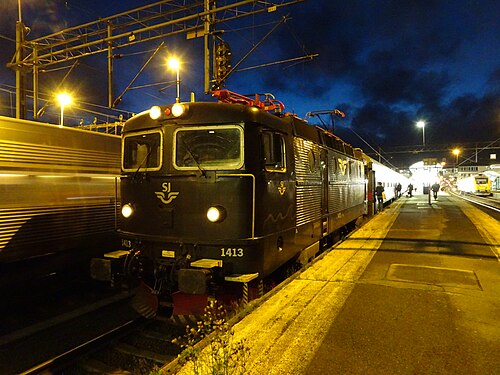
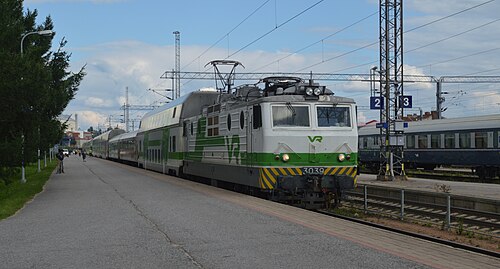
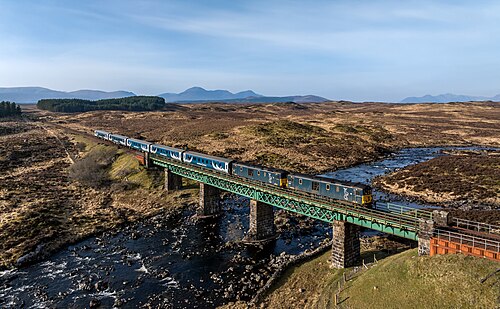
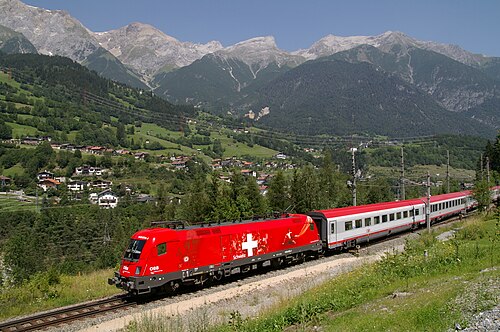
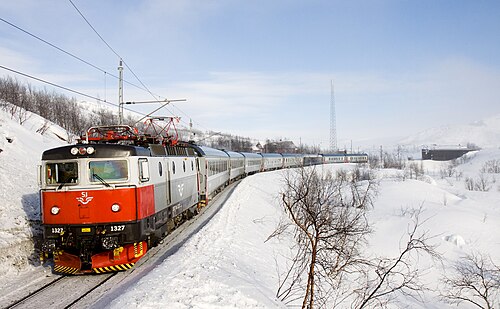
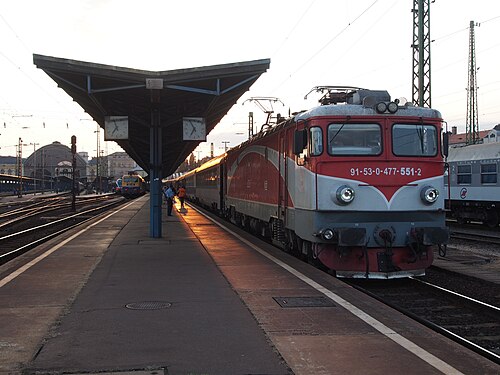
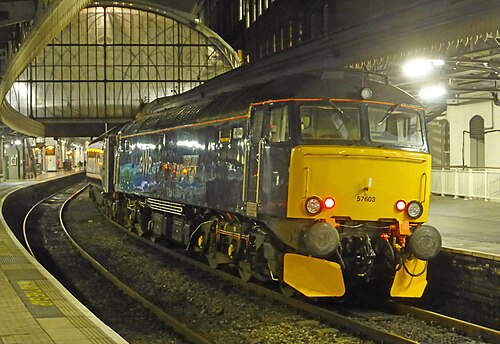
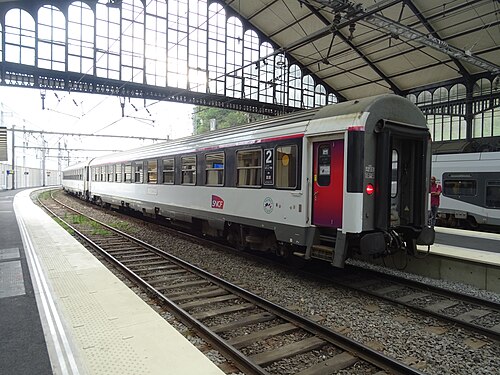
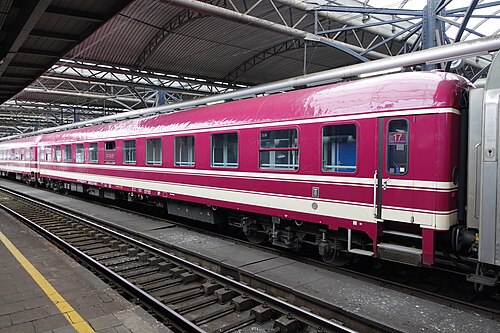
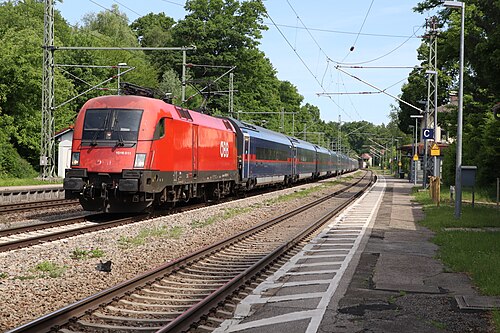
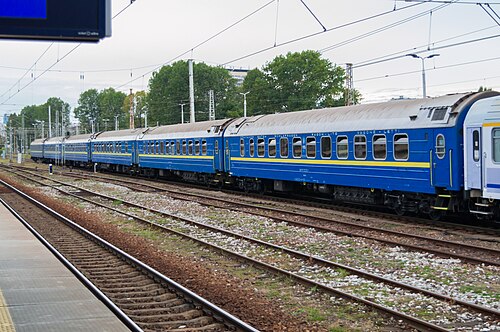
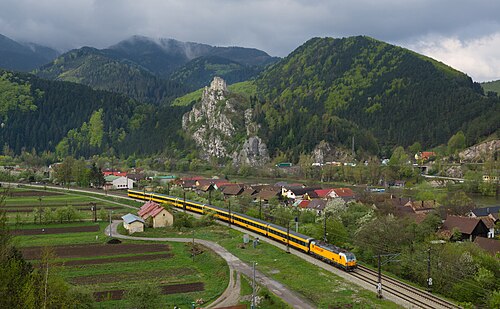
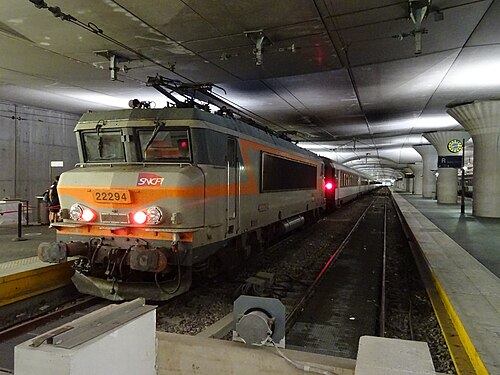
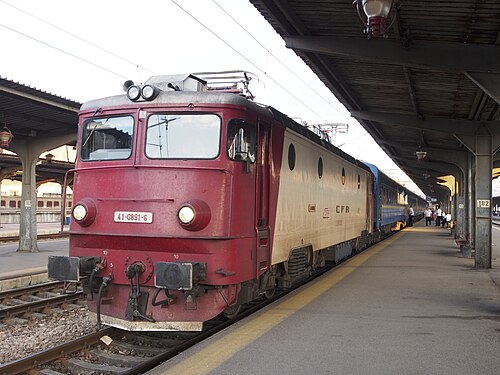
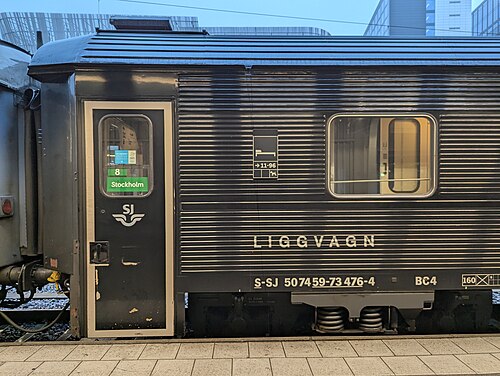
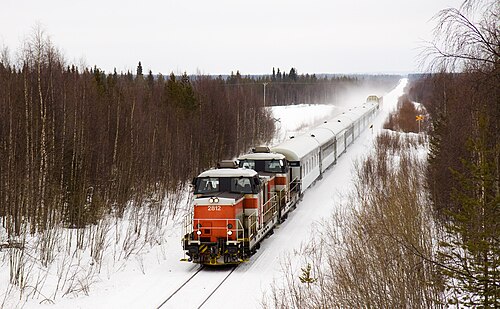
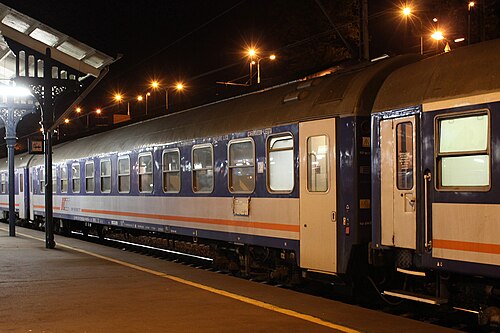
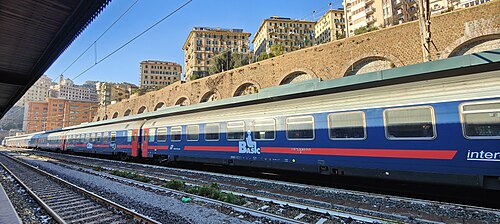
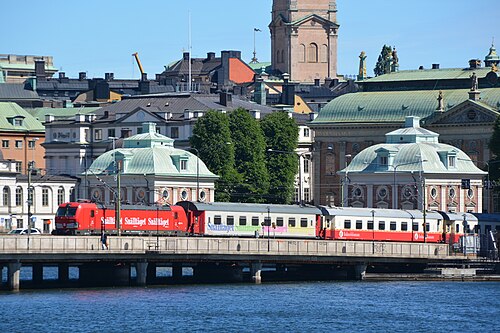
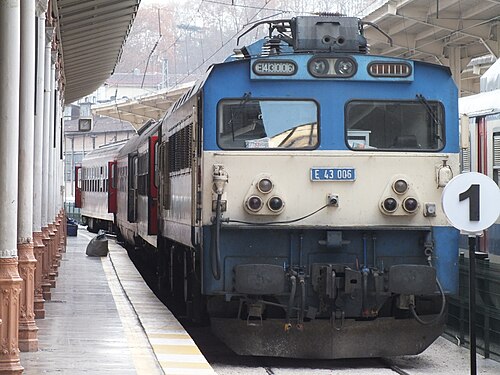
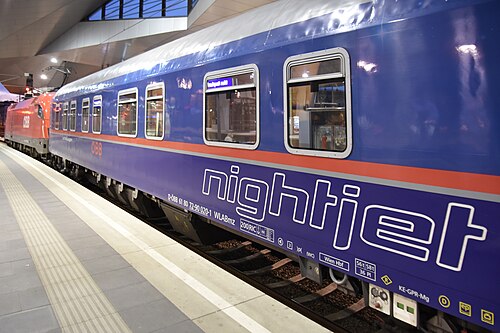
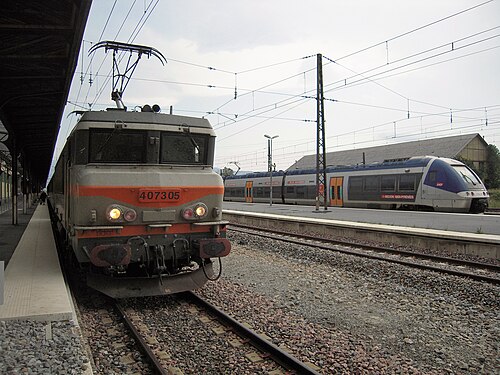
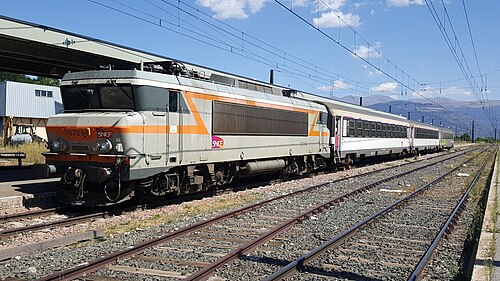
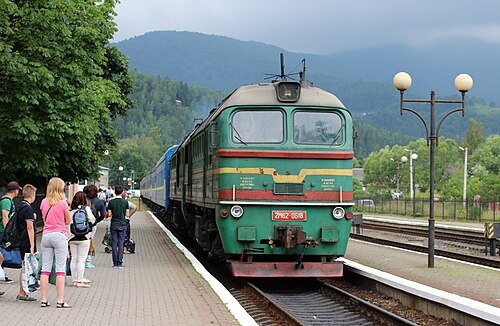
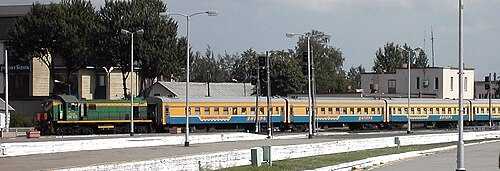
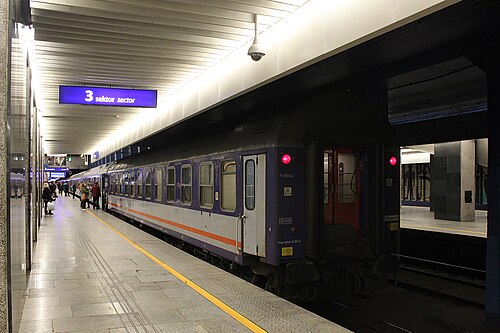
Scenic routes in Europe (153)
- Glacier Express
“The world’s slowest express”: 291 bridges, 91 tunnels and the 2,033 m Oberalp Pass at an average of 36 km/h.
Wikipedia ↗ - Bernina Express
A UNESCO World Heritage railway: 7 % grades with no rack, the Brusio spiral, and the highest rail crossing of the Alps at 2,253 m.
Wikipedia ↗ - Bergensbanen
Northern Europe’s highest main line: over the bare Hardangervidda plateau at 1,237 m, through 182 tunnels.
Wikipedia ↗ - West Highland Line
Regularly voted the world’s most scenic railway: around Rannoch Moor and over the 21-arch Glenfinnan Viaduct of film fame.
Wikipedia ↗ - Flåmsbana
One of the steepest adhesion railways on Earth: 864 m down to the fjord in 20 km, waterfalls at the window.
Wikipedia ↗ - Rhine Valley Line
Castle after castle past the Lorelei rock: the left bank of the Rhine is one long UNESCO postcard.
Wikipedia ↗ - Semmeringbahn
The world’s first true mountain railway (1854) and a UNESCO site: 16 viaducts built before the age of dynamite.
Wikipedia ↗ - Belgrade–Bar Railway
254 tunnels, 435 bridges and the vertigo-inducing Mala Rijeka viaduct. Yugoslavia’s engineering swan song.
Wikipedia ↗ - Dovrebanen
Over the Dovrefjell plateau where wild musk oxen roam: mountain birch, snow fences and midnight sun.
Wikipedia ↗ - GoldenPass Line
Lake Geneva’s riviera to Lucerne over the Brünig Pass — two trains: the gauge-changing GPX to Interlaken Ost, then zb’s Luzern–Interlaken Express.
Wikipedia ↗ - Settle–Carlisle Line
England’s highest main line crests Ais Gill at 356 m after striding across the 24-arch Ribblehead Viaduct, built by navvies camped on Batty Moss.
Wikipedia ↗ - Nordlandsbanen
Norway’s longest railway: 729 km of fjordside, forest and bare Saltfjellet plateau, and the country’s only line across the Arctic Circle.
Wikipedia ↗ - Rauma Line
Corkscrews down Romsdalen past the 1,100 m Trollveggen, Europe’s tallest vertical cliff, via the Stavem spiral tunnel and stone Kylling Bridge.
Wikipedia ↗ - Linha do Douro
Clings to the Douro’s waterline for some 100 km on ledges blasted out in the 1880s, passing UNESCO-listed port-wine terraces at Régua and Pinhão.
Wikipedia ↗ - Schwarzwaldbahn
Robert Gerwig’s 1873 blueprint for mountain railways climbs about 650 m through 39 tunnels and two sweeping double loops high above Triberg.
Wikipedia ↗ - Mariazellerbahn
Opened in 1907 and electrified with its own rare 6.5 kV 25 Hz current in 1911, Austria’s grandest narrow-gauge line crests at 892 m in the Gösing Tunnel.
Wikipedia ↗ - ICN Zagreb–Split
Tilting railcars lean through the bare karst of the Lika plateau below Velebit, then swoop down to the palm-fringed Adriatic at Split.
Wikipedia ↗ - Bohinj Railway
Habsburg Transalpina of 1906: the 6.3 km Bohinj tunnel, the emerald Soča, and Solkan’s 85 m arch, the world’s longest stone rail span.
Wikipedia ↗ - Brockenbahn
Metre-gauge steam still storms year-round to the 1,141 m Brocken. Goethe’s witches’ mountain, sealed off as a Soviet listening post until 1989.
Wikipedia ↗ - Centovalli Railway
Fifty-two km, 83 bridges and 31 tunnels between Piedmont and Ticino: chestnut forests, waterfalls and stone villages a hundred valleys deep.
Wikipedia ↗ - Höllentalbahn
Germany’s steepest main line climbs Hell’s Valley at 55 ‰: through the Hirschsprung gorge and over the Ravenna viaduct into the high Black Forest.
Wikipedia ↗ - Train Jaune
The canary-yellow metre gauge of the Pyrenees: open-air cars over the Séjourné and Gisclard bridges to France’s highest station at 1,593 m.
Wikipedia ↗ - Le Cévenol
Down the Allier gorges on viaducts stacked over a river with no road: the Massif Central crossing the TGV era forgot, kept alive by sheer beauty.
Wikipedia (FR) ↗ - Ligne des Hirondelles
36 tunnels and 18 viaducts swooping like its namesake swallows through the high Jura: stacked stone arches right above the rooftops of Morez.
Wikipedia (FR) ↗ - Cinque Terre Express
Village-hopping between tunnels where Liguria’s cliffs meet the sea. Monterosso, Vernazza, Corniglia, Manarola and Riomaggiore in half an hour.
Wikipedia (IT) ↗ - Rørosbanen
The original 1877 inland route to Trondheim: diesel country through Østerdalen’s forests to Røros, the UNESCO copper town still timber-built and soot-dark.
Wikipedia ↗ - Inlandsbanan
Two summer days up Sweden’s green spine: moose at the window and a trackside stop at the Arctic Circle, where everyone piles out for photographs.
Wikipedia ↗ - Kraków–Zakopane
Climbs from Kraków into the Tatra Mountains on the rebuilt line to Zakopane, Poland’s highest town and winter-sports capital.
- Tatra Electric Railway (TEŽ)
Metre-gauge electric cars climb to the High Tatra resort of Štrbské Pleso at 1,320 m, Slovakia’s highest railway station.
Wikipedia ↗ - Rhodope Narrow-Gauge
Bulgaria’s last 760 mm line threads 35 tunnels up to Avramovo, the highest railway station in the Balkans at 1,267 m.
Wikipedia ↗ - Valsugana Line
Out of Trento past the vineyards, along Lake Caldonazzo and down the gorge of the Brenta to the foot of Monte Grappa, twenty three stops in a bit over two hours on a line begun in 1896.
- REX 92 Wiener Neustadt–Fehring
Planned in 1873 as the Vienna to Thessaloniki railway and killed by the crash that spring, then built in pieces anyway and joined up only in 1910. Wiener Neustadt over the Wechsel to Fehring.
- Rudolfsbahn
Through the Gesäuse on the old Kronprinz Rudolf line, Amstetten to Selzthal in two hours and five by Waidhofen and Hieflau. One train on Saturdays and two on Sundays; on weekdays you change.
Wikipedia ↗ - Carinthian Line
Over the border at Holmec and down the Drava through the old ironworks valleys, Prevalje, Ravne and Dravograd, on a single track built between 1857 and 1863 to carry Carinthian steel out to the world.
- Mühlkreisbahn
Out of Linz on the north bank of the Danube and up into the Mühlviertel towards the Bohemian border, an hour and a half on a branch opened in November 1900.
- Gleichenberger Bahn
Twenty one kilometres of Styrian light railway from the spa at Bad Gleichenberg down to the main line at Feldbach, opened in the presence of the President of Austria in June 1931.
- Istrian Line
The length of Istria at a walking pace, Pula to Buzet in two and a half hours through the red earth and the karst, on the state railway Austria opened to its naval port in September 1876.
- Esk Valley Line
An hour and a half from Teesside across the North York Moors and down the river to the sea, on rails that reached Whitby in 1835 and were worked by horses for the first ten years.
Wikipedia ↗ - Moselstrecke
Follows the wine-terraced Moselle past Cochem, crossing the river on the historic two-tier Alf–Bullay bridge below Germany’s steepest vineyards.
Wikipedia ↗ - Molli
A rare 900 mm-gauge steam line running since 1886, Molli puffs right down the middle of Bad Doberan’s tree-lined avenue on its way to the Baltic shore.
Wikipedia ↗ - Rasender Roland
Nicknamed the Racing Roland, this 750 mm-gauge steam railway has linked Rügen’s white-sand Baltic resorts of Binz, Sellin and Göhren since 1895.
Wikipedia ↗ - Kusttram
The world’s longest tram line: 67 km of metre-gauge track hugging the entire Belgian coast from De Panne to Knokke, calling at 68 stops.
Wikipedia ↗ - Intercity
A cross-border Intercity through the wooded Éislek and the Ourthe and Amblève valleys, one of the prettiest rail rides in the Ardennes.
- Train des Pignes
Metre-gauge “pine-cone train” climbing 151 km from Nice to Digne over some 25 tunnels and 16 viaducts, inaugurated in 1911.
Wikipedia ↗ - Train des Merveilles
Spirals up the wild Roya valley past the Bronze-Age rock carvings of the Vallée des Merveilles, looping through helicoidal tunnels to Tende at 1,040 m.
Wikipedia (FR) ↗ - Mont-Blanc Express
A metre-gauge mountain line under Mont Blanc, using third-rail power and a rack section to climb the Chamonix valley from Saint-Gervais into Switzerland.
Wikipedia (FR) ↗ - Chemins de fer de la Corse
Corsica’s beloved “U Trinichellu” crosses the island’s granite spine, piercing the 3.9 km Vizzavona tunnel at 906 m altitude.
Wikipedia ↗ - Tren dels Llacs
A heritage “train of the lakes” climbing beside the Noguera Pallaresa past reservoirs and tunnels to the Pyrenean foothills.
Wikipedia ↗ - Ferrovia Circumetnea
A 950 mm narrow-gauge line almost encircling Mount Etna, Europe’s most active volcano, crossing black lava fields around Bronte and Randazzo.
Wikipedia ↗ - Trenino Verde
At 159 km the longest tourist railway in Italy, this narrow-gauge line climbs to 868 m through the wild Ogliastra mountains to the sea at Arbatax.
Wikipedia ↗ - Rittner Bahn
A metre-gauge survivor of a 1907 rack railway, its vintage tramcars glide across the sunny Renon plateau above Bolzano, the Dolomites on the horizon.
Wikipedia ↗ - Circumvesuviana
The narrow-gauge line to Sorrento, opened in 1948, carries travellers past the ruins of Pompeii and Herculaneum under the shadow of Vesuvius.
Wikipedia ↗ - Sarajevo–Ploče line
Threads the plunging Neretva canyon between the Prenj and Čvrsnica massifs, then follows the river down to the Adriatic at Ploče through 106 tunnels.
Wikipedia ↗ - Ferrovia delle Meraviglie
The “Railway of Wonders” spirals up the Alps through helical tunnels and viaducts into France; wrecked in WWII, it reopened only in 1979.
Wikipedia (IT) ↗ - Vinschgau Railway
Closed to passengers in 1990, this South Tyrol branch reopened in 2005 as a rural-rail success story and went fully electric in 2026.
Wikipedia ↗ - R16 Praha–Železná Ruda
Prague to the edge of the Bohemian Forest, ending at a station shared with Bavaria across the border; the 1877 climb to it bored the Špičák tunnel, longest in the Czech lands for 130 years.
- Šumava Railway
The Šumava forest railway: out of Budějovice, past Český Krumlov’s castle bend, along Lake Lipno and up into the Bohemian Forest at Volary.
Wikipedia (CS) ↗ - Marseille–Briançon
The Durance valley all the way up: Aix, Sisteron’s citadel, Gap, Embrun above the lake, and the highest town in France at the buffer stops.
Wikipedia (FR) ↗ - Eifelbahn
Rebuilt after the 2021 flood tore it out: Cologne into the volcanic Eifel over Gerolstein’s crags and down the Kyll gorge to Trier.
Wikipedia ↗ - Zaragoza–València (via Teruel)
The emptiest main line in Spain: five hours via Teruel — a provincial capital with no direct Madrid train — through ochre gorges to the Mediterranean.
Wikipedia (ES) ↗ - Cambrian Line
Birmingham to the Irish Sea over the Cambrian Mountains: Welshpool, the Talerddig summit cutting, Machynlleth and the estuary into Aberystwyth.
Wikipedia ↗ - Dublin–Rosslare
DART territory then the wild bit: Killiney bay, Wicklow’s cliff ledge above the sea, Wexford’s quays, and the Europort at the end.
Wikipedia ↗ - Roslagsbanan
Sweden’s last commercial narrow-gauge railway (891 mm), still running through Stockholm’s leafy northern suburbs out to rural Kårsta.
Wikipedia ↗ - Kyle of Lochalsh Line
One of the world’s great scenic railways, blasted through Torridonian rock for 82 miles from Inverness to the Skye ferry pier at Kyle of Lochalsh.
Wikipedia ↗ - Far North Line
Britain’s most northerly line, a lonely 4-hour run to Wick that swings far inland on the Lairg Loop to dodge the deep Highland sea firths.
Wikipedia ↗ - Heart of Wales Line
A 121-mile request-stop ramble through empty Mid Wales, crossing the castle-like 13-arch Knucklas Viaduct where trains halt only if you flag them down.
Wikipedia ↗ - Cambrian Coast Line
Clings to the Mid-Wales shore on mostly single track, rumbling across the half-mile timber Barmouth Viaduct over the Mawddach estuary.
Wikipedia ↗ - Belfast–Derry Line
Michael Palin called the Coleraine–Derry run one of the world’s most beautiful; the train skims the Atlantic strand below cliff-top Mussenden Temple.
Wikipedia ↗ - Ionian Coast Line
Sicily’s east coast end to end: out of Messina along the Ionian shore below Taormina, past Etna at Giarre and Acireale into Catania, then the salt flats and Augusta’s bay to Siracusa. Complete.
Wikipedia (IT) ↗ - El Canfranero
Reopened in June 2025 after two years of works, the line climbs to Europe’s grandest abandoned border station, shut since a 1970 bridge collapse.
Wikipedia (ES) ↗ - R11 Costa Brava Line
Regional trains skirt Costa Brava cliffs near the French border before Portbou, terminus of the line completed in 1878.
Wikipedia ↗ - Linha do Vouga
Portugal’s last surviving metre-gauge line still carries commuters: and a vintage wooden-carriage special every summer Saturday.
Wikipedia ↗ - Ligne des Pyrénées
Four daily trains climb past Foix’s castle and Ax-les-Thermes to Latour-de-Carol, where three different rail gauges meet.
Wikipedia (FR) ↗ - Chur–Arosa Line
Seventy curves and the record-setting 1914 Langwieser Viaduct carry hourly trains from Chur up into the ski resort of Arosa.
Wikipedia ↗ - Pinzgauer Lokalbahn
A 760 mm-gauge valley line follows the Salzach past Hohe Tauern peaks to Krimml, ending beneath Austria’s highest waterfall.
Wikipedia ↗ - Zillertalbahn
A working 760 mm-gauge valley railway that still runs steam trains alongside its half-hourly regular service to Mayrhofen.
Wikipedia ↗ - Selketalbahn (Harz Narrow Gauge)
Metre-gauge Mallet steam locomotives still double-head trains out of Alexisbad on this Harz valley line, opened for timber and ore in 1887.
Wikipedia ↗ - Arlberg Railway
Eight hours Zurich to Vienna on Austria’s only east–west mountain mainline: the Trisanna gorge, Wiesberg Castle and a 1,310 m summit in the 10.2 km Arlberg tunnel.
Wikipedia ↗ - Lötschberger
The 1913 mountain line the base tunnel made optional. Felsenburg spirals, a 14.6 km summit tunnel, then the Bietschtal bridge on a ledge above the Rhône.
Wikipedia ↗ - Tauern Railway
Franz Joseph’s 1909 crossing of the Hohe Tauern: stone viaducts up the Gastein spa valley to an 8.4 km tunnel at 1,226 m.
Wikipedia ↗ - Wuppertal Schwebebahn
The world’s oldest electric suspension railway, hanging from a steel frame above the Wupper river since 1901, a monorail that never stopped commuting.
Wikipedia ↗ - Voralpen-Express
Hourly cross-country trains link the abbey city of St. Gallen with lakeside Lucerne across the pre-Alps, taking in the Wattwil moorland, the Rapperswil lake dam and the Rothenthurm high bog.
Wikipedia ↗ - Palaiofarsalos–Kalambaka
The branch to the monasteries in the sky: from the junction at Palaiofarsalos across the Thessalian plain to Kalambaka, beneath the sandstone pillars of Meteora. Athens trains connect here — no through service runs.
Wikipedia ↗ - Gotthard Panorama Express
A paddle steamer up Lake Lucerne, then the 1882 Gotthard line’s spirals and the Wassen church seen thrice — summer-only, once daily, seat surcharge.
Wikipedia ↗ - Albula Railway
The UNESCO Albula line spirals through helical tunnels and sweeps over the six-arch Landwasser Viaduct, a curved stone bridge running straight into a cliff, on its climb to St. Moritz.
Wikipedia ↗ - Genoa–Casella Railway
A metre-gauge mountain tram that climbs straight out of central Genoa over three Apennine valleys to the village of Casella, sea views at its back.
Wikipedia ↗ - Mittenwaldbahn
Munich to the Tyrol over the Karwendel: the electrified 1912 Mittenwaldbahn climbs from Garmisch through Alpine meadows and horseshoe curves to the Seefeld saddle before dropping into Innsbruck.
Wikipedia ↗ - Oravița–Anina Railway
The “Banat Semmering” of 1863. Romania’s first mountain railway spirals through 14 tunnels and over 10 viaducts up the Aninei gorges, a masterwork of Habsburg engineering.
Wikipedia (RO) ↗ - Pustertalbahn
Follows the Puster Valley below the Dolomites from the Brenner line at Fortezza past Bruneck and the Three Peaks, crossing into Austria at Innichen to run on to Lienz in East Tyrol.
Wikipedia ↗ - Salzkammergutbahn
Austria’s lake district by rail: from Attnang-Puchheim along the Traunsee past the imperial spa of Bad Ischl to the shore opposite Hallstatt, the picture-postcard village mirrored in its emerald lake.
Wikipedia ↗ - Treno Gottardo
The everyday Gotthard panorama train: hourly IRs over the 1882 mountain line’s spiral tunnels, no surcharge, from Basel or Zürich to Locarno’s palms.
Wikipedia ↗ - Train de l’Aubrac
One daily train across the empty heart of France: over Garabit’s red Eiffel viaduct, the Truyère gorges and the Causses down to the Med — six hours, change at Neussargues.
Wikipedia (FR) ↗ - Bastia–Calvi
The Trinighellu’s Balagne arm: inland from Bastia to Ponte-Leccia, then down to a beach-hugging crawl from Île-Rousse to Calvi’s citadel.
Wikipedia ↗ - Highland Main Line
Over Druimuachdar Pass at 452 m — the highest main line in Britain — threading the Cairngorms from the capital to the Highland capital.
Wikipedia ↗ - West Highland Line — Oban
The West Highland Line’s other arm: splitting at Crianlarich for Loch Awe, Kilchurn Castle’s ruin and the Hebrides ferry port of Oban.
Wikipedia ↗ - Hope Valley Line
Straight through the Peak District: Edale, Kinder Scout and the Hope valley between England’s steel and cotton cities — the hikers’ line.
Wikipedia ↗ - Cumbrian Coast Line
England’s forgotten coastal railway: the Irish Sea one side, the Lakeland fells the other, all the way round from Hadrian’s city to shipbuilding Barrow.
Wikipedia ↗ - Conwy Valley Line
From the pier at Llandudno up the Conwy gorge into Snowdonia’s slate mountains, meeting the Ffestiniog steam trains at Blaenau — coast to crag in an hour.
Wikipedia ↗ - Tyne Valley Line
One of the world’s first cross-country railways (1838), shadowing Hadrian’s Wall from the Tyne to the Solway — the Roman frontier out the window.
Wikipedia ↗ - EC Transalpin
One train, one panorama car, half the Alps: Zurich to Graz over the Arlberg, past Zell am See, the Ennstal and the Gesäuse gates — the day-long EuroCity people ride for the window.
Wikipedia ↗ - Milano–Tirano
Lake Como’s eastern shore from the train window — Varenna, then the vineyard terraces of the Valtellina to Tirano, where the Bernina Express waits.
Wikipedia (IT) ↗ - Mr Henderson’s Railway
Up the Serranía de Ronda from Gibraltar bay: the British-built 1892 line that is Mr Henderson’s railway proper, Algeciras to the Bobadilla plain, ending today at Antequera Santa Ana’s high-speed interchange.
Wikipedia ↗ - Rodalies R3
Climbs from Barcelona to 1,494 m at Toses — the roof of the Spanish network — to meet the Yellow Train across the platform at Latour-de-Carol.
Wikipedia ↗ - Katakolo–Olympia Train
Greece’s first provincial railway (1882–83) reborn as a cruise shuttle: a metre-gauge railcar links Katakolo’s quay with the sanctuary of Ancient Olympia.
Wikipedia (EL) ↗ - Posázavský Pacifik
Prague’s “Pacific”, the tramps’ weekend railway of the 1920s: ledges above the Vltava and Sázava canyons and the 41 m Žampach viaduct on the way to Čerčany.
Wikipedia (CS) ↗ - Harzquerbahn
HSB’s metre-gauge trunk across the Harz: 2-10-2 tank engines storm out of Nordhausen up the Zorge valley to Drei Annen Hohne, the junction where the Brocken steam begins.
Wikipedia ↗ - Berner Oberland-Bahn
Jungfrau gateway since 1890: from Interlaken Ost the BOB splits at Zweilütschinen — one arm to Lauterbrunnen, this one climbing to Grindelwald under the Eiger’s north face.
Wikipedia ↗ - Murtalbahn
Austria’s second-longest narrow gauge (1894) follows the young Mur 64 km from Unzmarkt to Tamsweg — 70 km/h diesels on weekdays, steam specials all summer.
Wikipedia ↗ - Chemins de fer du Jura
Metre gauge across the Franches-Montagnes plateau: horse pastures and firs at 1,000 m from watch-town La Chaux-de-Fonds to Saignelégier, then a wooded ravine descent to Glovelier.
Wikipedia ↗ - Borkumer Kleinbahn
Timed to the tide: Borkum’s 900 mm railway (1888) meets every ferry at the Reede pier and rolls 7 km along the dike into the North Sea island’s town.
Wikipedia ↗ - Wangerooger Inselbahn
Deutsche Bahn’s only narrow gauge: the tide writes the timetable as diesels haul ferry passengers across the salt marsh from Westanleger pier to car-free Wangerooge village.
Wikipedia ↗ - Le Train Rouge
France’s longest tourist railway: 60 km from Rivesaltes’ vineyards into the Fenouillèdes gorges beneath the Cathar castles of Quéribus and Puilaurens.
Wikipedia (FR) ↗ - Ligne de la Côte Bleue
An everyday TER on a corniche of 23 tunnels and 18 viaducts: calanque after calanque between L’Estaque and Martigues for a few euros.
Wikipedia (FR) ↗ - Media Distancia R-3f
Three metre-gauge trains a day still thread all 119 km of the 1898 Santander–Bilbao railway, winding through green Basque and Cantabrian valleys.
Wikipedia ↗ - Media Distancia R-1f
Europe’s longest narrow-gauge ride: two trains a day take seven hours to weave around Galicia’s rias and along the Asturian cliffs from Ferrol to Oviedo.
Wikipedia (ES) ↗ - Treno di Dante
Vintage Centoporte coaches link Dante’s Florence with his tomb in Ravenna over the Apennine Faentina line — joined by new direct Sunday trains since July 2026.
Wikipedia ↗ - Ferrovia Trento–Malè–Mezzana
A metre-gauge electric line out of Trento: through the Rocchetta gorge into apple-carpeted Val di Non and Val di Sole, ending at Mezzana beneath the Brenta Dolomites.
Wikipedia ↗ - Pyhrn railway
Climbs from Linz over the Pyhrn Pass to Selzthal, tying the Westbahn to the Enns valley through the northern limestone Alps.
Wikipedia ↗ - Brescia–Iseo–Edolo railway
Runs the length of Lake Iseo and up the Valcamonica to Edolo under the Adamello — standard gauge, single track, unelectrified, built in stages from 1885.
Wikipedia ↗ - Zvolen–Vrútky railway
Slovak line 170 through the mountains north of Zvolen: the Banská Bystrica–Dolná Štubňa section alone, built 1936–40, has 22 tunnels totalling 12.2 km.
Wikipedia (SK) ↗ - Margecany–Červená Skala railway
Single track through the Slovak Ore Mountains and along the south-east flank of the Low Tatras, climbing to the spiral and viaduct at Telgárt.
Wikipedia (SK) ↗ - Prättigau Line
Metre-gauge Rhaetian track climbing the Prättigau from the Rhine valley at Landquart to the high spa town of Davos, open since 1890.
Wikipedia ↗ - Engadine Line
Metre gauge down the Lower Engadine from the Albula line at Bever to the spa at Scuol-Tarasp, opened in 1913 and never joined to Austria.
Wikipedia ↗ - Biel–La Chaux-de-Fonds railway
Single track up out of Biel through the Jura gorges to the watchmaking city of La Chaux-de-Fonds at 1,000 m, worked since 1874.
Wikipedia ↗ - Győr–Veszprém railway
The Bakonyvasút: a slow single track that leaves the Győr–Szentgotthárd line and climbs through the wooded Bakony hills to Veszprém.
Wikipedia (HU) ↗ - Jura Railway
The Jurabahn of 1857 follows the Birs out of Basel into the French-speaking Jura, through Delémont and the Moutier gorges down to Biel.
Wikipedia ↗ - Cadenazzo–Luino railway
Hugs the north-eastern shore of Lake Maggiore, crossing from Ticino into Italy on the way to Luino.
Wikipedia ↗ - Tonkin Line
Opened in 1859 by the Ligne d'Italie, running from the Rhône at Saint-Maurice out to Lake Geneva at Le Bouveret and the French border.
Wikipedia ↗ - Glarus Line
The Glarnerlinie of 1859, single track up the Linth valley under the Glärnisch and the Tödi to the road-head at Linthal.
Wikipedia (DE) ↗ - Mouchard–Bourg-en-Bresse railway
Part of the Mulhouse–Besançon–Lyon route: a demanding northern section of climbs and falls through the Jura before it runs out onto the Bresse plain.
Wikipedia (FR) ↗ - Fryksdal Line
Single track, no wires, up the Fryken lakes of Värmland from Kil to Torsby — railcars for people, timber and pulpwood for the mills.
Wikipedia ↗ - Perpignan–Villefranche line
Up the Têt from the Mediterranean at Perpignan into the Pyrenean foothills, ending where the metre-gauge Train Jaune takes over at Villefranche.
Wikipedia (FR) ↗ - Kochelsee Railway
Bavarian lakes branch of 1865: from Tutzing on the Starnberger See south to the Kochelsee under the first peaks of the Alps.
Wikipedia ↗ - Rheinfall railway
Named for what it passes: the 1857 line from Winterthur to Schaffhausen runs along the Rhine Falls, Europe's widest waterfall.
Wikipedia ↗ - Colmar–Metzeral line
Alsace's valley branch of 1868, from Colmar and its vineyards up the Fecht into the high Vosges at Metzeral.
Wikipedia (FR) ↗ - Siena–Grosseto railway
Southern Tuscany at walking pace: 100 km through the Crete Senesi and the Maremma from Siena down to Grosseto, open since 1864.
Wikipedia ↗ - Ammersee Railway
The Ammerseebahn, single track from Mering near Augsburg past Geltendorf and the Ammersee to Weilheim under the Bavarian Alps.
Wikipedia ↗ - Haller Willem
The Haller Willem climbs the Teutoburg Forest on a gradient built in 1886 — the tunnel that would have eased it was left out to save money.
Wikipedia ↗ - Line 166 (Athus–Meuse)
Up the Meuse and over the Ardennes from Dinant to Bertrix — passenger trains on the Athus–Meuse freight road between Antwerp and Basel.
Wikipedia (FR) ↗ - Xàtiva–Alcoi railway
Iberian-gauge single track opened in 1904, climbing 64 km of viaducts and tunnels from the Xàtiva plain into the mountains at Alcoi.
Wikipedia (ES) ↗ - Lauter Valley Railway
The Lautertalbahn follows its river out of Kaiserslautern to Lauterecken — a branch the Bundesbahn planned to close in the 1980s and never did.
Wikipedia ↗ - Lutterbach–Kruth line
Up the Thur valley from Mulhouse through Thann to Kruth in the high Vosges, worked by SNCF trains and the Mulhouse tram-train together.
Wikipedia (FR) ↗ - Appenzell Line
Metre-gauge adhesion track from Gossau up through Appenzell to Wasserauen under the Alpstein, running continuously since 1949.
Wikipedia ↗ - Marktoberdorf–Füssen railway
The Allgäu branch to Füssen, opened by a private local railway in 1889 and now the train that delivers visitors below Neuschwanstein.
Wikipedia ↗ - Brașov–Zărnești railway
A Transylvanian branch across the Burzenland from Brașov to Zărnești, under the limestone wall of the Piatra Craiului.
Wikipedia (RO) ↗ - Málaga–Sevilla
The slow way between Andalucía’s two great cities: up the Guadalhorce past El Chorro’s gorge, beneath the Caminito del Rey walkway, then across the campiña by Osuna and Marchena.
- Sofia–Vidin
Up the Iskar gorge, which is the reason to take it: the river cuts a canyon north out of Sofia through Svoge and Lakatnik to Mezdra, then Vratsa and the plain to the Danube at Vidin.
- Zvolen–Košice railway
The southern trans-Slovak line: three hours through the karst country via Lučenec, Plešivec and Rožňava beneath medieval mining towns.
- Silesian Mountain Railway
The 1867 Silesian Mountain Railway: through Wałbrzych’s coal valleys and Jelenia Góra, climbing to nearly 700 m at Szklarska Poręba under the Karkonosze.
Wikipedia ↗ - Kék Hullám
The Kék Hullám (Blue Wave) IC along Balaton’s vineyard-clad north shore: Balatonfüred, the basalt hills of Badacsony, then inland to Tapolca.
- Katowice–Zwardoń railway
Out of the Silesian coalfield into the Beskids: Katowice through Tychy and Bielsko-Biała to Żywiec and the Slovak border at Zwardoń, a line completed piece by piece to 1912.
- Donauuferbahn
Mauthausen to Grein opened on 4 July 1898 and the state line on through the Strudengau in 1909; trains now turn at St. Nikola-Struden, where the rest of the Danube line was given up in 2019.
Wikipedia ↗ - Číčenice–Nové Údolí railway
Prachatice was reached in 1893, Volary in 1899 and the Bavarian border in 1910; through trains to Passau stopped in 1951 and the rails past Nové Údolí are now pushed by hand.
Wikipedia ↗
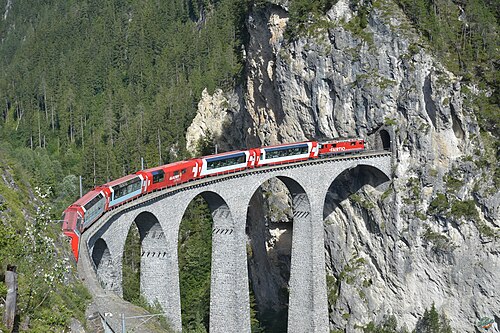
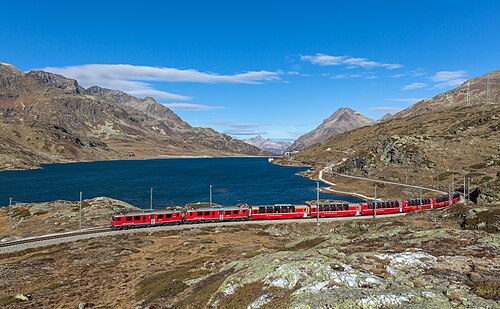
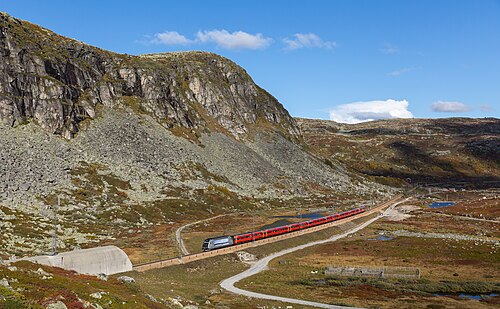
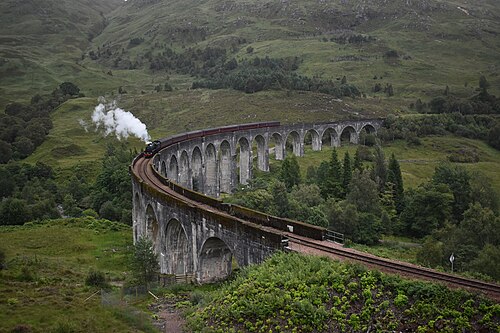
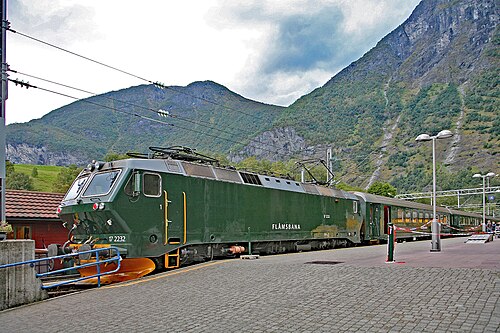
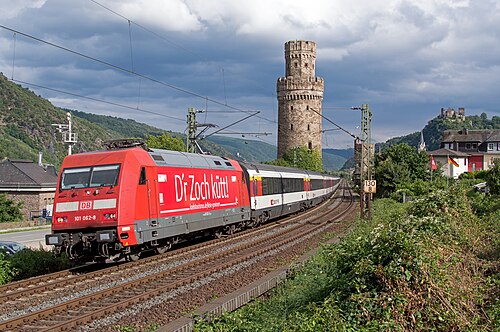
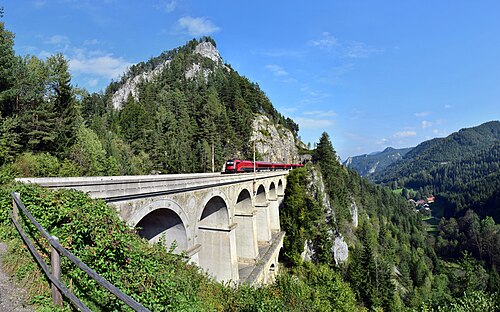
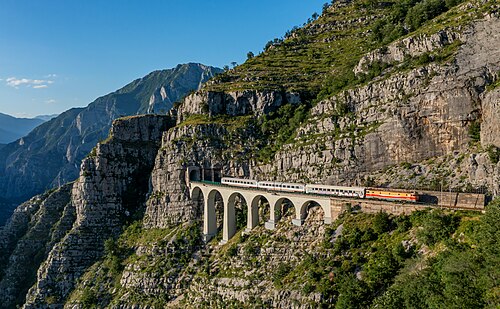
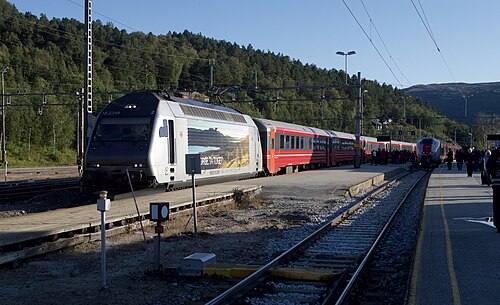
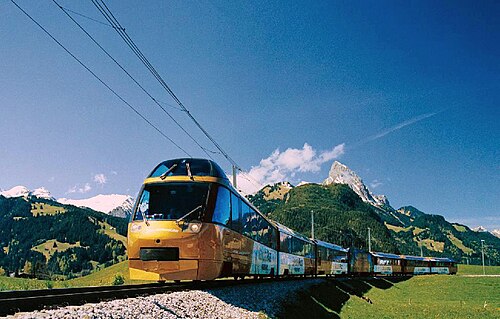
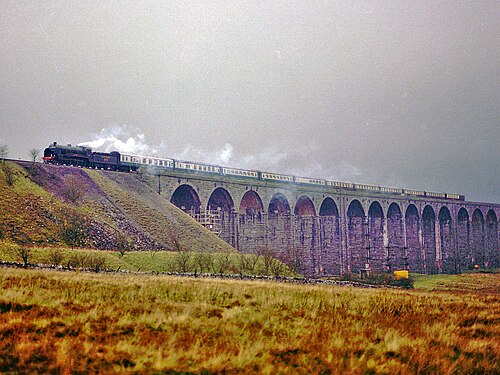
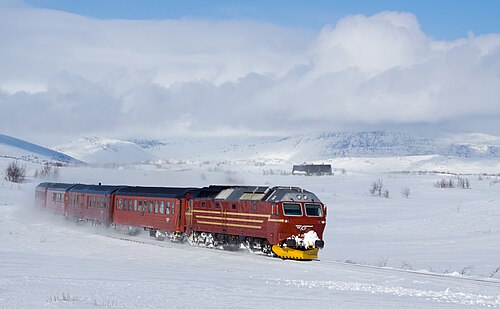
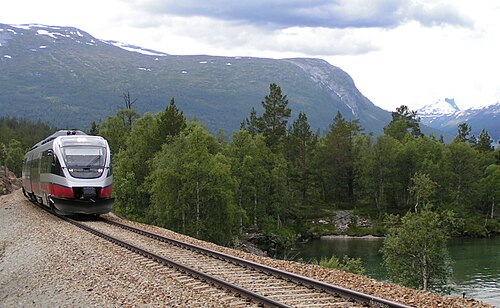
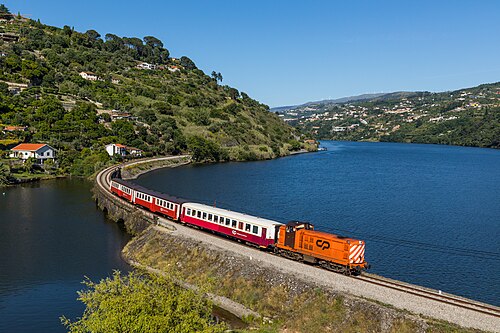
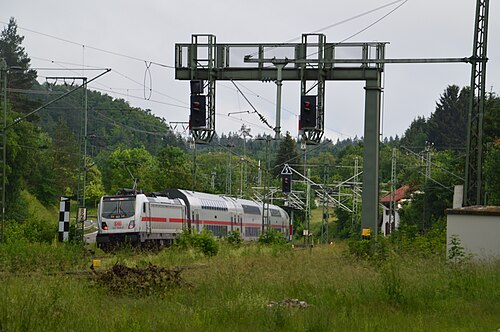
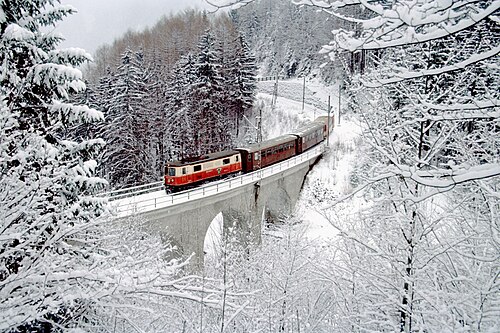
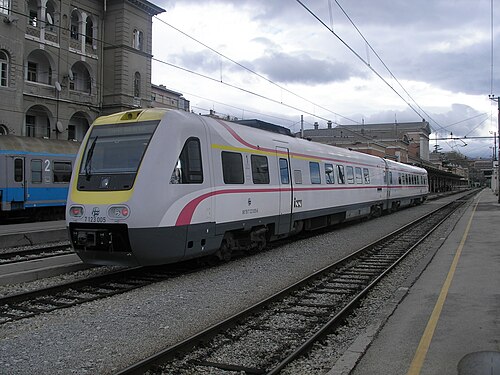
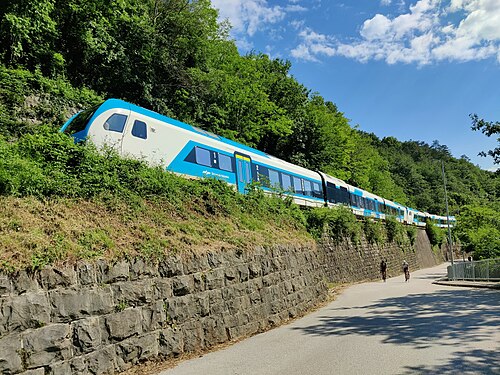
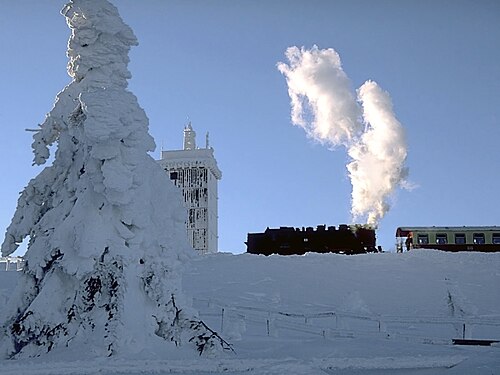
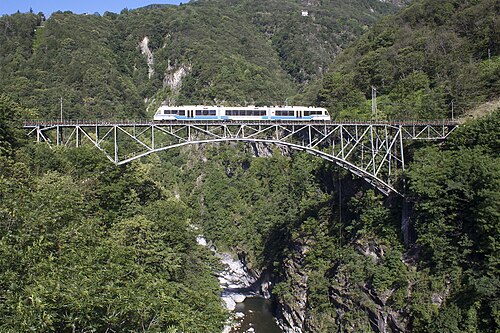
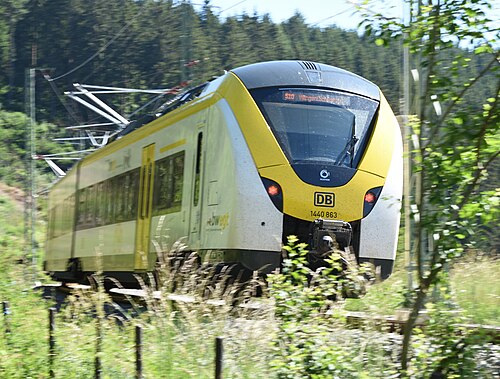
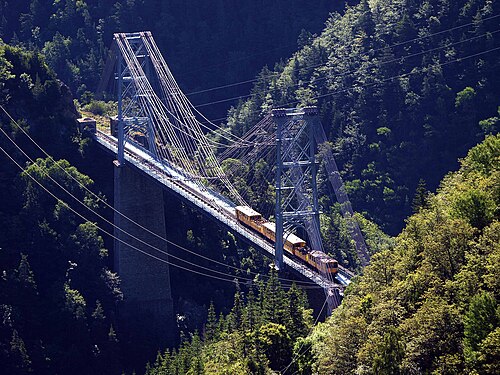
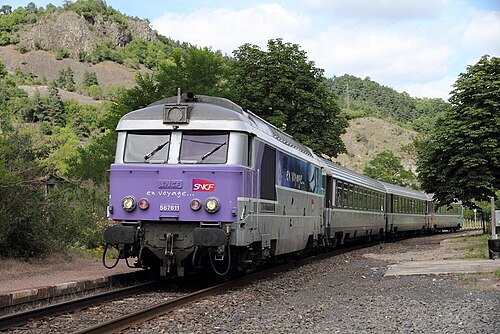
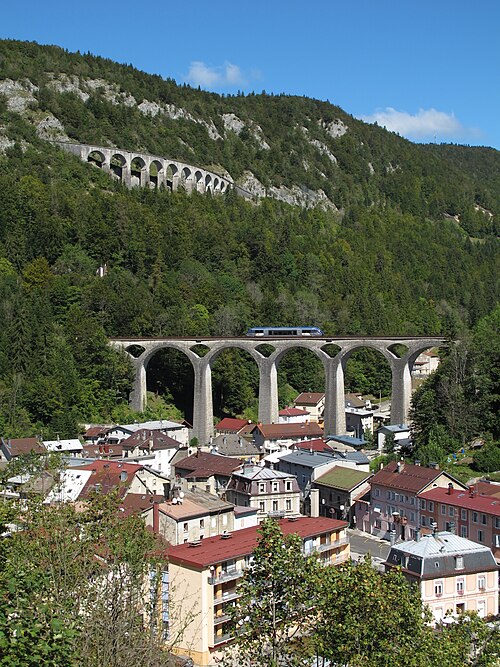
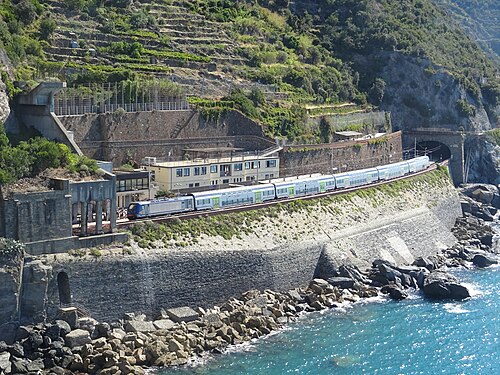
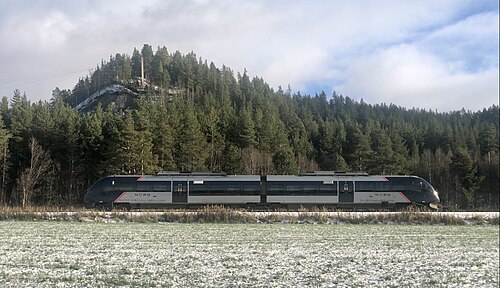
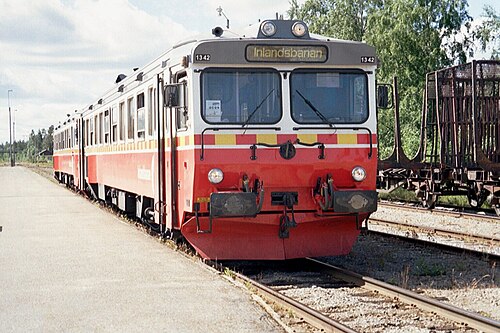
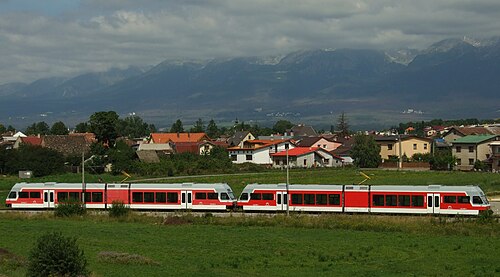
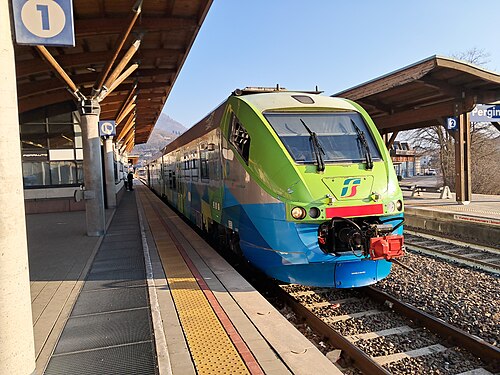
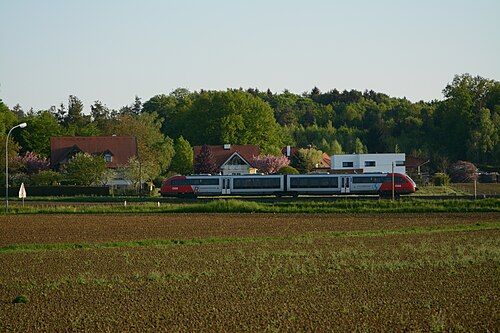
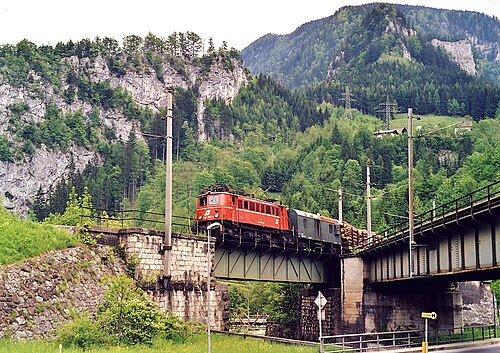
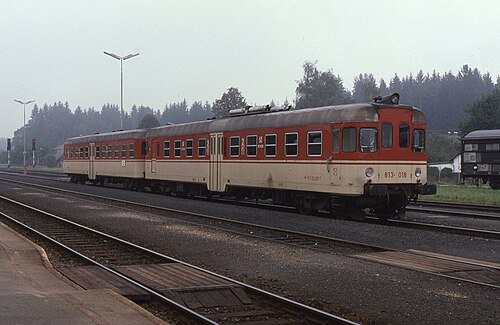
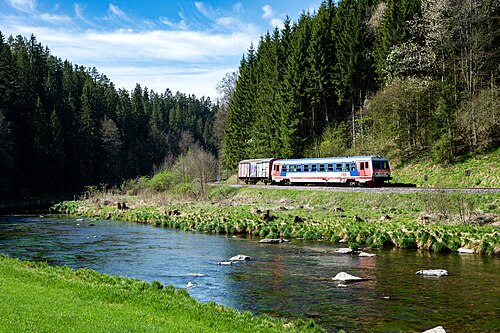
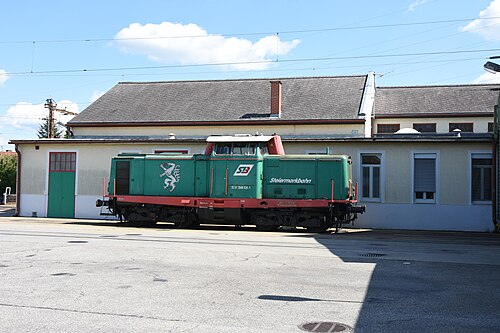
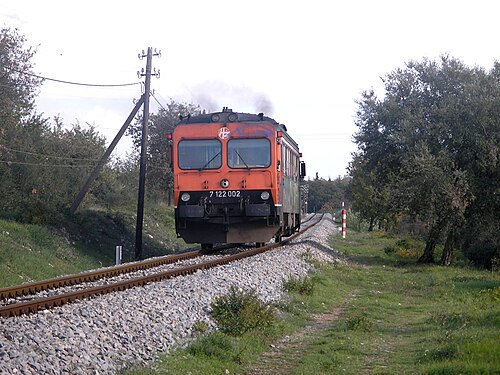
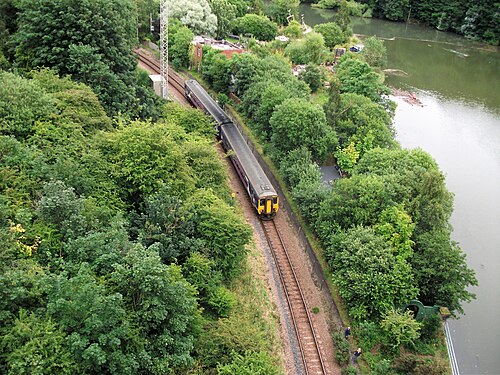
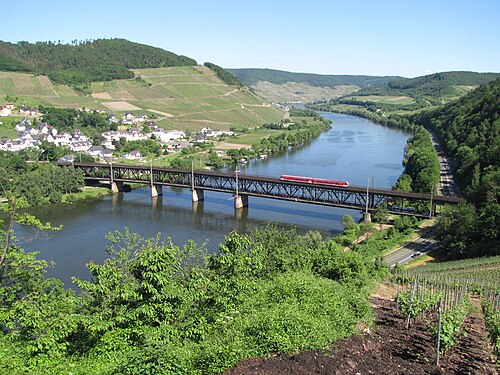
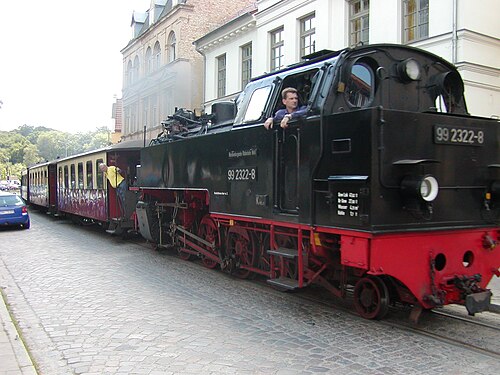
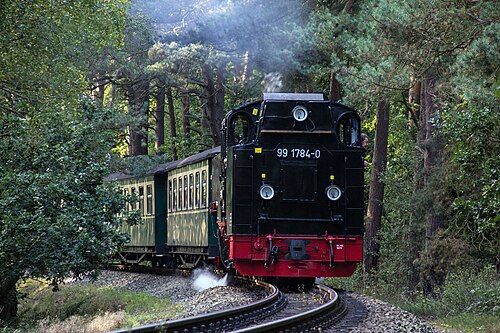
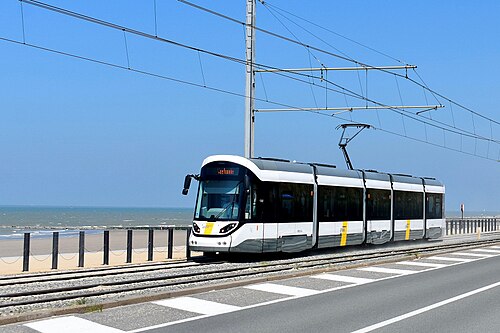
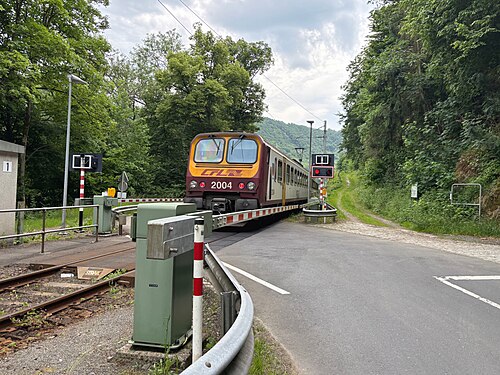
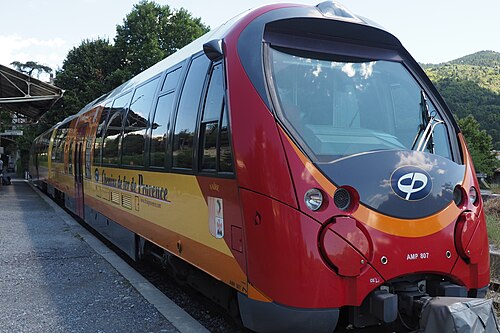
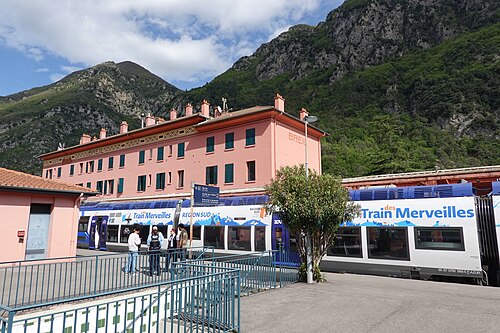
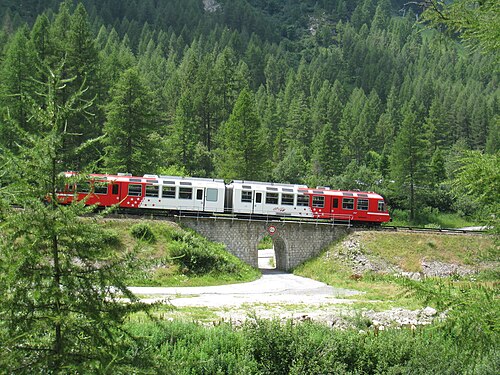
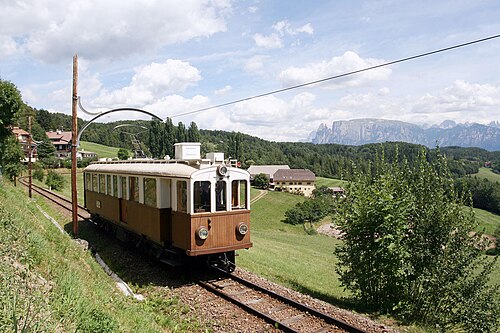
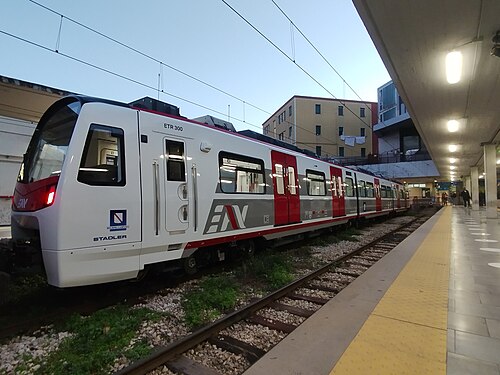
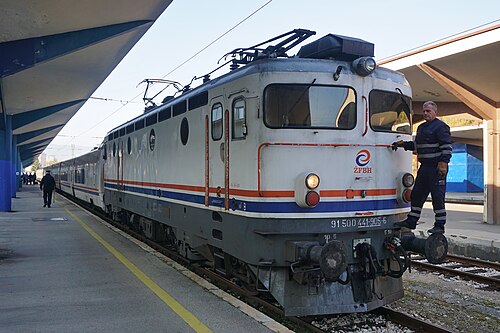
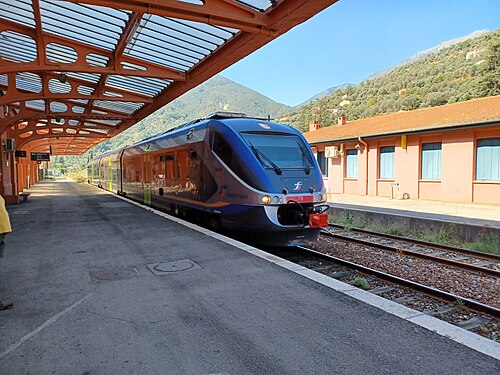
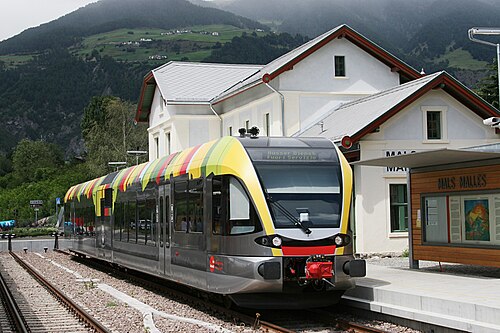
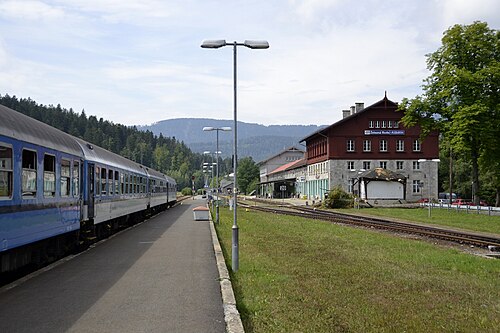
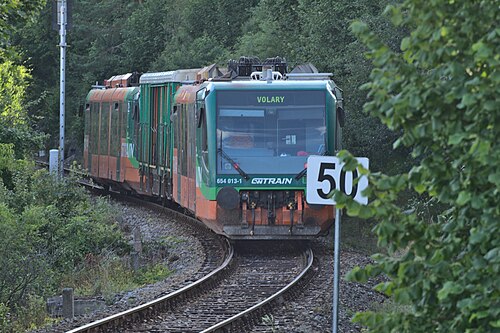
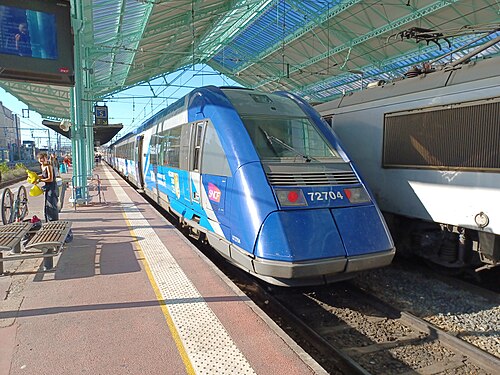

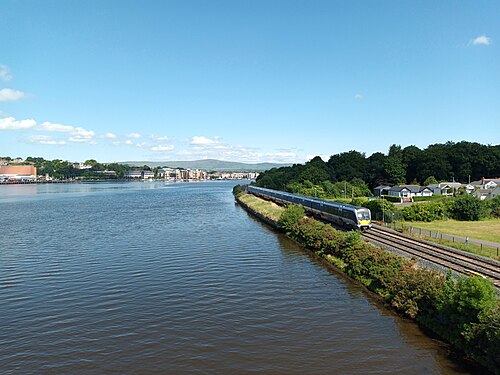
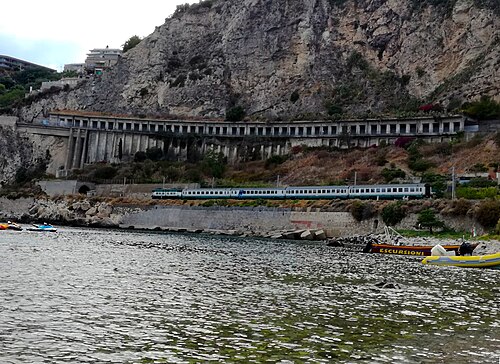
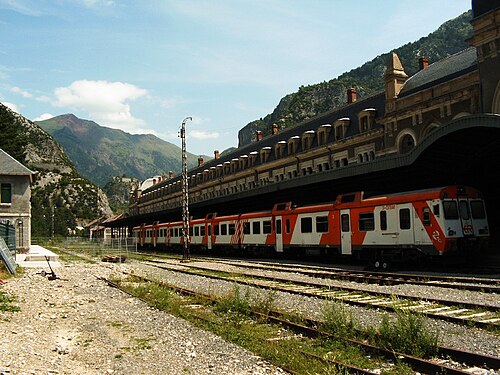
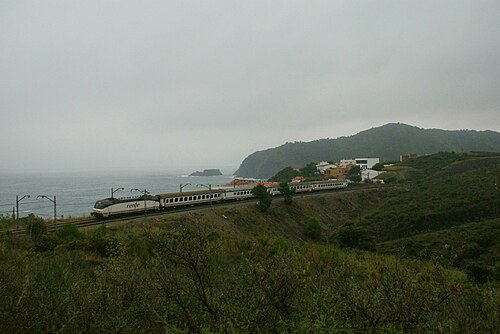
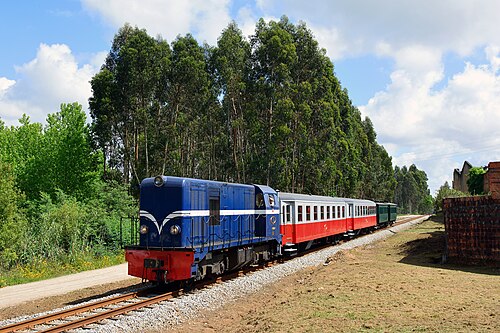
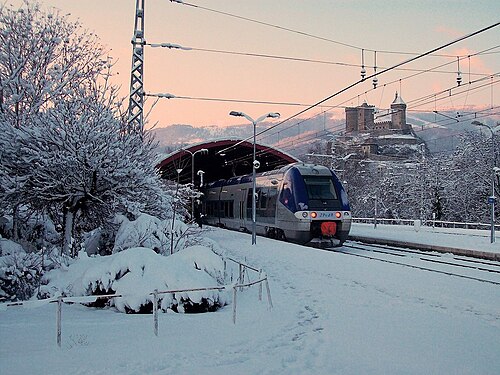
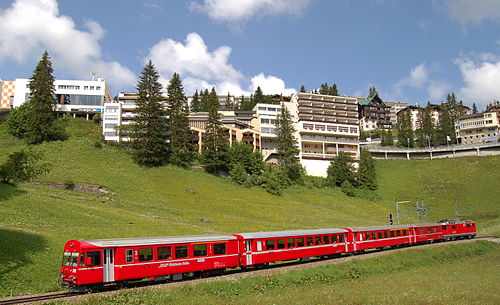
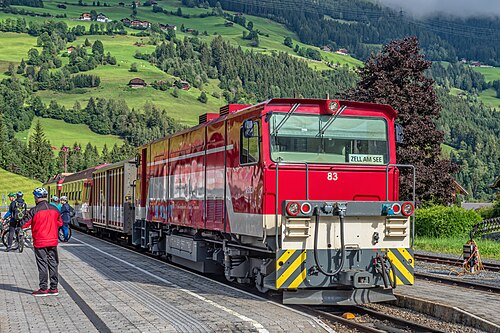
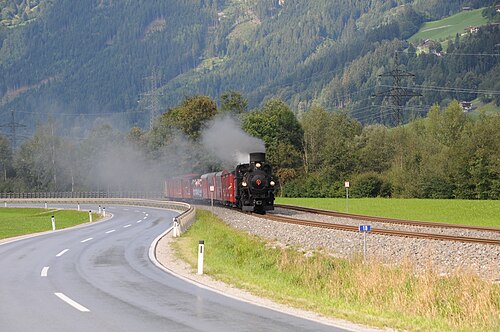
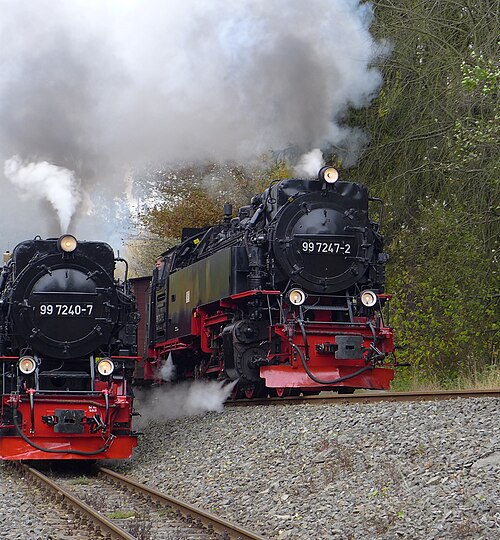
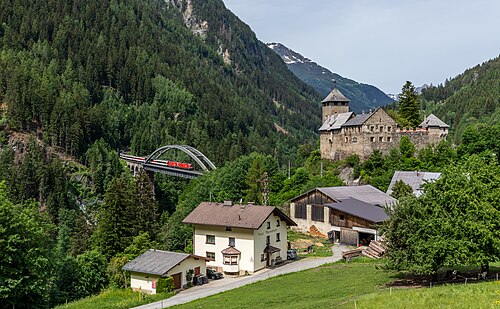
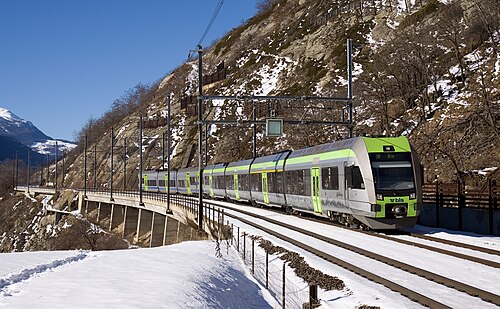
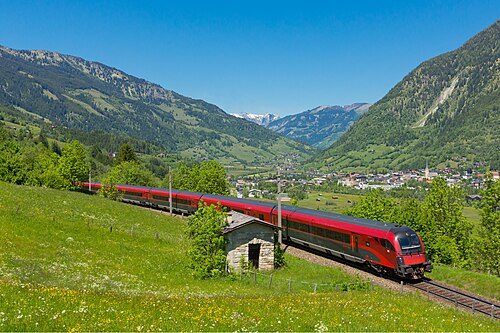
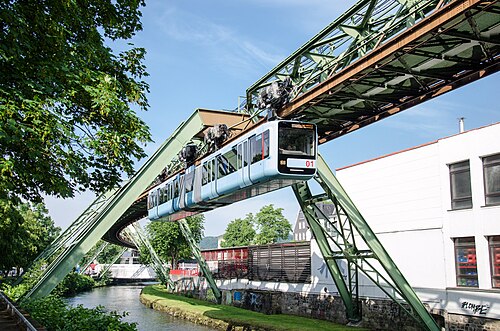
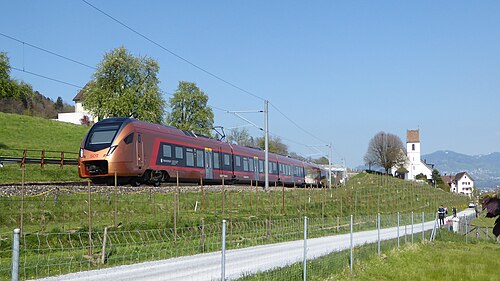
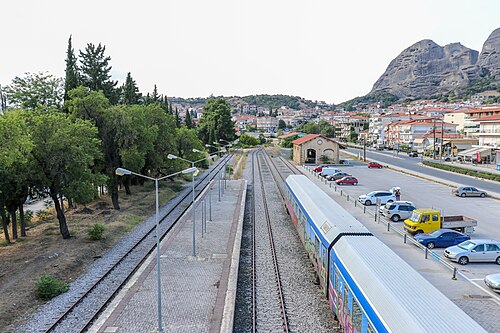
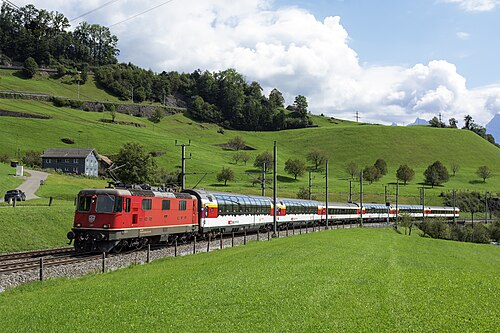
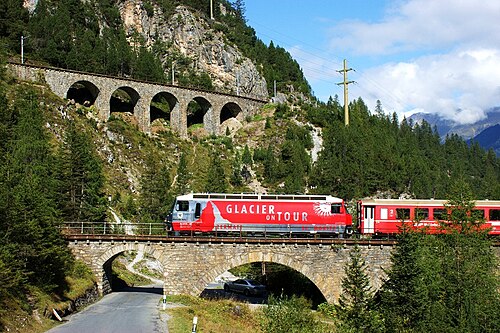
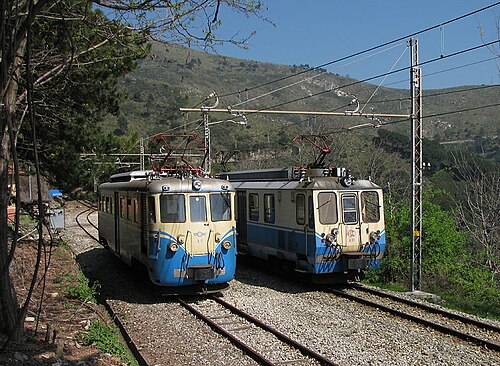
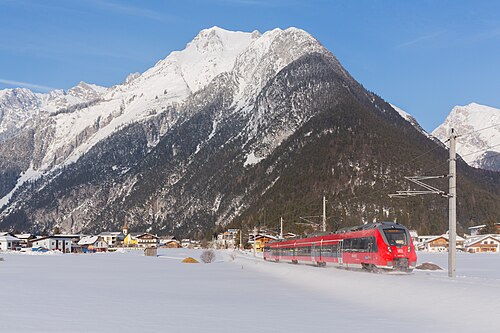
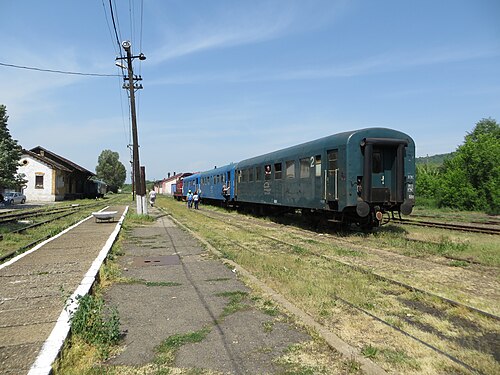
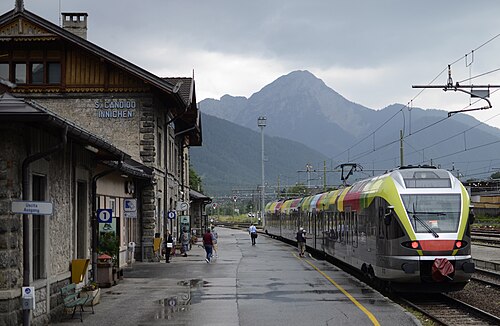
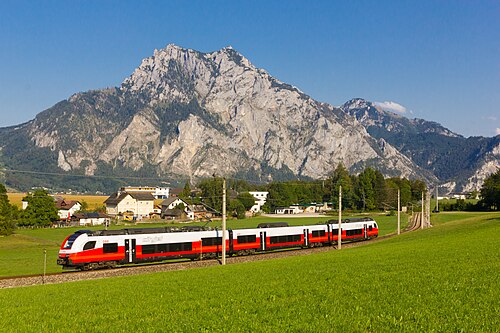
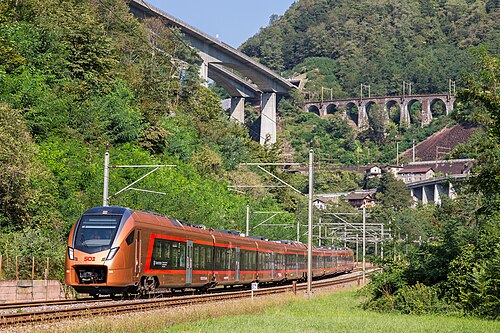
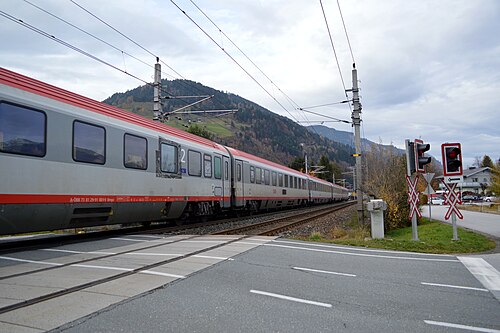
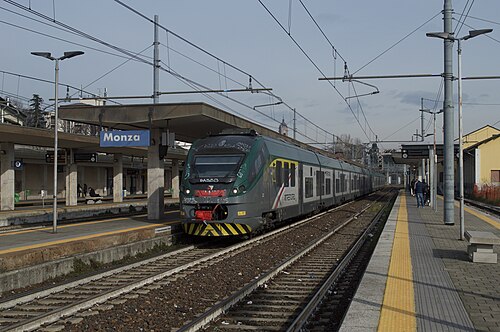
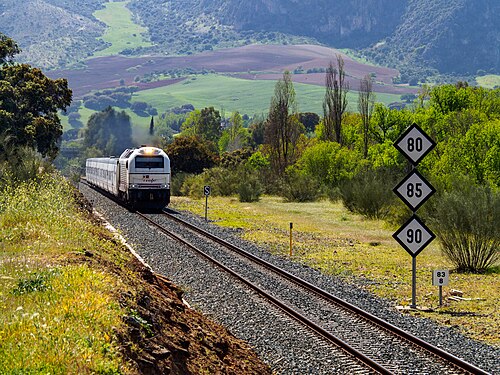
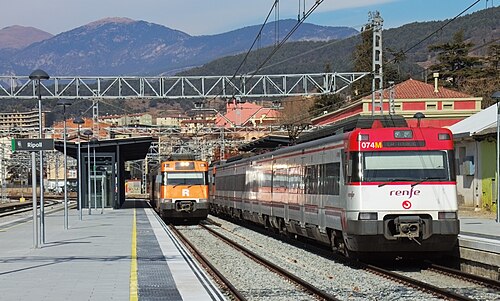
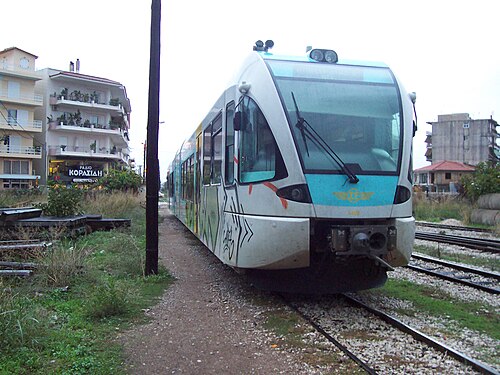
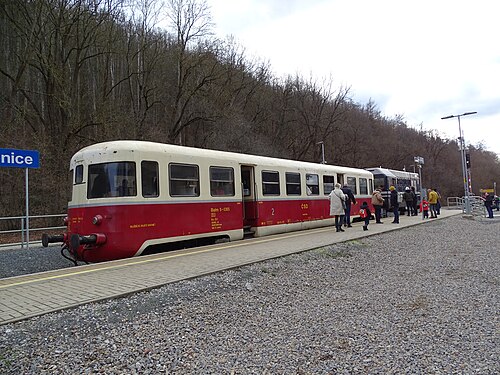
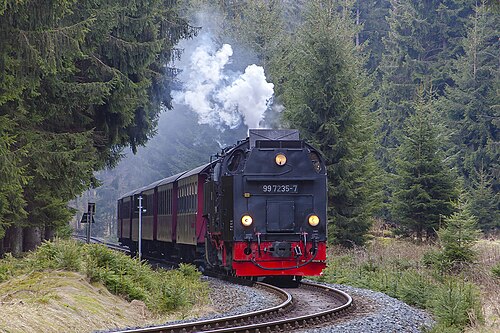
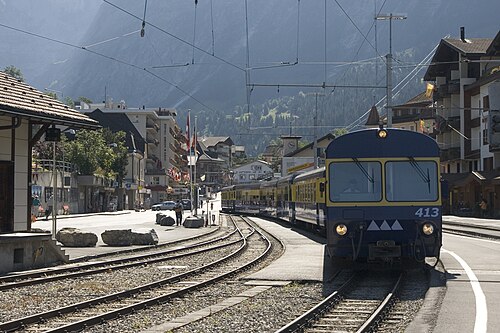
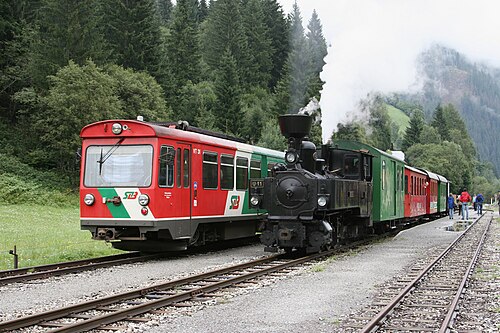
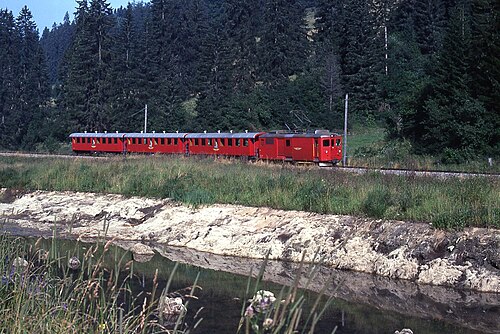
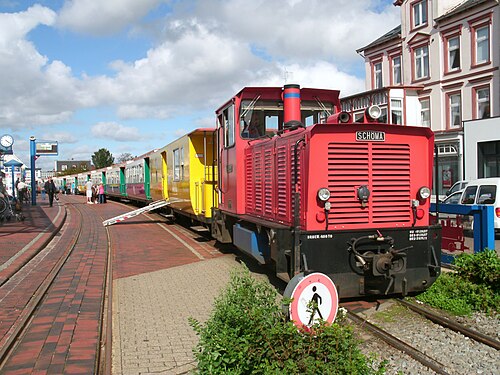
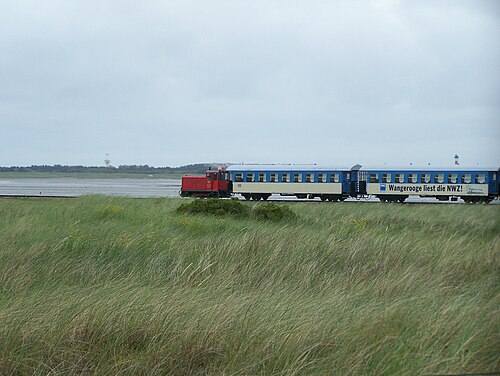
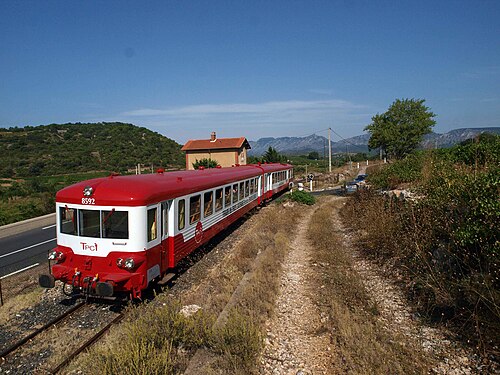
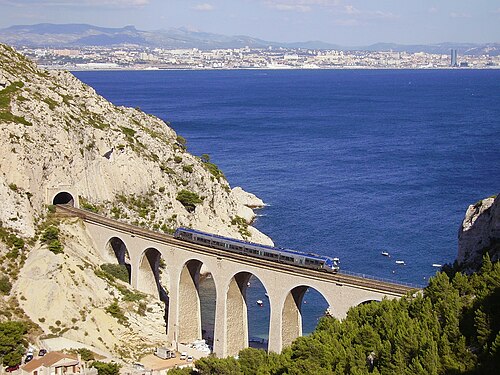
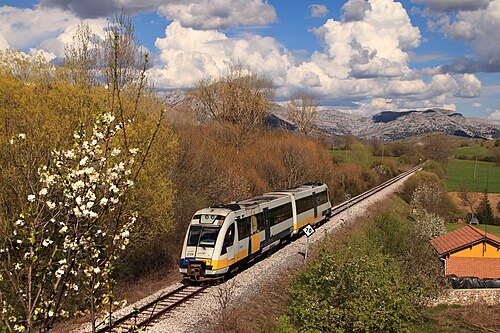
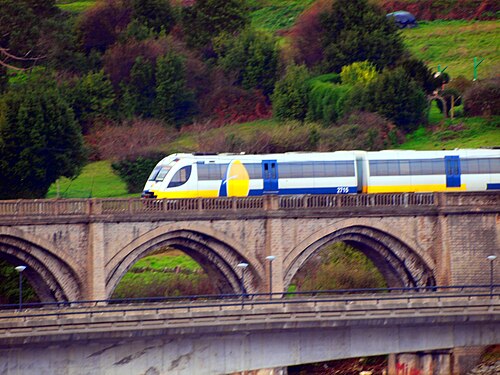
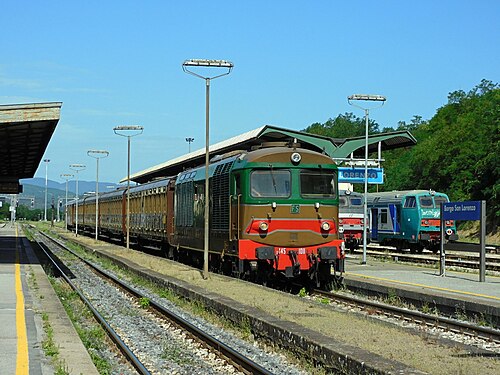
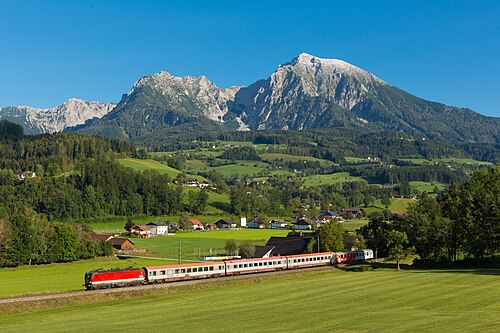
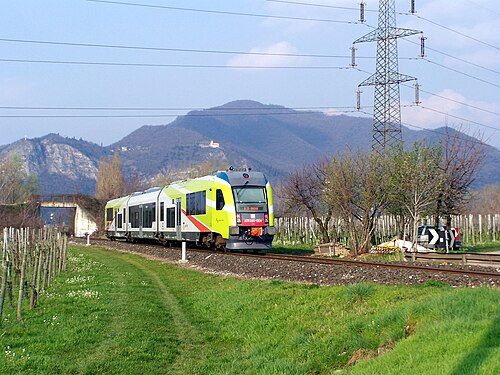
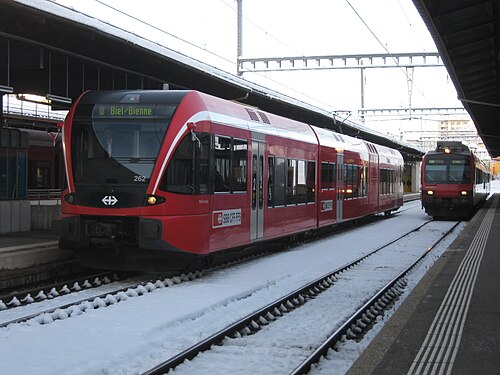
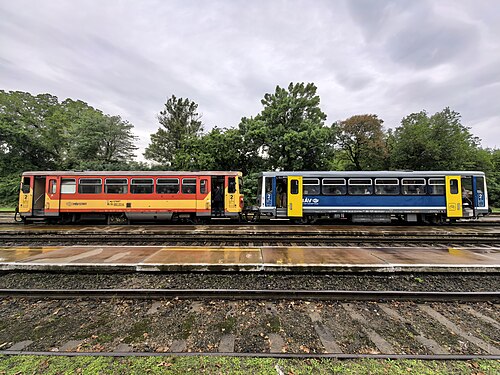
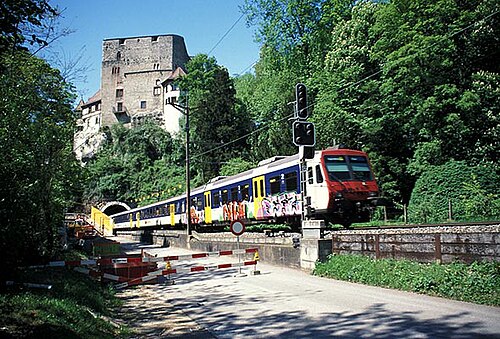
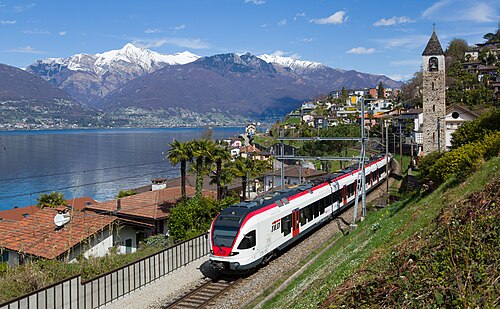
.jpg/500px-S6_FLIRT_bei_Schwanden_(50862252586).jpg)
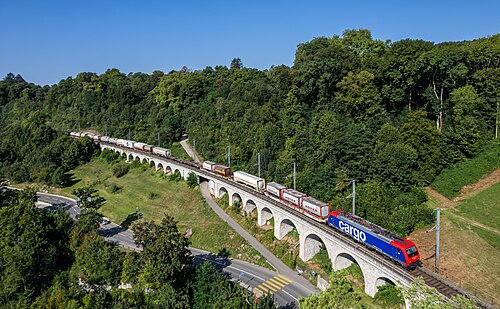
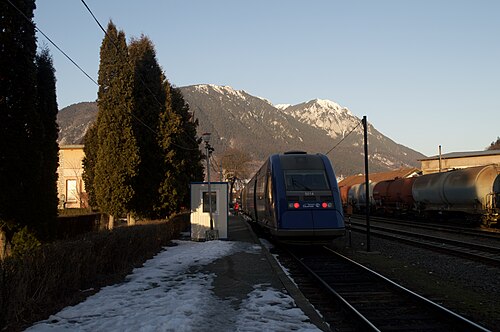
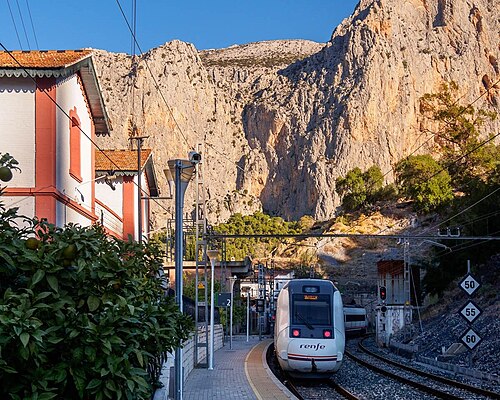
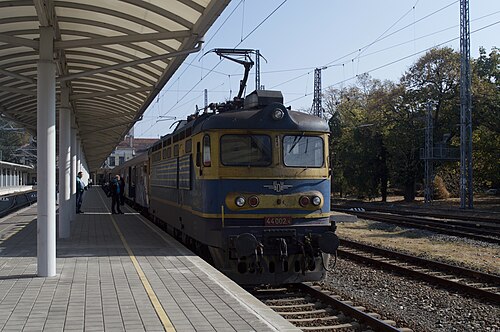
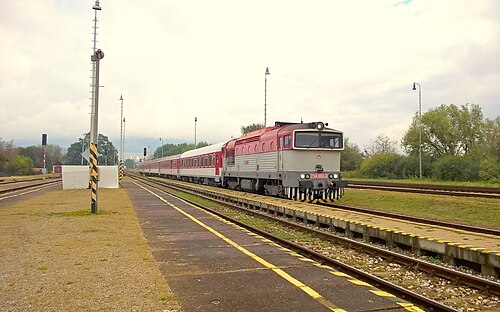
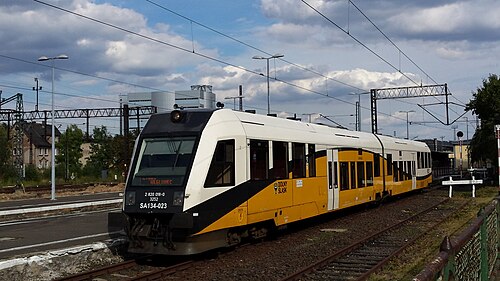
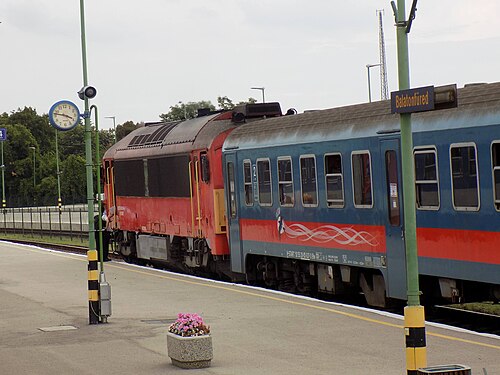
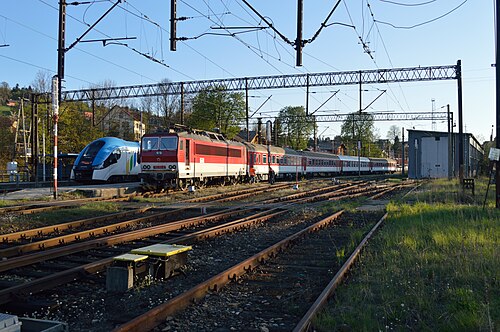
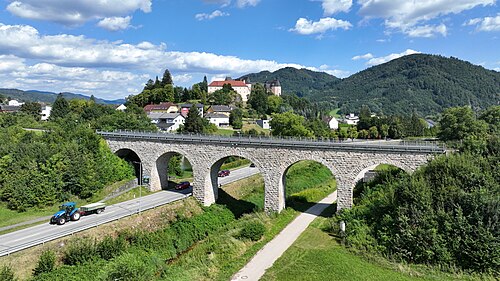
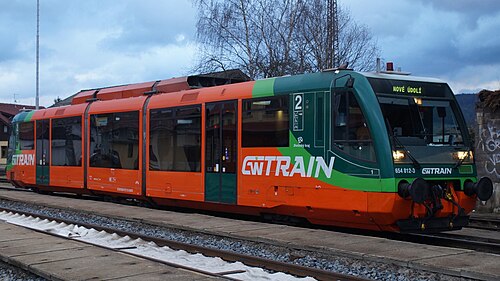
Heritage routes in Europe (100)
- Ffestiniog & Welsh Highland
The world’s oldest narrow-gauge railway company (1836): double-ended Fairlie steam from Caernarfon castle through Snowdonia to the slate town of Blaenau.
Wikipedia ↗ - The Jacobite
Steam over the 21 arches of Glenfinnan on the 1901 Mallaig extension: the working train that became the Hogwarts Express, white sands of Morar below.
Wikipedia (DE) ↗ - Tren de Sóller
Varnished mahogany carriages from 1912 thread thirteen tunnels through the Tramuntana into Sóller’s orange-grove valley. Mallorca’s rolling time machine.
Wikipedia ↗ - Children’s Railway (Gyermekvasút)
A 760 mm line through the Buda Hills staffed almost entirely by children aged 10–14: a Young Pioneer legacy still running today.
Wikipedia ↗ - Mocănița Vaser Valley
The world’s last steam-hauled forestry railway still logging, chuffing up the wild Vaser gorge in Maramureș toward the Ukrainian border.
Wikipedia (RO) ↗ - Rübelandbahn
Heritage steam storms a fierce Harz grade once worked by rack rail; the 1926 tank engine 95 027, the Bergkönigin, still climbs to the caves at Rübeland.
Wikipedia ↗ - Zittauer Schmalspurbahn
750 mm-gauge steam climbs from Zittau to the sandstone crags of the Zittau Mountains, serving the pilgrimage village of Oybin since 1890.
Wikipedia ↗ - Miljoenenlijn
Nicknamed the Million Line for its ruinously costly cuttings and viaducts, this steam railway climbs the only real hills in the Netherlands, in South Limburg.
Wikipedia ↗ - Pelion Railway
Evaristo de Chirico’s 600 mm mountain railway on Mt Pelion curls over his iron-and-stone bridge near Milies through olive and apple groves.
Wikipedia ↗ - Transiberiana d’Italia
Italy’s “Trans-Siberian”: a heritage train over snowbound Apennine plateaus to Rivisondoli-Pescocostanzo, at 1,268 m among the country’s highest stations.
Wikipedia ↗ - North Yorkshire Moors Railway
One of the world’s busiest steam heritage lines, climbing Stephenson’s 1836 route over the moors to Goathland, Hogsmeade in the Harry Potter films.
Wikipedia ↗ - Severn Valley Railway
Sixteen miles of preserved Great Western branch line tracing the River Severn, crossing the water on the graceful iron span of Victoria Bridge.
Wikipedia ↗ - Bluebell Railway
The world’s first preserved standard-gauge passenger railway, running vintage steam through the Sussex Weald without a break since 1960.
Wikipedia ↗ - West Somerset Railway
Britain’s longest standard-gauge independent heritage railway: 22¾ miles of steam from the Quantock Hills down to the Bristol Channel shore at Minehead.
Wikipedia ↗ - Vale of Rheidol Railway
Narrow-gauge steam grinding 200 m uphill from the sea at Aberystwyth to the wooded gorge of Devil’s Bridge: the last steam line British Rail ever ran.
Wikipedia ↗ - Šargan Eight
A 760 mm loop climbing 300 m through 22 tunnels and 5 bridges in a literal figure-eight to gain height.
Wikipedia ↗ - Tren de la Fresa
Hostesses in 1920s dress hand out strawberries aboard replica carriages on Spain’s second-ever railway, opened in 1851.
Wikipedia ↗ - Čierny Hron Forest Railway
One of Europe’s last steam-worked forestry railways: its branch to Dobroč runs straight through the middle of a village football pitch.
Wikipedia ↗ - Jokioinen Museum Railway
The last stretch of Finland’s once-extensive 750 mm network, run by volunteers with steam engines from Finnish, German, Soviet and Belgian builders, veterans of the country’s vanished narrow-gauge lines.
Wikipedia ↗ - Porvoo Museum Railway
Summer museum trains out of Helsinki: a 1950s Dm7 “flat-hat” railbus leaves the main line at Kerava for the 1874 branch to Porvoo’s wooden old town.
Wikipedia (FI) ↗ - Gulbene–Alūksne Narrow Gauge Railway (Bānītis)
The only regularly operating narrow-gauge passenger railway left in the Baltic states, rattling twice daily through Vidzeme’s forests.
Wikipedia ↗ - Aukštaitija Narrow Gauge Railway (Siaurukas)
Weekend survivor of a 750 mm network that once ran 68 km to Panevėžys, now trundling summer tourists out to Rubikiai lake.
Wikipedia ↗ - Carpathian Tram (Vyhoda Forest Railway)
Ukraine’s last working forest railway, built in 1890 to haul Carpathian timber, now carries tourists up the Mizunka valley past waterfalls.
Wikipedia (UK) ↗ - Zaslonov Children’s Railway
A working 750 mm railway through Chelyuskintsy Park operated entirely by schoolchildren training as drivers, conductors and dispatchers.
Wikipedia ↗ - Lillafüred Forest Railway
Narrow-gauge line through the Bükk mountains via two tunnels and two viaducts, opened for timber and now Hungary’s best-loved forest train.
Wikipedia ↗ - Szilvásvárad Forest Railway (Szalajka Valley)
Hungary’s busiest narrow-gauge railway: a steep timber line up the Szalajka valley to a waterfall, now carrying 300,000-plus riders a year.
Wikipedia (HU) ↗ - Jindřichův Hradec–Nová Bystřice Narrow Gauge
South Bohemia’s narrow-gauge survivor, rescued by a new operator in 2026 after the original company’s 2022 bankruptcy nearly ended the line.
Wikipedia ↗ - Train 1900 (Fond-de-Gras Heritage Railway)
Vintage steam trains rattle through Luxembourg’s old iron-mining Minett region on track first laid in 1874 to move ore and miners.
Wikipedia (FR) ↗ - Bieszczady Forest Railway
Poland’s highest narrow-gauge line, a former logging railway that now carries over 150,000 riders a year into the Bieszczady wilderness.
Wikipedia ↗ - Waterford & Suir Valley Railway
Narrow-gauge trains follow the tidal River Suir on the trackbed of an 1878 mainline, running alongside the Waterford Greenway cycle path.
Wikipedia ↗ - Sauschwänzlebahn (Wutach Valley Railway)
Germany’s only spiral railway tunnel: a 1,700 m loop at Stockhalde lets the line climb the Black Forest by circling back over itself.
Wikipedia ↗ - Chemin de Fer de la Baie de Somme
Belle-Époque steam trains skirt the Somme estuary’s tidal salt marshes, with locomotives running round their own train at each terminus.
Wikipedia ↗ - Chemin de Fer du Bocq
Three tunnels and five stone viaducts pack into the Bocq valley on one of Belgium’s most dramatically engineered branch lines.
Wikipedia (FR) ↗ - Museumstoomtram Hoorn–Medemblik
A steam tram dating from 1887 still crosses North Holland’s polders and tulip fields between Hoorn and the old Zuiderzee port of Medemblik.
Wikipedia ↗ - Talyllyn Railway
The world’s first railway saved by volunteers, in 1951: its Victorian steam engines still cross Dolgoch Viaduct into the Fathew valley.
Wikipedia ↗ - Romney, Hythe & Dymchurch Railway
Marketed as the world’s smallest public railway, its steam expresses still get local schoolchildren to class along Romney Marsh.
Wikipedia ↗ - Chemin de fer de La Mure
Reopened in 2021, this cliffside metre-gauge line hangs on ledges and viaducts high above the turquoise Monteynard reservoir in the Isère.
Wikipedia ↗ - Le Mastrou (Vivarais)
A metre-gauge steam survivor climbing the granite gorge of the Doux from the Rhône at Tournon to the chestnut country of Lamastre, hauled by 1903 Mallet engines.
Wikipedia ↗ - Chiemsee-Bahn
The world’s oldest steam tram still in service, an 1887 green Krauss engine that shuttles down to the Chiemsee jetty for the boat to Ludwig II’s island palace.
Wikipedia (DE) ↗ - Great Central Railway
Britain’s only double-track heritage main line, where two steam expresses can pass at speed just as they did on the last main line built towards the Continent.
Wikipedia ↗ - Keighley & Worth Valley Railway
The branch that starred in the 1970 film “The Railway Children”, steaming up the Brontë moors past Haworth to the mill village of Oxenhope.
Wikipedia ↗ - Wachaubahn
Keeps to the north bank of the Danube through the UNESCO Wachau: apricot orchards and terraced vineyards past Dürnstein, where Richard the Lionheart was once held for ransom.
Wikipedia ↗ - Erzbergbahn
The “Semmering of the ore”: a heritage line over the 1,204 m Präbichl pass under the terraced Erzberg, the ochre iron mountain worked for over 1,300 years.
Wikipedia (DE) ↗ - Fichtelbergbahn
Saxon narrow-gauge steam, every day of the year: 750 mm VII K locomotives hauling green coaches 238 m uphill to Oberwiesenthal, Germany’s highest town.
Wikipedia ↗ - Wolsztyn Steam
Europe’s last everyday steam: commuters behind a 1948 Pt47 out of the working Wolsztyn roundhouse — an ordinary ticket, an extraordinary train.
Wikipedia (PL) ↗ - Osoblažka
Czechia’s last public narrow gauge: 760 mm and 102 curves in 20 km — including the network’s sharpest at 75 m radius — dawdling across Silesia at 40 km/h.
Wikipedia ↗ - Żnin District Railway
A 600 mm minirailway from 1894 chuffing 12 km through Pałuki to the Iron Age lake fort of Biskupin — archaeologists commute by narrow gauge.
Wikipedia (PL) ↗ - Nadmorska Kolej Wąskotorowa
Opened 1896 and still packing 150,000 riders a summer: metre-gauge cars amble from Gryfice to the Baltic cliffs, Poland’s last coastal narrow gauge.
Wikipedia ↗ - Upper Silesian Narrow Gauge
Running since 1853 — the world’s oldest continuously operating narrow gauge: 785 mm industrial track turned heritage line across the Silesian coalfield.
Wikipedia ↗ - Mocănița Huțulca
Bucovina’s oldest mocănița, laid in 1888 for a Munich sawmill: the Huțulca puffs 12 km up the Moldovița valley behind a Reșița-built 764 steam engine.
- Mocănița Sovata
From the spa resort of Sovata a 1949 Chrzanów steam engine hauls open cars to Câmpu Cetății — a rescued shard of the 82 km Târgu Mureș–Praid line of 1915.
Wikipedia (RO) ↗ - Orava Forest Railway
Built by POWs in 1915–18 to haul timber: the surviving 3.5 km climbs from Tanečník to Sedlo Beskyd on a five-switchback staircase unique in Europe.
Wikipedia ↗ - Weißeritztalbahn
Germany’s oldest working public narrow gauge (1882): 750 mm steam daily through the Rabenauer Grund gorge and past Malter dam, 350 m up into the Ore Mountains to Kipsdorf.
Wikipedia ↗ - Lößnitzgrundbahn
Daily steam on Dresden’s doorstep since 1884: out of Radebeul’s villa streets into the wooded Lößnitzgrund, past Moritzburg’s moated hunting palace to little Radeburg.
Wikipedia ↗ - Waldviertelbahn
NÖVOG’s 760 mm Südast winds from Gmünd through the granite-and-pine Waldviertel to Groß Gerungs, summer steam grinding round horseshoe bends and over stone viaducts.
Wikipedia (DE) ↗ - Brohltalbahn
The Vulkan-Expreß ambles at Tempo 20 from the Rhine at Brohl 400 m up into the volcanic Eifel, on metre gauge laid in 1901 to carry the region’s tuff and phonolite.
Wikipedia (DE) ↗ - Reblaus-Express
Named after the phylloxera louse: a heritage diesel with a wine-tavern car trundles from Retz’s vine terraces to the Thaya loop at Drosendorf, weekends May to October.
Wikipedia (DE) ↗ - Blonay–Chamby Museum Railway
Switzerland’s first museum railway (running since 1968): Belle Époque steam and electrics cross the Baye de Clarens viaduct high above Lake Geneva on 3 km of 1902 branch line.
Wikipedia ↗ - Preßnitztalbahn
Torn up in 1986, relaid 1992–2000 by volunteers: Saxon IV K tanks once more steam the upper Preßnitz valley from Steinbach to Jöhstadt on weekends through the year.
Wikipedia ↗ - Steyrtal-Museumsbahn
Austria’s oldest 760 mm line (1889): ÖGEG steam ambles down the green Steyr valley from Steyr Lokalbahnhof to Grünburg on summer weekends — Bosnian gauge as it began.
Wikipedia ↗ - Petit train d’Artouste
Built for the dam works of the 1920s: 500 mm open cars creep along a cliff ledge at 1,940 m from the La Sagette gondola to Lac d’Artouste.
Wikipedia ↗ - Train à Vapeur des Cévennes
Steam between Anduze and Saint-Jean-du-Gard: across the Gardon on four viaducts, past the giant bamboo of Prafrance — 40 open-window minutes in the Cévennes.
Wikipedia (FR) ↗ - Velay Express
France’s highest steam railway: a 1906 Mallet hauls metre-gauge trains across the 1,000 m Velay plateau between Raucoules and Saint-Agrève.
Wikipedia (FR) ↗ - Chemin de fer de la Vendée
Belle-Époque dining on the move: restored CIWL Orient Express diners behind an 030 T steam engine, three viaducts between Mortagne and Les Herbiers.
Wikipedia (FR) ↗ - Train des Mouettes
Steam at 30 km/h beside the Seudre oyster beds: an 1891 Schneider — France’s oldest working steam engine — still hauls the gulls’ train to La Tremblade.
Wikipedia ↗ - Train Thur Doller Alsace
Sunday steam in the Doller valley: a century-old 030 T ambles from Cernay to Sentheim past storks, orchards and the first folds of the Vosges.
Wikipedia ↗ - Ferrocarril de Riotinto
Restored mining stock creeps along the blood-red Río Tinto through a Mars-like landscape mined for 5,000 years — Victorian steam hauls it on winter Sundays.
Wikipedia ↗ - Tren de Felipe II
An ALCO diesel and 1940s coaches staffed by costumed actors climb from Príncipe Pío into the Guadarrama foothills to Philip II’s colossal monastery-palace.
- Treno Natura
Steam excursions across the UNESCO Val d’Orcia: 51 km of cypress avenues, clay badlands and Brunello vineyards on an 1865 branch kept alive purely for the Treno Natura.
Wikipedia ↗ - Porrettana Express
The 1864 Porrettana was Italy’s first railway across the Apennines: E.626-hauled Centoporte coaches now relive its 26 ‰ climb from Pistoia to the spa town of Porretta.
Wikipedia (IT) ↗ - Trenino Verde
The Trenino Verde’s second living branch: 46 km of 950 mm track twisting off Macomer’s basalt plateau down to the palm-lined seafront at Bosa Marina.
Wikipedia ↗ - Irpinia Express
Closed in 2010, revived for excursions: the 1895 Ofanto-valley line threads 119 km of viaducts, vineyards and hill villages from Avellino to lonely Rocchetta junction.
Wikipedia (IT) ↗ - Chemin de Fer à Vapeur des Trois Vallées
Steam on the 1854 Entre-Sambre-et-Meuse line: CFV3V engines bark up the wooded Viroin valley to the great museum shed at Treignes.
Wikipedia ↗ - Lennakatten
Steam from the edge of a university city: the 891 mm Lennakatten rolls 33 km through Uppland forests and lakeside summer halts to the engine sheds at Faringe.
Wikipedia ↗ - Krøderbanen
Norway’s longest museum railway: 26 km of the 1872 Krøder line preserved whole — stations, water cranes and NSB steam between Vikersund and the lake at Krøderen.
Wikipedia ↗ - Gamle Vossebanen
The 1883 Voss line’s surviving loop outside Bergen: NSB 18c steam between Garnes and Midttun, bypassed by new tunnels in 1964 and kept alive by volunteers.
Wikipedia ↗ - Thamshavnbanen
Built in 1908 for Orkla’s copper ore: the oldest alternating-current railway still in service, running its original 6.6 kV motor coaches along the green Orkla valley.
Wikipedia ↗ - Setesdalsbanen
Norway’s oldest museum railway, volunteer-run since 1964: 1890s narrow-gauge steam puffing up the Otra river from Grovane to the little terminus at Røyknes.
Wikipedia ↗ - Veluwsche Stoomtrein
The Netherlands’ biggest steam operation: wartime German Kriegsloks and a forty-strong fleet work the 1887 Veluwe country line between Apeldoorn and Dieren.
Wikipedia ↗ - Mariager–Handest Veteranjernbane
Denmark’s leading veteran railway: 1909 Henschel steam from the fjord port of Mariager over rolling moraine hills to Handest, run in 1950s private-railway style.
Wikipedia (DA) ↗ - Ravenglass & Eskdale Railway
Fifteen-inch gauge up Eskdale from the Cumbrian coast, laid for iron ore in 1875 and run since as a miniature main line that Cumbria calls La’al Ratty.
Wikipedia ↗ - Kandertalbahn
Sunday steam up the Kandertal from the Rhine plain at Haltingen to Kandern, the 1895 branch kept running by the society that saved it.
Wikipedia ↗ - Mátravasút (Mátra Forest Railway)
Seven-sixty gauge out of Gyöngyös into the Mátra hills: a 1920s timber railway carrying holidaymakers to Mátrafüred behind an Mk48 in open-sided coaches.
- Bregenzerwaldbahn (Wälderbähnle)
All that is left of the 760 mm line to Bregenz: five kilometres of the Wälderbähnle between Bezau and Schwarzenberg, worked by steam and diesel through the Bregenzerwald on summer weekends.
- Dartmouth Steam Railway
The Kingswear branch of 1864, sold by British Rail to the Dart Valley company in 1972: steam from Paignton over Goodrington Sands and along the Dart estuary to Kingswear, for the ferry to Dartmouth.
Wikipedia ↗ - North Norfolk Railway
The Poppy Line: the last stretch of the Midland & Great Northern in Norfolk, carrying passengers again since July 1975, from the seaside at Sheringham past Weybourne to Holt.
Wikipedia ↗ - Llangollen Railway
Ten miles of the Great Western’s Ruabon–Barmouth line, closed in 1965: volunteers reopened Llangollen station in 1975 and relaid the Dee valley mile by mile, reaching a new station at Corwen in 2023.
Wikipedia ↗ - Epping Ongar Railway
The Central line’s lost end: London Underground closed Epping to Ongar in 1994, and heritage steam and diesel have run it again since 2012, from Ongar through North Weald to the edge of Epping Forest.
Wikipedia ↗ - Embsay & Bolton Abbey Steam Railway
Four miles of the Midland’s Skipton–Ilkley line, closed in 1965 and reopened by volunteers in 1981, with trains back into Bolton Abbey station, for the priory estate, since 1997.
Wikipedia ↗ - Dean Forest Railway
The Severn & Wye’s line into the Forest of Dean, rebuilt by volunteers: passenger trains since 1991, down to Lydney Junction in 1995 and up through the woods to Parkend.
Wikipedia ↗ - Lakeside & Haverthwaite Railway
The Furness Railway’s 1869 branch to Windermere, reopened in 1973: three and a half miles of steam from Haverthwaite to Lakeside, where trains still connect with the lake steamers.
Wikipedia ↗ - Bure Valley Railway
Norfolk’s 15-inch-gauge railway, laid in 1990 on the old East Norfolk trackbed: nine miles from the Broads at Wroxham, over the River Bure and under the A140 by tunnel, to Aylsham.
Wikipedia ↗ - Chinnor & Princes Risborough Railway
A surviving piece of the Great Western’s Watlington branch at the foot of the Chilterns, reopened to passengers in 1994 and reconnected to the main line at Princes Risborough in 2016.
Wikipedia ↗ - Caledonian Railway (Brechin)
Four miles of the Aberdeen Railway’s 1840s line between Brechin’s preserved terminus and Bridge of Dun, worked by volunteers every summer since 1993.
Wikipedia ↗ - Cholsey & Wallingford Railway
The Great Western’s 1866 Wallingford branch, kept alive into preservation by the town’s maltings traffic: two and a half miles from Wallingford to the main line at Cholsey.
Wikipedia ↗ - Gwili Railway
Wales’ first standard-gauge heritage railway, reopened in 1978 on the Carmarthen–Aberystwyth line, the last in Wales to lose Brunel’s broad gauge, and now four and a half miles up the Gwili valley.
Wikipedia ↗ - Kirklees Light Railway
A 15-inch-gauge railway opened in 1991 on the Lancashire & Yorkshire’s Clayton West branch: through Skelmanthorpe and the 511-yard Shelley Woodhouse tunnel, with Emley Moor mast in view.
Wikipedia ↗ - Leighton Buzzard Light Railway
Built in 1919 to carry sand from the Bedfordshire quarries and running passenger trains since 1968: two-foot-gauge industrial steam and diesel from Page’s Park to Stonehenge Works.
Wikipedia ↗ - Strathspey Railway
Steam since 1978 on a preserved stretch of the Highland Railway main line, one of only a handful of former main lines saved in Britain: from Aviemore through Boat of Garten to Broomhill.
Wikipedia ↗ - Volk’s Electric Railway
The world’s oldest operating electric railway: Magnus Volk opened it on Brighton seafront in August 1883, and its cars still run along the beach from Aquarium to Black Rock.
Wikipedia ↗
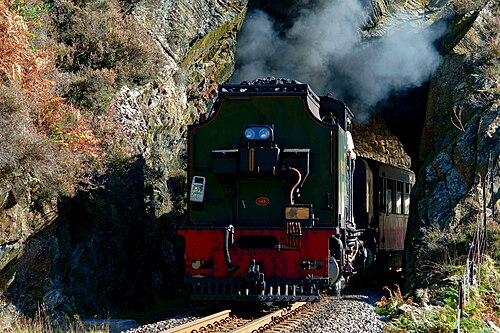
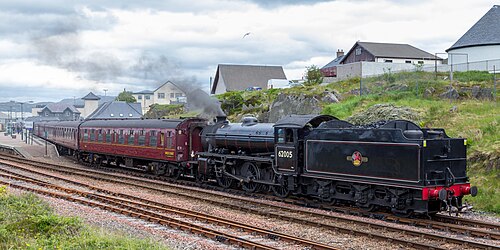
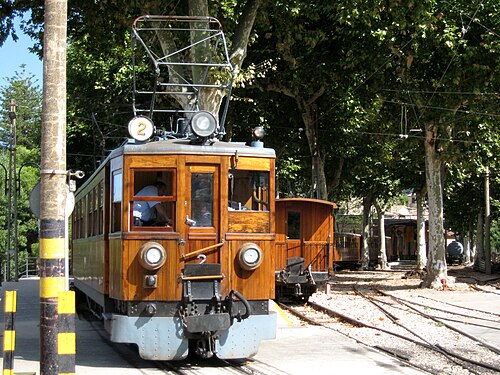
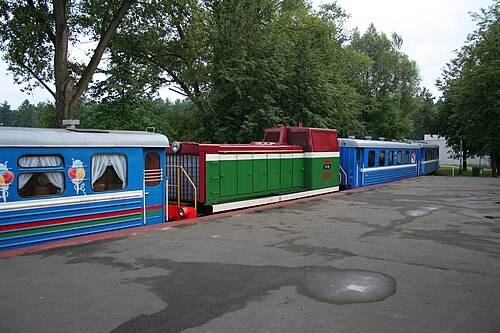
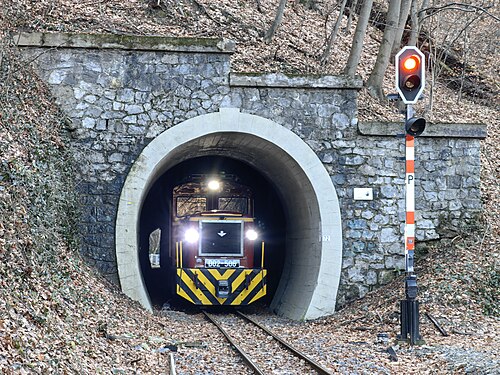
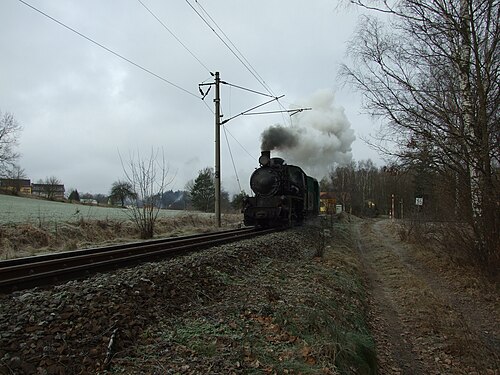
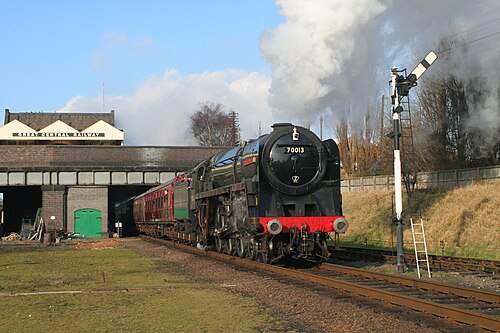
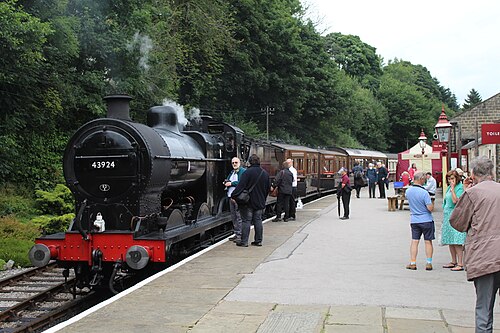
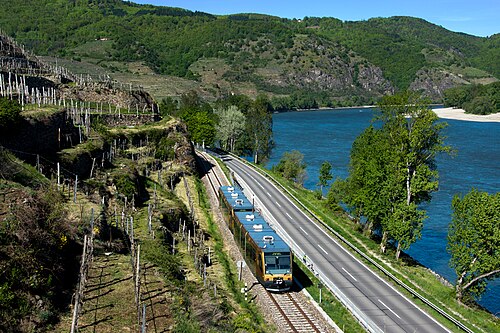
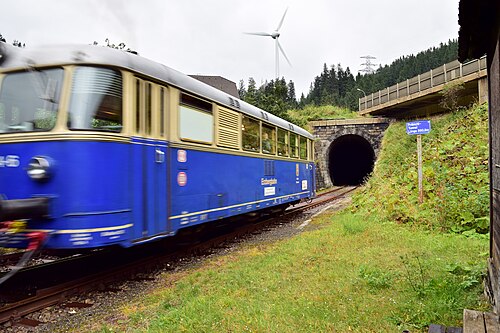
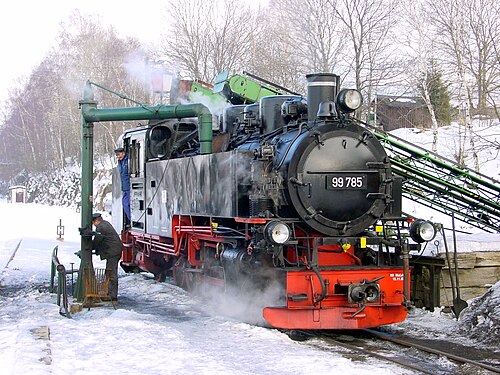
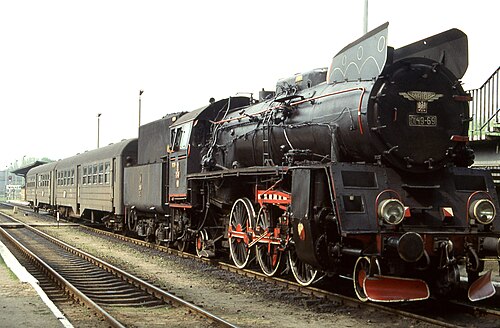
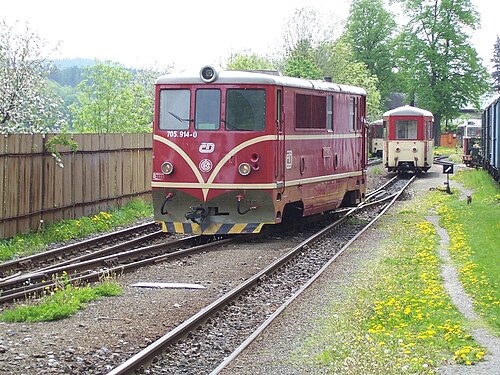
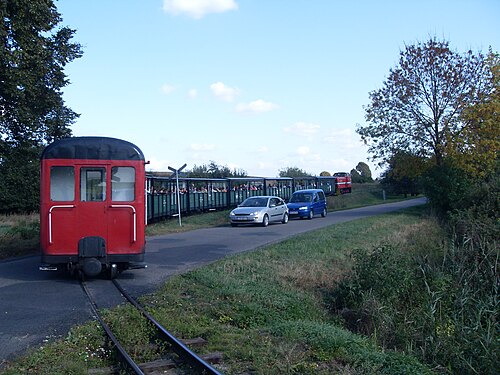
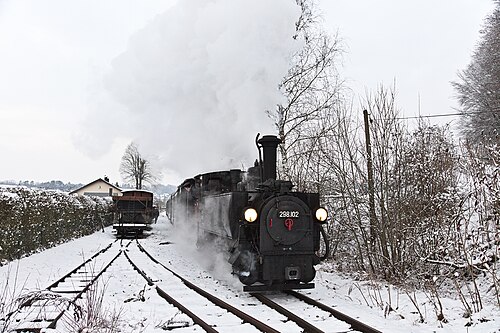
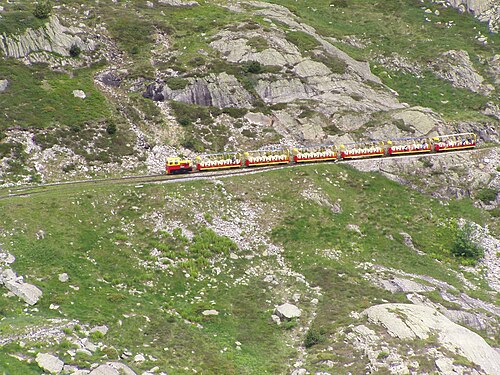
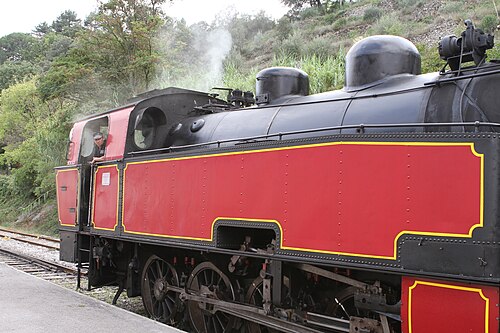
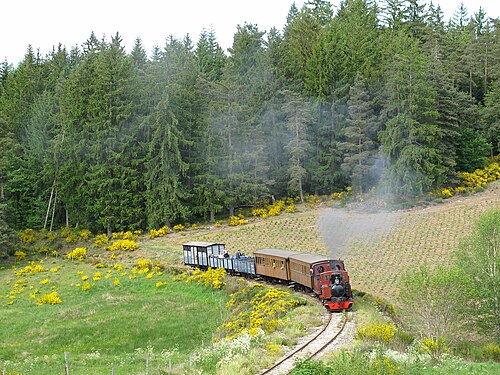
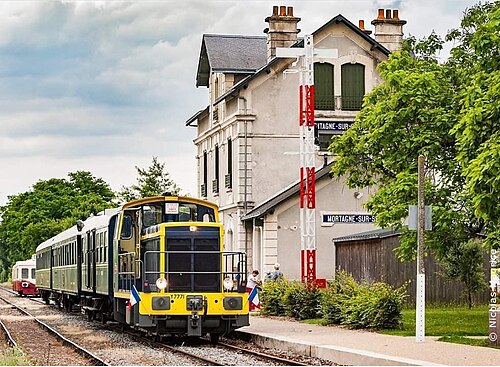
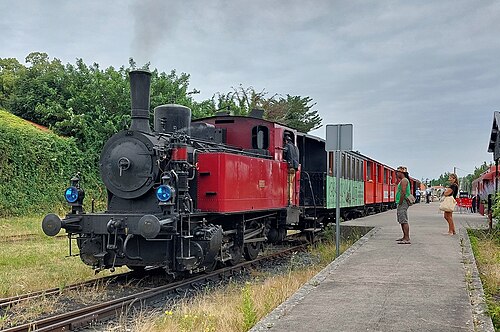
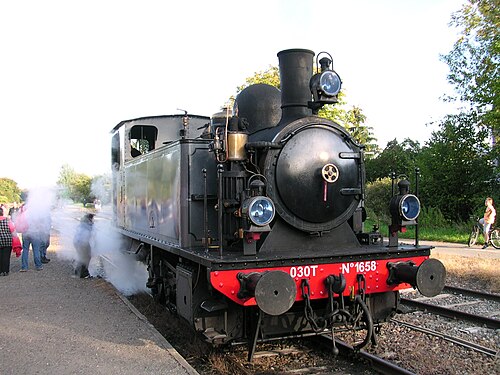
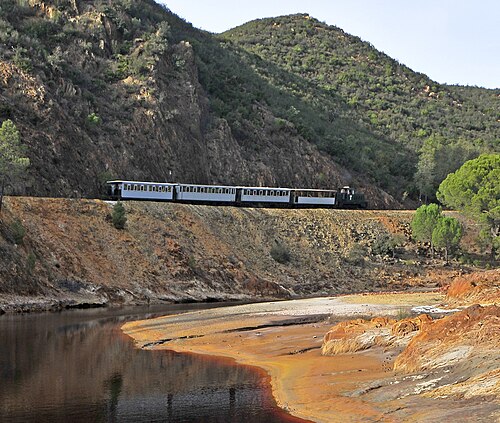
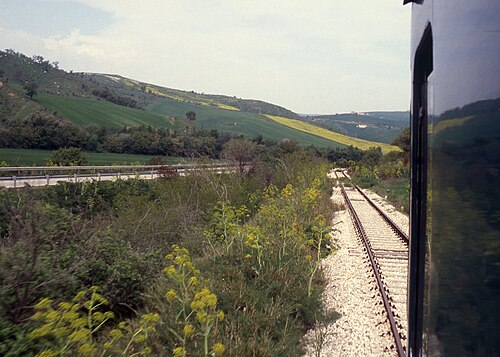


Mountain routes in Europe (53)
- Jungfraubahn
Tunnels INSIDE the Eiger to Europe’s highest station at 3,454 m, the “Top of Europe” since 1912.
Wikipedia ↗ - Gornergrat Bahn
Europe’s highest open-air railway climbs from Zermatt to 3,089 m: the Matterhorn framed in the window from the first curve to the summit ridge.
Wikipedia ↗ - Pilatus Railway
The steepest rack railway on Earth: 48 % grades since 1889, with Locher’s horizontal cog wheels gripping a ladder no ordinary train could climb.
Wikipedia ↗ - Rigi Railways
Europe’s first mountain railway (1871) still ratchets up from Lake Lucerne to the Queen of the Mountains. Mark Twain rode it and wrote home about it.
Wikipedia ↗ - Bayerische Zugspitzbahn
Germany’s highest railway: cogwheels from Garmisch past the Eibsee, then 4.5 km of tunnel to snowfields at 2,588 m below the country’s highest summit.
Wikipedia ↗ - Snowdon Mountain Railway
Britain’s only public rack-and-pinion railway, Swiss-engineered in 1896: 950 vertical metres from Llanberis to the roof of Wales.
Wikipedia ↗ - Zubačka Rack Railway
Czechia’s only cog railway, climbing the Jizera Mountains on an Abt rack at a gradient of 58‰, a national record.
Wikipedia ↗ - Schlossbergbahn Graz
Up the Schlossberg through the trees since 1894, from the Mur embankment to the clock tower above Graz’s red roofs.
Wikipedia ↗ - Heidelberg Bergbahnen
Two funiculars stacked end to end: a modern car to the castle, then 1890s wooden carriages on up to the Königstuhl summit — Germany’s longest funicular climb.
Wikipedia ↗ - Dresden Standseilbahn
From Loschwitz villa streets to the Weißer Hirsch heights since 1895, sister to the suspension railway one valley over.
Wikipedia ↗ - Funicular de Artxanda
Bilbao’s 1915 escape hatch: three minutes from the Casco Viejo edge to the Artxanda ridge and the whole Guggenheim skyline at your feet.
Wikipedia ↗ - Montreux–Rochers-de-Naye Railway
Climbs 1,700 m from Lake Geneva’s shore to a marmot-filled Alpine garden in under an hour, on Abt rack track dating to 1892.
Wikipedia ↗ - Wengernalpbahn
The world’s longest continuous cogwheel railway links Lauterbrunnen and Grindelwald over Kleine Scheidegg, under the Eiger’s north face.
Wikipedia ↗ - Furka Cogwheel Steam Railway
Volunteer-run steam locomotives claw over the 2,160 m Furka Pass past the Rhône Glacier on track abandoned when the base tunnel opened in 1982.
Wikipedia ↗ - Brienz Rothorn Bahn
A 25% steam rack line, Europe’s highest unelectrified railway, climbs from Lake Brienz to a 2,244 m summit in an hour.
Wikipedia ↗ - Achenseebahn
Europe’s oldest still-working steam cog railway: its four 1889 locomotives haul open carriages up to the turquoise Achensee.
Wikipedia ↗ - Schafbergbahn
Austria’s steepest steam rack railway climbs 1,190 m in 40 minutes to a summit overlooking eleven Salzkammergut lakes.
Wikipedia ↗ - Štrba–Štrbské Pleso Rack Railway
Slovakia’s only cog railway climbs 430 vertical metres up a 15% rack gradient into the High Tatras on hybrid EMUs delivered in 2021.
Wikipedia ↗ - Cremallera de Núria
The only way to roadless Núria: Abt rack rails climbing 1,000 vertical metres through the Freser gorges to a sanctuary at 1,964 m.
Wikipedia ↗ - Odontotos Rack Railway
An 1896 rack line climbs 700 m up the sheer Vouraikos gorge to Kalavryta, through tunnels and along ledges cut above the torrent.
Wikipedia ↗ - Cremallera de Montserrat
A rack railway climbing the serrated massif to the Benedictine monastery at 720 m: the pilgrims’ way to Catalonia’s black Madonna since 1892.
Wikipedia ↗ - Petit Train de la Rhune
A 1924 wooden cog train grinds up to the 905 m Basque summit of La Rhune, past pottok ponies and griffon vultures, with the Bay of Biscay spread out below.
Wikipedia ↗ - Montenvers Railway
A rack railway since 1908, climbing from Chamonix to a balcony above the Mer de Glace, France’s largest glacier, under the Drus and the Grandes Jorasses.
Wikipedia ↗ - Mont-Blanc Tramway
France’s highest railway grinds up the flank of Mont Blanc to the Nid d’Aigle at 2,372 m, where the climbers’ route to the summit begins.
Wikipedia ↗ - Schynige Platte Railway
Vintage 1914 cars grind up an Abt rack to a 2,000 m ridge, with the Eiger, Mönch and Jungfrau lined up across the valley and an alpine garden at the top.
Wikipedia ↗ - Monte Generoso Railway
A rack line from the shore of Lake Lugano to a 1,704 m summit whose Mario Botta “Fiore di pietra” lookout takes in the Alps from Monte Rosa to the Apennines.
Wikipedia ↗ - Schneebergbahn
Austria’s highest railway: the red Salamander cog train grinds 1,200 vertical metres from Puchberg to the Hochschneeberg terminus at 1,795 m, the Alps’ balcony over the Vienna basin.
Wikipedia ↗ - Wendelsteinbahn
Bavaria’s oldest high-mountain railway of 1912 racks up from Brannenburg through tunnels and 25% grades toward the Wendelstein’s summit cave, observatory and panorama over the Inn valley.
Wikipedia ↗ - Drachenfelsbahn
Germany’s oldest rack railway (1883) climbs 220 m in eight minutes from Königswinter past Schloss Drachenburg to the Drachenfels ruin above the Rhine — Siegfried’s dragon mountain.
Wikipedia ↗ - Panoramique des Dômes
A Strub rack railway spirals up the dormant Puy de Dôme volcano: 5.3 km and 500 vertical metres to the Roman Temple of Mercury at 1,406 m.
Wikipedia ↗ - Stoosbahn
The world’s steepest funicular: a 110% maximum gradient climbed by barrel cabins that rotate to keep the floor level, 744 m up to car-free Stoos.
Wikipedia ↗ - Niesenbahn
Climbs 1,643 m over 3.5 km up the pyramid of the Niesen — and the service stairway alongside is the longest on earth at 11,674 steps.
Wikipedia ↗ - Gelmerbahn
An open-car ride up a 106% grade — Europe’s steepest funicular until Stoos overtook it in 2017 — built to serve the Gelmersee dam works.
Wikipedia ↗ - Funiculaire Sierre–Crans-Montana
Switzerland’s longest funicular: 4.2 km and 927 m of climb from the Rhône valley vineyards at Sierre to the Crans-Montana plateau.
Wikipedia ↗ - Fribourg Funicular
Europe’s last funicular driven by wastewater: since 1899 the descending car is weighted with up to 3,000 litres of city sewage.
Wikipedia ↗ - Hungerburgbahn
A 2007 hybrid funicular with Zaha Hadid’s sculpted glass stations — cabins tilt to stay level from the flat river crossing to a 46% climb.
Wikipedia ↗ - FestungsBahn Salzburg
Austria’s oldest funicular in service (1892) rises into Hohensalzburg — one of Europe’s largest intact medieval fortresses — in 54 seconds.
Wikipedia ↗ - Mendelbahn
Europe’s longest and steepest funicular at its 1903 opening, still climbing 854 m at up to 64% from South Tyrol’s wine country to the Mendel Pass.
Wikipedia ↗ - Como–Brunate Funicular
Since 1894 the link between Como’s lakefront and hilltop Brunate, ’the balcony of the Alps’, climbing at up to 55% above Lake Como.
Wikipedia ↗ - Funicolare Centrale
One of the world’s busiest funiculars — around 10 million passengers a year between Via Toledo and the Vomero hill.
Wikipedia ↗ - Capri Funicular
Capri’s main street since 1907: hoists ferry arrivals from Marina Grande harbour 138 m up to the island’s famous Piazzetta in four minutes.
Wikipedia ↗ - Montmartre Funicular
Paris’s shortcut to Sacré-Cœur since 1900 — 108 m of track, 36 m of rise and about two million riders a year.
Wikipedia ↗ - Fourvière Funicular (la ficelle)
Lyon ran the world’s first urban funiculars from 1862; today’s F2 of 1900 lifts riders from UNESCO-listed Vieux Lyon to the Fourvière basilica.
Wikipedia ↗ - Tibidabo Funicular (Cuca de Llum)
Barcelona’s 1901 summit line to the Tibidabo amusement park and Sagrat Cor temple, reborn in 2021 as the glass ’glow-worm’ trains.
Wikipedia ↗ - Montjuïc Funicular
Metro-integrated since 1928 and rebuilt for the 1992 Olympics — among Europe’s highest-capacity funiculars at 8,000 passengers an hour.
Wikipedia ↗ - Bom Jesus do Monte Funicular
The world’s oldest water-balance funicular in continuous service (1882), climbing beside the baroque stairway of UNESCO-listed Bom Jesus do Monte.
Wikipedia ↗ - Budavári Sikló
Opened 1870 as Europe’s second funicular; destroyed in WWII and rebuilt in 1986, it climbs to Buda Castle inside the UNESCO Danube panorama.
Wikipedia ↗ - Zagreb Funicular (Uspinjača)
At 66 m one of the world’s shortest public funiculars, linking Zagreb’s Lower and Upper Towns since 1890.
Wikipedia ↗ - Ljubljana Castle Funicular
A glass funicular of 2006 rising 70 m in one minute from the old-town market square to Ljubljana Castle, the capital’s defining landmark.
Wikipedia ↗ - Fløibanen
Norway’s best-known funicular (1918): 844 m and ~300 m of rise from central Bergen to the Fløyen viewpoint above the fjord city.
Wikipedia ↗ - Lynton & Lynmouth Cliff Railway
The world’s highest and steepest fully water-powered railway (1890): gravity and 700-gallon tanks alone work its twin cars on a 58% grade.
Wikipedia ↗ - Nerobergbahn
Germany’s only surviving water-ballast funicular (1888), still climbing Wiesbaden’s Neroberg on 7,000 litres of tank water and no engine.
Wikipedia ↗ - Kyiv Funicular
Kyiv’s 1905 funicular climbs a 36% grade from riverside Podil to the St Michael’s monastery quarter — 2.8 million riders a year even in wartime.
Wikipedia ↗
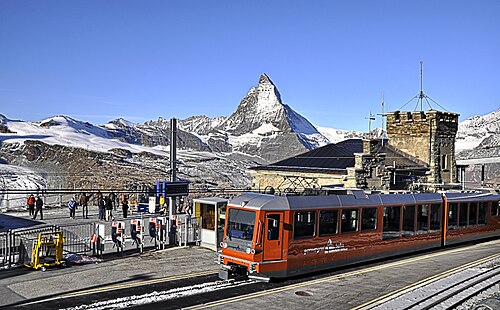
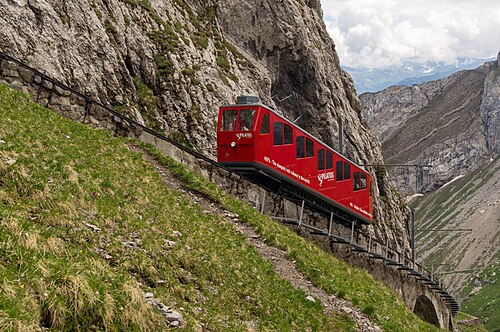
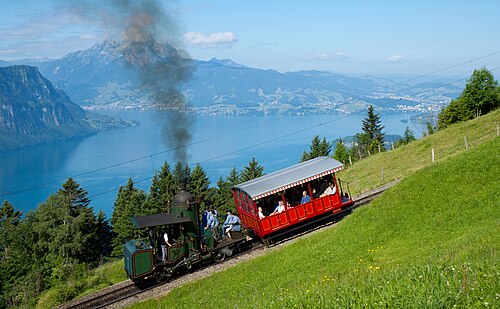
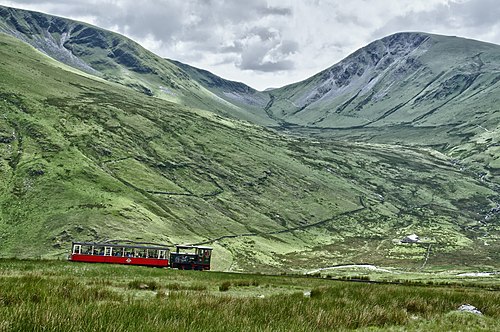
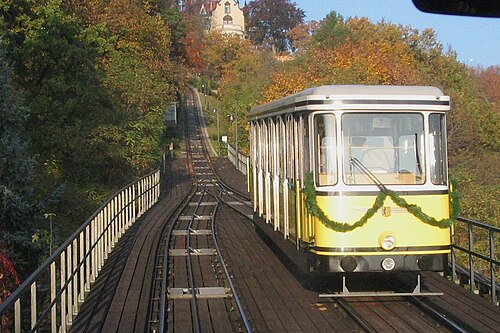
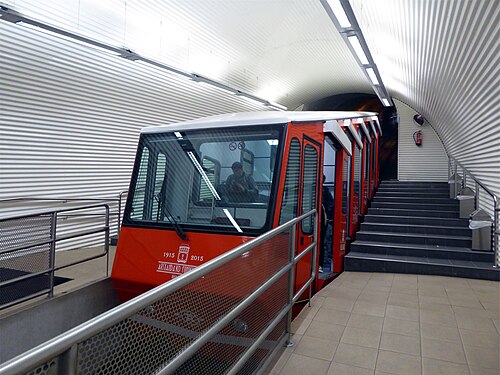
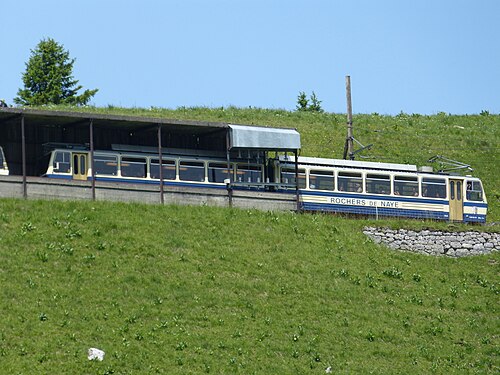
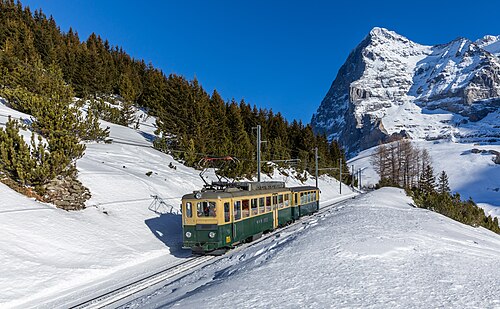
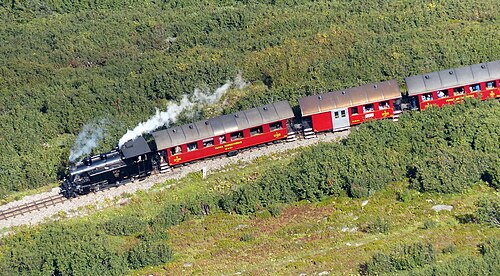
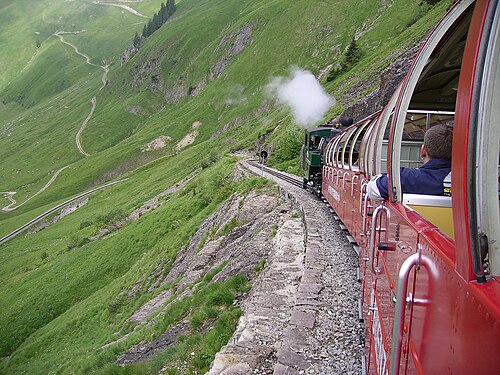
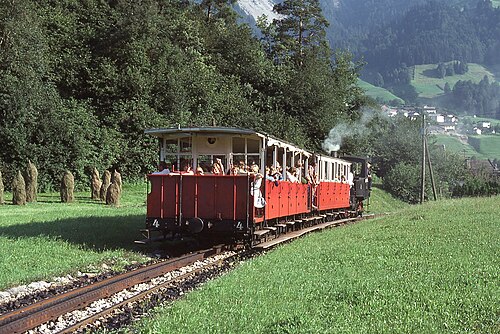
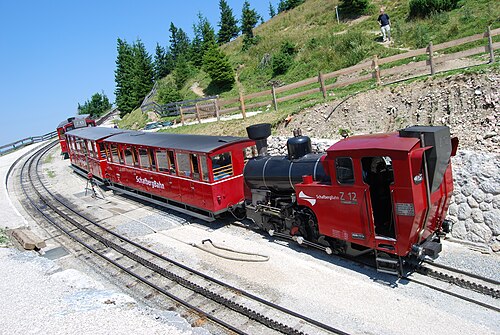
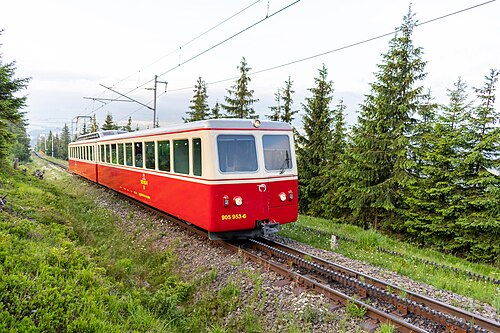
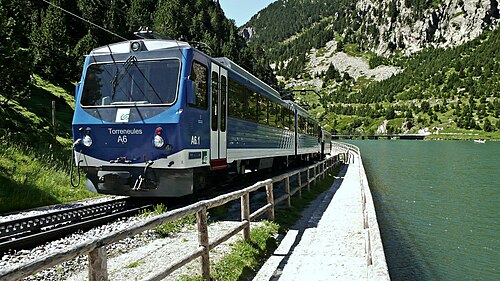
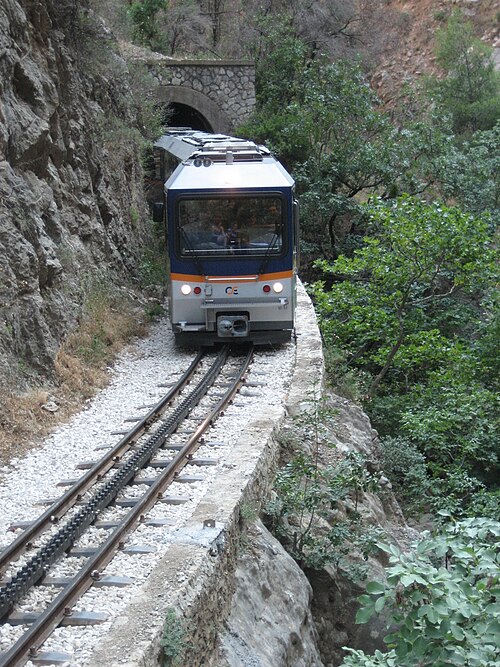
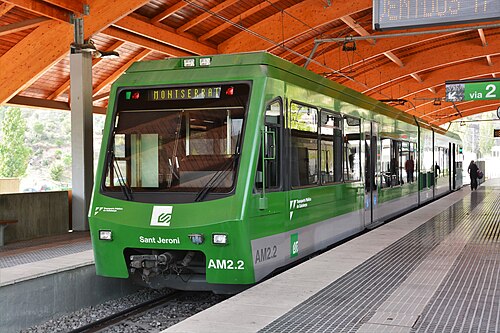
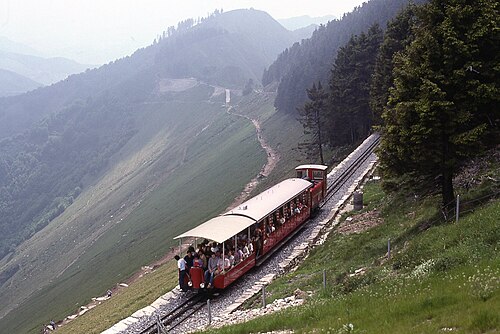
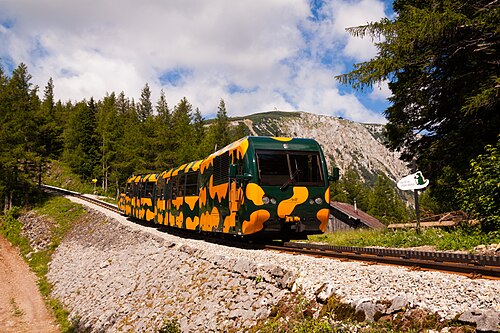
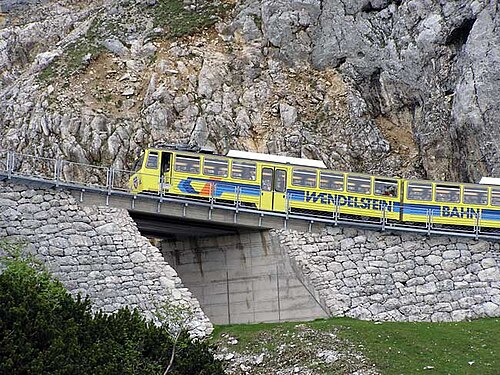
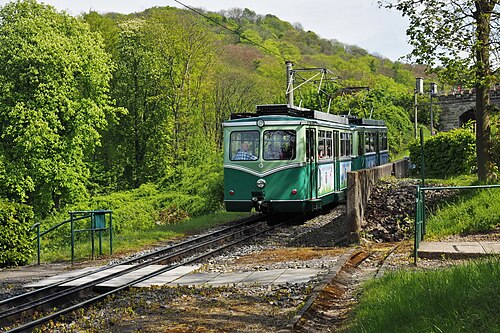
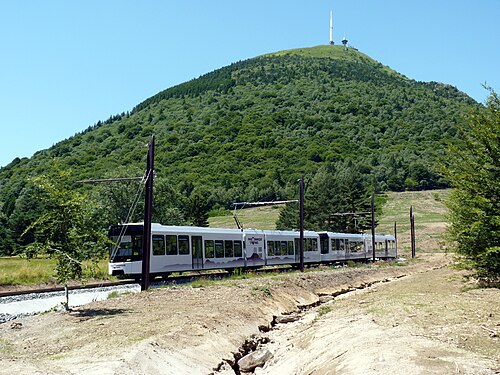
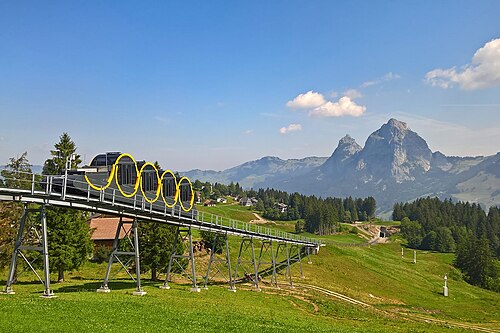
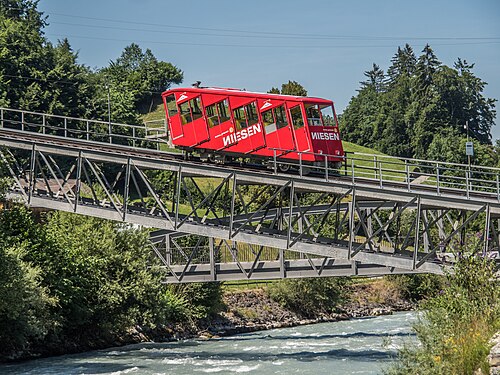
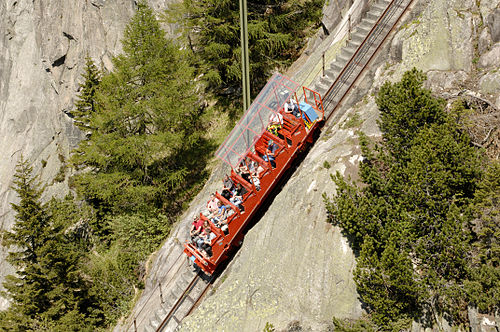
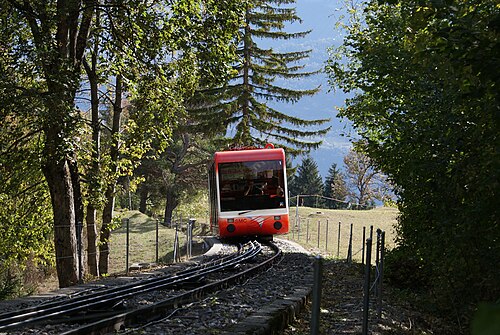
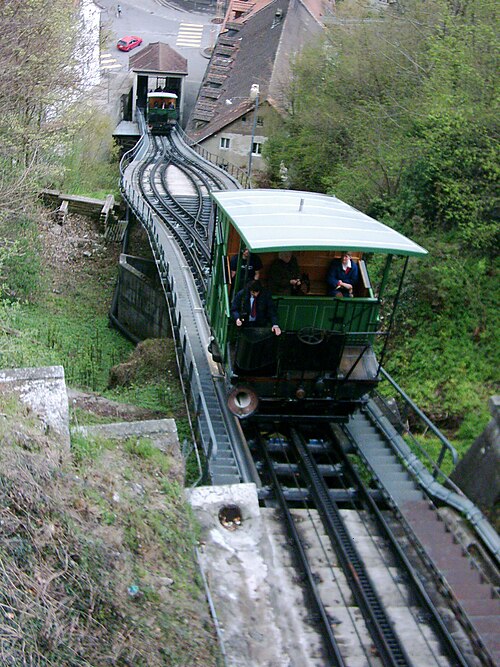
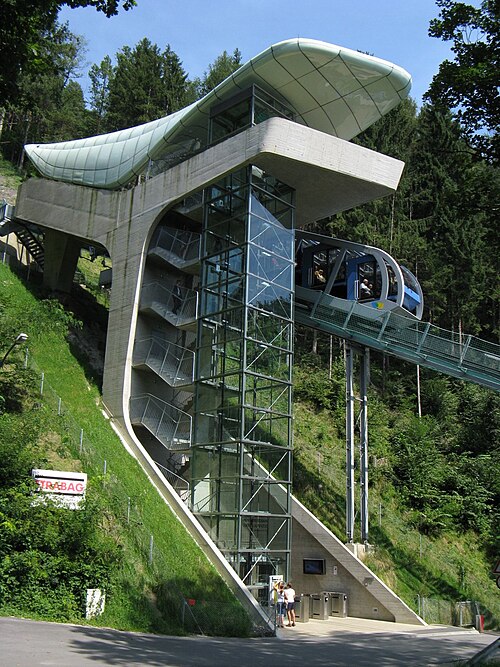
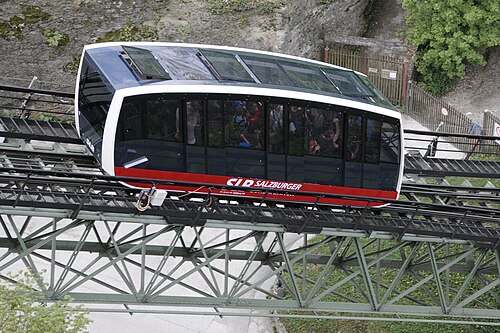
_(2).jpg/500px-Elevador_Hidr%C3%A1ulico_(14740970272)_(2).jpg)
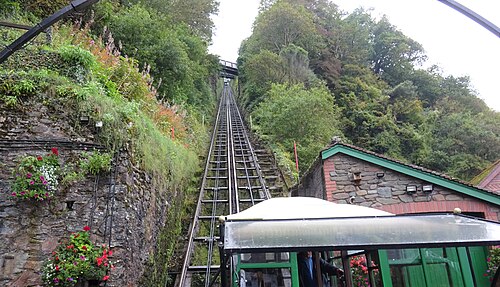
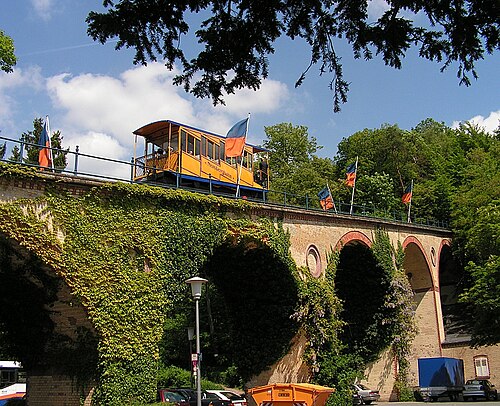
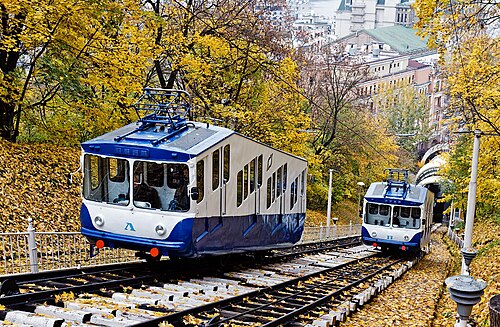
Luxury routes in Europe (7)
- Venice Simplon-Orient-Express
Belmond’s restored Art Deco sleepers of the 1920s–30s: black tie encouraged as the Alps slide past the champagne bar.
Wikipedia ↗ - El Transcantábrico
Spain’s first hotel-train (1983): an eight-day, metre-gauge cruise along the green Cantabrian coast from the Basque Country to Galicia.
Wikipedia ↗ - El Expreso de La Robla
Retraces the historic La Robla coal railway, Spain’s longest narrow-gauge line, on a three-day luxury run between Bilbao and León.
Wikipedia ↗ - Presidential Train
Royal-blue saloon carriages built from 1890, which once carried heads of state, now a fine-dining train up the terraced Douro wine valley.
Wikipedia ↗ - Al Ándalus
A rolling Belle Époque palace whose 1929 sleeping cars once carried the British court from Calais to the Riviera: now easing from Seville to Madrid in seven days.
- Belmond Royal Scotsman
Just 40 guests aboard mahogany-panelled Pullmans that cross the Forth Bridge outbound and stable each night in Highland sidings.
Wikipedia ↗ - Le Grand Tour
Puy du Fou’s rolling theatre: a Belle Époque sleeper loops 4,000 km around France in six days, actors staging a mystery from Reims to Chenonceau.
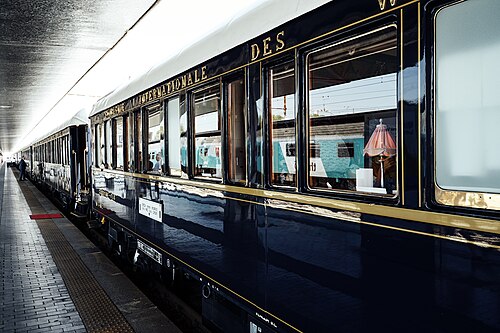
Photos via Wikimedia Commons — each route page credits the author & licence