
🇪🇸 Country
Train routes in Spain
67 routes · high-speed 21 · classic 24 · scenic 10 · heritage 4 · mountain 5 · luxury 3
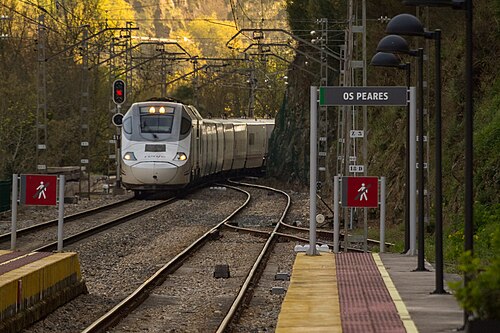
67 routes cross Spain in the World Train Map atlas. The longest is the Alvia Vigo–Barcelona at 1,371 km; the fastest is the TGV inOui, running up to 320 km/h; the oldest line dates to 1851. Every route links to its facts, photo and story, and to the interactive world map.
Open the world railway map →Part of the Europe train map: every route on the continent, one map.
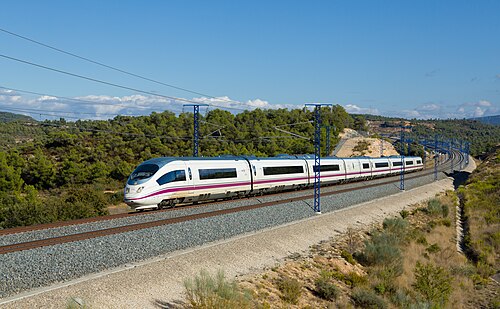
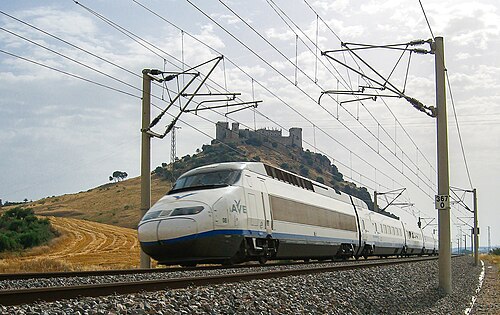
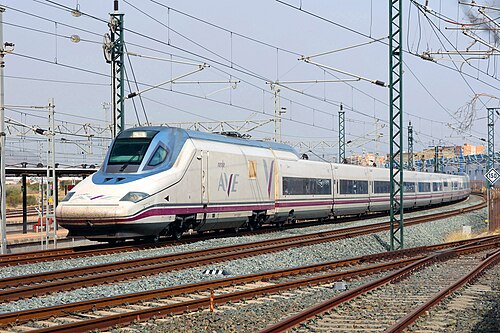
High-speed (21)
- AVE
Scheduled at 300 km/h, this line flipped one of the world’s busiest air routes to rail.
Wikipedia ↗ - AVE
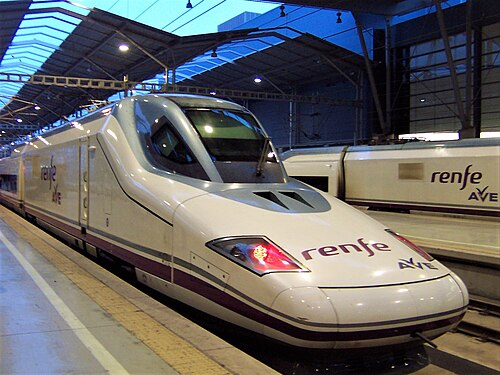
Spain’s first AVE, built for Expo ’92 in standard gauge, the line that reset Spanish railways.
Wikipedia ↗ - AVE
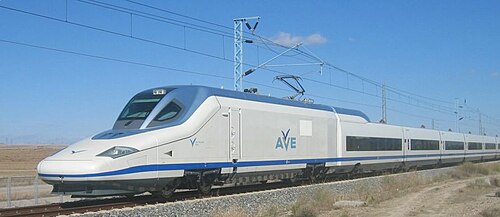
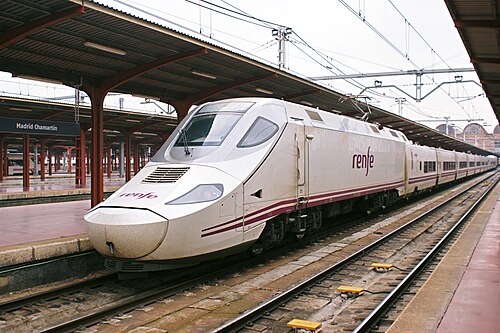
Madrid to the Mediterranean paella coast in 100 minutes aboard the duck-nosed “Pato”.
Wikipedia ↗ - AVE
Splits from the Seville line at Córdoba and dives through the Sierra to the Costa del Sol.
Wikipedia ↗ - Euromed
Talgo tilting sets swap the Madrid high-speed line for the classic Mediterranean corridor at Camp de Tarragona, then follow the coast and the Iberian-gauge line beyond Valencia to Alicante.
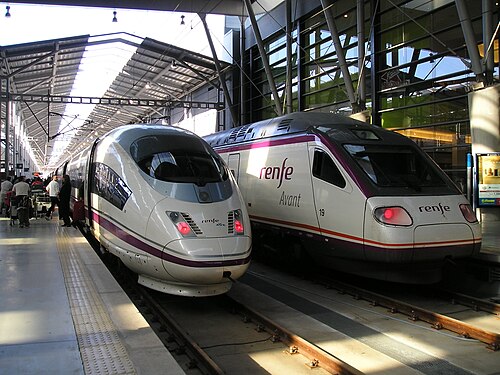
Wikipedia ↗ - Avant Málaga–Granada
The Bobadilla branch of 1874 served Granada for a century and a half; its high speed replacement opened in 2019, but Málaga meant a change at Antequera until the Gobantes chord made it direct in 2022.
Wikipedia ↗ - AVE
Branches off the Madrid–Levante high-speed line to reach the Costa Blanca, opened in 2013 and worked by S-112 “Pato” trainsets.
- AVE
The first stretch of Spain’s Madrid–Barcelona line (2003), crossing the Guadalajara plateau and Ebro valley to Zaragoza in 75 minutes.
- AVE
Leaps into Galicia through 30 tunnels, including the 8.6 km O Corno bore, then runs on down the Atlantic axis through Santiago de Compostela to the coast at A Coruña.
Wikipedia (ES) ↗ - AVE
Opened in 2019, it branches off the Córdoba–Málaga line at Antequera to lift the AVE network into the foothills of the Sierra Nevada.
Wikipedia ↗ - AVE
A single high-speed run tying the Mediterranean to the Costa del Sol, skirting Madrid to stitch two AVE corridors together.
Wikipedia ↗ - Avant Málaga–Sevilla
Andalusia’s own high-speed shuttle: Málaga to Seville via Córdoba’s mezquita city in two hours, on the S-104 sets built for exactly this.
Wikipedia ↗ - TGV inOui
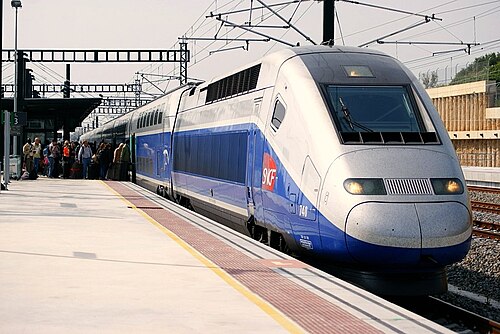
Paris to Barcelona in 6 h 39 min, diving under the Pyrenees through the 8.3 km Perthus tunnel at the Spanish border.
Wikipedia ↗ - Alvia
Off the 1992 Madrid–Seville high-speed spine, a gauge-changing Talgo carries on through sherry country to the Atlantic at Cádiz.
Wikipedia ↗ - AVE Madrid–Oviedo
The 2023 Variante de Pajares pierced the Cantabrian wall with a 25 km base tunnel, cutting Asturias’ link to Madrid to about three hours.
Wikipedia ↗ - Alvia Madrid–Badajoz
High speed reached long-isolated Extremadura in 2022, passing the Roman city of Mérida to the Portuguese border at Badajoz.
Wikipedia ↗ - AVE Madrid–Murcia
High speed reached the Segura in December 2022, running Madrid to Murcia via Cuenca and Albacete on a new elevated approach into the palm-country capital.
Wikipedia ↗ - Alvia
Gauge-changing Alvias to the Basque coast: the 2022 Burgos high-speed line, Vitoria’s green ring and the belle-époque bay of La Concha at the end.
Wikipedia ↗ - Alvia
Off the high-speed line at Palencia and over the 1866 Reinosa pass — a mountain descent to the Cantabrian Sea and Santander’s curved bay.
Wikipedia ↗ - Avant Eje Atlántico
Galicia’s rebuilt Atlantic spine: 250 km/h between the rías with Santiago de Compostela halfway — the north–south line Madrid’s radial map forgets.
Wikipedia ↗ - Avant Madrid–Toledo
Thirty-three minutes off the Seville high-speed line to the city on the Tagus bend — El Greco’s Toledo as a Madrid day trip.
Wikipedia ↗
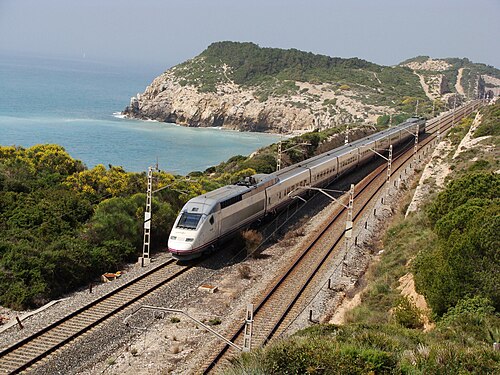
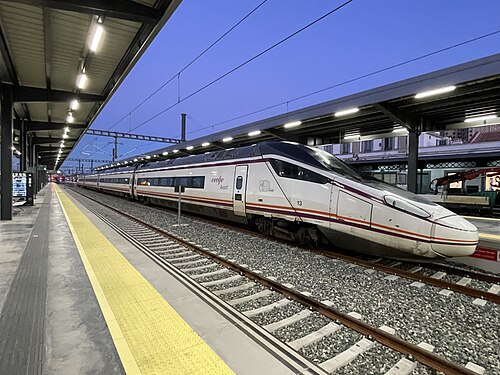
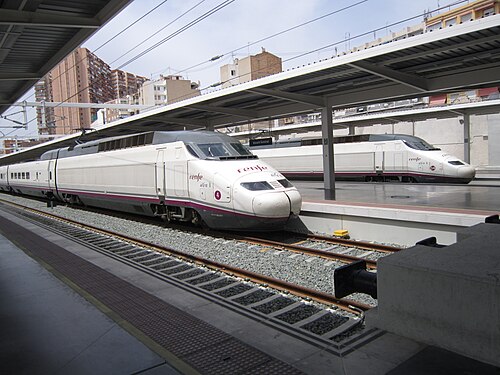
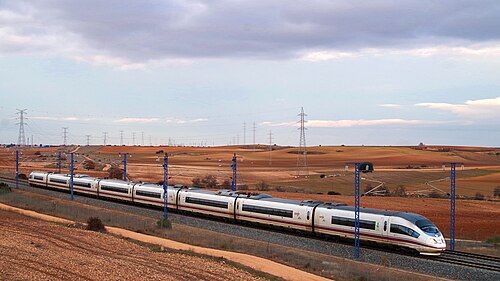
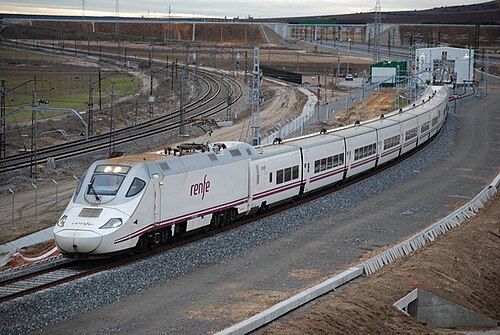
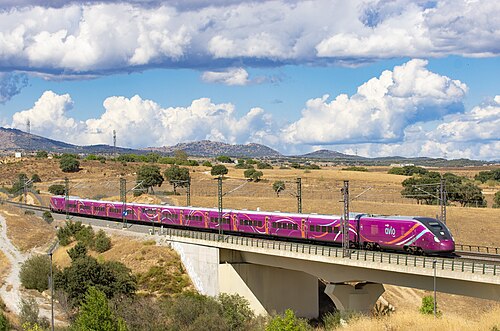
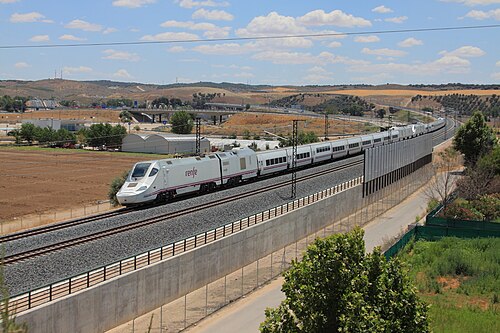
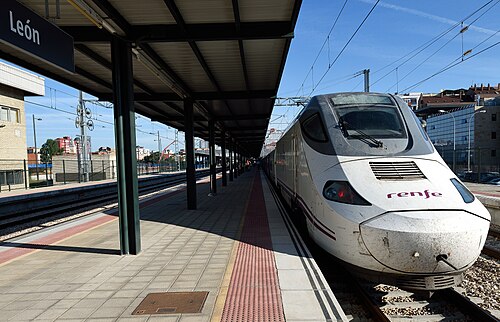
Classic (24)
- R13 Barcelona–Lleida
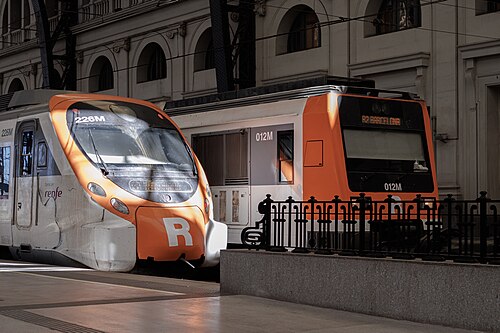
Barcelona to Lleida the slow way, three and three quarter hours down the coast to Vilanova and then inland by Valls and Montblanc, on the Valls to Vilanova line of 29 December 1881.
- C-1 Gijon-Puente de los Fierros
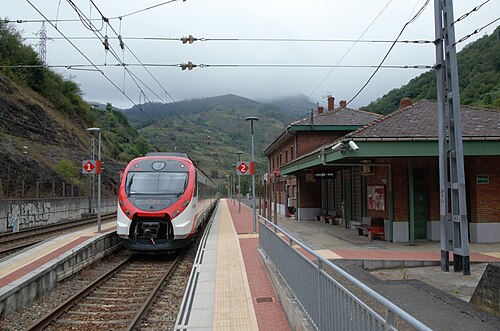
Up the Caudal valley from the Asturian coast through Oviedo and Pola de Lena to Puente de los Fierros, where the line stops at the foot of the Pajares ramp and the climb to Leon begins.
- MD León–Ponferrada
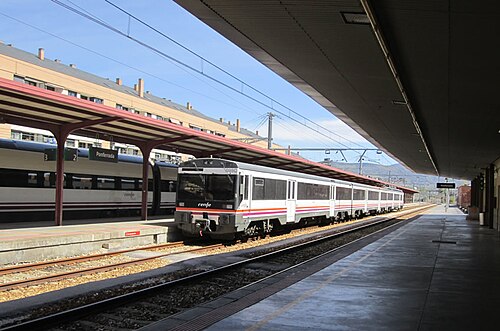
The Rampa de Brañuelas took more than a decade to build and helped bankrupt the company that began it. León to Ponferrada over the Montes de León in under two hours, through since 4 February 1882.
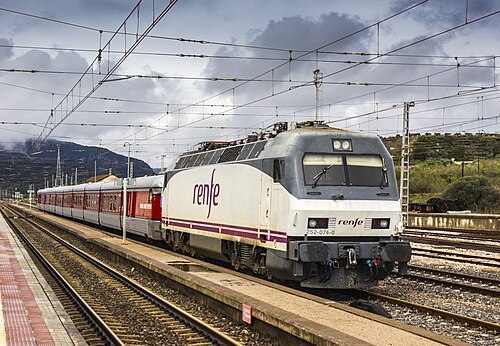
- Alvia Vigo–Barcelona
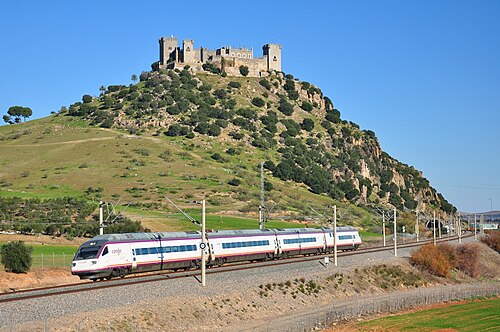
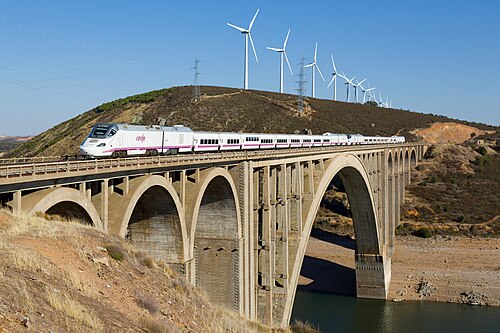
Fourteen hours from the Atlantic to the Mediterranean, Vigo to Barcelona by Santiago, the Bierzo, León, Pamplona and Zaragoza. At 1,371 km it is the longest scheduled domestic run on this map.
- Comboio Raiano
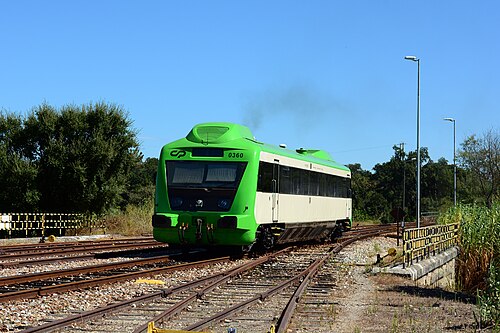
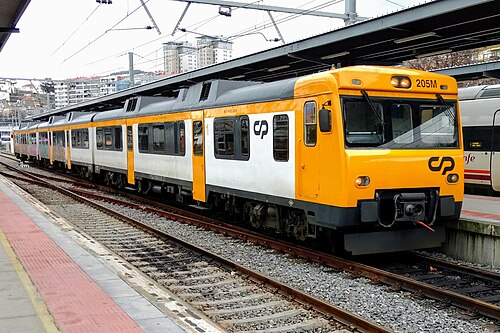
The borderland train across the cork oaks of the Alentejo, Abrantes to Badajoz by way of Ponte de Sor, Crato and Elvas, on the link to Spain that opened in September 1863.
- Alvia Madrid–Salamanca
Over the Guadarrama by high-speed line, then across Castile to the golden sandstone of Salamanca in well under two hours.
Wikipedia ↗ - Celta
The only train across the Portugal–Spain border in the north: down the Minho, over the Valença bridge, into Galicia — two countries, one ticket, 2 h 35.
Wikipedia (PT) ↗ - Zafra–Huelva railway
Built in 1889 to carry Sierra de Aracena ore down to the quays at Huelva, and still crossing it past halts named for villages miles from the line: Jabugo, Almonaster, Valdelamusa.
Wikipedia ↗ - Manresa–Lleida railway
Inland Catalonia the slow way, over the Segarra plateau by Calaf and Cervera; the first trains ran into Lleida in 1860 while the coastal route through Valls took the traffic.
Wikipedia (CA) ↗ - Ciudad Real–Badajoz railway
338 km west across La Mancha and the Extremadura dehesa, from Ciudad Real to the Portuguese border city of Badajoz, on track opened in 1866.
Wikipedia (ES) ↗ - Linares Baeza–Almería railway
Iberian gauge from the Alcázar–Cádiz main line at Linares down through the Sierra to the Mediterranean at Almería, through the desert country the spaghetti Westerns made famous.
Wikipedia ↗ - Castejón–Alsasua railway
Iberian-gauge track up the Ebro and over into Navarre, opened in 1865 and still the Madrid–Basque Country road through Altsasu.
- Manzanares–Ciudad Real line
Single Iberian-gauge track across La Mancha, opened in 1861 by the MZA company and electrified today as Adif's line 522.
Wikipedia (ES) ↗ - Valencia–Alicante line
The Iberian-gauge coastal alternative to the AVE: 1,668 mm single track through Xàtiva and Villena, still worked end to end by the Euromed.
- Alicante–Murcia line
Iberian gauge since 1884, threading the Elche palm groves and the Segura valley between two provincial capitals in under an hour.
Wikipedia ↗ - Sevilla–Huelva
The 1880 MZA line west over the Guadalquivir plain and Condado vineyards to the Atlantic at Huelva, whose neo-Mudéjar terminus has stood empty since 2019 and lost its roof to a fire in 2022.
Wikipedia (ES) ↗ - Almería–Granada
Across the high desert of the Hoya de Guadix: Almería’s palms to Granada by way of Moreda, through the badlands the spaghetti Westerns loved.
- Jaén–Cádiz
One train across all Andalucía: olive country at Jaén, the Guadalquivir at Córdoba and Seville, sherry country at Jerez, and the Atlantic at Cádiz.
- Jaén–Madrid
The classic climb out of Andalucía: through the Despeñaperros gorge, the old gateway pass, then straight across La Mancha to Madrid.
- Sevilla–Zafra
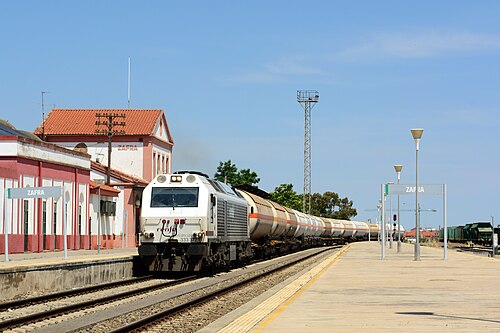
North out of Seville into the Sierra Morena: cork oaks and mining country by Cazalla and Llerena to the junction town of Zafra.
Wikipedia ↗ - R-1 Madrid–Ávila
Out of Madrid past El Escorial and over the Guadarrama to Ávila and its complete medieval walls, on the main line to the French border built between 1860 and 1864.
- Monforte de Lemos–A Coruña railway
For seventy years the only railway between Galicia and the meseta: Lugo to A Coruña opened on 10 October 1875, and the last stretch east of Monforte on 4 September 1883.
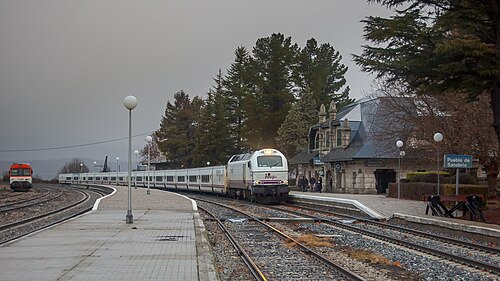
Wikipedia ↗ - Valladolid–Puebla de Sanabria railway
Thirty years of building, some of it by Republican prisoners at forced labour: the climb from Zamora to Puebla de Sanabria opened on 23 September 1952.
Wikipedia ↗ - Zaragoza–Barcelona by Caspe
MZA’s second way from Zaragoza to the sea, built to cut out Lleida: Reus to Móra opened in 1891, Caspe was reached in 1893, the line was complete in 1894 and carried its first trains in 1895.
Wikipedia ↗
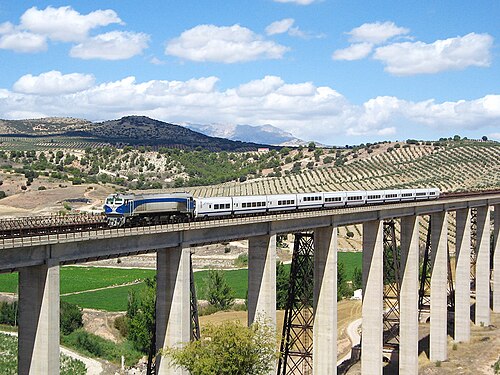
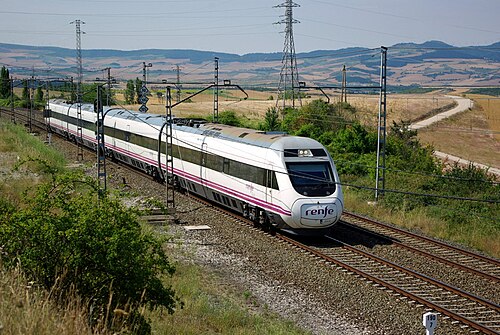
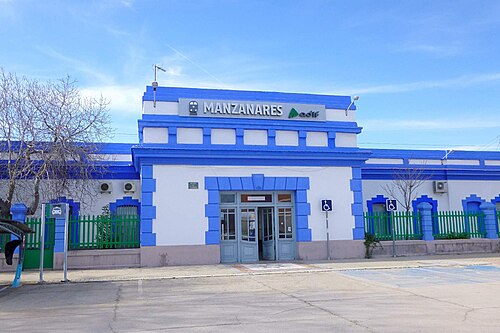
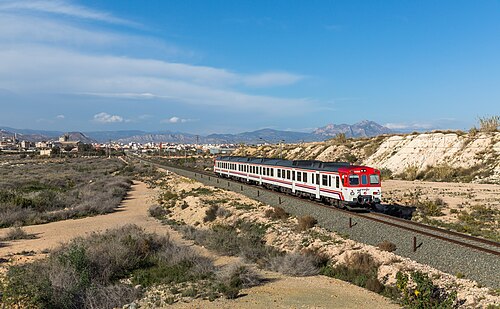
Scenic (10)
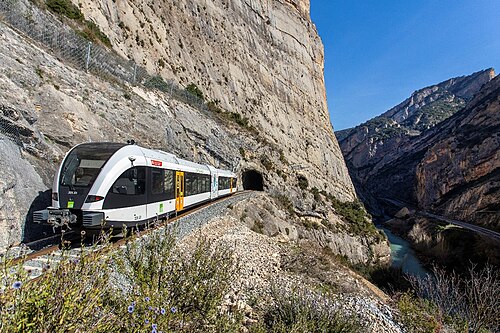
- Tren dels Llacs
A heritage “train of the lakes” climbing beside the Noguera Pallaresa past reservoirs and tunnels to the Pyrenean foothills.
Wikipedia ↗ - Zaragoza–València (via Teruel)
The emptiest main line in Spain: five hours via Teruel — a provincial capital with no direct Madrid train — through ochre gorges to the Mediterranean.
Wikipedia (ES) ↗ - El Canfranero
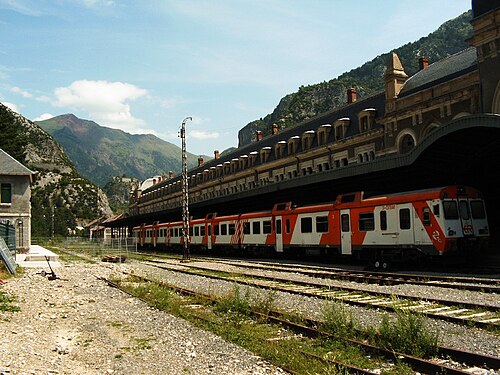
Reopened in June 2025 after two years of works, the line climbs to Europe’s grandest abandoned border station, shut since a 1970 bridge collapse.
Wikipedia (ES) ↗ - R11 Costa Brava Line
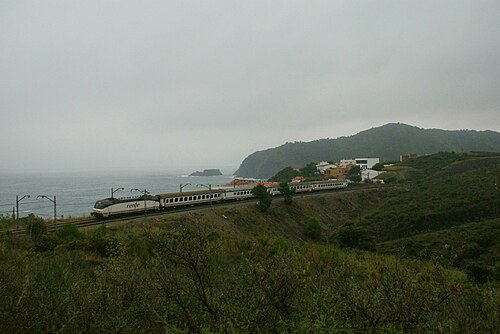
Regional trains skirt Costa Brava cliffs near the French border before Portbou, terminus of the line completed in 1878.
Wikipedia ↗ - Mr Henderson’s Railway
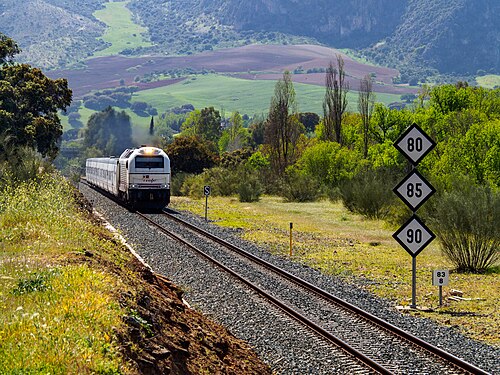
Up the Serranía de Ronda from Gibraltar bay: the British-built 1892 line that is Mr Henderson’s railway proper, Algeciras to the Bobadilla plain, ending today at Antequera Santa Ana’s high-speed interchange.
Wikipedia ↗ - Rodalies R3
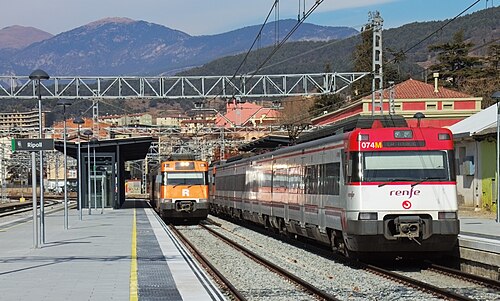
Climbs from Barcelona to 1,494 m at Toses — the roof of the Spanish network — to meet the Yellow Train across the platform at Latour-de-Carol.
Wikipedia ↗ - Media Distancia R-3f
Three metre-gauge trains a day still thread all 119 km of the 1898 Santander–Bilbao railway, winding through green Basque and Cantabrian valleys.
Wikipedia ↗ - Media Distancia R-1f
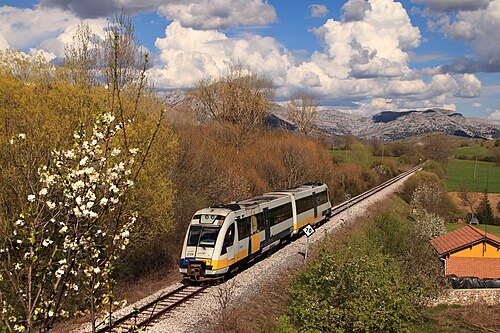
Europe’s longest narrow-gauge ride: two trains a day take seven hours to weave around Galicia’s rias and along the Asturian cliffs from Ferrol to Oviedo.
Wikipedia (ES) ↗ - Xàtiva–Alcoi railway
Iberian-gauge single track opened in 1904, climbing 64 km of viaducts and tunnels from the Xàtiva plain into the mountains at Alcoi.
Wikipedia (ES) ↗ - Málaga–Sevilla
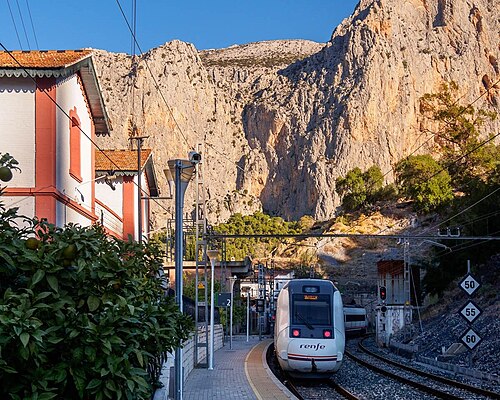
The slow way between Andalucía’s two great cities: up the Guadalhorce past El Chorro’s gorge, beneath the Caminito del Rey walkway, then across the campiña by Osuna and Marchena.
Heritage (4)
- Tren de Sóller
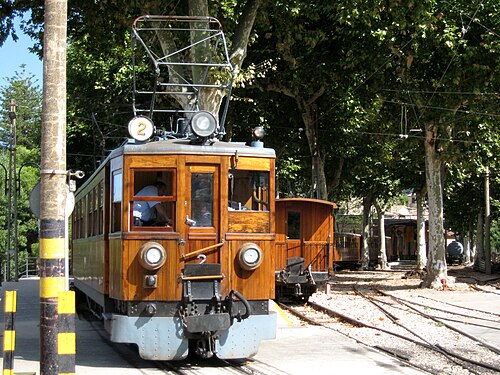
Varnished mahogany carriages from 1912 thread thirteen tunnels through the Tramuntana into Sóller’s orange-grove valley. Mallorca’s rolling time machine.
Wikipedia ↗ - Tren de la Fresa
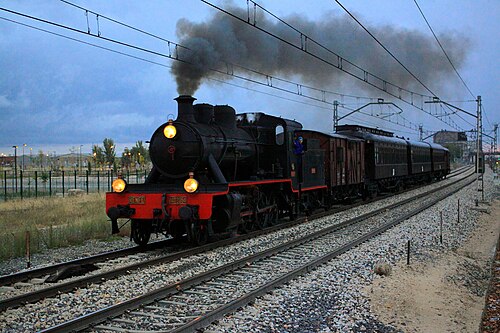
Hostesses in 1920s dress hand out strawberries aboard replica carriages on Spain’s second-ever railway, opened in 1851.
Wikipedia ↗ - Ferrocarril de Riotinto
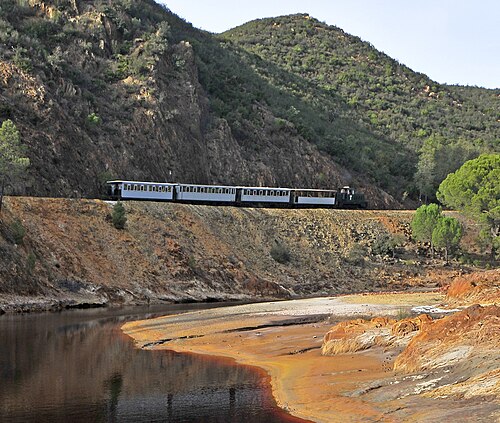
Restored mining stock creeps along the blood-red Río Tinto through a Mars-like landscape mined for 5,000 years — Victorian steam hauls it on winter Sundays.
Wikipedia ↗ - Tren de Felipe II
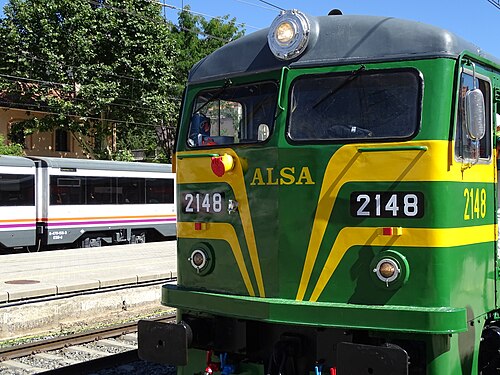
An ALCO diesel and 1940s coaches staffed by costumed actors climb from Príncipe Pío into the Guadarrama foothills to Philip II’s colossal monastery-palace.
Mountain (5)
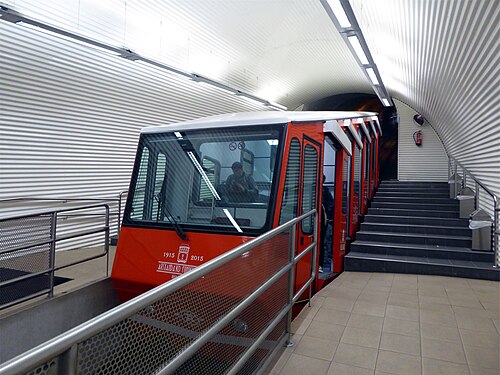
- Funicular de Artxanda
Bilbao’s 1915 escape hatch: three minutes from the Casco Viejo edge to the Artxanda ridge and the whole Guggenheim skyline at your feet.
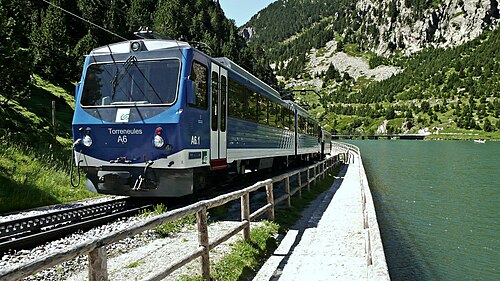
Wikipedia ↗ - Cremallera de Núria
The only way to roadless Núria: Abt rack rails climbing 1,000 vertical metres through the Freser gorges to a sanctuary at 1,964 m.
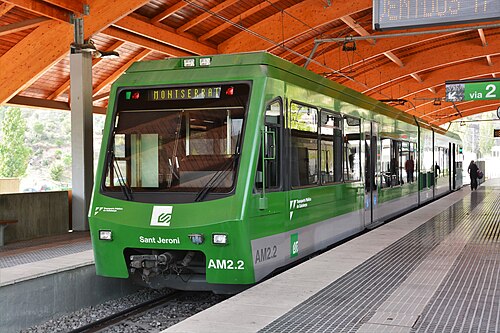
Wikipedia ↗ - Cremallera de Montserrat
A rack railway climbing the serrated massif to the Benedictine monastery at 720 m: the pilgrims’ way to Catalonia’s black Madonna since 1892.
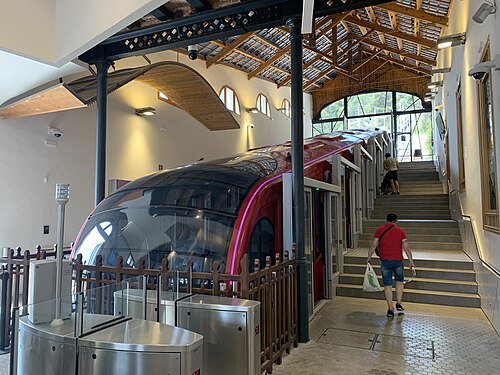
Wikipedia ↗ - Tibidabo Funicular (Cuca de Llum)
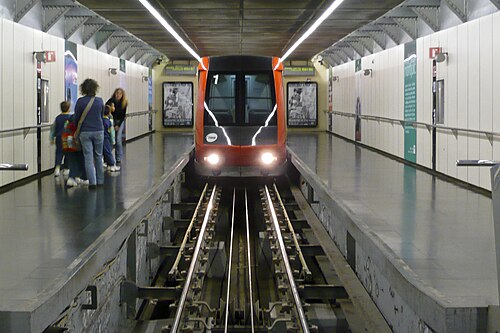
Barcelona’s 1901 summit line to the Tibidabo amusement park and Sagrat Cor temple, reborn in 2021 as the glass ’glow-worm’ trains.
Wikipedia ↗ - Montjuïc Funicular
Metro-integrated since 1928 and rebuilt for the 1992 Olympics — among Europe’s highest-capacity funiculars at 8,000 passengers an hour.
Wikipedia ↗
Luxury (3)
- El Transcantábrico
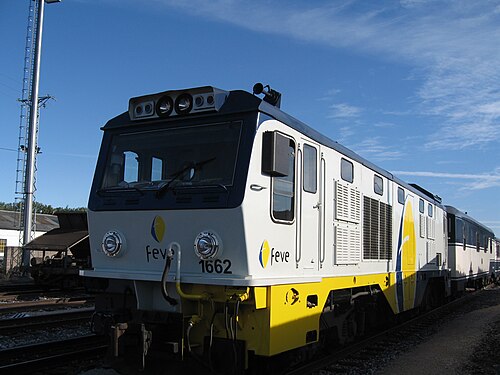
Spain’s first hotel-train (1983): an eight-day, metre-gauge cruise along the green Cantabrian coast from the Basque Country to Galicia.
Wikipedia ↗ - El Expreso de La Robla
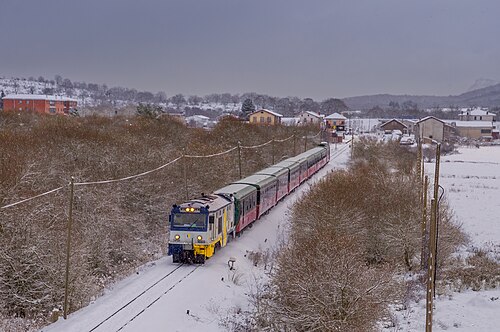
Retraces the historic La Robla coal railway, Spain’s longest narrow-gauge line, on a three-day luxury run between Bilbao and León.
Wikipedia ↗ - Al Ándalus
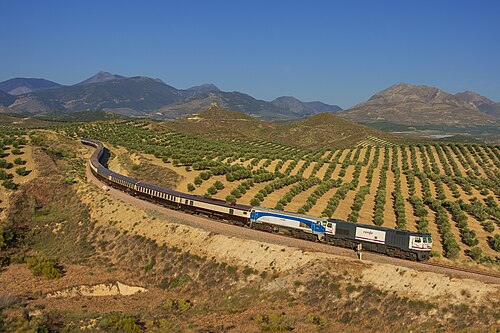
A rolling Belle Époque palace whose 1929 sleeping cars once carried the British court from Calais to the Riviera: now easing from Seville to Madrid in seven days.
Photos via Wikimedia Commons — each route page credits the author & licence
What is the fastest train in Spain?
The TGV inOui, running Paris to Barcelona at up to 320 km/h. It is one of 67 routes in Spain in this atlas.
Are there night trains in Spain?
Not in this atlas. Spain has 67 routes here and none of them is a scheduled sleeper, though night trains from neighbouring countries may still reach it.
Can you cross the border by train from Spain?
Yes — 4 of its 67 routes continue into another country: Comboio Raiano (Abrantes – Badajoz), Celta (Porto – Vigo), TGV inOui (Paris – Barcelona), Rodalies R3 (Barcelona – Latour-de-Carol).
Which is the most scenic railway in Spain?
Spain has 15 scenic or mountain lines in this atlas. The longest is the Zaragoza–València (via Teruel), 355 km.
Cross-border lines continue into
- 🇫🇷 Train routes in France 109 routes
- 🇵🇹 Train routes in Portugal 18 routes