
🇦🇹 Country
Train routes in Austria
63 routes · high-speed 2 · classic 25 · night train 5 · scenic 18 · heritage 6 · mountain 6 · luxury 1
63 routes cross Austria in the World Train Map atlas. The longest is the Venice Simplon-Orient-Express at 1,270 km; the fastest is the Koralmbahn, running up to 250 km/h; the oldest line dates to 1839. Every route links to its facts, photo and story, and to the interactive world map.
Open the world railway map →Part of the Europe train map: every route on the continent, one map.
High-speed (2)
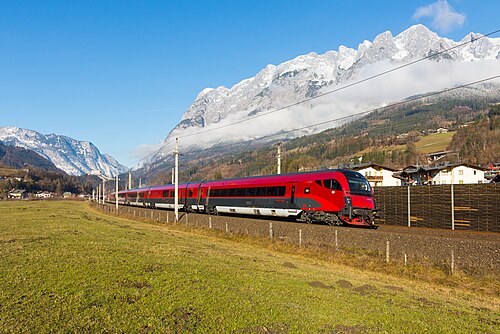
- Railjet
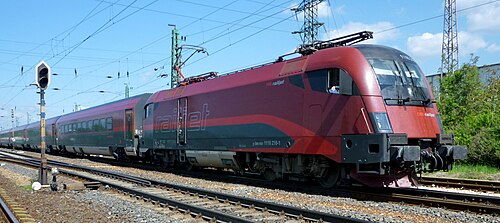
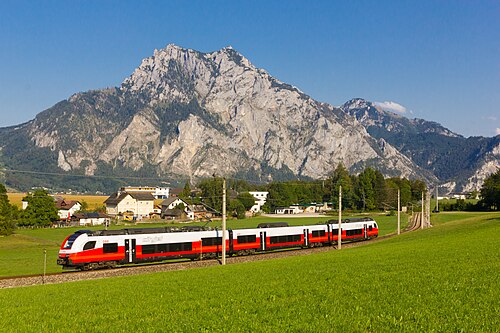
Bavaria to the Danube capital along the Westbahn, past Salzburg’s fortress and the baroque abbeys of Upper Austria.
Wikipedia ↗ - Koralmbahn
Austria’s game-changer of December 2025: the 33 km Koralm Tunnel cuts Graz–Klagenfurt from nearly three hours to 45 minutes, forging a new Baltic–Adriatic high-speed axis.
Wikipedia ↗
Classic (25)
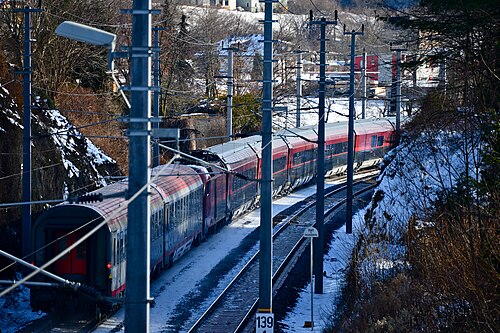
- Railjet
Follows the old Orient Express alignment down the Danube plain: centre to centre faster than any flight.
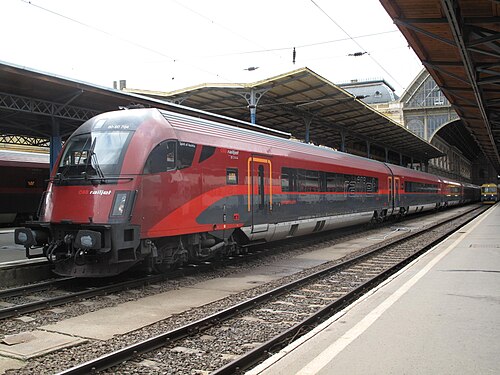
Wikipedia ↗ - Railjet
Follows the Habsburg Empire’s first steam railway of 1839. Prague, Brno and Vienna strung like pearls.
Wikipedia ↗ - WESTbahn
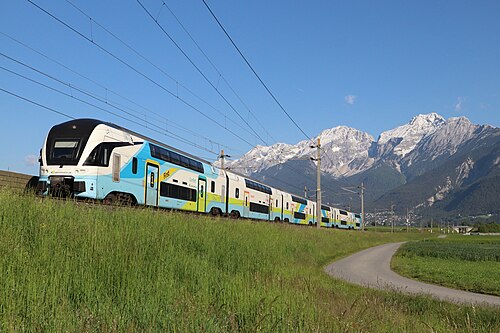
Austria’s first open-access challenger, running since 2011: 200 km/h Stadler KISS double-deckers that drove fares down on the Vienna–Salzburg run.
Wikipedia ↗ - Triesting Valley Line
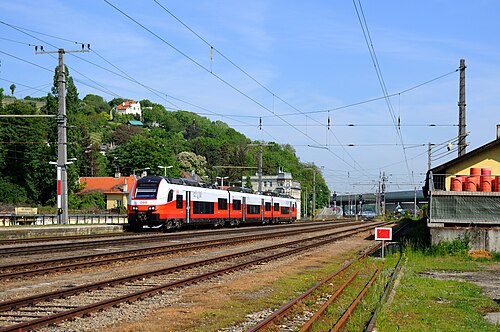
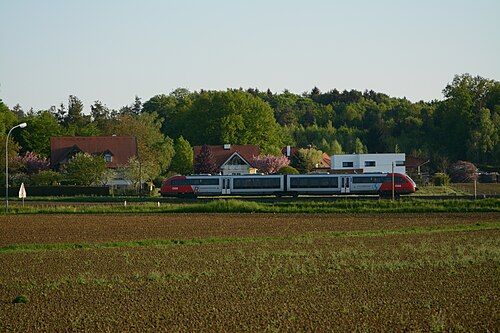
Nineteen kilometres down the Triesting out of the Vienna Woods to the main line at Leobersdorf, the surviving stub of a branch the Leobersdorfer Bahn opened as far as Kaumberg in September 1877.
- Summerauerbahn
The Summerauerbahn: out of Budweis, over the granite hills where Europe’s first horse-drawn railway ran, down the Mühlviertel to the Danube at Linz.
Wikipedia (CS) ↗ - REX Wien–Sopron
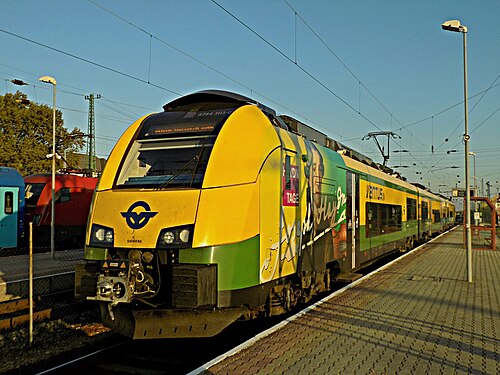
Vienna into Hungary the old imperial way: Wiener Neustadt, the Ödenburg plain, and GySEV’s green-and-yellow home town of Sopron.
- Railjet Vienna–Bregenz
The full west-bound railjet: Salzburg, Innsbruck, the Arlberg tunnel and out at the Bodensee — Austria end to end in one train.
Wikipedia ↗ - Brenner Railway
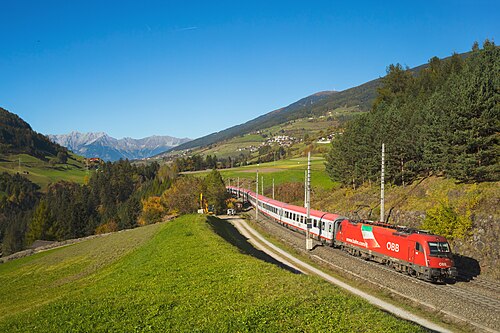
Munich to Verona over the first railway across the main Alpine crest (1867), still topping the open pass at 1,371 m: no summit tunnel, just a border station.
Wikipedia ↗ - Railjet Wien–Lienz
Osttirol’s capital link restored: two railjets a day over the Semmering, through the new Koralm tunnel and up the Drau valley — a child of the Dec 2025 timetable.
Wikipedia ↗ - München–Innsbruck
The Brenner corridor’s northern approach: out of Munich, across the Inn at Rosenheim, into Tyrol at Kufstein and up the valley beneath the Karwendel wall.
- Railjet · Deutsches Eck
Tyrol to Salzburg the fast way — through Bavaria: Austrian expresses cut the German corner nonstop via Rosenheim, Alps on the horizon the whole run.
Wikipedia ↗ - REX Wien–Bratislava
Europe’s closest capital pair, an hour apart on the 1848 Marchegg line across the Morava floodplain — two countries, one commuter corridor.
Wikipedia (DE) ↗ - Vorarlbergbahn
Vorarlberg end to end: from Lindau on Lake Constance up the Rhine valley and the Walgau to Bludenz, where the Arlberg and Montafon lines begin.
Wikipedia ↗ - EuroCity Zürich–München
Electrified through in 2020, which cut an hour off the run: out of Zurich by Winterthur and St Gallen, over the Rhine at St Margrethen, along Lake Constance through Bregenz and Lindau, then the Allgäu to Munich.
- Railjet Wien–Venezia
One seat Vienna to Venice: over the Semmering, through the new Koralm tunnel to Klagenfurt and Villach, then the 1879 Pontebbana across the Julian Alps.
- EC Wien–Ljubljana
The EuroCity to Slovenia on the 1857 Southern Railway: over the Semmering to Graz, the Drava at Maribor, then the Sava valley into Ljubljana.
- Tauernschleuse
Salzburg to Carinthia without the pass: the car shuttle through the 1909 Tauern tunnel, hourly under the Alpine main ridge from Böckstein to Mallnitz.
Wikipedia ↗ - S6 Lienz–Villach
Down the Drau from East Tyrol into Carinthia, Lienz past Oberdrauburg and Spittal to Villach, on the original Drautalbahn of 20 November 1871: an S-Bahn since 2015, renumbered S6 in December 2025.
Wikipedia ↗ - S4 Villach–Hermagor
South out of Villach to Arnoldstein, then west up the Gail valley to Hermagor, on a branch opened on 11 August 1894 and ridden by 310 people on its first train.
Wikipedia (DE) ↗ - Almtalbahn
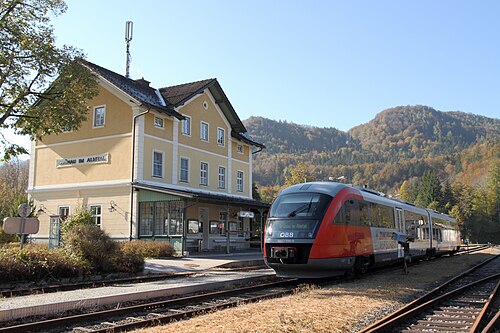
Wels built it to keep the Almtal from Lambach: the branch from Sattledt opened in 1901, owned by a local company until 1942 and run by the state railway from the first day.
Wikipedia ↗ - Neusiedler Seebahn
It opened on 19 December 1897 with all 109 km of it inside Hungary; Trianon moved the northern part into Austria in 1921, and trains have crossed the border at Pamhagen ever since.
Wikipedia ↗ - Hausruckbahn
The northern half of the Salzkammergutbahn, opened on 23 October 1877 by the Crown Prince Rudolf company to bring Hausruck coal down to the salt pans of Ebensee and Ischl.
Wikipedia ↗ - Innkreisbahn
Neumarkt-Kallham to Braunau opened on 20 December 1870 and the bridge over the Inn to Simbach on 1 June 1871; from 1883 to 1897 the Orient Express took this way between Vienna and Munich.
Wikipedia ↗ - Linzer Lokalbahn
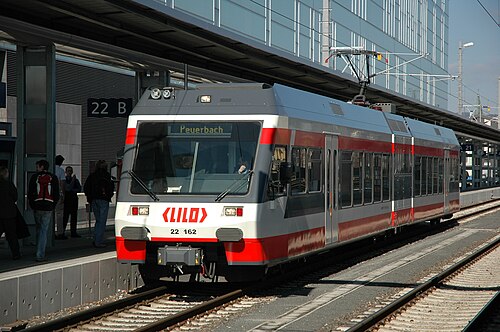
Electric from the start: Waizenkirchen to Peuerbach opened in 1908, the link on to Eferding and Linz on 16 December 1912, and Stern & Hafferl have run it since 1 January 1913.
Wikipedia ↗ - Franz-Josefs-Bahn
The first 22 km of the line to Gmünd and Prague: the Vienna end opened in 1870, once the delayed stretch in from Eggenburg was finished, and ran as part of the Stadtbahn from 1898 to 1925.
Wikipedia ↗
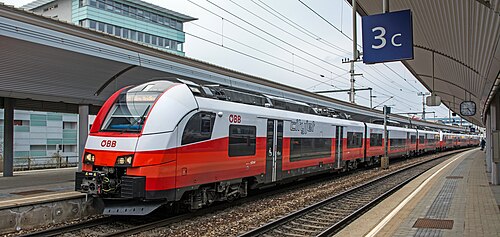
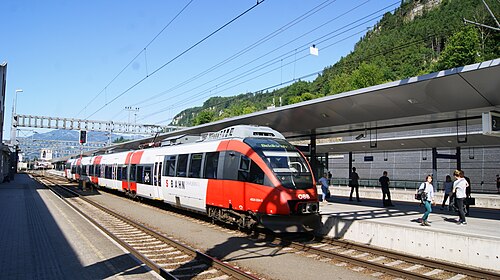
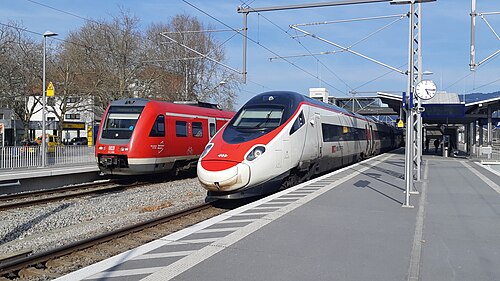
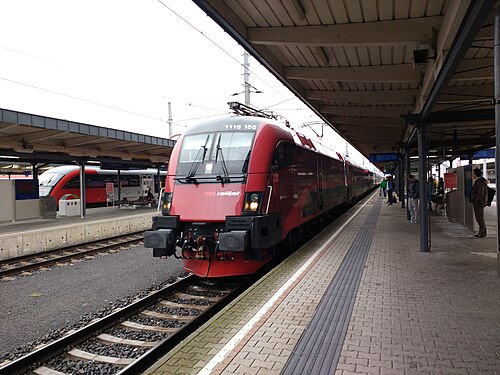
Night train (5)
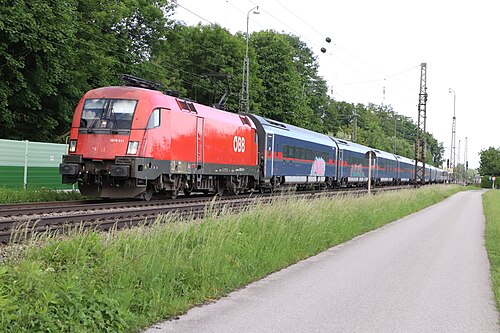
- Nightjet
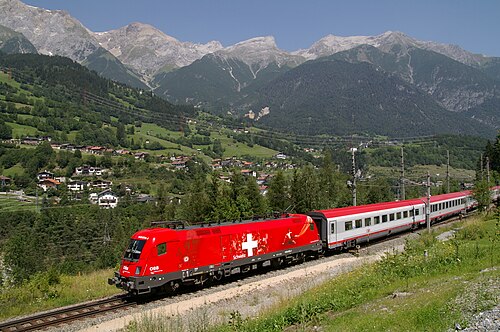
The founding route of the Nightjet brand: over the Arlberg while you sleep, Alps at both ends.
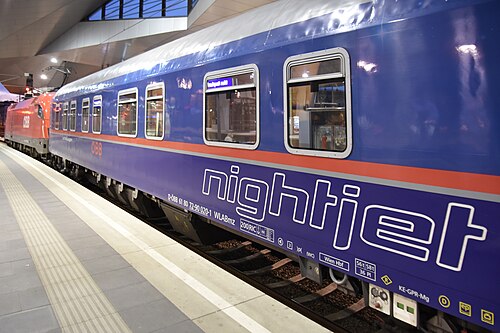
Wikipedia ↗ - Nightjet
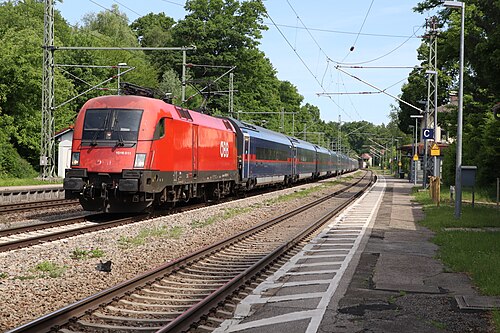
First route to get ÖBB’s new-generation Nightjets in 2023. Mini Cabin pods for solo travellers and 230 km/h sleeper stock.
Wikipedia ↗ - Nightjet Munich–Rome
Board after dinner in Bavaria, wake to Tuscan hills: mini-cabins and wireless charging on ÖBB’s newest sleepers, crossing the Tauern by night. From Villach south it runs coupled with the Vienna portion — one train into Rome.
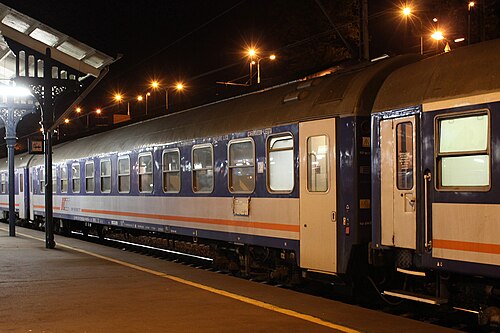
Wikipedia ↗ - Chopin
The Chopin sleeper has linked Vienna and Warsaw since at least the 1980s, slipping through the Moravian Gate by night and finishing down Poland’s CMK fast line into the capital before six.
Wikipedia ↗ - Nightjet Vienna–Rome
Board in Vienna after dinner, cross the Carinthian Alps and the Venetian plain by night, and wake rolling into Rome, a sleeper between two imperial capitals. From Villach south it runs coupled with the Munich portion — one train.
Wikipedia ↗
Scenic (18)
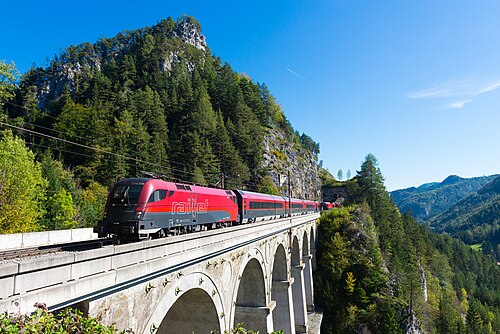
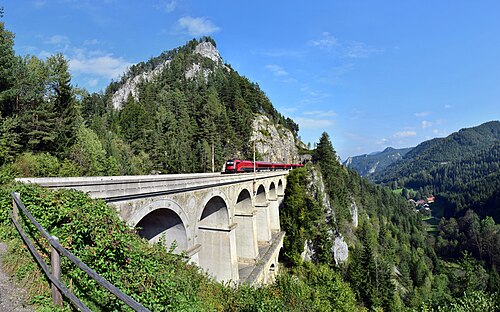
- Semmeringbahn
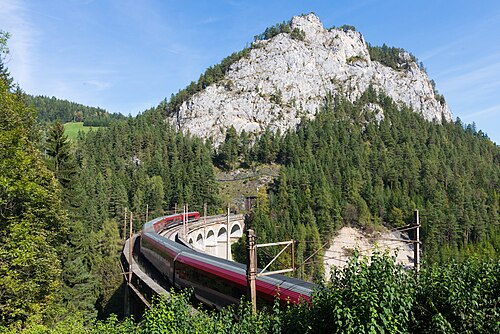
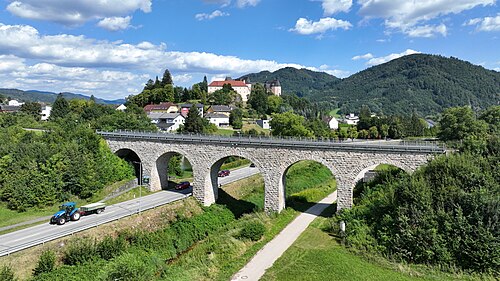
The world’s first true mountain railway (1854) and a UNESCO site: 16 viaducts built before the age of dynamite.
Wikipedia ↗ - Mariazellerbahn
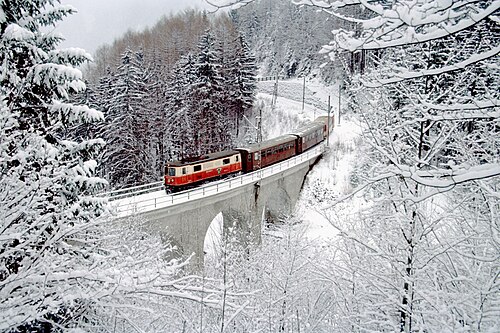
Opened in 1907 and electrified with its own rare 6.5 kV 25 Hz current in 1911, Austria’s grandest narrow-gauge line crests at 892 m in the Gösing Tunnel.
Wikipedia ↗ - REX 92 Wiener Neustadt–Fehring
Planned in 1873 as the Vienna to Thessaloniki railway and killed by the crash that spring, then built in pieces anyway and joined up only in 1910. Wiener Neustadt over the Wechsel to Fehring.
- Rudolfsbahn
Through the Gesäuse on the old Kronprinz Rudolf line, Amstetten to Selzthal in two hours and five by Waidhofen and Hieflau. One train on Saturdays and two on Sundays; on weekdays you change.
Wikipedia ↗ - Carinthian Line
Over the border at Holmec and down the Drava through the old ironworks valleys, Prevalje, Ravne and Dravograd, on a single track built between 1857 and 1863 to carry Carinthian steel out to the world.
- Mühlkreisbahn
Out of Linz on the north bank of the Danube and up into the Mühlviertel towards the Bohemian border, an hour and a half on a branch opened in November 1900.
- Gleichenberger Bahn
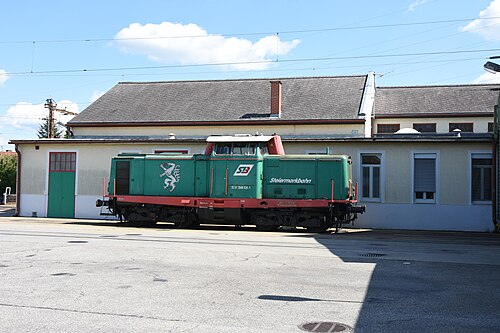
Twenty one kilometres of Styrian light railway from the spa at Bad Gleichenberg down to the main line at Feldbach, opened in the presence of the President of Austria in June 1931.
- Pinzgauer Lokalbahn
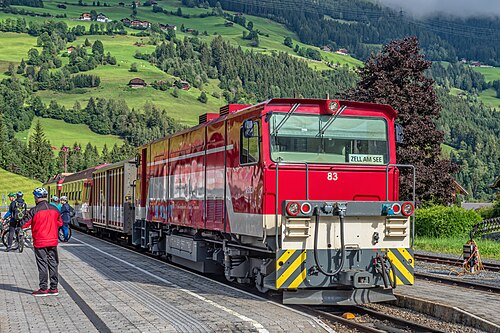
A 760 mm-gauge valley line follows the Salzach past Hohe Tauern peaks to Krimml, ending beneath Austria’s highest waterfall.
Wikipedia ↗ - Zillertalbahn
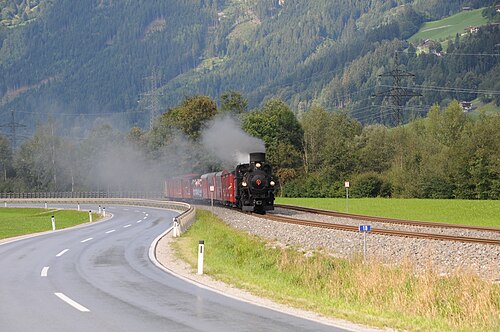
A working 760 mm-gauge valley railway that still runs steam trains alongside its half-hourly regular service to Mayrhofen.
Wikipedia ↗ - Arlberg Railway
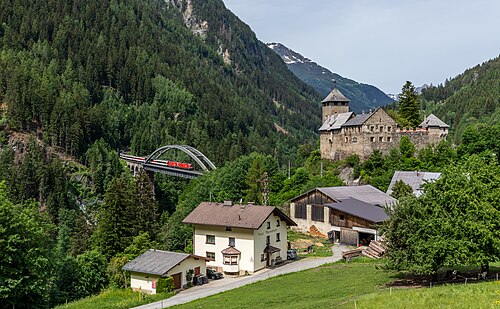
Eight hours Zurich to Vienna on Austria’s only east–west mountain mainline: the Trisanna gorge, Wiesberg Castle and a 1,310 m summit in the 10.2 km Arlberg tunnel.
Wikipedia ↗ - Tauern Railway
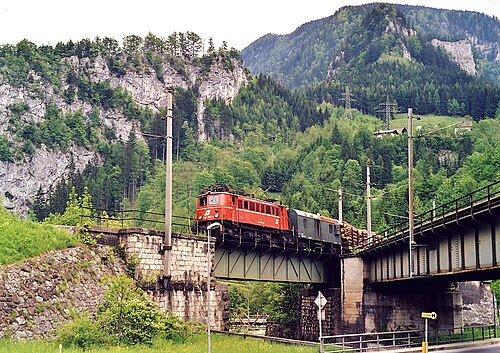
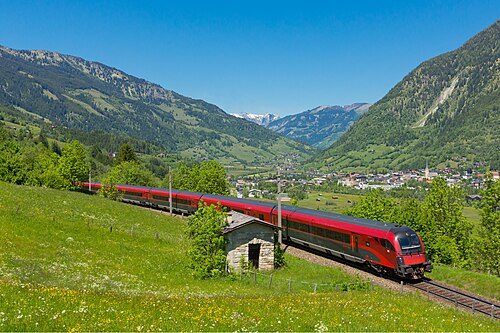
Franz Joseph’s 1909 crossing of the Hohe Tauern: stone viaducts up the Gastein spa valley to an 8.4 km tunnel at 1,226 m.
Wikipedia ↗ - Mittenwaldbahn
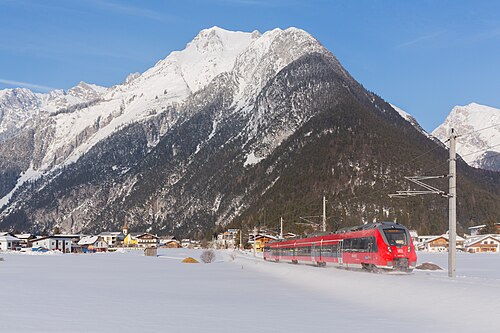
Munich to the Tyrol over the Karwendel: the electrified 1912 Mittenwaldbahn climbs from Garmisch through Alpine meadows and horseshoe curves to the Seefeld saddle before dropping into Innsbruck.
Wikipedia ↗ - Pustertalbahn
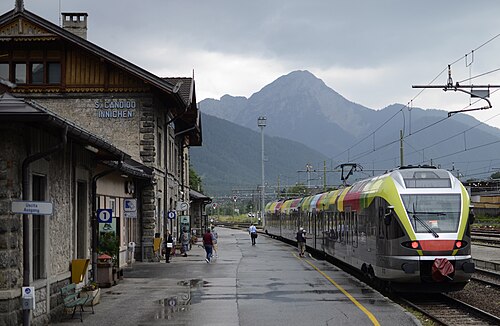
Follows the Puster Valley below the Dolomites from the Brenner line at Fortezza past Bruneck and the Three Peaks, crossing into Austria at Innichen to run on to Lienz in East Tyrol.
Wikipedia ↗ - Salzkammergutbahn
Austria’s lake district by rail: from Attnang-Puchheim along the Traunsee past the imperial spa of Bad Ischl to the shore opposite Hallstatt, the picture-postcard village mirrored in its emerald lake.
Wikipedia ↗ - EC Transalpin
One train, one panorama car, half the Alps: Zurich to Graz over the Arlberg, past Zell am See, the Ennstal and the Gesäuse gates — the day-long EuroCity people ride for the window.
Wikipedia ↗ - Murtalbahn
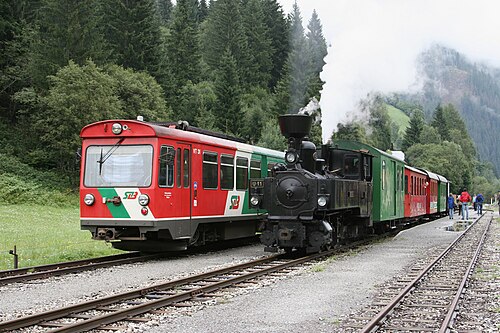
Austria’s second-longest narrow gauge (1894) follows the young Mur 64 km from Unzmarkt to Tamsweg — 70 km/h diesels on weekdays, steam specials all summer.
Wikipedia ↗ - Pyhrn railway
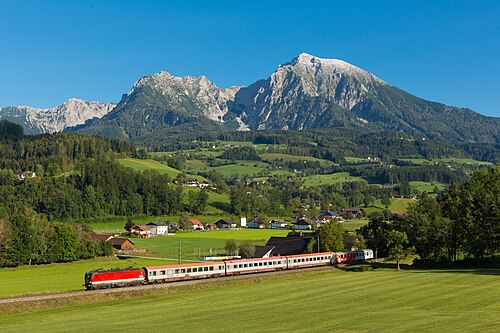
Climbs from Linz over the Pyhrn Pass to Selzthal, tying the Westbahn to the Enns valley through the northern limestone Alps.
Wikipedia ↗ - Donauuferbahn
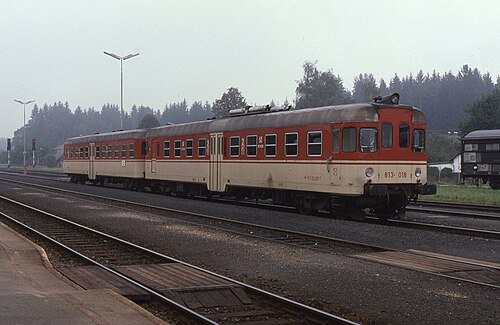
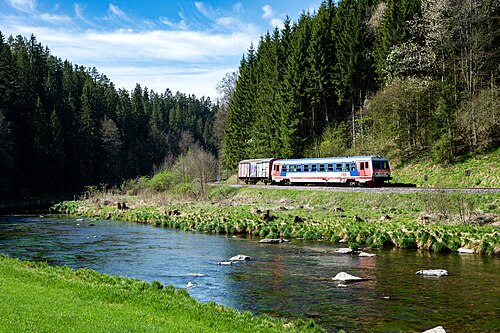
Mauthausen to Grein opened on 4 July 1898 and the state line on through the Strudengau in 1909; trains now turn at St. Nikola-Struden, where the rest of the Danube line was given up in 2019.
Wikipedia ↗
Heritage (6)
- Wachaubahn
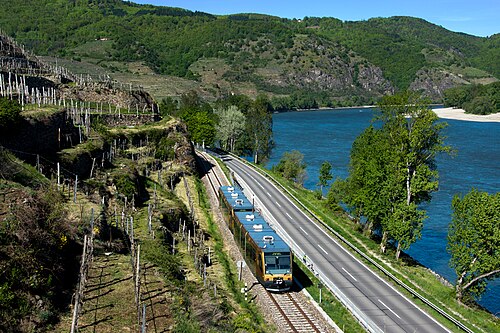
Keeps to the north bank of the Danube through the UNESCO Wachau: apricot orchards and terraced vineyards past Dürnstein, where Richard the Lionheart was once held for ransom.
Wikipedia ↗ - Erzbergbahn
The “Semmering of the ore”: a heritage line over the 1,204 m Präbichl pass under the terraced Erzberg, the ochre iron mountain worked for over 1,300 years.
Wikipedia (DE) ↗ - Waldviertelbahn
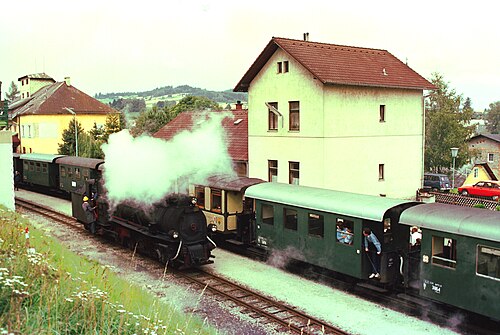
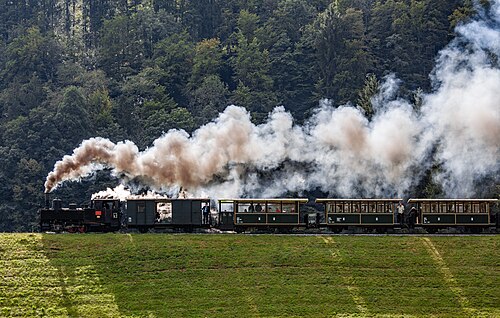
NÖVOG’s 760 mm Südast winds from Gmünd through the granite-and-pine Waldviertel to Groß Gerungs, summer steam grinding round horseshoe bends and over stone viaducts.
Wikipedia (DE) ↗ - Reblaus-Express
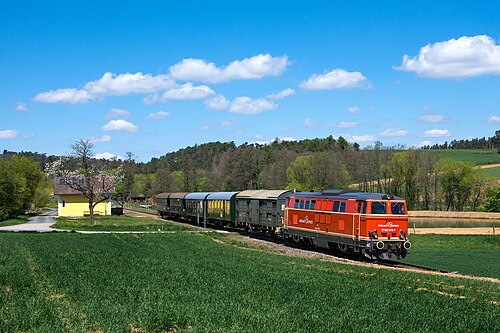
Named after the phylloxera louse: a heritage diesel with a wine-tavern car trundles from Retz’s vine terraces to the Thaya loop at Drosendorf, weekends May to October.
Wikipedia (DE) ↗ - Steyrtal-Museumsbahn
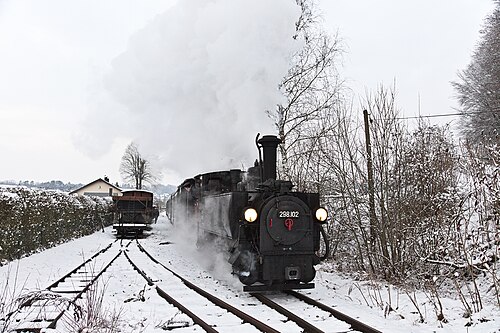
Austria’s oldest 760 mm line (1889): ÖGEG steam ambles down the green Steyr valley from Steyr Lokalbahnhof to Grünburg on summer weekends — Bosnian gauge as it began.
Wikipedia ↗ - Bregenzerwaldbahn (Wälderbähnle)
All that is left of the 760 mm line to Bregenz: five kilometres of the Wälderbähnle between Bezau and Schwarzenberg, worked by steam and diesel through the Bregenzerwald on summer weekends.
Mountain (6)
- Schlossbergbahn Graz
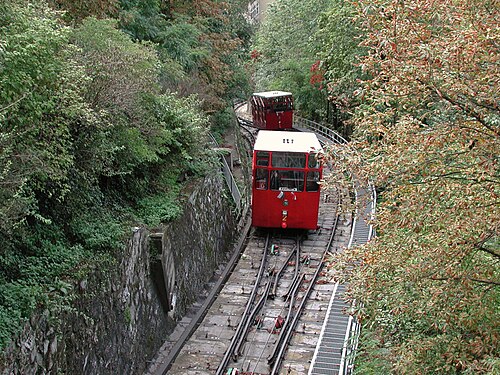
Up the Schlossberg through the trees since 1894, from the Mur embankment to the clock tower above Graz’s red roofs.
Wikipedia ↗ - Achenseebahn
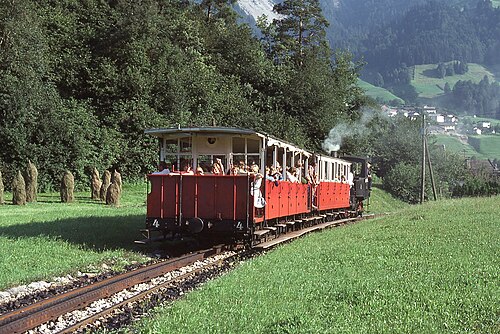
Europe’s oldest still-working steam cog railway: its four 1889 locomotives haul open carriages up to the turquoise Achensee.
Wikipedia ↗ - Schafbergbahn
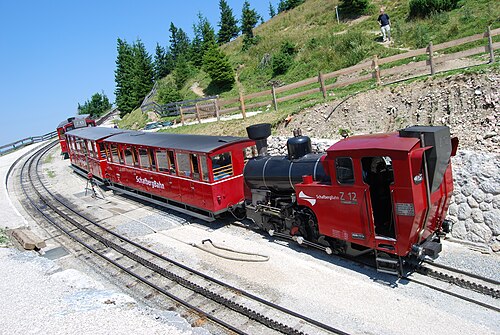
Austria’s steepest steam rack railway climbs 1,190 m in 40 minutes to a summit overlooking eleven Salzkammergut lakes.
Wikipedia ↗ - Schneebergbahn
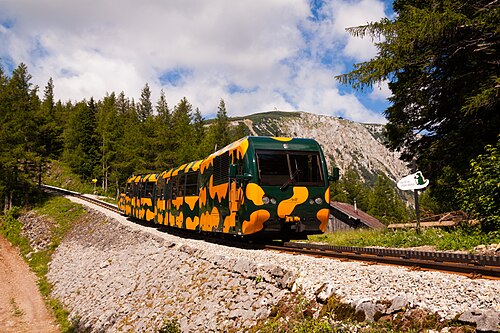
Austria’s highest railway: the red Salamander cog train grinds 1,200 vertical metres from Puchberg to the Hochschneeberg terminus at 1,795 m, the Alps’ balcony over the Vienna basin.
Wikipedia ↗ - Hungerburgbahn
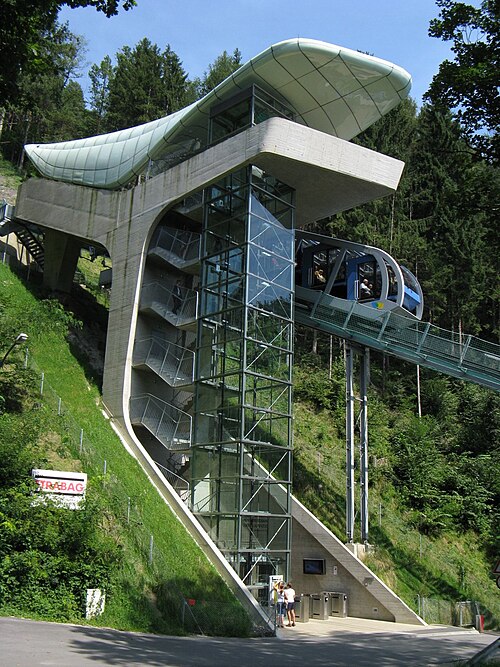
A 2007 hybrid funicular with Zaha Hadid’s sculpted glass stations — cabins tilt to stay level from the flat river crossing to a 46% climb.
Wikipedia ↗ - FestungsBahn Salzburg
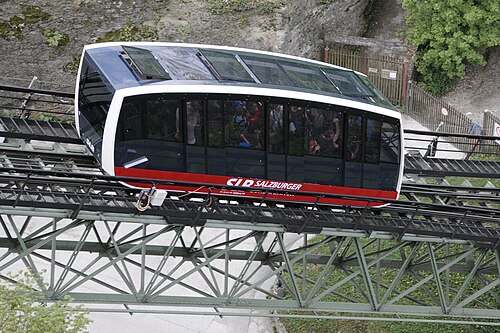
Austria’s oldest funicular in service (1892) rises into Hohensalzburg — one of Europe’s largest intact medieval fortresses — in 54 seconds.
Wikipedia ↗
Luxury (1)
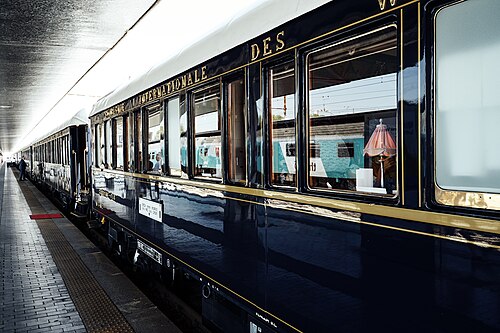
- Venice Simplon-Orient-Express
Belmond’s restored Art Deco sleepers of the 1920s–30s: black tie encouraged as the Alps slide past the champagne bar.
Wikipedia ↗
Photos via Wikimedia Commons — each route page credits the author & licence
What is the fastest train in Austria?
The Koralmbahn, running Graz to Klagenfurt at up to 250 km/h. It is one of 63 routes in Austria in this atlas.
Are there night trains in Austria?
Yes — 5 sleeper services in this atlas serve Austria: Nightjet (Vienna – Zurich), Nightjet (Hamburg – Vienna), Nightjet Munich–Rome (Munich – Rome), Chopin (Vienna – Warsaw), and others.
Can you cross the border by train from Austria?
Yes — 27 of its 63 routes continue into another country: Railjet (Vienna – Budapest), Venice Simplon-Orient-Express (Paris – Venice), Nightjet (Vienna – Zurich), Railjet (Prague – Vienna), among others.
Which is the most scenic railway in Austria?
Austria has 24 scenic or mountain lines in this atlas. The longest is the Arlberg Railway, 811 km.
Cross-border lines continue into
- 🇨🇿 Train routes in Czechia 31 routes
- 🇫🇷 Train routes in France 109 routes
- 🇩🇪 Train routes in Germany 138 routes
- 🇭🇺 Train routes in Hungary 41 routes
- 🇮🇹 Train routes in Italy 83 routes
- 🇱🇮 Train routes in Liechtenstein 4 routes
- 🇵🇱 Train routes in Poland 53 routes
- 🇸🇰 Train routes in Slovakia 20 routes
- 🇸🇮 Train routes in Slovenia 12 routes
- 🇨🇭 Train routes in Switzerland 71 routes